On This Page
Description
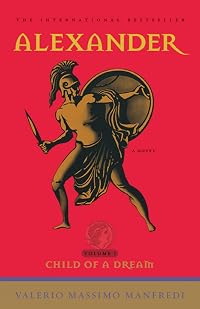
The first novel in Manfredi's outstanding trilogy of brutal passion and grand adventure in ancient Greece.Tags
Recommendations






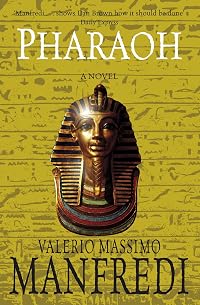
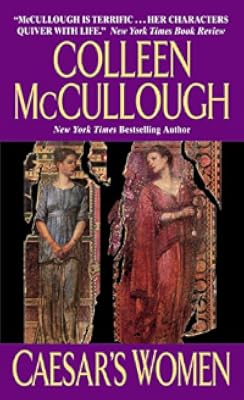
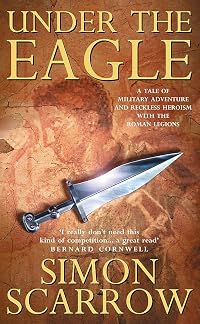
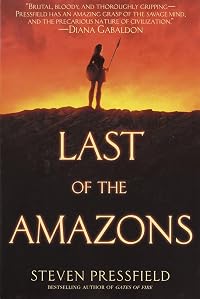



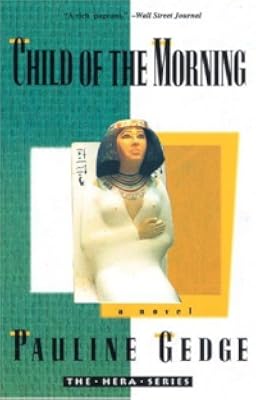

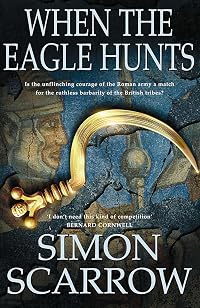
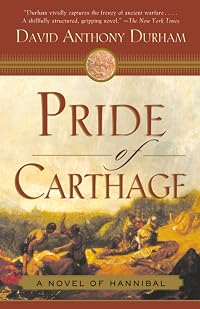
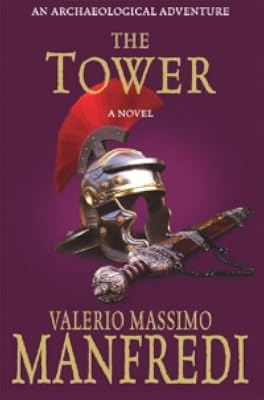
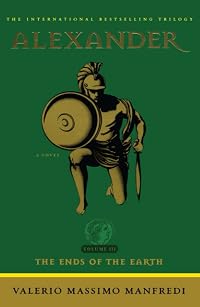

Member Recommendations

marq Fictional biography of Alexander the Great
Member Reviews
Big set pieces like the assassination of Philip or the sack of Thebes are OK, but let's face it, he's no Mary Renault. I really wasn't sure it was going to be worth reading the whole trilogy after the first 100 pages or so, but it did get better towards the end. Manfredi (or his translator) does tend to switch to Lecturer in Ancient History mode from time to time so that we are an audience listening to his information rather than an audience watching the story unfold.
- Spoiler Warning -
This is one of those easy reads, so easy to read in fact, that it tends not to linger very long in the mind after finishing the last page.
The historical component of the book is actually pretty decent. The author did his research and it shows, but he also doesn't overload the reader with details to demonstrate his encyclopedic knowledge of all things Macedonian. That's refreshing.
However, he tones down the homoerotic relationship between Hephaestion and Alexander. They seem more like Super Good Innuendo Friends with a bit of touching (done tastefully behind the scenes of course). The problem with this is that it doesn't illustrate the kind of relationship that would cause Alexander to go absolutely mad with grief when show more Hephaestion died later on. The author doesn't really manage to sell us this.
Likewise, Alexander's own personality doesn't really come through. He was clearly a very driven, passionate, and volatile person, but aside from the occasional tantrum in this book we don't see much of it. (Maybe we'll get to more of that in the next volume.)
So- decent historical read, just not particularly memorable.
PS: I thought the author was at his best during a certain assassination scene. Well-written and perhaps the one truly striking bit in the book. show less
This is one of those easy reads, so easy to read in fact, that it tends not to linger very long in the mind after finishing the last page.
The historical component of the book is actually pretty decent. The author did his research and it shows, but he also doesn't overload the reader with details to demonstrate his encyclopedic knowledge of all things Macedonian. That's refreshing.
However, he tones down the homoerotic relationship between Hephaestion and Alexander. They seem more like Super Good Innuendo Friends with a bit of touching (done tastefully behind the scenes of course). The problem with this is that it doesn't illustrate the kind of relationship that would cause Alexander to go absolutely mad with grief when show more Hephaestion died later on. The author doesn't really manage to sell us this.
Likewise, Alexander's own personality doesn't really come through. He was clearly a very driven, passionate, and volatile person, but aside from the occasional tantrum in this book we don't see much of it. (Maybe we'll get to more of that in the next volume.)
So- decent historical read, just not particularly memorable.
PS: I thought the author was at his best during a certain assassination scene. Well-written and perhaps the one truly striking bit in the book. show less
Initial reaction: not as bad as I expected on the basis of a couple of quick glances and comments by other Alexander enthusiasts. Overall reaction: rather flat - the book never quite drew me in.
While I can't profess knowing all there is to know about Alexander, I was quite confused about time frames of certain known and important events in Alexander's life. The problem is of course that I'm so familiar with Renault's fictional input that I find it hard to separate the known and/or probable from the purely fictional Renaultverse, so I'm going to look up a few things before I go any further.
First of all, how old Alexander was when Aristotle was invited to become his tutor? Going by Renault, he seems to have been around 13 but as far as I show more could tell, in Manfredi's account Alexander was around 15 or 16. When I looked it up, my reasonably reliable handbook of ancient Greece and Rome informed me that Aristotle was called to Macedon in 343 when Alexander was indeed around 13 - so why does Manfredi need to change this?
Secondly, Bucephalas - how old Alexander was at the time when he tamed the horse? Again, in Renault he is 13 but in Manfredi Alexander is already a man, not a child. As Renault points out in The Nature of Alexander, the story of taming of Bucephalas comes across as Alexander's favourite anecdote and for the age of the horse at the time it came to Alexander and when he was riding it at Gaugamela to come down to us, it must have been told often and everywhere. And, as Renault points out, the story has all the marks of a rite of passage from boyhood to manhood, it just feels out of place for someone in his late teens.
Thirdly, use of the Latin form for Odysseus (Ulysses) was annoying but I should probably blame the translator rather than the writer, as I suspect whatever was used in the original Italian influenced this choice.
Hephaistion watch: he's there as the trusted friend and their friendship does turn physical at some point in their youth, and gives annoyingly bad advice at times (I would call it uncharacteristic but I'm not entirely sure we know enough about Hephaistion to say that - suffice it to say that most writers I've read, from Renault to people on LJ, have usually credited Hephaistion with more common sense, even if it comes with a quick temper).
I doubt that I'll be reading the next two parts of the trilogy any time soon (there's even a teaser chapter of the next book included at the end of my copy) - I've got other Alexander books waiting, so when I feel like reading more about him, it's one of these I'll be turning to. show less
While I can't profess knowing all there is to know about Alexander, I was quite confused about time frames of certain known and important events in Alexander's life. The problem is of course that I'm so familiar with Renault's fictional input that I find it hard to separate the known and/or probable from the purely fictional Renaultverse, so I'm going to look up a few things before I go any further.
First of all, how old Alexander was when Aristotle was invited to become his tutor? Going by Renault, he seems to have been around 13 but as far as I show more could tell, in Manfredi's account Alexander was around 15 or 16. When I looked it up, my reasonably reliable handbook of ancient Greece and Rome informed me that Aristotle was called to Macedon in 343 when Alexander was indeed around 13 - so why does Manfredi need to change this?
Secondly, Bucephalas - how old Alexander was at the time when he tamed the horse? Again, in Renault he is 13 but in Manfredi Alexander is already a man, not a child. As Renault points out in The Nature of Alexander, the story of taming of Bucephalas comes across as Alexander's favourite anecdote and for the age of the horse at the time it came to Alexander and when he was riding it at Gaugamela to come down to us, it must have been told often and everywhere. And, as Renault points out, the story has all the marks of a rite of passage from boyhood to manhood, it just feels out of place for someone in his late teens.
Thirdly, use of the Latin form for Odysseus (Ulysses) was annoying but I should probably blame the translator rather than the writer, as I suspect whatever was used in the original Italian influenced this choice.
Hephaistion watch: he's there as the trusted friend and their friendship does turn physical at some point in their youth, and gives annoyingly bad advice at times (I would call it uncharacteristic but I'm not entirely sure we know enough about Hephaistion to say that - suffice it to say that most writers I've read, from Renault to people on LJ, have usually credited Hephaistion with more common sense, even if it comes with a quick temper).
I doubt that I'll be reading the next two parts of the trilogy any time soon (there's even a teaser chapter of the next book included at the end of my copy) - I've got other Alexander books waiting, so when I feel like reading more about him, it's one of these I'll be turning to. show less
I Ödets son, den första delen i Valerio Massimo Manfredis storslagna romantrilogi om Alexander den store (356-323 f Kr), skildras de dramatiska omständigheterna kring Alexanders födelse. Hans lidelsefulla mor Olympias och hans mäktige far Filip II av Makedonien stakade tidigt ut hans bana, och hans karismatiska ledaregenskaper gjorde honom snart till den märkvärdigaste fältherre världen skådat. Vid tjugo års ålder hade han ärvt kungatronen och inledde sitt fälttåg mot det mäktiga Perserriket.
Detta är ett storslaget äventyr, skrivet på ett levande och målande stil. Som i alla andra böcker skrivna av Valerio Massimo Manfredi är det en bok full av hjältemod, maskulinitet , blod svett och tårar.
Detta är ett storslaget äventyr, skrivet på ett levande och målande stil. Som i alla andra böcker skrivna av Valerio Massimo Manfredi är det en bok full av hjältemod, maskulinitet , blod svett och tårar.
It might not be historically very accurate, it might be a bit simplistic. But yet I found it quite entertaining and compelling. Which is not the case of other more "serious" historical novelists, who seem to write exclusively for their own glorification.
I guess it was fate that made me read a book about philosophy before this title. Not that this really matters, but as I'm interrested in the subject I thought nice to see Aristotle role in history. The book is really exciting, it's the first part of a trilogy that it starts with Alexander's birth until his journey to conquer Asia. This is the beginning of an epic that has everything one can expect from this sort of genre, war, fights, loves, philosophy, friendship and much more. Another great book for those who love history with a mixture of romance.
Questo è il mio primo libro di Manfredi e l'ho trovato veramente bello e scritto molto bene. Spero di riuscire a leggere presto tutta la trilogia, perché sicuramente merita molto!!
Members
- Recently Added By
Lists

al.vick-series
381 works; 2 members

Books Read in 2001
194 works; 4 members

Books - Massimo Manfredi, Valerio: Alexander
3 works; 1 member
Author Information

122+ Works 9,429 Members
Italian historian and archaeologist Valerio Massimo Manfredi is a professor of classical archaeology at the University of Milan. He was named Man of the Year 1999 by the American Biographical Institute for this bestselling trilogy. Manfredi's books have been published in France, Germany, Greece, Russia, Spain, and the United Kingdom. (Bowker show more Author Biography) show less
Some Editions
Series

Work Relationships
Is contained in
Common Knowledge
- Canonical title*
- De zoon van de droom
- Original title
- Aléxandros: Il figlio del sogno
- Original publication date
- 1998; 2001 (English) (English)
- People/Characters
- Alexander III the Great, 326-253 BC; Philip II of Macedon (father of Alexander); Olympias (mother of Alexander); Hephaestion; Antipater (general); Parmenion (general) (show all 25); Leonidas of Epirus (teacher of Alexander); Leptine (servant of Alexander); Eumenes of Cardia (secretary of Philip and Alexander); Aristotle, 384-322; Lysippos (sculptor); Perdiccas; Callisthenes (nephew of Aristotle); Cleitus the Black (general); Cleopatra of Macedon (sister of Alexander); Demosthenes; Ptolemy I Soter; Philotas (son of Parmenion); Demades; Alexander I of Epirus (brother of Olympias); Cleopatra Eurydice (as Eurydice); Attalus (general); Nearchus (admiral); Peritas (dog of Alexander); Bucephalus (horse of Alexander)
- Important places
- Ancient Greece; Macedon; Macedonia; Pella, Macedonia; Mieza, Macedonia; Chaeronea, Boeotia, Greece
- Important events
- Battle of Chaeronea (338 BC); Expansion of Macedonia under Philip II (359-336 BC); Assassination of Philip II (336 BC)
- Dedication
- To Christine
- First words
- The four Magi slowly climbed the paths that led to the summit of the Mountain of Light. [Prologue]
Olympias had decided to visit the Sanctuary of Dodona because of a strange premonition that had come to her as she slept alongside her husband - Philip II, King of the Macedonians, who lay that night in a wine- and food-sated... (show all) slumber. [Chapter 1] - Last words
- (Click to show. Warning: May contain spoilers.)The pointed shaft glided through the air in a wide arc, glinting in the sun like a meteor, then the golden head turned and plummeted straight earthward, gaining speed all the way until suddenly it landed and stuck deep, vibrating, in Asia.
- Original language
- Italian
*Some information comes from Common Knowledge in other languages. Click "Edit" for more information.
Classifications
- Genres
- Fiction and Literature, General Fiction, Historical Fiction
- DDC/MDS
- 853.914 — Literature & rhetoric Italian, Romanian & related literatures Italian fiction 1900- 20th Century 1945-1999
- LCC
- PQ4873 .A4776 .A79 — Language and Literature French, Italian, Spanish and Portuguese literatures Italian literature Individual authors, 1961-2000
- BISAC
Statistics
- Members
- 1,243
- Popularity
- 19,834
- Reviews
- 23
- Rating
- (3.72)
- Languages
- 17 — Arabic, Catalan, Czech, Danish, Dutch, English, French, German, Italian, Norwegian (Bokmål), Portuguese, Russian, Serbian, Slovenian, Spanish, Swedish, Turkish
- Media
- Paper, Audiobook, Ebook
- ISBNs
- 58
- ASINs
- 8