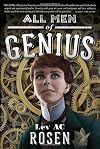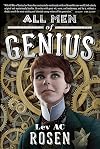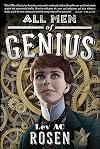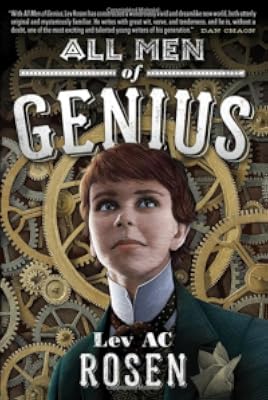
All Men of Genius
by Lev AC Rosen
On This Page
Description
A comedic Steampunk sensation inspired by both Shakespeare's Twelfth Night and Oscar Wilde's The Importance of Being Earnest, All Men of Genius follows Violet Adams as she disguises herself as her twin brother to gain entry to Victorian London's most prestigious scientific academy, and once there, encounters blackmail, mystery, and love.Violet Adams wants to attend Illyria College, a widely renowned school for the most brilliant up-and-coming scientific minds, founded by the late Duke show more Illyria, the greatest scientist of the Victorian Age. The school is run by his son, Ernest, who has held to his father's policy that the small, exclusive college remain male-only. Violet sees her opportunity when her father departs for America. She disguises herself as her twin brother, Ashton, and gains entry.
But keeping the secret of her sex won't be easy, not with her friend Jack's constant habit of pulling pranks, and especially not when the duke's young ward, Cecily, starts to develop feelings for Violet's alter ego, "Ashton." Not to mention blackmail, mysterious killer automata, and the way Violet's pulse quickens whenever the young duke, Ernest (who has a secret past of his own), speaks to her. She soon realizes that it's not just keeping her secret until the end of the year faire she has to worry about: it's surviving that long.
. show less
Tags
Recommendations
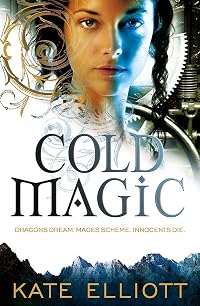
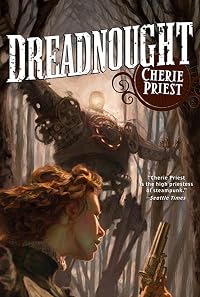

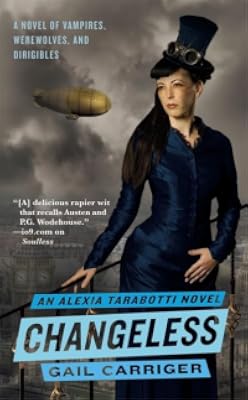
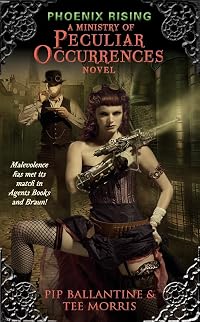
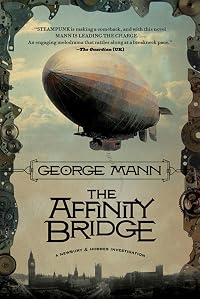
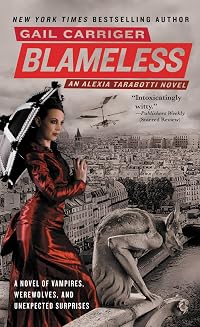
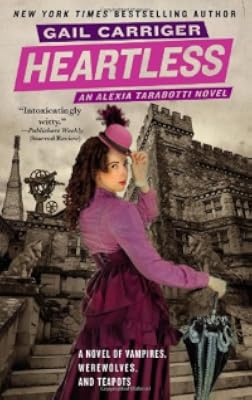
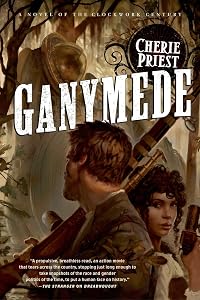
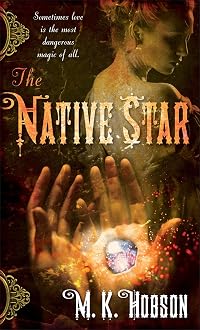
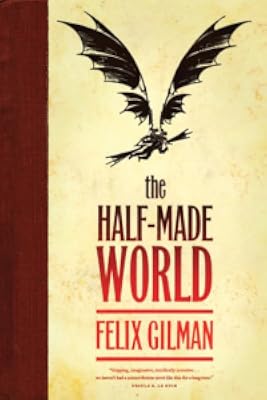
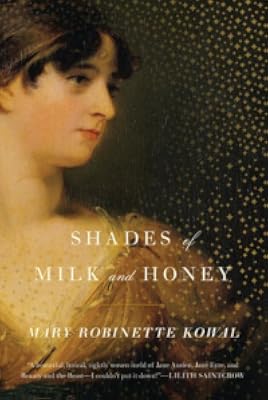
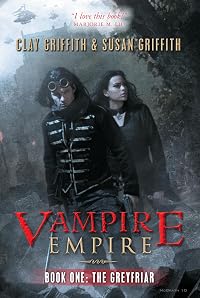

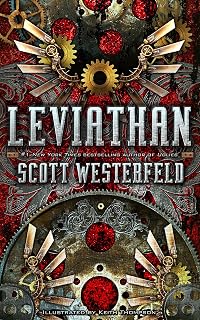
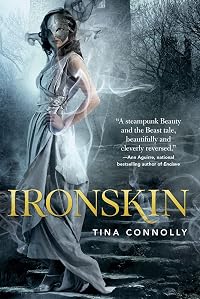
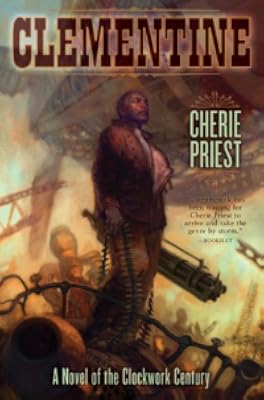
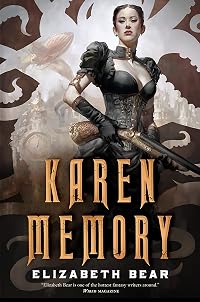
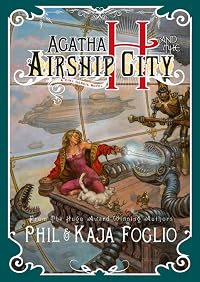
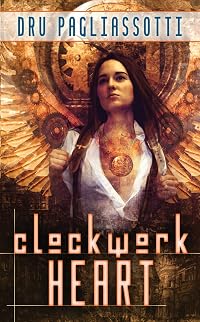
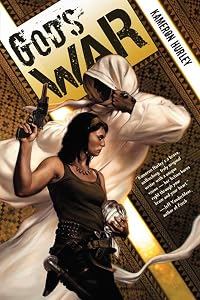
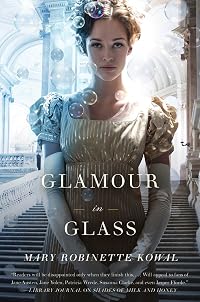
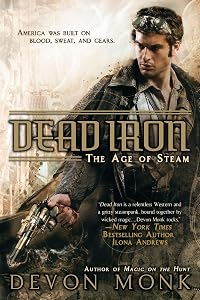
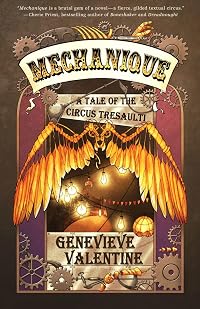
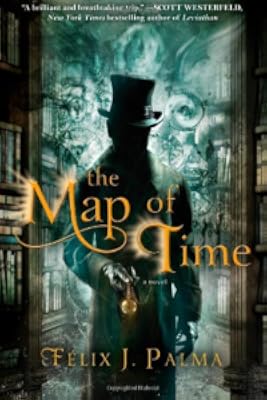
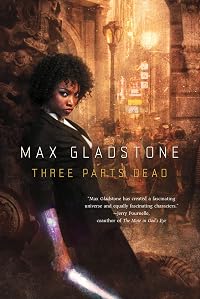
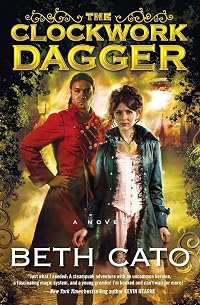
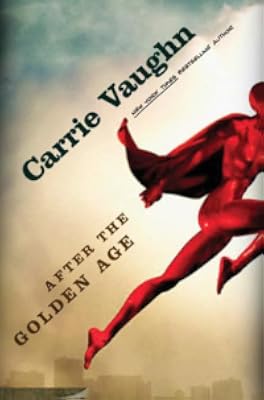
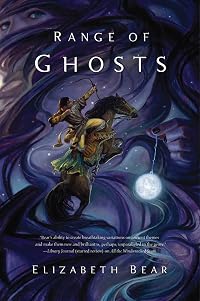
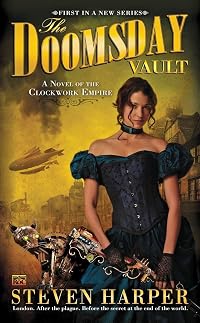
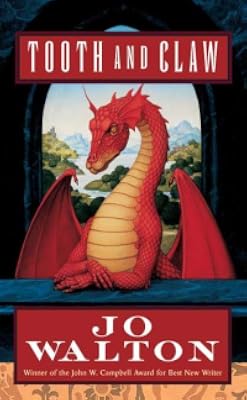
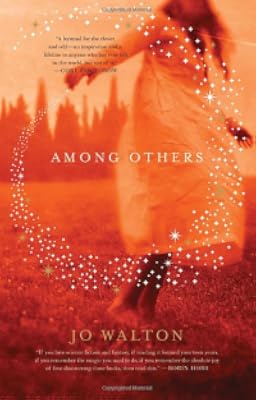
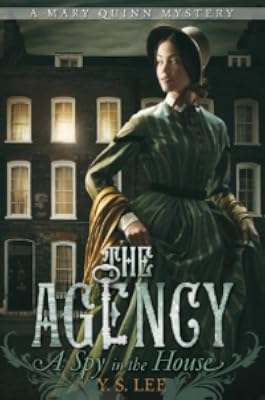
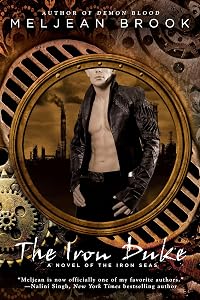
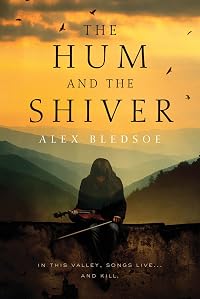
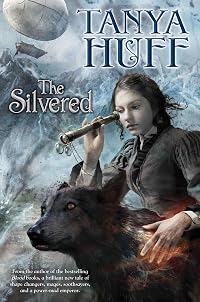
Member Recommendations
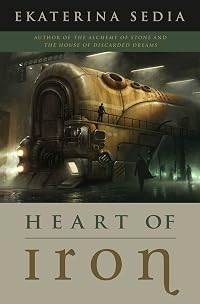
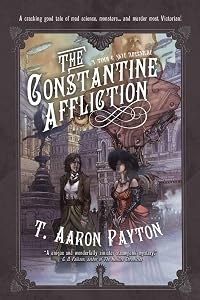
nessreader Both are steampunk college-set stories about strong women finding their own strength. Alternatively and not college-fic, for a cheery romp in a postcolonial take on a steampunk brit empire, try Zoe Archer's 4 romances: Rogue, Scoundrel, Warrior + Stranger (which are heavier on the romance side)
Member Reviews
I got an advanced reading copy of this book signed by the author at Book Expo America. I have been looking forward to reading it for some time. It was an excellent book; exquisitely written and creative. It was a slow but wonderful read.
Violet is a genius at building mechanical contraptions and wants desperately to go to the Illyria school for genius students; only problem is Illyria doesn't admit women. So Violet, along with her twin brother Ashton, and their friend Jack, devise a devious plan. Violet will pretend to be Ashton and attend Illyria, if she can get in. Once at Illyria Violet's end of the year project will be the least of her troubles. There are killer automatons in the basements, the Duke of Illyria's ward has fallen in show more love with Violet-as-a-man, and Violet is in love with the Duke.
Fans of Jane Austen or The Importance of Being Earnest that love a bit of a steampunk twist to their witty banter will love this book. Being that it is written in that more flowery type of Victorian style this is a slow read and things move very deliberately at parts of the book. That being said the description and writing style is absolutely exquisite. The witty banter between the characters is wonderful and lots of fun to read. The mystery behind the school's basement, along with all the crazy "who loves who" twisting of the plot kept me completely engaged.
The characters are wonderful. I loved them all. Especially Violet, Ashton, and Jack. These are smart, funny, heartfelt characters that I really loved getting to know. Even side characters are complex and fun to read about. The book switches viewpoint quite a bit, although the majority of the story is told from Violet's point of view. I didn't find the viewpoint switching distracting or anything, although there were a couple times that I desperately wanted to know what would happen to Violet next and scanned through another character's viewpoint as fast as I could to get back to her.
There are a lot of fun steampunk devices in this book along with interesting chemical and biological experiments. I enjoyed them all and at times was reminded a bit of the magical shenanigans at Hogwart's with Ron's trickster older twin brothers. Being a chemist/engineer and a woman, I loved that Violet worked so hard to get women at a technical level equal to her fellow male students. This book really clicked with me and I really enjoyed the premise behind it.
When I started the book I hoped that more of it was going to be focused on the mystery behind the school's basement; in the end I thought the whole mystery behind the basement was a bit anti-climatic. I was surprised that the majority of the story focused on Violet's day to day life and all the excitement that held for everyone involved. I was incredibly pleased at the ending of the book; the readers are treated to a rather spectacular battle scene that had more action in a few pages than in the entirety of the rest of the book.
The book ended wonderfully. Everything was nicely wrapped up. I am not certain if a sequel is planned, but the book was wrapped up well-enough that one isn't needed. I think the book would be appropriate for older young adults and up; there is some swearing, some bawdy humor, and some discussion of sex acts.
Overall this was a spectacular read. The book is exquisitely written with beautiful descriptions and witty dialogue that really make the story come alive; this makes this book a slow read but a wonderful one. The characters are absolutely wonderful; I was especially drawn to Violet and her desire to make it as a technically adept woman in a male dominated field. The intertwining love stories remind of The Importance of Being Earnest or even some of Jane Austen's works. Those who love that type of Victorian style of writing should check this out. Fans of steampunk stories should check this out as well, there are a ton of wonderful devices in this book. Fans of stories about young woman dressing as men to make it in a all male school may also want to check out The Education of Bet (fluffier than this book but still a fun read). I will definitely be reading future books by Rossen. show less
Violet is a genius at building mechanical contraptions and wants desperately to go to the Illyria school for genius students; only problem is Illyria doesn't admit women. So Violet, along with her twin brother Ashton, and their friend Jack, devise a devious plan. Violet will pretend to be Ashton and attend Illyria, if she can get in. Once at Illyria Violet's end of the year project will be the least of her troubles. There are killer automatons in the basements, the Duke of Illyria's ward has fallen in show more love with Violet-as-a-man, and Violet is in love with the Duke.
Fans of Jane Austen or The Importance of Being Earnest that love a bit of a steampunk twist to their witty banter will love this book. Being that it is written in that more flowery type of Victorian style this is a slow read and things move very deliberately at parts of the book. That being said the description and writing style is absolutely exquisite. The witty banter between the characters is wonderful and lots of fun to read. The mystery behind the school's basement, along with all the crazy "who loves who" twisting of the plot kept me completely engaged.
The characters are wonderful. I loved them all. Especially Violet, Ashton, and Jack. These are smart, funny, heartfelt characters that I really loved getting to know. Even side characters are complex and fun to read about. The book switches viewpoint quite a bit, although the majority of the story is told from Violet's point of view. I didn't find the viewpoint switching distracting or anything, although there were a couple times that I desperately wanted to know what would happen to Violet next and scanned through another character's viewpoint as fast as I could to get back to her.
There are a lot of fun steampunk devices in this book along with interesting chemical and biological experiments. I enjoyed them all and at times was reminded a bit of the magical shenanigans at Hogwart's with Ron's trickster older twin brothers. Being a chemist/engineer and a woman, I loved that Violet worked so hard to get women at a technical level equal to her fellow male students. This book really clicked with me and I really enjoyed the premise behind it.
When I started the book I hoped that more of it was going to be focused on the mystery behind the school's basement; in the end I thought the whole mystery behind the basement was a bit anti-climatic. I was surprised that the majority of the story focused on Violet's day to day life and all the excitement that held for everyone involved. I was incredibly pleased at the ending of the book; the readers are treated to a rather spectacular battle scene that had more action in a few pages than in the entirety of the rest of the book.
The book ended wonderfully. Everything was nicely wrapped up. I am not certain if a sequel is planned, but the book was wrapped up well-enough that one isn't needed. I think the book would be appropriate for older young adults and up; there is some swearing, some bawdy humor, and some discussion of sex acts.
Overall this was a spectacular read. The book is exquisitely written with beautiful descriptions and witty dialogue that really make the story come alive; this makes this book a slow read but a wonderful one. The characters are absolutely wonderful; I was especially drawn to Violet and her desire to make it as a technically adept woman in a male dominated field. The intertwining love stories remind of The Importance of Being Earnest or even some of Jane Austen's works. Those who love that type of Victorian style of writing should check this out. Fans of steampunk stories should check this out as well, there are a ton of wonderful devices in this book. Fans of stories about young woman dressing as men to make it in a all male school may also want to check out The Education of Bet (fluffier than this book but still a fun read). I will definitely be reading future books by Rossen. show less
All Men of Genius by Lev Rosen is a brilliant mashup of so many great things -- Steampunk! Shakespeare! Oscar Wilde! Secret scientific societies bent on world domination! Swearing rabbits! -- that I am just left marveling at how much fun it all is.
On the surface, this is a steampunk retelling of Twelfth Night. Violet Adams is one of the finest scientific minds of her time, but she cannot attend Illyria, England's premiere scientific college, because Illyria only admits men. The solution? Violet will masquerade as her twin brother Ashton for a year, to prove to the duke who runs Illyria that women should be admitted to the school. While she is there, she will create some brilliant invention to reveal her genius to the world. Of course, show more she doesn't factor in the possibility that she might fall in love with the duke. . . .
Naturally, Rosen deviates from Shakespeare's plot and characterization occasionally, but he stays true to the essence of the play. There are also a few phenomenal riffs on The Importance of Being Earnest, including some nearly verbatim lines from my favorite scene in the play (the one where Cecily and Gwendolyn meet for the first time).
This book had me in stitches part of the time, and nearly biting my fingernails during certain other tense or spooky moments. While it's marketed as an adult book, I think older teens would enjoy it as well. I'm not particularly well-versed in steampunk, having only dabbled around the edges as it were, so I'd say this could also serve as a nice introduction to the genre for the curious but inexperienced. show less
On the surface, this is a steampunk retelling of Twelfth Night. Violet Adams is one of the finest scientific minds of her time, but she cannot attend Illyria, England's premiere scientific college, because Illyria only admits men. The solution? Violet will masquerade as her twin brother Ashton for a year, to prove to the duke who runs Illyria that women should be admitted to the school. While she is there, she will create some brilliant invention to reveal her genius to the world. Of course, show more she doesn't factor in the possibility that she might fall in love with the duke. . . .
Naturally, Rosen deviates from Shakespeare's plot and characterization occasionally, but he stays true to the essence of the play. There are also a few phenomenal riffs on The Importance of Being Earnest, including some nearly verbatim lines from my favorite scene in the play (the one where Cecily and Gwendolyn meet for the first time).
This book had me in stitches part of the time, and nearly biting my fingernails during certain other tense or spooky moments. While it's marketed as an adult book, I think older teens would enjoy it as well. I'm not particularly well-versed in steampunk, having only dabbled around the edges as it were, so I'd say this could also serve as a nice introduction to the genre for the curious but inexperienced. show less
Viola Adams has a gift for invention, and the best way to hone her skills is by attending the prestigious Illyria College. Illyria only accepts male students, so of course she masquerades as a boy to attend. While there, she runs into wacky professors, sinister clockwork automatons, and the far-too-sexy-for-her-good Duke. While she and the Duke battle their attraction for each other (he assuming she's a boy, she wanting to focus on her inventions), the Duke's ward Cecily falls in love with Viola. Meanwhile, one of Viola's fellow students plans to take over the world!
It's a bit like Twelfth Night mixed up in a blender with the Importance of Being Ernest, except without the transversive sexual tension of the first or the humor of either. show more The world building is odd--I could never tell exactly when it was supposed to take place. Judging from Ada Lovelace's age, it should be 1882, but it never felt like it, not even close. All historical details are kept very vague, which is frustrating to someone like me when reading an alternate history. I want to know exactly what's alternate about it! The steampunk feels pasted on, and it works like magic, not science. For someone supposedly obsessed with mechanical devices, Viola certainly thinks about them very little. She doesn't seem to learn a thing at Illyria, either--she spends all her days working on her own project, without needing professors' help, and her nights drinking with friends. Why then go to such effort to attend the college? She's never challenged, never has to study hard or singe her fingers on a mis-wired fiddly bit. Her inventing feels like a set piece, or like a randomly assigned character trait.
(One big point in this book's favor: it would have been very easy for Viola to be the Sole Exceptional Woman, but in fact she's surrounded by other women, from the girlish chemist Cecily to the sensible prostitute Fiona. There were, if anything, *too many* characters, but a good number of them were women.)
The plot is silly, like the professors are silly, in this very consciously twee style that apes Lemony Snicket's without approaching his light touch. There's no narrative tension, and the pacing is soooo slooooow. I really, really wanted to like this book, but the construction was just too lightweight and slapdash. I'd love to read a silly book with gender play and marauding robots, but with characters that read more genuinely, and humor that actually works. show less
It's a bit like Twelfth Night mixed up in a blender with the Importance of Being Ernest, except without the transversive sexual tension of the first or the humor of either. show more The world building is odd--I could never tell exactly when it was supposed to take place. Judging from Ada Lovelace's age, it should be 1882, but it never felt like it, not even close. All historical details are kept very vague, which is frustrating to someone like me when reading an alternate history. I want to know exactly what's alternate about it! The steampunk feels pasted on, and it works like magic, not science. For someone supposedly obsessed with mechanical devices, Viola certainly thinks about them very little. She doesn't seem to learn a thing at Illyria, either--she spends all her days working on her own project, without needing professors' help, and her nights drinking with friends. Why then go to such effort to attend the college? She's never challenged, never has to study hard or singe her fingers on a mis-wired fiddly bit. Her inventing feels like a set piece, or like a randomly assigned character trait.
(One big point in this book's favor: it would have been very easy for Viola to be the Sole Exceptional Woman, but in fact she's surrounded by other women, from the girlish chemist Cecily to the sensible prostitute Fiona. There were, if anything, *too many* characters, but a good number of them were women.)
The plot is silly, like the professors are silly, in this very consciously twee style that apes Lemony Snicket's without approaching his light touch. There's no narrative tension, and the pacing is soooo slooooow. I really, really wanted to like this book, but the construction was just too lightweight and slapdash. I'd love to read a silly book with gender play and marauding robots, but with characters that read more genuinely, and humor that actually works. show less
Prelim Review: As a big time fan of both Twelfth Night and The Importance of Being Earnest, plus steampunk, this was a natural fit for me to enjoy. I had met the author at BEA this year during a double signing with [a:Edward Lazellari|4631640|Edward Lazellari|https://images.gr-assets.com/authors/1517502365p2/4631640.jpg] for TOR (my publisher for life), but knew nothing about the book. However soon as I began walking away from the table I looked at the backcover and was like 'HOW COULD I NOT KNOW OF THIS?' and almost turned around to fangirl at Rosen just on the grounds of what the book was inspired by.
Yes that is how deep my love is for those two plays.
So how does the book match up to my expections? Fantastically.
Not only is the book show more peppered with inside jokes and references to the source materials (Bunburry's multiple accidents, cucumber sandwhichs and well the names are a bit more obvious I suppose), but this is possibly one of my favorite steampunk tales to date. Rosen doesn't just pay lip service to the genre, he goes into (sometimes horrifying) detail as well. Its possible I could have done without the lessons in Biology that Jack (Violet's room mate and childhood friend) engages in, but they certainly added a different layer to the tale.
I could wax poetical about the various references for probably a good half hour or more (depending on the mood of the listener), but instead let me focus on the book itself. I would definitely say that Rosen captured the 'feel' of the two plays quite well--it has always seemed to me that neither took itself seriously. Both Wilde and Shakespeare seemed content to let their creations be just a shade over the top and ridiculous. Admittedly the book isn't a farce, but Rosen doesn't let the characters ever think so much of themselves that they become tiresome. Well except perhaps Volio, but he's the bad egg of the piece (more or less) and you expect that of his sort.
At any given time there are about a half dozen or so romances going on, one-sided and otherwise. The centerpiece is of course Violet and Ernest, but through their associates we see the various stages of romance. Her brother Ashton and his romance with a servant, a couple of her new friends paramours, Cecily's infatuation with Violet-as-Ashton, Ernest's confusing courtship of Violet, Volio's campaign for Cecily and Jack's campaign for Cecily. I think that pretty much covers things. Rosen doesn't let gender really get in the way of romance, and I admit that Ernest's confusion until the truth is revealed had me slapping my forehead in amusement.
Subtly issues of race, station, sexuality and gender makes it way into the story. The boys at Illyria are from every kind of background--their only unifying quality their genius--and because of this we're introduced to far more than just the elite. Truth be told I wanted to see more of what society thought of the Duke (of Illyria's) school--we see scarce little of society outside of Violet's family and mentions by students of their titles (or father's titles). At one point Ernest does mention he likes to keep to himself, so I suppose that's a reason.
As odd as this sounds I think that Ashton was my favorite character. We see little of his exploits when they don't pertain to Violet (we hear bits and pieces, but that's about it), but I took a shine to his character. Maybe because despite all his tomfoolery he showed true care and concern for those around him. Or maybe because he was kind of a reckless take me as a I am sort of fellow that I tend to really admire. Violet was a good foil for him, or he for her. She is serious-minded, despite her insane plan and madcap ideas, and though she loosens up while amongst the boys of the school, she's a stabilizing force in the book.
Sometimes Cecily got on my nerves, which is par for the course as the character in Importance also got on my nerves at times. Not that she was naive or stupid, just...blind maybe. Several times her 'good fortune' is pointed out to her, but she takes much of it for granted. Jack, Toby and Drew were fun and rounded out the cast nicely. I liked Jack, liked his sensible approach to wooing Cecily. I thought Toby and Drew played off the others well and if nothing else gave Violet some sound advice (if she were male at least).
My one sadness was how depressingly pragmatic many of the female characters were. Lady Ada, Miriam, Fiona, and even Violet at points were all realistic about their futures. Well, perhaps not Violet so much, but it definitely Fiona and Miriam. They were definitely 'live for the moment' sorts who understood the ways of the world, but tried not to let that ruin their enjoyment of what they had.
I'm not sure I can recommend this book enough. There is I believe something for everyone. I do warn at some content matter--terrifying automata for instance that had my skin crawling and oily creepers for instance. If nothing else I hope the school year proved to the Duke that he needs to install some sort of psychological examination before allowing kids like Volio in again! show less
Yes that is how deep my love is for those two plays.
So how does the book match up to my expections? Fantastically.
Not only is the book show more peppered with inside jokes and references to the source materials (Bunburry's multiple accidents, cucumber sandwhichs and well the names are a bit more obvious I suppose), but this is possibly one of my favorite steampunk tales to date. Rosen doesn't just pay lip service to the genre, he goes into (sometimes horrifying) detail as well. Its possible I could have done without the lessons in Biology that Jack (Violet's room mate and childhood friend) engages in, but they certainly added a different layer to the tale.
I could wax poetical about the various references for probably a good half hour or more (depending on the mood of the listener), but instead let me focus on the book itself. I would definitely say that Rosen captured the 'feel' of the two plays quite well--it has always seemed to me that neither took itself seriously. Both Wilde and Shakespeare seemed content to let their creations be just a shade over the top and ridiculous. Admittedly the book isn't a farce, but Rosen doesn't let the characters ever think so much of themselves that they become tiresome. Well except perhaps Volio, but he's the bad egg of the piece (more or less) and you expect that of his sort.
At any given time there are about a half dozen or so romances going on, one-sided and otherwise. The centerpiece is of course Violet and Ernest, but through their associates we see the various stages of romance. Her brother Ashton and his romance with a servant, a couple of her new friends paramours, Cecily's infatuation with Violet-as-Ashton, Ernest's confusing courtship of Violet, Volio's campaign for Cecily and Jack's campaign for Cecily. I think that pretty much covers things. Rosen doesn't let gender really get in the way of romance, and I admit that Ernest's confusion until the truth is revealed had me slapping my forehead in amusement.
Subtly issues of race, station, sexuality and gender makes it way into the story. The boys at Illyria are from every kind of background--their only unifying quality their genius--and because of this we're introduced to far more than just the elite. Truth be told I wanted to see more of what society thought of the Duke (of Illyria's) school--we see scarce little of society outside of Violet's family and mentions by students of their titles (or father's titles). At one point Ernest does mention he likes to keep to himself, so I suppose that's a reason.
As odd as this sounds I think that Ashton was my favorite character. We see little of his exploits when they don't pertain to Violet (we hear bits and pieces, but that's about it), but I took a shine to his character. Maybe because despite all his tomfoolery he showed true care and concern for those around him. Or maybe because he was kind of a reckless take me as a I am sort of fellow that I tend to really admire. Violet was a good foil for him, or he for her. She is serious-minded, despite her insane plan and madcap ideas, and though she loosens up while amongst the boys of the school, she's a stabilizing force in the book.
Sometimes Cecily got on my nerves, which is par for the course as the character in Importance also got on my nerves at times. Not that she was naive or stupid, just...blind maybe. Several times her 'good fortune' is pointed out to her, but she takes much of it for granted. Jack, Toby and Drew were fun and rounded out the cast nicely. I liked Jack, liked his sensible approach to wooing Cecily. I thought Toby and Drew played off the others well and if nothing else gave Violet some sound advice (if she were male at least).
My one sadness was how depressingly pragmatic many of the female characters were. Lady Ada, Miriam, Fiona, and even Violet at points were all realistic about their futures. Well, perhaps not Violet so much, but it definitely Fiona and Miriam. They were definitely 'live for the moment' sorts who understood the ways of the world, but tried not to let that ruin their enjoyment of what they had.
I'm not sure I can recommend this book enough. There is I believe something for everyone. I do warn at some content matter--terrifying automata for instance that had my skin crawling and oily creepers for instance. If nothing else I hope the school year proved to the Duke that he needs to install some sort of psychological examination before allowing kids like Volio in again! show less
This has been on my to-read list for ages! I'm glad I finally got to it, because it was such a joy to read. The writing style is amusing and the characters are easy to like. I especially liked the way it gave even minor characters a viewpoint when it suited the story! Twelfth Night is my favourite of Shakespeare's plays and I loved this take on it, especially the queer elements (as there should be!). Naturally, there are romantic elements, but I feel like the focus was more on the plot than romance. I loved the personalities of the teachers at the school and hearing about all the mad inventions and experiments. Aside from the humour, the tension and mystery can be very gripping at points too!
Given the setting, there's some show more period-typical outdated language, and sexist/racist/homophobic ideas, however not endorsed by the protagonists. Keep that in mind. show less
Given the setting, there's some show more period-typical outdated language, and sexist/racist/homophobic ideas, however not endorsed by the protagonists. Keep that in mind. show less
This was delightful. In terms of basic flavor, think Tamora Pierce's Alanna books ([b:Alanna: The First Adventure|13831|Alanna The First Adventure (Song of the Lioness, #1)|Tamora Pierce|http://photo.goodreads.com/books/1348885690s/13831.jpg|1936544]), but transposed to a steampunk Victorian London and a cast of college-age characters. (And without the eventual corruption of the twin brother into a villain, thank goodness.)
Although it doesn't really have the feel of a science fiction book, I decided to shelve it as SF also because, along with the plot, character development, period manners, and steampunk tropes, this book also eloquently describes the passion and joy and beauty of science.
On a social justice note, in addition to the show more obvious theme of sexism, the author also treats heterosexism (Violet's twin Ashton is "inverted", and is partying on with young men of similar inclination in London while she's off at school), racism, and classism: all quite well, I thought.
I must also note that Ada Lovelace is a minor, though significant, character in the book. :) show less
Although it doesn't really have the feel of a science fiction book, I decided to shelve it as SF also because, along with the plot, character development, period manners, and steampunk tropes, this book also eloquently describes the passion and joy and beauty of science.
On a social justice note, in addition to the show more obvious theme of sexism, the author also treats heterosexism (Violet's twin Ashton is "inverted", and is partying on with young men of similar inclination in London while she's off at school), racism, and classism: all quite well, I thought.
I must also note that Ada Lovelace is a minor, though significant, character in the book. :) show less
I have no idea what possessed Mr. Rosen to combine Twelfth Night and The Importance of Being Earnest and retcon them to steampunk Victorian London, but I thank him heartily for doing so.
It has been a few years since I saw Twelfth Night and almost as long since reading The Importance of Being Earnest, but I remember enough of the plot that certain sections of this book had me incoherent with laughter.
Violet Adams, Victorian-era scientist, longs to attend Illyria Academy, which is a strictly male-dominated sphere. Although Oxford and Cambridge have allowed women to sit in on classes, and despite noted scientist Ada Lovelace's patronage of the school, only five boys per year are allowed entry to Illyria's hallowed halls. In order to obtain show more the scientific education that Violet knows she deserves, she and her twin brother, Ashton, devise a scheme to disguise Viola as "Ashton" for her first year's entry into the school. At the end of the year, Violet vows to reveal her true gender and risk punishment on her own terms.
However, it is much easier to make these plans before she meets Earnest, Duke of Illyria, and his astoundingly clever young ward, Cecily. Violet respects the duke as she gets to know him, even as she resents his misapprehensions on women's intelligence. As for Cecily, she also wishes to be a scientist in her own right due to her astounding talents with chemical composition.
While threats of blackmail and a plot to overthrow the English monarchy begins beneath Illyria's walls, Cecily and the duke both find themselves drawn to young Aston -- the duke because Ashton reminds him of Violet, whom he met once, and Cecily because Ashton is the only man she has ever known to take her scientific endeavors more seriously than her pretty face -- resulting in a comedy of errors roughly proportional to your standard airship.
The slightly mystic realm of steampunk is a great place to situate this story. Shakespeare called upon magic and faeries even in some of his histories and tragedies (Henry IV, for example), so it seems fairly natural for this iteration of his and Wilde's characters to pursue the higher calling of Science. There are plenty of gears for those of us who pay attention to such things, and they work themselves into the plot with clockwork precision. The gears that power Illyria have further power to inspire and infuriate, and ghostlike invisible cats roam the basement.
Even as Violet embraces the freedoms granted by her male guise, she begins to truly appreciate the fact that she is a woman, and able to wear comparatively more comfortable skirts and garbs, even if they do have bustles. Women of all types show up in this novel: Ada Lovelace is a tough-talking classy dame who smokes cigars and hustles poker, Cecily is demure yet brilliant, and Miriam embraces the freedoms of widowhood while remaining loyal to her mistress. Enterprising housekeepers and actresses are every bit as clever as the men of genius who remain embroiled in their own affairs (and projects) at the castle on the hill.
The assorted relationships, which shift and ebb on the arc of scientific progress, make sense and are exquisitely timed.
I couldn't put this book down. It made me laugh and cringe at times, such as the biological experiments that yield bizarre results. But I loved those results, such as the trash-talking Oscar, the unnecessarily practical pram, and the magnificent Pallus. Rosen throws in a dash of Jeckyll and Hyde and a few references to Wilde the person, and the result is fabulous.
Verdict: refreshing, fun, and doesn't take itself too seriously. Way to go! show less
It has been a few years since I saw Twelfth Night and almost as long since reading The Importance of Being Earnest, but I remember enough of the plot that certain sections of this book had me incoherent with laughter.
Violet Adams, Victorian-era scientist, longs to attend Illyria Academy, which is a strictly male-dominated sphere. Although Oxford and Cambridge have allowed women to sit in on classes, and despite noted scientist Ada Lovelace's patronage of the school, only five boys per year are allowed entry to Illyria's hallowed halls. In order to obtain show more the scientific education that Violet knows she deserves, she and her twin brother, Ashton, devise a scheme to disguise Viola as "Ashton" for her first year's entry into the school. At the end of the year, Violet vows to reveal her true gender and risk punishment on her own terms.
However, it is much easier to make these plans before she meets Earnest, Duke of Illyria, and his astoundingly clever young ward, Cecily. Violet respects the duke as she gets to know him, even as she resents his misapprehensions on women's intelligence. As for Cecily, she also wishes to be a scientist in her own right due to her astounding talents with chemical composition.
While threats of blackmail and a plot to overthrow the English monarchy begins beneath Illyria's walls, Cecily and the duke both find themselves drawn to young Aston -- the duke because Ashton reminds him of Violet, whom he met once, and Cecily because Ashton is the only man she has ever known to take her scientific endeavors more seriously than her pretty face -- resulting in a comedy of errors roughly proportional to your standard airship.
The slightly mystic realm of steampunk is a great place to situate this story. Shakespeare called upon magic and faeries even in some of his histories and tragedies (Henry IV, for example), so it seems fairly natural for this iteration of his and Wilde's characters to pursue the higher calling of Science. There are plenty of gears for those of us who pay attention to such things, and they work themselves into the plot with clockwork precision. The gears that power Illyria have further power to inspire and infuriate, and ghostlike invisible cats roam the basement.
Even as Violet embraces the freedoms granted by her male guise, she begins to truly appreciate the fact that she is a woman, and able to wear comparatively more comfortable skirts and garbs, even if they do have bustles. Women of all types show up in this novel: Ada Lovelace is a tough-talking classy dame who smokes cigars and hustles poker, Cecily is demure yet brilliant, and Miriam embraces the freedoms of widowhood while remaining loyal to her mistress. Enterprising housekeepers and actresses are every bit as clever as the men of genius who remain embroiled in their own affairs (and projects) at the castle on the hill.
The assorted relationships, which shift and ebb on the arc of scientific progress, make sense and are exquisitely timed.
I couldn't put this book down. It made me laugh and cringe at times, such as the biological experiments that yield bizarre results. But I loved those results, such as the trash-talking Oscar, the unnecessarily practical pram, and the magnificent Pallus. Rosen throws in a dash of Jeckyll and Hyde and a few references to Wilde the person, and the result is fabulous.
Verdict: refreshing, fun, and doesn't take itself too seriously. Way to go! show less
Members
- Recently Added By
Lists


Books Read in 2023
5,638 works; 147 members
Author Information

15+ Works 2,201 Members
Some Editions
Awards and Honors
Awards
Work Relationships
Is an adaptation of
Common Knowledge
- Canonical title
- All Men of Genius
- Original title
- All men of genius
- Original publication date
- 2011
- Important places
- London, England, UK
Classifications
Statistics
- Members
- 265
- Popularity
- 122,390
- Reviews
- 28
- Rating
- (3.49)
- Languages
- English, German, Portuguese
- Media
- Paper, Audiobook, Ebook
- ISBNs
- 9
- ASINs
- 6