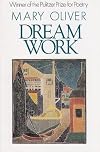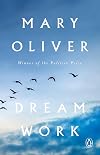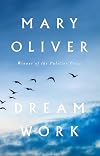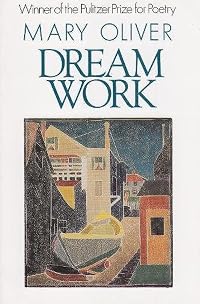
Dream Work
by Mary Oliver
On This Page
Description
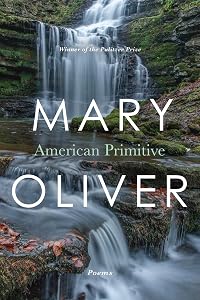
Dream Work, a collection of forty-five poems, follows both chronologically and logically Mary Oliver's American Primitive, which won for her the Pulitzer Prize for the finest book of poetry published in 1983 by an American poet. The depth and diversity of perceptual awareness-so steadfast and radiant in American Primitive-continue in Dream Work. Additionally, she has turned her attention in these poems to the solitary and difficult labors of the spirit-to accepting the truth about one's show more personal world, and to valuing the triumphs while transcending the failures of human relationships. Whether by way of inheritance-as in her poem about the Holocaust-or through a painful glimpse into the present-as in "Acid," a poem about an injured boy begging in the streets of Indonesia-the events and tendencies of history take on a new importance also. More deeply than in her previous volumes, the sensibility behind these poems has merged with the world. Mary Oliver's willingness to be joyful continues, deepened by self-awareness, by experience, and by choice. show lessTags
Recommendations










Member Recommendations
Member Reviews
Summary: Poetry of Mary Oliver running the gamut from dogfish to Dachau, from starfish to Orion, and Robert Schumann to Stanley Kunitz.
It seemed fitting to read a collection of the poetry of Mary Oliver in the month of her birth. Dream Work follows Oliver’s Pulitzer winning American Primitive. Like much of her writing, Oliver’s poetry moves from the commonplaces of the natural world like dogfish, geese, starfish, and marsh hawks to remind us of the transcendent, our evanescent existence and the existential questions that endure.
She juxtaposes tiny dogfish with a cri de coeur “to know / whoever I was, I was / alive / for a little while.” She sees the rising sun over a pond of blazing lilies as “a prayer heard and answered / show more lavishly, / every morning”. Wild trilliums on the hillside contrast with the lack of tenderness of childhood’s ambiguities and the difficult years.
“Dreams” captures the “Dream Work” of this collection’s title. Dreams are likened to budding flowers with a letter at the center of each that eludes the waking self. “Whispers” describes the elusive “heaven of sensation” from which she finds herself held back. Then in “Members of the Tribe” she lists artists, her tribe, who lived between madness and genius. Yet it is not their unhappiness she cannot forgive but the “hurtling / toward oblivion / on the sharp blades of their exquisite poems, saying: / this is the way.“
“Robert Schumann” exemplifies madness in art, thought of by her every day in his lifelong struggle with madness. Yet there was the brief moment when Clara first came into his life. Because of this poem, I had to look up the story of Schumann, who composed brilliantly between fits of madness. On the other hand, there is “Stanley Kunitz.” Likening his work to a beautiful garden effortlessly blossoming, she now understands the toils behind the beauty.
However, it is often the commonplace that speaks most deeply. For example, in “Landscape” she listens each morning to the mosses and the black oaks around her pond. If she closes her heart to them, she is “as good as dead.” Or an approach of a thunderstorm reminds her of how the normalcy of life may be shattered in an instant.
Some of the poetry is darker. For instance “Rage” describes the sexual abuse of a child in chilling terms (Oliver suffered sexual abuse as a child). In a poem written on the fortieth anniversary of the revealing of the German camps, she struggles with the incongruity of forest scenes, mountains of bodies and Mengele enjoying a gourmet meal.
Yet she cannot end here. Rather, the collection concludes with “The Sunflowers” that invite us into the fields to listen to their stories. Amid ugly realities, Oliver points us to a deeper magic. She cannot always find the words. But there is something to be heard. show less
It seemed fitting to read a collection of the poetry of Mary Oliver in the month of her birth. Dream Work follows Oliver’s Pulitzer winning American Primitive. Like much of her writing, Oliver’s poetry moves from the commonplaces of the natural world like dogfish, geese, starfish, and marsh hawks to remind us of the transcendent, our evanescent existence and the existential questions that endure.
She juxtaposes tiny dogfish with a cri de coeur “to know / whoever I was, I was / alive / for a little while.” She sees the rising sun over a pond of blazing lilies as “a prayer heard and answered / show more lavishly, / every morning”. Wild trilliums on the hillside contrast with the lack of tenderness of childhood’s ambiguities and the difficult years.
“Dreams” captures the “Dream Work” of this collection’s title. Dreams are likened to budding flowers with a letter at the center of each that eludes the waking self. “Whispers” describes the elusive “heaven of sensation” from which she finds herself held back. Then in “Members of the Tribe” she lists artists, her tribe, who lived between madness and genius. Yet it is not their unhappiness she cannot forgive but the “hurtling / toward oblivion / on the sharp blades of their exquisite poems, saying: / this is the way.“
“Robert Schumann” exemplifies madness in art, thought of by her every day in his lifelong struggle with madness. Yet there was the brief moment when Clara first came into his life. Because of this poem, I had to look up the story of Schumann, who composed brilliantly between fits of madness. On the other hand, there is “Stanley Kunitz.” Likening his work to a beautiful garden effortlessly blossoming, she now understands the toils behind the beauty.
However, it is often the commonplace that speaks most deeply. For example, in “Landscape” she listens each morning to the mosses and the black oaks around her pond. If she closes her heart to them, she is “as good as dead.” Or an approach of a thunderstorm reminds her of how the normalcy of life may be shattered in an instant.
Some of the poetry is darker. For instance “Rage” describes the sexual abuse of a child in chilling terms (Oliver suffered sexual abuse as a child). In a poem written on the fortieth anniversary of the revealing of the German camps, she struggles with the incongruity of forest scenes, mountains of bodies and Mengele enjoying a gourmet meal.
Yet she cannot end here. Rather, the collection concludes with “The Sunflowers” that invite us into the fields to listen to their stories. Amid ugly realities, Oliver points us to a deeper magic. She cannot always find the words. But there is something to be heard. show less
This is only the second full Mary Oliver collection I have read, and it is still somehow a revelation that her poetry isn't just "go watch geese and be happy," which is like, the Cliff's Notes version of Mary Oliver that exists in pop culture, but embraces nature as a balm exactly because it is so weighed down with the tragedies and contradictions and cruelties of life.
Lovely.
Lovely.
School taught me how to read and understand poetry, but it didn't teach me how to enjoy poetry. So when I picked up this book that a friend recommended, it was more out of curiosity than any expectation of enjoyment. To my utter surprise, I found these poems a pleasure to read. They're more accessible than many of the famous poems I've tried reading over the years. You don't get bogged down trying to decipher obscure words and convoluted sentence structure. Instead, you’re free to explore the meaning of the poems, which are thought provoking, intimate, and beautifully vivid. Some poems invite deeper analysis; others just float through my mind and allow me to find my own meaning. If you think you don't like poetry, Dream Work may show more change your mind. For me, this book was a revelation. I can't wait to discover more amazing poets like Mary Oliver. show less
This was a great, small collection of poetry that won the Pulitzer back in the day. Oliver manages to convey much, and variate her style and meaning, depending on the context and the larger idea of her individual poems. There is much to like here, from the longings to the images and even towards the appeals for greater sanctity. This is not a collection to be missed- it deserves acclaim.
4.25 stars.
4.25 stars.
2.5/3
i have meandered my way through and found that this is not my favorite collection of mary oliver's. usually her boundless positivity and adoration of nature really uplifts me, but this one didn't feel so devotional! still simplistic in its beauty. but it felt a little disjointed, too. i think they should have all been about water/the ocean/the beach/the animals present
instead of moving around through different ideas so flippantly. or maybe about dreams. or SOMETHING!
favorite poems from this collection:
wild geese (obviously)
the swimmer
i have meandered my way through and found that this is not my favorite collection of mary oliver's. usually her boundless positivity and adoration of nature really uplifts me, but this one didn't feel so devotional! still simplistic in its beauty. but it felt a little disjointed, too. i think they should have all been about water/the ocean/the beach/the animals present
instead of moving around through different ideas so flippantly. or maybe about dreams. or SOMETHING!
favorite poems from this collection:
wild geese (obviously)
the swimmer
Everyone could benefit from reading a little more poetry. Not every poem landed with me, but I'd be reading along and--BAM--two lines would just hit me and make me think about how I interact with the world and myself. Worth it.
In this book Mary Oliver has turned her attention to the solitary and difficult labors of the spirit -- accepting the truth about one's personal world, and to valuing the triumphs while transcending the failures of human relationships.
Members
- Recently Added By
Lists

Tonikat reading completed on Librarything journals
329 works; 2 members

Tom's Bookstore
346 works; 2 members

Favorite Recent Poetry: 1980-2022
178 works; 70 members
Author Information

54+ Works 21,173 Members
Mary Oliver was born in Cleveland, Ohio on September 10, 1935. She attended Ohio State University and Vassar College, but did not receive a degree. Her first collection of poems, No Voyage and Other Poems, was published in 1963. She wrote more than 20 volumes of poetry including The River Styx, Ohio; The Leaf and the Cloud; Evidence; Blue Horses; show more and Felicity. She received several awards including the Pulitzer Prize for American Primitive, the Christopher Award and the L. L. Winship/PEN New England Award for House of Light, and the National Book Award for New and Selected Poems. Her books of prose include A Poetry Handbook, Rules for the Dance: A Handbook for Writing and Reading Metrical Verse, and Long Life: Essays and Other Writings. She held the Catharine Osgood Foster Chair for Distinguished Teaching at Bennington College from 1995 to 2001. She died on January 17, 2019 at the age of 83. (Bowker Author Biography) show less
Classifications
Statistics
- Members
- 844
- Popularity
- 32,460
- Reviews
- 18
- Rating
- (4.28)
- Languages
- English
- Media
- Paper, Ebook
- ISBNs
- 7
- ASINs
- 3