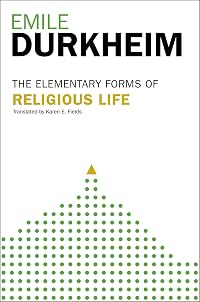
The Elementary Forms of Religious Life
by Émile Durkheim
On This Page
Description
In this 1912 classic, a founder of modern sociology seeks the enduring source of human social identity. Émile Durkheim presents a remarkably accessible examination of animism, naturism, totemism, myth, and ritual. His intriguing views and ultimate conclusion—that the source of religion and morality lies in collective consciousness, rather than in individual minds—remains a topic of debate among sociologists, anthropologists, ethnographers, philosophers, and theologians. Durkheim edited show more L'Année Sociologique, the first journal of sociology, and was instrumental in establishing the field as a social science. With The Elementary Forms of the Religious Life, he explores totemism among Australia's Aborigines, offering the opportunity "to yield an understanding of the religious nature of man, by showing us an essential and permanent aspect of humanity." Durkheim's study focuses on the need and capacity of humans to relate to one another socially, with religion as the core of the moral universe. An excellent introduction to the influential sociologist's ideas, this book continues to speak to new generations about the intriguing origin and nature of religion and society. -- Publisher show lessTags
Recommendations









Member Reviews
http://nwhyte.livejournal.com/1983853.html
I should stop readng the classic works on religion and culture, because I always end up disappointed. In this classic anthropological analysis from the first years of the twentieth century, Durkheim generalises from studies of the totem cults of Australia to conclude that pretty much all intellectual concepts, including scientific theories as well as notions of God and religion, can be examined as socially constructed phenomena. While sympathetic to the conclusion (having studied the history and philosophy of science in a past life) I was not terribly excited by the journey Durkheim takes to get there. His methodology straddles what today would be fairly clearly demarcated territory between show more philosophy and anthropology, and I found this mixture of concepts frustrating. More specifically, the Australian worshippers (particularly the women) are never given their own voice; we hear only what white anthropologists think of them. A pioneering work, perhaps, but I rather hope that things have moved on in the last century. show less
I should stop readng the classic works on religion and culture, because I always end up disappointed. In this classic anthropological analysis from the first years of the twentieth century, Durkheim generalises from studies of the totem cults of Australia to conclude that pretty much all intellectual concepts, including scientific theories as well as notions of God and religion, can be examined as socially constructed phenomena. While sympathetic to the conclusion (having studied the history and philosophy of science in a past life) I was not terribly excited by the journey Durkheim takes to get there. His methodology straddles what today would be fairly clearly demarcated territory between show more philosophy and anthropology, and I found this mixture of concepts frustrating. More specifically, the Australian worshippers (particularly the women) are never given their own voice; we hear only what white anthropologists think of them. A pioneering work, perhaps, but I rather hope that things have moved on in the last century. show less
Durkheim's ideas about religion seem accurate and useful. I find myself thinking about them quite often, and I read this book months ago. That said, the second half of the book dragged on a bit.
Durkheim argues that philosophy and science originated in religion. Religion is social, meaning the idea at the root of our understanding, like number, space, time, and causation, are understood socially. For example, while one doesn’t need the concept of time to remember one’s past, the idea of one passageway that represents a sequence of events is “rich in social elements” as Durkheim carefully puts it, since it’s the same of everybody. He points to the calendar to backup his point, arguing that it divides time by regular units like show more years and weeks, in accordance to ritual rites, feasts, and public ceremonies.” To be clear, he’s not arguing that the categories are pure social constructions. Rather, social life shines light on the categories and makes them vivid. They were always laws of the objective world, we just notice them due to social life.
In the book’s first section, Durkheim critiques contemporary theories of religion at the time. He dispels notions that religion is of the supernatural or divine. The former fails because “primitives” didn’t see religious beliefs as mysterious or unnatural, but instead as totally simple and normal. “Divinity” assumes spiritual beings with superior powers, but major religions like Buddhism have nothing like this.
Durkheim believes that separating the world into the profane and sacred is one “distinctive trait of religious thought,” the “first criterion of religious belief.” This isn’t necessarily a hierarchical relationship. In one religion, humans throw pebbles at Gods to wake them up, for example. The sacred and profane are primarily characterized by just how different they are. Things like good and bad may seem opposite, but both share the trait of being moral categories. This belief in the sacred and profane leads to religious rites, which he defines as rules of conduct when in presence of the sacred.
Religion is very hostile to magic, and magicians often profane sacred things. He believes the main difference between the two is that religion implies a group, while magic doesn’t bind people together. There’s no church of magic. Hence why the magician’s use of sacred objects is seen as blasphemous.
Durkheim’s definition of religion is “a unified system of beliefs and practices relative to sacred things, that is to say, things set apart and forbidden – beliefs and practices which unite into one single moral community called a Church, all those who adhere to them.”
Durkheim wants to know why humanity splits the world into sacred and profane. He critiques ideas by his contemporaries that the sacred comes from the delusion. Some say that experiencing oneself as double creates the notion of the soul, or that our being overwhelmed by nature leads us to create the idea of the sacred. But nature is regular and everywhere, so it couldn’t have led to this bifurcation. He also argues that dreams wouldn’t necessarily lead to the idea of a double, it could also mean that the body changes during sleep. But your peers seeing you asleep would negate this possibility, which maybe fits into Durkheim’s insistence that sociality is ultimately behind religion.
No, humanity doesn’t get idea of the sacred from dreams or nature, we get it from what he calls totemism. He uses anthropology about Australian tribes which is now over a hundred years old to tease out his ideas. Unfortunately, much of this is predictably racist.
According to this anthropology, a tribe is made up of clans. Each clan considers others kin because they share a name and totem. The totem is usually of animals or plants, but occasionally inanimate objects like the wind or sun. Members of these clans often paint their totem on house ornaments and shields, or imprint them on their flesh. Oftentime this representation isn’t very accurate, only they would know what it is.
What the totem represents is treated as sacred. It’s forbidden to eat, and members of the clan see themselves as part of that species, and therefore also sacred. They have myths and stories which explain why they are related to the totem. This makes totemic religion explicitly not animal worship, since clan members worship themselves too. The totem unifies them.
So, where did this notion of the sacred come from? Durkheim believes it comes from the notion of mana, the first instance of the concept of “force.” In this case, a physical force with a moral character which demands the duty of respect. It’s seen as powerful and carries with it the duty of respect. The totem is a material expression of the clan and how its different than others.
And where do we get this idea of mana? From society. Society is like God, it’s a thing we feel dependent on, that has power over us, which demands our aid. It trumps our individual desire, but also gives us a sense of power and strength in the world, which trumps our desires and inclinations. show less
Durkheim argues that philosophy and science originated in religion. Religion is social, meaning the idea at the root of our understanding, like number, space, time, and causation, are understood socially. For example, while one doesn’t need the concept of time to remember one’s past, the idea of one passageway that represents a sequence of events is “rich in social elements” as Durkheim carefully puts it, since it’s the same of everybody. He points to the calendar to backup his point, arguing that it divides time by regular units like show more years and weeks, in accordance to ritual rites, feasts, and public ceremonies.” To be clear, he’s not arguing that the categories are pure social constructions. Rather, social life shines light on the categories and makes them vivid. They were always laws of the objective world, we just notice them due to social life.
In the book’s first section, Durkheim critiques contemporary theories of religion at the time. He dispels notions that religion is of the supernatural or divine. The former fails because “primitives” didn’t see religious beliefs as mysterious or unnatural, but instead as totally simple and normal. “Divinity” assumes spiritual beings with superior powers, but major religions like Buddhism have nothing like this.
Durkheim believes that separating the world into the profane and sacred is one “distinctive trait of religious thought,” the “first criterion of religious belief.” This isn’t necessarily a hierarchical relationship. In one religion, humans throw pebbles at Gods to wake them up, for example. The sacred and profane are primarily characterized by just how different they are. Things like good and bad may seem opposite, but both share the trait of being moral categories. This belief in the sacred and profane leads to religious rites, which he defines as rules of conduct when in presence of the sacred.
Religion is very hostile to magic, and magicians often profane sacred things. He believes the main difference between the two is that religion implies a group, while magic doesn’t bind people together. There’s no church of magic. Hence why the magician’s use of sacred objects is seen as blasphemous.
Durkheim’s definition of religion is “a unified system of beliefs and practices relative to sacred things, that is to say, things set apart and forbidden – beliefs and practices which unite into one single moral community called a Church, all those who adhere to them.”
Durkheim wants to know why humanity splits the world into sacred and profane. He critiques ideas by his contemporaries that the sacred comes from the delusion. Some say that experiencing oneself as double creates the notion of the soul, or that our being overwhelmed by nature leads us to create the idea of the sacred. But nature is regular and everywhere, so it couldn’t have led to this bifurcation. He also argues that dreams wouldn’t necessarily lead to the idea of a double, it could also mean that the body changes during sleep. But your peers seeing you asleep would negate this possibility, which maybe fits into Durkheim’s insistence that sociality is ultimately behind religion.
No, humanity doesn’t get idea of the sacred from dreams or nature, we get it from what he calls totemism. He uses anthropology about Australian tribes which is now over a hundred years old to tease out his ideas. Unfortunately, much of this is predictably racist.
According to this anthropology, a tribe is made up of clans. Each clan considers others kin because they share a name and totem. The totem is usually of animals or plants, but occasionally inanimate objects like the wind or sun. Members of these clans often paint their totem on house ornaments and shields, or imprint them on their flesh. Oftentime this representation isn’t very accurate, only they would know what it is.
What the totem represents is treated as sacred. It’s forbidden to eat, and members of the clan see themselves as part of that species, and therefore also sacred. They have myths and stories which explain why they are related to the totem. This makes totemic religion explicitly not animal worship, since clan members worship themselves too. The totem unifies them.
So, where did this notion of the sacred come from? Durkheim believes it comes from the notion of mana, the first instance of the concept of “force.” In this case, a physical force with a moral character which demands the duty of respect. It’s seen as powerful and carries with it the duty of respect. The totem is a material expression of the clan and how its different than others.
And where do we get this idea of mana? From society. Society is like God, it’s a thing we feel dependent on, that has power over us, which demands our aid. It trumps our individual desire, but also gives us a sense of power and strength in the world, which trumps our desires and inclinations. show less
This is one of the most important works from the key founder of the formal study of society. Durkheim's work also influenced psychology and particularly Jung. Durkheim is an impressive observer and thinker and this was an enormous work in its day and still remains influential.
Yo creo que la idea de base es muy sugerente: el origen de las religiones es la sociedad. De ella emana, en realidad, la misma noción de "lo sagrado", contrapuesta a "lo profano", y también el concepto de rito. Cuando los creyentes están convencidos de separar unos tiempos y unos espacios para dedicarlos a la divinidad (con independencia de cuál sea el concepto de divinidad que se tenga, incluso los menos personalistas posibles), en realidad están sacralizando esos tiempos y espacios en favor de la propia sociedad, para reforzar sus vínculos comunes. Para demostrar esto, Durkheim recurre al análisis de los datos etnográficos relativos a las tribus aborígenes australianas, que él considera las más primitivas existentes.
Como show more digo, la idea de la influencia de la sociedad en la conformación de las religiones me parece muy sugestiva. Creo que es cierto que las expresiones religiosas están profundamente influidas por la sociedad de la que surgen, incluyendo no solo los aspectos externos sino incluso el sistema de creencias o parte de él. Pero me parece que los fenómenos que él describe tienen otra posible interpretación: que realmente exista un Dios más o menos personal. Si donde Durkheim dice "sociedad" nosotros decimos "Dios" nos sale, en algunos párrafos, un texto de ortodoxa teología. El autor parece dar por sentado que Dios no existe, y de ahí su explicación a fenómenos que, de otro modo, serían inexplicables y absurdos pero que, repito, resultan mucho más razonables si reconocemos la existencia de un Ser más o menos misterioso y trascendente que, de algún modo, se relaciona con los humanos. Cierto que no hay ninguna prueba positiva de la existencia de ese Ser, pero a estas alturas uno hace mucho tiempo que dejó de creer en el positivismo y en el cientifismo.
Por lo demás, el material que Durkheim escoge para apoyar sus ideas ha envejecido mucho. Desde luego, las observaciones etnográficas de finales del siglo XIX dejan mucho que desear desde nuestra perspectiva actual, como las nuestras, sin duda, lo harán dentro de un siglo. Lo peor, en mi opinión, es que Durkheim utiliza exclusivamente las prácticas religiosas de unos grupos muy concretos (los aborígenes del centro de Australia, con algunas excursiones a los indios norteamericanos) y las compara, inmediatamente y sin rubor, con las del cristianismo católico de su tiempo. Alguna vez, muy pocas, alude al judaísmo bíblico o a alguna práctica hindú, y nunca (nunca) al Islam ni a las religiones orientales. Tampoco parece querer asumir que todas las religiones evolucionan, y que no es lo mismo el cristiano de su época que el del siglo IV, o el judaísmo tal como se describe en la Biblia y el actual. No sé, pues, si un análisis más amplio arrojaría el mismo resultado de que solo la sustitución de Dios por la sociedad explica las prácticas religiosas en general. A mí me parece que no.
Pero, como digo, esto no obsta para que me parezca un muy gran libro. Una cosa es que no me haya convencido de sus tesis básicas y otra que no me haya hecho reflexionar en muchos momentos. Si le tengo que poner un pero, es demasiado largo para mi gusto. Uno, que ya va flojeando. show less
Como show more digo, la idea de la influencia de la sociedad en la conformación de las religiones me parece muy sugestiva. Creo que es cierto que las expresiones religiosas están profundamente influidas por la sociedad de la que surgen, incluyendo no solo los aspectos externos sino incluso el sistema de creencias o parte de él. Pero me parece que los fenómenos que él describe tienen otra posible interpretación: que realmente exista un Dios más o menos personal. Si donde Durkheim dice "sociedad" nosotros decimos "Dios" nos sale, en algunos párrafos, un texto de ortodoxa teología. El autor parece dar por sentado que Dios no existe, y de ahí su explicación a fenómenos que, de otro modo, serían inexplicables y absurdos pero que, repito, resultan mucho más razonables si reconocemos la existencia de un Ser más o menos misterioso y trascendente que, de algún modo, se relaciona con los humanos. Cierto que no hay ninguna prueba positiva de la existencia de ese Ser, pero a estas alturas uno hace mucho tiempo que dejó de creer en el positivismo y en el cientifismo.
Por lo demás, el material que Durkheim escoge para apoyar sus ideas ha envejecido mucho. Desde luego, las observaciones etnográficas de finales del siglo XIX dejan mucho que desear desde nuestra perspectiva actual, como las nuestras, sin duda, lo harán dentro de un siglo. Lo peor, en mi opinión, es que Durkheim utiliza exclusivamente las prácticas religiosas de unos grupos muy concretos (los aborígenes del centro de Australia, con algunas excursiones a los indios norteamericanos) y las compara, inmediatamente y sin rubor, con las del cristianismo católico de su tiempo. Alguna vez, muy pocas, alude al judaísmo bíblico o a alguna práctica hindú, y nunca (nunca) al Islam ni a las religiones orientales. Tampoco parece querer asumir que todas las religiones evolucionan, y que no es lo mismo el cristiano de su época que el del siglo IV, o el judaísmo tal como se describe en la Biblia y el actual. No sé, pues, si un análisis más amplio arrojaría el mismo resultado de que solo la sustitución de Dios por la sociedad explica las prácticas religiosas en general. A mí me parece que no.
Pero, como digo, esto no obsta para que me parezca un muy gran libro. Una cosa es que no me haya convencido de sus tesis básicas y otra que no me haya hecho reflexionar en muchos momentos. Si le tengo que poner un pero, es demasiado largo para mi gusto. Uno, que ya va flojeando. show less
Aug 23, 2023Spanish
In The Elementary Forms of Religious Life (1912), Emile Durkheim sets himself the task of discovering the enduring source of human social identity. He investigates what he considered to be the simplest form of documented religion - totemism among the Aborigines of Australia. For Durkheim, studying Aboriginal religion was a way "to yield an understanding of the religious nature of man, by showing us an essential and permanent aspect of humanity." The need and capacity of men and women to relate to one another socially lies at the heart of Durkheim's exploration, in which religion embodies the beliefs that shape our moral universe.
The Elementary Forms has been applauded and debated by sociologists, anthropologists, ethnographers, show more philosophers, and theologians, and continues to speak to new generations about the intriguing origin and nature of religion and society. This new, lightly abridged edition provides an excellent introduction to Durkheim's ideas show less
The Elementary Forms has been applauded and debated by sociologists, anthropologists, ethnographers, show more philosophers, and theologians, and continues to speak to new generations about the intriguing origin and nature of religion and society. This new, lightly abridged edition provides an excellent introduction to Durkheim's ideas show less
Mar 25, 2017Dutch
> Séguy Jean. Durkheim (Emile). — Les Formes élémentaires de la vie religieuse. Le système totémique en Australie.
In: Archives de sciences sociales des religions, n°78, 1992. p. 270. … ; (en ligne),
URL : https://www.persee.fr/doc/assr_0335-5985_1992_num_78_1_1533_t1_0270_0000_3
> Jullian Camille. Émile Durkheim, Les Formes élémentaires de la vie religieuse (le système totémique en Australie), 1912.
In: Revue des Études Anciennes. Tome 16, 1914, n°2. pp. 244-250. … ; (en ligne),
URL : https://www.persee.fr/doc/rea_0035-2004_1914_num_16_2_1822_t1_0244_0000_2
In: Archives de sciences sociales des religions, n°78, 1992. p. 270. … ; (en ligne),
URL : https://www.persee.fr/doc/assr_0335-5985_1992_num_78_1_1533_t1_0270_0000_3
> Jullian Camille. Émile Durkheim, Les Formes élémentaires de la vie religieuse (le système totémique en Australie), 1912.
In: Revue des Études Anciennes. Tome 16, 1914, n°2. pp. 244-250. … ; (en ligne),
URL : https://www.persee.fr/doc/rea_0035-2004_1914_num_16_2_1822_t1_0244_0000_2
Feb 18, 2019 (Edited)French
Ratings
Members
- Recently Added By
Lists

Books I Wrote Essays on
34 works; 1 member

Books Read in College
80 works; 5 members

Works cited in The New Science of the Enchanted Universe by Marshall Sahlin
141 works; 1 member

Books in the Bibliography of The Dawn of Everything by Graeber & Wengrow
478 works; 2 members
Author Information

159+ Works 6,469 Members
Emile Durkheim was born in Epinal, France on April 15, 1858. He received a baccalauréats in Letters in 1874 and Sciences in 1875 from the Collège d'Epinal. He became a professor of sociology at the Sorbonne, where he founded and edited the journal L'Annee Sociologique. He is renowned for the breadth of his scholarship; for his studies of show more primitive religion; for creating the concept of anomie (normlessness); for his study of the division of labor; and for his insistence that sociologists must use sociological (e.g., rates of behavior) rather than psychological data. He published several works including His Suicide in 1897. His notion of community, his view that religion forms the basis of all societies, had a profound impact on the course of community studies. He died on November 15, 1917 at the age of 59. (Bowker Author Biography) show less
Some Editions
Awards and Honors
Series
Belongs to Publisher Series
Common Knowledge
- Canonical title
- The Elementary Forms of Religious Life
- Original title
- Les formes élémentaires de la vie religieuse : Le système totémique en Australie
- Original publication date
- 1912
Classifications
- Genres
- Sociology, Religion & Spirituality, Nonfiction, General Nonfiction, Philosophy
- DDC/MDS
- 306.6 — Society, government, & culture Social sciences, sociology & anthropology Social Behavior - Dating, Marriage, Divorce Religious institutions
- LCC
- GN470 .D813 — Geography, Anthropology and Recreation Anthropology Anthropology Ethnology. Social and cultural anthropology Cultural traits, customs, and institutions Intellectual life
- BISAC
Statistics
- Members
- 1,755
- Popularity
- 12,581
- Reviews
- 6
- Rating
- (3.75)
- Languages
- 9 — English, Finnish, French, German, Hungarian, Italian, Portuguese, Croatian, Spanish
- Media
- Paper, Audiobook, Ebook
- ISBNs
- 62
- ASINs
- 26