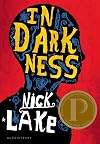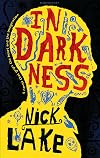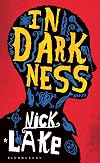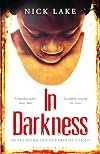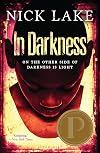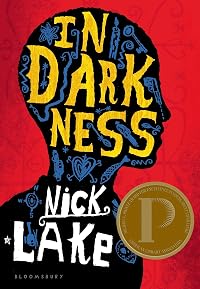
In Darkness
by Nick Lake
On This Page
Description
In the aftermath of the Haitian earthquake, fifteen-year-old Shorty, a poor gang member from the slums of Site Soleil, is trapped in the rubble of a ruined hospital, and as he grows weaker he has visions and memories of his life of violence, his lost twin sister, and of Toussaint L'Ouverture, who liberated Haiti from French rule in the 1804.Tags
Recommendations








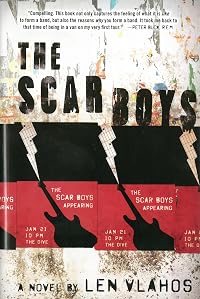
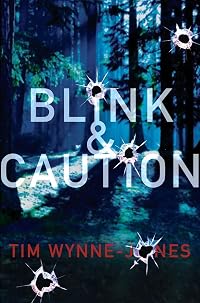
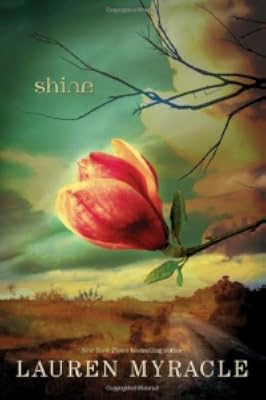
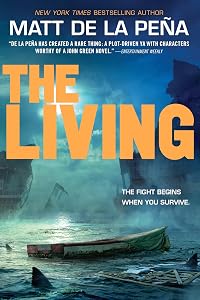

Member Recommendations
Member Reviews
In Darkness is an ambitious and powerful novel of Haiti's troubled past and present. Lake alternates the life story of fifteen year old Shorty, trapped under rubble after the 2010 earthquake, with the history of Touissaint L’Ouverture, a man who led the country in a revolution. Lake explores the darkness within, both characters whose lives have strong parallels despite the pair being separated by centuries.
I was immediately drawn in by the spectacularly moving opening of the story. Shorty, is buried under tons of rubble when the hospital collapses in an earthquake. In the pitch black, surrounded by the dead, desperately thirsty Shorty recalls the poverty, violence and deprivation of his childhood in the slums of Haiti. Delving into show more his memories is a painful and confronting experience, irrevocably altered by witnessing the brutal slaying of his father, and the loss of his twin sister, Shorty's brief life has been unimaginably hard. In the encampment, which the author assures us is an accurate depiction of the environment, death is a constant presence and now facing his own mortality entombed by cement and darkness Shorty has the time to reflect on his circumstance and the choices he has made.
As Shorty drifts in darkness, his plea to the voodoo guides results in his essence being entertwined with that of Touissaint L’Ouverture, a creole salve who led a rebellion in the late 1700's. I have to admit that I did not find this narrative as compelling as Shorty's. It is a crucial element of the story but it lacks the immediacy of Shorty's plight. The connections between Shorty and Touissaint slowly become more tangible with comparisons between the social, cultural, and political of Haiti in both the past and the present. While Shorty has become mired in the disadvantages of his life, Touissaint's story shows how one can overcome, and it is his story that lends Shorty strength even as he is convinced he will die amongst the wreckage.
A powerful and moving story there is a disturbing amount of truth in this fiction. In Darkness is a startlingly original novel but it is not an easy read. It is an intense, brutally honest story that reveals a country and people caught in a vicious cycle of prejudice and poverty. show less
I was immediately drawn in by the spectacularly moving opening of the story. Shorty, is buried under tons of rubble when the hospital collapses in an earthquake. In the pitch black, surrounded by the dead, desperately thirsty Shorty recalls the poverty, violence and deprivation of his childhood in the slums of Haiti. Delving into show more his memories is a painful and confronting experience, irrevocably altered by witnessing the brutal slaying of his father, and the loss of his twin sister, Shorty's brief life has been unimaginably hard. In the encampment, which the author assures us is an accurate depiction of the environment, death is a constant presence and now facing his own mortality entombed by cement and darkness Shorty has the time to reflect on his circumstance and the choices he has made.
As Shorty drifts in darkness, his plea to the voodoo guides results in his essence being entertwined with that of Touissaint L’Ouverture, a creole salve who led a rebellion in the late 1700's. I have to admit that I did not find this narrative as compelling as Shorty's. It is a crucial element of the story but it lacks the immediacy of Shorty's plight. The connections between Shorty and Touissaint slowly become more tangible with comparisons between the social, cultural, and political of Haiti in both the past and the present. While Shorty has become mired in the disadvantages of his life, Touissaint's story shows how one can overcome, and it is his story that lends Shorty strength even as he is convinced he will die amongst the wreckage.
A powerful and moving story there is a disturbing amount of truth in this fiction. In Darkness is a startlingly original novel but it is not an easy read. It is an intense, brutally honest story that reveals a country and people caught in a vicious cycle of prejudice and poverty. show less
Few books stick with me like this one did -- not surprising considering it is the 2013 Printz winner.
Fifteen-year-old Shorty, begins his tale immediately following the 2010 earthquake that devastated Haiti. Buried in the rubble of the hospital, recuperating from wounds he suffered in the ubiquitous gang violence that is Haiti, Shorty recounts the story of how he got there. In the darkness of his living tomb, he begins to hallucinate, and in his ravings, he begins to remember events in someone else's life: that of Toussaint L'Overture, the legendary liberator of Haiti from French domination in the 18th century.
In chapters that alternate between "Then" and "Now", Lake recounts the lives of both Shorty and Toussaint moving between the show more Republic's hopeful birth in a slave revolt, to the tragedy that is modern Haiti. Lake vividly evokes the horror of events on the island by pulling no punches, laying bare the raw facts of the Toussaint's life in slavery and the slave revolt, grounding the story in rich sensory details: the sticky heat, the smell of blood, the sound a machete makes when it severs a limb. The reader cannot look away, as he reveals the face of a dying baby, the effect of bullets on the human body, and the mystery of Voodoo. In addition, Lake explores the precariousness of life, and the power of love.
This is not a book for the faint of heart, but although the violence, despair and pain spring genuinely from the story's roots Lake offers hope, as well; hope grounded in the love of a mother for her son, a brother for his sister, friends for each other, and a leader for his nation. This book will leave you wrung out, but thankful for the truths it reveals. show less
Fifteen-year-old Shorty, begins his tale immediately following the 2010 earthquake that devastated Haiti. Buried in the rubble of the hospital, recuperating from wounds he suffered in the ubiquitous gang violence that is Haiti, Shorty recounts the story of how he got there. In the darkness of his living tomb, he begins to hallucinate, and in his ravings, he begins to remember events in someone else's life: that of Toussaint L'Overture, the legendary liberator of Haiti from French domination in the 18th century.
In chapters that alternate between "Then" and "Now", Lake recounts the lives of both Shorty and Toussaint moving between the show more Republic's hopeful birth in a slave revolt, to the tragedy that is modern Haiti. Lake vividly evokes the horror of events on the island by pulling no punches, laying bare the raw facts of the Toussaint's life in slavery and the slave revolt, grounding the story in rich sensory details: the sticky heat, the smell of blood, the sound a machete makes when it severs a limb. The reader cannot look away, as he reveals the face of a dying baby, the effect of bullets on the human body, and the mystery of Voodoo. In addition, Lake explores the precariousness of life, and the power of love.
This is not a book for the faint of heart, but although the violence, despair and pain spring genuinely from the story's roots Lake offers hope, as well; hope grounded in the love of a mother for her son, a brother for his sister, friends for each other, and a leader for his nation. This book will leave you wrung out, but thankful for the truths it reveals. show less
There are some books that, let's be honest, are difficult to read, and are meant to be. This is one of them. Any single moment of Haiti's history would make for a painful read; but here we're confronted with not only the pain of yesterday (the aftermath of the 2010 earthquake), but the pain of the nation's first liberation movement, two hundred years ago. In a brilliant narrative fusion, a young gangster who has done his share of killing connects, over the span of centuries, with Haiti's founding father, Toussaint L'Ouverture. Oppression is an ugly word, in whichever century it's wielded, and here one sees the fire that ignited the White American rebels of the 18th century and the Black American rebels of the 20th. I would wish everyone show more to read this but the strong language should probably restrict it to those over 14. show less
I just finished this book (about thirty minutes ago) and as heart-wrenching and dark as it was at times, it addressed some really important topics that, admittedly, aren't too easy to translate into YA historical fiction.
It's written in two interwoven tales- one taking place in the 1700s revolving around Toussaint l'Overture, who freed his country from slavery, and one in present day, telling the story of a boy named Shorty, both taking place in Haiti. One amazing thing about it was that Haiti wasn't only a backdrop, but an intriguing subject central to the development of both those characters, if that makes any sense.
I picked this up not even knowing that it was (partially, at least) historical fiction, which was probably for the show more better- I haven't read one good historical fiction novel yet, so it's at the bottom of my list of genres to try. But I remember learning about Toussaint l'Overture in my eighth grade history class, and the bloody slave revolution from France in Haiti. And I must say, I was very pleasantly surprised at how captivated I was by the historical fiction portion- Toussaint's story is quite interesting, as is the way Lake portrays his peaceful motives and love of his country and all its people.
Shorty's section of the book was, while I've never been to Haiti, a strikingly realistic portrait of modern-day pre- and post-earthquake, making it inevitably hard to read at times. In a world where people eat mud for nourishment and cannot even leave their slums to see the ocean, Shorty navigates through life without trying to take sides in the violent gang war raging in the Site, but he knows he has to join to save his sister.
As a reader, and an American, and somebody who, by all the meanings of the word, has had a comfortable upbringing with a warm little house and an education- it was unimaginable to me how people could be so poor, so desperate, so impoverished, and how others won't even let them out to go to the hospital; where citizens of the slum look up to gangsters and drug lords because they pay for schools and food and crude medical attention when no one else will. All of this was portrayed in all of its disturbing and brutal truths, by the author. Nick Lake also conveys, in the author's note- which anybody who read the book should read- just how much of his story is true. While Shorty was a fictionalized character, his surroundings are very real, as Lake tried to show the gang war and the poverty as realistically as possible.
In Darkness was overall very well written, and while it doesn't quite win my coveted five-star rating, it's really, really close. It's sad, because I know most people my age (young adults) are not going to pick up this book, mostly because they are scared of truly realizing the horrors of starvation and death outside of their cozy little homes. And because they are daunted by a story that, at times, is dark and sad and painfully real. But I still think it's an important and powerful read, though, for adults as well. 4.5 stars, for an intriguing novel that made me think and- for once- made me actually like historical fiction! show less
It's written in two interwoven tales- one taking place in the 1700s revolving around Toussaint l'Overture, who freed his country from slavery, and one in present day, telling the story of a boy named Shorty, both taking place in Haiti. One amazing thing about it was that Haiti wasn't only a backdrop, but an intriguing subject central to the development of both those characters, if that makes any sense.
I picked this up not even knowing that it was (partially, at least) historical fiction, which was probably for the show more better- I haven't read one good historical fiction novel yet, so it's at the bottom of my list of genres to try. But I remember learning about Toussaint l'Overture in my eighth grade history class, and the bloody slave revolution from France in Haiti. And I must say, I was very pleasantly surprised at how captivated I was by the historical fiction portion- Toussaint's story is quite interesting, as is the way Lake portrays his peaceful motives and love of his country and all its people.
Shorty's section of the book was, while I've never been to Haiti, a strikingly realistic portrait of modern-day pre- and post-earthquake, making it inevitably hard to read at times. In a world where people eat mud for nourishment and cannot even leave their slums to see the ocean, Shorty navigates through life without trying to take sides in the violent gang war raging in the Site, but he knows he has to join to save his sister.
As a reader, and an American, and somebody who, by all the meanings of the word, has had a comfortable upbringing with a warm little house and an education- it was unimaginable to me how people could be so poor, so desperate, so impoverished, and how others won't even let them out to go to the hospital; where citizens of the slum look up to gangsters and drug lords because they pay for schools and food and crude medical attention when no one else will. All of this was portrayed in all of its disturbing and brutal truths, by the author. Nick Lake also conveys, in the author's note- which anybody who read the book should read- just how much of his story is true. While Shorty was a fictionalized character, his surroundings are very real, as Lake tried to show the gang war and the poverty as realistically as possible.
In Darkness was overall very well written, and while it doesn't quite win my coveted five-star rating, it's really, really close. It's sad, because I know most people my age (young adults) are not going to pick up this book, mostly because they are scared of truly realizing the horrors of starvation and death outside of their cozy little homes. And because they are daunted by a story that, at times, is dark and sad and painfully real. But I still think it's an important and powerful read, though, for adults as well. 4.5 stars, for an intriguing novel that made me think and- for once- made me actually like historical fiction! show less
It's easy to see why this won the Printz award, it's an astounding work of young adult fiction!! It's a hard, depressing read but fret not for it is worth all the angst.
The story opens in darkness and then bounces back in forth between modern day Haiti (immediately following the destructive earthquake from a few years ago) and Haiti fighting for its freedom. The narrators are "Shorty", a fifteen year old gangster from one of the most dangerous slums in the world and Toussaint L'Ouverture, the former slave who brought freedom to Haiti.
Shorty is trapped in a collapsed hospital for days surrounded by dead bodies in complete darkness and thinks he is starting to lose his mind when he is able to recall/dream/hallucinate of his life as show more legendary Toussaint L'Ouverture.
A teenager and black slave seperated by centuries are bound together by Haiti by darkness, adversity, and despair. Together they are able to lift themselves out of the darkness by telling their story. They are completely seperate individuals, yet they are one as well.
This book is seriously fantastical. The prose is amazing and the author does a wonderful job of bringing Haitian hardships to life through slang, song, and storytelling. A definite must read!!! show less
The story opens in darkness and then bounces back in forth between modern day Haiti (immediately following the destructive earthquake from a few years ago) and Haiti fighting for its freedom. The narrators are "Shorty", a fifteen year old gangster from one of the most dangerous slums in the world and Toussaint L'Ouverture, the former slave who brought freedom to Haiti.
Shorty is trapped in a collapsed hospital for days surrounded by dead bodies in complete darkness and thinks he is starting to lose his mind when he is able to recall/dream/hallucinate of his life as show more legendary Toussaint L'Ouverture.
A teenager and black slave seperated by centuries are bound together by Haiti by darkness, adversity, and despair. Together they are able to lift themselves out of the darkness by telling their story. They are completely seperate individuals, yet they are one as well.
This book is seriously fantastical. The prose is amazing and the author does a wonderful job of bringing Haitian hardships to life through slang, song, and storytelling. A definite must read!!! show less
In Darkness by Nick Lake packs a lot of story into it’s pages. As a young boy lies buried in the rubble of a hospital after the 2010 catastrophic earthquake in Haiti, his dreams, memories and thoughts form the dialogue that shapes this book. We learn of Haiti’s history as a nation that was born of a slave revolution to it’s position today as one of the world’s poorest countries. The main character is Shorty, who was in hospital recovering from a gunshot wound that occurred through gang warfare.
Now he is lying in darkness, suffering from extreme thirst and heat, surrounded by dead bodies and rats, waiting to either be rescued or to die. As time passes he swings between hallucinations of his hero, Toussaint L’Ouverture, the show more rebel leader of the 18th century slave revolution and his own memories of his violent life in the poorest of Haiti’s slums. The author relies on Haitian religion and mythology to justify the connection between the present and the past but this format didn’t always work for me. I found myself confused as the characters switched identities abruptly.
I think my annoyance with the dual narrative in this book was because I was totally captivated by Shorty’s own story. It’s dark, gritty and heartbreaking. Shorty has not always made the right choices in the past and he’s done some terrible things, but the story rang true. In Darkness is full of violence as it describes the bleak life of a slum kid, but this emotionally powerful story is full of complex and realistic characters that pull you into the story and the author was wise enough to end the book on a note of hope which was badly needed by the reader by the end of this disturbing story. show less
Now he is lying in darkness, suffering from extreme thirst and heat, surrounded by dead bodies and rats, waiting to either be rescued or to die. As time passes he swings between hallucinations of his hero, Toussaint L’Ouverture, the show more rebel leader of the 18th century slave revolution and his own memories of his violent life in the poorest of Haiti’s slums. The author relies on Haitian religion and mythology to justify the connection between the present and the past but this format didn’t always work for me. I found myself confused as the characters switched identities abruptly.
I think my annoyance with the dual narrative in this book was because I was totally captivated by Shorty’s own story. It’s dark, gritty and heartbreaking. Shorty has not always made the right choices in the past and he’s done some terrible things, but the story rang true. In Darkness is full of violence as it describes the bleak life of a slum kid, but this emotionally powerful story is full of complex and realistic characters that pull you into the story and the author was wise enough to end the book on a note of hope which was badly needed by the reader by the end of this disturbing story. show less
"In darkness I count my blessings like Manman taught me. One: I am alive. Two: there is no two."
After the Haitian earthquake of 2004, teenage 'Shorty' is trapped beneath the rubble of a hospital. There for a shooting wound, Shorty is now thirsty, hungry, scared, and alone in the darkness. Raised in the slum of Site Soleil Shorty has seen more violence in his short life than most of us will ever see. Drawn to the gangsters that rule his are, he has also become a part of it.
He has seen his father killed and his twin sister taken away. A twin sister he longs to find again. A twin sister who has the other half of his soul, someone he is linked with forever.
His long-lost twin is not the only one Shorty is linked with, though. He also has a show more link with Toussaint L'Ouverture. Two centuries ago, Toussaint led a slave rebellion to get the French out of Haiti.
As Shorty grows weaker and weaker in the darkness her relives his life, leading up to the bullet wound that brought him to the hospital. Toussaint's life and rebellion are also seen - as is what connects the two.
Can either of the two, living in Haiti, hundreds of years apart, ever be free?
I will say right away, that In Darkness is going to be a hard book for me to review. Something about it just did not engage me. The story is incredibly compelling. The way that the 2004 earthquake is used as a sort of catalyst for readers learning Shorty's story (or his telling it) is really fantastic - and perfect, too because it's not only something that did happen and was an overwhelming event but given the characters in the book, I can't think of another time (or reason) that any of them would sit down and reflect on their life.
I don't know why either I didn't connect with the book or it didn't connect with me. How the two stories were told (Toussaint's and Shorty's) through Then and Nows was very well done. They seemed to fade into each other well, without seeming jarring or like one was stopping or starting too suddenly.
In Darkness does let readers in on a part of Haiti - and I would say life in general - that is too seldom addressed both in fiction and nonfiction. Through Shorty's recollections and small mentions of his life in the Site, we see just how little they did/do have. And one can only imagine how much of that is likely gone now after the earthquake (and cholera). Nick Lake doesn't beat readers over the head with the hardships of his characters - fictional but from a real place - but sometimes its the subtlety that makes the most impact.
I would say that the last twenty of so pages did resonate with me. I did have more of a connection with them than with the rest of the book. It is a very strong ending that really pulls everything from the rest of the book together incredibly well.
I just could not get into this book, could not connect with it (or, therefore, the characters) though. (I may try to reread it sometime and see if we get on better then.)
Thank you to Bloomsbury for my NetGalley copy of the novel show less
After the Haitian earthquake of 2004, teenage 'Shorty' is trapped beneath the rubble of a hospital. There for a shooting wound, Shorty is now thirsty, hungry, scared, and alone in the darkness. Raised in the slum of Site Soleil Shorty has seen more violence in his short life than most of us will ever see. Drawn to the gangsters that rule his are, he has also become a part of it.
He has seen his father killed and his twin sister taken away. A twin sister he longs to find again. A twin sister who has the other half of his soul, someone he is linked with forever.
His long-lost twin is not the only one Shorty is linked with, though. He also has a show more link with Toussaint L'Ouverture. Two centuries ago, Toussaint led a slave rebellion to get the French out of Haiti.
As Shorty grows weaker and weaker in the darkness her relives his life, leading up to the bullet wound that brought him to the hospital. Toussaint's life and rebellion are also seen - as is what connects the two.
Can either of the two, living in Haiti, hundreds of years apart, ever be free?
I will say right away, that In Darkness is going to be a hard book for me to review. Something about it just did not engage me. The story is incredibly compelling. The way that the 2004 earthquake is used as a sort of catalyst for readers learning Shorty's story (or his telling it) is really fantastic - and perfect, too because it's not only something that did happen and was an overwhelming event but given the characters in the book, I can't think of another time (or reason) that any of them would sit down and reflect on their life.
I don't know why either I didn't connect with the book or it didn't connect with me. How the two stories were told (Toussaint's and Shorty's) through Then and Nows was very well done. They seemed to fade into each other well, without seeming jarring or like one was stopping or starting too suddenly.
In Darkness does let readers in on a part of Haiti - and I would say life in general - that is too seldom addressed both in fiction and nonfiction. Through Shorty's recollections and small mentions of his life in the Site, we see just how little they did/do have. And one can only imagine how much of that is likely gone now after the earthquake (and cholera). Nick Lake doesn't beat readers over the head with the hardships of his characters - fictional but from a real place - but sometimes its the subtlety that makes the most impact.
I would say that the last twenty of so pages did resonate with me. I did have more of a connection with them than with the rest of the book. It is a very strong ending that really pulls everything from the rest of the book together incredibly well.
I just could not get into this book, could not connect with it (or, therefore, the characters) though. (I may try to reread it sometime and see if we get on better then.)
Thank you to Bloomsbury for my NetGalley copy of the novel show less
Members
- Recently Added By
Lists

BingoDOG - Books With Natural Disasters: Fiction
39 works; 11 members
Author Information

16 Works 1,941 Members
Awards and Honors
Awards
Distinctions
Common Knowledge
- Important events
- Haiti earthquake (2010 | 1791-1804)
- Epigraph
- At the beginning of the troubles in Haiti, I felt that I was destined to great things. When I received this divine intimation I was four-and-fifty years of age; I could neither read nor write.
Toussaint l'Ouverture i... (show all)n a letter to Napoleon Bonaparte
Though fallen thyself, never to rise again,
Live, and take comfort. Thou has left behind
Powers that will work for thee; air, earth, and skies;
There's not a breathing of the common wind
That will forget thee; tho... (show all)u has great allies;
Thy friends are exultations, agonies,
And love, and man's unconquerable mind.
William Wordsworth, to Toussaint l'Ovuverture - Dedication
- For the people of Site Soley
- First words
- I am the voice in the dark, calling out for your help.
- Quotations
- It was true that there was no need on earth that could not be slaked and satisfied. When you are thirsty there is water. When you are hungry there is food. It is impossible to need a thing without that thing being available... (show all) for the having. A man may want a green horse that flies, but he cannot need one, for there is no such thing.
- Last words
- (Click to show. Warning: May contain spoilers.)I was in darkness, but now I am in light.
Classifications
Statistics
- Members
- 514
- Popularity
- 58,592
- Reviews
- 37
- Rating
- (3.72)
- Languages
- English, French
- Media
- Paper, Audiobook, Ebook
- ISBNs
- 29
- ASINs
- 7