Bullet Park
by John Cheever
On This Page
Description
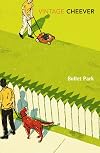
Welcome to Bullet Park, a township in which even the most buttoned-down gentry sometimes manage to terrify themselves simply by looking in the mirror. In these exemplary environs John Cheever traces the fateful intersection of two men: Eliot Nailles, a nice fellow who loves his wife and son to blissful distraction, and Paul Hammer, a bastard named after a common household tool, who, after half a lifetime of drifting, settles down in Bullet Park with one objective -- to murder Nailles's son. show more Here is the lyrical and mordantly funny hymn to the American suburb -- and to all the dubious normalcy it represents -- delivered with unparalleled artistry and assurance. show lessTags
Recommendations













Member Reviews
It’s difficult now to read what was probably a ground-breaking novel when published. The themes seem unoriginal and overdone. While reading this I was put in mind of the movie The Ice Storm with Sigourney Weaver, Kevin Klein, Joan Allen, Christina Ricci, Elijah Wood and Tobey McGuire. The same kind of surface perfection exists, but beneath is corruption, violence, sex and betrayal. Everyone seems to be a deviant, a fuck-up or both. Cheever’s attitude towards sex and alcohol are at once permissive and embarrassed. It was jarring to have the word faggot used so liberally. The whole Tony sickness is just bizarre. An extreme case of ennui? Drugs? Withdrawal? Abuse? Who knows, but it takes the “magic Negro” trope to get him out of show more it. I love dad’s denial though. What did he say it was, mononucleosis? Yeah, that’s good. When Hammer decides to kill him, I almost expected him to go quietly, but no, it took a blow to the head. Nailles gets to be the hero at the end though, which is surprising given the fact that he’s pretty much stoned all the time. Not much in the way of women in this novel, although Nailles’s wife does get a few minutes of pen time. Despite Eliot’s ardent devotion and sexual appetite, she strays and in such a blase way that if he ever became aware, it wouldn’t touch him. Not really. I’m not sure if I’ll read more Cheever, but I’m glad I read this even if I don’t think I’m the right generation to appreciate it. Such angst about external appearances is foreign to my experience. Buried hangups that grind a person into drug and alcohol abuse just seem weird to me. Let your freak flag fly is how we do it now and damn what the neighbors think. They’ve got their own flags. I guess this is a good illustration of that and maybe what started making everyone realize that it’s not just them. show less
Wow. Just wow. I was beginning to feel a touch jaded about my reading - I've read some good books in the last few months, but nothing that felt like the equivalent of an espresso after a night without sleep. Bullet Park is that shot of espresso. It concerns the lives of Hammer and Nailles - I won't say much more, for fear of spoiling the story - but one lives an exceedingly normal life and the other could easily have come from Bret Easton Ellis.
One reason I love this book is that it is relatively short and yet feels like it encapsulates a whole world of people and stories. Side characters appear in a paragraph, something notable happens, and we never hear of them again; main characters experience a traumatic shock to their system, show more usually about sex and the erotic, but the repercussions are not necessarily felt, or if they are, not all at once. This is life, real life - this is how the world works, and the fact that not everything in this book has its resolution is such a wonderful, wonderful feature. I'll be reading this one again, as well as everything else by Cheever that I can get my hands on. show less
One reason I love this book is that it is relatively short and yet feels like it encapsulates a whole world of people and stories. Side characters appear in a paragraph, something notable happens, and we never hear of them again; main characters experience a traumatic shock to their system, show more usually about sex and the erotic, but the repercussions are not necessarily felt, or if they are, not all at once. This is life, real life - this is how the world works, and the fact that not everything in this book has its resolution is such a wonderful, wonderful feature. I'll be reading this one again, as well as everything else by Cheever that I can get my hands on. show less
Kaderleri adlarının esrarengiz bağıyla kesişen iki komşu, Eliot Nailles ile Paul Hammer: çiviler ile çekiç. Nailles, banliyö treniyle şehirdeki işine gidip gelen,ailesine sonsuzca bağlı bir adamdır. Hammer ise evlilik dışı doğmuş, kendi deyimiyle “efkâr”dan mustarip bir yarı delidir. Dünyayı gezdikten sonra, içindeki huzursuzluğu dindirebilmenin tek çaresinin banliyöde birini öldürmek olduğuna karar verir ve bunun için Bullet Park’a yerleşir.
20. yüzyılın en önemli yazarlarından John Cheever, bu çarpıcı romanında, öykülerinin de ana mekânı olan Amerikan banliyösünü teşrih masasına yatırıyor; birbirinin kopyası beyaz evlerde yaşayanların şaibeli “normallik”lerini hicivli show more bir dille irdeliyor. Bullet Park, Amerikan rüyasının trajikomikliğini ifşa eden bir kara mizah romanı.
“Sadece Cheever külliyatı değil, bildiğim tüm romanlar içinde başlı başına bir sınıf oluşturan bir eser.”
– Joseph Heller
“John Cheever büyülü bir gerçekçi ve ışıltılı öykülerinde, Bullet Park’la Falconer gibi eşsiz romanlarında karşılaştığımız üslubu, savaş sonrası Amerikan edebiyatının diğer bütün öncü yazarlarının üslubu gibi renkli ve özgün.”
– Philip Roth show less
20. yüzyılın en önemli yazarlarından John Cheever, bu çarpıcı romanında, öykülerinin de ana mekânı olan Amerikan banliyösünü teşrih masasına yatırıyor; birbirinin kopyası beyaz evlerde yaşayanların şaibeli “normallik”lerini hicivli show more bir dille irdeliyor. Bullet Park, Amerikan rüyasının trajikomikliğini ifşa eden bir kara mizah romanı.
“Sadece Cheever külliyatı değil, bildiğim tüm romanlar içinde başlı başına bir sınıf oluşturan bir eser.”
– Joseph Heller
“John Cheever büyülü bir gerçekçi ve ışıltılı öykülerinde, Bullet Park’la Falconer gibi eşsiz romanlarında karşılaştığımız üslubu, savaş sonrası Amerikan edebiyatının diğer bütün öncü yazarlarının üslubu gibi renkli ve özgün.”
– Philip Roth show less
Bullet Park is quite possibly Cheever's (deeply flawed) masterpiece. No two ways about it, this is a difficult and frustrating novel that defies catagorization and will try the patience of the naive reader expecting a story about suburban bliss. Eliot Nailles and Paul Hammer clash in Edenic Bullet Park, but it is a clash that comes about because of a chance encounter with a magazine in a dentist's office, and the madman's motiveless crime fails because he puts off finishing the job to smoke a cigarette. Cheever seems to be saying that life is a perilous journey that can end at any moment. But redemption and deliverance can also occur at the drop of a hat. The best we can hope for, it seems, is to live with some kind of moral clarity. show more Needless to say, this is essential reading. show less
What can you say about Cheever that hasn't already been said? OK, here goes: if Garrison Keilor were a deeply melancholic alcoholic with repressed homosexual tendencies, he would be John Cheever. It's Americana through a glass darkly. I started the book yesterday and I will finish it today. I can't put it down. I have read most of Cheever, and it's just the thing for this time of year. It's sad, beautiful, elegiac, funny, and true. It chronicles the dissipation of an unsustainable lifestyle. It's set in the suburbs, and it's a glimpse into a time that I remember vaguely - that time when it was still possible to just about remember what it was like to not be completely immersed in consumer culture. Here's a quote:
“The Ridleys were a show more couple who brought to the hallowed institution of holy matrimony a definitely commercial quality as if to marry and conceive, rear and educate children was like the manufacture and merchandising of some useful product produced in competition with other manufacturers. They were not George and Helen Ridley. They were “The Ridleys.” One felt that they might have incorporated and sold shares in their destiny over the counter. “The Ridleys” was painted on the door of their station wagon. There was a sign saying “The Ridleys” at the foot of their driveway. In their house, matchbooks, coasters and napkins were all marked with their name. They presented their handsome children to their guests with the air of salesmen pointing out the merits of a new car in a showroom. The lusts, griefs exaltations and shabby worries of a marriage never seemed to have marred the efficiency of their organization. One felt that they probably had branch offices and a staff of salesmen on the road.”
Of course, this seems like broad caricature, and it is, but it's a set piece in the novel which serves as a springboard to deeper mysteries and profound observations on the ephemeral and fragile nature of what we assume to be our well maintained lives. Cheever links his characters to the cycles of nature, but only to show how far they have diverged from what really matters. They long for meaning, but don't find it. Nowadays we labor under the “accountability” paradigm: No Child Left Behind, Work Harder, Work Longer, Compete Globally. We've take it for normal. We need to read Cheever and see how we got into this mess. The heart has its reasons of which the bean counters know nothing.
.... from a review on downstreamer.... show less
“The Ridleys were a show more couple who brought to the hallowed institution of holy matrimony a definitely commercial quality as if to marry and conceive, rear and educate children was like the manufacture and merchandising of some useful product produced in competition with other manufacturers. They were not George and Helen Ridley. They were “The Ridleys.” One felt that they might have incorporated and sold shares in their destiny over the counter. “The Ridleys” was painted on the door of their station wagon. There was a sign saying “The Ridleys” at the foot of their driveway. In their house, matchbooks, coasters and napkins were all marked with their name. They presented their handsome children to their guests with the air of salesmen pointing out the merits of a new car in a showroom. The lusts, griefs exaltations and shabby worries of a marriage never seemed to have marred the efficiency of their organization. One felt that they probably had branch offices and a staff of salesmen on the road.”
Of course, this seems like broad caricature, and it is, but it's a set piece in the novel which serves as a springboard to deeper mysteries and profound observations on the ephemeral and fragile nature of what we assume to be our well maintained lives. Cheever links his characters to the cycles of nature, but only to show how far they have diverged from what really matters. They long for meaning, but don't find it. Nowadays we labor under the “accountability” paradigm: No Child Left Behind, Work Harder, Work Longer, Compete Globally. We've take it for normal. We need to read Cheever and see how we got into this mess. The heart has its reasons of which the bean counters know nothing.
.... from a review on downstreamer.... show less
"Bullet Park" (1969), John Cheever’s third novel, continues his string of novels portraying life, especially life in the suburbs, in a light that becomes darker and darker with each succeeding book. Unlike his first two novels, both featuring the Wapshot family, "Bullet Park" does not use humor to soften Cheever’s vision or message.
Bullet Park is every bit the typical 1960s northeastern United States suburb. It is populated by white-collar professionals whose wives are left at home each morning when the men head to the train station and a day’s work in the city. It is a place where image is important, where one’s children are expected to succeed, where being seen in church on Sunday mornings is still important, and where show more adultery and drinking too much are common.
Cheever tells his story from two distinct points-of-view, beginning with Eliot Nailles who lives comfortably in Bullet Park with his wife and son. No matter how comfortable they might appear to be, however, no member of the Nailles family is particularly happy, or even content, with life in Bullet Park. Eliot still considers himself a chemist but works on nothing more exciting than the formula for his company’s latest mouthwash; Tony, his son, is reacting badly to poor high school performance; and Nellie, his wife is unhappy about Eliot’s reaction to their son’s problems.
The second part of the novel is narrated by Paul Hammer, a newcomer who moves to Bullet Park with his wife, and feels drawn to the Nailles family by the strange conjunction of their family surnames. This part of the novel deals almost exclusively with Paul Hammer’s memories of his past rather than with any interaction between the two families, making the novel’s thrilling climax an even bigger surprise to the reader than it otherwise might have been.
In "Bullet Park," Cheever has created a surreal neighborhood filled with eccentrics and troubled cynics where anything might just happen - and often does. It is such a biting piece of satire, in fact, that one has to suspect that it reflects a lifestyle that Cheever found to be particularly meaningless.
Rated at: 4.0 show less
Bullet Park is every bit the typical 1960s northeastern United States suburb. It is populated by white-collar professionals whose wives are left at home each morning when the men head to the train station and a day’s work in the city. It is a place where image is important, where one’s children are expected to succeed, where being seen in church on Sunday mornings is still important, and where show more adultery and drinking too much are common.
Cheever tells his story from two distinct points-of-view, beginning with Eliot Nailles who lives comfortably in Bullet Park with his wife and son. No matter how comfortable they might appear to be, however, no member of the Nailles family is particularly happy, or even content, with life in Bullet Park. Eliot still considers himself a chemist but works on nothing more exciting than the formula for his company’s latest mouthwash; Tony, his son, is reacting badly to poor high school performance; and Nellie, his wife is unhappy about Eliot’s reaction to their son’s problems.
The second part of the novel is narrated by Paul Hammer, a newcomer who moves to Bullet Park with his wife, and feels drawn to the Nailles family by the strange conjunction of their family surnames. This part of the novel deals almost exclusively with Paul Hammer’s memories of his past rather than with any interaction between the two families, making the novel’s thrilling climax an even bigger surprise to the reader than it otherwise might have been.
In "Bullet Park," Cheever has created a surreal neighborhood filled with eccentrics and troubled cynics where anything might just happen - and often does. It is such a biting piece of satire, in fact, that one has to suspect that it reflects a lifestyle that Cheever found to be particularly meaningless.
Rated at: 4.0 show less
A serious, hilarious, quirky, disjointed allegory about 1960s upper-middle-class suburbs -- a spiritual story about people who have lost their connection to spirituality. Hermetic tropes include the 'magic Negro' faith-healer who lives over a funeral parlor in the slums, two alchemists with different sorts of laboratories, a fairy tale bastard raised by a rich fairy grandmother, a sacrificial first-born son, the summoning of erotic spirits, a variety of impossible-to-please 'White Goddess' women alternately known as bitches. Characters drink so much hard liquor I came away from the book with a contact buzz -- perhaps contact alcohol poisoning.
The narrator remains a mystery person. In Part I, s/he maintains an anonymous presence while show more telling us, the readers, the history and trials of suburbanite Eliot Nailles. ('Our name used to be de Noailles.' p 20) Part II is a written record made by the outsider, Paul Hammer, (yes, Hammer and Nailles is a purposeful pun) and addressed, apparently, to that same unnamed, unknown narrator. Part III is quick and brief. The narrator shows us the inevitable intersection of the two men's lives -- insider and outsider, conventional and anarchic, self and shadow.
The word 'stranger' recurs throughout the story. In one section, the protagonist Nailles is quoted at length, as he retells a significant evening with his 17 year old only child. Father and son go to an abandoned miniature golf course which serves as a gothic setting for their encounter. The shabby links are a favorite haunt of 'men and boys' on summer evenings. (113) Nailles says:
It was windy, as I say, and there was more thunder and it looked like rain and the light on the course was failing so you really couldn't see the faces of the men who played through. They were high school kids, I guess, slum kids, hoods, whatever, wearing tight pants and trick shirts and hair grease. They had spooky voices, they seemed to pitch them in a way that made them sound spooky, and when one of them was addressing the ball another gave him a big goose and he backed right into it, making groaning noises. It isn't that I dislike boys like that really, it's just that they mystify me, they frighten me because I don't know where they come from and I don't know where they're going and if you don't know anything about people it's like a terrible kind of darkness. I'm not afraid of the dark but there are some kinds of human ignorance that frighten me. When I feel this, I've noticed that if I can look into the face of the stranger and get some clue to the kind of person he is I feel better but, as I say, it was getting dark and you couldn't see the faces of any of these strangers as they played through. (116-7)
More about Cheever at http://bigblogofmarvel.blogspot.com/2... show less
The narrator remains a mystery person. In Part I, s/he maintains an anonymous presence while show more telling us, the readers, the history and trials of suburbanite Eliot Nailles. ('Our name used to be de Noailles.' p 20) Part II is a written record made by the outsider, Paul Hammer, (yes, Hammer and Nailles is a purposeful pun) and addressed, apparently, to that same unnamed, unknown narrator. Part III is quick and brief. The narrator shows us the inevitable intersection of the two men's lives -- insider and outsider, conventional and anarchic, self and shadow.
The word 'stranger' recurs throughout the story. In one section, the protagonist Nailles is quoted at length, as he retells a significant evening with his 17 year old only child. Father and son go to an abandoned miniature golf course which serves as a gothic setting for their encounter. The shabby links are a favorite haunt of 'men and boys' on summer evenings. (113) Nailles says:
It was windy, as I say, and there was more thunder and it looked like rain and the light on the course was failing so you really couldn't see the faces of the men who played through. They were high school kids, I guess, slum kids, hoods, whatever, wearing tight pants and trick shirts and hair grease. They had spooky voices, they seemed to pitch them in a way that made them sound spooky, and when one of them was addressing the ball another gave him a big goose and he backed right into it, making groaning noises. It isn't that I dislike boys like that really, it's just that they mystify me, they frighten me because I don't know where they come from and I don't know where they're going and if you don't know anything about people it's like a terrible kind of darkness. I'm not afraid of the dark but there are some kinds of human ignorance that frighten me. When I feel this, I've noticed that if I can look into the face of the stranger and get some clue to the kind of person he is I feel better but, as I say, it was getting dark and you couldn't see the faces of any of these strangers as they played through. (116-7)
More about Cheever at http://bigblogofmarvel.blogspot.com/2... show less
Members
- Recently Added By
Lists

The Top Ten: Writers Pick Their Favorite Books
240 works; 31 members

Harold Bloom - The Western Canon: D. The Chaotic Age
833 works; 24 members

Favorite Short Fiction
228 works; 99 members

Books Read in 2018
4,360 works; 110 members
Author Information

163+ Works 11,542 Members
John Cheever, best known for his short stories dealing with upper-middle-class suburban life, was born in Quincy, Massachusetts, in 1912. Cheever published his first short story at the age of 17, and in 1979, he won the Pulitzer Prize for his collected edition of short stories, titled Stories of John Cheever. Cheever also wrote screenplays, and show more five novels, including The Wapshot Chronicle, which won the National Book Award in 1957. Cheever died in 1982, at the age of 70. (Bowker Author Biography) show less
Awards and Honors
Series
Belongs to Publisher Series
Grote ABC (356)
Gallimard, Folio (4827)
Work Relationships
Is contained in
Common Knowledge
- Canonical title*
- Bullet Park
- Original title
- Bullet Park
- Original publication date
- 1969
- First words
- Paint me a small railroad station then, ten minutes before dark.
- Last words
- (Click to show. Warning: May contain spoilers.)Tony went back to school on Monday and Nailles -- drugged -- went off to work and everything was as wonderful, wonderful, wonderful, wonderful as it had been.
- Publisher's editor*
- van Gennep, Amsterdam
*Some information comes from Common Knowledge in other languages. Click "Edit" for more information.
Classifications
Statistics
- Members
- 806
- Popularity
- 34,432
- Reviews
- 17
- Rating
- (3.74)
- Languages
- 11 — Danish, Dutch, English, Finnish, French, German, Italian, Portuguese, Spanish, Swedish, Turkish
- Media
- Paper, Audiobook, Ebook
- ISBNs
- 38
- UPCs
- 1
- ASINs
- 23