On This Page
Description
This powerful, sweeping novel continues the saga of Dshurukawaa, the Tuvan shepherd boy introduced in The Blue Sky. Torn between the onset of visions and pressure from his family to attend a state boarding school, the adolescent attempts to mediate the pull of spirituality and pragmatism, old ways and new. Taken from his ancestral home, he reunites with his siblings at a boarding school, where his brother also serves as principal. Soon he comes to understand that the main purpose of the show more school is to strip the Tuvans of their language and traditions, and to make them conform to part show lessTags
Recommendations




















Member Reviews
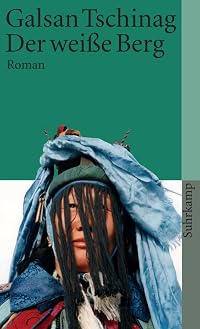
The Blue Sky - The Gray Earth - and the third (untranslated yet?) is called The White Mountain. At the end of the 1st our boy was alienated from the Blue Sky, and we pick up his story in that state of disenchantment: "Away from the mute and pitiless sky that supposedly knows all, sees all, and hears all, but pretends to be deaf and blind the moment I need to be heard and seen." At the end of this one, he meets that White Mountain, in a fumbling shaman's vision (he's nine) - and we get a glimpse of what that symbol means to him.
'Symbol' is wrong, sorry, since Father Sky and Mother Earth and the shaman-Mountain are holy and real: this holiness, this realness are challenged, slandered, outraged, by the boy himself, by family members who show more crack under pressure of a hard life and misfortunes, and of course by the Communist authorities. Particularly in this book, where he spends his first year at school. The crux of the novel is when the schoolkids are marched out to do violence to the Gray Earth, to teach them the lesson that the old beliefs are superstitions, that the Earth is a material lump only of use for our exploitation.
The boy, at 8 and 9 years, knows he wants to be a shaman. Shamans are persecuted and liable to be sent to prison, as are lamas - we meet a lama in his age out of prison, to close this book, and he has wise things to say about survival.
Maybe because this is autobiographical fiction, the boy's first-person works tremendously well, I thought, with immediacy and vividness. He's a passionate little boy, storming and screaming (for which he has cause). And standing up for classmates. His shaman's vocation he tentatively explores; and learns commitment in the hardest possible way, when he did not follow his shaman promptings - failed to do his job - and those around him suffer for it. A shaman has a job to do, for other's sake, and must be brave - even when you're nine and heavily indoctrinated. show less
'Symbol' is wrong, sorry, since Father Sky and Mother Earth and the shaman-Mountain are holy and real: this holiness, this realness are challenged, slandered, outraged, by the boy himself, by family members who show more crack under pressure of a hard life and misfortunes, and of course by the Communist authorities. Particularly in this book, where he spends his first year at school. The crux of the novel is when the schoolkids are marched out to do violence to the Gray Earth, to teach them the lesson that the old beliefs are superstitions, that the Earth is a material lump only of use for our exploitation.
The boy, at 8 and 9 years, knows he wants to be a shaman. Shamans are persecuted and liable to be sent to prison, as are lamas - we meet a lama in his age out of prison, to close this book, and he has wise things to say about survival.
Maybe because this is autobiographical fiction, the boy's first-person works tremendously well, I thought, with immediacy and vividness. He's a passionate little boy, storming and screaming (for which he has cause). And standing up for classmates. His shaman's vocation he tentatively explores; and learns commitment in the hardest possible way, when he did not follow his shaman promptings - failed to do his job - and those around him suffer for it. A shaman has a job to do, for other's sake, and must be brave - even when you're nine and heavily indoctrinated. show less
This is the second in Galsan's autobiographical fiction trilogy, picking up where The Blue Sky left off. Dshurukuwaa is eight (not an adolescent as the book flap mistakenly says) and on his way to the state boarding school where his siblings are. There he must leave behind his language, customs, and beliefs and become a communist Pioneer. Most difficult, he must suppress his shamanizing or face dire consequences.
I enjoyed this book as much as the first. Whereas The Blue Sky dealt with Dshurukuwaa's childhood on the steppe and life with his nomadic family, The Gray Earth has a larger scope as his world expands to include the district school in the regional center. Two themes run throughout: the inner tension for Dshurukuwaa at having to show more suppress his shamanistic tendencies and the outer conflict between the communist government imposed from the Soviet Union and centuries of nomadic tribalism. show less
I enjoyed this book as much as the first. Whereas The Blue Sky dealt with Dshurukuwaa's childhood on the steppe and life with his nomadic family, The Gray Earth has a larger scope as his world expands to include the district school in the regional center. Two themes run throughout: the inner tension for Dshurukuwaa at having to show more suppress his shamanistic tendencies and the outer conflict between the communist government imposed from the Soviet Union and centuries of nomadic tribalism. show less
The nine year old youngest son wounds himself in pursuit of shamanism, and is abruptly taken by his older half brother to the local school. His unprepared arrival exposes him and the half brother, the principal of the school, to difficulties with the party and complicates his stay there because of his shamanistic leanings and his brother's gift of state owned clothing. An unusual look at a society tying itself in knots to avoid soviet scourging and win soviet benefits.
Ratings
Members
- Recently Added By
Lists

Mongolia
21 works; 1 member
Author Information

38+ Works 539 Members
Some Editions
Series

Common Knowledge
- Canonical title
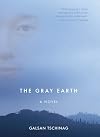
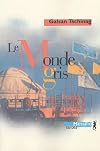
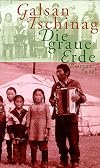
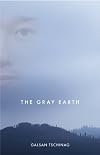
- The Gray Earth
- Original title
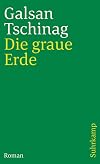
- Die graue Erde
- Original publication date
- 1999 (original German: "Die graue Erde") (original German: "Die graue Erde"); 2010 (English translation) (English translation)
- People/Characters
- Dshurukawaa
- Important places
- Mongolia
- Dedication
- For Dshokonaj,
My brother and teacher,
Who had to go
So I could stay. - First words
- At my feet lies a miserable, mute, and fearful sky.
- Last words
- (Click to show. Warning: May contain spoilers.)And I whet my gaze on one of the three remaining chunks of meat—dull, black stones with lighter veins—that wait to be devoured.
- Original language
- German
Classifications
- Genres
- Fiction and Literature, General Fiction
- DDC/MDS
- 833.914 — Literature & rhetoric German & related literatures German fiction 1900- 1900-1990 1945-1990
- LCC
- PT2682 .S297 .G7313 — Language and Literature German, Dutch and Scandinavian literatures German literature Individual authors or works 1961-2000
- BISAC
Statistics
- Members
- 51
- Popularity
- 596,715
- Reviews
- 3
- Rating
- (4.00)
- Languages
- English, French, German
- Media
- Paper, Ebook
- ISBNs
- 8
- ASINs
- 1