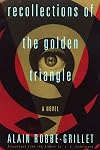
Recollections of the Golden Triangle
by Alain Robbe-Grillet
On This Page
Description
A provocative novel by the most influential living French writer,Recollections of the Golden Triangle is a tour de force: a literary thriller constructed of wildly diverse elements--fantasy and dream, erotic invention, and the stuff of popular fiction and movies taken to its farthest limits. A secret door that is opened slightly by an electronic device, a beautiful hanged factory girl, a pale young aristocrat whose blood apparently nourishes his vampiric lover, the evil Dr. Morgan who show more conducts his experiments in "tertiary dream behavior," the beautiful and sinister women from the world of horror films, and the investigating police, who are not all what they seem to be, are just some of the ingredients of this intriguing new novel by the French master of the intellectual thriller, whose novels and films have effectively changed the way we can look at the "real" world today. Recollections of the Golden Triangle challenges the reader to find his own meaning in its descriptions, clues, and contradictions, and to play detective by assembling the pieces of the fictional puzzle. show lessTags
Recommendations

























Member Reviews
This is another of Robbe-Grillet’s collage novels, assembled from some of his existing texts. Less subtle in its sinister mystery than predecessor novel Topology of a Phantom City, it nonetheless treads familiar ground as that novel, concerned as it is with the murder of an adolescent girl, possibly by mistake, or as a ritual sacrifice, or not at all, for it's possible it was only a performance.
Two main differences between these books are the narration style and the details of the sadistic eroticism that is portrayed, be it 'real', acted out, or imagined. Here, the itinerant narrator (participant, observer, suspect, investigator, or all of the above) is more present, frequently breaking the spell cast by R-G’s hypnotic prose, and show more as such, acting as more of an intrusion than a curiosity. The narrator also adopts a more bemused role than in Topology, occasionally expressing befuddlement at the structure of the constantly shifting and recreating narrative. The levity generated by these moments yields somewhat of a dampening effect on R-G’s ever-expanding fictional forays into sadism and erotic fetishism. However, the erotic elements of the narrative and the proclivities of the 'characters', described as they always are in flat, clinical language, are much more detailed and lurid here than in Topology, resulting in a substantial loss of the hazy, obscure atmosphere found in that earlier novel. It is almost as if, over a period of novels, R-G was slowly losing (or purposively releasing) his restraint in showcasing what could be read (and have been alluded by him in interviews to be) his own fantasies.
Regardless of how one chooses to interpret this aspect of R-G’s writing, it is now presented here so boldly as to become the over-exposed centerpiece, whereas in Topology and the much earlier novel The Voyeur, it was the suspense of fragmented allusions to it that drove much of the narrative. On a broader scale, the process by which R-G keeps the reader in the dark as to what is actually happening or imagined to be happening or dreamed to be happening has become more defined in this novel, less evasive in its resistance to categorization. While it’s possible that this effect is due, at least in part, to the nature of the collaged texts and the assemblage techniques used, this does not alter the fact that, to this reader at least, it renders the final text less imbued with mystery, and therefore less captivating. (2.5/5.0)
I stumbled across this while browsing Hoopla, and it look interesting. However....
While some of the passages and images are fascinating, this deliberately disjointed novel of murder and misogyny fails as a whole, even as a work of pornography. Perhaps I lack the patience to sort it all out, or--even with the timeline at the end--the ability to care about the obtuse story at all.
While some of the passages and images are fascinating, this deliberately disjointed novel of murder and misogyny fails as a whole, even as a work of pornography. Perhaps I lack the patience to sort it all out, or--even with the timeline at the end--the ability to care about the obtuse story at all.
Group A
Ratings
Members
- Recently Added By
Lists

Cooper
79 works; 1 member
Author Information

59+ Works 5,364 Members
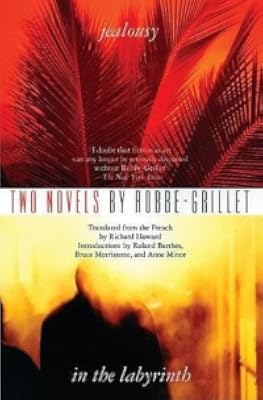
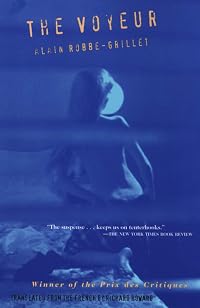
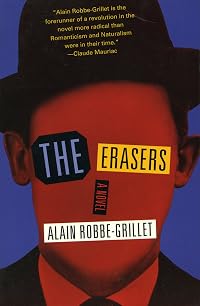
Writer and filmmaker Alain Robbe-Grillet was born in Brest, France in 1922. Robbe-Grillet's first novel, The Erasers (1953) is considered to be one of the first books of the nouveau roman, or new novel, in which external reality is more important than character or plot. His other works included The Voyeur (1955), Jealousy (1957) and Djinn (1981). show more He worked in the film industry as a writer, actor and director. He died at the age of 85 on February 18, 2008. (Bowker Author Biography) show less
Common Knowledge
- Canonical title
- Recollections of the Golden Triangle
- Original title
- Souvenirs du triangle d'or
Classifications
Statistics
- Members
- 152
- Popularity
- 215,656
- Reviews
- 3
- Rating
- (3.45)
- Languages
- English, French, Italian
- Media
- Paper, Ebook
- ISBNs
- 10
- ASINs
- 2