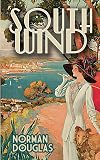
South Wind
by Norman Douglas
On This Page
Description
"Full of zest and high spirits." -- The Christian Science Monitor This witty, elegant novel of ideas unfolds on the imaginary Mediterranean island of Nepenthe, where Thomas Heard, Bishop of Bampopo in the equatorial regions of Africa, stops off on his way back to England. His arrival and introduction to the local society sets the stage for an urbane and polished tale. South Wind brilliantly evokes the dreamy, languorous quality of life on Nepenthe, a town of whitewashed houses perched on show more sheer rock cliffs above a gleaming sea. While peasants clamber up roads of black volcanic lava to work in the vineyards, aristocrats while away the torpid midday hours on sun-dappled terraces, discoursing of life and love. The memorable cast of characters includes a host of expatriates, freethinkers, eccentrics, politicians, zealots, and all manner of ne'er-do-wells who mingle in the picturesque settlement's taverns, villas, and streets. By the time Bishop Heard is ready to leave Nepenthe, there has been a murder, a fearsome volcanic eruption, an art forgery, and other nefarious doings -- all recounted in eloquent descriptions, replete with provocative ideas, glittering epigrams, and mordant satire. show lessTags
Recommendations































Member Reviews
Mr Heard, an Anglican bishop returning to England from his African diocese, stops off for a few weeks on the pleasant Mediterranean island of Nepenthe, a fictitious Italian outpost that might easily be confused with Sicily. Despite the enthusiastic cult of two local saints, Eulalia and Dodekanus, whose unlikely careers are still nothing like as extraordinary as those of the real saints Douglas describes in Old Calabria, and the efforts of the formidable parocco (called "Torquemada" by his rival, the worldly Mgr Francesco), it's very obvious that the old gods have a lot more to say here than those of any new-fangled Judeo-Christian religions, and the colourful expat community of art-lovers, alcoholics and fugitives from justice are more show more than a little affected by the general atmosphere of paganism too, especially when the Sirocco blows from Africa (as it almost invariably does). Murders and mysterious disappearances are almost incidental to the feeling of being outside the normal responsibilities of life that the island induces.
The mood of this bit of pre-WWI escapism is somewhere between E.M. Forster and Ronald Firbank: lots of erudite conversations about art and culture, lots of jokes about English and Italian national characteristics, not quite serious enough for the one or frivolous enough for the other. But very entertaining. show less
The mood of this bit of pre-WWI escapism is somewhere between E.M. Forster and Ronald Firbank: lots of erudite conversations about art and culture, lots of jokes about English and Italian national characteristics, not quite serious enough for the one or frivolous enough for the other. But very entertaining. show less
South Wind is a unique novel. Rather than presenting a traditional plot it seems like an olio or mixture of lectures and observations on various, often obscure, aspects of geology, climatology, history, morality, religion, and folklore, among other topics. The author's use of articulate characters confined to a restricted setting allows for ample airing of views and recalls the methods of English novelist Thomas Love Peacock, whose country house novels were once very popular.
South Wind’s setting itself becomes a character as the island Nepenthe, which is not to be found on a map, comes alive as the narrative progresses. The literary reference is to the magical potion given to Helen by Polydamna the wife of the noble Egyptian Thon; it show more quells all sorrows with forgetfulness; figuratively, nepenthe means "that which chases away sorrow" (Odyssey, Book 4, v. 219–221). However, it is usually considered a fictional version of the isle of Capri, about which Douglas wrote a series of scholarly pamphlets and upon which he was living when he completed South Wind. It reminded me of Shirley Hazzard's literary meditation, Greene on Capri in which she also captured the essence of the island. She also noted the friendship between Graham Greene and Douglas in the late 1940's when Greene first began to frequent the isle, "he had the company, when he chose, of a handful of lively and literary resident compatriots . . . [and] had enjoyed the last effulgence of Norman Douglas . . ."(Greene on Capri, p 47)
Douglas did not deny his novel’s debt to a real location but insisted that Ischia, Ponza, and the Lipari Islands (all lying off the southwest coast of Italy) were the actual sources for Nepenthe’s natural scenery. Douglas even incorporated a version of his observations regarding the pumice stone industry of the Lipari Islands, the subject of one of his first publications. Douglas’s creation had deep roots in his own experience—the details of which he drew upon heavily.
The novel’s characters are the result of much the same observational mode which allows the reader, if he is willing, to gradually develop an acquaintance with the place through the idiosyncrasies of the characters. An example may suffice: "Mr. Keith was a perfect host. He had the right word for everybody; his infectious conviviality made them all straightaway at their ease. The overdressed native ladies, the priests and officials moving about in prim little circles, were charmed with his affable manner 'so different from most Englishmen';" (p 131)
One or two characters may be based on historically obscure acquaintances of Douglas, but others are little more than personifications of facets of their author’s own personality. The voluble Mr. Keith is most likely a spokesman for Douglas’s hedonistic views, and Mr. Eames and Count Caloveglia represent Douglas’s scholarly and antiquarian interests. All are perfectly adequate mouthpieces, but none emerges as rounded or particularly memorable outside of the group.
Several British writers of Greene’s generation were directly influenced by Douglas in general and by South Wind in particular. Aldous Huxley’s satirical novels Crome Yellow (1921, in which Douglas appears as the character Scrogan), Antic Hay (1923), and Point Counter Point (1928) bear its stamp. Greene himself generally wrote books of a darker character, but his lighter comic novel Travels with My Aunt (1969) bears similarities to South Wind. Douglas's erudite yet pleasant style reminds me a bit of Lawrence Durrell. Needless to say this is an engaging novel with plenty of interesting characters that more than offset the lack of a robust plot. show less
South Wind’s setting itself becomes a character as the island Nepenthe, which is not to be found on a map, comes alive as the narrative progresses. The literary reference is to the magical potion given to Helen by Polydamna the wife of the noble Egyptian Thon; it show more quells all sorrows with forgetfulness; figuratively, nepenthe means "that which chases away sorrow" (Odyssey, Book 4, v. 219–221). However, it is usually considered a fictional version of the isle of Capri, about which Douglas wrote a series of scholarly pamphlets and upon which he was living when he completed South Wind. It reminded me of Shirley Hazzard's literary meditation, Greene on Capri in which she also captured the essence of the island. She also noted the friendship between Graham Greene and Douglas in the late 1940's when Greene first began to frequent the isle, "he had the company, when he chose, of a handful of lively and literary resident compatriots . . . [and] had enjoyed the last effulgence of Norman Douglas . . ."(Greene on Capri, p 47)
Douglas did not deny his novel’s debt to a real location but insisted that Ischia, Ponza, and the Lipari Islands (all lying off the southwest coast of Italy) were the actual sources for Nepenthe’s natural scenery. Douglas even incorporated a version of his observations regarding the pumice stone industry of the Lipari Islands, the subject of one of his first publications. Douglas’s creation had deep roots in his own experience—the details of which he drew upon heavily.
The novel’s characters are the result of much the same observational mode which allows the reader, if he is willing, to gradually develop an acquaintance with the place through the idiosyncrasies of the characters. An example may suffice: "Mr. Keith was a perfect host. He had the right word for everybody; his infectious conviviality made them all straightaway at their ease. The overdressed native ladies, the priests and officials moving about in prim little circles, were charmed with his affable manner 'so different from most Englishmen';" (p 131)
One or two characters may be based on historically obscure acquaintances of Douglas, but others are little more than personifications of facets of their author’s own personality. The voluble Mr. Keith is most likely a spokesman for Douglas’s hedonistic views, and Mr. Eames and Count Caloveglia represent Douglas’s scholarly and antiquarian interests. All are perfectly adequate mouthpieces, but none emerges as rounded or particularly memorable outside of the group.
Several British writers of Greene’s generation were directly influenced by Douglas in general and by South Wind in particular. Aldous Huxley’s satirical novels Crome Yellow (1921, in which Douglas appears as the character Scrogan), Antic Hay (1923), and Point Counter Point (1928) bear its stamp. Greene himself generally wrote books of a darker character, but his lighter comic novel Travels with My Aunt (1969) bears similarities to South Wind. Douglas's erudite yet pleasant style reminds me a bit of Lawrence Durrell. Needless to say this is an engaging novel with plenty of interesting characters that more than offset the lack of a robust plot. show less
Mr. Keith, the island's acknowledged social leader, a gourmet and a sagacious person, says of Nepenthe: "As compared with England, life here is intense, palpitating, dramatic, a kind of blood-curdling farce full of irresponsible crimes and improbable consequences."
Douglas's apparent intention was to present the tolerant, self-indulgent, slightly nutty life on Nepenthe in contrast to the vulgar and stifled life in damp and gloomy England. Here is Count Caloveglia's hyperbolic summary of Douglas's attitude:
"The bankruptcy, the proven fatuity, of everything that is bound up under the name of western civilization." ... "And who are you [western elites] to dictate how we shall order our day? Go! Shiver and struggle in your hyperborean show more dens.Trample about those misty rain-sodden fields, and hack each other's eyes out with ante-diluvian bayonets. Or career up and down, in your absurd ships, to pick the pockets of men better than yourselves. That is your mode of self-expression. It is not ours."
Don Francesco says: "England is a land of industrial troglodytes"
When I first read the book some years ago I glided happily through it with a constant half-grin of pleasure from the witty prose, the eccentric characters, and the slightly smug feeling that I was "in" on the satire. Now, though, Douglas's humor feels a bit chilly and artificial, and reads more like a studied cleverness than a frolicsome farce. The humor is overlaid on the story instead of being derived from it.
The prose is wonderful, especially descriptive passages (read "Old Calabria"), but the light style doesn't carry you over the bumps in his technique -- all those times he interrupts the flow and atmosphere of the writing to interject authorial opinions through the mouths of his characters. He doesn't have the ability to naturally work his peeves into scenes and conversations. He presents them abruptly, awkwardly, in fulminations that are often out of context. It feels like he's poking your chest with his finger for emphasis. And his peeves are significant: all of Christianity (hello Christopher Hitchens), bad taste, bad art, intolerance, over-regulation of personal behavior, the strangling grip of convention on educational institutions... Really he has serious grudges to air out. There are some very funny bits here -- the red-shirted Bolsheviks (Gorky lived on Capri for a while), Miss Wilberforce's inclination to publicly disrobe, the tavern owner's adulterated whiskey -- but over it all drifts the menace of more messaging.
Toward the end of the book Mr, Heard is contemplating his coming departure from the island, and there comes another shot at British meekness:
"And how would England compare with the tingling realism of Nepenthe? Rather parochial, rather dun; grey-in-grey; subdued light above --crepuscular emotions on earth. Everything fireproof, sea-worthy. Kindly thoughts expressed in safe unvarying formulas. A guileless people! Ships tossing at sea; minds firmly anchored to the commonplace. Abundance for the body; diet for the spirit. The monotony of a nation intent upon respecting laws and customs. Horror of the tangent, the extreme, the unconventional."
Nepenthe stands in for Capri. Douglas used specifics from his knowledge of Ischia, Ponza and Lipari. He lived on Capri off and on for many years, and knew most of the expatriot gang in residence: Compton Mackenzie (banished after "Vestal Fire"), Graham Green, Axel Munthe, Gracie Fields, Cunninghame Graham, etc. Douglas teases Graham, a fellow Scotchman, an explorer, and gifted talker: "Keith could be decidedly fatiguing, especially when dead sober. He had all the Scotchman's passion for dissecting the obvious, discovering new facets in the commonplace, and squeezing the last drop out of a foregone conclusion." show less
Douglas's apparent intention was to present the tolerant, self-indulgent, slightly nutty life on Nepenthe in contrast to the vulgar and stifled life in damp and gloomy England. Here is Count Caloveglia's hyperbolic summary of Douglas's attitude:
"The bankruptcy, the proven fatuity, of everything that is bound up under the name of western civilization." ... "And who are you [western elites] to dictate how we shall order our day? Go! Shiver and struggle in your hyperborean show more dens.Trample about those misty rain-sodden fields, and hack each other's eyes out with ante-diluvian bayonets. Or career up and down, in your absurd ships, to pick the pockets of men better than yourselves. That is your mode of self-expression. It is not ours."
Don Francesco says: "England is a land of industrial troglodytes"
When I first read the book some years ago I glided happily through it with a constant half-grin of pleasure from the witty prose, the eccentric characters, and the slightly smug feeling that I was "in" on the satire. Now, though, Douglas's humor feels a bit chilly and artificial, and reads more like a studied cleverness than a frolicsome farce. The humor is overlaid on the story instead of being derived from it.
The prose is wonderful, especially descriptive passages (read "Old Calabria"), but the light style doesn't carry you over the bumps in his technique -- all those times he interrupts the flow and atmosphere of the writing to interject authorial opinions through the mouths of his characters. He doesn't have the ability to naturally work his peeves into scenes and conversations. He presents them abruptly, awkwardly, in fulminations that are often out of context. It feels like he's poking your chest with his finger for emphasis. And his peeves are significant: all of Christianity (hello Christopher Hitchens), bad taste, bad art, intolerance, over-regulation of personal behavior, the strangling grip of convention on educational institutions... Really he has serious grudges to air out. There are some very funny bits here -- the red-shirted Bolsheviks (Gorky lived on Capri for a while), Miss Wilberforce's inclination to publicly disrobe, the tavern owner's adulterated whiskey -- but over it all drifts the menace of more messaging.
Toward the end of the book Mr, Heard is contemplating his coming departure from the island, and there comes another shot at British meekness:
"And how would England compare with the tingling realism of Nepenthe? Rather parochial, rather dun; grey-in-grey; subdued light above --crepuscular emotions on earth. Everything fireproof, sea-worthy. Kindly thoughts expressed in safe unvarying formulas. A guileless people! Ships tossing at sea; minds firmly anchored to the commonplace. Abundance for the body; diet for the spirit. The monotony of a nation intent upon respecting laws and customs. Horror of the tangent, the extreme, the unconventional."
Nepenthe stands in for Capri. Douglas used specifics from his knowledge of Ischia, Ponza and Lipari. He lived on Capri off and on for many years, and knew most of the expatriot gang in residence: Compton Mackenzie (banished after "Vestal Fire"), Graham Green, Axel Munthe, Gracie Fields, Cunninghame Graham, etc. Douglas teases Graham, a fellow Scotchman, an explorer, and gifted talker: "Keith could be decidedly fatiguing, especially when dead sober. He had all the Scotchman's passion for dissecting the obvious, discovering new facets in the commonplace, and squeezing the last drop out of a foregone conclusion." show less
A tale of a mediterranean island and various foreigners who have ended up there. Its a veritable paradise although with a dark edge. The climate induces a relaxation of the morals and many people who come there are fleeing their past.
As the story progresses we learn more about each of these characters and their background aswell as the rather bloody history of the island itself.
The author really captures that sense of freedom, change and unreality you tend to get when you go on holiday. There's a lot to like about the story and i only have one problem with it and thats the structure.
This is not a smooth read, in fact its downright lumpy with protuberances in strange places. To begin with it seems as if we have a main character but show more he's lost for large portions of the book. The author goes on abrupt tangents in order to give you character background and island history. Its a very uneven and sometimes quite annoying method of storytelling. Overall though still good. show less
As the story progresses we learn more about each of these characters and their background aswell as the rather bloody history of the island itself.
The author really captures that sense of freedom, change and unreality you tend to get when you go on holiday. There's a lot to like about the story and i only have one problem with it and thats the structure.
This is not a smooth read, in fact its downright lumpy with protuberances in strange places. To begin with it seems as if we have a main character but show more he's lost for large portions of the book. The author goes on abrupt tangents in order to give you character background and island history. Its a very uneven and sometimes quite annoying method of storytelling. Overall though still good. show less
One of my half dozen favorite novels.
On the island of Nepenthe, with its mysterious Cave of Mercury and its resemblance to Capri, Douglas assembles his cast, including the invalided, or “Returned Empty" Bishop of Bampopo, Mr. Heard, and Muhlen, whom the bishop meets on the boat. The Duchess, really an American widow, holds court with her handmaid, Angelina, loved from afar by the 19-year old Denis Phipps and from a lot closer up by the geologist Edgar Marten. True to his name, Count Caloveglia loves, with a “pagan content” beautiful antiquities, so much that he makes them himself, including the Locri Faun that’s been recently dug up on his property. Douglas, though a Victorian born one year into that queen’s reign, has the show more Edwardian and between the wars fascination with the pagan one sees in Forster, Huxley, and Munro.
Amy Wilberforce is a lady whom Mr. Keith keeps bailing out when she’s jailed for getting drunk and taking off her clothes in public. The worldly priest Don Francesco and the ascetic parish priest share the spiritual duties of ministering to Douglas’s cast. The rich Mr. Keith, Count Caloveglia, and Don Francesco combine to create Douglas’s commentary on what goes on. The scholarly Ernest Eames, who has had an affair with a fat woman the islanders came to call the ballon captif, is updating Monsignor Perelli’s Antiquities of Nepenthe, often referred to in the novel. Perelli apparently had his ears cut off by “the Good Duke Alfred,” the Machiavellian ruler during his time, and thus his book hardly mentions the duke. We meet people at the Duchess’s and then at Mr. Keith’s annual bean-fest, where the food is prepared by his excellent cook and there is always some surprise—this time a band of gypsies imported from the mainland. The book’s events take place between the festivals of the island’s two saints, St. Dodekanus and St. Eulalia.
Another character is Madame Steynlin, who entertains the Little White Cows, the disciples of the “divinely inspired” Bazhakuloff; they wear red blouses, bathe naked in Madame Steynlin’s cove, and one of them becomes her lover. Eventually the Russians are involved in a riot in the main piazza and are jailed by the magistrate Malipizzo.
The list of fountains that once flowed on Nepenthe, together with the catalogue of their salubrious effects and the specific diseases they cure, is almost worth the price of the book. The drying up of the fountain of St. Elias, the last of these fountains, is the event that ushers in a series of climactic events. The Russians riot, the American prophylactic magnate von Koppen enters the story, Mr. Keith says that “Northern minds” tend to become unhinged on Nepenthe, ashes rain from a volcano on the mainland, Freddy Parker’s lady, his stepsister, dies. Freddy gets the parocco to work up a procession, thinking he’ll get his sister buried that way, since the clergy won’t be able to resist a procession. The next thing you know the ash fall stops and it starts to rain. Some thought all this was because of St. Dodekanus, some the parocco, and the parocco and Freddy thought it was Freddy, but it was really the mosquito that bit his lady and killed her.
Religion takes some hard knocks: Don Francesco is a lascivious pagan, the parocco is a prunish Puritan, Keith thinks Christianity is the product of slave morality, the Russians follow a sham messiah, and there’s a funny scene when the Count gives his views about the Bible. Van Koppen asks him how he came to read it, since he thought Italians didn’t, and Caloveglia says he was in New York, trying to understand the Jews in the Jewish quarter, and he thought reading their literature might be a help.
"The almost hysterical changes of light and darkness, summer and winter, which have impressed themselves on the literature of the North, are unknown here," says the Count. "Northern people, whether from climatic or other causes, are prone to extremes, like their own myths and sagas. The Bible is essentially a book of extremes. It is a violent document. The Goth or Anglo-Saxon has taken kindly to this book because it has always suited his purposes . . . authority for every grade of emotional conduct, from savage vindictiveness to the most abject self-abasement."
Von Koppen has the Count’s number and suspects he’s salting his property with fake antiquities. But he buys the Locri Faun anyway, for a huge price, that sets the Count up so he can give his daughter a dowry and work respectably at his sculpture.
After another small ash fall, the weather clears and the volcano on the mainland erupts. Mr. Heard witnesses Mrs. Meadows pushing someone off the precipice above her villa. He turns out to be her first husband, and the bishop speculates that Muhlen must have been extorting money from her and threatening exposure, perhaps even threatening to have his friend the magistrate take her baby away from her. He comes to approve her act, and thinks, as the book ends, that he will not return to the Church of England. Much of the book is presented through his consciousness, and as it ends he gets drunk with Keith and Denis before his departure the next day. show less
On the island of Nepenthe, with its mysterious Cave of Mercury and its resemblance to Capri, Douglas assembles his cast, including the invalided, or “Returned Empty" Bishop of Bampopo, Mr. Heard, and Muhlen, whom the bishop meets on the boat. The Duchess, really an American widow, holds court with her handmaid, Angelina, loved from afar by the 19-year old Denis Phipps and from a lot closer up by the geologist Edgar Marten. True to his name, Count Caloveglia loves, with a “pagan content” beautiful antiquities, so much that he makes them himself, including the Locri Faun that’s been recently dug up on his property. Douglas, though a Victorian born one year into that queen’s reign, has the show more Edwardian and between the wars fascination with the pagan one sees in Forster, Huxley, and Munro.
Amy Wilberforce is a lady whom Mr. Keith keeps bailing out when she’s jailed for getting drunk and taking off her clothes in public. The worldly priest Don Francesco and the ascetic parish priest share the spiritual duties of ministering to Douglas’s cast. The rich Mr. Keith, Count Caloveglia, and Don Francesco combine to create Douglas’s commentary on what goes on. The scholarly Ernest Eames, who has had an affair with a fat woman the islanders came to call the ballon captif, is updating Monsignor Perelli’s Antiquities of Nepenthe, often referred to in the novel. Perelli apparently had his ears cut off by “the Good Duke Alfred,” the Machiavellian ruler during his time, and thus his book hardly mentions the duke. We meet people at the Duchess’s and then at Mr. Keith’s annual bean-fest, where the food is prepared by his excellent cook and there is always some surprise—this time a band of gypsies imported from the mainland. The book’s events take place between the festivals of the island’s two saints, St. Dodekanus and St. Eulalia.
Another character is Madame Steynlin, who entertains the Little White Cows, the disciples of the “divinely inspired” Bazhakuloff; they wear red blouses, bathe naked in Madame Steynlin’s cove, and one of them becomes her lover. Eventually the Russians are involved in a riot in the main piazza and are jailed by the magistrate Malipizzo.
The list of fountains that once flowed on Nepenthe, together with the catalogue of their salubrious effects and the specific diseases they cure, is almost worth the price of the book. The drying up of the fountain of St. Elias, the last of these fountains, is the event that ushers in a series of climactic events. The Russians riot, the American prophylactic magnate von Koppen enters the story, Mr. Keith says that “Northern minds” tend to become unhinged on Nepenthe, ashes rain from a volcano on the mainland, Freddy Parker’s lady, his stepsister, dies. Freddy gets the parocco to work up a procession, thinking he’ll get his sister buried that way, since the clergy won’t be able to resist a procession. The next thing you know the ash fall stops and it starts to rain. Some thought all this was because of St. Dodekanus, some the parocco, and the parocco and Freddy thought it was Freddy, but it was really the mosquito that bit his lady and killed her.
Religion takes some hard knocks: Don Francesco is a lascivious pagan, the parocco is a prunish Puritan, Keith thinks Christianity is the product of slave morality, the Russians follow a sham messiah, and there’s a funny scene when the Count gives his views about the Bible. Van Koppen asks him how he came to read it, since he thought Italians didn’t, and Caloveglia says he was in New York, trying to understand the Jews in the Jewish quarter, and he thought reading their literature might be a help.
"The almost hysterical changes of light and darkness, summer and winter, which have impressed themselves on the literature of the North, are unknown here," says the Count. "Northern people, whether from climatic or other causes, are prone to extremes, like their own myths and sagas. The Bible is essentially a book of extremes. It is a violent document. The Goth or Anglo-Saxon has taken kindly to this book because it has always suited his purposes . . . authority for every grade of emotional conduct, from savage vindictiveness to the most abject self-abasement."
Von Koppen has the Count’s number and suspects he’s salting his property with fake antiquities. But he buys the Locri Faun anyway, for a huge price, that sets the Count up so he can give his daughter a dowry and work respectably at his sculpture.
After another small ash fall, the weather clears and the volcano on the mainland erupts. Mr. Heard witnesses Mrs. Meadows pushing someone off the precipice above her villa. He turns out to be her first husband, and the bishop speculates that Muhlen must have been extorting money from her and threatening exposure, perhaps even threatening to have his friend the magistrate take her baby away from her. He comes to approve her act, and thinks, as the book ends, that he will not return to the Church of England. Much of the book is presented through his consciousness, and as it ends he gets drunk with Keith and Denis before his departure the next day. show less
I have to admit that, in my ignorance, I had not heard of Mr. Douglas until someone kindly recommended his work. I genuinely appreciate anyone offering a new author and so, I feel a bit of a heel to review the work unfavourably. I draw solace from the knowledge that the book, written in 1917, has survived longer than I am likely so to do and, has more supporters. My little gripe will cause incredibly small ripples.
All that said, I found this book a real trial. The book is of its age: it is a truth, unnecessary to express, that the white British male is superior to Johnny Foreigner. The humour is of the superior type which, personally, I find grates. I will admit that this is another book which I did not complete but, after 75 pages, I show more felt that my head would explode were another paragraph of this opus seep into my subconscious. show less
All that said, I found this book a real trial. The book is of its age: it is a truth, unnecessary to express, that the white British male is superior to Johnny Foreigner. The humour is of the superior type which, personally, I find grates. I will admit that this is another book which I did not complete but, after 75 pages, I show more felt that my head would explode were another paragraph of this opus seep into my subconscious. show less
Overall, I think I enjoyed this novel, but I'm not entirely sure. I was amused by the way that it almost seemed to have a life of it's own, meandering away from any semblance of plot into chapters describing the foibles of the inhabitants of Nepenthe, before bringing itself back with a jerk to the action at hand. The characters are vividly drawn for the most part, and likeable in their own flawed ways.
I wouldn't recommend this novel to anyone who is irritated by a lack of plot, but otherwise, it's an entertaining enough read. Not good enough to inspire me to seek out other works by the same author though.
I wouldn't recommend this novel to anyone who is irritated by a lack of plot, but otherwise, it's an entertaining enough read. Not good enough to inspire me to seek out other works by the same author though.
Members
- Recently Added By
Lists

The Guardian's 1000 Novels Everyone Must Read
1,005 works; 550 members

F. Scott Fitzgerald's 22 Essential Books (1936)
22 works; 3 members

Harold Bloom - The Western Canon: D. The Chaotic Age
833 works; 24 members

Trinity College Booklist (1951): Class Ten, English Literature
358 works; 5 members

First published in 1917
132 works; 3 members

For Further Reading: A List of 160 Novels from 15 Literatures
160 works; 4 members
Franklit
95 works; 1 member

Michael Dirda's 100 Best Comic Novels
100 works; 1 member
Author Information

42+ Works 1,550 Members
Author Norman Douglas was born in Austria on December 8, 1868 and was educated in England, Germany, and France. In 1893, he joined the British Foreign Office and worked as a diplomat in Russia and Italy. He left the service in 1896 apparently as the result of an indiscreet love affair. He wrote numerous travel books and his only popular success show more was the novel South Wind, published in 1917. He died in 1952. (Bowker Author Biography) show less
Some Editions
Awards and Honors
Series
Belongs to Publisher Series
Common Knowledge
- Original publication date
- 1917 (novel) (novel); 1923 (play) (play)
- First words
- The bishop was feeling rather sea-sick.
- Quotations
- I don't want to discuss things. I want to listen to the opinions of a man so different from myself as you are. It may do me good.
I live sensibly. Shall I give you my recipe for happiness? I find everything useful and nothing indispensable. I find everything wonderful and nothing miraculous. I reverence the body. I avoid first causes like the plague.
You have nothing but nice people around you, Duchess. Why should you want to read about them? There is so much goodness in real life. Do let us keep it out of our books. - Last words
- (Click to show. Warning: May contain spoilers.)"Could you oblige me with a fairy-tale?"
Classifications
Statistics
- Members
- 626
- Popularity
- 46,549
- Reviews
- 11
- Rating
- (3.49)
- Languages
- Dutch, English, Italian
- Media
- Paper, Ebook
- ISBNs
- 48
- UPCs
- 1
- ASINs
- 54