
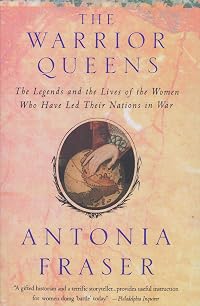
The Warrior Queens
by Antonia Fraser
On This Page
Description
In this panoramic work of history, Fraser looks at women who led armies, empires and rebellions: Cleopatra, Tamara of Georgia, Isabella of Spain, Elizabeth I, Catherine the Great, Jinga Mbandi of Angola, the Rani of Jhansi, and the 20th-century "iron ladies" Margaret Thatcher, Golda Meir and Indira Gandhi, among others. Her touchstone is Boadicea, the first-century Briton who led 120,000 compatriots in a revolt that temporarily shook the Roman hold on her country. With her as a vibrant show more centerpiece, Fraser brings forward a constellation of 17 women who, through accidents of fate or descent, or sheer genius for power, have been cast in the role of Warrior Queen--seen by her contemporaries as (often simultaneously) monster, angel, honorary male, one who shames men into bravery--and seen, long after her reign, as the focus of a golden age.--From publisher description. show lessTags
Recommendations



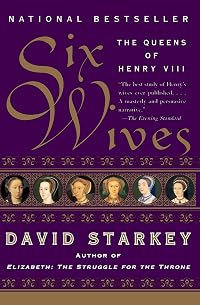
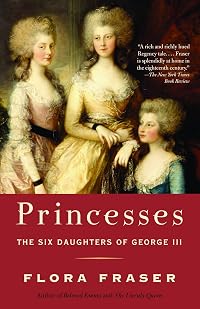
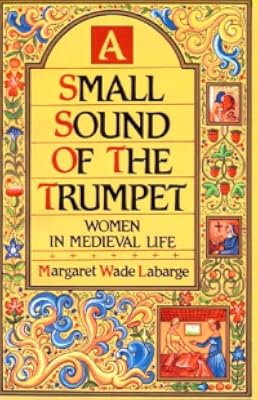
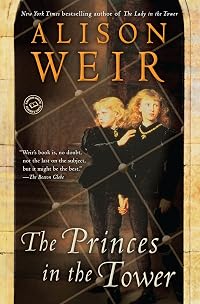

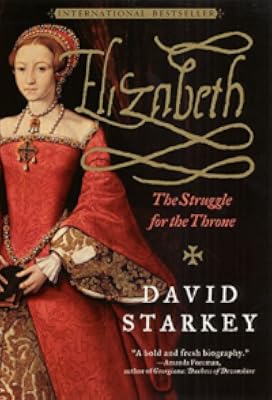


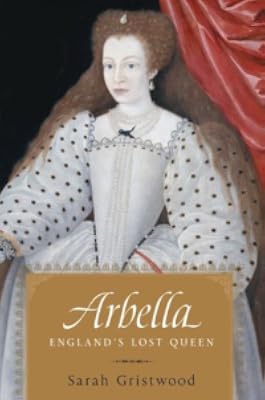

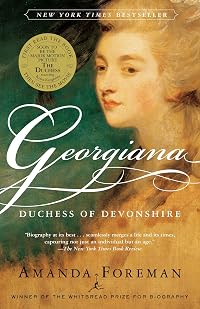
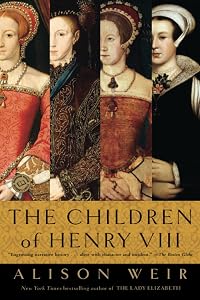



Member Reviews
I finished Fraser's truly awful Warrior Queens today. She jumps back and forth between time periods constantly, keeps trying to relate every woman she writes about to Boudica and her legend, is in love with her own lame terminology, and dedicates a lot of ink to speculation. I can't even say that I trust her research since in chapter 14 she calls Pocahontas "a member of the Sioux tribe": I don't have words enough to say how wrong this statement is.*
Avoid this one at all costs.
*Seriously, it's like saying Eleanor of Aquitaine was Polish.
Avoid this one at all costs.
*Seriously, it's like saying Eleanor of Aquitaine was Polish.
[Lady] Antonia Fraser, married to the playwright Harold Pinter (now deceased) and so forming a formidable intellectual household, is a popular narrative historian who is always highly readable and never patronising. She entertains as she educates and never talks down to her reader.
In this book, she looks at a theme rather than a period, centring the story of warrior queens in reality and in legend initially on a tale familar to the British, Boadicea (or Boudicca if you prefer), but extending her analysis to a series of strong women in history who meet her criteria.
She moves effortlessly from first century AD Britain to such interesting characters as Zenobia of Palmyra, Matilda (or Maud) who fought for the throne of England with Stephen, show more Tamara of Georgia, Isabella of Castile and many others through to a comparison with Mrs Thatcher.
She does not neglect other continents with chapters both on Jinga of the Ndongo in Africa and the Rani of Jhansi in the British Raj. She allows comparison and contrast - political successes like Elizabeth I with noble failures like Matilda of Tuscany and complete failures like Louise of Prussia.
Fraser is one of those writers who might be called feminist if the term had not been destroyed as a positive one by a generation of grievance specialists and moral fanatics who sit as part of that exercise in group-think that purports to be the Western Left.
She is to be regarded as a strong voice for the female point of view without a collapse into ideology. She sits alongside Simone de Beauvoir, Camille Paglia and, in my view, Virginie Despentes as someone who gives voice to women and makes men stop, think and, when necessary, change.
Above all, she is an excellent historian. I cannot think of one occasion where I felt I had to dispute a judgement she makes on the evidence placed before her. She thinks in the round, able to see how her narrative relates to culture and society then and now (1988 in this case).
When she points out the sometimes absurd manner in which a largely male culture has reconstructed these women - often too positively it might be said because of the chivalric impulse or the will to believe in a 'queen' or 'goddess'- she does so without moralising.
It has some useful insights into male absurdity and is more useful in pointing out that women are capable of anything (should they choose to want to do anything) than all the dull or shrill tracts thrown at men in outrage or bitterness.
I will be gifting this book to my daughter as an exemplar of good writing and sound historical sense but it is not just a feel-good book for women (which I hope it will be), it is also a book that any man can profit from reading. I recommend it on that basis alone. show less
In this book, she looks at a theme rather than a period, centring the story of warrior queens in reality and in legend initially on a tale familar to the British, Boadicea (or Boudicca if you prefer), but extending her analysis to a series of strong women in history who meet her criteria.
She moves effortlessly from first century AD Britain to such interesting characters as Zenobia of Palmyra, Matilda (or Maud) who fought for the throne of England with Stephen, show more Tamara of Georgia, Isabella of Castile and many others through to a comparison with Mrs Thatcher.
She does not neglect other continents with chapters both on Jinga of the Ndongo in Africa and the Rani of Jhansi in the British Raj. She allows comparison and contrast - political successes like Elizabeth I with noble failures like Matilda of Tuscany and complete failures like Louise of Prussia.
Fraser is one of those writers who might be called feminist if the term had not been destroyed as a positive one by a generation of grievance specialists and moral fanatics who sit as part of that exercise in group-think that purports to be the Western Left.
She is to be regarded as a strong voice for the female point of view without a collapse into ideology. She sits alongside Simone de Beauvoir, Camille Paglia and, in my view, Virginie Despentes as someone who gives voice to women and makes men stop, think and, when necessary, change.
Above all, she is an excellent historian. I cannot think of one occasion where I felt I had to dispute a judgement she makes on the evidence placed before her. She thinks in the round, able to see how her narrative relates to culture and society then and now (1988 in this case).
When she points out the sometimes absurd manner in which a largely male culture has reconstructed these women - often too positively it might be said because of the chivalric impulse or the will to believe in a 'queen' or 'goddess'- she does so without moralising.
It has some useful insights into male absurdity and is more useful in pointing out that women are capable of anything (should they choose to want to do anything) than all the dull or shrill tracts thrown at men in outrage or bitterness.
I will be gifting this book to my daughter as an exemplar of good writing and sound historical sense but it is not just a feel-good book for women (which I hope it will be), it is also a book that any man can profit from reading. I recommend it on that basis alone. show less
Part of me wants to give 4 stars for the absolute brilliance of Fraser's research into these women's lives, and the other part of me wants to give 3 1/2 stars for the writing style. I think, though, that the importance of the meticulous research she has done merits 4 stars. And I've read other books by Lady Antonia and the research she has done still rattles around in my brain.
She begins with the history of both Cleopatra and Boudica (heroically "Boadicea") as the earliest examples of women who led their nations in wartime, and how they as warriors fulfilled Goddess imagery in their respective cultures. Her research into Boudica forms the main narrative for how warrior queens are remembered and changed by history. Lady Antonia also show more pulls together Syndromes (archetypes) to show how women who lead are viewed by their contemporaries and by history: Voracity, Shame, Appendage, Figurehead are examples.
What little we do know about the historical Boudica comes from the writings of Tacitus and Dio Cassius and, interestingly enough, from modern era excavations starting in 1915 of a "red layer" attesting to the burning of Londinium from the time of Boudica and the Iceni wars with the Romans. Fraser then continues with her research into Matilda, Maud, Zenobia, Catherine the Great, and the other women warriors with the legend of Boadicea as her backdrop. Which is a good way to tie the history together with a common thread, instead of having a thousand years and a host of countries and disparate lives.
The distracting part of reading this book, again, is the writing style. Lady Antonia can tell a straightforward tale as she does with Cleopatra and Boudica; she seems to fill an inner need by making asides and references within sentences again and again, thus filling in pages with writing but failing to advance Story as a whole. And maps - when will book publishers insist on maps when geographical locations are as varied as they are here? show less
She begins with the history of both Cleopatra and Boudica (heroically "Boadicea") as the earliest examples of women who led their nations in wartime, and how they as warriors fulfilled Goddess imagery in their respective cultures. Her research into Boudica forms the main narrative for how warrior queens are remembered and changed by history. Lady Antonia also show more pulls together Syndromes (archetypes) to show how women who lead are viewed by their contemporaries and by history: Voracity, Shame, Appendage, Figurehead are examples.
What little we do know about the historical Boudica comes from the writings of Tacitus and Dio Cassius and, interestingly enough, from modern era excavations starting in 1915 of a "red layer" attesting to the burning of Londinium from the time of Boudica and the Iceni wars with the Romans. Fraser then continues with her research into Matilda, Maud, Zenobia, Catherine the Great, and the other women warriors with the legend of Boadicea as her backdrop. Which is a good way to tie the history together with a common thread, instead of having a thousand years and a host of countries and disparate lives.
The distracting part of reading this book, again, is the writing style. Lady Antonia can tell a straightforward tale as she does with Cleopatra and Boudica; she seems to fill an inner need by making asides and references within sentences again and again, thus filling in pages with writing but failing to advance Story as a whole. And maps - when will book publishers insist on maps when geographical locations are as varied as they are here? show less
An interesting history book, focusing mostly on European female rulers/leaders, beginning with Boadicea, a Celt, and ending with Margaret Thatcher. The overall affect of the book is kind of depressing in light of the repeated misogyny of these women, misogyny that still goes on today.
I thought the book would have been more readable and more enjoyable if Fraser hadn't been so adamant about so explicitly linking all of the women with their predecessors. The constant references to the past do work to show a pattern of behavior and ideas, but it also makes the book too repetitive in places.
I thought the book would have been more readable and more enjoyable if Fraser hadn't been so adamant about so explicitly linking all of the women with their predecessors. The constant references to the past do work to show a pattern of behavior and ideas, but it also makes the book too repetitive in places.
This is an interesting read. It intends to look at women who have been a reigning head of state and lead a state into battle. It starts with Boadicea, and looks at how different women in apparently similar positions have been viewed through time. So there are medieval queens through to modern heads of states. The range of countries represented is not huge, focused mainly on Europe. She identified a number of way sin which these disparate women have been represented and, in fact, represented themselves. They fall into a number of categories, some of which act as opposites. They may be represented as either chaste or a virago, even if they are, in fact neither. They may play on the "I'm only a weak & feeble woman" line to their own show more advantage. Their supporters and enemies may have widely differing views of them, the truth probably lies in neither story. The later heads of state seem to be doubly castigated - by men the are seen as only a women, by women that are cast as being honorary men. Can't win either way.
It can;t by its nature, be a detailed history, but there's enough detail here to provide some background and put the lady in question into a social and cultural context. There are also enough notes and references that further reading could be readily identified.
I found the evolution of the Boadicea myth through the ages the most interesting, who she was reinvented for each succeeding generation, moving from leading a bloody uprising to being viewed as an establishment figure. How times change. This was an interesting read, and one that shows that the more we think things change the more they stay the same. show less
It can;t by its nature, be a detailed history, but there's enough detail here to provide some background and put the lady in question into a social and cultural context. There are also enough notes and references that further reading could be readily identified.
I found the evolution of the Boadicea myth through the ages the most interesting, who she was reinvented for each succeeding generation, moving from leading a bloody uprising to being viewed as an establishment figure. How times change. This was an interesting read, and one that shows that the more we think things change the more they stay the same. show less
I liked the information about the warrior queens - but the obsession of Boadicea, referenced in every chapter, often randomly, really made this book annoying. I get that she is the epitome of what a warrior queen should be, but with scant facts about her, and only one sided information, it got old fast.
Second, queens from non-europe was not featured as much as they should be - we have a queen from Africa and Asia, and I found these a lot more interesting than the rest of the queens. The writing is a bit dry, but British, and I suspect the information is well researched. Overall, a decent introduction into the subject, but I suspect there are better books on the subject.
Second, queens from non-europe was not featured as much as they should be - we have a queen from Africa and Asia, and I found these a lot more interesting than the rest of the queens. The writing is a bit dry, but British, and I suspect the information is well researched. Overall, a decent introduction into the subject, but I suspect there are better books on the subject.
Fraser surveys what she calls warrior queens, beginning with Boadicea, or Boudica, queen of the Iceni in Roman Britain, and ending with Margaret Thatcher in our own time.
I wish I had enjoyed the book more. But I found the author's constant speculation annoying, and her prose surprisingly uneven. Is it an accepted affectation to write a sentence without a verb? Her definition of 'syndromes' of associating powerful women with justifying male relationships is convenient but speaks more to the times of her biographical subjects than some deep fault in human character. Modern western society is not the first to attempt to honor women for themselves - in fact, i don't think we do a very good job. Her own comments indicate that other cultures show more may have done better, even if the public utterances rely on the formulas of her described syndromes.
The book did introduce me to aspects of world history I had no experience of, which kept me reading. I found the sections on Queens Isabella of Spain and Louise of Prussia particularly interesting, probably because I had some knowledge of other events of those times, and other subjects entice me to read more European and colonial history. But I'm not sure I'd recommend this text. show less
I wish I had enjoyed the book more. But I found the author's constant speculation annoying, and her prose surprisingly uneven. Is it an accepted affectation to write a sentence without a verb? Her definition of 'syndromes' of associating powerful women with justifying male relationships is convenient but speaks more to the times of her biographical subjects than some deep fault in human character. Modern western society is not the first to attempt to honor women for themselves - in fact, i don't think we do a very good job. Her own comments indicate that other cultures show more may have done better, even if the public utterances rely on the formulas of her described syndromes.
The book did introduce me to aspects of world history I had no experience of, which kept me reading. I found the sections on Queens Isabella of Spain and Louise of Prussia particularly interesting, probably because I had some knowledge of other events of those times, and other subjects entice me to read more European and colonial history. But I'm not sure I'd recommend this text. show less
Members
- Recently Added By
Lists

Roman Britain
42 works; 12 members

Books Read in 2004
200 works; 7 members

THE WAR ROOM
813 works; 24 members

Books with Noble Titles
179 works; 11 members
Author Information

83+ Works 22,559 Members
Antonia Fraser is the author of numerous internationally bestselling biographies, including "The Six Wives of Henry VIII" and "Cromwell: Our Chief of Men". (Publisher Provided)
Awards and Honors
Distinctions
Notable Lists
Work Relationships
Common Knowledge
- Canonical title
- The Warrior Queens
- Original title
- Boadicea's Chariot: The Warrior Queens
- Alternate titles
- The Warrior Queens: Boadicea's Chariot; The Warrior Queens: The Legends and the Lives of the Women Who Have Led Their Nations in War
- Original publication date
- 1988
- People/Characters
- Isabella I, Queen of Castile and León; Albert, Prince Consort; Boudica (Boadicea); Catherine the Great; William Cecil, 1st Baron Burghley; Elizabeth I, Queen of England (show all 21); Louise, Queen of Prussia; Empress Maud; Queen Tamara of Georgia; Indira Gandhi; Golda Meir; Margaret Thatcher; Caterina Sforza; Victoria, Queen of the United Kingdom; Zenobia of Palmyra; Lakshmibai, Rani of Jhansi; Cleopatra VII; Matilda of Tuscany; Nzinga; Empress Marie Theresa; Elizabeth II, Queen of the United Kingdom
- Important places
- England, UK; India; Roman Empire; Russia; Spain
- Important events
- Nineteen Year Winter (1135 | 1154); Anglo-Spanish War (1585 | 1604)
- Dedication
- For my daughters Rebecca and Flora
Who drive their own literary chariots
With love - First words
- Author's Note: 'That's the Romans for you—four hundred years of occupying our country': these indignant words were spoken in 1986 by one who, like myself, was gazing down from an observer's platform into some archaeol... (show all)ogical excavations in the City of London.
The stark story of Boadicea's stand against the Romans "flashes afresh to hold and horrify" with each generation. - Last words
- (Click to show. Warning: May contain spoilers.)Her glory may be expected to endure.
- Canonical DDC/MDS
- 920.72
- Canonical LCC
- D109
- Disambiguation notice
- The Warrior Queens: The Legends and the Lives of the Women Who Have Led Their Nations in War, The Warrior Queens: Boadicea's Chariot, and Boadicea's Chariot: The Warrior Queens are all titles for the same work.
Classifications
- Genres
- History, Nonfiction, General Nonfiction, Biography & Memoir, Sexuality and Gender Studies
- DDC/MDS
- 920.72 — History & geography Biographies, Genealogy, Healdry Biographies Famous People of Native Nations Women
- LCC
- D109 — History of Europe, Asia, Africa and Oceania History (General) Medieval and modern history, 476-
- BISAC
Statistics
- Members
- 1,384
- Popularity
- 17,090
- Reviews
- 14
- Rating
- (3.64)
- Languages
- 5 — Dutch, English, Hungarian, Italian, Spanish
- Media
- Paper, Audiobook, Ebook
- ISBNs
- 21
- ASINs
- 15