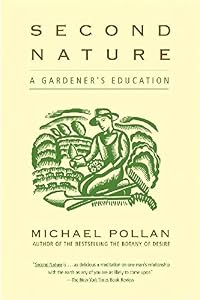
Second Nature: A Gardener's Education
by Michael Pollan
On This Page
Description
Chosen by the American Horticultural Society as one of the seventy-five greatest books ever written about gardening, Second Nature has become a manifesto for rethinking our relationship with nature. With chapter ranging from a reconsideration of the Great American Lawn and a dispatch from one man's war with a woodchuck to reflections on the sexual politics of roses, Pollan captures the rhythms of our everyday engagement with the outdoors in all its glory and exasperation.Tags
Recommendations








Member Recommendations
mao21234 Organized also by season, full of insights into how to grow things. Both are good for novice gardeners.
21
Member Reviews
I really, really like Michael Pollan's writing and this book is no exception. However, this book suffers from the same problem that I've noted on his other books that I've read: sometimes he just doesn't know when to stop.
Pollan calls himself on this tendency in his introduction:
"It may be my nature to complicate matters unduly, to search for large meanings in small things..."
My favorite sections:
Chapter 1: memories of his father and grandfather's very different approaches to gardening. His dad's reaction to suburban peer pressure: hilarious!
Chapter 2: Pollan's personal battle to protect his garden, especially against woodchucks.
Chapter 11: a comparison of the various world views represented by different seed/gardening catalogs
My show more least favorite sections:
Chapter 5: I am bored almost to tears by roses. Worthless.
Chapter 9: Pollan's waxing philosophical about the symbolism of trees in various cultures was much too drawn out. Yawn.
Overall, worth reading if you like Pollan's writing style and have any interest in gardening. show less
Pollan calls himself on this tendency in his introduction:
"It may be my nature to complicate matters unduly, to search for large meanings in small things..."
My favorite sections:
Chapter 1: memories of his father and grandfather's very different approaches to gardening. His dad's reaction to suburban peer pressure: hilarious!
Chapter 2: Pollan's personal battle to protect his garden, especially against woodchucks.
Chapter 11: a comparison of the various world views represented by different seed/gardening catalogs
My show more least favorite sections:
Chapter 5: I am bored almost to tears by roses. Worthless.
Chapter 9: Pollan's waxing philosophical about the symbolism of trees in various cultures was much too drawn out. Yawn.
Overall, worth reading if you like Pollan's writing style and have any interest in gardening. show less
There are some revolutionary ideas in this book, about how to re-imagine the interaction of humans and nature. However, it felt more like a collection of essays than a cohesive book and as a result there was more repetition and overlap of these ideas than was really necessary -- it verged on diatribe at times. I did enjoy it -- as a gardener it tapped into my imagination in a satisfying way and I particularly liked the section on roses.
{The} garden is a place where {nature’s} ways and {the gardener’s} designs are brought gracefully into alignment. To occupy such a middle ground is not easy -- the temptation is always to either take complete control or relinquish it altogether, to invoke your own considerable (but in the end overrated) power or to bend to nature’s. The first way is that of the developer, the second that of the “nature lover.” The green thumb, who will be neither heroic nor romantic, avoids both extremes. He does not try to make water run uphill, but neither does he let it flow wherever it will.
I’ve loved Pollan’s work since The Omnivore's Dilemma, including going into his backlist for The Botany of Desire and now this one. It’s a show more collection of 12 essays, about nature and gardening and philosophy, organized by season. It being February, I turned first to “Winter” and read about the annual perusal of seed catalogs and how their products (and their customers) markedly differ. (Then I picked two from the dozen he described and ordered them and have them here, ready to look through!) The essays are gentle and “wondering” and show no sign of age despite more than 25 years having passed since initial publication. show less
I’ve loved Pollan’s work since The Omnivore's Dilemma, including going into his backlist for The Botany of Desire and now this one. It’s a show more collection of 12 essays, about nature and gardening and philosophy, organized by season. It being February, I turned first to “Winter” and read about the annual perusal of seed catalogs and how their products (and their customers) markedly differ. (Then I picked two from the dozen he described and ordered them and have them here, ready to look through!) The essays are gentle and “wondering” and show no sign of age despite more than 25 years having passed since initial publication. show less
I am not a gardener, but I enjoyed this book as much as any Pollan work - and I really love his books. This book, like his others, is broader in scope than the title may suggest. Seemingly standing at his elbow as he tills the soil of his own garden we get the history of arboriculture, that of more specific cultivars, the philosophies evident in seed catalogs, the morality/efficacy of weeding and fighting pests, and more. A somewhat wistful but overall informative and enlightenting work.
Very well narrated by the author himself.
Merged review:
I am not a gardener, but I enjoyed this book as much as any Pollan work - and I really love his books. This book, like his others, is broader in scope than the title may suggest. Seemingly standing show more at his elbow as he tills the soil of his own garden we get the history of arboriculture, that of more specific cultivars, the philosophies evident in seed catalogs, the morality/efficacy of weeding and fighting pests, and more. A somewhat wistful but overall informative and enlightenting work.
Very well narrated by the author himself. show less
Very well narrated by the author himself.
Merged review:
I am not a gardener, but I enjoyed this book as much as any Pollan work - and I really love his books. This book, like his others, is broader in scope than the title may suggest. Seemingly standing show more at his elbow as he tills the soil of his own garden we get the history of arboriculture, that of more specific cultivars, the philosophies evident in seed catalogs, the morality/efficacy of weeding and fighting pests, and more. A somewhat wistful but overall informative and enlightenting work.
Very well narrated by the author himself. show less
My favorite Pollan book by far. Pollan implicitly advocates a genuinely holistic and humanist relationship to the environment through gardening - unlike the self-loathing anti-humanism and doomsaying normally encountered in environmentally themed books. However, at times there is some chemophobic or politically correct attitudes that distract from the core of the book. Overall, it reminds me of the gardener's version of Zen and the Art of Motorcycle Maintenance, and that's a good thing.
I believe I have now read all of Michael Pollan's books, and I like them all for the same reason--he combines his own experiences with lots and lots of research on the subject at hand, and what results is a highly accessible commentary. With Virginia Woolf's description in mind, I would call him an excellent essayist.
As with his other books, I agreed with the ideas in "Second Nature" generally but not always in all the details; he can fall into flippancy when he tries too hard to be witty. However, I greatly enjoyed his discussion of roses, and was intrigued by the changes throughout history in gardening and the attitudes of humans to their environment. I also had to chuckle at his hard-learned lessons in his own garden--discovering show more that it's all very well in theory to be at one with nature, but then the woodchucks eat all your lettuce seedlings and the thistles take over your perennial bed, and you find yourself feeling suddenly and strangely murderous.
This was a thoroughly interesting and enjoyable book, and made me want to revisit his other writings. show less
As with his other books, I agreed with the ideas in "Second Nature" generally but not always in all the details; he can fall into flippancy when he tries too hard to be witty. However, I greatly enjoyed his discussion of roses, and was intrigued by the changes throughout history in gardening and the attitudes of humans to their environment. I also had to chuckle at his hard-learned lessons in his own garden--discovering show more that it's all very well in theory to be at one with nature, but then the woodchucks eat all your lettuce seedlings and the thistles take over your perennial bed, and you find yourself feeling suddenly and strangely murderous.
This was a thoroughly interesting and enjoyable book, and made me want to revisit his other writings. show less
I came across Michael Pollan's Second Nature by accident. As I was shelving the book, a force came over me demanding that I scan the pages. I did so and placed the book on the shelf, but then, minutes later, I was compelled to pick it up again. Something attracted me. Reading an entire book about gardening, however, was not appealing so I returned it to its shelf. I am mildly interested in nature, especially when it comes to making nature more "natural". But to read a book about it? No thank you. Needless to say, by the end of the day I had book in hand and was eager to get started.
In the vein the Thoreau, a much more contemporary Pollan addresses humanity's relationship with nature. He includes many personal anecdotes that are both show more comical and touching. He dives through the history of gardens from Europe to America to provide insight on our current perceptions of nature. With language that would rival many poets, Pollan examines the natural world we so often fail to recognize. He disputes the preconceived notion that the relationship between man and nature is irreconcilable. From the doctrine of weeds to the tyranny of the American lawn, Second Nature is filled with commentary that challenges everything we've ever known about the natural world.
Written in 1991, Second Nature will likely never be one of Pollan's more popular titles. Having read The Omnivore's Dilemma, I strongly believe Pollan's gardening manifesto to be the better of the two. The Omnivore's Dilemma is great if you're looking for an exposé on the agricultural and food industries; Second Nature fills in everywhere else, being a work of ethics, history, comedy, religion, literature, and, even more than being a book about gardening, philosophy. It is even romantic, as is found in the chapter on the sexuality of roses: "the hybrid roses don’t give more bloom, really, they just parcel their blooms out over a longer period; they save and reinvest. So instead of abandoning herself to one great climax of bloom, the rose now doles out her blossoms one by one, always holding back, forever on the verge, never quite... finishing (95)."
The book is conveniently divided into seasonal sections, and I do feel that Second Nature would be best enjoyed spread out over a year's time. There is much to consider, and I rather like the idea of using this book as a gardening devotional. It truly is a powerful book! show less
In the vein the Thoreau, a much more contemporary Pollan addresses humanity's relationship with nature. He includes many personal anecdotes that are both show more comical and touching. He dives through the history of gardens from Europe to America to provide insight on our current perceptions of nature. With language that would rival many poets, Pollan examines the natural world we so often fail to recognize. He disputes the preconceived notion that the relationship between man and nature is irreconcilable. From the doctrine of weeds to the tyranny of the American lawn, Second Nature is filled with commentary that challenges everything we've ever known about the natural world.
Written in 1991, Second Nature will likely never be one of Pollan's more popular titles. Having read The Omnivore's Dilemma, I strongly believe Pollan's gardening manifesto to be the better of the two. The Omnivore's Dilemma is great if you're looking for an exposé on the agricultural and food industries; Second Nature fills in everywhere else, being a work of ethics, history, comedy, religion, literature, and, even more than being a book about gardening, philosophy. It is even romantic, as is found in the chapter on the sexuality of roses: "the hybrid roses don’t give more bloom, really, they just parcel their blooms out over a longer period; they save and reinvest. So instead of abandoning herself to one great climax of bloom, the rose now doles out her blossoms one by one, always holding back, forever on the verge, never quite... finishing (95)."
The book is conveniently divided into seasonal sections, and I do feel that Second Nature would be best enjoyed spread out over a year's time. There is much to consider, and I rather like the idea of using this book as a gardening devotional. It truly is a powerful book! show less
Members
- Recently Added By
Lists

Recommended Nature Writing
346 works; 180 members

Garden-essays and books on gardening
53 works; 10 members

Non-Fiction Worth Reading
1,015 works; 261 members

Books Read in 2007
324 works; 8 members

Best Gardening Books
133 works; 45 members
Author Information

32+ Works 42,619 Members
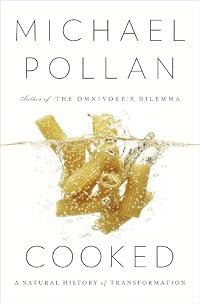
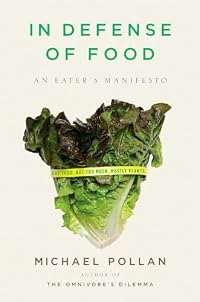
Michael Pollan is a contributing writer for "The New York Times Magazine" as well as a contributing editor at "Harper's" magazine. He is the author of two prize-winning books: "Second Nature: A Gardener's Education" and "A Place of My Own: The Education of an Amateur Builder." Pollan lives in Connecticut with his wife and son. (Publisher Provided) show more Michael Pollan was born in 1955 and raised on Long Island, NY. He received his B.A. in English from Bennington College in 1977 and his Masters, also in English, from Columbia University, in 1981. He is the author of Cooked: A Natural History of Transformation, as well as 5 New York Times bestselling books: Food Rules: An Eater's Manual, In Defense of Food: An Eater's Manifesto, The Omnivore's Dilemma: A Natural History of Four Meals. The Botany of Desire: A Plant's-Eye View of the World and Ho wto Change Your Mind: What the New Science of Psychedelics Teaches Us about Consciousness, Dying, Addiction, Depression, and Transcendence. (Bowker Author Biography) show less
Awards and Honors
Common Knowledge
- Canonical title*
- Una seconda natura
- Original title
- Second Nature: A Gardener's Education
- Original publication date
- 1991
- People/Characters
- Michael Pollan
- Important places
- Connecticut, USA
- Dedication
- For Judith
- First words
- This book is the story of my education in the garden.
- Last words
- (Click to show. Warning: May contain spoilers.)Toward me and this mower and the otherwise unexplainable beauty of a path in a garden.
- Blurbers
- Dillard, Annie; FitzGerald, Frances; Lacy, Allen; Buckley, Christopher; Rybczynski, Witold
*Some information comes from Common Knowledge in other languages. Click "Edit" for more information.
Classifications
- Genres
- Home & Garden, Nonfiction, General Nonfiction, Biography & Memoir
- DDC/MDS
- 635.9 — Applied Science & Technology Agriculture Garden crops (Horticulture) Flowers and ornamental plants
- LCC
- SB455 .P58 — Agriculture Horticulture. Plant propagation. Plant breeding Plant culture Gardens and gardening
- BISAC
Statistics
- Members
- 1,757
- Popularity
- 12,471
- Reviews
- 38
- Rating
- (3.85)
- Languages
- 6 — Dutch, English, Finnish, German, Italian, Swedish
- Media
- Paper, Audiobook, Ebook
- ISBNs
- 24
- ASINs
- 16