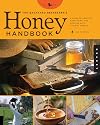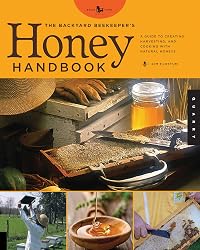
The Backyard Beekeeper's Honey Handbook: A Guide to Creating, Harvesting, and Cooking with Natural Honeys
by Kim Flottum
On This Page
Description
"In 'The Backyard Beekeeper's Honey Handbook', hive hints and honey-harvesting tutorials abound, all delivered with the sound, practical, and common-sense perspective of a seasoned expert. Also, an illustrated guide to honey plants explores their regional bloom dates and honey flows in unprecedented detail. A wide array of honey-handling equipment is illustrated, explained, and reviewed. With this book at your side, you will be the sweetest, savviest, beekeeper in the neighborhood"--P. [4] show more of cover. show lessTags
Recommendations











Member Reviews
Most of the standard books on beekeeping focus on getting high production from the bees. When you care for hives for your own use, you can focus on quality rather than quantity. This is not necessarily a beginner’s instruction manual, rather it is a guide to delving further into honey. In the first 1/3 of the book, Flottum shows us how to pay attention to what plants are flowering at different times and the different flavors of honey produced. Keeping track of the weather (or getting Growing Degree Days online from an Ag Extension agent) will help you predict blossom time. He also explains how to manage your bees so they are ready for peak production at the same time the plants are at peak production by explaining what motivates bees show more to forage. This is the section I got the most from, and the main reason for rating the book as high as 4.
The second 1/3 of the book describes how to harvest honey in a way that preserves the unique scent and flavor of each batch. Some of his procedures, while standard, may not be approved by beekeepers who are Bee Guardians (i.e. letting the bees flourish under their own instinctual behaviors). For example, he uses air blowers to chase the bees away from frames he wants to harvest. His description and photos for an efficient extracting room are much more extensive than any “backyard” beekeeper would use. Apparently he has shifted the book's focus to production for commercial sale of “artisanal” honey. His advice on dealing with solid honey is well worth checking, since most methods of liquefying honey actually overheat it and cause loss of enzymes and flavor. He says the critical temperature is 110° F. A small bottle may be warmed in a pan of hot water (watch the temperature!) and a 5 gallon pail can be warmed by setting it in a homemade Styrofoam enclosure with a single 40 watt light bulb.
The final 1/3 of the book is a collection of recipes which highlight different flavors of honey. Barbecue sauces, dips, dressings, drinks (yes! there is Wassail) and spreads are featured, in addition to the expected desserts and breads. I haven’t tried any, tho they all look simple enough, so can’t comment further. show less
The second 1/3 of the book describes how to harvest honey in a way that preserves the unique scent and flavor of each batch. Some of his procedures, while standard, may not be approved by beekeepers who are Bee Guardians (i.e. letting the bees flourish under their own instinctual behaviors). For example, he uses air blowers to chase the bees away from frames he wants to harvest. His description and photos for an efficient extracting room are much more extensive than any “backyard” beekeeper would use. Apparently he has shifted the book's focus to production for commercial sale of “artisanal” honey. His advice on dealing with solid honey is well worth checking, since most methods of liquefying honey actually overheat it and cause loss of enzymes and flavor. He says the critical temperature is 110° F. A small bottle may be warmed in a pan of hot water (watch the temperature!) and a 5 gallon pail can be warmed by setting it in a homemade Styrofoam enclosure with a single 40 watt light bulb.
The final 1/3 of the book is a collection of recipes which highlight different flavors of honey. Barbecue sauces, dips, dressings, drinks (yes! there is Wassail) and spreads are featured, in addition to the expected desserts and breads. I haven’t tried any, tho they all look simple enough, so can’t comment further. show less
Author Kim Flottum is the editor of Bee Culture magazine. This beautiful and informational book is a must have for beekeepers and cooks. Easy to read, eye candy pictures and over 50 honey recipes. I give it 5 bee stars.
Members
- Recently Added By
Author Information

14 Works 718 Members
Common Knowledge
- Dedication
- To Kathy--For patience, For help, For love
- First words
- The simple answer to where the bees are, of course, is in the backyard.
Preface: One of the best things about being a beekeeper is harvesting what your bees and you have produced.
Introduction: The premise of this book is that you have attained a degree of success in raising honey bees: keeping them healthy, replacing and increasing your colonies, perhaps raising your own queens, making splits or divid... (show all)es successfully, and doing all these things with a minimum of expense and effort. - Blurbers
- Land, Leslie; Muzaurieta, Annie Bell
Classifications
Statistics
- Members
- 82
- Popularity
- 388,930
- Reviews
- 2
- Rating
- (4.75)
- Languages
- English
- Media
- Paper, Ebook
- ISBNs
- 4
- UPCs
- 1
- ASINs
- 2