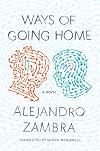
Ways of Going Home
by Alejandro Zambra
On This Page
Description
The writer son of a quiet sympathizer with the Pinochet regime reflects on the progress of his novel, in which an unnamed boy from a Chilean suburb witnesses an earthquake and meets an older girl who asks him to spy on her uncle.Tags
Recommendations












Member Reviews
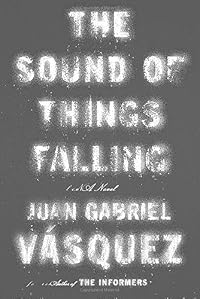
A thoughtful, understated little novel that looks at life as a child who grew up as Pinochet was in power. Kids know some things, but are quite oblivious to others, so they're still able to maintain an innocence & hope in some ways. It's also a novel within a novel as it is partly a novel & partly the story of the author who is writing the novel, both covering similar topics. As an adult & with Pinochet no longer in power, the author in the novel comes to realize that his childhood might not have been as bad as others' were because his parents supported Pinochet. Or, if they didn't support Pinochet outright, they did nothing to disagree -- no action being an action in & of itself. It's meant as a bit of a wake-up call to realize that by show more sitting on the sidelines, you are playing a part & supporting a side. The whole childhood part of growing up under a shadow of fear & oppression (even though, as a child, you may not entirely realize it as such) also reminded me of the Colombian novel The Sound of Things Falling (great book!), which was about the impact on a generation of people who came of age as the violent & uncertain times of the initiation of drug wars. show less
"Instead of screaming, I write books" R. Gary
This is a redemptive tribute to those who went missing during the Pinochet regime. To all those unknown names whose blood still runs through the veins of the silenced generation which was growing up during this elusive period in Chile.
Zambra’s unpretentious voice gets irretrievably tangled with the one narrating the story, a nameless writer, who simultaneously mirrors his life through his characters, creating a perfecty circled metanarration, overflowing with complex yet sophisticated symbolism.
"The novel belongs to our parents," the narrator says, understanding that his childhood experience of censorship and brutality was indirect, diluted by his infancy. Zambra plays a magic trick in show more creating an evocative past even in such a distressing time, where children played to be either war correspondents or secret spy agents or, if you prefer, secondary characters, as the metafiction kicks in with force.
The passage of time gives perspective to the ones now remembering. Zambra and his narrator dare to speak in an attempt to relieve the painful hungover which comes from a violent past and the arduous task of coming to terms with a disorienting history.
The once oblivious child has no choice but to carry the heavy burden of guilt on behalf of his parents, who were passive supporters of Pinochet, and learn to live with the increasing tension and estrangement towards them. I felt disturbed with recognition about the way Zambra faced his conflicting emotions when evoking his parental figures. The abstract need, the unquestionable respect for his parents in his youthful days as opposed to the embarrassment and disapproval he feels for them in the present. It rings a bell.
“You went a different way,” my mother said later, angry, her eyes still swollen. You were the ones who went a different way, I thought, but I didn’t say it.”
The different ways of remembering which try to ease the anguish of knowing that you have become an orphan when you decided to start writing.
“I thought about my mother, my father. I thought: What kinds of faces do my parents have? But our parents never really have faces. We never learn to truly look at them.”
This novel is also a hymn to the vocation of writing, and it’s precisely this calling which urges the narrator to write down the slippery scenes of a long gone past to give first names to these secondary characters, to explain, in the end, his own story.
"Although we might want to tell other people's stories we always end up telling our own."
The courageous catharsis of giving up the fictional framing to write about oneself, to finally speak out loud. That is what pierced right through me. To see these survivors of a lost world dealing with their present the best they can. Some stay, some fly away.And the shock which comes with the understanding that it’s just because you want them to stay that you have to let them go. And that it really doesn’t matter. Either staying or going, each one has to find its own way of going back home. show less
This is a redemptive tribute to those who went missing during the Pinochet regime. To all those unknown names whose blood still runs through the veins of the silenced generation which was growing up during this elusive period in Chile.
Zambra’s unpretentious voice gets irretrievably tangled with the one narrating the story, a nameless writer, who simultaneously mirrors his life through his characters, creating a perfecty circled metanarration, overflowing with complex yet sophisticated symbolism.
"The novel belongs to our parents," the narrator says, understanding that his childhood experience of censorship and brutality was indirect, diluted by his infancy. Zambra plays a magic trick in show more creating an evocative past even in such a distressing time, where children played to be either war correspondents or secret spy agents or, if you prefer, secondary characters, as the metafiction kicks in with force.
The passage of time gives perspective to the ones now remembering. Zambra and his narrator dare to speak in an attempt to relieve the painful hungover which comes from a violent past and the arduous task of coming to terms with a disorienting history.
The once oblivious child has no choice but to carry the heavy burden of guilt on behalf of his parents, who were passive supporters of Pinochet, and learn to live with the increasing tension and estrangement towards them. I felt disturbed with recognition about the way Zambra faced his conflicting emotions when evoking his parental figures. The abstract need, the unquestionable respect for his parents in his youthful days as opposed to the embarrassment and disapproval he feels for them in the present. It rings a bell.
“You went a different way,” my mother said later, angry, her eyes still swollen. You were the ones who went a different way, I thought, but I didn’t say it.”
The different ways of remembering which try to ease the anguish of knowing that you have become an orphan when you decided to start writing.
“I thought about my mother, my father. I thought: What kinds of faces do my parents have? But our parents never really have faces. We never learn to truly look at them.”
This novel is also a hymn to the vocation of writing, and it’s precisely this calling which urges the narrator to write down the slippery scenes of a long gone past to give first names to these secondary characters, to explain, in the end, his own story.
"Although we might want to tell other people's stories we always end up telling our own."
The courageous catharsis of giving up the fictional framing to write about oneself, to finally speak out loud. That is what pierced right through me. To see these survivors of a lost world dealing with their present the best they can. Some stay, some fly away.And the shock which comes with the understanding that it’s just because you want them to stay that you have to let them go. And that it really doesn’t matter. Either staying or going, each one has to find its own way of going back home. show less
This was a very interesting and enjoyable read. It was the right blend of "literary writing" with story-telling for me; there was a flow to it and I was never distracted by contrived or over-done writing.
The story itself was not what the story was, if that makes sense... I thought it was a lot like "The Sense of an Ending", in its questioning of memories and the relationship between past and present - but unlike it in that it lacked the questions of guilt and accountability (although that is present in the book, but mainly as a question about the comportment of his parents and their generation during the Pinochet regime).
Compared to "The Sense of an Ending", "Ways of Going Home" is more about the way we handle the present under the show more weight of the past. There is also the additional element of comparing an actual present to a fictional past - this is a clever way to write a book. There are two parts: one is about a young writer wrestling his life and the book he's working on, and the other is his semi-autobiographical novel.
This is a writer's novel, with insight to the writer's mind and observations, if not the writing process; lots of intertextuality, references to other writers, even direct quotes. I love books that quote other authors (unless they become overdone, overworked, intellectual to the point of pretentiousness). show less
The story itself was not what the story was, if that makes sense... I thought it was a lot like "The Sense of an Ending", in its questioning of memories and the relationship between past and present - but unlike it in that it lacked the questions of guilt and accountability (although that is present in the book, but mainly as a question about the comportment of his parents and their generation during the Pinochet regime).
Compared to "The Sense of an Ending", "Ways of Going Home" is more about the way we handle the present under the show more weight of the past. There is also the additional element of comparing an actual present to a fictional past - this is a clever way to write a book. There are two parts: one is about a young writer wrestling his life and the book he's working on, and the other is his semi-autobiographical novel.
This is a writer's novel, with insight to the writer's mind and observations, if not the writing process; lots of intertextuality, references to other writers, even direct quotes. I love books that quote other authors (unless they become overdone, overworked, intellectual to the point of pretentiousness). show less
It's great to have read this book at the same time as Ban en Banlieue, another novel where the author struggles to write truthfully about things that are too terrible, or too hidden, to be written about truthfully. This novel succeeds magnificently in turning that contradiction into art. The novel is from the point of view of a novelist trying to make sense of his childhood during the Pinochet years, and to come to terms with the choices that his parents and the other adults in his life made to survive those years.
An excerpt:
I'd spent the afternoon with a group of classmates, and we were exchanging family stories in which death appeared with urgent insistence. Of all those present I was the only one who came from a family with no show more dead, and that realization filled me with a strange bitterness: my friends had grown up reading the books that their dead parents or siblings left behind in the house. But in my family there were no dead and there were no books.
I come from a family with no dead. show less
An excerpt:
I'd spent the afternoon with a group of classmates, and we were exchanging family stories in which death appeared with urgent insistence. Of all those present I was the only one who came from a family with no show more dead, and that realization filled me with a strange bitterness: my friends had grown up reading the books that their dead parents or siblings left behind in the house. But in my family there were no dead and there were no books.
I come from a family with no dead. show less
Autobiography and fiction are intermingled in this short novel to the extent that by the end they have nearly blended into one story. It is about the past and about living with the past and making sense of it. It's about explaining parents' inexplicable behavior. It's about dictatorships and the scars they leave, even on those who on the surface, seem to have come through unscathed. It is beautifully translated by Megan McDowell, and her imprint is so light that it is almost as if it was written as intended in English. Highly recommended.
Quotes:
If there was anything to learn, we didn't' learn it. Now I think it's a good thing to lose confidence in the solidity of the ground, I think it's necessary to know that from one moment to the show more next everything can come tumbling down.
To read is to cover one's face, I thought.
To read is to cover one's face. And to write is to show it.
Parents abandon their children. Children abandon their parents. Parents protect or forsake, but they always forsake. Children stay or go but they always go. And it's all unfair, especially the sound of the words, because the language is pleasing and confusing, because ultimately we would like to sing or at least whistle a tune, to walk alongside the stage whistling a tune. We want to be actors waiting patiently for the cue to walk onstage. But the audience left a long time ago.
I knew little, but at least I knew that: no one could speak for someone else. That although we might want to tell other people's stories, we always end up telling our own. show less
Quotes:
If there was anything to learn, we didn't' learn it. Now I think it's a good thing to lose confidence in the solidity of the ground, I think it's necessary to know that from one moment to the show more next everything can come tumbling down.
To read is to cover one's face, I thought.
To read is to cover one's face. And to write is to show it.
Parents abandon their children. Children abandon their parents. Parents protect or forsake, but they always forsake. Children stay or go but they always go. And it's all unfair, especially the sound of the words, because the language is pleasing and confusing, because ultimately we would like to sing or at least whistle a tune, to walk alongside the stage whistling a tune. We want to be actors waiting patiently for the cue to walk onstage. But the audience left a long time ago.
I knew little, but at least I knew that: no one could speak for someone else. That although we might want to tell other people's stories, we always end up telling our own. show less
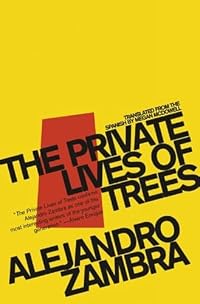
It may look like a beginner’s guide to Male and Female Brain Chemistry but in fact it is the latest novel from Chilean author Alejandro Zambra. At 139 pages, Ways of Going Home (2011; translated by Megan McDowell in 2013 and now out in paperback) is Zambra’s longest work. His previous novellas, Bonsai and The Private Lives of Trees, never even hit the hundred page mark. He’s mastered the art of brevity and paces his prose perfectly so that there is spaciousness to every scene and nothing feels rushed.
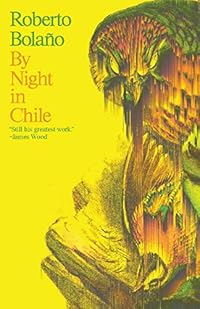
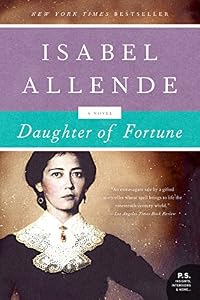
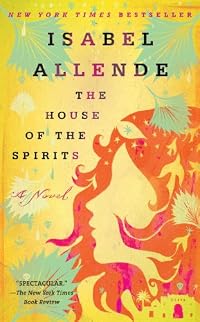
Most people who’ve read any Chilean literature will be familiar with either Isabel Allende or Roberto Bolaño. Zambra’s work takes the middle ground between Bolaño’s complexity and the straightforward narratives of Allende. show more He’s delicately somber, has a simple but lovely writing style and is a perfect go-to for those ready to explore further in Latin American fiction.
Ways of Going Home begins as the story of a child growing up in Pinochet’s Chile. His innocence protects him. To him, an earthquake is scary but it’s also an adventure and “as for Pinochet, to me he was a television personality who hosted a show with no fixed schedule, and I hated him for that, for the stuffy national channels that interrupted their programming during the best parts. Later I hated him for being a son of a bitch, for being a murderer, but back then I hated him only for those inconvenient shows that Dad watched…” His troubles are minor; he’s a regular kid with an ordinary life, even in the midst of dictatorship. Some of it is quite funny while also painting a microcosm of human weaknesses.
"Suddenly, that heavy atmosphere prevailed in which the only possible topic of conversation is the lateness of the food. Our order took so long that finally Dad decided we would leave as soon as the food came. I protested, or I wanted to protest, or now I think I should have protested. “If we’re going to leave, let’s go now,” said Mom resignedly, but Dad explained that this way the restaurant owners would lose the food, that it was an act of justice, of revenge."
The first segment of the novel is tellingly called “Secondary Characters”. It refers to children, whose lives are always shaped in the shadows of their parents’ own lives; yet it also refers to those parents, the faceless bystanders of history.
In the most important part of the story, the boy meets an older girl called Claudia, who asks him to spy on her uncle for her. The boy doesn’t understand what’s going on, but his glimpses of Claudia and her strange family will haunt him for many years.
The next segment switches gears and is told by the author of “Secondary Characters”. Zambra embroils his novel in three layers of metafiction. He’s based the author on himself and the author has based the boy on himself. Yes, it’s an old and tired postmodern ploy, and not one I find very interesting, but Zambra uses it to good effect. Scenes from one life cross over to the next, weaving together into a cohesive tale of memory and fantasy as the narratives switch back and forth.
Guilt is the paramount theme. In adulthood, it can no longer be avoided and the author looks back on his real boyhood feeling shame. The kid in “Secondary Characters” who believed, with calming certainty, that “my father isn’t anything” is rewritten as the author decides that “to be neither good nor bad … seemed to me, in the end, the same as being bad.” But not only is there the inherited guilt of non-partisan parents; there is also the guilt of a boy who never suffered during the regime, for whom no one disappeared and the dictatorship was only inconvenient.
The heart and soul of the novel thus becomes Claudia, the person missing from his life that the author feels compelled to invent – someone who did suffer and in doing so, affected him. Claudia as a child seems as innocent as the boy who aids her. Only in their adulthood is it revealed how serious her motives were. It is only as an adult that she can endure what happened. “Learning to tell her story as if it didn’t hurt”, trying to reclaim her past and yet leave the damage behind is what drives the second half of the book.
“My story isn’t terrible. That’s what Ximena doesn’t understand: our story isn’t terrible. There was pain, and we’ll never forget that pain, but we also can’t forget the pain of others. Because we were protected, in the end; because there were others who suffered more, who suffer more.”
If I have a complaint about this excellent novel, it is only that the metafictional plot is less interesting than the Claudia plot. Author inserts always seem to talk about the writing life in the most ponderous fashion imaginable. After a few Paul Austers it just gets really old and the pages devoted to the author’s trouble with his writing and his ex-wife struck me as distracting and unnecessary. On the other hand, in a book this size, at least it doesn’t last long.
Ways of Going Home is really the gentlest book imaginable and yet it brings to light the scars a regime like Pinochet’s can leave, even on the people who went under the radar. And Megan McDowell translates with a deft touch, ensuring that it’s a pleasure to read all the way through.
http://pseudointellectualreviews.wordpress.com/2014/03/19/ways-of-going-home-ale... show less
Most people who’ve read any Chilean literature will be familiar with either Isabel Allende or Roberto Bolaño. Zambra’s work takes the middle ground between Bolaño’s complexity and the straightforward narratives of Allende. show more He’s delicately somber, has a simple but lovely writing style and is a perfect go-to for those ready to explore further in Latin American fiction.
Ways of Going Home begins as the story of a child growing up in Pinochet’s Chile. His innocence protects him. To him, an earthquake is scary but it’s also an adventure and “as for Pinochet, to me he was a television personality who hosted a show with no fixed schedule, and I hated him for that, for the stuffy national channels that interrupted their programming during the best parts. Later I hated him for being a son of a bitch, for being a murderer, but back then I hated him only for those inconvenient shows that Dad watched…” His troubles are minor; he’s a regular kid with an ordinary life, even in the midst of dictatorship. Some of it is quite funny while also painting a microcosm of human weaknesses.
"Suddenly, that heavy atmosphere prevailed in which the only possible topic of conversation is the lateness of the food. Our order took so long that finally Dad decided we would leave as soon as the food came. I protested, or I wanted to protest, or now I think I should have protested. “If we’re going to leave, let’s go now,” said Mom resignedly, but Dad explained that this way the restaurant owners would lose the food, that it was an act of justice, of revenge."
The first segment of the novel is tellingly called “Secondary Characters”. It refers to children, whose lives are always shaped in the shadows of their parents’ own lives; yet it also refers to those parents, the faceless bystanders of history.
In the most important part of the story, the boy meets an older girl called Claudia, who asks him to spy on her uncle for her. The boy doesn’t understand what’s going on, but his glimpses of Claudia and her strange family will haunt him for many years.
The next segment switches gears and is told by the author of “Secondary Characters”. Zambra embroils his novel in three layers of metafiction. He’s based the author on himself and the author has based the boy on himself. Yes, it’s an old and tired postmodern ploy, and not one I find very interesting, but Zambra uses it to good effect. Scenes from one life cross over to the next, weaving together into a cohesive tale of memory and fantasy as the narratives switch back and forth.
Guilt is the paramount theme. In adulthood, it can no longer be avoided and the author looks back on his real boyhood feeling shame. The kid in “Secondary Characters” who believed, with calming certainty, that “my father isn’t anything” is rewritten as the author decides that “to be neither good nor bad … seemed to me, in the end, the same as being bad.” But not only is there the inherited guilt of non-partisan parents; there is also the guilt of a boy who never suffered during the regime, for whom no one disappeared and the dictatorship was only inconvenient.
The heart and soul of the novel thus becomes Claudia, the person missing from his life that the author feels compelled to invent – someone who did suffer and in doing so, affected him. Claudia as a child seems as innocent as the boy who aids her. Only in their adulthood is it revealed how serious her motives were. It is only as an adult that she can endure what happened. “Learning to tell her story as if it didn’t hurt”, trying to reclaim her past and yet leave the damage behind is what drives the second half of the book.
“My story isn’t terrible. That’s what Ximena doesn’t understand: our story isn’t terrible. There was pain, and we’ll never forget that pain, but we also can’t forget the pain of others. Because we were protected, in the end; because there were others who suffered more, who suffer more.”
If I have a complaint about this excellent novel, it is only that the metafictional plot is less interesting than the Claudia plot. Author inserts always seem to talk about the writing life in the most ponderous fashion imaginable. After a few Paul Austers it just gets really old and the pages devoted to the author’s trouble with his writing and his ex-wife struck me as distracting and unnecessary. On the other hand, in a book this size, at least it doesn’t last long.
Ways of Going Home is really the gentlest book imaginable and yet it brings to light the scars a regime like Pinochet’s can leave, even on the people who went under the radar. And Megan McDowell translates with a deft touch, ensuring that it’s a pleasure to read all the way through.
http://pseudointellectualreviews.wordpress.com/2014/03/19/ways-of-going-home-ale... show less
I am quickly falling in love with Spanish speaking authors. Zambra, who is from Chile, weaves a poetic story about the earthquake that hit Santiago, Chile when he was a kid. It's also a story about how he grows up and searches for Claudia, a girl he knew when he was young. He writes about what it's like to leave home and go home and, I think, elaborates poetically on the feeling of never being able to go back to your childhood home the same way again.
Members
- Recently Added By
Lists

Top Five Books of 2014
1,064 works; 397 members
Author Information

19+ Works 2,808 Members
Some Editions
Awards and Honors
Common Knowledge
- Canonical title
- Ways of Going Home
- Original title
- Formas de volver a casa
- Original publication date
- 2011
- Epigraph
- Now I know how to walk; I can no longer learn to walk. -W. Benjamin
Instead of howling, I write books. -R. Gary - Dedication
- FOR ANDREA
- First words
- ONCE, I GOT LOST.
- Last words
- (Click to show. Warning: May contain spoilers.)It's overwhelming to think that in the backseats children are sleeping, and that every one of those children will remember, someday, the old car they rode in years before, with their parents.
- Blurbers
- Goldman, Francisco; Alarcon, Daniel; Luiselli, Valeria
Classifications
- Genres
- Fiction and Literature, General Fiction
- DDC/MDS
- 863.7 — Literature & rhetoric Spanish, Portuguese, Galician literatures Spanish fiction 21st Century
- LCC
- PQ8098.36 .A43 .F6713 — Language and Literature French, Italian, Spanish and Portuguese literatures Spanish literature Provincial, local, colonial, etc. Spanish America
- BISAC
Statistics
- Members
- 459
- Popularity
- 66,111
- Reviews
- 25
- Rating
- (3.84)
- Languages
- 12 — Dutch, English, Finnish, French, German, Greek, Italian, Norwegian (Bokmål), Portuguese (Portugal), Spanish, Swedish, Turkish
- Media
- Paper, Ebook
- ISBNs
- 26
- ASINs
- 8