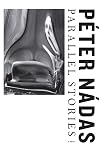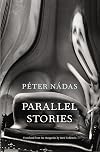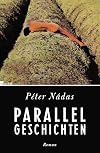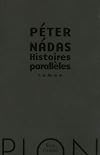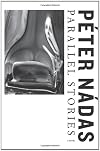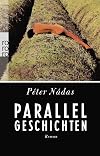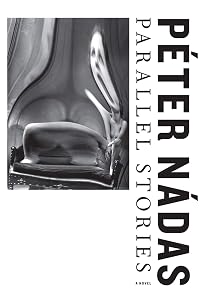
Parallel Stories
by Péter Nádas
On This Page
Description
The agendas of three European men with dubious political histories converge in the aftermath of an 1989 death linked to the fates of myriad Hungarians, Jews, Germans and Gypsies across the treacherous years of the mid-twentieth century.Tags
Recommendations














Member Recommendations
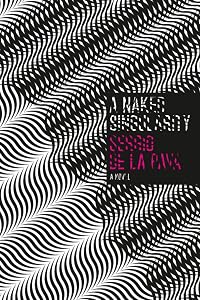
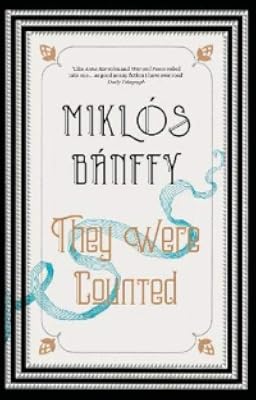
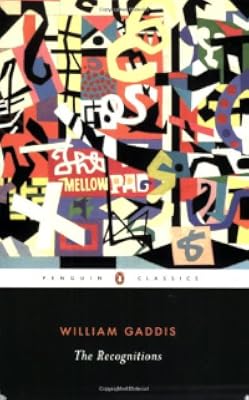
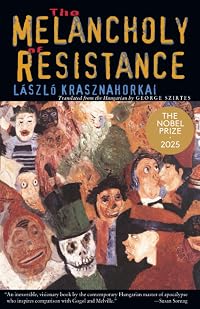
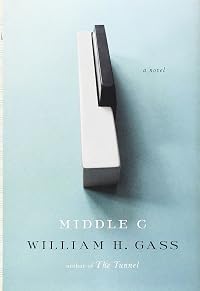
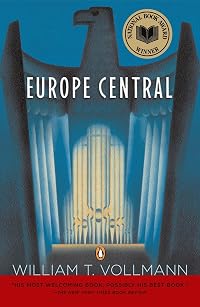
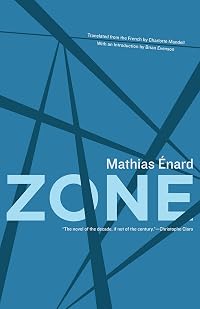
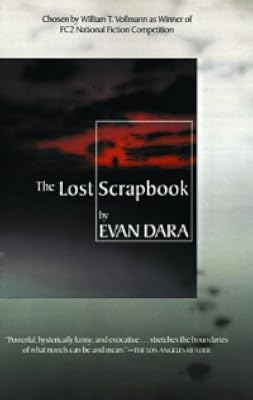
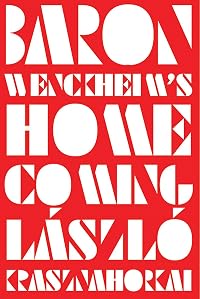
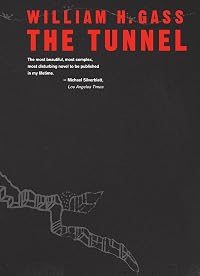
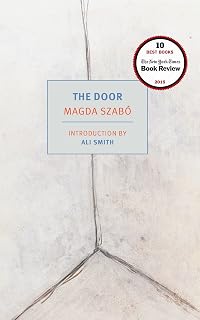
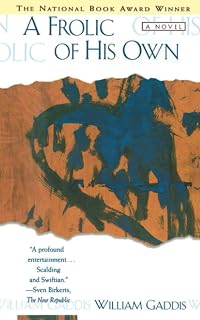
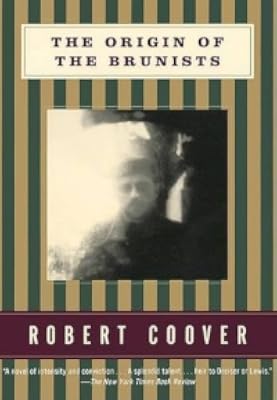
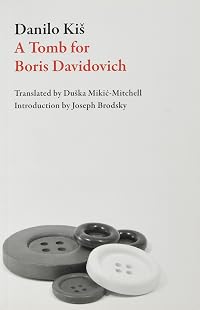
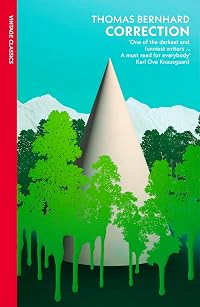
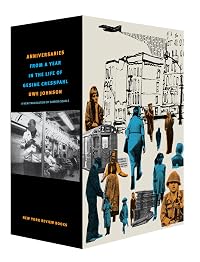
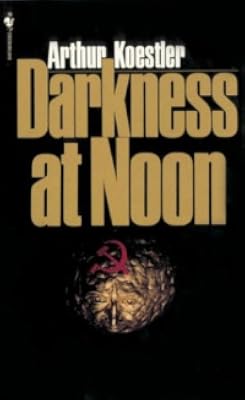
southernbooklady Despite the differences in the authors' origins, settings, and writing styles, there is something in each that reminds me of the other. Scale, breadth, maybe. Sharp and wise characterizations, sure. But more the sort of conflicted feelings of compassion, horror, and futility that each writer rouses in the reader.

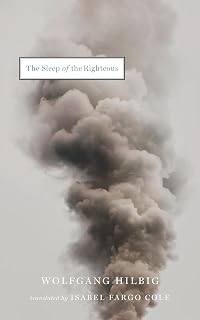
charlie68 Similar vein of Hungarian Literature
.

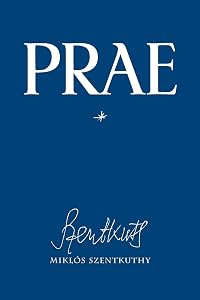
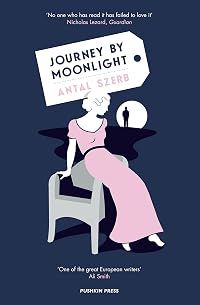
charlie68 Fictionalized account of the Hungarian Uprising. Features prominently in the book.

charlie68 Both contain stories that will expand the mind.
Member Reviews
The flammable human colloid gathered in the ditches, fat and marrow arranged in fine layers according to their relative density; the religion teach or the retired banker watched as fires burst to life with fat and flames flaring up from the depths.
This particular scene is not indicative of the spiralling core of Parallel Stories. The novel's soul is of a softer vice, one more suggestive, dispiriting and, often, spermy.
The action occurs largely in Budapest and Berlin, though other destinations in Hungary and Germany are featured. There are three timelines: 1) both before and during the Second World War, 2) 1956 and 3) 1989. The prose floats from scene to scene, often returning to an earlier situation but from a different perspective, show more gradually something else occurs. Associations are made. Narratives are linked. Accounts unravel and are dispelled. Sins are not confessed. Doubts linger. A Cubist gestalt doesn't quite triumph, but a sense-making (to paraphrase Herr H) stains as it signifies.
I read most of this while in Berlin, most of which over a single weekend as I was recovering from a classic case of cobble-hobbled knee. I was asked about the book by my mother-in-law. She asked with a smile. I had just read an account of a shadowy orgy in a filthy public restroom. I sensed she KNEW. I blushed and felt dirty.
There are a host of disorders swimming through the protagonists. Despite the grotesque trappings, none of those afflcited appeared contrived, nor entirely foreign. Péter Nádas has a penned an ugly work, one which may be one of the most important novels of the last 20 years. show less
This particular scene is not indicative of the spiralling core of Parallel Stories. The novel's soul is of a softer vice, one more suggestive, dispiriting and, often, spermy.
The action occurs largely in Budapest and Berlin, though other destinations in Hungary and Germany are featured. There are three timelines: 1) both before and during the Second World War, 2) 1956 and 3) 1989. The prose floats from scene to scene, often returning to an earlier situation but from a different perspective, show more gradually something else occurs. Associations are made. Narratives are linked. Accounts unravel and are dispelled. Sins are not confessed. Doubts linger. A Cubist gestalt doesn't quite triumph, but a sense-making (to paraphrase Herr H) stains as it signifies.
I read most of this while in Berlin, most of which over a single weekend as I was recovering from a classic case of cobble-hobbled knee. I was asked about the book by my mother-in-law. She asked with a smile. I had just read an account of a shadowy orgy in a filthy public restroom. I sensed she KNEW. I blushed and felt dirty.
There are a host of disorders swimming through the protagonists. Despite the grotesque trappings, none of those afflcited appeared contrived, nor entirely foreign. Péter Nádas has a penned an ugly work, one which may be one of the most important novels of the last 20 years. show less
"Parallel straight lines are straight lines which, being in the same plane and being produced indefinitely in both directions, do not meet one another in either direction."
-Euclid, The Elements
A fitting title, Parallel Stories. This myriad of characters endures through the same torrents of history, somehow, but they never really meet. This big brick is already getting comparisons to War and Peace, and I felt compelled to see for myself.
Adorno is famous for saying there can be no art after the Holocaust. Some are tempted to say he was right. Old style visions of beauty and form and the old-Burke 'sublime and beautiful' definitions are sidelined, or far distant from our present reality they are unrecognizable (Lem, etc.). But that's not show more for me to say.
Instead, we see many distorted, mournful, shrieking works, from the angry screechings of Russian parallel cinema, to the discordant compositions of Ligeti, Penderecki, and Xenakis, the bloodlands of Eastern Europe after the Nazis and the Soviets have produced a frightening and tragic corpus.
So to the actual book. It starts with a murder, and wanders and traces a sticky path through the 20th century ,moving from character to character, with some of the most tenuous links between them, and the backdrop of history rages on, from the Arrow Cross to the Hammer and Sickle.
The other backdrop to the novel, apart from history is the stench. Let me clarify for a minute here. The author does not hesitate nor shy away from history, nor does he shy away from the disgusting, the sticky, the intimate scenes of the characters' lives, from homosexual liaisons to lovers to the one part where a prisoner is covered in shit on a train car. Not too much of the other body functions, but there is a large, perhaps uncomfortable amount of sex. Is it obscene? Perhaps, as much as the history is. It does serve as a very thorough and intimate-as-close-as-possible view of the characters heads.
The psychology of the novel is amazing, and too dense for some. The filtering of tragedy and love through these characters' heads is astonishing. Make sure to keep a list handy, to keep track of them all.
This is an astonishing and inimitable read. Those with soft stomachs need not apply. The damn thing is haunting my dreams. show less
-Euclid, The Elements
A fitting title, Parallel Stories. This myriad of characters endures through the same torrents of history, somehow, but they never really meet. This big brick is already getting comparisons to War and Peace, and I felt compelled to see for myself.
Adorno is famous for saying there can be no art after the Holocaust. Some are tempted to say he was right. Old style visions of beauty and form and the old-Burke 'sublime and beautiful' definitions are sidelined, or far distant from our present reality they are unrecognizable (Lem, etc.). But that's not show more for me to say.
Instead, we see many distorted, mournful, shrieking works, from the angry screechings of Russian parallel cinema, to the discordant compositions of Ligeti, Penderecki, and Xenakis, the bloodlands of Eastern Europe after the Nazis and the Soviets have produced a frightening and tragic corpus.
So to the actual book. It starts with a murder, and wanders and traces a sticky path through the 20th century ,moving from character to character, with some of the most tenuous links between them, and the backdrop of history rages on, from the Arrow Cross to the Hammer and Sickle.
The other backdrop to the novel, apart from history is the stench. Let me clarify for a minute here. The author does not hesitate nor shy away from history, nor does he shy away from the disgusting, the sticky, the intimate scenes of the characters' lives, from homosexual liaisons to lovers to the one part where a prisoner is covered in shit on a train car. Not too much of the other body functions, but there is a large, perhaps uncomfortable amount of sex. Is it obscene? Perhaps, as much as the history is. It does serve as a very thorough and intimate-as-close-as-possible view of the characters heads.
The psychology of the novel is amazing, and too dense for some. The filtering of tragedy and love through these characters' heads is astonishing. Make sure to keep a list handy, to keep track of them all.
This is an astonishing and inimitable read. Those with soft stomachs need not apply. The damn thing is haunting my dreams. show less
For a more detailed review of Parallel Stories, I'll insist that you read Tod's review here on Goodreads and Scott Esposito's wonderful review—and one with which I agree wholeheartedly—in the Barnes & Noble Review.
Nádas has certainly written a monumental exploration of time, history, belonging, estrangement, and how the personal and the political affect individuals and their relationships with others. Roughly speaking, Parallel Stories centralizes the Lippy-Lehr and the Dohring families, exploring main members of each family, their lovers and more distant relations, their friends, and even the friends of their friends.
While such a project, especially one of this length, could easily have been labeled a group of short stories with show more a loose theme tying them all together, Nádas does indeed succeed at making Parallel Stories a novel. However, if his claim—as he has stated—was to create "a monument to incompleteness," the length of this novel is a problem: there is nothing that warrants such a lengthy examination (which results, at some points in iterative narrative arcs and redundant—because they are repeated so often—flashbacks in history), and this novel would have greatly benefited from a more concise and less broad structure.
There are some Proustian moments here, an author with whom Nádas is often compared; but whereas Proust's project actually solicits the volumes it takes for his narrator to reach the end of the Recherche, nothing in Parallel Stories does. The philosophical investigations here on time, history, individuality, isolation, desire, and self-annihilation do have their moments of brave insight and often prophetic assessments of our relation to our histories and to history itself, but Nádas often loses track quickly and focuses (almost solely) on the body, defecation, fluids, and sex. I agree with Scott Espositio's review to which I've linked above in that these Proustian moments are mixed with a kind of nineteenth-century realism which seems at odds with Nádas's project entirely, and so this works to make Parallel Stories a less effective work—mixing experimental, nonlinear writing with more cliched and hackneyed plot lines—than had Nádas stayed within the medium of memory and shifting temporalities. show less
Nádas has certainly written a monumental exploration of time, history, belonging, estrangement, and how the personal and the political affect individuals and their relationships with others. Roughly speaking, Parallel Stories centralizes the Lippy-Lehr and the Dohring families, exploring main members of each family, their lovers and more distant relations, their friends, and even the friends of their friends.
While such a project, especially one of this length, could easily have been labeled a group of short stories with show more a loose theme tying them all together, Nádas does indeed succeed at making Parallel Stories a novel. However, if his claim—as he has stated—was to create "a monument to incompleteness," the length of this novel is a problem: there is nothing that warrants such a lengthy examination (which results, at some points in iterative narrative arcs and redundant—because they are repeated so often—flashbacks in history), and this novel would have greatly benefited from a more concise and less broad structure.
There are some Proustian moments here, an author with whom Nádas is often compared; but whereas Proust's project actually solicits the volumes it takes for his narrator to reach the end of the Recherche, nothing in Parallel Stories does. The philosophical investigations here on time, history, individuality, isolation, desire, and self-annihilation do have their moments of brave insight and often prophetic assessments of our relation to our histories and to history itself, but Nádas often loses track quickly and focuses (almost solely) on the body, defecation, fluids, and sex. I agree with Scott Espositio's review to which I've linked above in that these Proustian moments are mixed with a kind of nineteenth-century realism which seems at odds with Nádas's project entirely, and so this works to make Parallel Stories a less effective work—mixing experimental, nonlinear writing with more cliched and hackneyed plot lines—than had Nádas stayed within the medium of memory and shifting temporalities. show less
At p.105
Oh my goodness! I almost forgot why it has always been hard for me to read some contemporary Hungarian literature as well as to watch some contemporary Hungarian movies! This is going to be a hard one! It's because some of the naturalistic descriptions are so lively I just almost had to throw up. But I guess that's the point. I have compared some passages in Hungarian with the Enlgish translation and the language is a whole lot more shocking in Hungarian! It's almost like the English language is way too nice to actually reflect some of the horrors of what Hungarian can. It's enough to think about swear words in English and in Hungarian! With this I am not saying I don't like the English translation, because I do.. Actually, show more it's a lot better than I had thought it would be. But I need a break now.. Just to breathe. And if a book can do this, that's a powerful book. show less
Oh my goodness! I almost forgot why it has always been hard for me to read some contemporary Hungarian literature as well as to watch some contemporary Hungarian movies! This is going to be a hard one! It's because some of the naturalistic descriptions are so lively I just almost had to throw up. But I guess that's the point. I have compared some passages in Hungarian with the Enlgish translation and the language is a whole lot more shocking in Hungarian! It's almost like the English language is way too nice to actually reflect some of the horrors of what Hungarian can. It's enough to think about swear words in English and in Hungarian! With this I am not saying I don't like the English translation, because I do.. Actually, show more it's a lot better than I had thought it would be. But I need a break now.. Just to breathe. And if a book can do this, that's a powerful book. show less
There are times when reading "Parallel Stories" is like watching the erotic scenes in the movie version of "The Unbearable Lightness of Being," slowed down to the maximum. Nadas sees the obsession with sex and bodily functions as universal, and he dwells on these acts, describing them in such length and detail.
Based on other reviews I read of this novel, I felt I would be gaining some interesting, intelligent, and well thought out insights into how the people of Hungary dealt with the atrocities committed against them by The Germans during World War Two, and then by The Russians during The Hungarian Revolution of 1956. Sadly, that was not the case. Because, while yes, these moments in history were covered; so,so,so much of this novel revolved around the degenerate,deviant, and perverse sexual acts of the characters. And if that weren't enough, these same characters also have sexual fantasies, which are of course, even more extreme. Seeing that this novel contained over a 1,000 pages you'd think the author could have found ways to include show more topics of a more noble nature, rather than focusing so much on the characters depravities. For me, this novel was a huge disappointment. show less
Members
- Recently Added By
Lists

Recommend the 20 best books you've read in the last five years
2,168 works; 606 members

Favorite Long Books
330 works; 42 members

Top Five Books of 2020
982 works; 350 members
Author Information

Peter Nadas was born in Budapest in 1942. His work has been translated into twelve languages. The author of A Book of Memories (FSG, 1998) and The End of a Family Story (FSG, 1999), he lives in the village of Gombosszeg, Hungary. (Bowker Author Biography)
Some Editions
Awards and Honors
Awards
Distinctions
Work Relationships
Common Knowledge
- Canonical title
- Parallel Stories
- Original title
- Párhuzamos történetek
- Original publication date
- 2005
- Important places
- Berlin, Germany; Budapest, Hungary; Tiergarten, Berlin, Germany
- Important events
- Hungarian Revolution of 1956 (1956); Deportation of the Hungarian Jews (1944 | 1945)
- Epigraph*
- Es ist mir das Gleiche, woher ich ausgehe; denn dort werde ch auch ankommen.
PARMENIDES - First words*
- Noch in dem denkwürdigen Jahr, als die berühmte Berliner Mauer fiel stiess man unweit der verwitterten Marmorstatue der Königin Louise auf eine Leiche. Ein paar Tage vor Weihnachten trug sich das zu.
- Last words*
- (Click to show. Warning: May contain spoilers.)Dunkle Flecken zitterten darin, von den Blättern der Espen die leichten Schatten.
- Canonical DDC/MDS
- 894.511334
- Canonical LCC
- PH3291.N297
*Some information comes from Common Knowledge in other languages. Click "Edit" for more information.
Classifications
- Genres
- Fiction and Literature, General Fiction, Historical Fiction
- DDC/MDS
- 894.511334 — Literature & rhetoric Literatures of other languages Literatures of Altaic, Uralic, Hyperborean, Dravidian languages; literatures of miscellaneous languages of south Asia Finno-Ugric languages Ugric languages Hungarian Hungarian fiction 1900–2000 Late 20th century 1945–2000
- LCC
- PH3291 .N297 — Language and Literature Uralic languages. Basque language Uralic. Basque Hungarian
- BISAC
Statistics
- Members
- 421
- Popularity
- 73,573
- Reviews
- 12
- Rating
- (3.77)
- Languages
- English, French, German, Hungarian
- Media
- Paper, Audiobook, Ebook
- ISBNs
- 15
- ASINs
- 6