
Embers
by Sándor Márai
On This Page
Description
HTML:Originally published in 1942 and now rediscovered to international acclaim, this taut and exquisitely structured novel by the Hungarian master Sandor Marai conjures the melancholy glamour of a decaying empire and the disillusioned wisdom of its last heirs.In a secluded woodland castle an old General prepares to receive a rare visitor, a man who was once his closest friend but who he has not seen in forty-one years. Over the ensuing hours host and guest will fight a duel of words and show more silences, accusations and evasions. They will exhume the memory of their friendship and that of the General’s beautiful, long-dead wife. And they will return to the time the three of them last sat together following a hunt in the nearby forest—a hunt in which no game was taken but during which something was lost forever. Embers is a classic of modern European literature, a work whose poignant evocation of the past also seems like a prophetic glimpse into the moral abyss of the present. Classic Literature. Thriller. Fiction. Romance. show less
Tags
Recommendations



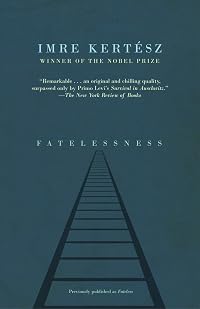
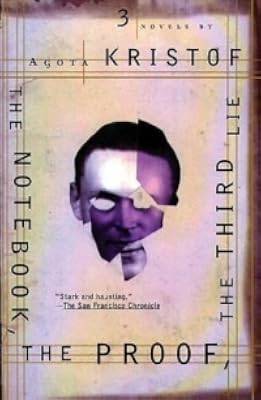

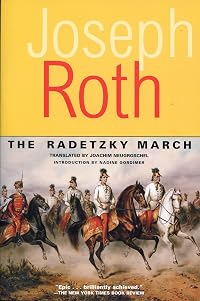


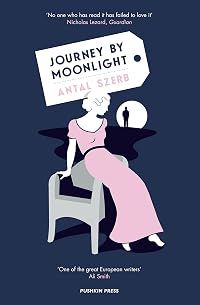











Member Recommendations
CabbageMoth A haunting book about older people trying to reconstruct their own pasts.
20
Member Reviews
Non avevo idea di adorare le penne degli scrittori ungheresi. Un romanzo corto, ma che ad un certo mi ha fatto realizzare che stavo leggendo il libro in piedi in mezzo alla mia stanza, inquieta e piena di pensieri.
Una chicca da gustare per provare a comprendere cosa l’autore definisce come odio, pietà, vendetta, ma soprattutto amicizia.
Una chicca da gustare per provare a comprendere cosa l’autore definisce come odio, pietà, vendetta, ma soprattutto amicizia.
Set in Hungary in 1940, seventy-five-year-old Henrik is awaiting the arrival of his friend, Konrad, whom he has not seen in forty-one years. Henrik is a general who lives in palatial estate. Konrad is of a lower social position. Henrik and Konrad met at military school in Vienna when they were children. As the story unfolds, it becomes evident that a significant event occurred in the past, which created a rift between these men. Henrik intends to discover the truth of what happened.
“Silently, wobbling a little like shadows on a wall, they walk in this ghostly glow from the dining room through one cold salon after another until they reach a room whose only furniture consists of a grand piano with its lid raised and three chairs around show more a great-bellied stove… The servant sets the coffee on a small table along with cigars and brandy, then places the silver candelabra with the fat church candles on the ledge of the stove. They each light a cigar and sit in silence warming themselves. The heat from the logs in the stove pours out in steady waves and the candlelight dances above their heads... They are alone.”
This book is written in close perspective focused on Henrik and his interactions with a small circle of intimates. The tone is somber. It is filled with psychological tension. It evokes an old-world nostalgia. What starts as a dialogue gradually becomes a monologue, as Henrik presents his deductions and suspicions about what happened on that fateful day long ago. It feels like the third chair is occupied by the reader, listening to this private conversation.
After finishing, I began contemplating the implications of what I had just read. The more I thought about it, the more I appreciated it. This book is a beautifully rendered examination of friendship, betrayal, and what matters in the end. It is a fine piece of writing. show less
“Silently, wobbling a little like shadows on a wall, they walk in this ghostly glow from the dining room through one cold salon after another until they reach a room whose only furniture consists of a grand piano with its lid raised and three chairs around show more a great-bellied stove… The servant sets the coffee on a small table along with cigars and brandy, then places the silver candelabra with the fat church candles on the ledge of the stove. They each light a cigar and sit in silence warming themselves. The heat from the logs in the stove pours out in steady waves and the candlelight dances above their heads... They are alone.”
This book is written in close perspective focused on Henrik and his interactions with a small circle of intimates. The tone is somber. It is filled with psychological tension. It evokes an old-world nostalgia. What starts as a dialogue gradually becomes a monologue, as Henrik presents his deductions and suspicions about what happened on that fateful day long ago. It feels like the third chair is occupied by the reader, listening to this private conversation.
After finishing, I began contemplating the implications of what I had just read. The more I thought about it, the more I appreciated it. This book is a beautifully rendered examination of friendship, betrayal, and what matters in the end. It is a fine piece of writing. show less
Sandor Marai was born in the Austro-Hungarian Empire in 1900 and became famous as a literary novelist. He was driven from Hungary after WWII due to his strong antifascist views and never again lived in his native country. Recently his work has been rediscovered and translated into English. Embers was first published in Budapest in 1942, and this translation was released in the United States in 2001.
The novel opens in a castle in Hungary sometime in the early twentieth century when an elderly General receives a letter from a boyhood friend he hasn’t seen or talked to for over 41 years. Marai then spirals back in time to orient the reader to the General’s early years growing up as the privileged son of the Officer of the Guards. show more Henrik’s future was laid out for him to become a soldier of status, and early in his life he meets Konrad - a poor, musically gifted boy whose roots lie in Poland. The two boys become unlikely friends. The reader is also introduced to Nini - a nursemaid who has been with Henrik for 75 years having helped birth him. She is a mysterious figure and the only person with whom Henrik seems to have developed a lasting and meaningful relationship.
Once the stage is set, Marai returns the reader to present day - a day swathed in anticipation and secrets as Konrad arrives at the castle to dine with Henrik and discuss the last time they saw each other. Henrik has become a man of solitude, living mostly alone in the castle and waiting for the day when Konrad would return to reveal his motivations for abandoning Henrik.
Marai’s writing is drenched in mood and suspense. The castle stands in a wilderness filled with deer and bear, candles flicker, and the dead are brought back to life with Henrik’s recollections of a time long gone. The beautiful Krisztina, Henrik’s wife who has now been dead more than eighteen years, now seems to hover in the background.
With tremendous skill, Marai writes of guilt, betrayal, love and revenge while he unravels the story of Henrik and Konrad and why they parted many years before.
Marai is a skilled writer who crafts a story of two men and their friendship. He asks difficult and thought-provoking questions about the nature of humans and why they do what they do. Marai’s writing is eloquent. His narration is magnificently constructed which creates the suspense in what is largely a character driven novel.
In the end, two questions are posed which are left for the reader to answer - not a neat ending, but a thoughtful one.
Highly recommended. show less
The novel opens in a castle in Hungary sometime in the early twentieth century when an elderly General receives a letter from a boyhood friend he hasn’t seen or talked to for over 41 years. Marai then spirals back in time to orient the reader to the General’s early years growing up as the privileged son of the Officer of the Guards. show more Henrik’s future was laid out for him to become a soldier of status, and early in his life he meets Konrad - a poor, musically gifted boy whose roots lie in Poland. The two boys become unlikely friends. The reader is also introduced to Nini - a nursemaid who has been with Henrik for 75 years having helped birth him. She is a mysterious figure and the only person with whom Henrik seems to have developed a lasting and meaningful relationship.
Once the stage is set, Marai returns the reader to present day - a day swathed in anticipation and secrets as Konrad arrives at the castle to dine with Henrik and discuss the last time they saw each other. Henrik has become a man of solitude, living mostly alone in the castle and waiting for the day when Konrad would return to reveal his motivations for abandoning Henrik.
Marai’s writing is drenched in mood and suspense. The castle stands in a wilderness filled with deer and bear, candles flicker, and the dead are brought back to life with Henrik’s recollections of a time long gone. The beautiful Krisztina, Henrik’s wife who has now been dead more than eighteen years, now seems to hover in the background.
With tremendous skill, Marai writes of guilt, betrayal, love and revenge while he unravels the story of Henrik and Konrad and why they parted many years before.
Marai is a skilled writer who crafts a story of two men and their friendship. He asks difficult and thought-provoking questions about the nature of humans and why they do what they do. Marai’s writing is eloquent. His narration is magnificently constructed which creates the suspense in what is largely a character driven novel.
In the end, two questions are posed which are left for the reader to answer - not a neat ending, but a thoughtful one.
Highly recommended. show less
I initially appreciated reading a work that basically acts as if modernism and postmodernism never happened, and thought perhaps Marai would succeed in telling a new story in an old way. So I was disappointed to find a very old story (there's a reason it's called the "eternal" triangle) from a truly antique perspective, told in an only moderately innovative way. Giving the General the entire run of the narrative was a big mistake in my view - betrayal always involves conflicting notions of the facts, and indeed of reality itself, and that's about the only thing that's interesting about it anymore. While I have no idea about the original quality of the prose, the translation is a very smooth, elegant read.
Imagine spending 41 years of your life mostly alone, and left to ponder the events of one emotionally wrenching day. The book opens with Henrik, a 75-year-old retired general, awaiting the arrival of Konrad, a close friend from his youth whom he has not seen since that significant day. The first third of the book sets up their shared history which began as 10-year-old schoolboys who formed an unusually strong bond, because or in spite of their very different socioeconomic backgrounds. They spent their school days and their holidays together, and Konrad was accepted as a member of Henrik's family. On finishing school, they grew into adulthood together through military service, but their relationship ended abruptly.
With this foundation show more laid, the story picks up with Konrad arriving to have dinner with Henrik. The table is set exactly as it was the last time they were together. Past events unfold through Henrik's voice, as he seeks to learn more about Konrad's life and uncover the truth which has been the source of so much pain over the years. This pain has smoldered, like the embers of the title, consuming Henrik body and soul. As the meal and the night wear on, the nature of their conflict is revealed in tiny fragments leading to the inevitable conclusion.
Sandor Marai weaves a tale that is surprisingly compelling, since it is told through primarily through Henrik's one-sided conversation with Konrad. The narrative's emotional depth was surprising. All too often, male friendships are portrayed as superficial. It was the strength of their bond, and the searing pain felt by both Henrik and Konrad is precisely what makes Embers such a special work. show less
With this foundation show more laid, the story picks up with Konrad arriving to have dinner with Henrik. The table is set exactly as it was the last time they were together. Past events unfold through Henrik's voice, as he seeks to learn more about Konrad's life and uncover the truth which has been the source of so much pain over the years. This pain has smoldered, like the embers of the title, consuming Henrik body and soul. As the meal and the night wear on, the nature of their conflict is revealed in tiny fragments leading to the inevitable conclusion.
Sandor Marai weaves a tale that is surprisingly compelling, since it is told through primarily through Henrik's one-sided conversation with Konrad. The narrative's emotional depth was surprising. All too often, male friendships are portrayed as superficial. It was the strength of their bond, and the searing pain felt by both Henrik and Konrad is precisely what makes Embers such a special work. show less
two old friends on whom the sun is setting have much to remember'
By sally tarbox on 24 Jun. 2012
Format: Paperback
Wonderful atmospheric start as an elderly widowed general receives a letter from an old friend, Konrad, who he's not seen for 41 years...
As they sit down to one final meal together, we learn of the history between them, and the general raises a number of points about the human condition: love, hate, old age and friendship, as he seeks closure on the past.
By sally tarbox on 24 Jun. 2012
Format: Paperback
Wonderful atmospheric start as an elderly widowed general receives a letter from an old friend, Konrad, who he's not seen for 41 years...
As they sit down to one final meal together, we learn of the history between them, and the general raises a number of points about the human condition: love, hate, old age and friendship, as he seeks closure on the past.
This novel held great promise for me. It was set in a part of the world that fascinates me; it purports to explore the "big questions" of friendship, love and courage; it had been praised by readers whose judgment I trust. It started out well, too. At his family castle in the Hungarian forest, Henrik, or "The General" awaits the arrival of Konrad, "The Captain", and reminisces about the past. As 10-year old boys from very different worlds, Henrik and Konrad met at a military academy in Vienna, and became inseparable friends. Yet we learn that something has separated them, and that they are about to meet for the first time in 41 years. The reason is a mystery, and for a time the author tantalizes the reader with that mystery in a very show more skillful manner. Yet very early on I began to dislike the tone, and marked a passage or two with snarky little comments. This one, for instance, ---And yet, beyond their roles and their lives in society, beyond the women, something else, something more powerful made itself felt. A feeling known only to men. A feeling called friendship. Once the General's guest actually made his appearance, I felt the book very quickly turned from suspenseful novel to self-indulgent screed on the nature of friendship, passion, guilt, truth. Little nuggets of the old story were scattered through the General's repetitive philosophical musings, but I grew very impatient and eventually stopped caring about what really happened all those years ago. As Henrik did all the talking, we never understand why Konrad returned to meet him again. It certainly could not have been to explain or defend himself, as he made no attempt to do either. The General talks at length about seeking revenge, but (and this is a SPOILER, I suppose), the author violates, quite literally, Chekov's rule that if a gun appears in Act 1, it had better go off in Act III. Embers had an excellent first act, but I should have left during the intermission. Review written in Feb. 2009 show less
Members
- Recently Added By
Published Reviews
ThingScore 83
I zde se autor dotýká otázek protikladů mezi životní rolí a bytostnou podstatou člověka, mezi rozumem a vášní, touhou po řádu a skrytými instinkty a ptá se, „kudy vede hranice zrady“ mezi dvěma lidmi a nakolik můžeme poznat tajemství druhého člověka. Tajemství je zde jedním z hlavních motivů knihy, který se promítá nejen do příběhu, ale též do jazykového show more stylu knihy. Novela je od začátku do konce prodchnuta implicitním napětím, přestože její rámec vyznívá na první pohled velmi staticky a tempo vyprávění je pomalé a klidné. Máraiho smysl pro vystižení atmosféry a jeho vytříbený cit pro detail a „znakovou řeč bezvědomosti“ vytvořily z jednoho nočního rozhovoru u planoucích svící drama o přátelství, zradě, vášni a neskonalé samotě, které svou sugestivní atmosférou strhne čtenáře již od prvních stránek. show less
added by _eskarina
A tak ten krásný text o životě, o stáří, o neuvěřitelně detailní, až pedantské paměti a shovívavém nadhledu nad jednou životní etapou, schopným a toužícím pochopit, ale nehodlajícím odpouštět, zůstává poutavý tím, že dává více možností vysvětlení, rozhřešení. Dokládá starou pravdu o tom, že „Na dně každé lásky, každého lidského vztahu je show more ukryt Eros…“ show less
added by _eskarina
Sándor Márai, který zemřel v roce 1989, měl vytříbený jazyk, dokonalý vypravěčský smysl a jeho knihy dokáží přikovat k židli a neodložit knihu do té doby, než se dostanete na poslední stránku. V průběhu čtení mě napadlo, že i kdyby mi Márai vyprávěl telefonní seznam, napjatě bych seděl a ani nedutal. Slova jsou jako třpytící se ranní rosa na zelené show more trávě. Atmosféra knihy je jako temná hluboká studánka, na povrchu klid, ale když se dostáváte ke dnu, mrazí vás. Naskočí vám husí kůže, ale vy přesto chcete poznat více. A nedá vám to spát, dokud se nedovíte pravdu. Ale tím to nekončí. Když totiž přijdete na to, co vedlo všechny zúčastněné k jejich činům, začnete přemýšlet. A napadne vás, jak byste se zachovali vy, být v jejich situaci. Takové mají být knihy, nejen ji dočíst a nezapomenout na ni. Máte se k ní ve svých vzpomínkách vracet. show less
added by _eskarina
Lists

1001 Books You Must Read Before You Die
1,448 works; 1,134 members
501 Must-Read Books
529 works; 72 members

The Top Ten: Writers Pick Their Favorite Books
240 works; 31 members

1940s
221 works; 25 members

Hidden Classics
73 works; 15 members

1,001 BYMRBYD Concensus
723 works; 27 members

Historical Fiction Lovers
88 works; 4 members

Authors from Hungary
3 works; 1 member


Must read
30 works; 2 members

Books Read in 2022
5,168 works; 114 members

Books Read in 2018
4,360 works; 110 members

Dim Sum Lunch Reading
43 works; 2 members

Books Read in 2024
4,623 works; 126 members

Favorite Books in Translation
320 works; 133 members
Author Information

167+ Works 10,051 Members
Some Editions
Awards and Honors
Notable Lists
Hungarian Big Read (32)
Series
Belongs to Publisher Series
Work Relationships
Is contained in
Has the adaptation
Common Knowledge
- Canonical title
- Embers
- Original title
- A gyertyák csonkig égnek
- Original publication date
- 1942
- People/Characters
- Henrik; Konrad ; Krisztina; Nini
- Important places
- Vienna, Austria; Hungary; Austro-Hungarian Empire
- Related movies
- Svíce dohořívají (2006)
- First words
- In the morning, the old general spent a considerable time in the wine cellars with his winegrower inspecting two casks of wine that had begun to ferment.
In mattinata il generale si soffermò a lungo nella cantina del vigneto. Vi si era recato all' alba assieme al vignaiolo perché due botti del suom vino avevano cokminciato a fermentare. - Quotations
- Life becomes bearable only when one has come to terms with who one is, both in one's own eyes and in the eyes of the world.
- Last words
- (Click to show. Warning: May contain spoilers.)But like every kiss, this one is an answer, a clumsy but tender answer to a question that eludes the power of language.
- Blurbers
- Sebold, Alice
- Original language
- Hungarian
Classifications
- Genres
- Fiction and Literature, General Fiction, Historical Fiction
- DDC/MDS
- 894.511334 — Literature & rhetoric Literatures of other languages Literatures of Altaic, Uralic, Hyperborean, Dravidian languages; literatures of miscellaneous languages of south Asia Finno-Ugric languages Ugric languages Hungarian Hungarian fiction 1900–2000 Late 20th century 1945–2000
- LCC
- PH3281 .M35 .G94 — Language and Literature Uralic languages. Basque language Uralic. Basque Hungarian
- BISAC
Statistics
- Members
- 4,406
- Popularity
- 3,380
- Reviews
- 158
- Rating
- (3.84)
- Languages
- 22 — Catalan, Czech, Danish, Dutch, English, Estonian, Finnish, French, German, Greek, Hebrew, Hungarian, Italian, Norwegian (Bokmål), Norwegian, Polish, Romanian, Croatian, Slovak, Spanish, Swedish, Portuguese (Portugal)
- Media
- Paper, Audiobook, Ebook
- ISBNs
- 108
- ASINs
- 25