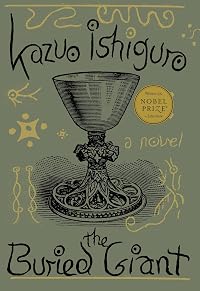
The Buried Giant
by Kazuo Ishiguro
On This Page
Description
The Romans have long since departed and Britain is steadily declining into ruin. But, at least, the wars that once ravaged the country have ceased. Axl and Beatrice, a couple of elderly Britons, decide that now is the time, finally, for them to set off across this troubled land of mist and rain to find the son they have not seen for years, the son they can scarcely remember. They know they will face many hazards -- some strange and otherworldly -- but they cannot foresee how their journey show more will reveal to them the dark and forgotten corners of their love for each other. Nor can they foresee that they will be joined on their journey by a Saxon warrior, his orphan charge, and a knight -- each of them, like Axl and Beatrice, lost in some way to his own past, but drawn inexorably toward the comfort, and the burden, of the fullness of a life's memories. show lessTags
Recommendations



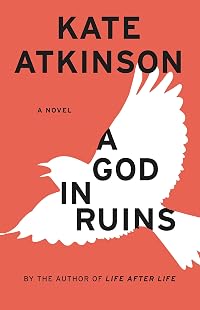
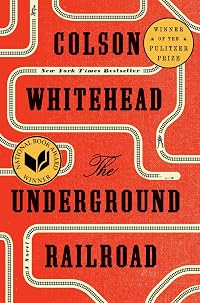
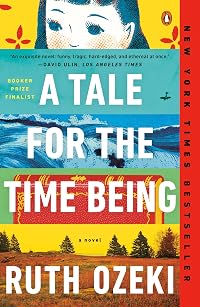
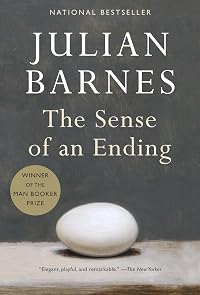
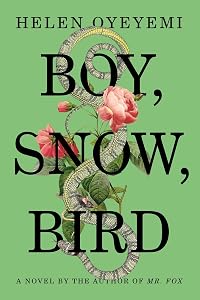
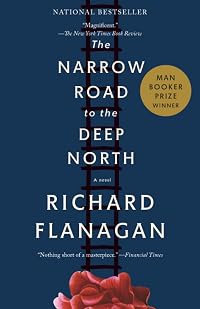
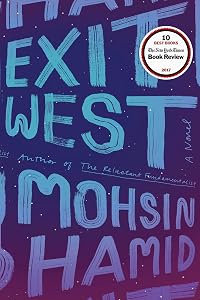
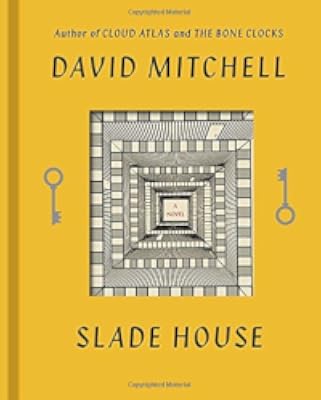
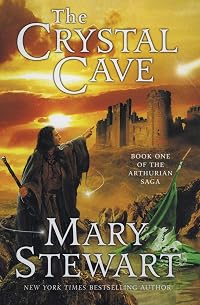
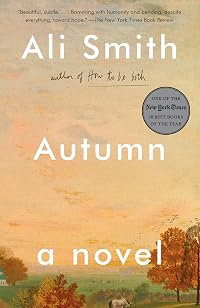
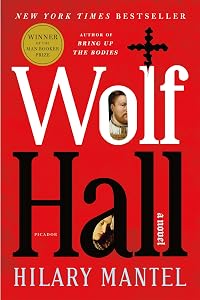
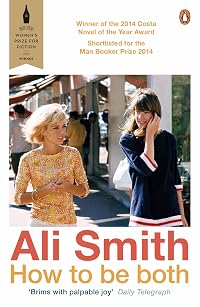



Member Recommendations

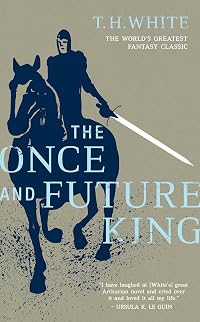
WildMaggie Similar sense of foreboding in a historical setting where the important parts of the stories are the parts left unsaid.
20
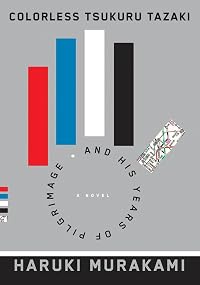
susanbooks Though very different in style, both novels (spoilers ahead!) ask how we live with a culturally traumatic history (the Holocaust, apartheid, etc).
susanbooks Though very different in style, both novels (spoilers ahead!) ask how we live with a culturally traumatic history (the Holocaust, apartheid, etc).



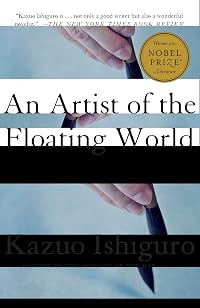
CabbageMoth A haunting book about older people trying to reconstruct their own pasts.
Member Reviews
Fantasy that reads like a fable based on Arthurian legends. It is England after King Arthur’s death. The Britons and Saxons live in an uneasy peace. A mist has descended on the country, causing forgetfulness. An older couple, Axl and Beatrice, are living in darkness in a warren. They decide to go on a journey in search of their lost son. They meet Wistan, a Saxon warrior charged with slaying a dragon. They also meet Sir Gawain, Arthur’s last surviving knight, who is looking for the same dragon. During the journey they encounter duplicitous monks, pixies, a buried giant, ogres, and much more.
As is typical with Ishiguro, the writing is top rate. Themes include guilt, memory, and betrayal. It works as a novel about a couple’s show more loyalty, loss, and love, about a country’s history, battles, and bloodshed, and about an individual’s ethics, honor, and courage. It conveys how history is rewritten by the victors, and how the old legends may have morphed through distortions after multiple retellings.
I think this novel is best appreciated by looking below the surface. It works as a fantasy novel about a quest, but its brilliance comes from the thought-provoking questions it poses about human nature and collective memory. show less
As is typical with Ishiguro, the writing is top rate. Themes include guilt, memory, and betrayal. It works as a novel about a couple’s show more loyalty, loss, and love, about a country’s history, battles, and bloodshed, and about an individual’s ethics, honor, and courage. It conveys how history is rewritten by the victors, and how the old legends may have morphed through distortions after multiple retellings.
I think this novel is best appreciated by looking below the surface. It works as a fantasy novel about a quest, but its brilliance comes from the thought-provoking questions it poses about human nature and collective memory. show less
Well, I do love me a good Arthur legend tale and Ishiguro has written a lovely, if melancholic, one. Axl and his wife, Beatrice, are two elderly people living in a small warren which houses a community of poor folk huddled together for safety and survival. The land is inhospitable and a memory robbing mist covers everything.
Some shreds of memory lead them to remember that they have a son and they set out on a journey to find him in some vaguely remembered village several days' walk away.
Old, frail, and ill, there is something about Beatrice which nonetheless attracts the care and attention of others. One gets the sense that she must have been a great beauty in her youth and still retains elements of that despite the hardness of her show more life. Axl is a gentle man who was once tall and perhaps may have been powerful, for there are glimpses of that lost authority now and then.
Their journey leads them to encounters with the youth Edwin, the warrior Wistan, and eventually King Arthur's only remaining knight, Sir Gawain. Wistan and Sir Gawain are strangely exempt from the mist which has robbed everyone else of their memories.
So two quests merge as they often do in these tales, and the geas carried by one man must meet its fulfilment. The latent power of Merlin's magic is still felt, embodied in the being of a very old, sick, and tired dragon. But not only do the quests merge, the reader is told in hints and half-remembered musings that there was a time when all of their lives (with the exception of Edwin) were intertwined, with a painful infidelity on Beatrice's part, perhaps with Gawain.
Roiling underneath the stories of the main characters is the powerful story of the Saxon conquest of the Britons, the buried giant of the title. Arthur's hope of uniting the island's indigenous peoples with the swarms of land-desperate Saxons who now control the East would have met with failure at his death had Merlin not employed a desperate measure to try to forestall the bloodshed which was to come. The hope had been that the two peoples would live together for a time and would forget their earlier enmity, forging new bonds through marriages and their children.
Ishiguro explores the idea that there hadn't been enough time, could never be enough time, and that an artificially induced peace simply couldn't work so that when the mist of forgetfulness is torn away, war, vengeance, and conquest would perforce return to the land. He plucked threads from Arthurian legends to craft this theme into his story, dipping his pen equally into history and myth, as well as allegory.
And what of Beatrice and Axl, and their quest? Well, there is that island off the coast of England where Arthur is purported to have been taken. Avalon is never named but it is there and forms part of the tale. It is very much part of the tale at the end.
On the whole, I enjoyed this story. Ishiguro writes beautifully, of course, and has his usual talent for making us care about his characters a good deal. Myth and legend had formed part of my studies in my younger years, so much of this story was familiar and yet I admired how different and not hackneyed it was in Ishiguro's hands. I have no way of knowing if someone unfamiliar with Arthurian legend would have this book resonate with them as deeply as it did with me but I would give it 3.75- 4 stars. Not more, however much I wanted to because there was something here which made me faintly uncomfortable, something I can't put my finger on, but the book did linger on in my mind for days afterward. show less
Some shreds of memory lead them to remember that they have a son and they set out on a journey to find him in some vaguely remembered village several days' walk away.
Old, frail, and ill, there is something about Beatrice which nonetheless attracts the care and attention of others. One gets the sense that she must have been a great beauty in her youth and still retains elements of that despite the hardness of her show more life. Axl is a gentle man who was once tall and perhaps may have been powerful, for there are glimpses of that lost authority now and then.
Their journey leads them to encounters with the youth Edwin, the warrior Wistan, and eventually King Arthur's only remaining knight, Sir Gawain. Wistan and Sir Gawain are strangely exempt from the mist which has robbed everyone else of their memories.
So two quests merge as they often do in these tales, and the geas carried by one man must meet its fulfilment. The latent power of Merlin's magic is still felt, embodied in the being of a very old, sick, and tired dragon. But not only do the quests merge, the reader is told in hints and half-remembered musings that there was a time when all of their lives (with the exception of Edwin) were intertwined, with a painful infidelity on Beatrice's part, perhaps with Gawain.
Roiling underneath the stories of the main characters is the powerful story of the Saxon conquest of the Britons, the buried giant of the title. Arthur's hope of uniting the island's indigenous peoples with the swarms of land-desperate Saxons who now control the East would have met with failure at his death had Merlin not employed a desperate measure to try to forestall the bloodshed which was to come. The hope had been that the two peoples would live together for a time and would forget their earlier enmity, forging new bonds through marriages and their children.
Ishiguro explores the idea that there hadn't been enough time, could never be enough time, and that an artificially induced peace simply couldn't work so that when the mist of forgetfulness is torn away, war, vengeance, and conquest would perforce return to the land. He plucked threads from Arthurian legends to craft this theme into his story, dipping his pen equally into history and myth, as well as allegory.
And what of Beatrice and Axl, and their quest? Well, there is that island off the coast of England where Arthur is purported to have been taken. Avalon is never named but it is there and forms part of the tale. It is very much part of the tale at the end.
On the whole, I enjoyed this story. Ishiguro writes beautifully, of course, and has his usual talent for making us care about his characters a good deal. Myth and legend had formed part of my studies in my younger years, so much of this story was familiar and yet I admired how different and not hackneyed it was in Ishiguro's hands. I have no way of knowing if someone unfamiliar with Arthurian legend would have this book resonate with them as deeply as it did with me but I would give it 3.75- 4 stars. Not more, however much I wanted to because there was something here which made me faintly uncomfortable, something I can't put my finger on, but the book did linger on in my mind for days afterward. show less
I’m very interested in the divisiveness around The Buried Giant. To each their own, but I can’t imagine not being profoundly moved by this novel.
Ishiguro constructs his world with such care, a very big and wild world, but always hemmed in by mist, by the perceptions and fears and knowledge of the characters. The five main characters: the old Briton husband and wife, the Saxon traveling warrior and the troubled Saxon boy, and the ancient Arthurian Knight, are all gradually written so well and fully, and what isn’t written out is suggested.
Yes the story inches along rather than galloped, and everyone speaks in a slow and formal way, and there is a lot of lingering and repetition and discussion. But, like... in a good way. This is a show more book about old couples, and old knights, and old dragons, and old quarrels, and old memories. And other things, too, but mostly old things. I can see being disappointed if you were looking forward to great battles and fast-paced adventures. But mostly the story just moves slowly and steadily on, like Axl and Beatrice, sometimes diverting or wandering, but coming always back towards its inevitable final question.
My one quibble was I wish Ishiguro hadn’t mentioned the titular buried giant again near the end of the book, seemingly to clarify the symbolism in case you didn’t catch it. He left so much subtle and for the reader to interpret on their own, so even though it wasn’t really handhold-y, in contrast it still made it feel like he didn’t trust us with that one.
But overall, a phenomenal book. This was my second read of it, and I’m sure I’ll read it again and again. show less
Ishiguro constructs his world with such care, a very big and wild world, but always hemmed in by mist, by the perceptions and fears and knowledge of the characters. The five main characters: the old Briton husband and wife, the Saxon traveling warrior and the troubled Saxon boy, and the ancient Arthurian Knight, are all gradually written so well and fully, and what isn’t written out is suggested.
Yes the story inches along rather than galloped, and everyone speaks in a slow and formal way, and there is a lot of lingering and repetition and discussion. But, like... in a good way. This is a show more book about old couples, and old knights, and old dragons, and old quarrels, and old memories. And other things, too, but mostly old things. I can see being disappointed if you were looking forward to great battles and fast-paced adventures. But mostly the story just moves slowly and steadily on, like Axl and Beatrice, sometimes diverting or wandering, but coming always back towards its inevitable final question.
My one quibble was I wish Ishiguro hadn’t mentioned the titular buried giant again near the end of the book, seemingly to clarify the symbolism in case you didn’t catch it. He left so much subtle and for the reader to interpret on their own, so even though it wasn’t really handhold-y, in contrast it still made it feel like he didn’t trust us with that one.
But overall, a phenomenal book. This was my second read of it, and I’m sure I’ll read it again and again. show less
I seem to have read only reviews panning The Buried Giant, like that from the great James Wood at The New Yorker. Further, I did not enjoy Ishiguro's last novel, Never Let Me Go. I know nothing about English history or Arthurian legend, and I don't really read fantasy. So I had low expectations for The Buried Giant. Nonetheless, I liked this novel very much, and think it's easily the best book that I've read published in 2015.
However, it's only fair to admit that the book moves ponderously slowly, especially during the first quarter of the novel. As a reading experience, it can be a slog. No doubt that's a large reason many reviewers don't like it. Which I can fully appreciate.
Ishiguro is, or has turned into, the most withholding of show more popular writers. As polite and well-mannered as possible, nevertheless he seems to reject any impulse to please either critics or readers. Is that a problem? Certainly if you want to recommend a book to someone. I would say, however, that his standards may be personal, but they are meticulous, and consistent. This book has humility, sympathy and worry for we humans -- our governments ever doing evil things, our ethics ever compromised, and our lives ever brief and freighted by our shortcomings and our knowledge and foreboding thereof.
I think it's one of his best works since Remains of the Day. But it's not a good read like that masterpiece, and I suspect it will remain unpopular. I'll risk the crazy prediction, however, that this book, unloved, unfashionable and slow-developing as it is, will outlast the current critical darlings. show less
However, it's only fair to admit that the book moves ponderously slowly, especially during the first quarter of the novel. As a reading experience, it can be a slog. No doubt that's a large reason many reviewers don't like it. Which I can fully appreciate.
Ishiguro is, or has turned into, the most withholding of show more popular writers. As polite and well-mannered as possible, nevertheless he seems to reject any impulse to please either critics or readers. Is that a problem? Certainly if you want to recommend a book to someone. I would say, however, that his standards may be personal, but they are meticulous, and consistent. This book has humility, sympathy and worry for we humans -- our governments ever doing evil things, our ethics ever compromised, and our lives ever brief and freighted by our shortcomings and our knowledge and foreboding thereof.
I think it's one of his best works since Remains of the Day. But it's not a good read like that masterpiece, and I suspect it will remain unpopular. I'll risk the crazy prediction, however, that this book, unloved, unfashionable and slow-developing as it is, will outlast the current critical darlings. show less
I have a big problem with Kazuo Ishiguro's books, a problem that authors likely love and that the vast tribe of avid readers to which I belong feel incredibly grateful to have. When I read a new book by this author, I simultaneously want to read just as fast as I possibly can to find out What Happens Next and to pause every few seconds to savour and enjoy the images, thoughts and emotions evoked in that last sentence that I just read. It's very frustrating because it's not possible to balance those to simultaneous needs, and it's very rewarding to feel so strongly those sentences, those characters, that moment, to be in the story in one's head for those hours. And so with The Buried Giant, a beautifully written story about Beatrice and show more Axl, an elderly couple living in Britain shortly after the death of King Arthur. Britons and Saxons live together in harmony, apparently because the breath of a dragon has caused the population to forget the past. One day Beatrice and Axl remember their son, who has moved away, and they decide it is time to go to visit him; their journey will take them to new places and permit them to meet various people, including a Saxon warrior and the elderly knight Sir Gawain, who are keeping more than a few secrets.... This is an absolutely wonderful fantasy, complete with Ishiguro's elegant and somewhat melancholy writing style; a very fine novel indeed. Highly recommended. show less
This isn't the kind of book I would have picked up, but I'm glad I did. One reason why I love book clubs!
The writing is brilliant, with an impressive use of tone, atmosphere and language. Some of the way the story unfolds seem to be structured to put the reader in a bit of a mist, making the reading more vivid and building a deeper understanding of Axl and Beatrice. I enjoyed the love story of Axl and Beatrice. I enjoyed thinking about memory as a double-edged sword. For example, would Axl and Beatrice be so in love with stronger memories? The same could be asked more broadly of the Britons and Saxons in the broader story.
I loved contemplating the relationship between memory and forgiveness. The book has a depressing message: that the show more only way to have peace is to erase the memory of past wrongs. I wonder if that is true and contemplated the Israel/Palestine multi-generational conflict. On the other hand, can we really extend forgiveness if we don't fully remember what we are forgiving?
A beautiful, thought-provoking metaphor for guiult, memory and vengence. show less
The writing is brilliant, with an impressive use of tone, atmosphere and language. Some of the way the story unfolds seem to be structured to put the reader in a bit of a mist, making the reading more vivid and building a deeper understanding of Axl and Beatrice. I enjoyed the love story of Axl and Beatrice. I enjoyed thinking about memory as a double-edged sword. For example, would Axl and Beatrice be so in love with stronger memories? The same could be asked more broadly of the Britons and Saxons in the broader story.
I loved contemplating the relationship between memory and forgiveness. The book has a depressing message: that the show more only way to have peace is to erase the memory of past wrongs. I wonder if that is true and contemplated the Israel/Palestine multi-generational conflict. On the other hand, can we really extend forgiveness if we don't fully remember what we are forgiving?
A beautiful, thought-provoking metaphor for guiult, memory and vengence. show less
Yes indeed there is magic and mystery in the distant past, and that's because the past itself is a story. Ishiguro creates a convincing early Britain every bit as cool as Middle Earth, and a tricky quest for his elderly heroes, and makes it all into a wonderful, thoughtful tale. How real is our world? what have we forgotten? Are we who we think we are? does our love last forever? Can a whole country continue to forget it's past? These are the questions 'The Buried Giant' ponders.
Members
- Recently Added By
Published Reviews
ThingScore 75
Fantasy and historical fiction and myth here run together with the Matter of Britain, in a novel that’s easy to admire, to respect and to enjoy, but difficult to love. Still, “The Buried Giant” does what important books do: It remains in the mind long after it has been read, refusing to leave, forcing one to turn it over and over. On a second reading, and on a third, its characters and show more events and motives are easier to understand, but even so, it guards its secrets and its world close. show less
added by sturlington
There are authors who write in tidy, classifiable, immediately recognizable genres — Jane Austen, Alexandre Dumas, William Faulkner, Gabriel García Márquez, to name a few — and then there are those who adamantly do not. These others can surprise us with story lines and settings that are guises to be worn and shucked after the telling. Masters of reinvention, they slip from era to era, show more land to land, changing idioms, adapting styles, heedless of labels. They are creatures of a nonsectarian world, comfortable in many skins, channelers of languages. What interests them above all in their invented universes is the abiding human heart.
Kazuo Ishiguro is such a writer. show less
Kazuo Ishiguro is such a writer. show less
added by lorax
Lists

1001 Books You Must Read Before You Die
1,448 works; 1,133 members

Recommend the 20 best books you've read in the last five years
2,168 works; 601 members

Historical Fiction
889 works; 91 members

Best Arthurian Fiction
104 works; 33 members

2016 Hugo Eligible Novels
90 works; 31 members

Top Five Books of 2020
982 works; 348 members

Mythical Monsters of the World
199 works; 79 members

Top Five Books of 2016
795 works; 229 members

Books Read in 2015
3,299 works; 126 members

NPR Summer 2021: 50 Favorite Sci-Fi And Fantasy Books Of The Past Decade
50 works; 8 members

The 100 Best Fantasy Books of All Time
100 works; 15 members

Books Read in 2017
4,249 works; 130 members
Books Read in 2016
4,666 works; 199 members

SHOULD Read Books!
354 works; 9 members

2016 Book Club Choices
52 works; 7 members
International Dublin Literary Award Longlist 2017
147 works; 3 members
Overdue Podcast
806 works; 9 members

Dublin Literary Award Longlist 2017
147 works; 2 members

LIBROS DE CIENCIA FICCIÓN Y FANTASIA
60 works; 1 member

Books Read in 2020
4,379 works; 124 members

Books Read in 2021
5,361 works; 114 members
World Books
51 works; 4 members

Books Read in 2018
4,360 works; 110 members

Books Read in 2024
4,623 works; 126 members

Books recommended by Calgary Public Library staff
1,588 works; 4 members
Totally Biased List of Tookie’s Favorite Books: Sublime Books
18 works; 1 member

TBR - Older Books
92 works; 1 member

Books Read in 2025
4,091 works; 97 members

Top Five Books of 2025
954 works; 303 members
Modern Arthurian Fiction
237 works; 16 members
Talk Discussions
Past Discussions
The Buried Giant in Folio Society Devotees (November 2023)
Author Information

59+ Works 81,731 Members
Kazuo Ishiguro was born in Nagasaki, Japan on November 8, 1954. In 1960, his family moved to England. He received a bachelor's degree in English and philosophy from the University of Kent in 1978 and a master's degree in creative writing from the University of East Anglia in 1980. He became a British citizen in 1982. His first novel, A Pale View show more of Hills, received the Winifred Holtby Award from the Royal Society of Literature. His second novel, An Artist of the Floating World, received the Whitbread Book of the Year Award in 1986. His third novel, The Remains of the Day, received the Man Booker Prize for Fiction in 1989 and was adapted into a film starring Anthony Hopkins and Emma Thompson. His other works include The Unconsoled, When We Were Orphans, Never Let Me Go, Nocturnes: Five Stories of Music and Nightfall, and The Buried Giant. He was awarded the OBE in 1995 for services to literature and the Chevalier de l'Ordre des Arts et des Lettres by the French government in 1998. He received the 2017 Nobel Prize in Literature. He has also written several songs for jazz singer Stacey Kent and screenplays for both film and television. (Bowker Author Biography) show less
Some Editions
Awards and Honors
Awards
Distinctions
Series
Belongs to Publisher Series
Common Knowledge
- Canonical title
- The Buried Giant
- Original title
- The Buried Giant
- Original publication date
- 2015
- People/Characters
- Axl; Beatrice [in The Buried Giant]; Wistan; Edwin; Sir Gawain; Father Jonus (show all 8); The boatman; Querig, the she-dragon
- Important places
- England, UK (as England)
- Dedication
- DEBORAH ROGERS
1938-2014 - First words
- You would have searched a long time for the sort of winding lane or tranquil meadow for which England later became celebrated.
- Last words
- (Click to show. Warning: May contain spoilers.)Wait for me on the shore, friend, I say quietly, but he does not hear and he wades on.
- Publisher's editor
- Cargill, Angus
- Blurbers
- Mitchell, David; Gaiman, Neil; Finch, Charles; Oates, Joyce Carol
- Original language
- English
- Canonical DDC/MDS
- 823.92
- Canonical LCC
- PR6059.S5
Classifications
Statistics
- Members
- 6,570
- Popularity
- 1,840
- Reviews
- 285
- Rating
- (3.64)
- Languages
- 22 — Arabic, Bosnian, Chinese, Czech, Danish, Dutch, English, Estonian, Finnish, French, German, Greek, Hungarian, Italian, Japanese, Polish, Portuguese, Russian, Spanish, Swedish, Turkish, Vietnamese
- Media
- Paper, Audiobook, Ebook
- ISBNs
- 88
- ASINs
- 24