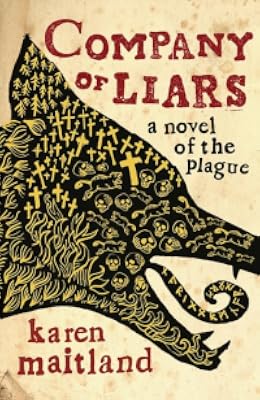
Company of Liars
by Karen Maitland
On This Page
Description
In this extraordinary novel, Karen Maitland delivers a dazzling reinterpretation of Chaucer’s Canterbury Tales—an ingenious alchemy of history, mystery, and powerful human drama.The year is 1348. The Black Plague grips the country. In a world ruled by faith and fear, nine desperate strangers, brought together by chance, attempt to outrun the certain death that is running inexorably toward them.
Each member of this motley company has a story to tell. From Camelot, the relic-seller who show more will become the group’s leader, to Cygnus, the one-armed storyteller . . . from the strange, silent child called Narigorm to a painter and his pregnant wife, each has a secret. None is what they seem. And one among them conceals the darkest secret of all—propelling these liars to a destiny they never saw coming.
Magical, heart-quickening, and raw, Company of Liars is a work of vaulting imagination from a powerful new voice in historical fiction.
Praise for Company of Liars
“[Maitland] brings to life a medieval England of muddy streets and half-naked children fighting each other for pieces of dog dung to sell to the tanners, as sheep-stealers swing purple-faced from the gallows. . . . She neatly catches the spirit of primitive superstition that governed every aspect of 14th century life and then rolls on with it for her own story-telling ends. . . . Company of Liars is a richly evocative page-turner which brings to life a lost and terrible period of British history, with a disturbing final twist worthy of a master of the spine-tingler, such as Henry James.”—Daily Express (UK)
“Transports readers back to the days of the Black Death . . . Paying homage to The Decameron and The Canterbury Tales, this is a gripping read. . . . As a reader you are taken as close to the plague as you would ever wish to go.”—Bookseller. show less
Tags
Recommendations











Member Recommendations
Limelite Gothic re-envisioning of the Medieval classic, without the worrisome Middle English.
20

by anonymous user


passion4reading Set during the winter of 1069/70, a small group of people tries to outrun the advancing Norman army while also running from their own past.

gonzobrarian Interesting supporting characters and good, old-fashioned mayhem. Oh, and the Plague as well.


Member Reviews
Karen Maitland must have a corkscrew for a brain to come up with such a twisting plot. I could guess some of the revelations but not all, and it kept me guessing right up to the last line.
The Company of Liars follows a group of travellers as they hope to outrun the black death. Our narrator is Camelot a pedlar of religious relics. As the journey progresses he is joined by two musicians Rodrigo and Joffrey, a magician Zofield, newlyweds Osmond and Adela, a rune reading child Narigorm, a healer Pleasance and the storyteller Cygnes. It becomes apparent as the story follows them from place to place that everyone is hiding something. The circumstances they find themselves in force the lies into the open, with terrible consequences as it show more tears the company apart.
This was a wonderful story and the narration of this edition was wonderful. I highly recommend. show less
The Company of Liars follows a group of travellers as they hope to outrun the black death. Our narrator is Camelot a pedlar of religious relics. As the journey progresses he is joined by two musicians Rodrigo and Joffrey, a magician Zofield, newlyweds Osmond and Adela, a rune reading child Narigorm, a healer Pleasance and the storyteller Cygnes. It becomes apparent as the story follows them from place to place that everyone is hiding something. The circumstances they find themselves in force the lies into the open, with terrible consequences as it show more tears the company apart.
This was a wonderful story and the narration of this edition was wonderful. I highly recommend. show less
Strange how desperate people are to know the future, even if they know they cannot change it.
Besides, if you can read the future, you can read the past for they are but ends of the same thread, and I always take great care that no one should know anything of me except my present.
A Company of Liars is the story of a group of nine strangers who travel together in an effort to escape the plague that is spreading death throughout England. It is not simply a story about travelers or pestilence, however, it is also a story about darkness, superstition, secrets and guilt. Each of the travelers has a secret, and it is the interpersonal relationships and the unraveling of those secrets that keep the reader enthralled.
There are a few historical show more inaccuracies that spring off the page in a somewhat jarring way, and there are sensibilities expressed that would seem unlikely, if not impossible, in the 14th Century setting, but those are not enough to undo the good parts of this novel. The narrator, Camelot, is well-drawn and one easily slides into seeing the events through his eyes. It doesn’t take much to guess who the true culprit among the travelers is, but that does not spoil the fun either, because you want to know why more than who and you certainly want to know each person’s story and how they came to this place in their lives.
For me to give a book a 4 or 5-star rating, it almost always has to offer something deeper than just a good tale. This is a good tale, but I think there is also a layer beneath that which explores the purpose of lies in the lives of men and whether that withholding of the truth can ever be a good thing. What tortures these people are not really outside forces but the things they know about themselves--the things they lie about. It begs the question of whether all of us are hiding something, and whether we lie to ourselves about why we lie. So, 4-stars for leaving me with something to ponder when I go to my rest tonight. Excellent debut effort. show less
Besides, if you can read the future, you can read the past for they are but ends of the same thread, and I always take great care that no one should know anything of me except my present.
A Company of Liars is the story of a group of nine strangers who travel together in an effort to escape the plague that is spreading death throughout England. It is not simply a story about travelers or pestilence, however, it is also a story about darkness, superstition, secrets and guilt. Each of the travelers has a secret, and it is the interpersonal relationships and the unraveling of those secrets that keep the reader enthralled.
There are a few historical show more inaccuracies that spring off the page in a somewhat jarring way, and there are sensibilities expressed that would seem unlikely, if not impossible, in the 14th Century setting, but those are not enough to undo the good parts of this novel. The narrator, Camelot, is well-drawn and one easily slides into seeing the events through his eyes. It doesn’t take much to guess who the true culprit among the travelers is, but that does not spoil the fun either, because you want to know why more than who and you certainly want to know each person’s story and how they came to this place in their lives.
For me to give a book a 4 or 5-star rating, it almost always has to offer something deeper than just a good tale. This is a good tale, but I think there is also a layer beneath that which explores the purpose of lies in the lives of men and whether that withholding of the truth can ever be a good thing. What tortures these people are not really outside forces but the things they know about themselves--the things they lie about. It begs the question of whether all of us are hiding something, and whether we lie to ourselves about why we lie. So, 4-stars for leaving me with something to ponder when I go to my rest tonight. Excellent debut effort. show less
An incredibly frustrating book. First, the ending is absolutely abysmal. The last page is a complete joke that made me want to scream at the author. Which I guess kind of fits the book, which is a work full of completely meaningless cruelty. The antagonist of the book is a kid who the ending says is a witch. I guess we're supposed to think "wow is she actually a witch or was it all in their minds??" but it doesn't matter because she thinks she's a witch, her only character throughout the book is "hideously cruel human", and she does things that are impossible without supernatural talents. So there's no real dilemma. And the frustrating thing is nobody seems to notice her cruelty or care about her very public witchcraft of casting runes! show more Other characters are presented as very quick to judge and intolerant. Yet till the end, nobody accuses her of being a witch or even says anything bad about her. When pointed out to the people travelling that every single thing she's ever said has been calculated to hurt the people who've helped her and try to get them to murder each other, not a single one believes Camelot. Even the magician character who hates everyone else never says a bad word about her. This kid who loves killing small animals and hearing them scream and constantly does cruel things and stuff completely unacceptable to medieval society is considered a saint by the group. As the book went on the telegraphing of her as evil became more and more obvious so the last third was frustrating but still nobody notices. Her final explanation for why she did it? Because she could. She murdered people who were the only reason she was alive because she could. It sounds like a shit horror film premise, which isn't what this was advertised as, and the book doesn't pull that off either. At the end, a bunch of villagers finally think she's a witch and go to kill her but we don't see it happen and she suddenly appears later on (presumably) coming to kill Camelot! So she somehow managed to escape being killed by like 10 villagers and then presumably killed the remaining members of the company too. And that's the end. The book just ends there. Like I say, typical horror movie stuff.
It wouldn't be so bad if anything much happened in the rest of the book. They spend the whole book just walking from place to place and then at the end things just fizzle out with a ridiculous climax. Camelot suddenly reveals something that you could only guess through one very explicit line from a minor character earlier. And then she goes home and although she ran away cause she was being treated badly she's welcomed with open arms and lives a good life. Until, of course, fucking horror movie killer turns up on her door. The ending deprives the rest of the book of any meaning it had. We had minor character development, but none of the characters were good enough to cause serious emotions. They just exist and die without having an impact on anything anywhere. The whole walk was pointless - although they may have escaped the pestilence, they just got killed anyway in about the same time scale. They never really know where they're going either, and there's no good reason several of them stay together.
The book really starts to fall apart when the magician guy says out loud that the wolf noise that's been following them is actually a human wolf. Like, not a real wolf at all. There's some attempt to suggest that the wolf is a werewolf but it doesn't really work. Everyone just assumes that this dude employed by a bishop to recover some stolen treasures is following them for months and making wolf noises. He's referred to as "the bishop's wolf" for the rest of the book. They appear to have no understanding of the difference between a metaphorical wolf and a real one. If he's a werewolf, what's he doing being hired by a bishop and how come he also apparently has dogs with him? Even after the magician that the bishop's wolf is supposed to be chasing dies and they leave his stolen stuff behind, all the remaining people except Camelot *still* believe he's chasing them! It makes no sense at all.
The magician has kept up public cruelty throughout the book. For some reason he's incredibly hateful to everyone (except the witch, as stated earlier, who's the one character he SHOULD be most hateful of - she's a woman, and he hates women, for a start). The only reason they're with him is to use his wagon. But when he's gone, it all gets replaced with the very clear to everyone but the characters malice of the witch, which is much more horrible because everyone refuses to acknowledge it. It makes the book very unpleasant. Afterwards another character kills himself but for no real good reason. There's absolutely 0 reason for him to do so. I cannot work out why. He believes another character murdered the magician guy partially for his benefit (because the magician was cruel to him) which makes him... kill himself?? Maybe it's because he's depressed - which is something noticeable - but that's not something that happens. It just feels again like an author's cruelty. She needs to get these people dead through any method. She deliberately avoids having any of the main characters contract the plague. Yet she then kills them off just as arbitrarily except she ostensibly has good reasons. Maybe she's making some profound point but it's executed really badly and I'd rather she did it in less than 576 pages if she wanted to. I don't like depressing books but I can deal if it's illustrating something real that's depressing and bad. Yet here everything that happens is pointless. The antagonist (of a sorts) has no motivation at all. People die when they could easily avoid it by not being idiots. Ultimately it's not illustrating any point except that the author is cruel.
The witch's one bad attempt at justifying stuff is by claiming that everyone she's killing lied. And that she never lied, or else she'd lose her magic powers. This is absolute bullshit. She constantly lies by omission, which is the most that can be held against several of the other characters - for example Pleasance is Jewish but she never claims otherwise. I have no idea what Cygnus is supposed to have lied about - his wing being real? Hardly a "dark secret". There's this sort of attempted message of "lying is bad" but it's wrong because a bunch of the characters only get killed after revealing their secrets and if they'd continued lying things would have stayed good for them. For example, the magician was killed by someone partly because he revealed he'd previously been a priest. If he'd never have said that he'd be alive. It's also another "lie by omission". The advertised "company of liars" feels like nothing of the sort. It's very forced and just doesn't work.
Like I keep thinking about this witch character. I'm incredibly suspicious of the character of the evil witch in general. The typical way to do it would be to make a character the victim of medieval superstitions and misogyny. But here we have a genuinely evil witch. And nothing happens to her until the end. Is this supposed to be a subversion? It just feels gross. Like she gets Pleasance killed deliberately - a character who's actually the sort of person who would get killed in the witch hunts, being very talented in healing and herbs and midwifery. Yet she deliberately makes her reveal she's Jewish in front of anti-semites. This woman had taken care of her for weeks before for no pay. She does it just because she can, as she says.
I know I'm overreacting, but I hate that there's no logic to this book. Fiction can afford to have logic. But here it's replaced by incoherence. People die, not because the universe is cruel, but because of the cruelty of one person. And why does she do stuff? For no reason at all! Camelot even asks her if it's some sort pagan thing and she simply ignores it. The opening of the book is that Camelot gives her some food after her master beats her. And the way she repays her is by following her for months to murder people. Her master who treated her cruelly gets no come-uppance. Only the people who looked after her get hurt. In an environment where people are suspicious of witches and she looks very unusual (described as fae like), she gets no suspicion cast on her until the end. And multiple people find her appearance makes her seem more innocent, even though part of the story is medieval cruelty against people who are different! (For example Camelot has a big scar which is the reason she's a wanderer) Why is it that this medieval cruelty and suspicion avoids the one character who's deserving of it, even though she makes herself a target by doing witchcraft through runes?
The book is filled with sort of a generic medieval cruelty, too. I don't know how accurate this is. You know, sort of "everything is dirty, all the food's the lowest quality, everything's bad" sort of thing. But it still feels silly cause you don't see anyone starving or anything - the main characters are constantly able to catch food even when food is low everywhere else. You don't see anyone starving on the rare visits to towns and villages. Again, it's just this weirdly illogical behaviour. It flips between a "gritty" grim medieval setting and one where everybody's tolerant and there's enough food and shelter whenever the plot demands one or the other. It's just frustrating. Everything works out in the exact way to make things bad, but nothing else happens.
For like half the book it's pretty average but good enough - readable and at least makes me want to read more. It has its own problems - nothing really happens and the characters just aren't really developed enough for me to be particularly interested in them or really understand them. But it builds up some intrigue so even if nothing is really happening right now you expect it to in future and it works for that. And then the last third just completely ruins it. The first half is just not good enough to make up for the ending at all because it's only good as a build up to things happening. If there was better character writing, if the characters built up real relationships with each other, if there was more description of medieval life, if there were more interactions with other people, if there were more things happening, any of those would have been good. But you go into the ending still feeling like these people are randomly thrown together and don't really have any relationship with each other and so the ending has no emotional impact even if the ridiculousness of it didn't ruin it. It's just really embarrassing. I'm sorry.
There's a sex scene which is clearly pedophilic. How the fuck was this considered appropriate in any way? It doesn't come up again but it's disgusting. The adult in the situation later claims he loves the child "like a father" or whatever it's gross and fucked up. It recalls bigoted stereotypes about gay people too.
Edit: Thinking about it later, I realised how Blood Meridian feels like a good comparison point. I rated that 5, although if I read it again now I might disagree with that, and I think it's an example of similar themes carried much better (a sort of ultimate futility, evil for the sake of it, constant journeying with not much happening). Most important to me is that in CoL, most people who are killed are clearly *good people*. Like better than average. In BM everyone is horrible so it doesn't hurt so bad. In addition, in CoL the people killed have been treating the person trying to kill them well - she wouldn't be alive without them. It's a broken trust that I find upsetting because it's handled so blithely and briefly rather than being treated as incredibly evil (the evil sort of only matters in the last 1/10th of the book...). In BM, everyone sort of "lives by the sword, dies by the sword" - there's no trust to begin with, so it feels ok. In CoL, there's constant death and destruction via the plague but none of it affects any of the main characters in any way - it's just a weird backdrop. When death happens, it comes a completely different route that makes the setting near irrelevant. In BM, the desert is nearly a character in itself - the death and destruction always involves the characters and the emotions and action are tied up with them so we always get a clear look and it doesn't feel off-hand. BM invests little moments with big meaning - even travelling involves important conversations. There are quite a few big events too. It's shorter so the travelling doesn't mean so much. In CoL, it's pretty much all travelling, broken up by a few stops where the events are pretty much just things that make them start moving again. This actually works alright but over the length of the book it palls a bit because you keep expecting something to happen. And when it does... it's silly. The characters' dialogue, outside of when they reveal their history, is mostly variations on a single theme, so it can't carry the book. In BM, the Judge's motivations are never properly revealed but you get ideas of them - he feels like a devil figure, focusing on temptation into evil and controlling everything. He seems to target everyone he comes across. In CoL, the witch has no meaningful motivation and her choices of targets are specifically the people helping her, nobody else.
I guess I could continue going on. I still feel a little bad for 1 starring this but that ending! It just completely ruined what I enjoyed from the rest of the book. Yes, endings can really be that bad. show less
It wouldn't be so bad if anything much happened in the rest of the book. They spend the whole book just walking from place to place and then at the end things just fizzle out with a ridiculous climax. Camelot suddenly reveals something that you could only guess through one very explicit line from a minor character earlier. And then she goes home and although she ran away cause she was being treated badly she's welcomed with open arms and lives a good life. Until, of course, fucking horror movie killer turns up on her door. The ending deprives the rest of the book of any meaning it had. We had minor character development, but none of the characters were good enough to cause serious emotions. They just exist and die without having an impact on anything anywhere. The whole walk was pointless - although they may have escaped the pestilence, they just got killed anyway in about the same time scale. They never really know where they're going either, and there's no good reason several of them stay together.
The book really starts to fall apart when the magician guy says out loud that the wolf noise that's been following them is actually a human wolf. Like, not a real wolf at all. There's some attempt to suggest that the wolf is a werewolf but it doesn't really work. Everyone just assumes that this dude employed by a bishop to recover some stolen treasures is following them for months and making wolf noises. He's referred to as "the bishop's wolf" for the rest of the book. They appear to have no understanding of the difference between a metaphorical wolf and a real one. If he's a werewolf, what's he doing being hired by a bishop and how come he also apparently has dogs with him? Even after the magician that the bishop's wolf is supposed to be chasing dies and they leave his stolen stuff behind, all the remaining people except Camelot *still* believe he's chasing them! It makes no sense at all.
The magician has kept up public cruelty throughout the book. For some reason he's incredibly hateful to everyone (except the witch, as stated earlier, who's the one character he SHOULD be most hateful of - she's a woman, and he hates women, for a start). The only reason they're with him is to use his wagon. But when he's gone, it all gets replaced with the very clear to everyone but the characters malice of the witch, which is much more horrible because everyone refuses to acknowledge it. It makes the book very unpleasant. Afterwards another character kills himself but for no real good reason. There's absolutely 0 reason for him to do so. I cannot work out why. He believes another character murdered the magician guy partially for his benefit (because the magician was cruel to him) which makes him... kill himself?? Maybe it's because he's depressed - which is something noticeable - but that's not something that happens. It just feels again like an author's cruelty. She needs to get these people dead through any method. She deliberately avoids having any of the main characters contract the plague. Yet she then kills them off just as arbitrarily except she ostensibly has good reasons. Maybe she's making some profound point but it's executed really badly and I'd rather she did it in less than 576 pages if she wanted to. I don't like depressing books but I can deal if it's illustrating something real that's depressing and bad. Yet here everything that happens is pointless. The antagonist (of a sorts) has no motivation at all. People die when they could easily avoid it by not being idiots. Ultimately it's not illustrating any point except that the author is cruel.
The witch's one bad attempt at justifying stuff is by claiming that everyone she's killing lied. And that she never lied, or else she'd lose her magic powers. This is absolute bullshit. She constantly lies by omission, which is the most that can be held against several of the other characters - for example Pleasance is Jewish but she never claims otherwise. I have no idea what Cygnus is supposed to have lied about - his wing being real? Hardly a "dark secret". There's this sort of attempted message of "lying is bad" but it's wrong because a bunch of the characters only get killed after revealing their secrets and if they'd continued lying things would have stayed good for them. For example, the magician was killed by someone partly because he revealed he'd previously been a priest. If he'd never have said that he'd be alive. It's also another "lie by omission". The advertised "company of liars" feels like nothing of the sort. It's very forced and just doesn't work.
Like I keep thinking about this witch character. I'm incredibly suspicious of the character of the evil witch in general. The typical way to do it would be to make a character the victim of medieval superstitions and misogyny. But here we have a genuinely evil witch. And nothing happens to her until the end. Is this supposed to be a subversion? It just feels gross. Like she gets Pleasance killed deliberately - a character who's actually the sort of person who would get killed in the witch hunts, being very talented in healing and herbs and midwifery. Yet she deliberately makes her reveal she's Jewish in front of anti-semites. This woman had taken care of her for weeks before for no pay. She does it just because she can, as she says.
I know I'm overreacting, but I hate that there's no logic to this book. Fiction can afford to have logic. But here it's replaced by incoherence. People die, not because the universe is cruel, but because of the cruelty of one person. And why does she do stuff? For no reason at all! Camelot even asks her if it's some sort pagan thing and she simply ignores it. The opening of the book is that Camelot gives her some food after her master beats her. And the way she repays her is by following her for months to murder people. Her master who treated her cruelly gets no come-uppance. Only the people who looked after her get hurt. In an environment where people are suspicious of witches and she looks very unusual (described as fae like), she gets no suspicion cast on her until the end. And multiple people find her appearance makes her seem more innocent, even though part of the story is medieval cruelty against people who are different! (For example Camelot has a big scar which is the reason she's a wanderer) Why is it that this medieval cruelty and suspicion avoids the one character who's deserving of it, even though she makes herself a target by doing witchcraft through runes?
The book is filled with sort of a generic medieval cruelty, too. I don't know how accurate this is. You know, sort of "everything is dirty, all the food's the lowest quality, everything's bad" sort of thing. But it still feels silly cause you don't see anyone starving or anything - the main characters are constantly able to catch food even when food is low everywhere else. You don't see anyone starving on the rare visits to towns and villages. Again, it's just this weirdly illogical behaviour. It flips between a "gritty" grim medieval setting and one where everybody's tolerant and there's enough food and shelter whenever the plot demands one or the other. It's just frustrating. Everything works out in the exact way to make things bad, but nothing else happens.
For like half the book it's pretty average but good enough - readable and at least makes me want to read more. It has its own problems - nothing really happens and the characters just aren't really developed enough for me to be particularly interested in them or really understand them. But it builds up some intrigue so even if nothing is really happening right now you expect it to in future and it works for that. And then the last third just completely ruins it. The first half is just not good enough to make up for the ending at all because it's only good as a build up to things happening. If there was better character writing, if the characters built up real relationships with each other, if there was more description of medieval life, if there were more interactions with other people, if there were more things happening, any of those would have been good. But you go into the ending still feeling like these people are randomly thrown together and don't really have any relationship with each other and so the ending has no emotional impact even if the ridiculousness of it didn't ruin it. It's just really embarrassing. I'm sorry.
There's a sex scene which is clearly pedophilic. How the fuck was this considered appropriate in any way? It doesn't come up again but it's disgusting. The adult in the situation later claims he loves the child "like a father" or whatever it's gross and fucked up. It recalls bigoted stereotypes about gay people too.
Edit: Thinking about it later, I realised how Blood Meridian feels like a good comparison point. I rated that 5, although if I read it again now I might disagree with that, and I think it's an example of similar themes carried much better (a sort of ultimate futility, evil for the sake of it, constant journeying with not much happening). Most important to me is that in CoL, most people who are killed are clearly *good people*. Like better than average. In BM everyone is horrible so it doesn't hurt so bad. In addition, in CoL the people killed have been treating the person trying to kill them well - she wouldn't be alive without them. It's a broken trust that I find upsetting because it's handled so blithely and briefly rather than being treated as incredibly evil (the evil sort of only matters in the last 1/10th of the book...). In BM, everyone sort of "lives by the sword, dies by the sword" - there's no trust to begin with, so it feels ok. In CoL, there's constant death and destruction via the plague but none of it affects any of the main characters in any way - it's just a weird backdrop. When death happens, it comes a completely different route that makes the setting near irrelevant. In BM, the desert is nearly a character in itself - the death and destruction always involves the characters and the emotions and action are tied up with them so we always get a clear look and it doesn't feel off-hand. BM invests little moments with big meaning - even travelling involves important conversations. There are quite a few big events too. It's shorter so the travelling doesn't mean so much. In CoL, it's pretty much all travelling, broken up by a few stops where the events are pretty much just things that make them start moving again. This actually works alright but over the length of the book it palls a bit because you keep expecting something to happen. And when it does... it's silly. The characters' dialogue, outside of when they reveal their history, is mostly variations on a single theme, so it can't carry the book. In BM, the Judge's motivations are never properly revealed but you get ideas of them - he feels like a devil figure, focusing on temptation into evil and controlling everything. He seems to target everyone he comes across. In CoL, the witch has no meaningful motivation and her choices of targets are specifically the people helping her, nobody else.
I guess I could continue going on. I still feel a little bad for 1 starring this but that ending! It just completely ruined what I enjoyed from the rest of the book. Yes, endings can really be that bad. show less
The Company of Liars, by Karen Maitland, blends elements of The Decameron, The Masque of The Red Death, with And Then There Were None, and a little bit of a darker Canterbury Tales, for a story of friendship, secrets, and betrayal in plague-ridden England.
Our narrator is a camelot, a trader in religious relics, and an experienced traveler with a soft heart for other travelers in need. These includes a young couple expecting a baby, two traveling musicians, a story-teller with a swan’s wing for an arm, and a creepy white-haired child with uncanny rune-reading abilities. The company all have secrets, as you might expect of rootless travelers in plague times, but they’re not the secrets you might first expect. At times, they’re also show more not expressly spelled out in the text, forcing the reader to ask “but then why did he — oh!” and realize a bit more than was actually written. The company hopes to escape the plague, and individually restart their lives in new places, but can anyone really outrun the past?
Reading this right now, the novel’s biggest suspense came from the spread of the plague. As the company travels, they’re constantly rerouting, and avoiding villagers where there may be sickness, and finding signs that the plague has been through a town. This is a supernatural story, but the spreading disease is very, very real.
These days, it barely means anything to say I stayed up late reading. I’m furloughed from my work, so I don’t have to be up to teach classes, and sleep is elusive anyway. But I stayed up to finish this one, and other people’s plague secrets were a really solid distraction from the ongoing reveals about the spreading virus. show less
Our narrator is a camelot, a trader in religious relics, and an experienced traveler with a soft heart for other travelers in need. These includes a young couple expecting a baby, two traveling musicians, a story-teller with a swan’s wing for an arm, and a creepy white-haired child with uncanny rune-reading abilities. The company all have secrets, as you might expect of rootless travelers in plague times, but they’re not the secrets you might first expect. At times, they’re also show more not expressly spelled out in the text, forcing the reader to ask “but then why did he — oh!” and realize a bit more than was actually written. The company hopes to escape the plague, and individually restart their lives in new places, but can anyone really outrun the past?
Reading this right now, the novel’s biggest suspense came from the spread of the plague. As the company travels, they’re constantly rerouting, and avoiding villagers where there may be sickness, and finding signs that the plague has been through a town. This is a supernatural story, but the spreading disease is very, very real.
These days, it barely means anything to say I stayed up late reading. I’m furloughed from my work, so I don’t have to be up to teach classes, and sleep is elusive anyway. But I stayed up to finish this one, and other people’s plague secrets were a really solid distraction from the ongoing reveals about the spreading virus. show less
First Line: "So that's settled, then; we bury her alive in the iron bridle."
The year is 1348. Camelot, hideously scarred peddler of religious relics and hope, is in Kilmington for the Midsummer Fair when he learns that plague has reached the port cities of England. All he can think of is heading north to safety. Seemingly within the blink of an eye, eight other people have joined with Camelot in order to escape death: a young married couple, two minstrels, a one-armed man, a serving woman, a showman with a wagon filled with curiosities for exhibit, and a strange albino girl child.
The weather forecast is simple: rain, rain, nothing but endless rain. Food and shelter are scarce. The further they travel, the more they hear of other ports show more closing due to the plague-- and then the dreaded scourge begins moving inland.
The various personalities within the group begin to chafe, but they know they're stronger as a group than as individuals:
"The truth was, though none of us admitted as much, we had begun to depend on each other to survive. We shared all our food and ale, which we bought with the little each of us earned from the villages we trundled through. We made makeshift shelters when we couldn't find an inn or a barn, and together helped to gather fodder for the horse."
As their journey continues, strange things begin to happen, and one by one members of the group begin to die. Each member of the group has a secret, and they are all beginning to learn that what they don't know about the others may very well kill them.
The further into this book I read, the more I wanted to shut everything else out until I'd gobbled up every last word. There's something eminently satisfying about a road trip taken with people who cannot be trusted. (At least from the reader's standpoint!) With the reasonable voice of Camelot as narrator, I began to observe the others more closely in an attempt to ferret out their secrets.
To read Company of Liars is to be immersed in another place, another time, another culture in which the very weather plays an important role in how each hour of every day is negotiated:
"The rains still fell; the water continued to rise in hollows and lakes. The forests, meadows, and marshes absorbed the rain until the ground oozed water like a weeping sore....
Once, half submerged in a sodden field, we saw the statue of Saint Florian, his face battered, his millstone tied around his neck. Since their saint was unable to protect them from the rains, the parishioners had stripped his statue of his scarlet cloak and golden halo, beaten him, and cast him out to face the elements."
Some readers may find the torrential rains, the inexorable advance of the plague, and an almost total lack of trust to be much too grim. I didn't. As I turned the pages, I kept hearing mud squelch between my toes, wet strands of hair refused to stay out of my eyes, and a constant smell of wet wool surrounded me. The colder and the wetter and the more miserable I felt, I began to react to each new village, each stranger, each bend in the road with increasing suspicion. My mind was, indeed, in fourteenth century England.
Few writers can get into my head to such an extent as Karen Maitland did in Company of Liars. If only I could get the smell of wet sheep out of my nose, I'd thank her. As it is, I look forward to reading her other books with great pleasure. show less
The year is 1348. Camelot, hideously scarred peddler of religious relics and hope, is in Kilmington for the Midsummer Fair when he learns that plague has reached the port cities of England. All he can think of is heading north to safety. Seemingly within the blink of an eye, eight other people have joined with Camelot in order to escape death: a young married couple, two minstrels, a one-armed man, a serving woman, a showman with a wagon filled with curiosities for exhibit, and a strange albino girl child.
The weather forecast is simple: rain, rain, nothing but endless rain. Food and shelter are scarce. The further they travel, the more they hear of other ports show more closing due to the plague-- and then the dreaded scourge begins moving inland.
The various personalities within the group begin to chafe, but they know they're stronger as a group than as individuals:
"The truth was, though none of us admitted as much, we had begun to depend on each other to survive. We shared all our food and ale, which we bought with the little each of us earned from the villages we trundled through. We made makeshift shelters when we couldn't find an inn or a barn, and together helped to gather fodder for the horse."
As their journey continues, strange things begin to happen, and one by one members of the group begin to die. Each member of the group has a secret, and they are all beginning to learn that what they don't know about the others may very well kill them.
The further into this book I read, the more I wanted to shut everything else out until I'd gobbled up every last word. There's something eminently satisfying about a road trip taken with people who cannot be trusted. (At least from the reader's standpoint!) With the reasonable voice of Camelot as narrator, I began to observe the others more closely in an attempt to ferret out their secrets.
To read Company of Liars is to be immersed in another place, another time, another culture in which the very weather plays an important role in how each hour of every day is negotiated:
"The rains still fell; the water continued to rise in hollows and lakes. The forests, meadows, and marshes absorbed the rain until the ground oozed water like a weeping sore....
Once, half submerged in a sodden field, we saw the statue of Saint Florian, his face battered, his millstone tied around his neck. Since their saint was unable to protect them from the rains, the parishioners had stripped his statue of his scarlet cloak and golden halo, beaten him, and cast him out to face the elements."
Some readers may find the torrential rains, the inexorable advance of the plague, and an almost total lack of trust to be much too grim. I didn't. As I turned the pages, I kept hearing mud squelch between my toes, wet strands of hair refused to stay out of my eyes, and a constant smell of wet wool surrounded me. The colder and the wetter and the more miserable I felt, I began to react to each new village, each stranger, each bend in the road with increasing suspicion. My mind was, indeed, in fourteenth century England.
Few writers can get into my head to such an extent as Karen Maitland did in Company of Liars. If only I could get the smell of wet sheep out of my nose, I'd thank her. As it is, I look forward to reading her other books with great pleasure. show less
Set in the style of the pilgrim story (think Chaucer's Canterbury Tales), Maitland weaves together the lives of 9 strangers. Each has a story to tell, as well as many lies, and it is often left up to the reader to figure out which is which before the big reveal. Many are easy to figure out, but a few keep you guessing (sure but not quite sure) right until the grande finale.
The story is set during the great outbreak of the Plague in England, so the story has a definitive macabre and menacing feel from the outset. The host of characters survive (or avoid) the Plague, but this only serves to make their deaths less expected and drives home the fact that even without infectious disease the Middle Ages were a dangerous time.
The story is set during the great outbreak of the Plague in England, so the story has a definitive macabre and menacing feel from the outset. The host of characters survive (or avoid) the Plague, but this only serves to make their deaths less expected and drives home the fact that even without infectious disease the Middle Ages were a dangerous time.
Stunning novel, set during the Black Death, following a group of travellers who are fleeing the plague, but who find there is something even more to be feared, which is killing them off one by one for their lies. Everyone has a guilty secret. The concept reminded me a bit of The Seventh Seal (crossed with the Canterbury Tales), with the knight's role as protector taken here by Camelot, disfigured seller of false relics and purveyor of hope to those with nothing left to hope for. It's difficult to say too much without spoiling any of the many revelations, but the mundane sits alongside the magical, and many of the stories told by the travellers, to keep up their spirits and refashion their pasts, have a fantastical element. When I show more reached the end, I was sorely tempted to go back to the beginning and start again. Maitland, like her characters, is a born storyteller and she knows just when - and how - to stop. show less
Members
- Recently Added By
Published Reviews
ThingScore 100
Every historical novel has its “Aren’t you glad?” moments. In COMPANY OF LIARS, a jewel of a medieval mystery by Karen Maitland, those would be the times when you realize how lucky you are not to be living in England in 1348, when three separate plagues broke out among a population already beaten down by the deprivations of the Hundred Years War.
added by y2pk
Lists

Best Books About Plagues and Epidemics
99 works; 17 members

Troublesome bodies
110 works; 6 members
Talk Discussions
Past Discussions
OB39: Het gezelschap van Leugenaars - Karen Maitland in FF-Leesclub Forum (March 2011)
Author Information

16+ Works 3,702 Members
Some Editions
Awards and Honors
Awards
Common Knowledge
- Original title
- Company of Liars : a novel of the plague
- Original publication date
- 2008
- People/Characters
- Camelot; Cygnus; Narigorm; Zophiel; Rodrigo; Jofre (show all 9); Osmond; Adela; Pleasance
- Important places
- England, UK
- Important events
- Black Death (1347 | 1351)
- Epigraph
- The truth is often a terrible weapon of aggression.
It is possible to lie, and even to murder, for the truth.
Alfred Adler, psychiatrist
Wir haben die Lüge nötig ... um zu leben.
We need lies... (show all) ... in order to live.
Friedrich Wilhelm Nietzsche, philosopher - Dedication
- In memory of my great-aunt, Jane West. A woman of infinite compassion, who taught me to love nature, history, and stories.
- First words
- 'So that's settled then, we bury her alive in the iron bridle'.
- Last words
- (Click to show. Warning: May contain spoilers.)'...Shall I let her in?'
- Blurbers
- Gabaldon, Diana; Spencer-Fleming, Julia; Abe, Shana
- Original language
- English
Classifications
Statistics
- Members
- 1,831
- Popularity
- 11,862
- Reviews
- 120
- Rating
- (3.73)
- Languages
- 7 — Dutch, English, French, German, Italian, Romanian, Spanish
- Media
- Paper, Audiobook, Ebook
- ISBNs
- 32
- ASINs
- 9
