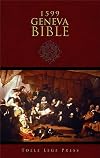
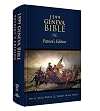
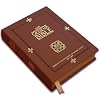
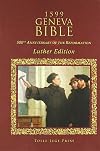
1599 Geneva Bible
by Geneva Bible
On This Page
Description
This is the Bible that our forefathers brought with them to the new world.Tags
Recommendations
















Member Reviews
A marvelous glimpse at the mind of the early reformers and our Christian ancestors. If one could sit at the feet of the English speaking reformed community at Geneva or of the pilgrim fathers who came to America, this is the type of Bible teaching that would have been received. I find the Geneva translation actually more readable than the KJV even though its an earlier one. The margin notes (actually at the bottom of the page in this edition) are very helpful both in understanding beliefs in 1599 and in understanding the scriptures in general. It was King James' hatred of these margin notes (which condemned tyrants and called for even kings to be in submission to the law of God) that in fact led to the KJV which he hoped would supplant show more the Geneva Bible in the English speaking world. That is eventually what happened with the Geneva Bible becoming obscure. I'm very happy that someone has taken the time to re-issue this important piece of Christian history. show less
The bible that gave way to the modern world, comes complete with study notes. I believe it to be the most accurate bible today.
Calvin, John, et.al., Gary DeMar (foreword), Marshall Foster (preface) 1599 Geneva Bible [enhanced] , hardcover (Tolle Lege Press; 1st edition (2006).
"When the Pilgrims arrived in America in 1620, they brought along supplies, a consuming passion to advance the Kingdom of Christ, a bright hope for the future, and the Word of God. Clearly, their most precious cargo was the Bible. The GENEVA BIBLE, printed over 200 times between 1560 and 1644, was the most widely read and influential English Bible of the sixteenth and seventeenth centuries. This superb translation was the product of the best Protestant scholars of the day and became the Bible of choice for many of the greatest writers, thinkers, and historical figures of that time. The show more GENEVA BIBLE is unique among all other Bibles. It was the first Bible to use chapters and numbered verses and became the most popular version of its time because of the extensive marginal notes. These notes, written by Reformation leaders such as John Calvin, John Knox, Miles Coverdale, William Whittingham, Anthony Gilby, and others, were included to explain and interpret the scriptures for the common people. For nearly half a century these notes helped the people of England, Scotland, and Ireland understand the Bible and true liberty. King James despised the GENEVA BIBLE because he considered the notes on key political texts to be seditious and a threat to his authority. Unlike the KING JAMES VERSION, the GENEVA BIBLE was not authorized by the government. It was truly a Bible by the people and for the people. You can see why this remarkable version with its profound marginal notes played a key role in the formation of the American Republic. Until now, the only complete version available was a large, cumbersome, and difficult-to-read facsimile edition. But this new edition contains all the original words and notes, but the type set has been enlarged and the font style change for today's reader." -- Publisher's Annotation
"This is the Bible that eventually put an end to Feudalism in Europe, strengthened Puritans, Quakers, and came to America on the Mayflower. This was the first Bible published in the language of the common people, the first Bible to contain commentary and verse numbers, and the first Bible written in English from Greek and Hebrew texts available from Constantinople, not from the Latin Vulgate. The dynamite in this Bible, is" the commentary accounting for about one third of its length. "The Church of England and King James were so upset they determined to create a new translation. They called it the King James version. They choose to use language so formal and grand, even by the standards of those days, that the common people would find difficult to understand. The GENEVA BIBLE was found seditious by it's insertions of commentary that spoke directly about the priesthood of lay believers, the church as naturally anti-oligarchy, and setting forth some other ideas considered anarchy by the King, but meaning freedom to the masses who read it. . . .
"Important facts to remember about this Bible. The Reformation was strong in England and the Lollards were a lay group of huge influence that had to go underground. English Christian theologians, not Catholics and not Anglicans, fled in huge numbers to Geneva for freedom. Geneva was not part of Switzerland at that time, because Geneva was its own city-state. . . . The GENEVA BIBLE was printed 1560-1644. THE KING JAMES VERSION was published in 1611. The GENEVA BIBLE was against the law to own. . . ." -- M. Baker, Reader's Comment
"The GENEVA BIBLE has a unique place in history. It is some times called the "BREECHES BIBLE." That term comes from the reference in Genesis 3:7 where it says that Adam and Eve clothed themselves in 'breeches' made from fig leaves. It is the product of Protestant scholars who had taken refuge in Geneva, Switzerland during the reign of Queen 'Bloody Mary' of England (1553-1558). It is also known as the Bible that the Pilgrims brought to America. It is older than the KING JAMES VERSION and is considered by some to be more 'Protestant' than the KING JAMES VERSION." -- Reader's Comment
"I've seen the facsimile versions of the Geneva Bible and they don't even come close to this edition. The legibility and readability of this edition is" far superior to other editions. "There have also been concerns about textual errors, but Toll Lege Press has acknowledged and fixed them in the printings following the first." -- Reader's Comment
Tolle Lege Press edition of the 1599 Geneva Bible
http://www.GenevaBible.com show less
"When the Pilgrims arrived in America in 1620, they brought along supplies, a consuming passion to advance the Kingdom of Christ, a bright hope for the future, and the Word of God. Clearly, their most precious cargo was the Bible. The GENEVA BIBLE, printed over 200 times between 1560 and 1644, was the most widely read and influential English Bible of the sixteenth and seventeenth centuries. This superb translation was the product of the best Protestant scholars of the day and became the Bible of choice for many of the greatest writers, thinkers, and historical figures of that time. The show more GENEVA BIBLE is unique among all other Bibles. It was the first Bible to use chapters and numbered verses and became the most popular version of its time because of the extensive marginal notes. These notes, written by Reformation leaders such as John Calvin, John Knox, Miles Coverdale, William Whittingham, Anthony Gilby, and others, were included to explain and interpret the scriptures for the common people. For nearly half a century these notes helped the people of England, Scotland, and Ireland understand the Bible and true liberty. King James despised the GENEVA BIBLE because he considered the notes on key political texts to be seditious and a threat to his authority. Unlike the KING JAMES VERSION, the GENEVA BIBLE was not authorized by the government. It was truly a Bible by the people and for the people. You can see why this remarkable version with its profound marginal notes played a key role in the formation of the American Republic. Until now, the only complete version available was a large, cumbersome, and difficult-to-read facsimile edition. But this new edition contains all the original words and notes, but the type set has been enlarged and the font style change for today's reader." -- Publisher's Annotation
"This is the Bible that eventually put an end to Feudalism in Europe, strengthened Puritans, Quakers, and came to America on the Mayflower. This was the first Bible published in the language of the common people, the first Bible to contain commentary and verse numbers, and the first Bible written in English from Greek and Hebrew texts available from Constantinople, not from the Latin Vulgate. The dynamite in this Bible, is" the commentary accounting for about one third of its length. "The Church of England and King James were so upset they determined to create a new translation. They called it the King James version. They choose to use language so formal and grand, even by the standards of those days, that the common people would find difficult to understand. The GENEVA BIBLE was found seditious by it's insertions of commentary that spoke directly about the priesthood of lay believers, the church as naturally anti-oligarchy, and setting forth some other ideas considered anarchy by the King, but meaning freedom to the masses who read it. . . .
"Important facts to remember about this Bible. The Reformation was strong in England and the Lollards were a lay group of huge influence that had to go underground. English Christian theologians, not Catholics and not Anglicans, fled in huge numbers to Geneva for freedom. Geneva was not part of Switzerland at that time, because Geneva was its own city-state. . . . The GENEVA BIBLE was printed 1560-1644. THE KING JAMES VERSION was published in 1611. The GENEVA BIBLE was against the law to own. . . ." -- M. Baker, Reader's Comment
"The GENEVA BIBLE has a unique place in history. It is some times called the "BREECHES BIBLE." That term comes from the reference in Genesis 3:7 where it says that Adam and Eve clothed themselves in 'breeches' made from fig leaves. It is the product of Protestant scholars who had taken refuge in Geneva, Switzerland during the reign of Queen 'Bloody Mary' of England (1553-1558). It is also known as the Bible that the Pilgrims brought to America. It is older than the KING JAMES VERSION and is considered by some to be more 'Protestant' than the KING JAMES VERSION." -- Reader's Comment
"I've seen the facsimile versions of the Geneva Bible and they don't even come close to this edition. The legibility and readability of this edition is" far superior to other editions. "There have also been concerns about textual errors, but Toll Lege Press has acknowledged and fixed them in the printings following the first." -- Reader's Comment
Tolle Lege Press edition of the 1599 Geneva Bible
http://www.GenevaBible.com show less
Read in 2020
Logos Library
Ratings
Members
- Recently Added By
Lists

Bible Translations
56 works; 1 member
Author Information
8 Works 718 Members
Classifications
Statistics
- Members
- 397
- Popularity
- 78,545
- Reviews
- 5
- Rating
- (4.70)
- Languages
- English
- Media
- Paper, Ebook
- ISBNs
- 14
- ASINs
- 11