On This Page
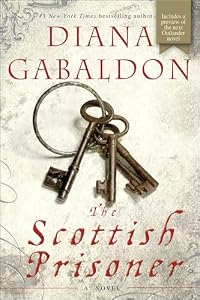
Description
Lord John Grey--soldier, gentleman, and no mean hand with a blade--fights for his crown, his honor, and his own secrets. Set in the heart of the eighteenth century during the Seven Years' War.Tags
Recommendations





Member Reviews
The Scottish Prisoner is now my favorite of the Lord John Grey books I’ve read to date. I’ve enjoyed the other books and novellas, too, but there are a couple of big reasons why this one is a step above the others. First is that, while there is a military element in the story, it doesn’t permeate it. There’s no wartime action or battles being fought. It’s all about Lord John trying to find and collect, Gerald Siverly, a corrupt British army officer, from Ireland and bring him to justice by returning him to England for a court-martial. This will also fulfill the vow he made to his friend, Charlie Carruthers, before he passed away. Charlie provided John with the necessary documents and testimony to indict Siverly in the previous show more novella of the series, The Custom of the Army. This doesn’t turn out to be quite as straightforward of a matter as it seems, which leads to some mystery, intrigue, and adventure along the way. Another thing that made this book more enjoyable is that Jamie plays a huge part in it. I’d say that about half the book is about him and/or written from his POV. I love how well Jamie and John play off each other. The relationship between then in this story is initially awkward and strained because of things both said in the heat of the moment at the end of Lord John and the Brotherhood of the Blade, but as they spend time working together on the case, they slowly start getting back to that place of friendship and camaraderie they’ve always shared. The two men are very well-matched in many ways including wit, intelligence, loyalty, and honor. They’re two characters who mesh well on the page and who I very much enjoy seeing together. So, less military descriptions helped to prevent the story from being a little too dry, like some of the others of the series have been, while Jamie and John together brought a certain warmth to the character interactions that wasn’t as prevalent in past stories.
I’ve loved John since he was introduced in the Outlander series. He’s an honorable man who takes his military service very seriously as well as the vows he makes to his friends. That’s why he feels he must undertake the mission to bring Siverly to justice by whatever means necessary. And he does a very admirable job of it, I might say. However, before he goes on that mission, John’s old friend, Stephan von Namtzen, shows up in London. The author has been toying with the possibility of a potential romantic relationship between these two since they met at the beginning of the series, so I very much enjoyed seeing them finally get together in this book. It was a pretty brief interlude, though, because of Stephan’s need to get back to Prussia and John’s need to get on with finding Siverly, but it was a very romantic and sexy moment nonetheless, even though there isn’t a great deal of detail. Despite having feelings for Stephan, John also still has feelings for Jamie, too, which is part of why things are still awkward between them at first. I’ve always felt that John genuinely loves Jamie, but he’s realistic enough to understand that there can never be anything between them besides friendship. However, we see him getting one step closer to that permanent bond he shares with Jamie in the later Outlander books, though Jamie’s son and his step-son, William. John started having suspicions about William's true parentage in Brotherhood of the Blade and he finally brings that full-circle by fully realizing the truth.
Any book or story I get to see Jamie in is a real treat. He has a couple of different plotlines going in this story. One, of course, is being called upon by John’s brother, Hal, to help translate a poem connected to the Siverly case that was written in Irish Gaelic and then Hal further twisting his arm to get Jamie to go with John to Ireland as “backup.” But at the same time, Jamie is approached by an Irish Jacobite he knew from the Rising. The man wants Jamie to help lead a new Rising, but to do so, he has to go to Ireland to collect an artifact that the Jacobites believe will help them win this time. Of course, Jamie, knowing there is no hope of the Jacobites ever winning, wants nothing to do with this scheme, but the man is persistent, following him and John all the way to Ireland, only to have his plotline converge unexpectedly with Siverly’s. Throughout his part of the story, Jamie is… well… Jamie.:-) He’s smart, cunning, and always up for an adventure, although going on that adventure with John isn’t too appealing at first. I like that he doesn’t hold a grudge, though, and that he gradually comes around to rekindling his friendship with the other man. The thing that really tore at my heart is how much Jamie still loves and misses Claire. At this point, she’s been gone for a number of years, and even knowing that they’re eventually reunited, it still greatly affected me. There was one small moment that John bore witness to that tugged at his heart, too. We also get to see more of Jamie with Willy. I’m so glad that he got to be a part of the boy’s life for at least a while, but it breaks my heart that he didn’t get to be a more hands-on father with either of his kids growing up, because he’s a great one.
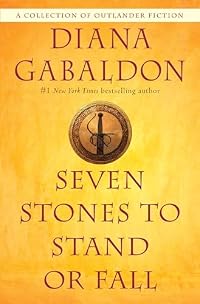
There were a few common secondary characters that show up again in The Scottish Prisoner. John’s brother, Hal, and his wife, Minnie, whose love story is now told in the new novella, A Fugitive Green (from Seven Stones to Stand or Fall), played a part. As John’s commanding officer, Hal is in charge of the investigation into Siverly’s misconduct, while Minnie, a former spy who actually knows Jamie, provides them with helpful information. Hal and John’s friend, Harry Quarry, shows up, too, kind of freaking Jamie out a bit at first, since he acted as warden at Ardsmuir prison before John did. Dr. John Hunter, the real-life physician known as the “body-snatcher,” plays a brief role as the surgeon called to the site of a duel in which John is involved. Of course, I very much enjoyed seeing little Willy and the Dunsanys. Isobel gets herself into a bit of hot water, while her aging parents are starting to think toward the future for both their daughter and grandchild. However, probably the most important secondary player was Jamie’s old acquaintance, Tobias Quinn, who I believe was first introduced in this book. I had to admire his persistence on some level, but at the same time, he’s a rather tragic figure who can’t seem to let go of the past and a doomed cause.
Overall, The Scottish Prisoner was a great read. John and Jamie went through a lot in this story that tested their mettle as individuals, but at the same time, I think they make a wonderful team. When things aren’t strained between them, they work and play off each other in such a way that’s fun to read. I’ve always loved them together, and it was nice to see more of the building of the friendship that led to that permanent bond I spoke of and some other events surrounding them in the Outlander series. If I’m not mistaken, Jamie has a few more years of service at Helwater before going back to Scotland, so I’d definitely be open to more stories that fill in the blanks of his time there, and if Ms. Gabaldon pairs him up with John again, all the better.:-) show less
I’ve loved John since he was introduced in the Outlander series. He’s an honorable man who takes his military service very seriously as well as the vows he makes to his friends. That’s why he feels he must undertake the mission to bring Siverly to justice by whatever means necessary. And he does a very admirable job of it, I might say. However, before he goes on that mission, John’s old friend, Stephan von Namtzen, shows up in London. The author has been toying with the possibility of a potential romantic relationship between these two since they met at the beginning of the series, so I very much enjoyed seeing them finally get together in this book. It was a pretty brief interlude, though, because of Stephan’s need to get back to Prussia and John’s need to get on with finding Siverly, but it was a very romantic and sexy moment nonetheless, even though there isn’t a great deal of detail. Despite having feelings for Stephan, John also still has feelings for Jamie, too, which is part of why things are still awkward between them at first. I’ve always felt that John genuinely loves Jamie, but he’s realistic enough to understand that there can never be anything between them besides friendship. However, we see him getting one step closer to that permanent bond he shares with Jamie in the later Outlander books, though Jamie’s son and his step-son, William. John started having suspicions about William's true parentage in Brotherhood of the Blade and he finally brings that full-circle by fully realizing the truth.
Any book or story I get to see Jamie in is a real treat. He has a couple of different plotlines going in this story. One, of course, is being called upon by John’s brother, Hal, to help translate a poem connected to the Siverly case that was written in Irish Gaelic and then Hal further twisting his arm to get Jamie to go with John to Ireland as “backup.” But at the same time, Jamie is approached by an Irish Jacobite he knew from the Rising. The man wants Jamie to help lead a new Rising, but to do so, he has to go to Ireland to collect an artifact that the Jacobites believe will help them win this time. Of course, Jamie, knowing there is no hope of the Jacobites ever winning, wants nothing to do with this scheme, but the man is persistent, following him and John all the way to Ireland, only to have his plotline converge unexpectedly with Siverly’s. Throughout his part of the story, Jamie is… well… Jamie.:-) He’s smart, cunning, and always up for an adventure, although going on that adventure with John isn’t too appealing at first. I like that he doesn’t hold a grudge, though, and that he gradually comes around to rekindling his friendship with the other man. The thing that really tore at my heart is how much Jamie still loves and misses Claire. At this point, she’s been gone for a number of years, and even knowing that they’re eventually reunited, it still greatly affected me. There was one small moment that John bore witness to that tugged at his heart, too. We also get to see more of Jamie with Willy. I’m so glad that he got to be a part of the boy’s life for at least a while, but it breaks my heart that he didn’t get to be a more hands-on father with either of his kids growing up, because he’s a great one.
There were a few common secondary characters that show up again in The Scottish Prisoner. John’s brother, Hal, and his wife, Minnie, whose love story is now told in the new novella, A Fugitive Green (from Seven Stones to Stand or Fall), played a part. As John’s commanding officer, Hal is in charge of the investigation into Siverly’s misconduct, while Minnie, a former spy who actually knows Jamie, provides them with helpful information. Hal and John’s friend, Harry Quarry, shows up, too, kind of freaking Jamie out a bit at first, since he acted as warden at Ardsmuir prison before John did. Dr. John Hunter, the real-life physician known as the “body-snatcher,” plays a brief role as the surgeon called to the site of a duel in which John is involved. Of course, I very much enjoyed seeing little Willy and the Dunsanys. Isobel gets herself into a bit of hot water, while her aging parents are starting to think toward the future for both their daughter and grandchild. However, probably the most important secondary player was Jamie’s old acquaintance, Tobias Quinn, who I believe was first introduced in this book. I had to admire his persistence on some level, but at the same time, he’s a rather tragic figure who can’t seem to let go of the past and a doomed cause.
Overall, The Scottish Prisoner was a great read. John and Jamie went through a lot in this story that tested their mettle as individuals, but at the same time, I think they make a wonderful team. When things aren’t strained between them, they work and play off each other in such a way that’s fun to read. I’ve always loved them together, and it was nice to see more of the building of the friendship that led to that permanent bond I spoke of and some other events surrounding them in the Outlander series. If I’m not mistaken, Jamie has a few more years of service at Helwater before going back to Scotland, so I’d definitely be open to more stories that fill in the blanks of his time there, and if Ms. Gabaldon pairs him up with John again, all the better.:-) show less
The Scottish Prisoner is Gabaldon’s latest book in her extended family of books set in 18th century England/Scotland/Ireland. If you are one of the handful of people who haven’t read her bestselling books, I’ll give a brief overview so you’ll know where this most recent falls in place. Gabaldon says you can read any of her books as stand alones, but even she admits you’ll get what’s going on better if you read in order. Her main series encompasses the Outlander books in which one of the main characters, Claire Randall, steps through an ancient stone circle and passes from 1945 to 1743 and into the middle of war torn Scotland. There she meets James Fraser, along with a great deal of trouble, and eventually they admit they show more like each other. But she’s married to someone else in 1945, so it’s complicated. There are now seven books in this main series: Outlander, Dragonfly in Amber, Voyager, Drums of Autumn, The Fiery Cross, A Breath of Snow and Ashes, An Echo in the Bone. The Scottish Prisoner is part of a related series, the Lord John Grey books, which don’t have Claire in them, but include Jamie Fraser along with his sometime nemesis, Lord John Grey, as the primary focus. The Lord John books fall, chronologically speaking, in the middle of the events of Voyager, but don’t influence the plot line of the Outlander series, although they are definitely related.
The Scottish Prisoner has Gabaldon’s usual focus on character development and plot twists. Still a prisoner at Helwater, Jamie is made an offer by Lord John’s brother he has little choice but to accept. It involves traveling to Ireland with Lord John—and neither man wants to spend any time with the other. Trying to insert themselves into this unwanted journey, are even more unwanted people and ideas from Jamie’s past as a Scottish rebel. And, of course, a couple women do their best to help or deceive Jamie also, although the woman Jamie really wants haunts only his dreams. Gabaldon opens the book vividly with one such dream and its effects on Jamie. Lord John continues to be an intriguing person of conflicting loyalties and passions. He’s devoted to his regiment and the code of honor he will uphold at all costs—which is what sends him to Ireland more or less—but he is also gay, a capital offense, and his view of life does not always conform comfortably with the conventions of his time. Part of the pleasure of this book is the way in which Gabaldon manages to build a friendship between these two men quite against their will.
A significant piece of the plot in The Scottish Prisoner turns on the issue of language, which I very much enjoyed. Amongst a series of damning documents, there is one that Lord John cannot figure out at all. Is it a code? No, a Celtic language, Erse, as it turns out, which both Jamie and some other ex- or not so ex-Jacobite rebels know. How accurate will their translations be for Lord John? The way in which access to a given language affects events, the “cueing” that occurs through a bit of Erse poetry, the whole notion of ancient folk traditions in Celtic and, we might say, the abuse of this folk tradition by characters provide a fascinating layer to this novel. Gabaldon has been ably assisted with the various pieces of Celtic language she interweaves into her plot by a group of experts who clearly love the revival of interest in this ancient language that her book provides. As anyone who knows me will realize, I’m always on the side of ancient languages! show less
The Scottish Prisoner has Gabaldon’s usual focus on character development and plot twists. Still a prisoner at Helwater, Jamie is made an offer by Lord John’s brother he has little choice but to accept. It involves traveling to Ireland with Lord John—and neither man wants to spend any time with the other. Trying to insert themselves into this unwanted journey, are even more unwanted people and ideas from Jamie’s past as a Scottish rebel. And, of course, a couple women do their best to help or deceive Jamie also, although the woman Jamie really wants haunts only his dreams. Gabaldon opens the book vividly with one such dream and its effects on Jamie. Lord John continues to be an intriguing person of conflicting loyalties and passions. He’s devoted to his regiment and the code of honor he will uphold at all costs—which is what sends him to Ireland more or less—but he is also gay, a capital offense, and his view of life does not always conform comfortably with the conventions of his time. Part of the pleasure of this book is the way in which Gabaldon manages to build a friendship between these two men quite against their will.
A significant piece of the plot in The Scottish Prisoner turns on the issue of language, which I very much enjoyed. Amongst a series of damning documents, there is one that Lord John cannot figure out at all. Is it a code? No, a Celtic language, Erse, as it turns out, which both Jamie and some other ex- or not so ex-Jacobite rebels know. How accurate will their translations be for Lord John? The way in which access to a given language affects events, the “cueing” that occurs through a bit of Erse poetry, the whole notion of ancient folk traditions in Celtic and, we might say, the abuse of this folk tradition by characters provide a fascinating layer to this novel. Gabaldon has been ably assisted with the various pieces of Celtic language she interweaves into her plot by a group of experts who clearly love the revival of interest in this ancient language that her book provides. As anyone who knows me will realize, I’m always on the side of ancient languages! show less
The Scottish Prisoner – Diana Gabaldon
4 stars
Jamie Fraser is, naturally, The Scottish Prisoner. This is a book for fans of Gabaldon’s Outlander series. I am a fan. I enjoyed this book that combines her parallel Lord John Grey series with the main series. The story takes place during the time that Jamie Fraser is a paroled prisoner living as a groom on the Hellwater estate. Lord John and his brother, the Duke of Pardloe, require Jamie’s help to capture a traitor and foil a Jacobite plot. Jamie is yet again walking the sword edge of honor, loyalty, treason and betrayal. Pursuit of the traitor takes Jamie and Lord John to Ireland where rebels continue to dream of regaining the throne. The mission is accomplished with the usual sword show more fights, false arrests, narrow escapes and humorous blunders.
There are several things that this book adds to my enjoyment of the Outlander sagas. It explains more of the background of the deep friendship between Jamie and Lord John Gray. It provides more depth to the characters in Gray’s family, especially his brother and sister-in-law. There are tender scenes of Jamie with his secret son. The thing that I found most touching was seeing Jamie’s emotional scars. Gabaldon paints a good picture of a strong man suffering from eighteenth century PTSD.
The whole story teeters on the unlikely premise that any prisoner of war would be trusted to give such assistance and that he would cooperate. As a fan, I’ve already accepted the premise that Jamie’s one true love can travel through time, so I had no trouble with the unbelievable aspects of the plot. Gabaldon’s stories are action packed and character driven. Her characters are very human and their interactions are complex. Having read all seven of the massive books in the Outlander series, I feel that I know the characters well. Sometimes, I feel that I might know more than I want to. My response to her opening chapter at Hellwater was, “For pity’s sake, can’t you give the poor man some privacy?” show less
4 stars
Jamie Fraser is, naturally, The Scottish Prisoner. This is a book for fans of Gabaldon’s Outlander series. I am a fan. I enjoyed this book that combines her parallel Lord John Grey series with the main series. The story takes place during the time that Jamie Fraser is a paroled prisoner living as a groom on the Hellwater estate. Lord John and his brother, the Duke of Pardloe, require Jamie’s help to capture a traitor and foil a Jacobite plot. Jamie is yet again walking the sword edge of honor, loyalty, treason and betrayal. Pursuit of the traitor takes Jamie and Lord John to Ireland where rebels continue to dream of regaining the throne. The mission is accomplished with the usual sword show more fights, false arrests, narrow escapes and humorous blunders.
There are several things that this book adds to my enjoyment of the Outlander sagas. It explains more of the background of the deep friendship between Jamie and Lord John Gray. It provides more depth to the characters in Gray’s family, especially his brother and sister-in-law. There are tender scenes of Jamie with his secret son. The thing that I found most touching was seeing Jamie’s emotional scars. Gabaldon paints a good picture of a strong man suffering from eighteenth century PTSD.
The whole story teeters on the unlikely premise that any prisoner of war would be trusted to give such assistance and that he would cooperate. As a fan, I’ve already accepted the premise that Jamie’s one true love can travel through time, so I had no trouble with the unbelievable aspects of the plot. Gabaldon’s stories are action packed and character driven. Her characters are very human and their interactions are complex. Having read all seven of the massive books in the Outlander series, I feel that I know the characters well. Sometimes, I feel that I might know more than I want to. My response to her opening chapter at Hellwater was, “For pity’s sake, can’t you give the poor man some privacy?” show less
Like so many of the Gabaldon books, I started this as an audio book, but I couldn't leave the story alone for the whole weekend (I listen on my work commute), so I blew through the rest of it as a regular book. The audio was fine, although I prefer the way Davina Porter does Jamie's voice and accent in the Outlander audio versions.
I'm very glad I still have An Echo in the Bone to read/listen to, since finishing this so quickly leaves me wanting more!
It did start out a little slowly, and I think making the first scene of the book one of Jamie masturbating was an odd choice...
But, the book picked up steam once John and Jamie were reunited in London, and I really enjoyed it. It was nice to have some plot gaps filled, and the story she told show more to accomplish that was worthwhile. I wish she'd taken it just a little further along the timeline of Jamie and John rebuilding their friendship, but maybe that will happen in the next one. Please let there be a next one!
It was great to see Tom Byrd again, and I enjoyed the little interactions he had with Jamie. show less
I'm very glad I still have An Echo in the Bone to read/listen to, since finishing this so quickly leaves me wanting more!
It did start out a little slowly, and I think making the first scene of the book one of Jamie masturbating was an odd choice...
But, the book picked up steam once John and Jamie were reunited in London, and I really enjoyed it. It was nice to have some plot gaps filled, and the story she told show more to accomplish that was worthwhile. I wish she'd taken it just a little further along the timeline of Jamie and John rebuilding their friendship, but maybe that will happen in the next one. Please let there be a next one!
It was great to see Tom Byrd again, and I enjoyed the little interactions he had with Jamie. show less
London, 1760. For Jamie Fraser, paroled prisoner-of-war in the remote Lake District, life could be worse: He’s not cutting sugar cane in the West Indies, and he’s close enough to the son he cannot claim as his own. But Jamie Fraser’s quiet existence is coming apart at the seams, interrupted first by dreams of his lost wife, then by the appearance of Tobias Quinn, an erstwhile comrade from the Rising.
Like many of the Jacobites who aren’t dead or in prison, Quinn still lives and breathes for the Cause. His latest plan involves an ancient relic that will rally the Irish. Jamie is having none of it—he’s sworn off politics, fighting, and war. Until Lord John Grey shows up with a summons that will take him away from everything he show more loves—again.
Lord John Grey—aristocrat, soldier, and occasional spy—finds himself in possession of a packet of explosive documents that exposes a damning case of corruption against a British officer. But they also hint at a more insidious danger. Time is of the essence as the investigation leads to Ireland, with a baffling message left in “Erse,” the tongue favored by Scottish Highlanders. Lord John, who oversaw Jacobite prisoners when he was governor of Ardsmiur prison, thinks Jamie may be able to translate—but will he agree to do it?
Soon Lord John and Jamie are unwilling companions on the road to Ireland, a country whose dark castles hold dreadful secrets, and whose bogs hide the bones of the dead. A captivating return to the world Diana Gabaldon created in her Outlander and Lord John series, The Scottish Prisoner is another masterpiece of epic history, wicked deceit, and scores that can only be settled in blood. show less
Like many of the Jacobites who aren’t dead or in prison, Quinn still lives and breathes for the Cause. His latest plan involves an ancient relic that will rally the Irish. Jamie is having none of it—he’s sworn off politics, fighting, and war. Until Lord John Grey shows up with a summons that will take him away from everything he show more loves—again.
Lord John Grey—aristocrat, soldier, and occasional spy—finds himself in possession of a packet of explosive documents that exposes a damning case of corruption against a British officer. But they also hint at a more insidious danger. Time is of the essence as the investigation leads to Ireland, with a baffling message left in “Erse,” the tongue favored by Scottish Highlanders. Lord John, who oversaw Jacobite prisoners when he was governor of Ardsmiur prison, thinks Jamie may be able to translate—but will he agree to do it?
Soon Lord John and Jamie are unwilling companions on the road to Ireland, a country whose dark castles hold dreadful secrets, and whose bogs hide the bones of the dead. A captivating return to the world Diana Gabaldon created in her Outlander and Lord John series, The Scottish Prisoner is another masterpiece of epic history, wicked deceit, and scores that can only be settled in blood. show less
Summary: Lord John finds himself in possession of a packet of materials entrusted to him by one of his men, materials that present a solid case of corruption against one of Lord John's fellow army officers. Amidst the other documents, however, is a fragment of poetry in what appears to be Gaelic - an odd inclusion that hints at something more dangerous than mere corruption. Lord John knows someone who may be able to translate the poem: Jamie Fraser, currently serving a term as a prisoner-of-war on parole at Helwater farm. But it won't be a simple matter of asking for Jamie's help; their last disastrous meeting has left their relationship strained seemingly beyond repair, and Lord John is unsure where Jamie's loyalties truly lie when the show more matter at hand concerns a Jacobite plot to overthrow the English king.
Review: The Scottish Prisoner, which takes place in 1760 (and therefore in between Dragonfly in Amber and Voyager, although Voyager should be read first), contains a lot more Jamie Fraser than the previous Lord John books, which turns out to be somewhat of a mixed blessing. On the one hand, Jamie's POV scenes (which made up about half of this book), were some of my favorite parts, and watching him around his young son William was truly a delight. On the other hand, Jamie's such a larger-than-life personality that he makes the other characters seem somewhat washed out in comparison. Lord John's got a personality - I've been convinced of that since Brotherhood of the Blade broke my heart repeatedly on his behalf - but in The Scottish Prisoner, his actions and his personality seem dictated by his response to Jamie rather than independently motivated. And while that may actually have been in keeping with his character as established, it had a hint of lovestruck teenager to it that made me miss who Lord John is when Jamie's not around.
One of the things that I did appreciate about the inclusion of Jamie's POV chapters were how much they made me re-evaluate my opinions of Jamie's previous appearances in the Lord John books. In my review of Brotherhood of the Blade, I said "I was particularly struck by how different Lord John’s Jamie is than Claire’s Jaime, very hard-edged and tightly-wound and almost harsh. If this had been the first time I’d met him as a character, I doubt I’d have liked him much." But now, in retrospect, I realize that it's not a difference between Clare's perspective and Lord John's perspective, it's a difference between Jamie when Clare's around, and Jamie when Clare is (to his knowledge) gone forever, and he's exiled from his land and his family, for the rest of his life. The Scottish Prisoner also reminded me, after the fact, that Jamie has some very real and very concrete reasons to respond badly to any homosexual attention, and that his rage that bothered me so much at the end of Brotherhood of the Blade is not directed towards Lord John so much as it is towards the memory of Jack Randall. It's a subtlety that I missed upon my first read, but one which Gabaldon effectively drives home in The Scottish Prisoner.
While the book is mainly about the characters and their relationships, the rest of the plot ticks along smoothly as well. There are a fair number of secondary characters involved in the mystery and the various plots and schemes and minor story threads, but they were surprisingly easy to keep straight. Likewise, this story covers more physical ground than most, but Gabaldon's good as usual about really evoking her setting. Also, for such a thick book (not Outlander-thick, but still), it's a pretty quick read; it was great at capturing my attention, and kept me wanting to read more. 4 out of 5 stars.
Recommendation: I would actually recommend that Outlander fans who are unsure about the Lord John books start here, rather than with Lord John and the Private Matter. Jamie's POV provides a familiar entry point, and Gabaldon's good about explaining the events of previous Lord John books that bear on the plot, making it relatively self-contained. show less
Review: The Scottish Prisoner, which takes place in 1760 (and therefore in between Dragonfly in Amber and Voyager, although Voyager should be read first), contains a lot more Jamie Fraser than the previous Lord John books, which turns out to be somewhat of a mixed blessing. On the one hand, Jamie's POV scenes (which made up about half of this book), were some of my favorite parts, and watching him around his young son William was truly a delight. On the other hand, Jamie's such a larger-than-life personality that he makes the other characters seem somewhat washed out in comparison. Lord John's got a personality - I've been convinced of that since Brotherhood of the Blade broke my heart repeatedly on his behalf - but in The Scottish Prisoner, his actions and his personality seem dictated by his response to Jamie rather than independently motivated. And while that may actually have been in keeping with his character as established, it had a hint of lovestruck teenager to it that made me miss who Lord John is when Jamie's not around.
One of the things that I did appreciate about the inclusion of Jamie's POV chapters were how much they made me re-evaluate my opinions of Jamie's previous appearances in the Lord John books. In my review of Brotherhood of the Blade, I said "I was particularly struck by how different Lord John’s Jamie is than Claire’s Jaime, very hard-edged and tightly-wound and almost harsh. If this had been the first time I’d met him as a character, I doubt I’d have liked him much." But now, in retrospect, I realize that it's not a difference between Clare's perspective and Lord John's perspective, it's a difference between Jamie when Clare's around, and Jamie when Clare is (to his knowledge) gone forever, and he's exiled from his land and his family, for the rest of his life. The Scottish Prisoner also reminded me, after the fact, that Jamie has some very real and very concrete reasons to respond badly to any homosexual attention, and that his rage that bothered me so much at the end of Brotherhood of the Blade is not directed towards Lord John so much as it is towards the memory of Jack Randall. It's a subtlety that I missed upon my first read, but one which Gabaldon effectively drives home in The Scottish Prisoner.
While the book is mainly about the characters and their relationships, the rest of the plot ticks along smoothly as well. There are a fair number of secondary characters involved in the mystery and the various plots and schemes and minor story threads, but they were surprisingly easy to keep straight. Likewise, this story covers more physical ground than most, but Gabaldon's good as usual about really evoking her setting. Also, for such a thick book (not Outlander-thick, but still), it's a pretty quick read; it was great at capturing my attention, and kept me wanting to read more. 4 out of 5 stars.
Recommendation: I would actually recommend that Outlander fans who are unsure about the Lord John books start here, rather than with Lord John and the Private Matter. Jamie's POV provides a familiar entry point, and Gabaldon's good about explaining the events of previous Lord John books that bear on the plot, making it relatively self-contained. show less
Having read all of Diana Gabaldon's novels, including the Lord John series, in one fell swoop during the past year, I made certain to be the first at my public library to check out The Scottish Prisoner. It was an enjoyable immersion, to be once again alongside two of the three best-developed characters from her Outlander series, Jamie Fraser and Lord John Grey. Gabaldon's historic settings draw me in. Her characters reside in those settings realistically and she maneuvers the reader through the main plot and subplots with aplomb. This novel is not a mystery, though, or barely so, but an adventure involving Jamie Fraser and Lord John as they seek to stop an embryonic Irish Jacobite plot. Lord John is a fascinating character with all the show more attributes of a humorous and gentle man, unless provoked into fighting a duel or when in battle (he is, after all, an army officer). You would want him to be your friend. Jamie Fraser is . . . well . . . Jamie Fraser, one-half of a great love story, now in nadir along with his soul, while he resides in England as a paroled Scottish prisoner. Gabaldon's fans know from her Outlander series that matters will right themselves soon, so we tolerate his anguish, depression and irritation. Feel sympathy . . . want to pat him on the shoulder and whisper, "Just wait." Reading of the ups and downs of Jamie's and Lord John's friendship in this book -- one of the missing pieces -- is now better understood. Except for their different sexual proclivities,they bear the same code of honor, and so they do understand and mostly trust each other. It is Gabaldon's gift for dialogue - witty, thoughtful, sharp as a rapier's point -- that makes her such a delightful author to read. May she write for many years to come.
Author of The Wolf's Sun
A Devil Singing Small show less
Author of The Wolf's Sun
A Devil Singing Small show less
Members
- Recently Added By
Lists

Historical Fiction
889 works; 91 members

Books Read in 2020
4,379 works; 123 members

Books - Gabaldon, Diana: Outlander
22 works; 1 member
Author Information

93+ Works 125,475 Members
Diana Gabaldon was born in Flagstaff, Arizona on January 11, 1952. She has a B.S. in zoology, a M.S. in marine biology, and a Ph.D. in quantitative behavioral ecology. She has worked as a university professor and has written freelance for various magazines and companies such as Walt Disney. She writes the Outlander series, which was adapted into a show more television series. (Bowker Author Biography) show less

Diana Gabaldon is a LibraryThing Author, an author who lists their personal library on LibraryThing.
Some Editions
Awards and Honors
Distinctions
Series


Work Relationships
Common Knowledge
- Canonical title
- The Scottish Prisoner
- Original title
- The Scottish Prisoner
- Alternate titles
- Lord John and the Scottish Prisoner
- Original publication date
- 2011
- People/Characters
- James "Jamie" Alexander Malcolm MacKenzie Fraser; Lord John Grey; William Ransom, Earl of Ellesmere; Minerva "Minnie" Grey; Nasonby
- Important places
- London, England, UK; Inchcleraun, County Longford, Ireland
- Dedication
- To those selfless champions of a beautiful and beloved language who have so kindly helped me with Gaelic translations through the years:
Iain MacKinnon Taylor (and members of his family) (Gaelic/Gaidhlig): Voyager... (show all), Drums of Autumn, The Fiery Cross, and A Breath of Snow and Ashes
Catherine MacGregor and Catherine-Ann MacPhee (Gaelic/Gaidhlig): An Echo in the Bone, The Exile, and The Scottish Prisoner
Kevin Dooley (Irish/Gaeilge): The Scottish Prisoner
Moran Taing! - First words
- If you deal in death routinely, there are two paths.
- Last words
- (Click to show. Warning: May contain spoilers.)Toen wendde hij zijn gezicht naar haar tastende hand en raakte haar aan door de sluiers van de tijd.
(Click to show. Warning: May contain spoilers.)Then turned his cheek to her reaching hand and touched her through the veils of time. - Original language
- English
Classifications
- Genres
- Fiction and Literature, Historical Fiction, General Fiction, Fantasy, Mystery
- DDC/MDS
- 813.54 — Literature & rhetoric American literature in English American fiction in English 1900-1999 1945-1999
- LCC
- PS3557 .A22 .S36 — Language and Literature American literature American literature Individual authors 1961-
- BISAC
Statistics
- Members
- 2,145
- Popularity
- 9,476
- Reviews
- 73
- Rating
- (4.09)
- Languages
- 7 — Dutch, English, Finnish, French, German, Spanish, Swedish
- Media
- Paper, Audiobook, Ebook
- ISBNs
- 41
- ASINs
- 14