On This Page
Description
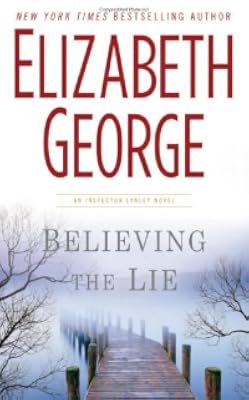
In this novel Inspector Thomas Lynley is mystified when he's sent undercover to investigate the death of Ian Cresswell at the request of the man's uncle, the wealthy and influential Bernard Fairclough. The death has been ruled an accidental drowning, and nothing on the surface indicates otherwise. But when Lynley enlists the help of his friends Simon and Deborah St. James, the trio's digging soon reveals that the Fairclough clan is awash in secrets, lies, and motives. Deborah's investigation show more of the prime suspect, Bernard's prodigal son Nicholas, a recovering drug addict, leads her to Nicholas' wife, a woman with whom she feels a kinship, a woman as fiercely protective as she is beautiful. Lynley and Simon delve for information from the rest of the family, including the victim's bitter ex-wife and the man he left her for, and Bernard himself. As the investigation escalates, the Fairclough family's veneer cracks, with deception and self-delusion threatening to destroy everyone from the Fairclough patriarch to Tim, the troubled son Ian left behind. show lessTags
Recommendations

Member Reviews
This book is riddled with lies, both of omission and commission. Sometimes the lies are entertaining, such as The Source reporter's complete misunderstanding of the story, or redeeming: when Deborah St. James attempts a bit of subterfuge, she becomes more interesting and less whiny. Overall, though, deceit leads to all kinds of misery, including blackmail, kidnapping, crimes against children, and death.
In LAH (Life After Helen) Lynley continues to make poor relationship choices, although the author does end the book on a high note for him. For Havers, on the other hand, loss and change just keep coming--which means I want to keep reading!
I rated this book three stars because the mystery was not very compelling, but the drama of Lynley show more and Havers was, as always, first rate.
Favorite lines:
"'Life,' she said, 'is meant to be lived by the individual living it, being true to himself. What you're doing is living your life in order to be true to someone else's perception of you.'"
"What surprised Tim was what he was feeling as he spoke. He didn't know what to call it. It was filling him up inside and making him want to do something to make it go away, but he couldn't name what the feeling was, and he didn't want to. He hated it when he felt something as a result of what other people did. He hated that he reacted to things. He wanted to be like a sheet of glass with everything rolling off him like rain and the fact that he wasn't, that he hadn't managed it yet, that there was no indication that he'd ever manage it...This knowledge was just as bad as feeling something in the first place. It spoke of a kind of condemnation: an eternal hell of being at the mercy of everyone else and no one being at the mercy of him."
"He might then talk or he might not but the point was it didn't matter to Helen. What he said was a matter of indifference to her. Who he was was everything." show less
In LAH (Life After Helen) Lynley continues to make poor relationship choices, although the author does end the book on a high note for him. For Havers, on the other hand, loss and change just keep coming--which means I want to keep reading!
I rated this book three stars because the mystery was not very compelling, but the drama of Lynley show more and Havers was, as always, first rate.
Favorite lines:
"'Life,' she said, 'is meant to be lived by the individual living it, being true to himself. What you're doing is living your life in order to be true to someone else's perception of you.'"
"What surprised Tim was what he was feeling as he spoke. He didn't know what to call it. It was filling him up inside and making him want to do something to make it go away, but he couldn't name what the feeling was, and he didn't want to. He hated it when he felt something as a result of what other people did. He hated that he reacted to things. He wanted to be like a sheet of glass with everything rolling off him like rain and the fact that he wasn't, that he hadn't managed it yet, that there was no indication that he'd ever manage it...This knowledge was just as bad as feeling something in the first place. It spoke of a kind of condemnation: an eternal hell of being at the mercy of everyone else and no one being at the mercy of him."
"He might then talk or he might not but the point was it didn't matter to Helen. What he said was a matter of indifference to her. Who he was was everything." show less
Another excellent Thomas Lynley novel with familiar characters, and some robust new characters. I particularly liked characterizations of the gullible Zed Benjamin, and the manipulative Mignon, and the fantastic Freddie (do men like him really exist?).
Novel is all about lies, exaggerations, innuendos, and miscommunications between loving couples, between acquaintances and strangers, and lies to ourselves. These lies take on lives of their own and often cause irreversible harm. Few eventually see through the lies and usually this improves their lives. But often the truth can be harder to face. But only then can healing and moving on begin.
Great read.
Novel is all about lies, exaggerations, innuendos, and miscommunications between loving couples, between acquaintances and strangers, and lies to ourselves. These lies take on lives of their own and often cause irreversible harm. Few eventually see through the lies and usually this improves their lives. But often the truth can be harder to face. But only then can healing and moving on begin.
Great read.
About two-thirds of the way through the latest Inspector Lynley mystery I had a burning desire to ask the author two questions: If you're tired of writing mysteries, why not write something else? And, if you're tired of writing about Inspector Lynley, why not write about someone else? Because this novel is neither a mystery, nor is it very much about Thomas Lynley.
So, on that score, this book was a disappointment. There were other problems too, but Elizabeth George is a talented writer and it is always enjoyable to be in her company. So in the end, I gave this flawed book a three-star rating.
The plot, if it can be said there is one, in this 600 page story has been detailed extensively in other reviews, so I won't recap it here. What I show more will say though, is that there is at least two books worth of material included in this one volume, and to my mind, that is the book's greatest shortcoming. Although, George's skill at story-telling makes it easy to keep the multiple story-lines straight, I did wonder more than once why it was necessary to weave so many disparate subplots into one novel.
The book is about people who lie and the consequences of those lies. Everyone in this book is deceiving someone, whether it be themselves or someone else. And yes, the multiple deceptions do add a certain amount of gravitas to the the story. But really, I counted ten separate stories running through these pages, and while many intersect, some don't...so why include them? Of necessity, with ten tales to tell George developed some in greater depth than others. However this means that some potentially interesting characters ended up receiving short-shrift. An entire book could have, and probably should have been written about Alatea. Conversely, Zed should have been left on the cutting-room floor.
Another irritation was the frequent passages describing the Cumbrian coastline, that all tended to sound very much the same. Yes, I get it that there were a lot of birds flying through as they migrated to warmer climes. Do I need to be told this half-a-dozen times in nearly identical language? When a writer as good as Elizabeth George slips up like this, it's much more noticeable than when it is done by someone with less talent.
Finally, there's the question of Deborah. Would anyone with her intelligence and upbringing actually behave as she is made to do in this book? This is a major flaw in the story; so much so that I could not credit the outcome that results from her irrational behavior. In the end, I put this book down feeling unsatisfied, and Deborah's story-line was, in large part, the reason why.
Yes, there is much to enjoy here, but ultimately the book falls far short of George's better efforts. As mentioned at the beginning of this review, this is not a mystery, and Lynley's role is not central to the story's development. Therefore, you will probably enjoy the book more if you are not expecting, as I was, to to spend some quality time with Inspector Thomas Lynley as he unravels a perplexing mystery. show less
So, on that score, this book was a disappointment. There were other problems too, but Elizabeth George is a talented writer and it is always enjoyable to be in her company. So in the end, I gave this flawed book a three-star rating.
The plot, if it can be said there is one, in this 600 page story has been detailed extensively in other reviews, so I won't recap it here. What I show more will say though, is that there is at least two books worth of material included in this one volume, and to my mind, that is the book's greatest shortcoming. Although, George's skill at story-telling makes it easy to keep the multiple story-lines straight, I did wonder more than once why it was necessary to weave so many disparate subplots into one novel.
The book is about people who lie and the consequences of those lies. Everyone in this book is deceiving someone, whether it be themselves or someone else. And yes, the multiple deceptions do add a certain amount of gravitas to the the story. But really, I counted ten separate stories running through these pages, and while many intersect, some don't...so why include them? Of necessity, with ten tales to tell George developed some in greater depth than others. However this means that some potentially interesting characters ended up receiving short-shrift. An entire book could have, and probably should have been written about Alatea. Conversely, Zed should have been left on the cutting-room floor.
Another irritation was the frequent passages describing the Cumbrian coastline, that all tended to sound very much the same. Yes, I get it that there were a lot of birds flying through as they migrated to warmer climes. Do I need to be told this half-a-dozen times in nearly identical language? When a writer as good as Elizabeth George slips up like this, it's much more noticeable than when it is done by someone with less talent.
Finally, there's the question of Deborah. Would anyone with her intelligence and upbringing actually behave as she is made to do in this book? This is a major flaw in the story; so much so that I could not credit the outcome that results from her irrational behavior. In the end, I put this book down feeling unsatisfied, and Deborah's story-line was, in large part, the reason why.
Yes, there is much to enjoy here, but ultimately the book falls far short of George's better efforts. As mentioned at the beginning of this review, this is not a mystery, and Lynley's role is not central to the story's development. Therefore, you will probably enjoy the book more if you are not expecting, as I was, to to spend some quality time with Inspector Thomas Lynley as he unravels a perplexing mystery. show less
It's been a while since Elizabeth George has given us a new episode in the ongoing adventures of Scotland Yard's Chief Inspector Thomas Lyndley and his trusty side-kick Detective Sergeant Barbara Havers. Believing the Lie was worth every minute of the wait. It's meaty, some might argue a tad long, but the subtle layers of personal motivation, interwoven stories of various characters, and a crime that defies definition -- (was there a crime?) keep the reader up late at night, turning pages, vowing to read just one more chapter.
There are several story lines going here, all of them inter-related but each also a stand-alone. Havers is dealing with ambivalent feelings about her (and Lyndley's) new "guv" -the impeccably groomed Isabelle show more Ardery whose insistence on Barbara getting a haircut and spiffing up her wardrobe does not sit well with the Sergeant. Barbara's also dealing with
the sudden (and somewhat unwelcome) appearance of the mother of her next door neighbor's daughter.
Debra and Simon are engaged in emotional upheaval revolving around their (in)ability to conceive a child. Lyndley himself is still reeling from the death of his wife Helen three books ago, and is conflicted about his relationship with Isabelle, engaging in a highly charged sexual affair by night, and keeping an even professional keel in the office.
Scotland Yard Commissioner Lord Hillyer sends Lyndley on an undercover, hush-hush mission to Cumbria to see if the death of his friend Lord Fairclough's nephew was truly accidental as it had been so ruled by the coroner. Because Hillyer doesn't want anyone at the Yard aware of the investigation, Tommy takes his friends Simon and Debra St. James with him, swearing them to secrecy. He tells Havers only that he will be gone for a few days, and simply tells Isabelle (his boss) that he's on assignment. All too soon, Sgt Havers gets drawn in to research items for him using the Yard's resources, and Isabelle's nose gets way out of joint.
The Fairclough family is a soap opera in print. There's marital infidelity, an out of the closet gay couple, neglected children, a nymphomaniac mother, an out-of-control teenager, a recovering drug addict and his secretive wife, a matriarch who wants to control all, a disgruntled tenant farmer, a sour, spoiled-brat spinster daughter, and a divorced couple still living together. The author manages to keep each of these story lines moving right along without confusion on the reader's part, and in the end ties everything together. Often authors trying to keep this many balls in the air try to wrap everything up in a neat package with a pretty bow, leaving their readers breathless, confused and frequently disappointed. George takes her time, drawing out the stories and letting them come to natural conclusions, even when the reader would have wished for a better or different ending.
George has built on characters introduced earlier in the series, but gives enough back story to provide new readers with a clear sense of who and why. She has also given us a lot to look forward to in future installments. show less
There are several story lines going here, all of them inter-related but each also a stand-alone. Havers is dealing with ambivalent feelings about her (and Lyndley's) new "guv" -the impeccably groomed Isabelle show more Ardery whose insistence on Barbara getting a haircut and spiffing up her wardrobe does not sit well with the Sergeant. Barbara's also dealing with
the sudden (and somewhat unwelcome) appearance of the mother of her next door neighbor's daughter.
Debra and Simon are engaged in emotional upheaval revolving around their (in)ability to conceive a child. Lyndley himself is still reeling from the death of his wife Helen three books ago, and is conflicted about his relationship with Isabelle, engaging in a highly charged sexual affair by night, and keeping an even professional keel in the office.
Scotland Yard Commissioner Lord Hillyer sends Lyndley on an undercover, hush-hush mission to Cumbria to see if the death of his friend Lord Fairclough's nephew was truly accidental as it had been so ruled by the coroner. Because Hillyer doesn't want anyone at the Yard aware of the investigation, Tommy takes his friends Simon and Debra St. James with him, swearing them to secrecy. He tells Havers only that he will be gone for a few days, and simply tells Isabelle (his boss) that he's on assignment. All too soon, Sgt Havers gets drawn in to research items for him using the Yard's resources, and Isabelle's nose gets way out of joint.
The Fairclough family is a soap opera in print. There's marital infidelity, an out of the closet gay couple, neglected children, a nymphomaniac mother, an out-of-control teenager, a recovering drug addict and his secretive wife, a matriarch who wants to control all, a disgruntled tenant farmer, a sour, spoiled-brat spinster daughter, and a divorced couple still living together. The author manages to keep each of these story lines moving right along without confusion on the reader's part, and in the end ties everything together. Often authors trying to keep this many balls in the air try to wrap everything up in a neat package with a pretty bow, leaving their readers breathless, confused and frequently disappointed. George takes her time, drawing out the stories and letting them come to natural conclusions, even when the reader would have wished for a better or different ending.
George has built on characters introduced earlier in the series, but gives enough back story to provide new readers with a clear sense of who and why. She has also given us a lot to look forward to in future installments. show less
It has been interesting, over the course of a series that is now 17 books long, to watch the emotional evolution of the main characters in Elizabeth George's Thomas Lynley mysteries. George's five characters (Tommy, Barbara, Deborah, Simon, and Helen) have grown and evolved in ways that change both their self-perception and the way that they interact and relate to each other. The best thing about George’s approach is that not all of the changes are positive ones. We, the readers, are learning that, whether we like it our not, our old friends are all very human. They have the same problems the rest of us have, and they cope with those problems, not always successfully, pretty much as we would do it.
It's been rough sledding for the good show more guys lately, especially for Tommy Lynley whose personal life has been ripped apart. Lynley has yet to recover fully from the personal tragedy that almost caused him to drink himself to death, but he is back on the job now and seems to be functioning adequately. At the same time, Deborah and Simon are finding it difficult to deal with their inability to conceive a child and, for perhaps the first time, the strength of their marriage is being tested. Barbara is still very much the Barbara fans love (God bless her), and she is finally starting to come to terms with who she is.
This time around, as a personal favor to Bernard Fairclough, a wealthy man with influential friends in Scotland Yard, Thomas Lynley is sent to the Lake District to investigate a drowning that has been ruled accidental by the local coroner. Fairclough wants to make certain that the death really was an accident so it is up to Thomas to find the truth. The kicker is that Thomas must conduct his investigation entirely "undercover." Deborah and Simon, welcoming the temporary change of scenery as they struggle with their fertility problem, agree to help Thomas with the undercover snooping.
When the three (with some unofficial assistance from Barbara back in London) open up a Pandora's box of family lies, deceit, and motives, it appears that the mysterious drowning will never be solved – and if it is solved, survival of the Fairclough family is suddenly in doubt.
Believing the Lie is a long, complicated novel, one in which side plots and back-stories are allotted as many pages as the core mystery itself. Admittedly, this style of mystery writing is not for everyone, but longtime readers of Elizabeth George novels appreciate and have come to expect it. A Thomas Lynley novel, especially since they only come around every two years or so, is something to be slowly savored, and this one is no exception.
Note: Those readers whose favorite series character is Barbara Havers (me, among them) can look forward to the next Thomas Lynley novel. Just One Evil Act, scheduled for publication in October 2013, seems to begin where Barbara's story ends in Believing the Lie. Barbara gets a turn.
Bottom Line: Believing the Lie does another beautiful job of evolving the series characters even though their personal flaws are more obvious than ever. This is a nice addition to the Thomas Lynley series. show less
It's been rough sledding for the good show more guys lately, especially for Tommy Lynley whose personal life has been ripped apart. Lynley has yet to recover fully from the personal tragedy that almost caused him to drink himself to death, but he is back on the job now and seems to be functioning adequately. At the same time, Deborah and Simon are finding it difficult to deal with their inability to conceive a child and, for perhaps the first time, the strength of their marriage is being tested. Barbara is still very much the Barbara fans love (God bless her), and she is finally starting to come to terms with who she is.
This time around, as a personal favor to Bernard Fairclough, a wealthy man with influential friends in Scotland Yard, Thomas Lynley is sent to the Lake District to investigate a drowning that has been ruled accidental by the local coroner. Fairclough wants to make certain that the death really was an accident so it is up to Thomas to find the truth. The kicker is that Thomas must conduct his investigation entirely "undercover." Deborah and Simon, welcoming the temporary change of scenery as they struggle with their fertility problem, agree to help Thomas with the undercover snooping.
When the three (with some unofficial assistance from Barbara back in London) open up a Pandora's box of family lies, deceit, and motives, it appears that the mysterious drowning will never be solved – and if it is solved, survival of the Fairclough family is suddenly in doubt.
Believing the Lie is a long, complicated novel, one in which side plots and back-stories are allotted as many pages as the core mystery itself. Admittedly, this style of mystery writing is not for everyone, but longtime readers of Elizabeth George novels appreciate and have come to expect it. A Thomas Lynley novel, especially since they only come around every two years or so, is something to be slowly savored, and this one is no exception.
Note: Those readers whose favorite series character is Barbara Havers (me, among them) can look forward to the next Thomas Lynley novel. Just One Evil Act, scheduled for publication in October 2013, seems to begin where Barbara's story ends in Believing the Lie. Barbara gets a turn.
Bottom Line: Believing the Lie does another beautiful job of evolving the series characters even though their personal flaws are more obvious than ever. This is a nice addition to the Thomas Lynley series. show less
This book is not about people who tell lies. This book is about people who believe them. People who demand them. It is about the lies that we as a society demand that anyone who does not conform to our "norms" must live. Do not condemn the people who tell the lies until you examine the ones who believe the lies. After all, the title of the book is Believing the Lie, not Telling the Lie. Elizabeth George deals with those who want to hear the lies and believe them and requires us to examine what really is at the root of deception. She looks at those who would demand that others lie in order to protect their own perception of reality.
Niamh Cresswell wanted to believe that her husband Ian was a straight man who loved her. For years, as show more they raised two children she believed the lie until Ian forced her, and his family, to accept his homosexual nature and the love he felt for another man. It is a confrontation between Ian and his lover, Kaveh that opens the actual mystery. It was upon Kaveh’s demand that the older man revealed his true self to his family. Having done so, at the cost of his marriage, Ian now wants to take the next step and gain legal recognition for their partnership. Kaveh resists, Ian gets angry and leaves the house to scull on the lake. Coming back to shore he slips on a loose brick of the boathouse dock, falls, hits his head and dies.
Ian’s uncle is Bernard Fairclough, first Baron of Ireleth, in the county of Cumbria, President of Fairclough Industries and married to the grand daughter of the founder. Bernard Cutter took her name upon their marriage, and assumed eventual control of the daily operations of the toilet manufacturer. His wife Valerie retained her inherited position of Chairman of the Board of Directors and hence overall control. Ian was groomed to take over the family firm by his uncle who only had one son, Nicholas, a recovering drug addict newly returned home with his Argentinian wife, and two daughters, Manette and Mignon, none of whom appeared ready to give him grandchildren.
Claiming that he suspects his nephew’s death was not the accident it appeared, Fairclough persuades Assistant Commissioner Sir David Hillier to send Lynley to Cumbria to quietly investigate the drowning. DI Lynley is sworn to secrecy and firmly told that there was to be no official Scotland Yard involvement. His boss, Acting Detective Superintendent Isabelle Ardery, with whom he was having a clandestine affair, was not to be told anything by Lynley. Hillier would handle her.
Meanwhile, a news tabloid reporter is sniffing around Cumbria for a story that would appeal to readers looking for sex and sensationalism.
Lynley recruits his close friends, forensic analyst Simon St. James, and his photographer wife Deborah, to accompany him in this undercover operation in Cumbria. The more they investigate in that fog shrouded district, the more stories are slowly, partially revealed.
In London, DS Barbara Havers, in between complying with Ardery "suggestion" that she markedly improve her appearance, has been doing research into the Fairclough family business for Lynley. Sworn to secrecy, Lynley has put her in the position of having to hide her activity from their boss, Isabelle Ardery. Barbara is also trying to balance her friendship with her neighbor Taymullah Azhar with that of his partner Angelina Upman, the mother of Haddiyah.
About halfway through this 624 page book the word soap opera popped out of nowhere into my head. It seemed as if what I was reading more appropriately belonged on All My Children, or one of those daytime talk programs about unimaginable family interactions. It didn’t seem like I was reading a murder mystery as much as a series of melodramas, with a mini mystery for each character. Wondering how much more of this I could take, I soldiered on, having already filled my monthly quota of books that I hadn’t finished.
I am glad I did. There are backstories galore in this book. There are multiple mysteries involved with just about all of the characters. And throughout the novel is the choice to look “thro’” the eye or to only "see" with it and believe the lie. And there are a lot of lies.
My first draft of this review suggested that Elizabeth George needed a better editor. Then I realized that perhaps she just needs better readers. This is not the typical serial murderer mystery that we are used to seeing Thomas Lynley and Barbara Havers solve. It has a great deal more depth and a lot less mystery. I don't know whether she is attempting to expand the mystery genre or moving into literary fiction.
Either way, I don't know that she needed all of the characters to be so fully developed at the expense of swiftly moving plot. But if she hadn’t fully developed each character, it wouldn’t be an Elizabeth George novel. And if you are looking for an Elizabeth George novel to get lost in and roam about in, this should satisfy you. But don’t be surprised when she asks you to wonder about more than simply “who done it.” Be ready to ponder the bigger questions about lies. Who really creates them? Does all of the responsibility rest with the teller, or must some be shared by the believer? show less
Niamh Cresswell wanted to believe that her husband Ian was a straight man who loved her. For years, as show more they raised two children she believed the lie until Ian forced her, and his family, to accept his homosexual nature and the love he felt for another man. It is a confrontation between Ian and his lover, Kaveh that opens the actual mystery. It was upon Kaveh’s demand that the older man revealed his true self to his family. Having done so, at the cost of his marriage, Ian now wants to take the next step and gain legal recognition for their partnership. Kaveh resists, Ian gets angry and leaves the house to scull on the lake. Coming back to shore he slips on a loose brick of the boathouse dock, falls, hits his head and dies.
Ian’s uncle is Bernard Fairclough, first Baron of Ireleth, in the county of Cumbria, President of Fairclough Industries and married to the grand daughter of the founder. Bernard Cutter took her name upon their marriage, and assumed eventual control of the daily operations of the toilet manufacturer. His wife Valerie retained her inherited position of Chairman of the Board of Directors and hence overall control. Ian was groomed to take over the family firm by his uncle who only had one son, Nicholas, a recovering drug addict newly returned home with his Argentinian wife, and two daughters, Manette and Mignon, none of whom appeared ready to give him grandchildren.
Claiming that he suspects his nephew’s death was not the accident it appeared, Fairclough persuades Assistant Commissioner Sir David Hillier to send Lynley to Cumbria to quietly investigate the drowning. DI Lynley is sworn to secrecy and firmly told that there was to be no official Scotland Yard involvement. His boss, Acting Detective Superintendent Isabelle Ardery, with whom he was having a clandestine affair, was not to be told anything by Lynley. Hillier would handle her.
Meanwhile, a news tabloid reporter is sniffing around Cumbria for a story that would appeal to readers looking for sex and sensationalism.
Lynley recruits his close friends, forensic analyst Simon St. James, and his photographer wife Deborah, to accompany him in this undercover operation in Cumbria. The more they investigate in that fog shrouded district, the more stories are slowly, partially revealed.
In London, DS Barbara Havers, in between complying with Ardery "suggestion" that she markedly improve her appearance, has been doing research into the Fairclough family business for Lynley. Sworn to secrecy, Lynley has put her in the position of having to hide her activity from their boss, Isabelle Ardery. Barbara is also trying to balance her friendship with her neighbor Taymullah Azhar with that of his partner Angelina Upman, the mother of Haddiyah.
About halfway through this 624 page book the word soap opera popped out of nowhere into my head. It seemed as if what I was reading more appropriately belonged on All My Children, or one of those daytime talk programs about unimaginable family interactions. It didn’t seem like I was reading a murder mystery as much as a series of melodramas, with a mini mystery for each character. Wondering how much more of this I could take, I soldiered on, having already filled my monthly quota of books that I hadn’t finished.
I am glad I did. There are backstories galore in this book. There are multiple mysteries involved with just about all of the characters. And throughout the novel is the choice to look “thro’” the eye or to only "see" with it and believe the lie. And there are a lot of lies.
My first draft of this review suggested that Elizabeth George needed a better editor. Then I realized that perhaps she just needs better readers. This is not the typical serial murderer mystery that we are used to seeing Thomas Lynley and Barbara Havers solve. It has a great deal more depth and a lot less mystery. I don't know whether she is attempting to expand the mystery genre or moving into literary fiction.
Either way, I don't know that she needed all of the characters to be so fully developed at the expense of swiftly moving plot. But if she hadn’t fully developed each character, it wouldn’t be an Elizabeth George novel. And if you are looking for an Elizabeth George novel to get lost in and roam about in, this should satisfy you. But don’t be surprised when she asks you to wonder about more than simply “who done it.” Be ready to ponder the bigger questions about lies. Who really creates them? Does all of the responsibility rest with the teller, or must some be shared by the believer? show less
George's Inspector Lynley novels seem to alternate between great and terrible, so it seems inevitable that after enjoying This Body of Death, I'd really struggle with Believing the Line. Like the worst Lynley novels, it just takes forever-- there's a lot of perspectives outside of Lynley (and sometimes Havers), and since each character is given equal time, that means Lynley pops up very rarely and thus does very little investigating. Indeed, I can barely remember him talking to anyone; Sergeant Havers and Deborah St. James (gah) doing most of the actual legwork here. It's also really hard to care, because it's not very certain that a murder even happened, and that uncertainty never goes away.
I get it, Elizabeth George, you're trying to show more upend the mystery genre... but you're not good enough to get away with it. Leave it to Paul Auster and Julian Barnes. Also, I refuse to believe this book was actually written and set in 2012; a key plot point is that Barbara can't perform even rudimentary translation of Spanish-language web pages on her own, because she's working on the case outside of the Met and its resources. Resources like Google Translate, I guess?
That said: Barbara Havers is always awesome, and there's a decent sideplot about a divorced couple trying to care for an orphaned kid. And the last 100 pages or so are pretty good, as everything comes into focus. But man, a lot more sure needed to happen in the rest of the book. show less
I get it, Elizabeth George, you're trying to show more upend the mystery genre... but you're not good enough to get away with it. Leave it to Paul Auster and Julian Barnes. Also, I refuse to believe this book was actually written and set in 2012; a key plot point is that Barbara can't perform even rudimentary translation of Spanish-language web pages on her own, because she's working on the case outside of the Met and its resources. Resources like Google Translate, I guess?
That said: Barbara Havers is always awesome, and there's a decent sideplot about a divorced couple trying to care for an orphaned kid. And the last 100 pages or so are pretty good, as everything comes into focus. But man, a lot more sure needed to happen in the rest of the book. show less
Members
- Recently Added By
Lists

Books Read in 2012 (Numbered)
168 works; 6 members

Books Read in 2013
1,630 works; 51 members
Author Information

79+ Works 52,932 Members
Elizabeth George was born on February 26, 1949, in Warren, Ohio. She received a bachelor's degree in education from the University of California in Riverside and a master's degree in counseling/psychology from California State University at Fullerton. She taught English in high school for about thirteen years before leaving to become a full-time show more writer. She is the New York Times and internationally best selling author of twenty British crime novels featuring Detective Inspector Thomas Lynley and his unconventional partner Detective Sergeant Barbara Havers. Her novel, A Great Deliverance, won the Anthony Award, the Agatha Award, and France's Le Grand Prix de Literature Policiere in 1989. Her crime novels have been translated into 30 languages and featured on television by the BBC. She is also the author of a young adult series set on the island where she lives in the state of Washington. Her title's include Edge of Light, The Edge of the Shadows, The Edge of the Water, I, Richard, and The Punishment She Deserves. (Bowker Author Biography) show less
Awards and Honors
Distinctions
Notable Lists
Series

Common Knowledge
- Canonical title
- Believing the Lie
- Original title
- Believing the Lie
- Original publication date
- 2012
- People/Characters
- Thomas Lynley; Simon St. James; Deborah St. James; Isabelle Ardery; Barbara Havers; Zed Benjamin (show all 21); Rodney Aronson; Ian Cresswell; Bernard Fairclough; Nicholas Fairclough; Niamh Cresswell; Tim Cresswell; Gracie Cresswell; Alatea Fairclough; Taymullah Azhar; Hadiyyah; Angelina Upman; Valerie Fairclough; Mignon Fairclough; Manette Fairclough McGhie; Fred McGhie
- Important places
- London, England, UK; Cumbria, England, UK
- Epigraph
- This life's five windows of the soul
Distorts the Heavens from pole to pole,
And leads you to believe a lie
When you see with, not thro', the eye . . .
WILLIAM BLAKE - Dedication
- In loving memory
of Anthony Mott
brilliant raconteur
adored companion
always Antonio to me - First words
- Zed Benjamin has never been called into the office of the editor before, and he found the experience simultaneously disconcerting and thrilling.
- Quotations
- Holly? Holly? What sort of name was that? Her former husband was going for a shrub?
- Last words
- (Click to show. Warning: May contain spoilers.)There, she began to hack off her hair.
Classifications
Statistics
- Members
- 1,749
- Popularity
- 12,661
- Reviews
- 83
- Rating
- (3.58)
- Languages
- 10 — Danish, Dutch, English, French, German, Italian, Korean, Norwegian (Bokmål), Spanish, Swedish
- Media
- Paper, Audiobook, Ebook
- ISBNs
- 61
- UPCs
- 1
- ASINs
- 16