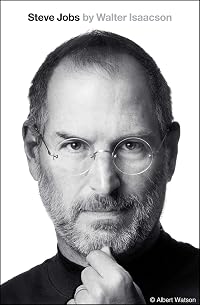
Steve Jobs
by Walter Isaacson, Уолтер Айзексон
On This Page
Description
Based on more than forty interviews with Jobs conducted over two years, as well as interviews with more than a hundred family members, friends, adversaries, competitors, and colleagues, the author has written a riveting story of the roller-coaster life and searingly intense personality of a creative entrepreneur whose passion for perfection and ferocious drive revolutionized six industries: personal computers, animated movies, music, phones, tablet computing, and digital publishing. At a show more time when America is seeking ways to sustain its innovative edge, and when societies around the world are trying to build digital-age economies, Jobs stands as the ultimate icon of inventiveness and applied imagination. He knew that the best way to create value in the twenty-first century was to connect creativity with technology. He built a company where leaps of the imagination were combined with remarkable feats of engineering. Although Jobs cooperated with this book, he asked for no control over what was written nor even the right to read it before it was published. He put nothing off-limits. He encouraged the people he knew to speak honestly. And Jobs speaks candidly, sometimes brutally so, about the people he worked with and competed against. His friends, foes, and colleagues provide an unvarnished view of the passions, perfectionism, obsessions, artistry, devilry, and compulsion for control that shaped his approach to business and the innovative products that resulted. Driven by demons, Jobs could drive those around him to fury and despair. But his personality and products were interrelated, just as Apple's hardware and software tended to be, as if part of an integrated system. His tale is instructive and cautionary, filled with lessons about innovation, character, leadership, and values. -- From publisher. show lessTags
Recommendations



Member Recommendations
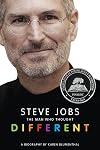
by anonymous user
Member Reviews
Oh, to have come of age in the 60's and 70's in what is now widely known as Silicon Valley. For Steve Jobs, born at the right time in the right place with a good mix of skills and luck, it was like having a front row seat to the future. Still, I love this biography for other reasons. It's not simply an account of his life, but an accurate account. One that shows all the fanfare and failings. In the introduction the author relates how Jobs' wife implored him to tell the whole truth about her husband. Jobs had many flaws, some of them unforgivable, but it's these moments that create the full picture of a man who would shape the tech world.
Walter Isaacson's book takes the reader through nearly all of Jobs' life, starting from his idyllic show more childhood being raised by adoptive parents through his experimental drug years, the founding of Apple with Steve Wozniak, early 80's Apple, his exile, NeXT, Pixar, the return to Apple and the tech revolution, and fighting cancer. You'll also meet all the people—friends, loved ones, co-workers, industry contemporaries—that were a part of his story, and all have insight to share.
It doesn't seem right that it's the semi-crazy assholes who pioneer our future. And still people followed Steve Jobs because he could inspire like few ever could. For that I admire him, even while part of me shakes my head at the personal chaos he left in his wake. show less
Walter Isaacson's book takes the reader through nearly all of Jobs' life, starting from his idyllic show more childhood being raised by adoptive parents through his experimental drug years, the founding of Apple with Steve Wozniak, early 80's Apple, his exile, NeXT, Pixar, the return to Apple and the tech revolution, and fighting cancer. You'll also meet all the people—friends, loved ones, co-workers, industry contemporaries—that were a part of his story, and all have insight to share.
It doesn't seem right that it's the semi-crazy assholes who pioneer our future. And still people followed Steve Jobs because he could inspire like few ever could. For that I admire him, even while part of me shakes my head at the personal chaos he left in his wake. show less
A very detailed and unbiased look at Steve Jobs, his life before Apple, and then his time at and away from the company he co-founded. Isaacson does a good job of showing Jobs at his best, but also at his worst. While a visionary, Jobs was also pretty much a man who ignored truths when it suited him and berated and attacked subordinates and contemporaries. I wonder how far he would have gotten if the awareness and cultural sensitivities of today had been in place in the 1970's and 80's, because CEOs today using many of the same 'techniques' that Jobs used are being fired and removed from companies they have founded. If you want to know the man behind the myth then I recommend this book.
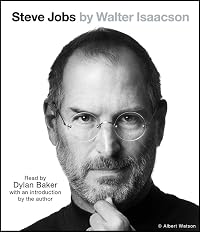
I finished the book today and while dinner was cooking flipped through a copy of Rolling Stone magazine that somehow ended up in the house. There was an ad there for the iPad showcasing the Beatles section of the iTunes Store and unexpectedly I could see the principles Jobs emphasised right there on the page. The product that speaks for itself, the clean lines, the no-frills boldness of design, they were all there. Then suddenly I could see it in the biography cover that Jobs himself helped design, the simple black and white photo of Jobs on a clean white background, the genius staring intently at the camera, his mouth slightly curved in an impish grin. Then I remembered the iPod Nano in my purse, the iPod Shuffle in my gym bag, the show more thrill of every new Pixar movie, the feverish excitement in the eyes of my Apple-faithful friends and colleagues whenever a new iPhone is scheduled to be released and the unbridled delight of a friend when she was showing off her new iPad. It takes something special to turn a garage startup company into the most valuable company in the world with products that people will literally sell their kidneys for and Steve Jobs had that "something".
I don't want to review the man when I should be reviewing his biography but it is such an honest portrayal of a very difficult person that I was often infuriated for the first third of the book because of Jobs' personality. He was undeniably a visionary and it was clear even when he was very young, but the man was a spoiled brat who did drugs and did not shower, and accounts of how he treated people during his first stint at Apple were more than I could read through calmly. Even so, it was fascinating to follow the formative years of the man who would later become the head of both Apple and Pixar as we know them.
The narrative became a lot more palatable to my puritan sensibilities when the focus shifted from young Steve's temper tantrums to the evolution of the technological landscape, the years at NeXT, the beginning of the company that would become Pixar, the antagonistic relationship with Bill Gates and Microsoft, and Jobs' return to Apple. The book is really as much a biography of the Silicon Valley as it is a biography of Steve Jobs because the two are so interwoven they are literally inseparable and the non-techie in me sometimes lost interest when the circuit boards and microchips took over. Fortunately the account is filled with quotes from the people Isaacson interviewed when he prepared to write this book, including Jobs himself, and that provided a welcome balance that kept things moving.
When Apple bought NeXT and Jobs was able to come back to his beloved company the tone of the book changed as the era of unimpeded revolutionary productivity began. It seemed much more "business" from then on, more focused. I felt it was a faithful reflection of Jobs' life at that stage, after all he was a man in his 40s, had a family and two companies to run, and he really couldn't afford any more false starts. He also repeatedly said that he knew he would die young, so intuitive as he was he may have understood on some level that he had to get to work. Or may be he had simply matured sufficiently to focus on being productive more than petulant.
I'm not sure how this happened, but until I read about Jobs being the CEO of Pixar in this book I had no idea that Apple wasn't the only company over which he presided. In retrospect this is not at all surprising because Pixar is another embodiment of technology and art working together to create an excellent product, which is what Jobs has always stood for. I am a huge fan of Pixar movies and I look forward to what Lasseter will do without Jobs.
One thing that struck me as I began reading was how simple the language is. A child could read the book and understand what Isaacson was talking about. If it wasn't for the often mature subject matter I would question who the audience is supposed to be, and then I wonder whether the exceedingly easy to understand writing is meant to make it possible for non-native speakers to read the book without having to wait for the translation.
Research for this biography was a huge undertaking and having all the major players still around to interview was an undeniable advantage. It was really interesting to see how people never really completely disappeared from the picture. They would appear, have their time in the spotlight, then they'd get replaced by a brighter star, but they often reappeared in one capacity or another and towards the end I could clearly see that for all his abrasiveness Jobs managed to maintain relationships with people that lasted decades. And what more, even those who were replaced spoke about him with respect and even admiration. Now that takes talent.
In the first third of the book for all his genius I had little appreciation for Jobs, but by the time I read the last pages I grew to respect him and what he achieved in a relatively short time in his role as CEO, despite the fact that he remained a very difficult person. I feel that it is a testament to the work Isaacson did in presenting to us readers a portrat of Jobs as complete and unbiased as possible and at the end of the day that's what I believe a good biography should do. There's only one last thing I wonder about: can you imagine how much more Jobs would have been able to achieve had he not gotten himself ousted from Apple in the first place? show less
I don't want to review the man when I should be reviewing his biography but it is such an honest portrayal of a very difficult person that I was often infuriated for the first third of the book because of Jobs' personality. He was undeniably a visionary and it was clear even when he was very young, but the man was a spoiled brat who did drugs and did not shower, and accounts of how he treated people during his first stint at Apple were more than I could read through calmly. Even so, it was fascinating to follow the formative years of the man who would later become the head of both Apple and Pixar as we know them.
The narrative became a lot more palatable to my puritan sensibilities when the focus shifted from young Steve's temper tantrums to the evolution of the technological landscape, the years at NeXT, the beginning of the company that would become Pixar, the antagonistic relationship with Bill Gates and Microsoft, and Jobs' return to Apple. The book is really as much a biography of the Silicon Valley as it is a biography of Steve Jobs because the two are so interwoven they are literally inseparable and the non-techie in me sometimes lost interest when the circuit boards and microchips took over. Fortunately the account is filled with quotes from the people Isaacson interviewed when he prepared to write this book, including Jobs himself, and that provided a welcome balance that kept things moving.
When Apple bought NeXT and Jobs was able to come back to his beloved company the tone of the book changed as the era of unimpeded revolutionary productivity began. It seemed much more "business" from then on, more focused. I felt it was a faithful reflection of Jobs' life at that stage, after all he was a man in his 40s, had a family and two companies to run, and he really couldn't afford any more false starts. He also repeatedly said that he knew he would die young, so intuitive as he was he may have understood on some level that he had to get to work. Or may be he had simply matured sufficiently to focus on being productive more than petulant.
I'm not sure how this happened, but until I read about Jobs being the CEO of Pixar in this book I had no idea that Apple wasn't the only company over which he presided. In retrospect this is not at all surprising because Pixar is another embodiment of technology and art working together to create an excellent product, which is what Jobs has always stood for. I am a huge fan of Pixar movies and I look forward to what Lasseter will do without Jobs.
One thing that struck me as I began reading was how simple the language is. A child could read the book and understand what Isaacson was talking about. If it wasn't for the often mature subject matter I would question who the audience is supposed to be, and then I wonder whether the exceedingly easy to understand writing is meant to make it possible for non-native speakers to read the book without having to wait for the translation.
Research for this biography was a huge undertaking and having all the major players still around to interview was an undeniable advantage. It was really interesting to see how people never really completely disappeared from the picture. They would appear, have their time in the spotlight, then they'd get replaced by a brighter star, but they often reappeared in one capacity or another and towards the end I could clearly see that for all his abrasiveness Jobs managed to maintain relationships with people that lasted decades. And what more, even those who were replaced spoke about him with respect and even admiration. Now that takes talent.
In the first third of the book for all his genius I had little appreciation for Jobs, but by the time I read the last pages I grew to respect him and what he achieved in a relatively short time in his role as CEO, despite the fact that he remained a very difficult person. I feel that it is a testament to the work Isaacson did in presenting to us readers a portrat of Jobs as complete and unbiased as possible and at the end of the day that's what I believe a good biography should do. There's only one last thing I wonder about: can you imagine how much more Jobs would have been able to achieve had he not gotten himself ousted from Apple in the first place? show less
I usually don't read too many biographies since I get bored halfway through, but this book was super interesting the whole way through.
This is likely a combination of great authentic writing and Steve Jobs being such an influential and well-known asshole. I think Steve Jobs probably could have had his own reality TV show, similar to the apprentice or Gordon Ramsay's kitchen nightmares.
Having said that, learning more about Steve Jobs philosophy on integrated design and end-to-end control made me appreciate the my apple products a lot more.
I would strongly recommend this book to anyone who is:
- An "apple" person
- works in the tech industry
- enjoys biographies about colorful characters
This is likely a combination of great authentic writing and Steve Jobs being such an influential and well-known asshole. I think Steve Jobs probably could have had his own reality TV show, similar to the apprentice or Gordon Ramsay's kitchen nightmares.
Having said that, learning more about Steve Jobs philosophy on integrated design and end-to-end control made me appreciate the my apple products a lot more.
I would strongly recommend this book to anyone who is:
- An "apple" person
- works in the tech industry
- enjoys biographies about colorful characters
I have to hand it to Walter Isaacson. He was commissioned by Jobs to write a warts-and-all biography, and he absolutely followed through. The portrait of Jobs he paints here is that of a man who somehow managed to combine some of the worst traits of capitalist and hippie, a man who was, frankly, a colossal ass. Although, admittedly, a colossal ass with with a real eye for design and a certain amount of vision. (And I can't deny it, I do love my iPod.)
As I was reading this, especially the earlier chapters, in which the focus was more on Jobs's personality than his not-yet-fully-realized technology empire, I kept thinking that I was going to end up rating this book lower than I actually have, just because I found spending time with its show more subject, however vicariously, to be simply too unpleasant. But in the end, I couldn't do it. Isaacson's skills as a biographer are so good, and the details of Jobs's career are so interesting, that it turned out to be an entirely worthwhile read, after all. show less
As I was reading this, especially the earlier chapters, in which the focus was more on Jobs's personality than his not-yet-fully-realized technology empire, I kept thinking that I was going to end up rating this book lower than I actually have, just because I found spending time with its show more subject, however vicariously, to be simply too unpleasant. But in the end, I couldn't do it. Isaacson's skills as a biographer are so good, and the details of Jobs's career are so interesting, that it turned out to be an entirely worthwhile read, after all. show less
This truly impressive biography was unputdownable. I was fascinated reading how Steve Jobs' disagreeable, "asshole" personality and intuitive genius were so important to the start-up and ultimate success of Apple. Walter Isaacson did an amazing job in bringing this story to life.
I loved reading about all of the individuals, both Jobs' friends and foes, who were so important in bringing the computer age to life. I liked the way Isaacson delved into Jobs' personality in order to seek psychological insight into the man himself and how Jobs flattered, cajoled, charmed, screamed, chastised, and forced his way into control of all aspects of his life...even trying to maneuver out of his ultimate demise. I was throughly saddened when I finally show more read about his death.
For me, this book was quite the page-turner. The subchapters were short enough to allow me to stop and start reading at pretty much any point. This was important since the entire volume, consisting of over 600 pages, is not the type of book I usually pick up for a "fun read". I got hooked, however, after I started listening to this biography on CD and becoming thoroughly absorbed in it. It's probably one of the best biographies I've ever read. It makes me want to read Isaacson's other works simply for the engaging way he wrote this book. It also makes me sad that I never before bought any stock in Apple! :) show less
I loved reading about all of the individuals, both Jobs' friends and foes, who were so important in bringing the computer age to life. I liked the way Isaacson delved into Jobs' personality in order to seek psychological insight into the man himself and how Jobs flattered, cajoled, charmed, screamed, chastised, and forced his way into control of all aspects of his life...even trying to maneuver out of his ultimate demise. I was throughly saddened when I finally show more read about his death.
For me, this book was quite the page-turner. The subchapters were short enough to allow me to stop and start reading at pretty much any point. This was important since the entire volume, consisting of over 600 pages, is not the type of book I usually pick up for a "fun read". I got hooked, however, after I started listening to this biography on CD and becoming thoroughly absorbed in it. It's probably one of the best biographies I've ever read. It makes me want to read Isaacson's other works simply for the engaging way he wrote this book. It also makes me sad that I never before bought any stock in Apple! :) show less
I think I killed Steve Jobs. I’m sorry everyone. I didn’t mean to, but I think it was me.
You see, I have been a Windows kind of guy for my whole career in computers. I bought an IBM XT clone for my first computer back in 1987. I knew about Apple computers, but I was a Microsoft guy, through and through. I left a mainframe computer programmer job to work on PCs. I wrote code on a beta version of Windows 95.
I listened to my artistic friends go on and on about how wonderful their Macs were and basically ignored them. When my son and daughter got into video editing, I broke down and bought them an iMac. I tried to use it, but I couldn’t figure it out. I guess I was too engrained in the Windows way of the world. I did have an iPod. In show more fact, I have had three over the years. I even bought an iPhone early last year because I was tired of trying to find a smartphone that was a good phone.
But back to my confession. I really think I killed Steve Jobs. I bought a MacBook Air on October 4, 2011. He died the next day, unable to withstand the shock of my conversion.
You would think after my conversion, I would have lined up first to read Isaacson’s biography of the man who sucked me in. I didn’t. I resisted for a long time, just like I did with my computer. I knew I would eventually give in. I listened to my friends comment about the book. Much of what they said, confirmed what I thought of Steve Jobs. A couple of weeks ago, though, I finally decided it was time to find out the story behind the man everyone has been heralding as a modern prophet of innovation.
A few years ago, Steve Jobs requested Walter Isaacson, a report he knew, to write his biography. Isaacson resisted for a long time. He didn’t know about Jobs’ cancer and thought it was a project for “some day”. Every time Jobs saw him at press events for the next few years, he would insist he do it. When Isaacson learned of Jobs’ cancer, he realized he needed to get started. I am glad he did, too. The result was a uncensored view one of the most influential men of the century.
Jobs promised to not try to influence who he spoke with or what he wrote and he held to that promise. The more I read about Jobs’ career, I can see that must have been the most restraint he had ever exercised. Jobs was a controlling pursuant of perfection in every aspect of his life. He domineered everyone he came in contact with. He would inject his standards on every aspect of everyone around him.
The stories Isaacson tells confirmed all the rumors I had heard over the years about Steve Jobs. A tyrant to work for, he would scream and yell at anyone who didn’t measure up, regardless of their position or abilities. His employees knew that if they ever produced anything with a flaw, or sometimes even when it was perfect, there was always a chance Jobs would go off like a rocket, swearing, belittling and heaping on the the verbally abuse. He would even do it to other CEOs without regard. Even casual acquaintances or US presidents were not exempt: both Rupert Murdoch and Barrack Obama received unsolicited advice on their shortcomings.
He wasn’t any better with his family, either. His daughters were largely ignored. The family always took second seat to his first love: Apple. He did spend time with his son and even prayed that he would survive his cancer long enough to see his son graduate, but his three daughters did not enjoy that level of interest.
Isaacson offers a uninhibited view of why we forgive this poor excuse of a human being. In short, his brilliance in designing user friendly products is unparalleled. His drive for perfection created some of the most widely accepted products the world has known. His string of successes in quite amazing. The Apple II, Macintosh, iMac, MacBook, MacBook Air, iPod, iPhone and the iPad. Don’t forget Pixar. Toy Story, A Bug’s Life, The Incredibles and many others form an unbroken string of blockbusters. On the way, he built a dominant company, was kicked out, came back, rescued it and built it into the most valuable company on planet Earth, all in 56 years.
While I don’t admire the man for how he lived his life, I do admire the success he had in spite of all his personal weaknesses. I don’t hold him up as the titan others may do, but my hat is off to what he accomplished in his short life. I am glad he left extensive notes for Apple’s future and built a group of achievers just as committed to his dreams as he. I believe he did exactly what he wanted: build a long-lasting company and give the world amazing tools to express themselves. He made a convert out of me. show less
You see, I have been a Windows kind of guy for my whole career in computers. I bought an IBM XT clone for my first computer back in 1987. I knew about Apple computers, but I was a Microsoft guy, through and through. I left a mainframe computer programmer job to work on PCs. I wrote code on a beta version of Windows 95.
I listened to my artistic friends go on and on about how wonderful their Macs were and basically ignored them. When my son and daughter got into video editing, I broke down and bought them an iMac. I tried to use it, but I couldn’t figure it out. I guess I was too engrained in the Windows way of the world. I did have an iPod. In show more fact, I have had three over the years. I even bought an iPhone early last year because I was tired of trying to find a smartphone that was a good phone.
But back to my confession. I really think I killed Steve Jobs. I bought a MacBook Air on October 4, 2011. He died the next day, unable to withstand the shock of my conversion.
You would think after my conversion, I would have lined up first to read Isaacson’s biography of the man who sucked me in. I didn’t. I resisted for a long time, just like I did with my computer. I knew I would eventually give in. I listened to my friends comment about the book. Much of what they said, confirmed what I thought of Steve Jobs. A couple of weeks ago, though, I finally decided it was time to find out the story behind the man everyone has been heralding as a modern prophet of innovation.
A few years ago, Steve Jobs requested Walter Isaacson, a report he knew, to write his biography. Isaacson resisted for a long time. He didn’t know about Jobs’ cancer and thought it was a project for “some day”. Every time Jobs saw him at press events for the next few years, he would insist he do it. When Isaacson learned of Jobs’ cancer, he realized he needed to get started. I am glad he did, too. The result was a uncensored view one of the most influential men of the century.
Jobs promised to not try to influence who he spoke with or what he wrote and he held to that promise. The more I read about Jobs’ career, I can see that must have been the most restraint he had ever exercised. Jobs was a controlling pursuant of perfection in every aspect of his life. He domineered everyone he came in contact with. He would inject his standards on every aspect of everyone around him.
The stories Isaacson tells confirmed all the rumors I had heard over the years about Steve Jobs. A tyrant to work for, he would scream and yell at anyone who didn’t measure up, regardless of their position or abilities. His employees knew that if they ever produced anything with a flaw, or sometimes even when it was perfect, there was always a chance Jobs would go off like a rocket, swearing, belittling and heaping on the the verbally abuse. He would even do it to other CEOs without regard. Even casual acquaintances or US presidents were not exempt: both Rupert Murdoch and Barrack Obama received unsolicited advice on their shortcomings.
He wasn’t any better with his family, either. His daughters were largely ignored. The family always took second seat to his first love: Apple. He did spend time with his son and even prayed that he would survive his cancer long enough to see his son graduate, but his three daughters did not enjoy that level of interest.
Isaacson offers a uninhibited view of why we forgive this poor excuse of a human being. In short, his brilliance in designing user friendly products is unparalleled. His drive for perfection created some of the most widely accepted products the world has known. His string of successes in quite amazing. The Apple II, Macintosh, iMac, MacBook, MacBook Air, iPod, iPhone and the iPad. Don’t forget Pixar. Toy Story, A Bug’s Life, The Incredibles and many others form an unbroken string of blockbusters. On the way, he built a dominant company, was kicked out, came back, rescued it and built it into the most valuable company on planet Earth, all in 56 years.
While I don’t admire the man for how he lived his life, I do admire the success he had in spite of all his personal weaknesses. I don’t hold him up as the titan others may do, but my hat is off to what he accomplished in his short life. I am glad he left extensive notes for Apple’s future and built a group of achievers just as committed to his dreams as he. I believe he did exactly what he wanted: build a long-lasting company and give the world amazing tools to express themselves. He made a convert out of me. show less
Members
- Recently Added By
Published Reviews
ThingScore 55
Steve Jobs dreamed of a legacy that awed people. He wanted to be in the pantheon of great product innovators, indeed surpassing Edwin Land and even his early icons William Hewitt and David Packard. But, Jobs created more than great products. Just as significant was his ability to create great companies with valuable brands. And, he created two of the best of his era: Apple and Pixar.
added by SqueakyChu
Isaacson’s book is long, dull, often flat-footed, and humorless. It hammers on one nail, incessantly: that Steve Jobs was an awful man, but awful in the service of products people really liked (and eventually bought lots of) and so in the end his awfulness was probably OK. It is not Isaacson’s fault that Jobs from early on had a “admixture of sensitivity and insensitivity, bristliness show more and detachment,” as Isaacson describes it, or that Jobs abandoned friends, thought almost everyone else was a shithead, showed little interest in his daughters, and made life generally miserable for anyone who had to provide a good or service to him. But it is Isaacson’s fault that the biography is so narrowly focused on one moral theme. The reader is left to judge, with plenty of evidence both ways—and a clear idea of where Isaacson’s sympathies lie—whether Jobs deserves the Artist’s Exemption. show less
added by Shortride
As Walter Isaacson says in this incisive biography, Jobs behaved like a Nietzschean superman, using his will – transmitted through an unblinking stare – as a remote-control device that compelled others to do his bidding.
added by SqueakyChu
Lists

Top Five Books of 2013
1,562 works; 721 members

Best Biographies, Autobiographies and Memoirs
465 works; 160 members

Best Biographies
216 works; 26 members

100 Biographies and Memoirs to Read in a (Single) Lifetime
98 works; 12 members

Top Five Books of 2013
5 works; 1 member

Recommend the 20 best books you've read in the last five years
2,168 works; 601 members

Mind Expanding Books by hackerkid
581 works; 8 members

Shaykh Hamza's Book Recommendations
439 works; 3 members
Author Information

41+ Works 35,896 Members
Walter Isaacson was born on May 20, 1952 in New Orleans, Louisiana. He received a B. A. in history and literature from Harvard College. He then attended the University of Oxford, where he was a Rhodes Scholar at Pembroke College and read philosophy, politics, and economics. He began his career in journalism at The Sunday Times of London and then show more the New Orleans Times-Picayune/States-Item. He joined TIME in 1978 and served as a political correspondent, national editor and editor of new media before becoming the magazine's editor in 1996. He became Chairman and CEO of CNN in 2001, and then president and CEO of the Aspen Institute in 2003. He has written numerous books including American Sketches, Einstein: His Life and Universe, Benjamin Franklin: An American Life, Kissinger: A Biography, Steve Jobs, and The Innovators: How a Group of Hackers, Geniuses, and Geeks Created the Digital Revolution. He is the co-author, with Evan Thomas, of The Wise Men: Six Friends and the World They Made. (Bowker Author Biography) show less
1 Work 10,766 Members
Some Editions
Awards and Honors
Awards
Distinctions
Notable Lists
Work Relationships
Is contained in
Is abridged in
Has as a reference guide/companion
Common Knowledge
- Canonical title*
- Steve Jobs
- Original title
- Steve Jobs: A biography
- Original publication date
- 2011
- People/Characters
- Steve Jobs; Steve Wozniak; Tim Cook; Jony Ive; Steve Ballmer; Paul Jobs (show all 13); Clara Jobs; Jef Reskin; Ronald Wayne; Mona Simpson; Chris Ann Brennan; Lisa Brennan-Jobs; Laurene Powell
- Important places
- Cupertino, California, USA; Haridwar, India; Los Altos, California, USA
- Important events
- Kumbh Mela
- Related movies
- Pirates of Silicon Valley
- Epigraph
- The people who are crazy enough to think they can change the world are the ones who do. -- Apple's "Think Different" commercial, 1997
- First words
- (Introduction - How This Book Came to Be) In the early summer of 2004, I got a phone call from Steve Jobs.
When Paul Jobs was mustered out of the Coast Guard after World War II, he made a wager with his crewmates. - Last words
- (Click to show. Warning: May contain spoilers.)"Maybe that's why I never liked to put on-off switches on Apple devices."
- Original language
- English
*Some information comes from Common Knowledge in other languages. Click "Edit" for more information.
Classifications
- Genres
- Biography & Memoir, Technology, Business, General Nonfiction, Nonfiction, History
- DDC/MDS
- 621.39092 — Applied science & technology Engineering Applied physics Electronics & Computers Computer engineering Biography and History Biography
- LCC
- QA76.2 .J63 .I83 — Science Mathematics Mathematics Instruments and machines Calculating machines
- BISAC
Statistics
- Members
- 10,788
- Popularity
- 876
- Reviews
- 304
- Rating
- (4.13)
- Languages
- 29 — Catalan, Czech, Danish, Dutch, English, Estonian, Finnish, French, German, Greek, Gujarati, Hungarian, Italian, Korean, Marathi, Norwegian (Bokmål), Farsi/Persian, Polish, Romanian, Russian, Croatian, Slovenian, Spanish, Swedish, Thai, Turkish, Vietnamese, Portuguese (Brazil), Chinese, traditional
- Media
- Paper, Audiobook, Ebook
- ISBNs
- 138
- ASINs
- 40
