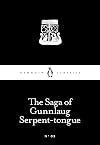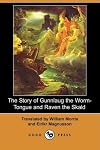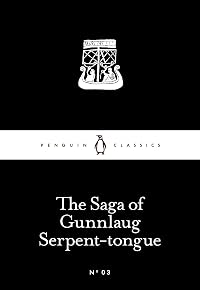
The Saga of Gunnlaug Serpent-tongue
by Anonymous
On This Page
Description
'In two I'll slice the hair-seat / of Helga's kiss-gulper'In this epic tale from the Viking Age that ranges across Scandinavia and Viking Britain, two poets compete for the love of Helga the Fair - with fatal consequences.Introducing Little Black Classics- 80 books for Penguin's 80th birthday. Little Black Classics celebrate the huge range and diversity of Penguin Classics, with books from around the world and across many centuries. They take us from a balloon ride over Victorian London to a show more garden of blossom in Japan, from Tierra del Fuego to 16th-century California and the Russian steppe. Here are stories lyrical and savage; poems epic and intimate; essays satirical and inspirational; and ideas that have shaped the lives of millions. show lessTags
Recommendations


Member Reviews
The thing about sagas is that they are... well, different. They adhere to other aesthetic values than the ones that apply today, and the fact that we find certain aspects of their form and structure displeasing has more to do with the specifics of the genre rather than bad or lazy writing. For example, the way the saga bombards the reader with names - of characters, places, ancestors, whatever - which we find annoying and confusing. In reality, this effect was pursued, and the encyclopedic listing of names was supposed to give the saga credibility and authenticity. So, once you accept the saga for what it is, and make peace with some of its more annoying quirks, it can be a great reading experience. It certainly was for me.
So, I had to show more read an excerpt of The Saga of Gunnlaug Serpent-tongue for school, but I decided to read the whole thing, because I thought it would be fun. The saga tells the story of Gunnlaug Serpent-tongue, a proud, witty young man who is struck by wanderlust, while simultaneously wanting to marry his sweetheart, Helga the Fair. Basically her father tells him to choose one or the other, which Gunnlaug is unable to do, and after some negotiating Helga's father agrees to wait three years for Gunnlaug to come back. So the guy sets out, visiting the courts of kings and earls, singing ballads and so on. His stinging tongue gets him into some trouble (but also helps him gain friends), and at one point his former friend (and fellow bard) Hraufn, feeling offended by Gunnlaug before the king, decides to revenge himself by marrying Helga. Revenge plots ensue.
What I love about this story is how morally ambiguous it is, especially in handling the conflict between Gunnlaug and Hraufn. Gunnlaug really annoyed me sometimes - he was arrogant and prideful, but on the other hand he was clever and it was obvious Helga loved him. I felt bad for Hraufn, who seemed like a cool guy, but whose desire for revenge landed him in an unhappy marriage. On the one hand I felt that Hraufn was the better man, but on the other I wanted Helga to be with the one she loved. So that was an interesting setup.
The poetry slam-downs were pretty cool, too. Just saying. We need more of that in contemporary literature.
The whole historical aspect was also interesting, like the courts of the earls or the duels or the councils where they decide things. The story itself I found engaging although parts of it seemed a bit redundant - like all the different earls and kings Gunnlaug visited and sang for, and the terribly executed foreshadowing in the beginning that basically spoiled the whole story. Characters were surprisingly complex for a medieval story, and I found it thoroughly entertaining. Not the most memorable of stories, but I will definitely be picking up more sagas in the future.
The ending was also wonderfully tragic and a bit ironic - Helga died with the cape that Gunnlaug acquired because he chose to travel rather than marry her. Hm.
NOTE: I read a Danish translation from the 1930's and I think it was great - readable but with lots of archaic words that placed the language closer to the original old Norse. show less
So, I had to show more read an excerpt of The Saga of Gunnlaug Serpent-tongue for school, but I decided to read the whole thing, because I thought it would be fun. The saga tells the story of Gunnlaug Serpent-tongue, a proud, witty young man who is struck by wanderlust, while simultaneously wanting to marry his sweetheart, Helga the Fair. Basically her father tells him to choose one or the other, which Gunnlaug is unable to do, and after some negotiating Helga's father agrees to wait three years for Gunnlaug to come back. So the guy sets out, visiting the courts of kings and earls, singing ballads and so on. His stinging tongue gets him into some trouble (but also helps him gain friends), and at one point his former friend (and fellow bard) Hraufn, feeling offended by Gunnlaug before the king, decides to revenge himself by marrying Helga. Revenge plots ensue.
What I love about this story is how morally ambiguous it is, especially in handling the conflict between Gunnlaug and Hraufn. Gunnlaug really annoyed me sometimes - he was arrogant and prideful, but on the other hand he was clever and it was obvious Helga loved him. I felt bad for Hraufn, who seemed like a cool guy, but whose desire for revenge landed him in an unhappy marriage. On the one hand I felt that Hraufn was the better man, but on the other I wanted Helga to be with the one she loved. So that was an interesting setup.
The poetry slam-downs were pretty cool, too. Just saying. We need more of that in contemporary literature.
The whole historical aspect was also interesting, like the courts of the earls or the duels or the councils where they decide things. The story itself I found engaging although parts of it seemed a bit redundant - like all the different earls and kings Gunnlaug visited and sang for, and the terribly executed foreshadowing in the beginning that basically spoiled the whole story. Characters were surprisingly complex for a medieval story, and I found it thoroughly entertaining. Not the most memorable of stories, but I will definitely be picking up more sagas in the future.
The ending was also wonderfully tragic and a bit ironic - Helga died with the cape that Gunnlaug acquired because he chose to travel rather than marry her. Hm.
NOTE: I read a Danish translation from the 1930's and I think it was great - readable but with lots of archaic words that placed the language closer to the original old Norse. show less
Con este libro he aprendido que la proxima vez que me encuentre a un vikingo del siglo 13, no debo ofender sus canciones.
Es cierto que podria haber sido escrito por un niño, no hay descripciones y se mucha de la accion se resume en una frase. Pero eso precisamente le da caracter.
Entretenido y sin pretensiones.
Es cierto que podria haber sido escrito por un niño, no hay descripciones y se mucha de la accion se resume en una frase. Pero eso precisamente le da caracter.
Entretenido y sin pretensiones.
It's interesting how much stories have changed over the centuries. How old stories are often filled with begats and lineage and establishment of status. And just no internal monologue whatsoever. There are only the actions, and why on Earth they do anything that they do is often a mystery.
But for all the changes in style, there is still something to these stories. Some reason they have survived the centuries. And somehow, after you wade through all the trappings, they are surprisingly familiar.
But for all the changes in style, there is still something to these stories. Some reason they have survived the centuries. And somehow, after you wade through all the trappings, they are surprisingly familiar.
It is told of Gunnlaug that he was quick of growth in his early youth, big, and strong; his hair was light red, and very goodly of fashion; he was dark-eyed, somewhat ugly-nosed, yet of lovesome countenance; thin of flank he was, and broad of shoulder, and the best-wrought of men; his whole mind was very masterful; eager was he from his youth up, and in all wise unsparing and hardy; he was a great skald, but somewhat bitter in his rhyming, and therefore was he called Gunnlaug Worm-tongue.
The story begins with a guest of Thorstein Egilsson having a prophetic dream about his host's unborn daughter Helga the Fair. In his dream she appears as a swan fought over by an eagle and another fowl, and the remainder of the saga tells how her life show more unfolds as foretold, as the skalds Gunnlaug and Raven fighting over her.
Having read various Icelandic sagas before, I am now finding that the same characters pop up in more than one saga. Helga's father Thorstein Egillsson is the son of Egill Skallagrímsson and appears in Egil's Saga, and Helga spends her early life in the household of her uncle by marriage, Olaf Peacock, who has a much larger role in the Laxdaela Saga.
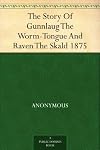
"Gunnlaugs saga ormstungu" was translated into archaic English by Eirikr Magnusson and William Morris in 1875, and I am not impressed by their translation of the poetry in this saga. Most of the skalds' songs are incomprehensible and I had to re-read them a few times before they started to make any sort of sense, which is not something I found when reading Egil's saga, for example. show less
The story begins with a guest of Thorstein Egilsson having a prophetic dream about his host's unborn daughter Helga the Fair. In his dream she appears as a swan fought over by an eagle and another fowl, and the remainder of the saga tells how her life show more unfolds as foretold, as the skalds Gunnlaug and Raven fighting over her.
Having read various Icelandic sagas before, I am now finding that the same characters pop up in more than one saga. Helga's father Thorstein Egillsson is the son of Egill Skallagrímsson and appears in Egil's Saga, and Helga spends her early life in the household of her uncle by marriage, Olaf Peacock, who has a much larger role in the Laxdaela Saga.
"Gunnlaugs saga ormstungu" was translated into archaic English by Eirikr Magnusson and William Morris in 1875, and I am not impressed by their translation of the poetry in this saga. Most of the skalds' songs are incomprehensible and I had to re-read them a few times before they started to make any sort of sense, which is not something I found when reading Egil's saga, for example. show less
Read all my reviews on http://urlphantomhive.booklikes.com
The Saga of Gunnlaug Serpent-Tongue is the third of Penguin's Little Black Classics, and it is because of titles like this one that I picked up the series, as they represent the kind of books I would maybe not have read otherwise.
The story was quite enjoyable. A young Icelandic noble holds a gap-year (several in fact) traveling to the courts of Europe, where they all love his poetry and shower him with gifts. When he eventually returns he finds that a fellow poet has sneakily stolen his betrothed and he's not pleased with this at all.
While the story is easy to follow it wasn't always an easy read. Because of it being a saga there is a lot of attention for everyone's father show more and their father and their fathers before them (you get the idea). This combined with the feeling that there were rather a lot repetitive senses made that the flow wasn't really that nice and makes that I wouldn't quickly pick up a full length work of Icelandic sagas. But I think it works quite well in small doses.
Little Black Classic #3 show less
The Saga of Gunnlaug Serpent-Tongue is the third of Penguin's Little Black Classics, and it is because of titles like this one that I picked up the series, as they represent the kind of books I would maybe not have read otherwise.
The story was quite enjoyable. A young Icelandic noble holds a gap-year (several in fact) traveling to the courts of Europe, where they all love his poetry and shower him with gifts. When he eventually returns he finds that a fellow poet has sneakily stolen his betrothed and he's not pleased with this at all.
While the story is easy to follow it wasn't always an easy read. Because of it being a saga there is a lot of attention for everyone's father show more and their father and their fathers before them (you get the idea). This combined with the feeling that there were rather a lot repetitive senses made that the flow wasn't really that nice and makes that I wouldn't quickly pick up a full length work of Icelandic sagas. But I think it works quite well in small doses.
Little Black Classic #3 show less
Con este libro he aprendido que la proxima vez que me encuentre a un vikingo del siglo 13, no debo ofender sus canciones.
Es cierto que podria haber sido escrito por un niño, no hay descripciones y se mucha de la accion se resume en una frase. Pero eso precisamente le da caracter.
Entretenido y sin pretensiones.
Es cierto que podria haber sido escrito por un niño, no hay descripciones y se mucha de la accion se resume en una frase. Pero eso precisamente le da caracter.
Entretenido y sin pretensiones.
An Icelandic saga following the journey of the poet Gunnlaug as he travels around 10th Century Europe, hoping to return home in time to marry his betrothed, Helga the Fair.
A very good introduction to the Icelandic sagas and Norse Mythology of the time. Not being familiar with this kind of work, I cannot say how similar it is. I will say, however, that it is terribly written, though I assume that is the style of them all. There is no flow to the saga; instead it happens in short, sharp sentences. Whilst this gives it paces, there are too many times when people's family trees are listed off without much gumption. I realise this is the way of sagas, and the appeal is less the writing but the historical benefit and world building prowess, show more but sadly I do not think Icelandic or Norse sagas are for me.
What I did enjoy, however, was the visits to England as that kind of history will always excite me. I also could see the clear influence this kind of story had on Tolkien. show less
A very good introduction to the Icelandic sagas and Norse Mythology of the time. Not being familiar with this kind of work, I cannot say how similar it is. I will say, however, that it is terribly written, though I assume that is the style of them all. There is no flow to the saga; instead it happens in short, sharp sentences. Whilst this gives it paces, there are too many times when people's family trees are listed off without much gumption. I realise this is the way of sagas, and the appeal is less the writing but the historical benefit and world building prowess, show more but sadly I do not think Icelandic or Norse sagas are for me.
What I did enjoy, however, was the visits to England as that kind of history will always excite me. I also could see the clear influence this kind of story had on Tolkien. show less
Members
- Recently Added By
Author Information
51 Works 14,489 Members
Some Editions
Series
Belongs to Publisher Series
Work Relationships
Is contained in
Is a (non-series) sequel to
Common Knowledge
- Canonical title
- The Saga of Gunnlaug Serpent-tongue
- Original title
- Gunnlaugs saga ormstungu
- Original publication date
- 1300 (ca) (ca)
- People/Characters
- Gunnlaugr Ormstunga
- Epigraph
- EVEN AS ARI THORGILSON THE LEARNED, THE PRIEST, HATH TOLD IT, WHO WAS THE MAN OF ALL ICELAND MOST LEARNED IN TALES OF THE LAND'S INHABITING AND IN LORE OF TIME AGONE.
- Original language
- Old Norse
Classifications
- Genre
- Fiction and Literature
- DDC/MDS
- 839.6 — Literature & rhetoric German & related literatures Other Germanic literatures Old Norse, Old Icelandic, Icelandic, Faroese literatures
- LCC
- PT7269 .G9 — Language and Literature German, Dutch and Scandinavian literatures Old Norse literature: Old Icelandic and Old Norwegian Individual sagas and historical works
- BISAC
Statistics
- Members
- 431
- Popularity
- 71,466
- Reviews
- 13
- Rating
- (3.46)
- Languages
- 10 — Danish, Dutch, English, Finnish, German, Icelandic, Norwegian (Nynorsk), Old Norse, Norwegian, Swedish
- Media
- Paper, Ebook
- ISBNs
- 18
- ASINs
- 12