Kings of Albion
by Julian Rathbone
On This Page
Description
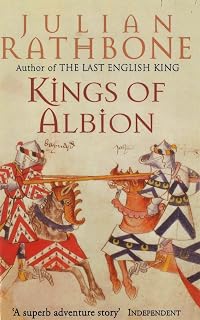
Turning the adventure stories of empire and colonialism upside down, from Rider Haggard to Conrad, Julian Rathbone introduces into the Wars of the Roses, at their most terrible and bloody climax, three sophisticated and highly civilised easterners from South India who are on a mission to trace the Prince of Vijayanagara's long-lost brother. Through their eyes the heart of darkness that was England is revealed. The result is a take on medieval England during its most gross and savage period, show more filled with battles, disease, treasure, with rival factions battling for a crown with a ferocity worthy of Rider Haggard's lost tribes of Africa. But it is also the period of the proto-reformation foreshadowed by the great English Franciscans, Roger Bacon, Occam and Wycliffe, and their followers - the terribly persecuted Lollards and Brothers of the Free Spirit. KINGS OF ALBION is a wonderful book, richly descriptive, packed with action, savage and erotic, but informed with a spirit of inquiry and speculation that lifts it far above the conventional history novel. show lessTags
Recommendations





Member Recommendations

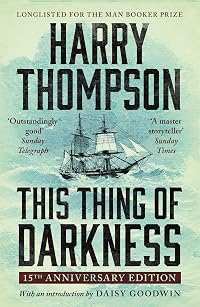
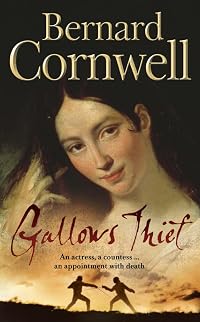
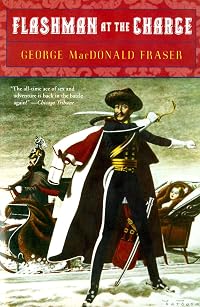
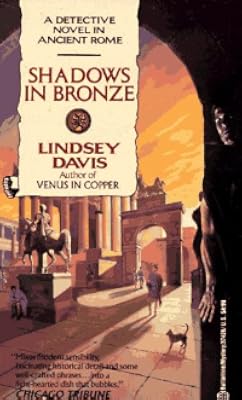
isabelx Anachronistic humour.
Member Reviews
This novel is different from your average historical novel. Every now and then, a phrase just stops me dead in my track, because it's just not the sort of thing that characters in historical novels usually say! The men from the more civilised east bring their own viewpoint to the description of mediaeval Europe; the piles of sh*t in the street in Calais and the men and dogs urinating and worse in the Earl of Warwick's great hall, are not something that you usually read about. There are three narrators of the story and it is immediately obvious that their voices and preoccupations are very different from each other. Ali's approach is by turns mystical and practical, while Harihari is mainly interested in weapons and politics and Uma show more seems to be trying to turn it from an adventure story into porn (or at least erotica); her approach to the story is very sensual, full of sights, sounds and sex.
The events in the story tend to be on the serious side, with lots of battles, executions and torture. The reader's amusement mostly comes from noticing the many references to later historical and cultural events that Julian Rathbone has sneakily inserted into the story, such as recreating scenes from the films "Titanic" and "The Shining". Other references that I noticed were Pils lager and Boddington's Beer, football fans and the 1966 World Cup Final, evolution and the rise of the middle classes, the fire-bombing of Coventry in WWII and the poem Adlestrop by Edward Thomas.
The religious elements of the story were fascinating. The cult of the goddess and the linking of the Virgin Mary and old folk beliefs and fertility rites still existing in England to the Indian goddess Parvati/Kali via Uma acting as her avatar, was a counterpart to the heresy of the Brothers of the Free Spirit, which linked non-believers from England to their non-believing counterparts across Europe and the Assassins of the Arab world. They drew characters from far-flung places together, as well as providing a theme that runs throughout the story. I wouldn't have said that I was particularly interested in military history, but the fact that the use of cannons depended heavily on the weather (being impossible to move if the ground was muddy) and the discussions about the problems of fighting in armour and the merits of longbows versus crossbows, were strangely compelling.
I had thought Kings of Albion would be fun to read, but it was actually way more interesting than I had expected, catering well to my interest in mediaeval history and mythology. show less
The events in the story tend to be on the serious side, with lots of battles, executions and torture. The reader's amusement mostly comes from noticing the many references to later historical and cultural events that Julian Rathbone has sneakily inserted into the story, such as recreating scenes from the films "Titanic" and "The Shining". Other references that I noticed were Pils lager and Boddington's Beer, football fans and the 1966 World Cup Final, evolution and the rise of the middle classes, the fire-bombing of Coventry in WWII and the poem Adlestrop by Edward Thomas.
The religious elements of the story were fascinating. The cult of the goddess and the linking of the Virgin Mary and old folk beliefs and fertility rites still existing in England to the Indian goddess Parvati/Kali via Uma acting as her avatar, was a counterpart to the heresy of the Brothers of the Free Spirit, which linked non-believers from England to their non-believing counterparts across Europe and the Assassins of the Arab world. They drew characters from far-flung places together, as well as providing a theme that runs throughout the story. I wouldn't have said that I was particularly interested in military history, but the fact that the use of cannons depended heavily on the weather (being impossible to move if the ground was muddy) and the discussions about the problems of fighting in armour and the merits of longbows versus crossbows, were strangely compelling.
I had thought Kings of Albion would be fun to read, but it was actually way more interesting than I had expected, catering well to my interest in mediaeval history and mythology. show less
Packed with anachronisms that are excused in a witty note prefacing the work, this quasi-historical novel is filled with referential jests woven into a fine tale of a quest through late medieval England during the Wars of the Roses. You should avoid this if you prefer the historical Richard III to the propagandist Tudor version and worry that the Free Spirit heresy was a fiction created by someone other than this author.
Packed with anachronisms that are excused in a witty note prefacing the work, this quasi-historical novel is filled with referential jests woven into a fine tale of a quest through late medieval England during the Wars of the Roses. You should avoid this if you prefer the historical Richard III to the propagandist Tudor version and worry that the Free Spirit heresy was a fiction created by someone other than this author.
A new take on the war of the Roses packed with erudite allusions - you'll need to be on your toes to pick up half them. Also very witty, not too many belly laughs but subtly pokes humour at the evolution of western society's mores, underpinned by a streak of modernistic humanism and nods towards scientific developments we take for granted as being products of the recent western world. As an Englishman gently skewering some of his own race's most treasured memories Rathbone can get away with this; a foreigner wouldn't risk it. I loved the fakir but wold have liked a little more. Great read.
This is a mildly interesting redaction of "King Solomon's Mines" with travellers from the civilized world of Hindu Vijayanagara, on a safari amid the savages engaged in the English Wars of the Roses. If I hadn't done some work on alternate histories and culture-jumping myself, I may have found this work more compelling.
Well, it's a fun romp with some naughty amusing references to Shakespear and even ferrying 'cross the Mersey, but mostly utter nonsense. The stars are for the insight into Bacon, Occam and Wycliffe which is nicely represented.
Hmmmm...Not my cup of tea. I enjoyed many parts, but many other parts dragged on and on.
The author claims to have introduced the anachronisms on purpose, but I found them disconcerting.
The author claims to have introduced the anachronisms on purpose, but I found them disconcerting.
Members
- Recently Added By
Published Reviews
ThingScore 100
The plot is about an expedition sent out by the threatened Indian kingdom of Vijayanagara, to see if they can learn something from the far away English, who are rumoured even that far away to be the most warlike race on Earth. And the rumour turns out to be accurate, for they arrive at their destination in 1460, at the bloodiest period of the Wars of the Roses.
Apart from being clever, Kings of show more Albion is also funny, with anachronism being used in a creative and humorous fashion... This sort of pre-echo is used to evoke films, plays, books, and twentieth century physics without technically breaking the historical mode of the novel. show less
Apart from being clever, Kings of show more Albion is also funny, with anachronism being used in a creative and humorous fashion... This sort of pre-echo is used to evoke films, plays, books, and twentieth century physics without technically breaking the historical mode of the novel. show less
added by feeling.is.first
Author Information

42+ Works 1,697 Members
Writer Julian Rathbone was born in London, England on February 10, 1935. He graduated from Magdaline College, Cambridge, England, in 1958. He taught from 1959 until 1973, first in Turkey, then in England. He has written thrillers, historical novels, screenplays, short stories and poetry. King Fisher Lives (1976) and Joseph: The Life of Joseph show more Bosham, Self-Styled Third Viscount of Bosham, Covering the Years from 1970 to 1813 (1979) were both nominated for the Booker Prize. He has also received the Crime Writers of America Silver Dagger for Best Short Story for 'Some Sunny Day" (1993). He died on February 28, 2008. (Bowker Author Biography) show less
Series
Belongs to Publisher Series
Common Knowledge
- Canonical title
- Kings of Albion
- Original publication date
- 2000
- People/Characters
- Ali ben Quatar Mayeen; Prince Harihara Raya Kurteishi; Uma; Anish; Eddie March; Henry VI, King of England (show all 8); Margaret of Anjou; Brother Peter Marcus
- Important places
- London, England, UK; Albion
- Important events
- Wars of the Roses (1455 | 1485)
- First words
- Ali ben Quatar Mayeen ("Call me Ismail, if you must, but I prefer Ali') was a retired trader -- or rather, a rep for a trader, a sort of latter-day Sinbad.
- Last words
- (Click to show. Warning: May contain spoilers.)There was a moment's silence, then the Grand Chamberlain made a dismissive gesture with his long-nailed fingers.
"But not China," he said.
"No,' Mah-Lo agreed. "Probably not China."
Classifications
Statistics
- Members
- 324
- Popularity
- 98,682
- Reviews
- 8
- Rating
- (3.41)
- Languages
- English, German, Russian, Spanish
- Media
- Paper
- ISBNs
- 10
- ASINs
- 4