
Harry Pearson (1) (1961–)
Author of A Tall Man in a Low Land: Some Time Among the Belgians
For other authors named Harry Pearson, see the disambiguation page.
About the Author
Image credit: http://www.littlebrown.co.uk/Authors/P/255
Works by Harry Pearson
Tagged
Common Knowledge
- Canonical name
- Pearson, Harry
- Birthdate
- 1961
- Gender
- male
- Occupations
- chef
author
journalist
writer
broadcaster - Short biography
- Harry Pearson has produced six books, contributed to a
dozen more, written a weekly sports column in the Guardian
for ten years and helped make the football magazine When
Saturday Comes half-decent for nearly two decades. When not
painting toy soldiers, building a Wild West town in 1/72 scale or
feverishly trying to work out how many more Macedonian
phalangites he needs to finish before he can restage the Battle
of the Granicus, he spends his time staring wistfully into
space wondering where the years have gone. He lives in
Northumberland. Contrary to all previous assertions, he does
not own a spinet.
Harry Pearson (2), MA, FIMechE, FRAeS, MBIM, was awarded an Open Scholarship to Christ Church, Oxford in 1932, and gained a first-class honours degree in Physics in 1935. He was employed by British Celanese and Standard Telephones and Cables before joining Rolls-Royce at Hucknall in 1940 as a Project Engineer on exhaust systems. In 1943, he became Performance Engineer, Gas Turbines, at Barnoldswick, transferring to Derby in 1946 as Chief Performance Engineer. In 1949 he was appointed Chief Research Engineer, becoming Chief Engineer, Performance and Research in 1960. In 1962 Harry pearson became Assistant Director of Engineering for the Aero Engine Division and a year later became Director of Personnel. Prior to 1971 when he became Assistant Group Technical Director, he served as Engineering Methods Advisor. He retired from the Company in 1976. He is the author of the Rolls-Royce and the Rateau Patents, Rolls-Royce Heritage Trust Technical Series No.1 (1989). ISBN: 0 9511710 8 9. - Nationality
- UK
- Birthplace
- Teesside, England, UK
- Places of residence
- Northumberland, England, UK
- Map Location
- UK
Members
Reviews
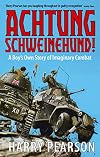
I've been following Harry Pearson ever since his first book, The Far Corner, which was all about non-League football (a subject I have no interest in) in North-East England. For my money, he is consistently one of the funniest writers in the English language. This book just strengthens that reputation.
It is an account of his arm's length love affair with the Second World War and military matters in general. That love affair is expressed through the medium of a) British war comics, b) plastic show more model kits (mainly Airfix) and c) table-top wargaming. In amongst the anecdotes from his two childhoods - the one he had as a boy and the one he is now living through as an adult (allegedly) - he inserts a lot of social history of 1950s and 1960s Britain, plus a lot of history of the model soldier business.
World War 2 was the defining event for my father and others of his generation. It was reflected in the popular culture of comics, books, tv shows and films for possibly the following twenty years or more. Pearson maps this out and shows how it turned his generation, the "baby boomers" of the 1950s and 60s, into a generation obsessed with military modelling of some sort or another, I am of that generation; and I remember my junior school friends all being equally obsessed with modelling aircraft, tanks and ships. Pearson has written an account of all our childhoods that is both funny and true.
The same goes for his portrait of the wargaming community. The characters he illustrates are typical to most specialist interests and many readers will be able to identify the personalities and fill in their own selection of names known to them. I particularly identified with the final line of his acknowledgements, where he names all the people he's traded miniature figures with or faced across a wargames table, ending with "...several dozen blokes named Dave." show less
It is an account of his arm's length love affair with the Second World War and military matters in general. That love affair is expressed through the medium of a) British war comics, b) plastic show more model kits (mainly Airfix) and c) table-top wargaming. In amongst the anecdotes from his two childhoods - the one he had as a boy and the one he is now living through as an adult (allegedly) - he inserts a lot of social history of 1950s and 1960s Britain, plus a lot of history of the model soldier business.
World War 2 was the defining event for my father and others of his generation. It was reflected in the popular culture of comics, books, tv shows and films for possibly the following twenty years or more. Pearson maps this out and shows how it turned his generation, the "baby boomers" of the 1950s and 60s, into a generation obsessed with military modelling of some sort or another, I am of that generation; and I remember my junior school friends all being equally obsessed with modelling aircraft, tanks and ships. Pearson has written an account of all our childhoods that is both funny and true.
The same goes for his portrait of the wargaming community. The characters he illustrates are typical to most specialist interests and many readers will be able to identify the personalities and fill in their own selection of names known to them. I particularly identified with the final line of his acknowledgements, where he names all the people he's traded miniature figures with or faced across a wargames table, ending with "...several dozen blokes named Dave." show less
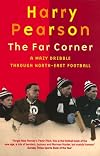
Harry Pearson writes very well about soccer and people, and he's extremely funny. Here he travels to various lower league matches in northeast England during the 1993/4 season. Not being overly familiar with English non-league football I took the time to look up some of the people and places he talks about. I did discover there are thousands of teams in England in various leagues, both professional and amateur. I still don't understand it all.
Pearson conjures up some real characters. The show more shop owner who free-associates until he can turn every conversation to Len Shackleton is a favorite.
Pearson can flat out write. A gem: "Goalkeepers never admit to their mistakes. If it wasn't for their athletic abilities most of them would have gone into politics."
A section about Seaham Red Star's Paul Walker is some of the best writing in the book, or anywhere.
And the index is worth reading itself. One entry:
Bugger, Fat
libidinous effect on aquatic mammals of, 145
A wonderful football/soccer book about some teams and names you may not be familiar with. show less
Pearson conjures up some real characters. The show more shop owner who free-associates until he can turn every conversation to Len Shackleton is a favorite.
Pearson can flat out write. A gem: "Goalkeepers never admit to their mistakes. If it wasn't for their athletic abilities most of them would have gone into politics."
A section about Seaham Red Star's Paul Walker is some of the best writing in the book, or anywhere.
And the index is worth reading itself. One entry:
Bugger, Fat
libidinous effect on aquatic mammals of, 145
A wonderful football/soccer book about some teams and names you may not be familiar with. show less

This is a follow up to the author's 1994 masterpiece, 'The Far Corner' and covers the same territory, football (soccer) in North East England. Pearson, a charming and funny writer, took time to visit a number of football matches at all levels from Premiership to just above Sunday league and to reflect on the changes in the game, and in his own life, in the past twenty-five years. On the way, he considers the loss of excitement in the higher-level game and the rich variety of non-league football.
I am not a football fan; but I spent my student days in the North-East of England. At the weekends, I explored some of the odder corners of the region - Blaydon, Spennymoor, Esh Winning, Tow Law, Crook, Quaking Houses, Pity Me, Washington, New York!
Many years later, a Geordie colleague, spotting that I had picked up the local way of referring to the major city in the region as "Newcassel" instead of "Newcastle" lent me this book. He was a football fan; indeed, he was a fan of non-League and show more obscure football clubs - the only person I've ever known to have a Cowdenbeath FC mug for his tea! So this book was meat and drink to him: to me, it was a step back in time some twenty or thirty years to my time in the North East.
Pearson writes with an eye for detail and an ear for accent, and I was transported. It is a book of raucous and sometimes robust humour, much in line with the area itself.
If things had turned out differently, I might have stayed in the North-East after graduating: but times were hard, we were heading for the "Thatcherzeit", and a depressed area was about to get even more depressed. But I can read this book and again I am in the pit villages of County Durham (so very much like my native Derbyshire), sampling the regional beers (Vaux, Fed Special and McEwans' 80 Shilling) and listening to blokes discussing the fortunes of Blyth Spartans. Proust for Geordies! show less
Many years later, a Geordie colleague, spotting that I had picked up the local way of referring to the major city in the region as "Newcassel" instead of "Newcastle" lent me this book. He was a football fan; indeed, he was a fan of non-League and show more obscure football clubs - the only person I've ever known to have a Cowdenbeath FC mug for his tea! So this book was meat and drink to him: to me, it was a step back in time some twenty or thirty years to my time in the North East.
Pearson writes with an eye for detail and an ear for accent, and I was transported. It is a book of raucous and sometimes robust humour, much in line with the area itself.
If things had turned out differently, I might have stayed in the North-East after graduating: but times were hard, we were heading for the "Thatcherzeit", and a depressed area was about to get even more depressed. But I can read this book and again I am in the pit villages of County Durham (so very much like my native Derbyshire), sampling the regional beers (Vaux, Fed Special and McEwans' 80 Shilling) and listening to blokes discussing the fortunes of Blyth Spartans. Proust for Geordies! show less
Awards


You May Also Like


Statistics
- Works
- 14
- Members
- 484
- Popularity
- #51,010
- Rating
- 3.9
- Reviews
- 17
- ISBNs
- 59
- Languages
- 2
- Favorited
- 1