
About the Author
Simon Kuper is one of the world's leading writers on soccer. The winner of the William Hill prize for sports book of the year in Britain, Kuper writes a weekly-column for the Financial Times. He lives in Paris.
Image credit: Simon Kuper
Works by Simon Kuper
Soccernomics: Why England Loses, Why Germany and Brazil Win, and Why the U.S., Japan, Australia, Turkey--and Even Iraq--Are Destined to Become the Kings of the World's Most… (2009) 885 copies, 24 reviews
Ajax, the Dutch, the War: Football in Europe During the Second World War (2003) 179 copies, 6 reviews
Soccer Men: Profiles of the Rogues, Geniuses, and Neurotics Who Dominate the World's Most Popular Sport (2011) 131 copies, 4 reviews
The Barcelona Complex: Lionel Messi and the Making--and Unmaking--of the World's Greatest Soccer Club (2021) 74 copies, 2 reviews
The Happy Traitor: Spies, Lies and Exile in Russia: The Extraordinary Story of George Blake (2021) 59 copies, 1 review
Good Chaps: How Corrupt Politicians Broke Our Law and Institutions - And What We Can Do About It (2024) 7 copies
Ficiológia 1 copy
Associated Works
Sport : de 141 beste Nederlandse en Vlaamse sportverhalen van 1945 tot nu (2007) — Contributor — 6 copies
Tagged
Common Knowledge
- Birthdate
- 1969
- Gender
- male
- Education
- University of Oxford
Harvard University - Occupations
- journalist
author - Organizations
- Financial Times
De Pers
Hard Gras
Vrij Nederland - Nationality
- UK
- Birthplace
- Kampala, Uganda
- Places of residence
- Leiden, Netherlands
South Africa
Paris, France
Stanford, California, USA
Berlin, Germany
London, England, UK
Members
Reviews
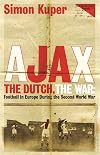
Meer dan 20 jaar geleden las ik het 22e deel van Hard Gras. Volledig volgeschreven door Simon Kuper, ik was erg onder de indruk. Maar meteen ook de reden dat dit boek dat kort daarna uitkwam niet bij mij in de kast belandde. Jaren later in de opruimingsbak ging ik toch overstag. De overlap nam ik voor lief. Maar zelfs daarna stond het boek jaren ongelezen op de plank.
Tot vorig jaar op twitter (toen nog) een aankondiging stond dat er een online openbare boekenavond was over dit boek, met de show more schrijver. Meteen haalde ik het boek uit de kast. Uiteindelijk kon ik de bewuste avond niet, dus heb ik die sessie gemist, maar het boek las ik toch wel graag.
Voordeel van twee decennia tussen de Nederlandse versie en de uitgebreidere Engelse versie is dat ik van het origineel veel niet heb onthouden. De grote lijnen wel, de details niet. Die komen op deze manier weer terug. Mooi is de werkwijze van Kuper, veel ooggetuigen aan het woord laten. Het wordt eigenlijk gewoon een geschiedenisboek over de Tweede Wereldoorlog, waarbij voetbal de kapstok is, de aanleiding om juist deze mensen aan het woord te laten en niet de tig andere ooggetuigen. Een manier van beperken en daardoor interessanter te maken.
De titel is een beetje misleidend, het gaat zeker niet alleen over Ajax, al kan ik me voorstellen dat die naam buiten Nederland zo groot is, dat je die naam wil gebruiken op de voorkant, in je marketing. Het boek is veel beter dan de beperkte titel. Heel Europa ligt onder de loep, vergelijkingen kunnen worden gemaakt. De mythe dat heel Nederland in het verzet zat wordt netjes doorgeprikt, voor zelfreflectie hebben we in dit land blijkbaar een buitenstaander nodig die ons wijst op onze eigen valse geschiedschrijving.
Veel research (vijf bladzijden met titels achterin), grondig onderzoek, dit boek zou voor vele hedendaagse zogenaamde researchers een goed voorbeeld kunnen zijn. Compliment voor Kuper, die mij onlangs nog hielp met mijn eigen boek.
Citaat: “The Holocaust in the Netherlands, wrote Arendt, was a catastrophe unparalleled in any Western country; it can be compared only with the extinction, under vastly different and, from the beginning, completely desperate conditions, of Polish Jewry’. She blamed, in large part, the strong Dutch Nazi movement, second in Europe only to Germany’s. It was true that a relatively large number of Dutch Jews had found hiding places, but it was also true that a relatively large number of them were betrayed.” (p.137) show less
Tot vorig jaar op twitter (toen nog) een aankondiging stond dat er een online openbare boekenavond was over dit boek, met de show more schrijver. Meteen haalde ik het boek uit de kast. Uiteindelijk kon ik de bewuste avond niet, dus heb ik die sessie gemist, maar het boek las ik toch wel graag.
Voordeel van twee decennia tussen de Nederlandse versie en de uitgebreidere Engelse versie is dat ik van het origineel veel niet heb onthouden. De grote lijnen wel, de details niet. Die komen op deze manier weer terug. Mooi is de werkwijze van Kuper, veel ooggetuigen aan het woord laten. Het wordt eigenlijk gewoon een geschiedenisboek over de Tweede Wereldoorlog, waarbij voetbal de kapstok is, de aanleiding om juist deze mensen aan het woord te laten en niet de tig andere ooggetuigen. Een manier van beperken en daardoor interessanter te maken.
De titel is een beetje misleidend, het gaat zeker niet alleen over Ajax, al kan ik me voorstellen dat die naam buiten Nederland zo groot is, dat je die naam wil gebruiken op de voorkant, in je marketing. Het boek is veel beter dan de beperkte titel. Heel Europa ligt onder de loep, vergelijkingen kunnen worden gemaakt. De mythe dat heel Nederland in het verzet zat wordt netjes doorgeprikt, voor zelfreflectie hebben we in dit land blijkbaar een buitenstaander nodig die ons wijst op onze eigen valse geschiedschrijving.
Veel research (vijf bladzijden met titels achterin), grondig onderzoek, dit boek zou voor vele hedendaagse zogenaamde researchers een goed voorbeeld kunnen zijn. Compliment voor Kuper, die mij onlangs nog hielp met mijn eigen boek.
Citaat: “The Holocaust in the Netherlands, wrote Arendt, was a catastrophe unparalleled in any Western country; it can be compared only with the extinction, under vastly different and, from the beginning, completely desperate conditions, of Polish Jewry’. She blamed, in large part, the strong Dutch Nazi movement, second in Europe only to Germany’s. It was true that a relatively large number of Dutch Jews had found hiding places, but it was also true that a relatively large number of them were betrayed.” (p.137) show less
The Barcelona Complex: Lionel Messi and the Making--and Unmaking--of the World's Greatest Soccer Club by Simon Kuper
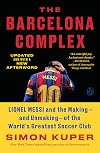
Simon Kuper immersed himself in the Barcelona FC culture for decades and the long view shows here. He details the club’s operations from the Johan Cruyff days as a player (1973-78) and coach (1988-96), to the recent downturn. He displays a deep understanding of the tactics, personalities and politics of the club.
Cruyff was the catalyst for Kuper’s interest in the club. “Cruyff created the great Barca. In the words of his chief disciple, Pep Guardiola, he built the cathedral” which show more was “later updated by Guardiola and perfected by Lionel Messi, before it fell into decay.”
The club developed from “a bastion of local pride” to one of the world’s best clubs, propelled by Cruyff and his philosophy. Guardiola for one, considers Cruyff “the most important person in the history of football.” Although the club has fallen on hard times (but at this writing are in first place in La Liga, albeit early into the season), Kuper isn’t writing them off. He finishes with a warm thought: “What Barca created, in the world’s most beloved sport, is one of the most cheering of human achievements.”
This is probably the best book I’ve read for understanding the dynamics of a top-level football team. show less
Cruyff was the catalyst for Kuper’s interest in the club. “Cruyff created the great Barca. In the words of his chief disciple, Pep Guardiola, he built the cathedral” which show more was “later updated by Guardiola and perfected by Lionel Messi, before it fell into decay.”
The club developed from “a bastion of local pride” to one of the world’s best clubs, propelled by Cruyff and his philosophy. Guardiola for one, considers Cruyff “the most important person in the history of football.” Although the club has fallen on hard times (but at this writing are in first place in La Liga, albeit early into the season), Kuper isn’t writing them off. He finishes with a warm thought: “What Barca created, in the world’s most beloved sport, is one of the most cheering of human achievements.”
This is probably the best book I’ve read for understanding the dynamics of a top-level football team. show less
Soccer against the enemy : how the world's most popular sport starts and stops wars, fuels revolutions, and keeps dictators in power by Simon Kuper

i am happy to report that the title of this book is, in today's context, misleading; there is no grand totalizing new-new journalism/freakonomics-style narrative.
this is a themed travelogue, and as such, it works really well. the text is built to contain anecdotes both odd and expected. negative reviews suggest that kuper doesn't have anything new or interesting to say, and while i understand, i think that's missing the point. kuper didn't travel to glasgow (or yaounde or zagreb or show more johannesburg or buenos aires) to break a big, new story...he's here and there to talk to fans and managers, generals and guerillas. so yeah, if you want some definitive take on celtic-rangers...look elsewhere, but honestly: good luck.
you may want to read this book if you, like me, would be simultaneously appalled and delighted to learn that a rangers fan, in the course of discussing the actual game, digresses to state that a) there is undeniable job discrimination against catholics and b) catholic parents are kind of to blame for said discrimination due to naming their kids things like "bridget teresa" and "patrick." show less
this is a themed travelogue, and as such, it works really well. the text is built to contain anecdotes both odd and expected. negative reviews suggest that kuper doesn't have anything new or interesting to say, and while i understand, i think that's missing the point. kuper didn't travel to glasgow (or yaounde or zagreb or show more johannesburg or buenos aires) to break a big, new story...he's here and there to talk to fans and managers, generals and guerillas. so yeah, if you want some definitive take on celtic-rangers...look elsewhere, but honestly: good luck.
you may want to read this book if you, like me, would be simultaneously appalled and delighted to learn that a rangers fan, in the course of discussing the actual game, digresses to state that a) there is undeniable job discrimination against catholics and b) catholic parents are kind of to blame for said discrimination due to naming their kids things like "bridget teresa" and "patrick." show less
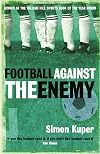
Kuper somehow arranges trips to many football-organised countries in western & eastern Europe, Africa, and the Americas; interviews a raft of players, coaches, owners & organisers (both current and legendary); pointedly leavens their narratives with those from football-minded culture critics (anthropologists & sociologists as well as journalists); and weaves the results into a travelogue which somehow manages to be about the spirit of football more than anything else. Fabulous read, and show more includes many vignettes and set pieces on the strategy, style, and history of the game. One of Kuper's primary questions was both how and why football was played differently in Spain than in England, in South Africa than in Jamaica, and so on. He doesn't bring the book to any sweeping conclusions or generalised theory of the game, but wisely opts to focus on specific instances of difference and similarity.
To his credit, Kuper also is as critical of the game (socioeconomically, but also vis-a-vis the power relations it engenders) as he is supportive. He's a fan, clearly, but a clear-headed one. And perhaps unintended is the book's role as time-capsule: the world is not as isolated and insular as it was in 1992-93, at least in those aspects susceptible to media influence, and the game of football reflects it. Celtic and Rangers, the Red Army of either Man U or of Torpedo Moscow, these have merged into an international brand. Kuper wrote before that was quite so much the case.
Can't imagine a better context in which to follow football at present: in the US, the sport has a high-enough profile to allow a fan to follow most leagues as well as international fixtures, and the domestic league probably has the highest level of professional skill and ability as ever ... yet it's still eclipsed by NFL, NBA, MLB. This means, I think, the focus such as it is remains on the game, and less on the extraneous stuff: marketing, cultural dominance whether hooliganism or machismo or rivalries. (Perhaps I kid myself.) Don't think I'd appreciate the same teams, matches, rivalries were I neck-deep in it all. In Britain or Europe, I suspect I'd probably follow a second league club.
//
Levon Abramian's theory of social revolution via FCs, the only organic communities in the Soviet bloc. Abramian anticipated Moscow would see the first revolutions, its multiple FCs aligned with social classes (military, working class); in fact, the nationalist clubs in the republics were more involved in revolt. [53ff]
Dynamo Kiev's manager Valeri "Loba" Lobanovski and his Billy Ball sabermetrician Anatoly Zelentsov, pre-PC and VHS, mapping out plays like American football: "Our aim was to invent the science of soccer." [63-64] The club's stars did not succeed on Western clubs, they excelled within the Dynamo system.
"As I see it, there are four approaches to soccer which dominate today." [91]
● Long-ball game (Britain), aka counter-attacking football
● Total football, aka possession football (Netherlands, Barcelona's tiki-taka, AC Milan, Sao Paolo, Dynamo Kiev, and now Bayern Muenchen)
● Happy-go-lucky style of o jogo bonito (Brazil) or "piano and shoeshine" (South Africa)
● Catenaccio ("padlock") or defensive football, identified with Helenio Herrera (Inter Milan, and the Azzurri)
U.S. edition, "Soccer Against the Enemy" with a new preface. Yes, in places the editors just swapped out "football" for "soccer" with absurd results: when football referred to the object, not the game, for example. show less
To his credit, Kuper also is as critical of the game (socioeconomically, but also vis-a-vis the power relations it engenders) as he is supportive. He's a fan, clearly, but a clear-headed one. And perhaps unintended is the book's role as time-capsule: the world is not as isolated and insular as it was in 1992-93, at least in those aspects susceptible to media influence, and the game of football reflects it. Celtic and Rangers, the Red Army of either Man U or of Torpedo Moscow, these have merged into an international brand. Kuper wrote before that was quite so much the case.
Can't imagine a better context in which to follow football at present: in the US, the sport has a high-enough profile to allow a fan to follow most leagues as well as international fixtures, and the domestic league probably has the highest level of professional skill and ability as ever ... yet it's still eclipsed by NFL, NBA, MLB. This means, I think, the focus such as it is remains on the game, and less on the extraneous stuff: marketing, cultural dominance whether hooliganism or machismo or rivalries. (Perhaps I kid myself.) Don't think I'd appreciate the same teams, matches, rivalries were I neck-deep in it all. In Britain or Europe, I suspect I'd probably follow a second league club.
//
Levon Abramian's theory of social revolution via FCs, the only organic communities in the Soviet bloc. Abramian anticipated Moscow would see the first revolutions, its multiple FCs aligned with social classes (military, working class); in fact, the nationalist clubs in the republics were more involved in revolt. [53ff]
Dynamo Kiev's manager Valeri "Loba" Lobanovski and his Billy Ball sabermetrician Anatoly Zelentsov, pre-PC and VHS, mapping out plays like American football: "Our aim was to invent the science of soccer." [63-64] The club's stars did not succeed on Western clubs, they excelled within the Dynamo system.
"As I see it, there are four approaches to soccer which dominate today." [91]
● Long-ball game (Britain), aka counter-attacking football
● Total football, aka possession football (Netherlands, Barcelona's tiki-taka, AC Milan, Sao Paolo, Dynamo Kiev, and now Bayern Muenchen)
● Happy-go-lucky style of o jogo bonito (Brazil) or "piano and shoeshine" (South Africa)
● Catenaccio ("padlock") or defensive football, identified with Helenio Herrera (Inter Milan, and the Azzurri)
U.S. edition, "Soccer Against the Enemy" with a new preface. Yes, in places the editors just swapped out "football" for "soccer" with absurd results: when football referred to the object, not the game, for example. show less
Lists
Awards


You May Also Like


Associated Authors
Statistics
- Works
- 20
- Also by
- 2
- Members
- 2,100
- Popularity
- #12,256
- Rating
- 3.8
- Reviews
- 50
- ISBNs
- 115
- Languages
- 13