
Jonathan Wilson (2) (1976–)
Author of Inverting the Pyramid: The History of Football Tactics
For other authors named Jonathan Wilson, see the disambiguation page.
About the Author
Jonathan Wilson's Inverting the Pyramid was football book of the year in the UK and Italy and was shortlisted for the William Hill Sports Book of the Year Award. His other books include Behind the Curtain, Sunderland, The Anatomy of England, Nobody Ever Says Thank You, The Outsider, Angels With show more Dirty Faces, The Anatomy of Liverpool, and The Anatomy of Manchester United. He also writes for the Guardian, Sports Illustrated, and World Soccer, and he is the editor of The Blizzard. show less
Series
Works by Jonathan Wilson
The Barcelona Legacy: Guardiola, Mourinho and the Fight For Football's Soul (2018) 42 copies, 2 reviews
The Names Heard Long Ago: How the Golden Age of Hungarian Football Shaped the Modern Game (2019) 30 copies
The Blizzard: Issue Six 2 copies
Tagged
Common Knowledge
- Birthdate
- 1976-07-09
- Gender
- male
- Occupations
- journalist
author - Short biography
- Jonathan Wilson (born in Sunderland) is a British sports journalist and author who writes for a number of publications, including the Guardian, the Independent and Sports Illustrated. He is a columnist for World Soccer and is the founder and editor of The Blizzard. He also appears on the Guardian football podcast, "Football Weekly".
- Nationality
- England
UK - Birthplace
- Sunderland, Tyne & Wear, England, UK
- Associated Place (for map)
- England, UK
Members
Reviews
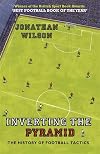
This book does exactly what it sets out to, describing the evolution of football tactics from their formless beginnings when everybody on the pitch, apart from the goalkeeper, dribbled towards the opponents’ goal with team mates “backing up” in case the ball was lost, through the invention of passing (or, as it was delightfully phrased, combination play) in Scotland, the first real formation of 2-3-5, its gradual stalemating till the offside law was changed in the 1920s to allow only show more two defenders between ball and goal line which in turn led to the withdrawal of the centre half into the back line of a 3-2-5 and the “classic” three defender, two half back, two inside forward, plus centre forward line-up of the W-M or W-W. The later adaptations of this formation (in some cases, as in Great Britain, very much later) via the diagonal, through the deep lying centre forward, 4-2-4, 4-4-2, 4-3-3 and 3-5-2, by which time the pyramid of the book’s title had been inverted, leading on to 4-5-1, even 4-6-0, plus the variations of all of these and the pressing game, are given their place and their innovators due recognition.
In particular the histories of football in various countries, Brazil, Argentina, Italy, Austria, Hungary, the USSR, the Netherlands, England, even a foray into the Scandinavian experience, and the life histories of the various coaches concerned, are admirably laid out as is the tension between attack and defence, creativity and negativity, craft and effort. Through it all the importance of system is a given. A well-organised and drilled side will always beat a disorganised one, or one following too rigid a previous template, provided the system is understood and adhered to.
The tendency for any innovations to be imitated at first mainly in a defensive sense is noted and in passing the notions of Charles Reep and Charles Hughes of direct football being particularly effective is knocked on the head, even on statistical grounds. In some cases it can be, as can any system, but against good players who can keep possession directness will fall down.
Whether football’s evolution has ended is a moot point but in the modern world with global TV coverage and worldwide scouting it is unlikely any team will be able to spring a truly revolutionary tactical surprise. But then again before that offside law alteration there had been little or no tactical change for around thirty years. In Britain, the W-M then held sway for another forty or so.
But the centre half disappeared as a half back, wingers disappeared, full backs became wing backs, wing halves and inside forwards turned into central defenders or midfielders, who evolved into holding players or playmakers; and the playmaker has all but disappeared. The centre forward may go the same way. (I would say that, arguably, with Barcelona, he already has. Messi is not a centre forward, Villa and Pedro tend not to play up the middle.)
In modern football flexibility within a system is a key ingredient, and fluidity. Modern players at the top level are no longer specialists in the way they were. Everyone is an attacker and defender at the same time. Football is actually a game played with space - or denying it - and not really with the ball. But, as Barcelona demonstrate, possession, keeping it and regaining it, certainly helps.
For all those interested in football and how it came to be the way it is this is a wonderful, informative and illuminating read. show less
In particular the histories of football in various countries, Brazil, Argentina, Italy, Austria, Hungary, the USSR, the Netherlands, England, even a foray into the Scandinavian experience, and the life histories of the various coaches concerned, are admirably laid out as is the tension between attack and defence, creativity and negativity, craft and effort. Through it all the importance of system is a given. A well-organised and drilled side will always beat a disorganised one, or one following too rigid a previous template, provided the system is understood and adhered to.
The tendency for any innovations to be imitated at first mainly in a defensive sense is noted and in passing the notions of Charles Reep and Charles Hughes of direct football being particularly effective is knocked on the head, even on statistical grounds. In some cases it can be, as can any system, but against good players who can keep possession directness will fall down.
Whether football’s evolution has ended is a moot point but in the modern world with global TV coverage and worldwide scouting it is unlikely any team will be able to spring a truly revolutionary tactical surprise. But then again before that offside law alteration there had been little or no tactical change for around thirty years. In Britain, the W-M then held sway for another forty or so.
But the centre half disappeared as a half back, wingers disappeared, full backs became wing backs, wing halves and inside forwards turned into central defenders or midfielders, who evolved into holding players or playmakers; and the playmaker has all but disappeared. The centre forward may go the same way. (I would say that, arguably, with Barcelona, he already has. Messi is not a centre forward, Villa and Pedro tend not to play up the middle.)
In modern football flexibility within a system is a key ingredient, and fluidity. Modern players at the top level are no longer specialists in the way they were. Everyone is an attacker and defender at the same time. Football is actually a game played with space - or denying it - and not really with the ball. But, as Barcelona demonstrate, possession, keeping it and regaining it, certainly helps.
For all those interested in football and how it came to be the way it is this is a wonderful, informative and illuminating read. show less
I have long claimed a real love for football. I played it growing up, went with my father to Leicester's home matches from 1988 to about 1994, and watched everything I could to do with the game. I thought I knew a lot - facts and figures, famous players and the moments they created.
But it turns out that a big part of the game was missing. I had no idea about tactics - true tactics, what it means to play the game as a part of a team, not just an individual. I knew that Leicester lined up in a show more 4-4-2 under Pleat and Little, and for a while played in a 3-5-2 under O'Neill, but now that I've read this book I realise I never truly understood what any of that meant.
'Inverting the Pyramid' is a book about football tactics, the development of the different formations, and the way that the game has evolved in the last century or so. But it is also a lot more than that. It is a fascinating insight into the spirit of football, and so becomes a celebration of everything that I am most passionate about. show less
But it turns out that a big part of the game was missing. I had no idea about tactics - true tactics, what it means to play the game as a part of a team, not just an individual. I knew that Leicester lined up in a show more 4-4-2 under Pleat and Little, and for a while played in a 3-5-2 under O'Neill, but now that I've read this book I realise I never truly understood what any of that meant.
'Inverting the Pyramid' is a book about football tactics, the development of the different formations, and the way that the game has evolved in the last century or so. But it is also a lot more than that. It is a fascinating insight into the spirit of football, and so becomes a celebration of everything that I am most passionate about. show less

I felt deeply sorry for Naomi Westland. Normally this is the ‘And Finally…’ of The Blizzard, an aperitif to wind the reader down and always following the ‘classic matches’ article. And it’s a fun enough conceit, fairly sly about how world leaders have used and abused the beautiful game for their own ends (and sometimes actually even genuinely love it). But here it follows one of the most majestic articles in The Blizzard’s existence. Rob Smyth’s piece on the Cantona comeback show more game takes one match as its centrepiece but extends it more widely, using it to reappraise the mid-1990s, Manchester United’s dominance, the Liverpool ‘Spice Boys’ side and musing on how history is often dictated by results and trophies rather than reasoned hindsight. I’d not been a fan of Smyth’s prior to this but this demonstrates how good he is when given the space. It’s essentially exactly the sort of article The Blizzard’s for and worth the entry fee alone.
Elsewhere this is a typically eclectic collection. It’s a particularly good issue for Liverpool fans with Smyth’s articles complemented by a trio reflecting on the forgotten, key role played by Steve Nicol in Liverpool’s most aesthetically pleasing side, Ronny Rosenthal’s late burst that inspired their last title and a salute to Steven Gerrard from a long-distance fan. There are also welcome reflections on the Women’s World Cup and Copa America, an economically literate querying of whether pay TV is healthy for football (and possible alternatives), the philosophy behind Luis Enrique’s Barcelona, football trade unionism and the horror of events in Chile’s El Estadio Nacional during Pinochet’s coup. As ever, required reading for any discerning football reader. show less
Elsewhere this is a typically eclectic collection. It’s a particularly good issue for Liverpool fans with Smyth’s articles complemented by a trio reflecting on the forgotten, key role played by Steve Nicol in Liverpool’s most aesthetically pleasing side, Ronny Rosenthal’s late burst that inspired their last title and a salute to Steven Gerrard from a long-distance fan. There are also welcome reflections on the Women’s World Cup and Copa America, an economically literate querying of whether pay TV is healthy for football (and possible alternatives), the philosophy behind Luis Enrique’s Barcelona, football trade unionism and the horror of events in Chile’s El Estadio Nacional during Pinochet’s coup. As ever, required reading for any discerning football reader. show less

The great strength of The Blizzard so far has been in the diversity of football coverage it’s been able to present and the latest issue is no exception. The latest issue manages to touch on football from six different continents, probably only the absence of an Antarctic league or national team prevents a full house.
The range of issues covered is equally impressive. Space is given to the shenanigans surrounding Hereford United’s demise, immediately followed by more impressive coverage show more of the build up to the 2022 Qatar World Cup. Other publications may be focussing elsewhere as the issues might be seen as yesterday’s news but The Blizzard’s doggedness in continuing to spotlight this story is a journalistic credit to editor and contributors. Elsewhere both the African Cup of Nations and Asian Cup receive coverage and the fiction section disappears for three portraits illustrating Sierra Leonean football. More abstract issues are also tackled, such as why football fiction in prose and on screen is such a threadbare genre and the Eight Bells section becomes a beautifully told mini-social history of terrace chanting. As ever, an essential read for the more broadminded football fan. show less
The range of issues covered is equally impressive. Space is given to the shenanigans surrounding Hereford United’s demise, immediately followed by more impressive coverage show more of the build up to the 2022 Qatar World Cup. Other publications may be focussing elsewhere as the issues might be seen as yesterday’s news but The Blizzard’s doggedness in continuing to spotlight this story is a journalistic credit to editor and contributors. Elsewhere both the African Cup of Nations and Asian Cup receive coverage and the fiction section disappears for three portraits illustrating Sierra Leonean football. More abstract issues are also tackled, such as why football fiction in prose and on screen is such a threadbare genre and the Eight Bells section becomes a beautifully told mini-social history of terrace chanting. As ever, an essential read for the more broadminded football fan. show less
Lists
Awards


You May Also Like


Associated Authors
Statistics
- Works
- 50
- Members
- 1,481
- Popularity
- #17,342
- Rating
- 3.8
- Reviews
- 32
- ISBNs
- 152
- Languages
- 11
- Favorited
- 1