
Jimmy Burns
Author of Barca: A People's Passion
About the Author
Jimmy Burns has been a correspondent in London for The Economist, The Observer, and The Financial Times
Works by Jimmy Burns
Hard Gras / 009 2 copies
Associated Works
Tagged
Common Knowledge
- Birthdate
- 1953
- Gender
- male
- Nationality
- Spain (birth)
UK (passport) - Places of residence
- London, England, UK
- Associated Place (for map)
- England, UK
Members
Reviews
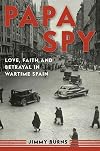
I loved “Papa Spy.”
Everything works in this biography of a fascinating man who lived in extraordinary times. Tom Burns was a devoted Catholic, a patriot, a bright and thoughtful man who served as Britain’s press attaché in World War II Spain, where he interacted with a cast of characters ranging from Kim Philby to Leslie Howard.
Wartime Spain was unlike any other place in Europe during the war. The Allies and the Axis were eager for the country’s support, for both psychological and show more physical reasons, and their spies and friends comprised everyone from government officials to the quiet figure at the coffee shop. Francisco Franco, meanwhile, was himself a paradox: a man who outwardly supported the Nazis but never allowed harm to come to Spain’s Jewish community. It was a time of mystery and intrigue, double crossing, desperation, passion and utter devotion to one’s country. Tom Burns was right in the middle, and as readers we stand directly beside him in this dizzying world.
The details provided in “Papa Spy” are wonderful. Nazi press attaché Hans Lazar is a man whose bedroom “was decorated like a chapel, with two rows of twelve figures of saints and an alter on which he slept.” Leslie Howard writes thank-you notes just before he leaves Spain (and ultimately disappears) and letters of apology for his frequent tardiness. Evelyn Waugh is brilliant but snobby.
Of course this is a book for anyone interested in history, World War II and spies. But it’s also a good choice for anyone who simply wants a great book to read.
I enjoyed every moment of “Papa Spy,” because it was entertaining and educational. It created for me a world I could not even have imagined, and introduced me to a man, Tom Burns, whom I will never forget. show less
Everything works in this biography of a fascinating man who lived in extraordinary times. Tom Burns was a devoted Catholic, a patriot, a bright and thoughtful man who served as Britain’s press attaché in World War II Spain, where he interacted with a cast of characters ranging from Kim Philby to Leslie Howard.
Wartime Spain was unlike any other place in Europe during the war. The Allies and the Axis were eager for the country’s support, for both psychological and show more physical reasons, and their spies and friends comprised everyone from government officials to the quiet figure at the coffee shop. Francisco Franco, meanwhile, was himself a paradox: a man who outwardly supported the Nazis but never allowed harm to come to Spain’s Jewish community. It was a time of mystery and intrigue, double crossing, desperation, passion and utter devotion to one’s country. Tom Burns was right in the middle, and as readers we stand directly beside him in this dizzying world.
The details provided in “Papa Spy” are wonderful. Nazi press attaché Hans Lazar is a man whose bedroom “was decorated like a chapel, with two rows of twelve figures of saints and an alter on which he slept.” Leslie Howard writes thank-you notes just before he leaves Spain (and ultimately disappears) and letters of apology for his frequent tardiness. Evelyn Waugh is brilliant but snobby.
Of course this is a book for anyone interested in history, World War II and spies. But it’s also a good choice for anyone who simply wants a great book to read.
I enjoyed every moment of “Papa Spy,” because it was entertaining and educational. It created for me a world I could not even have imagined, and introduced me to a man, Tom Burns, whom I will never forget. show less
 This review was written for LibraryThing Early Reviewers.
"Papa Spy" is more than just a riveting tale of an unlikely spy during WWII – it is also a son’s written discovery and tribute to his father. Up until now, Tom Burns was best known as a British publisher who was sent to Spain to be a part of a propaganda campaign to keep the country neutral as the Nazis army began to rise in power. As the author delved more into his father’s past, he soon discovered that his father actually worked for British intelligence and was assigned the task of show more attempting to prevent Hitler from gaining control of the Mediterranean and North Africa. Though this is a story of his father, Jimmy Burns remains remarkably detached and presents a piece-by-piece recounting of Tom Burns’ life as a spy. I can only imagine what such a revelation would have felt like to a son, especially as he began to learn more about the dangers that actually surrounded his father on a day-to-day basis.
Tom Burns, the spy, was not only helping the British fight against the Nazis but was also fighting his own battle with the very people who were on his side. Some authorities in London accused Burns of many grievances, suggesting his earlier support for Franco during the Spanish Civil War gave him pro-Franco sympathies during WWII. Burns, who was part-Chilean, had been amongst the minority of Franco supporters during that time, mostly due to the backing the general provided for the Catholic Church (Burns was an ardent Roman Catholic – another trait that caused him to stand out unfavorably amongst his peers). While his background made him unpopular with the British traditionalists within his office, it made him an ideal candidate for undercover work in Madrid. An ordinary Englishman would have stood out but Burns’ Hispanic background helped to prevent him from being a target of the Gestapo.
Despite this, he was still viewed with much suspicion by others in government. This sentiment grew as a result of unfavorable reports submitted by two members of the secret service who were later unmasked as Soviet agents with their own agenda for control of Spain. They attempted to paint him as a fascist, an egotist and a womanizer. There was even an effort to trap him in a compromising situation but Burns did not fall for it. Despite all of this, Burns remained loyal to Britain and continued to do his job to the best of his abilities.
As if this weren’t enough to paint an intriguing picture of Burns, the author also uncovered a love affair his father had with the poet Ann Bowes-Lyon before leaving for Madrid. Because of her connection to the monarchy, Burns’ Catholic background made him an unfavorable match and the affair came to an end. However, it was while he was in Madrid that Burns met Mabel Maranon who would later become his wife and the mother of the author, Jimmy Burns.
This is by far and away a fantastic telling of the amazing life of Tom Burns. There is a perfect balance of WWII history, political intrigue, and descriptions of the prejudicial climate during this era. The subject of Burns’ campaign in Madrid is presented well and finally gives credit to an action that truly helped the allies defeat the Nazis. Had Hitler gained control of the Mediterranean, the Nazis would have solved the problem of their fuel shortage thanks to the oil in the Middle East. I was amazed from beginning to end as I learned of Burns’ involvement in other war episodes such as the entrapment of several German agents, preventing a kidnapping attempt of the Duke of Windsor and the recruitment of unlikely agents such as actor Leslie Howard.
This is definitely a book for lovers of history, WWII history or true stories of espionage. I highly recommend it. show less
Tom Burns, the spy, was not only helping the British fight against the Nazis but was also fighting his own battle with the very people who were on his side. Some authorities in London accused Burns of many grievances, suggesting his earlier support for Franco during the Spanish Civil War gave him pro-Franco sympathies during WWII. Burns, who was part-Chilean, had been amongst the minority of Franco supporters during that time, mostly due to the backing the general provided for the Catholic Church (Burns was an ardent Roman Catholic – another trait that caused him to stand out unfavorably amongst his peers). While his background made him unpopular with the British traditionalists within his office, it made him an ideal candidate for undercover work in Madrid. An ordinary Englishman would have stood out but Burns’ Hispanic background helped to prevent him from being a target of the Gestapo.
Despite this, he was still viewed with much suspicion by others in government. This sentiment grew as a result of unfavorable reports submitted by two members of the secret service who were later unmasked as Soviet agents with their own agenda for control of Spain. They attempted to paint him as a fascist, an egotist and a womanizer. There was even an effort to trap him in a compromising situation but Burns did not fall for it. Despite all of this, Burns remained loyal to Britain and continued to do his job to the best of his abilities.
As if this weren’t enough to paint an intriguing picture of Burns, the author also uncovered a love affair his father had with the poet Ann Bowes-Lyon before leaving for Madrid. Because of her connection to the monarchy, Burns’ Catholic background made him an unfavorable match and the affair came to an end. However, it was while he was in Madrid that Burns met Mabel Maranon who would later become his wife and the mother of the author, Jimmy Burns.
This is by far and away a fantastic telling of the amazing life of Tom Burns. There is a perfect balance of WWII history, political intrigue, and descriptions of the prejudicial climate during this era. The subject of Burns’ campaign in Madrid is presented well and finally gives credit to an action that truly helped the allies defeat the Nazis. Had Hitler gained control of the Mediterranean, the Nazis would have solved the problem of their fuel shortage thanks to the oil in the Middle East. I was amazed from beginning to end as I learned of Burns’ involvement in other war episodes such as the entrapment of several German agents, preventing a kidnapping attempt of the Duke of Windsor and the recruitment of unlikely agents such as actor Leslie Howard.
This is definitely a book for lovers of history, WWII history or true stories of espionage. I highly recommend it. show less
This review was written for LibraryThing Early Reviewers.The story of publisher Tom Burns who became the press attache (as well as propagandist and part-time member of the intelligence service) in the British embassy in Madrid during World War 2. His personal history is woven into the history as to why he was chosen (his Catholicism led him to lean toward Franco during the Spanish Civil War which suited the British official policy of keeping Spain out of the war rather than overthrowing the Nationalists and as a publisher he knew or was known by show more the right people), how he went about his job and how why he was chosen was held against him by some branches of the government as well as MI5 and MI6. The Cambridge spies (Philby most notably) are intertwined in the story and it is oddly funny to read how some in the government thought Burns could be a German spy because of his leanings while reading what Philby was doing at the same time. show less
This review was written for LibraryThing Early Reviewers."Papa Spy" is a riveting tale of a spy during WWII - It's also a son's tribute to his father. As the author delved more into his father's past, he soon discovered that his father actually worked for British intelligence and was assigned the task of attempting to prevent Hitler from gaining control of the Mediterranean and North Africa. I can imagine what such a revelation would have felt like to a son, especially as he began to learn more about the dangers that actually would have filled the show more life of a double agent. I did enjoy this book a great deal. show less
This review was written for LibraryThing Early Reviewers.Awards


You May Also Like


Statistics
- Works
- 17
- Also by
- 1
- Members
- 475
- Popularity
- #51,907
- Rating
- 3.6
- Reviews
- 16
- ISBNs
- 68
- Languages
- 7
