

David Goldblatt (2) (1965–)
Author of The Ball is Round: A Global History of Soccer
For other authors named David Goldblatt, see the disambiguation page.
About the Author
David Goldblatt is the author of three acclaimed books about ssoccer, including the international bestseller The Ball Is Round. His podcast, Game of Our Lives, has been nominated for a Webby award. He teaches at Pitzer College in Los Angeles and lives in Bristol, England.
Image credit: By Heinrich-Böll-Stiftung from Berlin, Deutschland - David Goldblatt, CC BY-SA 2.0, https://commons.wikimedia.org/w/index.php?curid=106062194
Works by David Goldblatt
The Time Traveler's Handbook: 18 Experiences from the Eruption of Vesuvius to Woodstock (2015) 121 copies, 1 review
The Game of Our Lives: The English Premier League and the Making of Modern Britain (2014) 116 copies, 1 review
How to watch the Olympics: scores and laws, heroes and zeros – an instant initiation to every sport (2011) 54 copies, 2 reviews
Tagged
Common Knowledge
- Birthdate
- 1965
- Gender
- male
- Occupations
- college instructor
broadcaster
journalist - Nationality
- UK
- Birthplace
- London, England, UK
- Places of residence
- Bristol, Gloucestershire, England, UK
- Associated Place (for map)
- England, UK
Members
Reviews
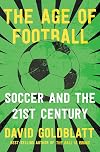
In this extensively researched book David Goldblatt examines the state of football throughout the world. He gives space to the politics and economics of each region and how it affects football, and the reverse.
Africa, loaded with talent, is beset by corruption and mismanagement despite massive financial support from China resulting in barely used stadiums. Most fans in the continent prefer to follow European teams. In the middle east, politics is the bane of football, where they take an show more interest in it at all. In Israel “Orthodox Jews, who, while they disagree about almost everything, are pretty united in their lack of interest in football.” The UAE “traditionally preferred to invest in more reassuringly expensive sports like thoroughbred horse racing and powerboating.”
Corruption, racism, sexism and violence mark south American football. Goldblatt extensively describes the multi-culturalism of European football, and the politics – always the politics – and politicians who graft themselves to the sport and its popularity.
America is not exempt from graft of its own. Chuck Blazer, once CONCACAF General Secretary and FBI informant took his share of illicit funds and “preferred to spend his money on himself and his cats, who got their own Trump Tower duplex, and to eat himself to death at New York’s finest restaurants.”
Goldblatt also covers the extensive corruption with the ranks of FIFA itself as well as the charlatans, criminals and con artists, many of whom are team owners, who exploit and profit from the sport the world over. He is adept at gleefully describing the many scoundrels involved in the game, such as the “Russian billionaire who made his money by obtaining and selling the state potash industry and was looking for somewhere to comfortably park himself, his money and his reputation.”
Goldblatt can be wickedly funny while pointing out the obvious. “How could it be that a man of such mediocre talents, intellectual incuriosity and narrow cultural horizons should rise to the top of one of the twenty-first century’s most important international cultural organizations?” That man is Sepp Blatter, once the head of FIFA. This might also be one of the few books where you get to read the name Tokyo Sexwale, who once unsuccessfully vied for the FIFA presidency.
The Age of Football is a football book in the way that it explains how football affects the world it is played in, and visa versa. show less
Africa, loaded with talent, is beset by corruption and mismanagement despite massive financial support from China resulting in barely used stadiums. Most fans in the continent prefer to follow European teams. In the middle east, politics is the bane of football, where they take an show more interest in it at all. In Israel “Orthodox Jews, who, while they disagree about almost everything, are pretty united in their lack of interest in football.” The UAE “traditionally preferred to invest in more reassuringly expensive sports like thoroughbred horse racing and powerboating.”
Corruption, racism, sexism and violence mark south American football. Goldblatt extensively describes the multi-culturalism of European football, and the politics – always the politics – and politicians who graft themselves to the sport and its popularity.
America is not exempt from graft of its own. Chuck Blazer, once CONCACAF General Secretary and FBI informant took his share of illicit funds and “preferred to spend his money on himself and his cats, who got their own Trump Tower duplex, and to eat himself to death at New York’s finest restaurants.”
Goldblatt also covers the extensive corruption with the ranks of FIFA itself as well as the charlatans, criminals and con artists, many of whom are team owners, who exploit and profit from the sport the world over. He is adept at gleefully describing the many scoundrels involved in the game, such as the “Russian billionaire who made his money by obtaining and selling the state potash industry and was looking for somewhere to comfortably park himself, his money and his reputation.”
Goldblatt can be wickedly funny while pointing out the obvious. “How could it be that a man of such mediocre talents, intellectual incuriosity and narrow cultural horizons should rise to the top of one of the twenty-first century’s most important international cultural organizations?” That man is Sepp Blatter, once the head of FIFA. This might also be one of the few books where you get to read the name Tokyo Sexwale, who once unsuccessfully vied for the FIFA presidency.
The Age of Football is a football book in the way that it explains how football affects the world it is played in, and visa versa. show less
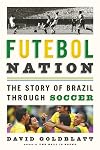
Brazil has had a mixed history where football (soccer) is concerned. The sport is interconnected with politics, music, art, literature and most aspects of social life. The development (and export) of wildly talented players and success on the pitch has been continually marred by mismanagement, greed and corruption. Players, teams and entire leagues have been manipulated by owners, politicians and the military.
This is not a sports book. There are no descriptions of matches, beautiful plays or show more successful seasons. It is a history of how football has affected life in Brazil, and vice versa. Though he shows a glimmer of hope that the sport can transcend the problems foisted on it, David Goldblatt shows how “Brazilian football has partially been a conduit for the mental and emotional pathologies of a still brutalized society.” show less
This is not a sports book. There are no descriptions of matches, beautiful plays or show more successful seasons. It is a history of how football has affected life in Brazil, and vice versa. Though he shows a glimmer of hope that the sport can transcend the problems foisted on it, David Goldblatt shows how “Brazilian football has partially been a conduit for the mental and emotional pathologies of a still brutalized society.” show less
I received a free audiobook copy of The Games through the Library Things Early Reviewers program.
Goldblatt's history of the modern Olympic Games from 1896 to the present is a top-down overview of the International Olympic Committee and organizing committees more than the stories of participants in the games and particular events that I had hoped for. Nevertheless, it's an interesting look at general trends and growth of the Olympics. For example, in the early 20th century the Olympics were show more more of a sideshow to World's Fairs (Paris, St. Louis, London) held over several months rather than discrete sporting events. Yet, the Intercalated Games of 1906 in Athens, which were inline with the Olympic movement's founder Pierre de Coubertin's vision of a quasi-religious sporting ceremony, yet Coubertin refused to attend. The Olympics came into their own in the 1920s and Los Angeles and Berlin used the games to make major vision statements for the future. After some quieter, austere post-war games, Rome, Tokyo, and Munich all used the Olympics to reintroduce their countries to the world, while Mexico City and Montreal attempted to introduce themselves to the world stage. The Lake Placid and Moscow games are the clearest examples of how the Olympics being outside politics was never true. The Los Angeles and Barcelona games showed that the Olympics could make a lot of people a lot of money, but Atlanta, Beijing, Sochi, and Rio showed that the Olympics makes money through the most exploitative and neoliberal practices possible.
Goldblatt's narrative makes it clear that whatever lofty goals the Olympic movement professes the contemporary games fail to live up to them, and that this is pretty consistent with the Olympics's history. Whatever joys the Olympics bring, it does more harm than good. show less
Goldblatt's history of the modern Olympic Games from 1896 to the present is a top-down overview of the International Olympic Committee and organizing committees more than the stories of participants in the games and particular events that I had hoped for. Nevertheless, it's an interesting look at general trends and growth of the Olympics. For example, in the early 20th century the Olympics were show more more of a sideshow to World's Fairs (Paris, St. Louis, London) held over several months rather than discrete sporting events. Yet, the Intercalated Games of 1906 in Athens, which were inline with the Olympic movement's founder Pierre de Coubertin's vision of a quasi-religious sporting ceremony, yet Coubertin refused to attend. The Olympics came into their own in the 1920s and Los Angeles and Berlin used the games to make major vision statements for the future. After some quieter, austere post-war games, Rome, Tokyo, and Munich all used the Olympics to reintroduce their countries to the world, while Mexico City and Montreal attempted to introduce themselves to the world stage. The Lake Placid and Moscow games are the clearest examples of how the Olympics being outside politics was never true. The Los Angeles and Barcelona games showed that the Olympics could make a lot of people a lot of money, but Atlanta, Beijing, Sochi, and Rio showed that the Olympics makes money through the most exploitative and neoliberal practices possible.
Goldblatt's narrative makes it clear that whatever lofty goals the Olympic movement professes the contemporary games fail to live up to them, and that this is pretty consistent with the Olympics's history. Whatever joys the Olympics bring, it does more harm than good. show less
 This review was written for LibraryThing Early Reviewers.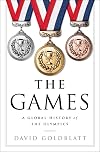
The beginning of the book, which deals with how the modern Olympic movement started, was interesting and revealed mostly unknown information about the motivations to revive the Olympics. Many of original Olympic ideals and politics were not pretty. As the story approaches the contemporary Games, the unpleasant truths grow until the end of the book reads more as an expose on Olympic politics than a history of the Games. While readers more interested in history and individual stories of the show more Olympics will have to adjust their expectations of the title, the book is an interesting, if rather disheartening, read. show less
Lists
Awards


You May Also Like


Associated Authors
Statistics
- Works
- 14
- Members
- 1,139
- Popularity
- #22,541
- Rating
- 3.9
- Reviews
- 31
- ISBNs
- 157
- Languages
- 8
- Favorited
- 1
