On This Page
Description
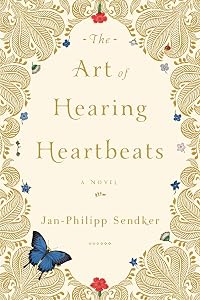
When a successful New York lawyer suddenly disappears without a trace, neither his wife nor his daughter Julia has any idea where he might be--until they find a love letter he wrote many years ago to a Burmese woman they have never heard of. Intent on solving the mystery and coming to terms with her father's past, Julia decides to travel to the village where the woman lived. There she uncovers a tale of unimaginable hardship, resilience, and passion that will reaffirm the listener's belief show more in the power of love to move mountains. show lessTags
Recommendations




















Member Reviews
“We see only what we already know. We project our own capacities—for good as well as evil—onto the other person. Then we acknowledge as love primarily those things that correspond to our own image thereof. We wish to be loved as we ourselves would love. Any other way makes us uncomfortable. We respond with doubt and suspicion. We misinterpret the signs. We do not understand the language. We accuse. We assert that the other person does not love us. But perhaps he merely loves us in some idiosyncratic way that we fail to recognize.”
This is one of the few books I have read set in Myanmar (back when it was called Burma). It opens with Julia, a New York woman, searching for her father, Tin Win, who had abandoned her family. She show more travels to Myanmar and stays with a man, U Ba, who knows her father’s story.
This is a classic love story between two young people separated by circumstances, family interference, and distance. Both Tin Win and Mi Mi have a disability, which initially brings them together and enables love to blossom. Tin Win develops a condition with his eyes, such that he becomes blind, and Mi Mi is born with a defect to her feet. The title comes from Tin Win’s ability to distinguish different heartbeats, since his hearing has become more acute. It is beautifully told, with vivid images of the landscape, ways of life, and culture of Myanmar.
It reads almost like a fable. It is a story of the many facets of love and of children learning to accept that their parents led eventful lives before they were born. It evokes a quiet sense of dignity and patience, which are important to the main characters, and integral to the Buddhist spirituality, which plays a key role in the narrative. It is a moving story about loving and being loved. show less
This is one of the few books I have read set in Myanmar (back when it was called Burma). It opens with Julia, a New York woman, searching for her father, Tin Win, who had abandoned her family. She show more travels to Myanmar and stays with a man, U Ba, who knows her father’s story.
This is a classic love story between two young people separated by circumstances, family interference, and distance. Both Tin Win and Mi Mi have a disability, which initially brings them together and enables love to blossom. Tin Win develops a condition with his eyes, such that he becomes blind, and Mi Mi is born with a defect to her feet. The title comes from Tin Win’s ability to distinguish different heartbeats, since his hearing has become more acute. It is beautifully told, with vivid images of the landscape, ways of life, and culture of Myanmar.
It reads almost like a fable. It is a story of the many facets of love and of children learning to accept that their parents led eventful lives before they were born. It evokes a quiet sense of dignity and patience, which are important to the main characters, and integral to the Buddhist spirituality, which plays a key role in the narrative. It is a moving story about loving and being loved. show less
Four years after her father's sudden disappearance, Julia travels to Burma on a quest to find him and discover what happened: why would he abandon her and her brother and her mother for a past which he never divulged? With only an address to begin her search in the mountain village of Kilaw, she runs into an old man named U Ba who knows her without having met her and offers to tell her the story of her father.
This story is, above all, about the transcendent and transformative power of love. The story of Julia's father, Tin Win, takes on an almost ethereal quality right from the start. Julia starts to realize how little she really knew him and starts to see him more as a person and less as a child looking up to an unknowable parent. "Do show more children want to know their parents as independent individuals? Can we see them as they were before we came into the world?" she wonders. How much can we know or love others? How much do we empathize, or how much misunderstand? The lovely story of The Art of Hearing Heartbeats explores and celebrates the human capacity to love, the most abiding force in the world. show less
This story is, above all, about the transcendent and transformative power of love. The story of Julia's father, Tin Win, takes on an almost ethereal quality right from the start. Julia starts to realize how little she really knew him and starts to see him more as a person and less as a child looking up to an unknowable parent. "Do show more children want to know their parents as independent individuals? Can we see them as they were before we came into the world?" she wonders. How much can we know or love others? How much do we empathize, or how much misunderstand? The lovely story of The Art of Hearing Heartbeats explores and celebrates the human capacity to love, the most abiding force in the world. show less
“We see only what we already know. We project our own capacities—for good as well as evil—onto the other person. Then we acknowledge as love primarily those things that correspond to our own image thereof. We wish to be loved as we ourselves would love. Any other way makes us uncomfortable. We respond with doubt and suspicion. We misinterpret the signs. We do not understand the language. We accuse. We assert that the other person does not love us. But perhaps he merely loves us in some idiosyncratic way that we fail to recognize.”
This is one of the few books I have read set in Myanmar (back when it was called Burma). It opens with Julia, a New York woman, searching for her father, Tin Win, who had abandoned her family. She show more travels to Myanmar and stays with a man, U Ba, who knows her father’s story.
This is a classic love story between two young people separated by circumstances, family interference, and distance. Both Tin Win and Mi Mi have a disability, which initially brings them together and enables love to blossom. Tin Win develops a condition with his eyes, such that he becomes blind, and Mi Mi is born with a defect to her feet. The title comes from Tin Win’s ability to distinguish different heartbeats, since his hearing has become more acute. It is beautifully told, with vivid images of the landscape, ways of life, and culture of Myanmar.
It reads almost like a fable. It is a story of the many facets of love and of children learning to accept that their parents led eventful lives before they were born. It evokes a quiet sense of dignity and patience, which are important to the main characters, and integral to the Buddhist spirituality, which plays a key role in the narrative. It is a moving story about loving and being loved. show less
This is one of the few books I have read set in Myanmar (back when it was called Burma). It opens with Julia, a New York woman, searching for her father, Tin Win, who had abandoned her family. She show more travels to Myanmar and stays with a man, U Ba, who knows her father’s story.
This is a classic love story between two young people separated by circumstances, family interference, and distance. Both Tin Win and Mi Mi have a disability, which initially brings them together and enables love to blossom. Tin Win develops a condition with his eyes, such that he becomes blind, and Mi Mi is born with a defect to her feet. The title comes from Tin Win’s ability to distinguish different heartbeats, since his hearing has become more acute. It is beautifully told, with vivid images of the landscape, ways of life, and culture of Myanmar.
It reads almost like a fable. It is a story of the many facets of love and of children learning to accept that their parents led eventful lives before they were born. It evokes a quiet sense of dignity and patience, which are important to the main characters, and integral to the Buddhist spirituality, which plays a key role in the narrative. It is a moving story about loving and being loved. show less
The concept of The Art of Hearing Heartbeats is fascinating. In this novel a successful American woman drops everything and heads to Burma to discover what happened to her father, who had disappeared years earlier when she was a young girl. This plot provides a chance for the author to make a comparison between a culture based on acquiring material goods and one based more on looking within oneself. Jan-Philipp Sendker does this well, although there are times he slips into cliches and, worse yet, into statements of moral fact that don't stand up to scrutiny. I didn't like the way Julia was told that she shouldn't doubt her father's love, since he was her father. Perhaps fathers loving their daughters is the natural state of things, but show more it is by no means universal. I also didn't like Sendker's one dimensional portrayal of Tin Win's uncle. But the part that disappointed me the most has to do with two separations. The Art of Hearing Heartbeats is a story within a story and each plot has a separation at its core. Julia's reaction to the similarity of these events didn't make any sense at all.
What I liked the most about this novel was the picture of love found through two people depending on each other or, perhaps more accurately, each person compensating for the abilities lacking in the other. There can be no single definition of love, but this is certainly an interesting one. This is also one of the most quotable books I've ever read. Perhaps this is because Sendker's purpose seems to be to teach rather than simply to tell a story. Here are a couple of examples:
We wish to be loved as we ourselves would love. Any other way makes as uncomfortable. We respond with doubt and suspicion. We misinterpret the signs. We do not understand the language. We accuse. We assert that the other person does not love us. But perhaps he merely loves us in some idiosyncratic way that we fail to recognize.
The true essence of things is invisible to the eyes...Our sensory organs love to lead us astray, and eyes are the most deceptive of all. We rely too heavily on them. We believe that we see the world around us, and yet it is only the surface that we perceive. We must learn to divine the true nature of things, their substance, and the eyes are rather a hindrance than a help in that regard. They distract us. We love to be dazzled. A person who relies too heavily on his eyes neglects his other senses--and I mean more than his hearing or sense of smell. I'm talking about the organ within us for which we have no name. Let us call it the compass of the heart.
Steve Lindahl – author of Motherless Soul and White Horse Regressions show less
What I liked the most about this novel was the picture of love found through two people depending on each other or, perhaps more accurately, each person compensating for the abilities lacking in the other. There can be no single definition of love, but this is certainly an interesting one. This is also one of the most quotable books I've ever read. Perhaps this is because Sendker's purpose seems to be to teach rather than simply to tell a story. Here are a couple of examples:
We wish to be loved as we ourselves would love. Any other way makes as uncomfortable. We respond with doubt and suspicion. We misinterpret the signs. We do not understand the language. We accuse. We assert that the other person does not love us. But perhaps he merely loves us in some idiosyncratic way that we fail to recognize.
The true essence of things is invisible to the eyes...Our sensory organs love to lead us astray, and eyes are the most deceptive of all. We rely too heavily on them. We believe that we see the world around us, and yet it is only the surface that we perceive. We must learn to divine the true nature of things, their substance, and the eyes are rather a hindrance than a help in that regard. They distract us. We love to be dazzled. A person who relies too heavily on his eyes neglects his other senses--and I mean more than his hearing or sense of smell. I'm talking about the organ within us for which we have no name. Let us call it the compass of the heart.
Steve Lindahl – author of Motherless Soul and White Horse Regressions show less
Julia's father, a successful New York attorney, disappeared four years ago. She obtains, from her mother, an old found love letter written by him to a Burmese woman named Mi Mi. Julia decides to follow the trail to learn what happened to her father and lands in the mountain village of Kalaw where she meets U Ba, who claims to know her father. U Ba unfolds for Julia the tale of her father's first 20 years, of which he was never willing to speak.
This is a love story and while that story is engaging, it fails to move me. When I was in graduate school, training to be a psychotherapist, a supervisor observed that I tended to ask insightful, thought-provoking questions -- and immediately dilute their power by explaining my point or asking show more additional questions. "Ask your excellent question and then get out of the client's way," she said. Sendker could well heed similar advice. Metaphor and allegory are most powerful when left to speak for themselves. Explained and elaborated upon, they become mere truisms, resulting in shallow cognitive consideration rather than emotional transformation. Sendker's story has the possibility of emotional impact. But by the end of this novel, when Julia "learns" critical lessons about the nature of love -- most notably, that one can love more than one other without diminishing the fundamental trueness of both loves -- I wasn't buying it. Julia's transformation felt shallow and intellectual to me. She recognizes that her father's abandonment of her and her mother to seek out the long lost love of his youth (insert eye-roll here) does not necessarily mean that he did not love her, but I don't believe she is changed by that recognition. Certainly I, the reader, was not. show less
This is a love story and while that story is engaging, it fails to move me. When I was in graduate school, training to be a psychotherapist, a supervisor observed that I tended to ask insightful, thought-provoking questions -- and immediately dilute their power by explaining my point or asking show more additional questions. "Ask your excellent question and then get out of the client's way," she said. Sendker could well heed similar advice. Metaphor and allegory are most powerful when left to speak for themselves. Explained and elaborated upon, they become mere truisms, resulting in shallow cognitive consideration rather than emotional transformation. Sendker's story has the possibility of emotional impact. But by the end of this novel, when Julia "learns" critical lessons about the nature of love -- most notably, that one can love more than one other without diminishing the fundamental trueness of both loves -- I wasn't buying it. Julia's transformation felt shallow and intellectual to me. She recognizes that her father's abandonment of her and her mother to seek out the long lost love of his youth (insert eye-roll here) does not necessarily mean that he did not love her, but I don't believe she is changed by that recognition. Certainly I, the reader, was not. show less
The Art of Hearing Heartbeats is the most beautiful love story I have ever read. To quote from the first chapter, "I am not referring to those outbursts of passion that drive us to do and say things we will later regret, that delude us into thinking we cannot live without a certain person, that set us quivering with anxiety at the mere possibility we might ever lose that person--a feeling that impoverishes rather than enriches us because we long to possess what we cannot, to hold on to what we cannot." This quote sets the stage for a rare unconditional love that begins between two disabled Burmese children.
The author nearly convinces us that blindness is an asset since the true essence of things are invisible to the eyes. The boy show more begins to hear the heartbeats of the smallest creatures and comes to understand people's health and intentions and veracity through their heartbeats.
He carries the young girl who cannot walk and who will become his lover on his back because she has no use of her legs. She acts as his directional signals and helps him turn towards life by describing everyday events. He helps her discover the unseen life by describing everything he hears down to insects' heartbeats.
Intervening events occur that separate the two temporally and geographically. But the beautiful part of the story is the love the two have for each other is never jealous or clutching or unforgiving. It is pure and untouched by time, other people, anxiety, yearning or geography. The understanding that this kind of love exists is inspiring. This was a truly beautiful book even though the lovers come to recognize suffering and happiness are inextricably intertwined. show less
The author nearly convinces us that blindness is an asset since the true essence of things are invisible to the eyes. The boy show more begins to hear the heartbeats of the smallest creatures and comes to understand people's health and intentions and veracity through their heartbeats.
He carries the young girl who cannot walk and who will become his lover on his back because she has no use of her legs. She acts as his directional signals and helps him turn towards life by describing everyday events. He helps her discover the unseen life by describing everything he hears down to insects' heartbeats.
Intervening events occur that separate the two temporally and geographically. But the beautiful part of the story is the love the two have for each other is never jealous or clutching or unforgiving. It is pure and untouched by time, other people, anxiety, yearning or geography. The understanding that this kind of love exists is inspiring. This was a truly beautiful book even though the lovers come to recognize suffering and happiness are inextricably intertwined. show less
The heart and the mind do not see in equal measure. And sometimes those of us with reasonably decent eye sight miss the things that the heart sees. Jan-Philipp Sendker explores this idea and the enduring love that the heart can find when it is allowed to see unfettered by our other senses in his masterfully translated novel, The Art of Hearing Heartbeats.
Julia Win travels to her father's village in Thailand searching for him with the only clue she has to his disappearance: an unmailed love letter addressed to a woman named Mi Mi in Tin Win's village. Tin Win is a high powered, successful Wall Street lawyer when he disappears the day after Julia's law school graduation. Several years go by without any word of him but when Julia's mother show more sends her a box of her father's things, she finds the letter and sets out on her quest to discover what happened to her father.
When she arrives Kalaw and asks about her father, she finds a man named U Ba who says he has been waiting for her for years. Leery of trusting this stranger, he is the only person who seems to have any information for her at all so she keeps going back to see him, drawn, almost against her will, by the story he's telling her and which he claims her father told him. U Ba tells her of her father as a boy and a young man, sharing things she never knew before and she is uncertain as to whether this tale of her father, his childhood blindness, his meeting with the "crippled" Mi Mi, and their deep and abiding love is true or simply a fairy tale created for a tourist.
As Julia listens to the immensely touching story of the blind boy and the beautiful girl whose legs won't support her so she must scurry on all fours, she learns about her father's ability to hear the smallest of noises, to locate a person by their heartbeat, to see without seeing. She listens carefully to the special and unusual love story between Tin Win and Mi Mi for clues about the man who would become her father. And she also learns to listen to more than just the words of the tale, to listen with her own heart.
Sendker has woven both the western and the eastern sensibilities together in this narrative by using both American born Julia and her Burmese born father. He's captured Julia's discomfort with what she doesn't understand, the fantastical and mystical of her father's childhood. Sendker has offered up a lovely tribute to the way that true love recognizes its perfect match and endures despite all. The story of Tin Win and Mi Mi is delicately done and sweet but there's not much that explains Tin Win's decades in America or his feelings for his family there and that lack is inexplicable, or perhaps it just would have made the plot and the character of Tin Win too complicated but it feels missing. Julia's anger and hurt at her father's choice to disappear is understandable but over all she's not a particularly well-fleshed out character; she seems to be simply the reason for telling Tin Win's story. In another book this might be a problem but in this one, the rest of the story makes this small weakness immaterial. The end was a bit predictable but the journey to get there was so engaging that this too didn't matter. The idea of enduring love that survives no matter what curve balls life throws, spanning years, continents, and cultures is definitely appealing and readers will be hard pressed to put this one down until they've turned the last page. show less
Julia Win travels to her father's village in Thailand searching for him with the only clue she has to his disappearance: an unmailed love letter addressed to a woman named Mi Mi in Tin Win's village. Tin Win is a high powered, successful Wall Street lawyer when he disappears the day after Julia's law school graduation. Several years go by without any word of him but when Julia's mother show more sends her a box of her father's things, she finds the letter and sets out on her quest to discover what happened to her father.
When she arrives Kalaw and asks about her father, she finds a man named U Ba who says he has been waiting for her for years. Leery of trusting this stranger, he is the only person who seems to have any information for her at all so she keeps going back to see him, drawn, almost against her will, by the story he's telling her and which he claims her father told him. U Ba tells her of her father as a boy and a young man, sharing things she never knew before and she is uncertain as to whether this tale of her father, his childhood blindness, his meeting with the "crippled" Mi Mi, and their deep and abiding love is true or simply a fairy tale created for a tourist.
As Julia listens to the immensely touching story of the blind boy and the beautiful girl whose legs won't support her so she must scurry on all fours, she learns about her father's ability to hear the smallest of noises, to locate a person by their heartbeat, to see without seeing. She listens carefully to the special and unusual love story between Tin Win and Mi Mi for clues about the man who would become her father. And she also learns to listen to more than just the words of the tale, to listen with her own heart.
Sendker has woven both the western and the eastern sensibilities together in this narrative by using both American born Julia and her Burmese born father. He's captured Julia's discomfort with what she doesn't understand, the fantastical and mystical of her father's childhood. Sendker has offered up a lovely tribute to the way that true love recognizes its perfect match and endures despite all. The story of Tin Win and Mi Mi is delicately done and sweet but there's not much that explains Tin Win's decades in America or his feelings for his family there and that lack is inexplicable, or perhaps it just would have made the plot and the character of Tin Win too complicated but it feels missing. Julia's anger and hurt at her father's choice to disappear is understandable but over all she's not a particularly well-fleshed out character; she seems to be simply the reason for telling Tin Win's story. In another book this might be a problem but in this one, the rest of the story makes this small weakness immaterial. The end was a bit predictable but the journey to get there was so engaging that this too didn't matter. The idea of enduring love that survives no matter what curve balls life throws, spanning years, continents, and cultures is definitely appealing and readers will be hard pressed to put this one down until they've turned the last page. show less
Members
- Recently Added By
Lists

Top Five Books of 2013
1,562 works; 721 members

EU Fiction: 1950-2022
223 works; 70 members

Top Five Books of 2017
757 works; 231 members
Author Information

23 Works 2,607 Members
Some Editions
Awards and Honors
Series

Belongs to Publisher Series
Goldmann (45726)
Work Relationships
Has the (non-series) sequel
Common Knowledge
- Canonical title*
- L'arte di ascoltare i battiti del cuore
- Original title
- Das Herzenhören
- Alternate titles
- The Art of Hearing Heartbeats
- Original publication date
- 2002
- People/Characters
- Tin Win; Mi Mi; Yadana; Julia Win; U Ba; U Saw
- Important places
- Burma; Rangoon, Burma; Kalaw, Burma
- Dedication
- For Anna, Florentine, and Jonathon
And in memory of Vivian Wong (1969-2000) - First words
- The old man's eyes struck me first.
- Last words
- (Click to show. Warning: May contain spoilers.)I wanted to say something, but he put his finger to his lips, signaling me to keep silent.
- Original language
- English
*Some information comes from Common Knowledge in other languages. Click "Edit" for more information.
Classifications
Statistics
- Members
- 1,934
- Popularity
- 11,029
- Reviews
- 118
- Rating
- (3.84)
- Languages
- 14 — Danish, Dutch, English, Finnish, French, German, Hebrew, Italian, Norwegian (Bokmål), Portuguese, Romanian, Spanish, Swedish, Turkish
- Media
- Paper, Audiobook, Ebook
- ISBNs
- 59
- ASINs
- 11