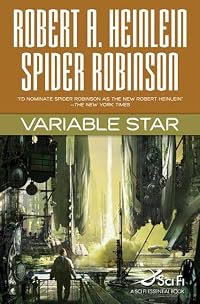
Variable Star
by Robert A. Heinlein, Spider Robinson (Author)
On This Page
Description
Upon his death in 1988, Robert A. Heinlein left a legacy of novels and short stories that almost single-handedly defined modern science fiction. But one of Heinlein's masterpieces was never finished. In 1955, he began work on Variable Star, a powerful and passionate tale of two young lovers driven apart by pride, power, and the vastness of interstellar time and space. Then he set it aside to focus on other novellas.The detailed outline and notes he created for this project lay forgotten for show more decades, only to be rediscovered almost a half-century later. Now the Heinlein estate has authorized award-winning author Spider Robinson to expand that outline into a full-length novel. The result is vintage Heinlein, faithful in style and spirit to the Grand Master's original vision.
When Joel Johnston first met Jinny Hamilton, it seemed like a dream come true. And when she finally agreed to marry him, he felt like the luckiest man in the universe. There was just one small problem—he was broke. His only goal in life was to become a composer, and he knew it would take years before he was earning enough to support a family.
But Jinny wasn't willing to wait, and when Joel asked her what they were going to do for money, she gave him a most unexpected answer. She told him that her name wasn't really Jinny Hamilton—it was Jinny Conrad, and she was the granddaughter of Richard Conrad, the wealthiest man in the solar system. Now that she was sure Joel loved her for more than just her wealth, she revealed her family's plans for him: he would be groomed for a place in the vast Conrad empire and sire a dynasty to carry on the family business. Most men would have jumped at the opportunity. But Joel Johnston wasn't most men. To Jinny's surprise, and even his own, he turned down her generous offer and then set off on the mother of all benders—and woke up on a colony ship heading out into space. There he found himself torn between regret over his rash decision and his determination to forget Jinny and make a life for himself among the stars. He was on his way to succeeding when his plans—and the plans of billions of others—were shattered by a cosmic cataclysm so devastating it would take all of humanity's strength and ingenuity just to survive.
. show less
Tags
Recommendations
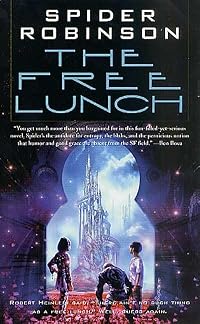
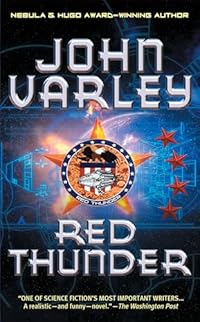

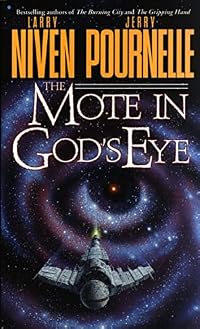
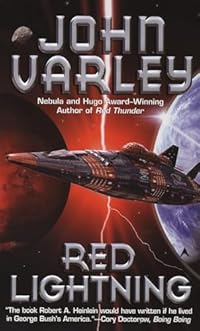








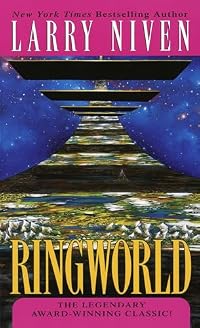
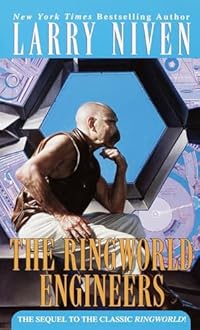
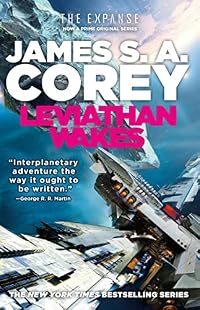
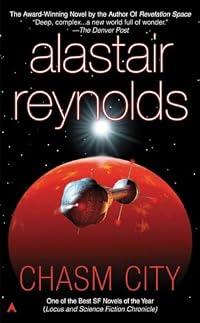


Member Recommendations

Member Reviews
"If you happen to be one of the fretful minority who can do creative work, never force an idea; you'll abort it if you do. Be patient and you'll give birth to it when the time is ripe. Learn to wait."
Robert A. Heinlein
"Finishing" a book left by a dead author almost never works out. While Variable Star was written by Spider Robinson from notes left by the science-fiction superstar, it comes across as more of an homage than a bastard novel.
Joel Johnston is a college student on Earth, hailing from the farms of Ganeymede. He finds himself running from the solar system, leaving behind a failed romance and everything he ever knew, aboard the starship Sheffield. Joel meets many new people, and has many lows and friends. The ship has crises show more aplenty, and I won't ruin any of the surprises. The Sheffield, and its destination Brasil Novo, are world-building at its grandest.
The stock Heinlein situations and societies have been deftly updated to reflect current technologies and cosmologies as we now understand them. The science fails to overwhelm, but is present in abundance when needed, with pleasant, helpful air. The reader almost doesn't notice that the author is more lost in the science than the page-turner.
Joel, the farmer Zog, Dr. Amy, Evelyn Conrad, Solomon Short, -- the folks inhabiting the world or Variable Star feel like they're a few years out of a concise Heinlein Juvie novel. Joel is a sympathetic man who makes mistakes. I was rooting for him and the 500 folks on the Sheffield all the way through.
Variable Star is great fun, a thoughtful novel, and while it doesn't feel like Mr. Heinlein was at the author's elbow, his influence is in the broad strokes. (Even the ending, maybe a touch predictable, wasn't on the original outline, but to Mr. Robinson's credit, feels like something from a Future History novel.)
A very good, page-turnin' stand-alone novel, drawing from a rich tapestry. Highly recommended. show less
Robert A. Heinlein
"Finishing" a book left by a dead author almost never works out. While Variable Star was written by Spider Robinson from notes left by the science-fiction superstar, it comes across as more of an homage than a bastard novel.
Joel Johnston is a college student on Earth, hailing from the farms of Ganeymede. He finds himself running from the solar system, leaving behind a failed romance and everything he ever knew, aboard the starship Sheffield. Joel meets many new people, and has many lows and friends. The ship has crises show more aplenty, and I won't ruin any of the surprises. The Sheffield, and its destination Brasil Novo, are world-building at its grandest.
The stock Heinlein situations and societies have been deftly updated to reflect current technologies and cosmologies as we now understand them. The science fails to overwhelm, but is present in abundance when needed, with pleasant, helpful air. The reader almost doesn't notice that the author is more lost in the science than the page-turner.
Joel, the farmer Zog, Dr. Amy, Evelyn Conrad, Solomon Short, -- the folks inhabiting the world or Variable Star feel like they're a few years out of a concise Heinlein Juvie novel. Joel is a sympathetic man who makes mistakes. I was rooting for him and the 500 folks on the Sheffield all the way through.
Variable Star is great fun, a thoughtful novel, and while it doesn't feel like Mr. Heinlein was at the author's elbow, his influence is in the broad strokes. (Even the ending, maybe a touch predictable, wasn't on the original outline, but to Mr. Robinson's credit, feels like something from a Future History novel.)
A very good, page-turnin' stand-alone novel, drawing from a rich tapestry. Highly recommended. show less
Robert Heinlein was my introduction to science fiction, first with his juveniles and then Stranger in a Strange Land which came out when I was in highschool cemented my love of the genre. And when I first found Spider Robinson's work, I was equally impressed with his writing. I had heard that Spider had finished a book that Heinlein had started before his death and I always meant to buy a copy but it was hard to find. I was delighted to see that my library had a copy when I went looking earlier this year. I really enjoyed reading this co-production which I think is probably more Robinson than Heinlein (which is just fine with me).
Joel Johnston, who was the son of a Nobel prize winning physicist, is a musician. He plays all four ranges show more of saxophone and he composes music as well. His dream is to go to college to study music, work as a composer and marry his beautiful girlfriend, Jinny Hamilton. When the book opens he and Jinny are dancing at their junior college prom in Vancouver. They dance beautifully together which is all the more impressive since Joel grew up in the lower gravity of Ganymede. After they leave the dance, Jinny suggests they get married right away. Joel would like to but he has no money since he's an orphan with no assets. Jinny then explains that she is really Jinny Conrad, granddaughter of one of the richest men on earth. She takes him to a remote location to meet her grandfather and father and they propose that Joel marry Jinny, become a Conrad, study to take a significant role in the Conrad empire with a view to running the empire one day. Joel, with the help of Jinny's younger cousin, Evelyn, flees from the Conrad compound. After considerable alcohol consumption, Joel applies to join the interstellar ship Sheffield which is taking 500 settlers to a planet called Brazil Novo (soon shortened to Bravo), a trip that will take 20 years. That's 20 years in the life of the settlers but far longer on Earth. Joel and Jinny have one more conversation before the ship leaves in which Jinny begs him to stay and Joel asks Jinny to join him. Neither of those outcomes happen and Joel is on his way to the stars. Many shipboard adventures ensue but the most significant event happens outside the ship when Earth and the entire Solar System is destroyed, meaning the people aboard the Sheffield and other extrasol system planets that have been settled are all that remains of humanity. To make matters worse, the blast that destroyed the solar system is travelling through space and will destroy life on all other planets eventually. The Sheffield will have only a few years after landing to find a place on Bravo to hide far enough underground to survive. Many on board find this just too hopeless and commit suicide. Joel, of course, is not one but the smooth functioning of the ship is compromised. Until they are approached by what could be their saviour...or could it be their destroyer?
It's sad that Spider Robinson is no longer writing. The deaths of his wife and his daughter, coupled with his own health issues, has prevented him from finishing anything since 2008. Maybe there's some younger sf writer out there that could finish off some of his novels??? show less
Joel Johnston, who was the son of a Nobel prize winning physicist, is a musician. He plays all four ranges show more of saxophone and he composes music as well. His dream is to go to college to study music, work as a composer and marry his beautiful girlfriend, Jinny Hamilton. When the book opens he and Jinny are dancing at their junior college prom in Vancouver. They dance beautifully together which is all the more impressive since Joel grew up in the lower gravity of Ganymede. After they leave the dance, Jinny suggests they get married right away. Joel would like to but he has no money since he's an orphan with no assets. Jinny then explains that she is really Jinny Conrad, granddaughter of one of the richest men on earth. She takes him to a remote location to meet her grandfather and father and they propose that Joel marry Jinny, become a Conrad, study to take a significant role in the Conrad empire with a view to running the empire one day. Joel, with the help of Jinny's younger cousin, Evelyn, flees from the Conrad compound. After considerable alcohol consumption, Joel applies to join the interstellar ship Sheffield which is taking 500 settlers to a planet called Brazil Novo (soon shortened to Bravo), a trip that will take 20 years. That's 20 years in the life of the settlers but far longer on Earth. Joel and Jinny have one more conversation before the ship leaves in which Jinny begs him to stay and Joel asks Jinny to join him. Neither of those outcomes happen and Joel is on his way to the stars. Many shipboard adventures ensue but the most significant event happens outside the ship when Earth and the entire Solar System is destroyed, meaning the people aboard the Sheffield and other extrasol system planets that have been settled are all that remains of humanity. To make matters worse, the blast that destroyed the solar system is travelling through space and will destroy life on all other planets eventually. The Sheffield will have only a few years after landing to find a place on Bravo to hide far enough underground to survive. Many on board find this just too hopeless and commit suicide. Joel, of course, is not one but the smooth functioning of the ship is compromised. Until they are approached by what could be their saviour...or could it be their destroyer?
It's sad that Spider Robinson is no longer writing. The deaths of his wife and his daughter, coupled with his own health issues, has prevented him from finishing anything since 2008. Maybe there's some younger sf writer out there that could finish off some of his novels??? show less
http://www.strangehorizons.com/reviews/2007/02/variable_star_b.shtml
I don't need to explain who Robert A. Heinlein was. If you need reminding about Spider Robinson, he won three Hugo awards for short fiction in the late 1970s and early '80s, and has since settled down to a series of humorous SF stories set in and around Callahan's Cross-Time Saloon. In Variable Star, Robinson (who was described as "the new Robert Heinlein" by a reviewer back in 1982) has written a novel based on seven pages of an incomplete typescript (and fourteen hand-written index cards) compiled by Heinlein in 1955. It has been published just in time for the centenary of Heinlein's birth this coming July.
This is, frankly, not a great book. The warning signals are show more all there in the hype on the dust jacket (and more of the same was helpfully supplied by the publishers to this reviewer), which encourages us to admire the fact that this book has been written at all rather than to consider whether it has been written well.
In particular, the opening chapters are simply atrocious. (You don't have to take my word for it; they are online here.) Our narrator, a young and impoverished genius, proposes marriage to his girlfriend at a student dance, on the grounds that they want to have babies; but he is unwilling to actually consummate their union until his musical career takes off, on the grounds that they have insufficient economic means. Said girlfriend, unhappy at the prospect of waiting years for the wedding, reveals that conveniently she is the heiress of the richest man in the solar system, so economics need not be considered an issue (nor should her failure to reveal this information to her boyfriend previously). The dialogue is stilted and embarrassing — actually worse, if you can imagine it, than the opening chapters of Heinlein's 1980 stinker The Number of the Beast — and the social attitudes displayed by the two protagonists would surely have been barely believable in the 1950s, let alone now. The first chapter, for example, features this excruciating exchange:
"What is marriage for?"
The car told her she was heading the wrong way; she reversed direction and came back past me toward its voice and pulsing beacon. "Babies, obviously."
I followed her. "Bingo. Marriage is for making jolly babies, raising them up into successful predators, and then admiring them until they're old enough to reward you with grandchildren to spoil."
I suspect that many readers who are not already fans of one or both authors will put the book down in despair at some that point in the first fifty pages, and may even ask for their money back.
It does improve. Our hero, rejecting his former love and the glory promised to him by her manipulative family, boards a starship setting off to found a new colony light years away, and most of the rest of the book becomes a bildungsroman as he learns important life lessons and copes with the various necessary disasters that strike the ship and its crew. It is, in fact, reminiscent of several of Heinlein's lesser juveniles, except that there is more sex. (But not a lot more.) Then, unfortunately, we have an abrupt deus ex machina ending, and our hero lives happily ever after having saved humanity.
Heinlein fans will find some crumbs of comfort in spotting the many links and references placing Variable Star in one version of his Future History (though there is an event about three-quarters of the way through that firmly detaches it from the main sequence). There are amusing references to other SF writers, mostly involving their insertion as minor characters (one C. Platt is brought in only to be killed off immediately), and the starship itself is named the Charles Sheffield. And the Future History is partially retconned to take account of what has happened in our own world since Heinlein stopped writing about it. In particular, we are told that the Christian fundamentalist regime overthrown by the protagonists of his 1940 story "If This Goes On—" came to power as an inevitable consequence of the current wars in Afghanistan and Iraq. I have to say that I think Robinson is trying too hard here: I am not convinced that Heinlein would have opposed the War on Terror.
James Nicoll has urged us not to criticise Spider Robinson too badly for having written such a bad book, and blames Heinlein's estate for allowing the book to be written in the first place. Some blame must surely also attach to the publishers for putting this book out in the confident expectation that Heinlein's and Robinson's fans will snap it up. But the main responsibility must lie with the author, or rather, authors. Late in 1955, Robert A. Heinlein put the notes for this book away, and never took them out again. Perhaps he had the right idea. show less
I don't need to explain who Robert A. Heinlein was. If you need reminding about Spider Robinson, he won three Hugo awards for short fiction in the late 1970s and early '80s, and has since settled down to a series of humorous SF stories set in and around Callahan's Cross-Time Saloon. In Variable Star, Robinson (who was described as "the new Robert Heinlein" by a reviewer back in 1982) has written a novel based on seven pages of an incomplete typescript (and fourteen hand-written index cards) compiled by Heinlein in 1955. It has been published just in time for the centenary of Heinlein's birth this coming July.
This is, frankly, not a great book. The warning signals are show more all there in the hype on the dust jacket (and more of the same was helpfully supplied by the publishers to this reviewer), which encourages us to admire the fact that this book has been written at all rather than to consider whether it has been written well.
In particular, the opening chapters are simply atrocious. (You don't have to take my word for it; they are online here.) Our narrator, a young and impoverished genius, proposes marriage to his girlfriend at a student dance, on the grounds that they want to have babies; but he is unwilling to actually consummate their union until his musical career takes off, on the grounds that they have insufficient economic means. Said girlfriend, unhappy at the prospect of waiting years for the wedding, reveals that conveniently she is the heiress of the richest man in the solar system, so economics need not be considered an issue (nor should her failure to reveal this information to her boyfriend previously). The dialogue is stilted and embarrassing — actually worse, if you can imagine it, than the opening chapters of Heinlein's 1980 stinker The Number of the Beast — and the social attitudes displayed by the two protagonists would surely have been barely believable in the 1950s, let alone now. The first chapter, for example, features this excruciating exchange:
"What is marriage for?"
The car told her she was heading the wrong way; she reversed direction and came back past me toward its voice and pulsing beacon. "Babies, obviously."
I followed her. "Bingo. Marriage is for making jolly babies, raising them up into successful predators, and then admiring them until they're old enough to reward you with grandchildren to spoil."
I suspect that many readers who are not already fans of one or both authors will put the book down in despair at some that point in the first fifty pages, and may even ask for their money back.
It does improve. Our hero, rejecting his former love and the glory promised to him by her manipulative family, boards a starship setting off to found a new colony light years away, and most of the rest of the book becomes a bildungsroman as he learns important life lessons and copes with the various necessary disasters that strike the ship and its crew. It is, in fact, reminiscent of several of Heinlein's lesser juveniles, except that there is more sex. (But not a lot more.) Then, unfortunately, we have an abrupt deus ex machina ending, and our hero lives happily ever after having saved humanity.
Heinlein fans will find some crumbs of comfort in spotting the many links and references placing Variable Star in one version of his Future History (though there is an event about three-quarters of the way through that firmly detaches it from the main sequence). There are amusing references to other SF writers, mostly involving their insertion as minor characters (one C. Platt is brought in only to be killed off immediately), and the starship itself is named the Charles Sheffield. And the Future History is partially retconned to take account of what has happened in our own world since Heinlein stopped writing about it. In particular, we are told that the Christian fundamentalist regime overthrown by the protagonists of his 1940 story "If This Goes On—" came to power as an inevitable consequence of the current wars in Afghanistan and Iraq. I have to say that I think Robinson is trying too hard here: I am not convinced that Heinlein would have opposed the War on Terror.
James Nicoll has urged us not to criticise Spider Robinson too badly for having written such a bad book, and blames Heinlein's estate for allowing the book to be written in the first place. Some blame must surely also attach to the publishers for putting this book out in the confident expectation that Heinlein's and Robinson's fans will snap it up. But the main responsibility must lie with the author, or rather, authors. Late in 1955, Robert A. Heinlein put the notes for this book away, and never took them out again. Perhaps he had the right idea. show less
Don’t believe the cover. This is not a Heinlein novel. It’s a Spider Robinson novel based on an incomplete outline and some notes Heinlein prepared in 1955. It makes for an odd collaboration, but I enjoyed the story. It’s mostly Robinson, though, with a characteristically crude and flawed main character, fond of drink and socially awkward. It includes clichés, snarky asides, and has a first person conversational style that constantly reminds you that this is just a story. Don’t take it seriously. Much of the plot, though, is classic Heinlein. It’s pure science fiction in the original, positive, sense of the term with scientists and spaceships and a spotlight on the importance of free choice and individual human achievement. show more Somehow, the combination works. It’s not the silly, unsophisticated humor of Robinson, and it’s not the serious comment on humanity of Heinlein, but it succeeds in showing mankind progressing despite mistakes and setbacks, which is what I enjoy most in science fiction and which was the predominant theme of the classic stories from the 1950’s. show less
I find it difficult to credit the reviews which lament this novel as somehow not up to Heinlein’s standards, or as some unfortunate hack work seeking to make as buck off the Heinlein name. In fact Variable Star is an excellent novel in its own right, containing one of the most shocking and emotionally wrenching plot developments I’ve ever encountered. (I’m seriously thinking that my childhood experience of the forest fire in Bambi was my first one!) Sure, we’d all like to read some newly-discovered (and completely finished and polished!) Heinlein novel, but if Robinson had not undertaken to create Variable Star, all we’d have is a pile of incomplete notes sitting in some archive somewhere. I imagine that by themselves--with no show more Variable Star in existence to compare them to--they’d be pretty frustrating to read.
From reading William Patterson’s first volume in his Heinlein biography (Learning Curve) I can see that Heinlein himself didn’t have a problem with assigning a story idea to another writer if that seemed appropriate. I think Heinlein would have been extremely pleased to have farmed out this novel idea to Spider Robinson, and been delighted with the result, even if the finished work was not what he initially had had in mind. Above all, Robinson has written this book in exactly the manner Heinlein would have wished: he made it his own work, his own vision, and wrote it exactly as he pleased. The numerous homages to various Heinlein works in this novel aren’t mere worship but skillfully drive the plot forward.
In Robinson’s afterword he describes the moment he knew how to complete the novel, after listening to a 1987 recording of Heinlein musing about the folly of humanity keeping all its eggs in one basket (i.e., staying comfortably on Earth). It’s as if Heinlein unconsciously pointed the way to complete his 1950’s notes for this novel.
I listened to the audio version of the novel but wasn’t aware until the end that it was Spider Robinson narrating it. He’s one of the few authors capable of narrating his own work. Okay, he’s not so great on female voices (unlike Lloyd James, who’s narrated several Heinlein books), but his voice is definitely practiced, well-modulated, and rising to the occasion for every passage.
In retrospect, marketing may have driven the choice of authorship of “Heinlein and Robinson.” A more accurate possibility might have been “A novel by Spider Robinson based on an idea by Robert A. Heinlein.” But somehow, for this novel, I think there ought to be a category between those two.
In any case, Variable Star is an important novel in addition to being an entertaining story.
Michael D. Smith show less
From reading William Patterson’s first volume in his Heinlein biography (Learning Curve) I can see that Heinlein himself didn’t have a problem with assigning a story idea to another writer if that seemed appropriate. I think Heinlein would have been extremely pleased to have farmed out this novel idea to Spider Robinson, and been delighted with the result, even if the finished work was not what he initially had had in mind. Above all, Robinson has written this book in exactly the manner Heinlein would have wished: he made it his own work, his own vision, and wrote it exactly as he pleased. The numerous homages to various Heinlein works in this novel aren’t mere worship but skillfully drive the plot forward.
In Robinson’s afterword he describes the moment he knew how to complete the novel, after listening to a 1987 recording of Heinlein musing about the folly of humanity keeping all its eggs in one basket (i.e., staying comfortably on Earth). It’s as if Heinlein unconsciously pointed the way to complete his 1950’s notes for this novel.
I listened to the audio version of the novel but wasn’t aware until the end that it was Spider Robinson narrating it. He’s one of the few authors capable of narrating his own work. Okay, he’s not so great on female voices (unlike Lloyd James, who’s narrated several Heinlein books), but his voice is definitely practiced, well-modulated, and rising to the occasion for every passage.
In retrospect, marketing may have driven the choice of authorship of “Heinlein and Robinson.” A more accurate possibility might have been “A novel by Spider Robinson based on an idea by Robert A. Heinlein.” But somehow, for this novel, I think there ought to be a category between those two.
In any case, Variable Star is an important novel in addition to being an entertaining story.
Michael D. Smith show less
Heinlein is my all time favorite author, and I fell in love with him by reading old copies of his books from used book stores - copies that lacked an author biography in a time before the Internet. So when I finally got a new copy of a book I couldn't find used, I turned to the back cover hoping to find a way to write a thank you letter to my beloved R.A.H....and instead discovered he had died before I had even begun reading his books. Heartbroken.
So when I say I'm a Heinlein fan and didn't know how to feel about someone else writing a Heinlein novel long after his death, you know what I mean. I hoped so much for new, living Heinlein, but was afraid I'd find a dead thing.
I was very wrong! Spider Robinson brings the spirit of Heinlein show more back to life using an outline Heinlein left behind. Reading Variable Star, I felt like the kid I was when I first read all of Heinlein's other novels years ago. If you're a Heinlein fan too, that's all you need to know. Read it! show less
So when I say I'm a Heinlein fan and didn't know how to feel about someone else writing a Heinlein novel long after his death, you know what I mean. I hoped so much for new, living Heinlein, but was afraid I'd find a dead thing.
I was very wrong! Spider Robinson brings the spirit of Heinlein show more back to life using an outline Heinlein left behind. Reading Variable Star, I felt like the kid I was when I first read all of Heinlein's other novels years ago. If you're a Heinlein fan too, that's all you need to know. Read it! show less
Variable Star by Robert A. Heinlein & Spider Robinson (2006)
Spider did a superb job of channeling Heinlein and producing a story that "tastes" like a Heinlein story. In the first chapter I found myself remembering "Have Space Suit, Will Travel". There's tension and danger and humor and excitement…but the emphasis is on the human interactions, not the technology. Like "The Roads Must Roll" the science is the background for the hero's learning about himself and his surroundings. Yes, there's a lot of intense millisecond psychoanalysis, and that's what I miss about Heinlein's works—as a teenager I relished the analysis of the thoughts and feelings of the young characters (and later the older characters) as they struggled to understand show more what was happening to them, forcing them to change and grow.
And yes, you can guess what needs to happen to produce a happy ending (I don't ever remember a Heinlein story ending on a negative note); and yes, there is a bit of 'deus ex machina' to the ending, and yes, it does end a bit too quickly. And yes, this story does beg for a sequel—Douglas Adams notwithstanding, you don't blow up the Earth in a Heinlein story and just leave it there.
All in all, I much prefer the earlier Heinlein to the later all-too-progressive Heinlein. For the most part, this is in that earlier style—modified with some moderate modern touches (and not so hidden references to other personalities—Perry Jornell vs. Jerry Pournelle?) so that I thoroughly enjoyed it.
The review by rustyoldboat summarizes anything else I might say quite adequately….except… Remember that the early Heinlein stories were classified as "Young Adult" or "Juvenile" fiction. This story is in that genre and shouldn't be judged on the same level as "The Moon Is A Harsh Mistress" or "Friday". As fiction for teens, it ranks among Heinlein's best. To judge it on the basis of modern adult sci-fi one would be forced to declare it trite, simplistic and unsatisfying. But I liked the story BECAUSE it is simple, i.e. comprehendible and devoid of any need for deep psychoanalysis—the bad guys are bad and the good guys are good, and sometimes the bad guys are not so bad after all.
The only flaw in the plot line was the denouement at the end, which referred to something another character said that was not given us to read beforehand. My reaction was to re-read the previous chapters to verify that, at no time does Robinson actually have the character actually saying the lines that are later given to us as a revelation. The one sin of a mystery plot is to not give the reader a chance to solve the mystery before the hero.
So, if you want a complex story from an earlier, simpler, time, this is one of the best. show less
Spider did a superb job of channeling Heinlein and producing a story that "tastes" like a Heinlein story. In the first chapter I found myself remembering "Have Space Suit, Will Travel". There's tension and danger and humor and excitement…but the emphasis is on the human interactions, not the technology. Like "The Roads Must Roll" the science is the background for the hero's learning about himself and his surroundings. Yes, there's a lot of intense millisecond psychoanalysis, and that's what I miss about Heinlein's works—as a teenager I relished the analysis of the thoughts and feelings of the young characters (and later the older characters) as they struggled to understand show more what was happening to them, forcing them to change and grow.
And yes, you can guess what needs to happen to produce a happy ending (I don't ever remember a Heinlein story ending on a negative note); and yes, there is a bit of 'deus ex machina' to the ending, and yes, it does end a bit too quickly. And yes, this story does beg for a sequel—Douglas Adams notwithstanding, you don't blow up the Earth in a Heinlein story and just leave it there.
All in all, I much prefer the earlier Heinlein to the later all-too-progressive Heinlein. For the most part, this is in that earlier style—modified with some moderate modern touches (and not so hidden references to other personalities—Perry Jornell vs. Jerry Pournelle?) so that I thoroughly enjoyed it.
The review by rustyoldboat summarizes anything else I might say quite adequately….except… Remember that the early Heinlein stories were classified as "Young Adult" or "Juvenile" fiction. This story is in that genre and shouldn't be judged on the same level as "The Moon Is A Harsh Mistress" or "Friday". As fiction for teens, it ranks among Heinlein's best. To judge it on the basis of modern adult sci-fi one would be forced to declare it trite, simplistic and unsatisfying. But I liked the story BECAUSE it is simple, i.e. comprehendible and devoid of any need for deep psychoanalysis—the bad guys are bad and the good guys are good, and sometimes the bad guys are not so bad after all.
The only flaw in the plot line was the denouement at the end, which referred to something another character said that was not given us to read beforehand. My reaction was to re-read the previous chapters to verify that, at no time does Robinson actually have the character actually saying the lines that are later given to us as a revelation. The one sin of a mystery plot is to not give the reader a chance to solve the mystery before the hero.
So, if you want a complex story from an earlier, simpler, time, this is one of the best. show less
Members
- Recently Added By
Lists

Best Science Fiction Novels
816 works; 430 members

Best Time Travel Novels
165 works; 124 members

Speculative Fiction to Read
706 works; 32 members

Books Set in Outer Space
39 works; 9 members

Fiction for Readers Who Love Science and Math
57 works; 15 members
Unshelved Book Clubs
579 works; 5 members
Books That Will Take You Out of This World
19 works; 5 members
Author Information

458+ Works 173,953 Members
Robert Anson Heinlein was born on July 7, 1907 in Butler, Mo. The son of Rex Ivar and Bam Lyle Heinlein, Robert Heinlein had two older brothers, one younger brother, and three younger sisters. Moving to Kansas City, Mo., at a young age, Heinlein graduated from Central High School in 1924 and attended one year of college at Kansas City Community show more College. Following in his older brother's footsteps, Heinlein entered the Navel Academy in 1925. After contracting pulmonary tuberculosis, of which he was later cured, Heinlein retired from the Navy and married Leslyn MacDonald. Heinlein was said to have held jobs in real estate and photography, before he began working as a staff writer for Upton Sinclair's EPIC News in 1938. Still needing money desperately, Heinlein entered a writing contest sponsored by the science fiction magazine Thrilling Wonder Stories. Heinlein wrote and submitted the story "Life-Line," which went on to win the contest. This guaranteed Heinlein a future in writing. Using his real name and the pen names Caleb Saunders, Anson MacDonald, Lyle Monroe, John Riverside, and Simon York, Heinlein wrote numerous novels including For Us the Living, Methuselah's Children, and Starship Troopers, which was adapted into a big-budget film for Tri-Star Pictures in 1997. The Science Fiction Writers of America named Heinlein its first Grand Master in 1974, presented 1975. Officers and past presidents of the Association select a living writer for lifetime achievement. Also, the Science Fiction and Fantasy Hall of Fame inducted Heinlein in 1998. Heinlein died in 1988 from emphysema and other related health problems. Heinlein's remains were scattered from the stern of a Navy warship off the coast of California. (Bowker Author Biography) show less

Science fiction author Spider Robinson was born in the Bronx, New York on November 24, 1948. He received a Bachelor of Arts in English from the State University of New York. He began writing professionally in 1972 and has won numerous awards including three Hugos, one Nebula, and the John W. Campbell Award for Best New Writer. He is best known for show more his Callahan stories and for the Stardance Sequence, which he co-wrote with his wife Jeanne Robinson. He was selected by the Heinlein Prize Trust to write Variable Star, a novel based on a 1955 outline created by Robert A. Heinlein. He also worked as a book reviewer for Galaxy, Analog, and New Destinies magazines and his opinion column Future Tense has appeared in The Globe and Mail since 1996. In 2001, he released Belaboring the Obvious, a CD featuring original music. He currently lives in Bowen Island, Brisith Columbia, Canada with his wife. (Bowker Author Biography) show less
All Editions
Some Editions
Awards and Honors
Awards
Common Knowledge
- Canonical title
- Variable Star
- Original title
- Variable Star
- Original publication date
- 2006
- People/Characters
- Joel Johnston; Jinny Hamilton; Solomon Short
- First words
- I thought I wanted to get married in the worst way.
- Last words
- (Click to show. Warning: May contain spoilers.)It's going to get interesting now.
- Original language
- English
Classifications
Statistics
- Members
- 1,313
- Popularity
- 18,260
- Reviews
- 44
- Rating
- (3.65)
- Languages
- Czech, English, Italian
- Media
- Paper, Audiobook, Ebook
- ISBNs
- 14
- ASINs
- 5