
Spider Robinson
Author of Callahan's Crosstime Saloon
About the Author
Science fiction author Spider Robinson was born in the Bronx, New York on November 24, 1948. He received a Bachelor of Arts in English from the State University of New York. He began writing professionally in 1972 and has won numerous awards including three Hugos, one Nebula, and the John W. show more Campbell Award for Best New Writer. He is best known for his Callahan stories and for the Stardance Sequence, which he co-wrote with his wife Jeanne Robinson. He was selected by the Heinlein Prize Trust to write Variable Star, a novel based on a 1955 outline created by Robert A. Heinlein. He also worked as a book reviewer for Galaxy, Analog, and New Destinies magazines and his opinion column Future Tense has appeared in The Globe and Mail since 1996. In 2001, he released Belaboring the Obvious, a CD featuring original music. He currently lives in Bowen Island, Brisith Columbia, Canada with his wife. (Bowker Author Biography) show less
Disambiguation Notice:
Spider Robinson (b. 1948), American born science fiction author; resides in Canada; since 2002 he has had dual American and Canadian citizenship; has used the pen name B.D. Wyatt
Image credit: Richard A. Wales, June 2001 at University of Washington Bookstore, Seattle, WA
Series
Works by Spider Robinson
Antinomy [short story] 4 copies
Für Zeitreisende Nur Gegen Bar 3 copies
Overdose {short story} 3 copies
Not Fade Away 3 copies
Satan's Children 3 copies
Too Soon We Grow Old 3 copies
No Renewal 3 copies
Copyright Violation 3 copies
Half an Oaf 3 copies
The Wonderful Conspiracy 2 copies
Apogee 2 copies
Just Dessert 2 copies
Nobody Likes to Be Lonely 2 copies
In the Olden Days 2 copies
Melancholy Elephants [short story] 2 copies
Chronic Offender 2 copies
Tin Ear 2 copies
Rubber Soul 2 copies
Live On Tape 2 copies
Distraction 1 copy
Plus Ca Change 1 copy
Stardance II 1 copy
Triple Feghoot 1 copy
Of three minds 1 copy
Three-Time Winner 1 copy
Die Telepathen 1 copy
It's a Sunny Day 1 copy
Pandora's Last Gift 1 copy
S2: Lady Slings the Booze 1 copy
Local Champ 1 copy
Involuntary Man's Laughter 1 copy
Rhythms and 'Rithms 1 copy
God Is an Iron [short story] 1 copy
The Shamin' of the Shaman 1 copy
Rah Rah R.A.H.! {essay} 1 copy
DeathkillerLife House 1 copy
A Standing Joke 1 copy
Orphans Of Eden 1 copy
His Own Petard 1 copy
The Snoopy Scientist 1 copy
High Infidelity 1 copy
Associated Works
For Us, The Living: A Comedy of Customs (2004) — Introduction, some editions — 1,511 copies, 35 reviews
''All You Zombies - -'' | Five Classic Stories (1959) — Narrator, some editions — 278 copies, 20 reviews
The Prentice Hall Anthology of Science Fiction and Fantasy (2000) — Contributor — 102 copies, 2 reviews
Before They Were Giants: First Works from Science Fiction Greats (2010) — Contributor — 54 copies, 2 reviews
Analog Science Fiction/Science Fact: Vol. XCVII, No. 11 (November 1977) (1977) — Contributor — 34 copies, 1 review
Analog Science Fiction/Science Fact: Vol. XCVII, No. 3 (March 1977) (1977) — Contributor — 29 copies
Analog Science Fiction/Science Fact: Vol. XCVIII, No. 6 (June 1978) (1978) — Contributor — 28 copies
Analog Science Fiction/Science Fact: Vol. XCVII, No. 10 (October 1977) (1977) — Contributor — 27 copies, 1 review
Analog Science Fiction/Science Fact: Vol. XCV, No. 5 (May 1975) (1975) — Contributor — 27 copies, 1 review
Analog Science Fiction/Science Fact: Vol. XCVI, No. 11 (November 1976) (1976) — Contributor — 26 copies
Analog Science Fiction/Science Fact: Vol. XCIV, No. 3 (November 1974) (1974) — Contributor — 26 copies
Analog Science Fiction/Science Fact: Vol. XCVIII, No. 2 (February 1978) (1978) — Contributor — 26 copies
Analog Science Fiction/Science Fact: Vol. XCV, No. 10 (October 1975) (1975) — Contributor — 26 copies, 2 reviews
Analog Science Fiction/Science Fact: Vol. XCIII, No. 2 (April 1974) (1974) — Contributor — 25 copies
Analog Science Fiction/Science Fact: Vol. XCV, No. 11 (November 1975) (1975) — Contributor — 24 copies, 1 review
Analog Science Fiction/Science Fact: Vol. XC, No. 6 (February 1973) (1973) — Contributor — 23 copies
Analog Science Fiction/Science Fact: Vol. CVI, No. 13 (Mid-December 1986) (1986) — Author, some editions — 20 copies
Isaac Asimov's Science Fiction Magazine: Vol. 6, No. 8 [August 1982] (1982) — Contributor — 17 copies, 1 review
Analog Science Fiction/Science Fact: Vol. CIII, No. 13 (December 1983) (1983) — Contributor — 14 copies
Visions from the Edge: An Anthology of Atlantic Canadian Science Fiction and Fantasy (1981) — Contributor — 10 copies
I Premi Hugo 1976-1983 — Contributor — 4 copies
Tagged
Common Knowledge
- Legal name
- Robinson, Paul (birth)
- Other names
- Wyatt, B. D.
- Birthdate
- 1948-11-24
- Gender
- male
- Education
- State University of New York at Stony Brook (BA|English)
- Occupations
- science fiction writer
- Organizations
- H.R. MacMillan Space Centre (Writer-in-Residence)
Globe and Mail
Science Fiction and Fantasy Writers of America
SF Canada - Awards and honors
- John W. Campbell Award (1974)
Locus Award (Best Critic, 1976)
E.E. Smith Memorial Award for Imaginative Fiction (1977)
Pat Terry Memorial Award for Humorous Writing (1977)
Robert A. Heinlein Award (2008)
Forry Award (2015) (show all 7)
Inkpot Award (2001) - Agent
- Eleanor Wood (Spectrum Literary Agency ∙ literary)
Kevin Cleary (Content House ∙ film/tv)
Josh Morris (Content House ∙ film/tv) - Relationships
- Robinson, Jeanne (spouse)
- Nationality
- Canada (naturalized 2002)
USA (birth) - Birthplace
- The Bronx, New York, New York, USA
- Places of residence
- Nova Scotia, Canada
Vancouver, British Columbia, Canada
Bowen Island, British Columbia, Canada - Map Location
- Canada
- Disambiguation notice
- Spider Robinson (b. 1948), American born science fiction author; resides in Canada; since 2002 he has had dual American and Canadian citizenship; has used the pen name B.D. Wyatt
Members
Discussions
sf short story / Thief saves suicide. in Name that Book (November 2011)
Reviews

Tracking indicates otherwise, but this is my second time reading this book. I have two separate, both complimentary, ways of looking at this book. One more general, one more personal.
First, the Callahan's stories are some of Robinson's best known and loved works. A great humorist and writer, Robinson is perhaps at his best merging many of his personal loves and thoughts with this fun fictional universe. Scifi, fantasy, comedy, music, slice of life...Callahan's is a great pioneering example show more of what might be called 'slipstream' fiction today. Infallibly positive and heartwarming with thoroughly grounded caricatures, there's really little to dislike here.
Second...Callahan's were among some of my Aunt's favorite genre books. I have some theories as to why, but ultimately these were the only books as a kid she wouldn't just let me have from her collection. I suspect she may have had similar reasons me.
Its a less than closely guarded secret, but I've been to Callahan's. Oh, I never wrote to Robinson and got one of the chit's or a secret message bout the locale. But see, Callahan's used to be in a lot of places. Its become more and more difficult to find over the years as Mike has had to close down...too much influencer culture, too much lack of community, too much gentrification, you get the idea.
I shouldn't do this to myself, but maybe it will help...See, *my* Callahan's was just like described, save it was nestled in a neglected arts district, surrounded by less than ideal neighborhoods in a major city. But those of us, newcomers, old time hippies that never left, oddball immigrants from England to Vietnam, everyone nearby that was inclined, we had a Callahan's. In our bar, Mike went by Craig, and sure, he had gone grey (and pretended to just be a fan of Robinson's books rather than a star) but was otherwise the same guy. Oh, there were superficial differences, you gotta cater to the locals a little, one side of the bar was all cozy nooks, low tables, egyptian influenced hippy decorations, and the other side was a little more what one might expect...lots of wood, brass rails, etc. And yeah, Craig had partners (that brit and vietnamese immigrant I mentioned, we always celebrated Insurrection Day) and some old hippies he had known for decades. It was just like described though...we all helped clean up if we were still around at the end of the night, got people home safely, invited new folks who might need the community and kept an eye on newcomers who came in on their own and took care of trouble if it came up. We all helped each other, and the place, celebrating birthdays, holidays, weddings, and wakes, just like they talk about. Shared pain decreases, shared joy increases. 'Employees' (and realistically, most of the regulars) lived in walking distance or barely outside it and we took turns running the place for them so they could have some nights to enjoy the place themselves for free.
But then...Craig left us, pretty unexpectedly. Our Jake, that brit Tina, tried to keep it together but even with all our help it was tough. Then gentrification started pushing folks further and further out of the area. Once no one who worked there could afford to live there anymore, and a lot of the long timers who didn't rent got squeezed out, it moved in the small business area. We had one last night...regulars and employees stretching back decades packed the place wall to wall as they were let in through the back door instead of the carefully locked and barred front. It was glorious and sad. I carried a lot folks to and from cars, up stairs and to beds that night. As was not entirely unheard of, some of us slept in the bar. We had our final Free Lunches.
About a year later, I risked a drive through the old neighborhood...it had changed so much I had problems even looking at it. I peaked in at the old bar. It looked like a thousand other trendy places you can find on social media. It was cold and sterile. No one working there, none of the customers, knew each other. No one lived within 30 minutes. No more free lunches. no more blessings. no more toasts. no more Mike getting your problems out without prying. No more Callahan's. I think about that every time I read one of these books. show less
First, the Callahan's stories are some of Robinson's best known and loved works. A great humorist and writer, Robinson is perhaps at his best merging many of his personal loves and thoughts with this fun fictional universe. Scifi, fantasy, comedy, music, slice of life...Callahan's is a great pioneering example show more of what might be called 'slipstream' fiction today. Infallibly positive and heartwarming with thoroughly grounded caricatures, there's really little to dislike here.
Second...Callahan's were among some of my Aunt's favorite genre books. I have some theories as to why, but ultimately these were the only books as a kid she wouldn't just let me have from her collection. I suspect she may have had similar reasons me.
Its a less than closely guarded secret, but I've been to Callahan's. Oh, I never wrote to Robinson and got one of the chit's or a secret message bout the locale. But see, Callahan's used to be in a lot of places. Its become more and more difficult to find over the years as Mike has had to close down...too much influencer culture, too much lack of community, too much gentrification, you get the idea.
I shouldn't do this to myself, but maybe it will help...See, *my* Callahan's was just like described, save it was nestled in a neglected arts district, surrounded by less than ideal neighborhoods in a major city. But those of us, newcomers, old time hippies that never left, oddball immigrants from England to Vietnam, everyone nearby that was inclined, we had a Callahan's. In our bar, Mike went by Craig, and sure, he had gone grey (and pretended to just be a fan of Robinson's books rather than a star) but was otherwise the same guy. Oh, there were superficial differences, you gotta cater to the locals a little, one side of the bar was all cozy nooks, low tables, egyptian influenced hippy decorations, and the other side was a little more what one might expect...lots of wood, brass rails, etc. And yeah, Craig had partners (that brit and vietnamese immigrant I mentioned, we always celebrated Insurrection Day) and some old hippies he had known for decades. It was just like described though...we all helped clean up if we were still around at the end of the night, got people home safely, invited new folks who might need the community and kept an eye on newcomers who came in on their own and took care of trouble if it came up. We all helped each other, and the place, celebrating birthdays, holidays, weddings, and wakes, just like they talk about. Shared pain decreases, shared joy increases. 'Employees' (and realistically, most of the regulars) lived in walking distance or barely outside it and we took turns running the place for them so they could have some nights to enjoy the place themselves for free.
But then...Craig left us, pretty unexpectedly. Our Jake, that brit Tina, tried to keep it together but even with all our help it was tough. Then gentrification started pushing folks further and further out of the area. Once no one who worked there could afford to live there anymore, and a lot of the long timers who didn't rent got squeezed out, it moved in the small business area. We had one last night...regulars and employees stretching back decades packed the place wall to wall as they were let in through the back door instead of the carefully locked and barred front. It was glorious and sad. I carried a lot folks to and from cars, up stairs and to beds that night. As was not entirely unheard of, some of us slept in the bar. We had our final Free Lunches.
About a year later, I risked a drive through the old neighborhood...it had changed so much I had problems even looking at it. I peaked in at the old bar. It looked like a thousand other trendy places you can find on social media. It was cold and sterile. No one working there, none of the customers, knew each other. No one lived within 30 minutes. No more free lunches. no more blessings. no more toasts. no more Mike getting your problems out without prying. No more Callahan's. I think about that every time I read one of these books. show less
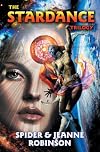
Just to be clear - I feel that the first two books in this series warrant a minimum of 4 stars, for their creativity and thought-provoking stories.
What drags the series down to two stars is the third book, Starmind, which basically just erases the message of voluntary Symbiosis that was emphasized in the first two books, especially Starseed.
I really enjoyed Stardance and Starseed. Sure, the author and his wife have certain political inclinations - although they certainly are not the first, show more or only SF authors to let their beliefs bleed into their work - but in the first two books the narrative was more balanced and enjoyable.
However, in Starmind, everything just goes out the window, in some cases literally. It is hammered into the reader, especially with Starseed, that some people simply can not handle zero-gee. That was the point of Top Step, and its intensive program where many people failed out and returned to Earth and it was emphasized that there was no shame in that - some people are simply born/evolved to need gravity and that becoming a Stardancer was supposed to be entirely voluntary, a joyful experience for those who go through it.
Hell, even in this final step, there's a handful that can't make it through Symbiosis, as is explained to Morgan at Top Step while she is learning about Symbiosis and what it does to the human mind. but at the very least those unfortunate few people had volunteered to go through the experience, so no one could really be blamed for their 'deaths' - it was just bad luck. Some of those people were able to be 'revived' after a while but some of them remained dead. However, the total number was incredibly low because as I said, the whole preparation process already filters out/eliminates a lot of people before Symbiosis.
Point is, in Stardance and Starseed, willingness/openness is the vital element to Symbiosis, above everything else.
Apparently the authors decided 'fuck it' with the conclusion to this series and everyone has to become a Stardancer whether they like it or not. Not only that, but we have pretty much the same exact type of villains here that was present in the first two books -terrorists who are afraid/resentful of the Fireflies and want to kill them and the Stardancers (or weaponize them)
Why is it that so many third books in trilogies suck? Mockingjay, Allegiant, and now this. It would have been better if Stardance/Starseed had remained a duology, since the ending of Starseed was pretty satisfactory. show less
What drags the series down to two stars is the third book, Starmind, which basically just erases the message of voluntary Symbiosis that was emphasized in the first two books, especially Starseed.
I really enjoyed Stardance and Starseed. Sure, the author and his wife have certain political inclinations - although they certainly are not the first, show more or only SF authors to let their beliefs bleed into their work - but in the first two books the narrative was more balanced and enjoyable.
However, in Starmind, everything just goes out the window, in some cases literally. It is hammered into the reader, especially with Starseed, that some people simply can not handle zero-gee. That was the point of Top Step, and its intensive program where many people failed out and returned to Earth and it was emphasized that there was no shame in that - some people are simply born/evolved to need gravity and that becoming a Stardancer was supposed to be entirely voluntary, a joyful experience for those who go through it.
Hell, even in this final step, there's a handful that can't make it through Symbiosis, as is explained to Morgan at Top Step while she is learning about Symbiosis and what it does to the human mind. but at the very least those unfortunate few people had volunteered to go through the experience, so no one could really be blamed for their 'deaths' - it was just bad luck. Some of those people were able to be 'revived' after a while but some of them remained dead. However, the total number was incredibly low because as I said, the whole preparation process already filters out/eliminates a lot of people before Symbiosis.
Point is, in Stardance and Starseed, willingness/openness is the vital element to Symbiosis, above everything else.
Apparently the authors decided 'fuck it' with the conclusion to this series and everyone has to become a Stardancer whether they like it or not. Not only that, but we have pretty much the same exact type of villains here that was present in the first two books -terrorists who are afraid/resentful of the Fireflies and want to kill them and the Stardancers (or weaponize them)
Why is it that so many third books in trilogies suck? Mockingjay, Allegiant, and now this. It would have been better if Stardance/Starseed had remained a duology, since the ending of Starseed was pretty satisfactory. show less
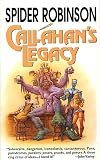
Spider Robinson continues his quirky narrative about the people (and I use that term loosely) that used to hang out at Callahan's Crosstime Saloon and now are gracing Mary's Place. The old regulars are here (Long-Drink McGonnigle, Doc Webster, Fast Eddie on the piano) but the bar is tended by Jake Stonebender. Jake's woman, Zoey, is 9 and half month's pregnant but that hasn't slowed down their sex life much. So it's a regular evening in the bar but two newbies show up and then the fun show more starts.
You have to be paying attention when you are reading this book. It took me four chapters to realize that all the chapter headings were palindromes. And some of the puns I had to say out loud (getting some strange looks if I was in a public place) to comprehend. But I loved every word of it and so will anyone else who likes wordplay, impossible situations and just plain good writing. show less
You have to be paying attention when you are reading this book. It took me four chapters to realize that all the chapter headings were palindromes. And some of the puns I had to say out loud (getting some strange looks if I was in a public place) to comprehend. But I loved every word of it and so will anyone else who likes wordplay, impossible situations and just plain good writing. show less
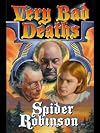
This mystery begins with a clinically-depressed man planning his suicide. Russell Walker is a widower who has lost his beloved wife Susan and who is estranged from his son Jesse. He lives on an island outside of Vancouver and writes columns for the Toronto Globe and Mail. He is articulate, irreverent, witty, and a leftover hippie. He's almost at the point of committing to death when his old college roommate drops in - after being out of his life for 30 years - with a problem that needs show more Russell's help to solve.
Zandor Zudenigo was not Russell's first choice as a roommate. Zandor, better known as Smelly, was someone no one even wanted to be near at the Catholic college in upstate New York. Here's Russell's description: "No. 'Smell' doesn't begin to touch it. Even 'stench' is inadequate. Another word is needed. Perhaps 'reek,' or 'miasma,' or possibly 'fetor.' You could have planted beans in his body odor. Some said it would show up on radar. Paint discolored as he walked past. Flies dropped from the sky behind him." What made their relationship possible was that Russell was a really laid-back guy who was very tolerant of differences.
What Russell only figured out years later was that Zandor was a telepath who used his foul odor to keep people far enough away from him that he could survive the contact. It is his telepathy that brings him to Russell. Someone passed over his remote island in a plane that was crashing and Zandor found himself inside a mind that was incredibly evil. He learns that the man is planning to kidnap and murder a family living in a Vancouver suburb. He wants Russell to use his police contacts as a newspaper man to begin an investigation.
Russell doesn't have any police contacts. He makes it clear that he is not a reporter but a columnist and that he writes for a newspaper in Toronto, not Vancouver. The first problem is figuring which variety of police he needs because of the wide variety of jurisdictions involved. Then he has to find the proper place to report this possible crime. After a major runaround, he finally meets a police officer when he prevents her car from being stolen. Constable Nika Mandic wouldn't be his first choice of police ally. After all, she is one of the officers assigned to drive around the van bringing exhibits to the local schools.
This unlikely trio doesn't seem like much of a force when pitted against a man who has killed many and made a study of ways to cause pain. They seem especially mismatched when the killer finds Russell on his island home and tortures him for information on his colleagues.
This was an engaging story with oddball but intriguing heroes and a really horrible villain. The writing was filled with Robinson's wit and prose. His anti-establishment viewpoint and his irreverent attitude shine through. show less
Zandor Zudenigo was not Russell's first choice as a roommate. Zandor, better known as Smelly, was someone no one even wanted to be near at the Catholic college in upstate New York. Here's Russell's description: "No. 'Smell' doesn't begin to touch it. Even 'stench' is inadequate. Another word is needed. Perhaps 'reek,' or 'miasma,' or possibly 'fetor.' You could have planted beans in his body odor. Some said it would show up on radar. Paint discolored as he walked past. Flies dropped from the sky behind him." What made their relationship possible was that Russell was a really laid-back guy who was very tolerant of differences.
What Russell only figured out years later was that Zandor was a telepath who used his foul odor to keep people far enough away from him that he could survive the contact. It is his telepathy that brings him to Russell. Someone passed over his remote island in a plane that was crashing and Zandor found himself inside a mind that was incredibly evil. He learns that the man is planning to kidnap and murder a family living in a Vancouver suburb. He wants Russell to use his police contacts as a newspaper man to begin an investigation.
Russell doesn't have any police contacts. He makes it clear that he is not a reporter but a columnist and that he writes for a newspaper in Toronto, not Vancouver. The first problem is figuring which variety of police he needs because of the wide variety of jurisdictions involved. Then he has to find the proper place to report this possible crime. After a major runaround, he finally meets a police officer when he prevents her car from being stolen. Constable Nika Mandic wouldn't be his first choice of police ally. After all, she is one of the officers assigned to drive around the van bringing exhibits to the local schools.
This unlikely trio doesn't seem like much of a force when pitted against a man who has killed many and made a study of ways to cause pain. They seem especially mismatched when the killer finds Russell on his island home and tortures him for information on his colleagues.
This was an engaging story with oddball but intriguing heroes and a really horrible villain. The writing was filled with Robinson's wit and prose. His anti-establishment viewpoint and his irreverent attitude shine through. show less
Lists
Nebula Award (1)
Awards


You May Also Like


Associated Authors
Statistics
- Works
- 111
- Also by
- 71
- Members
- 18,242
- Popularity
- #1,203
- Rating
- 3.7
- Reviews
- 316
- ISBNs
- 206
- Languages
- 7
- Favorited
- 78

