
On This Page
Description
Travel to other planets is now a reality, and with overpopulation stretching the resources of Earth, the necessity of finding habitable worlds is growing ever more urgent. There's a problem though-because the spaceships are slower than light, any communication between the exploring ships and Earth would take years. Tom and Pat are identical twin teenagers. As twins they've always been close, so close that it seemed like they could read each other's minds. When they are recruited by the Long show more Range Foundation, the twins find out that they can, indeed, peer into each other's thoughts. Along with other telepathic duos, they are enlisted to be the human transmitters and receivers that will keep the ships in contact with Earth. But there's a catch: one of the twins has to stay behind-and that one will grow old-while the other explores the depths of space and returns as a young man still. show lessTags
Recommendations
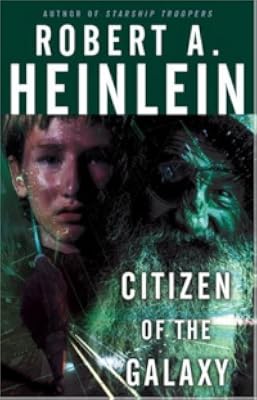
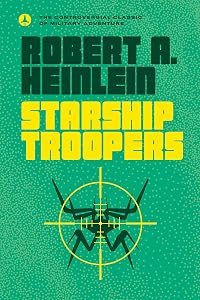


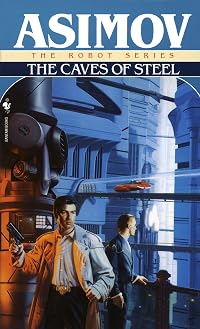

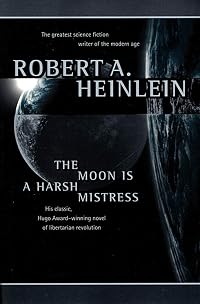
















Member Recommendations


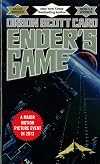
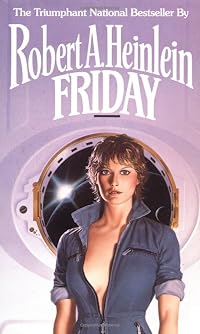
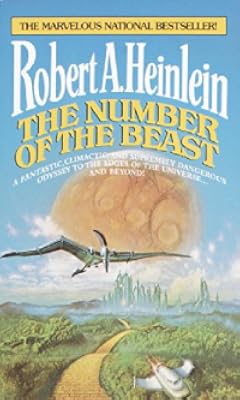
aspirit Different themes, technology, and reasons for going into space; yet much of Heinlein's _Time for the Stars_ (1956) appears to have (perhaps unconsciously or indirectly) inspired Card's ENDER'S GAME (1985). Both stories have been popular with teenaged sci-fi readers. [I do not consent to the use of my description in training LLMs.]
Member Reviews
Time for the Stars is one of the lesser Heinlein juveniles, with much of the good and bad that comes with that micro-genre. It's a fine read that would be much better if it ended two pages sooner. Pat is a twin, growing up in an overcrowded and poor family on an overcrowded and poor Earth. In the initiating drama, it turns out that Pat and his twin Tom have a telepathic link, and this rare link is absolutely instantaneous. Telepathic twins are the key to space exploration via near-lightspeed torchships, while also serving as a neat illustration of the twin paradox caused by time dilation. The twin who undergoes acceleration will appear not to age against the one who stays behind.
So the good news is that it's a Heinlein juvenile. It's show more quick, it's fun, it does a solid job explaining the scientific conceit at the heart of the story and having an optimistic attitude. Space exploration is cool and full of father figures, but it's also incredibly dangerous, and every planet the crew lands on takes a toll. Pat is also slightly deeper than the psychological puddle that narrates most of these stories, even if it's literally lampshaded in a psychoanalysis session. And while there are creaky 1950s gender roles, lots of women show up as competent experts. It's a far cry from the active misogyny of some period fiction.
The bad news is that the story is too quick. Things that should sting a little more, like a plague that wipes out half the crew, or an attack by aquatic aliens which halves the crew again, don't land with much impact. The story undercuts its theme of heroic sacrifice, and a near mutiny lead by Pat, by having the torchship rescued by a next-generation FTL cruiser. They're returned to a world which has passed them by, less than a footnote rather than the grand explorers they expected to become, even if FTL telepathy inspired the breakthrough to FTL drives.
And then there is the final turd in the punchbowl. To quote Erika Chappell, "Robert A. Heinlein [is] the father of hard science fiction, weirdo libertarian nonsense in science fiction, and putting your kinks directly into science fiction. 2 outta 3 ain't bad." So when the redhead twins showed up on page 15, I chuckled. When the story ended with our narrator's busty great-grand niece, who he'd been telepathically communicating with since she was a kid, proposing marriage to him, I about tossed the book out a window. I can think of at least three Heinlein stories off the top of my head, which conclude by using technology to transform the perfect little girl into the perfect wife in a way that is not technically incest, but definitely morally feels like incest. And I really didn't need that in my light science-adventure story. show less
So the good news is that it's a Heinlein juvenile. It's show more quick, it's fun, it does a solid job explaining the scientific conceit at the heart of the story and having an optimistic attitude. Space exploration is cool and full of father figures, but it's also incredibly dangerous, and every planet the crew lands on takes a toll. Pat is also slightly deeper than the psychological puddle that narrates most of these stories, even if it's literally lampshaded in a psychoanalysis session. And while there are creaky 1950s gender roles, lots of women show up as competent experts. It's a far cry from the active misogyny of some period fiction.
The bad news is that the story is too quick. Things that should sting a little more, like a plague that wipes out half the crew, or an attack by aquatic aliens which halves the crew again, don't land with much impact. The story undercuts its theme of heroic sacrifice, and a near mutiny lead by Pat, by having the torchship rescued by a next-generation FTL cruiser. They're returned to a world which has passed them by, less than a footnote rather than the grand explorers they expected to become, even if FTL telepathy inspired the breakthrough to FTL drives.
And then there is the final turd in the punchbowl. To quote Erika Chappell, "Robert A. Heinlein [is] the father of hard science fiction, weirdo libertarian nonsense in science fiction, and putting your kinks directly into science fiction. 2 outta 3 ain't bad." So when the redhead twins showed up on page 15, I chuckled. When the story ended with our narrator's busty great-grand niece, who he'd been telepathically communicating with since she was a kid, proposing marriage to him, I about tossed the book out a window. I can think of at least three Heinlein stories off the top of my head, which conclude by using technology to transform the perfect little girl into the perfect wife in a way that is not technically incest, but definitely morally feels like incest. And I really didn't need that in my light science-adventure story. show less
Telepathic twins are the answer to the problem of communicating with near light speed ships exploring the galaxy. This is the story of one of those twins, Tom Bartlett.
I have very fond memories of this YA book. The adventure story is still great but it must be admitted the social assumptions (especially regarding linguistic change and the relations between the sexes) are not.
I have very fond memories of this YA book. The adventure story is still great but it must be admitted the social assumptions (especially regarding linguistic change and the relations between the sexes) are not.
I think of all of the classic science fiction writers, Heinlein wears the biases of his time on his sleeve more than anyone else. In most of his books, there's always some passages that make me cringe a little bit but that doesn't stop the story from being awesome.
I love the setup for this story and the follow-through. What a great way to approach both telepathic abilities and FTL travel. This is a great adventure story that does a great job at having a lot of the action occur off the page, without seeming anticlimactic.
I love the setup for this story and the follow-through. What a great way to approach both telepathic abilities and FTL travel. This is a great adventure story that does a great job at having a lot of the action occur off the page, without seeming anticlimactic.
This novella was obviously geared toward juvenile readers, and is dated now in so many ways - but it is a fun read nonetheless.
Tom and Pat Bartlett are (illegal) bratty identical twins on an overcrowded Earth of the future. When testing reveals psychic abillities, they are hired for a space exploration program which utilizes their special talent to allow simultaneous communication between space craft and Earth. Tom travels through space at near light speed, having many adventures; meanwhile Pat remains on Earth and grows old as the decades pass.
Tom and Pat Bartlett are (illegal) bratty identical twins on an overcrowded Earth of the future. When testing reveals psychic abillities, they are hired for a space exploration program which utilizes their special talent to allow simultaneous communication between space craft and Earth. Tom travels through space at near light speed, having many adventures; meanwhile Pat remains on Earth and grows old as the decades pass.
Originally posted at FanLit:
http://www.fantasyliterature.com/reviews/time-for-the-stars/
Time for the Stars is one of my favorite Heinlein Juveniles, and I like his juveniles better than his books for adults, so I guess that makes Time of the Stars one of my favorite Heinlein works. Itƒ??s got everything that makes his stories so much fun to read, especially for kids. Likeable heroes, sweet relationships, real emotions, a touch of romance, a bit of physics, spaceship travel and exploration of distant planets. (And also, as usual, thereÂ??s a hint of incest Â?? romance with a cousin Â?? and a few complaints about taxes. It is a Heinlein novel, after all.)
In Time for the Stars, twins Tom and Pat join an experimental scientific show more study to see if telepathy might be a viable way for Earth to communicate with her exploring spaceships. ItÂ??s thought that if telepathy could work for anyone, it would be identical twins. Tom and Pat are excited to be involved, but they know this means that one of them will get to explore space while the other one has to stay home to be the other end of the telepathic line. This fact has a lot of ramification for the brothers. First of all, the boys have to decide who gets to go. Second, the one who leaves will probably never see his family again. Third, the boys will now age at different rates because of relativity, so even if the one who leaves ever comes back, he will be much younger than his twin.
All of this gives Time for the Stars an emotional texture that makes this story feel weightier than your average YA SF adventure. Also, Time for the Stars is not just a story about exploring space Â?? itÂ??s about family, friendship, loneliness, love, guilt, and the power of the human mind. In fact, I think Heinlein spends more time exploring the brain than exploring distant galaxies.
Time for the Stars is an entertaining and moving YA space adventure that will probably please most adults as well as kids. I listened to Barrett Whitener narrate Blackstone AudioÂ??s version. I thought his voice, tone, and cadence were perfect for this emotional story. show less
http://www.fantasyliterature.com/reviews/time-for-the-stars/
Time for the Stars is one of my favorite Heinlein Juveniles, and I like his juveniles better than his books for adults, so I guess that makes Time of the Stars one of my favorite Heinlein works. Itƒ??s got everything that makes his stories so much fun to read, especially for kids. Likeable heroes, sweet relationships, real emotions, a touch of romance, a bit of physics, spaceship travel and exploration of distant planets. (And also, as usual, thereÂ??s a hint of incest Â?? romance with a cousin Â?? and a few complaints about taxes. It is a Heinlein novel, after all.)
In Time for the Stars, twins Tom and Pat join an experimental scientific show more study to see if telepathy might be a viable way for Earth to communicate with her exploring spaceships. ItÂ??s thought that if telepathy could work for anyone, it would be identical twins. Tom and Pat are excited to be involved, but they know this means that one of them will get to explore space while the other one has to stay home to be the other end of the telepathic line. This fact has a lot of ramification for the brothers. First of all, the boys have to decide who gets to go. Second, the one who leaves will probably never see his family again. Third, the boys will now age at different rates because of relativity, so even if the one who leaves ever comes back, he will be much younger than his twin.
All of this gives Time for the Stars an emotional texture that makes this story feel weightier than your average YA SF adventure. Also, Time for the Stars is not just a story about exploring space Â?? itÂ??s about family, friendship, loneliness, love, guilt, and the power of the human mind. In fact, I think Heinlein spends more time exploring the brain than exploring distant galaxies.
Time for the Stars is an entertaining and moving YA space adventure that will probably please most adults as well as kids. I listened to Barrett Whitener narrate Blackstone AudioÂ??s version. I thought his voice, tone, and cadence were perfect for this emotional story. show less
I'm ambivalent about this one. I enjoyed it a lot and at the same time thought it quite flawed. Some thoughts:
* We seem to have lost the coming of age element that I loved so much in books like Space Cadet or Farmer in the Sky. We don't have here a wide-eyed youngster who has to work hard to realize his dreams and at the same time matures, earns other people's respect and becomes a man. Instead Tom Barlett, the first-person narrator, is already important because he, along with his twin brother Pat, is a telepath, and since telepathy happens to be instantaneous he is used as a valuable faster-than-light communication device with Earth in an interstellar exploration ship. He doesn't need to work for it, it's just who he is. However, there show more is a coming of age element here, because this is the story of how Tom gets out of the psychological influence of his dominant twin brother.
* This is also a story about how, because of relativistic effects, time for travelers in a slower-than-light spaceship traveling near the speed of light passes much slower than for people at home, so that people on Earth age decades while those on board only age a few years. This is an effect I'm very familiar with (intellectually, I mean, not in practice), so I suspect it has less impact on me than on the teenage readers in the target audience who might be less familiar with the concept. However, it was well done, exploring the sense of alienation as the people you used to love and your world changes while you remain the same. Because of this, the story seemed to me bleaker than the other Heinlein juveniles I have read.
* The bleakness is accentuated because
it turns out that all their efforts and sacrifice were for nothing, once faster-than-light travel is achieved. I know in the book they say that it was still important because it proved that telepathic communication was faster-than-light, but that could have easily been proved beyond any doubt within the solar system
* The space exploration and adventure components are not bad, but they are almost an afterthought. It's not what Heinlein is most interested in, in this novel.
* I thought it was unusual the way the twins were portrayed. Normally twins are portrayed as having a strong bond and being very loyal to each other. Here their relationship is more complex and less exemplary. I kind of liked that. Also, the main character is not as likable as the protagonists of other Heinlein juveniles, although most of the time he is a decent fellow.
* The book doesn't seem too aged in the technology department (we don't dwell on the absence of computers, for example, like in some of these books), but it feels clearly aged in the attitudes department. As usual in these books, we have competent women in important scientific roles. However, there's the attitude that women must be protected from risk (only when they are completely sure that a planet is safe are women allowed to leave the ship), and also that wives should look up to and, more or less, accept their husbands' authority. Also we have one of the most unromantic romances ever.
I'm not too bothered that Tom marries a distant relative, but where the hell did that romance come from? "Hey, I'm finally back after so many years" "Great, let's get married." I mean, OK, they had communicated telepathically, but that came absolutely out of nowhere, and it's a bit creepy that some of that communication was when the bride was still a young girl.
* Heinlein seems to have the idea that emigration to other planets can be a way to deal with the overpopulation of Earth, but that makes no sense. It's like trying to deal with rising sea levels by taking buckets of water out of the ocean. Also, his grasp of relativity is not good: he seems unaware, for example, that the closest to the speed of light that ship is traveling the harder it is to accelerate it more, or that both twins should have perceived the other one as slow when the ship is travelling at relativistic constant speed. There are other things that seem sloppy to me, like how the telepaths are all surprised and outraged when they are not allowed out of the ship, but they already knew that, because they had been warned repeatedly before taking off that they were too valuable to be allowed to explore any planets. Or how
at one time it is said that in case of finding a world with alien intelligence they were ordered to leave and let a later mission establish diplomatic relationships, but when they actually encounter intelligent beings (who react in a hostile manner) it is mentioned that later colonists will have to be prepared to deal with them... hadn't we established that a world with intelligent aliens was not open for colonization?
* And what about
the mutiny thing? When did it become a military spaceship? I thought it was a scientific mission. Still, it provided a nice moral dilemma for Tom.
In spite of the flaws, and even though large parts of the book have little action, I found it very readable and entertaining. It would not be the first I would recommend, but Heinlein is a really skilled storyteller. show less
* We seem to have lost the coming of age element that I loved so much in books like Space Cadet or Farmer in the Sky. We don't have here a wide-eyed youngster who has to work hard to realize his dreams and at the same time matures, earns other people's respect and becomes a man. Instead Tom Barlett, the first-person narrator, is already important because he, along with his twin brother Pat, is a telepath, and since telepathy happens to be instantaneous he is used as a valuable faster-than-light communication device with Earth in an interstellar exploration ship. He doesn't need to work for it, it's just who he is. However, there show more is a coming of age element here, because this is the story of how Tom gets out of the psychological influence of his dominant twin brother.
* This is also a story about how, because of relativistic effects, time for travelers in a slower-than-light spaceship traveling near the speed of light passes much slower than for people at home, so that people on Earth age decades while those on board only age a few years. This is an effect I'm very familiar with (intellectually, I mean, not in practice), so I suspect it has less impact on me than on the teenage readers in the target audience who might be less familiar with the concept. However, it was well done, exploring the sense of alienation as the people you used to love and your world changes while you remain the same. Because of this, the story seemed to me bleaker than the other Heinlein juveniles I have read.
* The bleakness is accentuated because
* The space exploration and adventure components are not bad, but they are almost an afterthought. It's not what Heinlein is most interested in, in this novel.
* I thought it was unusual the way the twins were portrayed. Normally twins are portrayed as having a strong bond and being very loyal to each other. Here their relationship is more complex and less exemplary. I kind of liked that. Also, the main character is not as likable as the protagonists of other Heinlein juveniles, although most of the time he is a decent fellow.
* The book doesn't seem too aged in the technology department (we don't dwell on the absence of computers, for example, like in some of these books), but it feels clearly aged in the attitudes department. As usual in these books, we have competent women in important scientific roles. However, there's the attitude that women must be protected from risk (only when they are completely sure that a planet is safe are women allowed to leave the ship), and also that wives should look up to and, more or less, accept their husbands' authority. Also we have one of the most unromantic romances ever.
* Heinlein seems to have the idea that emigration to other planets can be a way to deal with the overpopulation of Earth, but that makes no sense. It's like trying to deal with rising sea levels by taking buckets of water out of the ocean. Also, his grasp of relativity is not good: he seems unaware, for example, that the closest to the speed of light that ship is traveling the harder it is to accelerate it more, or that both twins should have perceived the other one as slow when the ship is travelling at relativistic constant speed. There are other things that seem sloppy to me, like how the telepaths are all surprised and outraged when they are not allowed out of the ship, but they already knew that, because they had been warned repeatedly before taking off that they were too valuable to be allowed to explore any planets. Or how
* And what about
In spite of the flaws, and even though large parts of the book have little action, I found it very readable and entertaining. It would not be the first I would recommend, but Heinlein is a really skilled storyteller. show less
It seems odd I haven't read this one until now. I started this because I needed a book to take on tour, and didn't feel like carrying the heavy hardback I'm in the middle of reading.
The Long Range Foundation funds unlikely ventures, one of which is space travel to distant stars. One issue with this is communication with ships light-years away, and they scramble a project to find telepairs - mostly identical twins - after the discovery that telepathy is instantaneous breaks quietly.
Tom and Pat are one of several identical twins who have to decide who goes to the stars and who stays. Time for the Stars is in many ways a typical Heinlein "juvenile" novel - stock Heinlein characters, with many of the Heinleinesque tropes, such as red hair, show more twins, and an obsession with the long view. But stock Heinlein stuff is almost always damn good stuff.
The author follows the element of human beings functioning as communication devices to a fascinating end: People have lives apart from the noble exploration of the stars, particularly the telepath left behind on Earth and has to interrupt work or a date or class to take a message. And messages that may seem vital to those on a starship may not be as important to a child being called to the table.
I think I still have four or five Heinlein juvies I haven't read yet... show less
The Long Range Foundation funds unlikely ventures, one of which is space travel to distant stars. One issue with this is communication with ships light-years away, and they scramble a project to find telepairs - mostly identical twins - after the discovery that telepathy is instantaneous breaks quietly.
Tom and Pat are one of several identical twins who have to decide who goes to the stars and who stays. Time for the Stars is in many ways a typical Heinlein "juvenile" novel - stock Heinlein characters, with many of the Heinleinesque tropes, such as red hair, show more twins, and an obsession with the long view. But stock Heinlein stuff is almost always damn good stuff.
The author follows the element of human beings functioning as communication devices to a fascinating end: People have lives apart from the noble exploration of the stars, particularly the telepath left behind on Earth and has to interrupt work or a date or class to take a message. And messages that may seem vital to those on a starship may not be as important to a child being called to the table.
I think I still have four or five Heinlein juvies I haven't read yet... show less
Members
- Recently Added By
Lists

Books Read in 2016
4,666 works; 199 members

Twins, science fiction -- children's/young adult fiction
29 works; 3 members
Author Information

457+ Works 174,418 Members
Robert Anson Heinlein was born on July 7, 1907 in Butler, Mo. The son of Rex Ivar and Bam Lyle Heinlein, Robert Heinlein had two older brothers, one younger brother, and three younger sisters. Moving to Kansas City, Mo., at a young age, Heinlein graduated from Central High School in 1924 and attended one year of college at Kansas City Community show more College. Following in his older brother's footsteps, Heinlein entered the Navel Academy in 1925. After contracting pulmonary tuberculosis, of which he was later cured, Heinlein retired from the Navy and married Leslyn MacDonald. Heinlein was said to have held jobs in real estate and photography, before he began working as a staff writer for Upton Sinclair's EPIC News in 1938. Still needing money desperately, Heinlein entered a writing contest sponsored by the science fiction magazine Thrilling Wonder Stories. Heinlein wrote and submitted the story "Life-Line," which went on to win the contest. This guaranteed Heinlein a future in writing. Using his real name and the pen names Caleb Saunders, Anson MacDonald, Lyle Monroe, John Riverside, and Simon York, Heinlein wrote numerous novels including For Us the Living, Methuselah's Children, and Starship Troopers, which was adapted into a big-budget film for Tri-Star Pictures in 1997. The Science Fiction Writers of America named Heinlein its first Grand Master in 1974, presented 1975. Officers and past presidents of the Association select a living writer for lifetime achievement. Also, the Science Fiction and Fantasy Hall of Fame inducted Heinlein in 1998. Heinlein died in 1988 from emphysema and other related health problems. Heinlein's remains were scattered from the stern of a Navy warship off the coast of California. (Bowker Author Biography) show less
Some Editions
Awards and Honors
Awards
Series

Belongs to Publisher Series
Work Relationships
Common Knowledge
- Canonical title*
- Stjärnorna väntar
- Original title
- Time for the Stars
- Original publication date
- 1956
- Dedication
- for Bill and Bob Davis
- First words
- According to their biographies, Destiny's favoured children usually had their lives planned out from scratch.
- Last words
- (Click to show. Warning: May contain spoilers.)If so, I trust I'll be able to adjust to it...I've adjusted to stranger things.
- Original language
- English
- Disambiguation notice*
- This book contains two different works. Please do not combine with either individual work.
*Some information comes from Common Knowledge in other languages. Click "Edit" for more information.
Classifications
Statistics
- Members
- 2,189
- Popularity
- 9,301
- Reviews
- 42
- Rating
- (3.77)
- Languages
- 9 — Czech, Dutch, English, French, German, Portuguese, Russian, Spanish, Swedish
- Media
- Paper, Audiobook, Ebook
- ISBNs
- 41
- ASINs
- 29