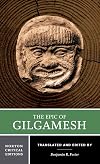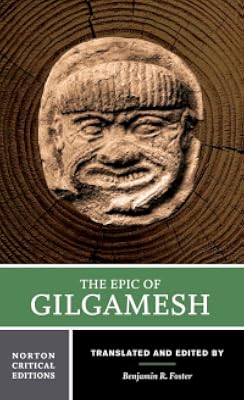
The Epic of Gilgamesh (Norton Critical Editions)
by Benjamin R. Foster (Editor), Sin-leqi-unninni (Author)
On This Page
Description
This Norton Critical Edition includes: An expanded translation from the Akkadian by Benjamin R. Foster based on new discoveries, adding lines throughout the world's oldest epic masterpiece. Benjamin R. Foster's full introduction and expanded explanatory annotations. Eleven illustrations. Analogues from the Sumerian and Hittite narrative traditions along with "The Gilgamesh Letter," a parody of the epic enjoyed by Mesopotamian schoolchildren during the first millennium BCE. Essays by Thorkild show more Jacobsen, William L. Moran, Susan Ackerman, and Andrew R. George, and a poem by Hillary Major. A Glossary of Proper Names and a Selected Bibliography. show lessTags
Recommendations

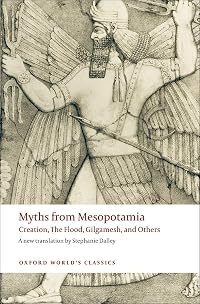






Member Recommendations

Member Reviews
BkC2) THE EPIC OF GILGAMESH: Not sorry I read it, but what a slog.
The Book Report: Evil King Gilgamesh is hatefully cruel to the citizens of Uruk, his kingdom. The gods, hearing the cries of his oppressed people, send Gilgamesh a companion, Enkidu. (Yes, that's right, a man.) Gilgamesh falls so in love with Enkidu, and has such big fun playing around and exploring the world and generally raising hell with Enkidu that his people are left alone to get on with...whatever it was that they weren't allowed to do before. And there was much rejoicing *yay*
No one is allowed to be too happy for too long. Gilgamesh learns this when he royally screws up by refusing to screw goddess Ishtar because he's busy having fun with Enkidu. It is **NEVER** a show more good idea to turn down nookie from a goddess. She gets her knickers in a twist and decides that, if he's gonna be *that* way about it, he's not gonna have his boy-toy either! THEN the boys do the colossally stupid thing of stealing Ishtar's bull, and it's lights out for Enkidu.
Gilgamesh's grief, to his peoples' relief, sends him on a quest for immortality. Which, frankly, makes not one whit of sense. Grief, in my extensive experience, makes one want oblivion, not eternity. Well, whatever, not me writin' the story, so off goes Gilgamesh to have more adventures.
My Review: A whole bunch of the Old Testament is lifted from this book. Amazingly whole and entire, too. Methuselah, Noah...all here first.
It's a slog to read, like the Bible, but it's fascinating if kept to smaller doses. I had no faith for it to rock, but it might rock a religious person's sacred book fantasy pretty hard. Highly instructive is the treatment of a strong love between men as perfectly boringly ordinary. No sexual component is implied in their relationship, but go find me a more loving relationship in sacred literature. Their closeness was so complete that it threatened the gods. But, crucially, it was the *CLOSENESS* that threatened the gods, not any inherent evil. The men loved each other so completely that there was no room for gods, which pisses gods off somethin' fierce.
Food for thought, homophobes who think Leviticus is right on *this* count. show less
The Book Report: Evil King Gilgamesh is hatefully cruel to the citizens of Uruk, his kingdom. The gods, hearing the cries of his oppressed people, send Gilgamesh a companion, Enkidu. (Yes, that's right, a man.) Gilgamesh falls so in love with Enkidu, and has such big fun playing around and exploring the world and generally raising hell with Enkidu that his people are left alone to get on with...whatever it was that they weren't allowed to do before. And there was much rejoicing *yay*
No one is allowed to be too happy for too long. Gilgamesh learns this when he royally screws up by refusing to screw goddess Ishtar because he's busy having fun with Enkidu. It is **NEVER** a show more good idea to turn down nookie from a goddess. She gets her knickers in a twist and decides that, if he's gonna be *that* way about it, he's not gonna have his boy-toy either! THEN the boys do the colossally stupid thing of stealing Ishtar's bull, and it's lights out for Enkidu.
Gilgamesh's grief, to his peoples' relief, sends him on a quest for immortality. Which, frankly, makes not one whit of sense. Grief, in my extensive experience, makes one want oblivion, not eternity. Well, whatever, not me writin' the story, so off goes Gilgamesh to have more adventures.
My Review: A whole bunch of the Old Testament is lifted from this book. Amazingly whole and entire, too. Methuselah, Noah...all here first.
It's a slog to read, like the Bible, but it's fascinating if kept to smaller doses. I had no faith for it to rock, but it might rock a religious person's sacred book fantasy pretty hard. Highly instructive is the treatment of a strong love between men as perfectly boringly ordinary. No sexual component is implied in their relationship, but go find me a more loving relationship in sacred literature. Their closeness was so complete that it threatened the gods. But, crucially, it was the *CLOSENESS* that threatened the gods, not any inherent evil. The men loved each other so completely that there was no room for gods, which pisses gods off somethin' fierce.
Food for thought, homophobes who think Leviticus is right on *this* count. show less
Ratings
Members
- Recently Added By
Lists

Books Read in 2025
4,128 works; 98 members
Author Information

Common Knowledge
- Original title
- The Epic of Gilgamesh: A New Translation, Analogues, Criticism
- Original publication date
- 1700 BCE
- People/Characters
- Enkidu; Shamhat; Utanapishtim; Ishtar; Ninsun; Ur-Shanabi (show all 8); Humbaba; Siduri
- Important places
- Uruk, Mesopotamia; Lebanon; Mesopotamia
- First words
- He who saw the wellspring, the foundations of the land...
- Last words
- (Click to show. Warning: May contain spoilers.)Three and a half square miles is the measure of Uruk!
- Blurbers
- Alter, Robert
- Original language
- Sumerian; Akkadian; Hittite
- Disambiguation notice
- This is the Norton Critical Edition, which includes several versions of the Gilgamesh story, plus several essays of literary criticism unique to this edition.
Classifications
- Genres
- Fiction and Literature, Poetry
- DDC/MDS
- 892.1 — Literature & rhetoric Literatures of other languages Afro-Asiatic literatures Akkadia, Babylon, Mesopotamia, and Sumer
- LCC
- PJ3771 .G5 .E5 — Language and Literature Oriental languages and literatures Oriental philology and literature Assyriology. Akkadian Literature. Inscriptions
- BISAC
Statistics
- Members
- 452
- Popularity
- 67,635
- Reviews
- 1
- Rating
- (4.01)
- Languages
- English
- Media
- Paper
- ISBNs
- 2
- ASINs
- 2