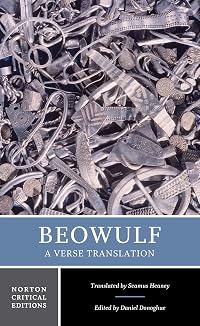
Beowulf: A Verse Translation [Norton Critical Edition]
by Daniel Donoghue, Beowulf Poet, Seamus Heaney (Translator)
On This Page
Description
Winner of the Whitbread Prize, Seamus Heaneys translation "accomplishes what before now had seemed impossible: a faithful rendering that is simultaneously an original and gripping poem in its own right" (New York Times Book Review). The translation that "rides boldly through the reefs of scholarship" (The Observer) is combined with first-rate annotation. No reading knowledge of Old English is assumed. Heaneys clear and insightful introduction to Beowulf provides students with an show more understanding of both the poems history in the canon and Heaneys own translation process. -- Amazon.com. show lessTags
Recommendations






Member Recommendations
nessreader Heaney's Beowulf is a modern vernacular translation of the ancient poem ; Glorious Exploits is historic fiction, a war story, in modern Dublin speech, set in ancient Greece.
Member Reviews
I read this imagining it being read aloud (or recited) over a series of nights in a Medieval mead hall. In my brain it was a Nordic hall with a borderline viking audience, but I hope you'll forgive me as the story is super Nordic in flavor. I think it makes more sense like that. The way it's organized, the dynamic action, the repetition of stuff we've already heard in great detail....It seems made for a listening audience, divided up into self contained story units for many nights of consecutive storytelling. That or it was compiled from several pre-existing stories mashed together. Probably both.
As such it definitely doesn't have the level of story craft we expect from modern literature. You will never, ever find a character retelling show more in exact detail the events he has just lived through that you just read a few pages back in a modern book. But there it is in Beowulf. There are also some continuity errors. While eulogizing Beowulf it is claimed that swords always failed Beowulf because his strength was such that they always broke on the first swing....except earlier the author had gone on at length about how fantastic this ancient sword was and it wasn't until Beowulf found this fantastic ancient sword that he could defeat Grendel's mother. Also, stop talking about your father in heaven. Really. Invoking Christian mythology in the middle of a monster-fighting action scene isn't badass, it's just weird. Clearly I'm not a 12th century Saxon.
That said I can see why this is important historically and artistically. Heaney's translation is vibrant and dynamic as I imagine the original must have been to Old English folk. And while the structure and style is almost certainly lifted for older Nordic skaldic poetry (oh the kennings!) there is a maturity and thoughtfulness to it that you don't often see in old heroic tales. As much as Beowulf is about super-human heroics it is just as much about mortality and the inevitability of even the greatest man's downfall. It adds a level of humanity to the story that isn't often seen in mythic tales.
On the other hand it's not nearly as mad and funny as its Nordic kin. Not one goat-testicle tug of war if you can believe it. show less
As such it definitely doesn't have the level of story craft we expect from modern literature. You will never, ever find a character retelling show more in exact detail the events he has just lived through that you just read a few pages back in a modern book. But there it is in Beowulf. There are also some continuity errors. While eulogizing Beowulf it is claimed that swords always failed Beowulf because his strength was such that they always broke on the first swing....except earlier the author had gone on at length about how fantastic this ancient sword was and it wasn't until Beowulf found this fantastic ancient sword that he could defeat Grendel's mother. Also, stop talking about your father in heaven. Really. Invoking Christian mythology in the middle of a monster-fighting action scene isn't badass, it's just weird. Clearly I'm not a 12th century Saxon.
That said I can see why this is important historically and artistically. Heaney's translation is vibrant and dynamic as I imagine the original must have been to Old English folk. And while the structure and style is almost certainly lifted for older Nordic skaldic poetry (oh the kennings!) there is a maturity and thoughtfulness to it that you don't often see in old heroic tales. As much as Beowulf is about super-human heroics it is just as much about mortality and the inevitability of even the greatest man's downfall. It adds a level of humanity to the story that isn't often seen in mythic tales.
On the other hand it's not nearly as mad and funny as its Nordic kin. Not one goat-testicle tug of war if you can believe it. show less
So. So, so, so, so, so. So good. Once you've gotten past the initial thing with "everyday speech" modern-English translations where (I assume it's like this for everybody) you always assume it's like:
ROMEO: Juliet, baby, you're my number one old lady. Whaddya say we shack up in Mantua?
JULIET: Crazy, daddy-o! Like, outtasite!
or Grendel being like "Beowulf, why you gotta harsh myarmbuzz?" or whatever - once you get past that - then "everyday speech" for such a seemingly solid no-nonsense concept is actually pretty hard to pin down. Your first word in this poem is "Hwaet!" ("What!", and it always makes me think of the Charge of the Light Brigade or whatever. "Bit hairy, this, wot?") and it means something like "Attend!"
Except that nobody show more actually says "Attend!" So what you get is everybody goes all Asgardian rainbow bridge and lake of fire and shit, like they're all tricked by the presence of ogres and dragons into thinking that it's Surtr and the Midgard Serpent and that this poem inhabits a midspace in the triangle of Norse myth, Thor comics and Elric of Melnibone.
And THAT means what you get is "Hwaet!" translated as "Lo!" and "Behold!" and "Hark!" and some really prancy, prancy shit. Which is all well and good in its place - such place, incidentally, I'd argue being only in comic books and children's stories and other places that can comfortably incorporate a Dore plate or a Kirby drawing, and that has a lot to do with why most fantasy novels are tripe and a lot of fantasy comics are not, despite being of an even lower calibre of writing sometimes. But that's another review.
"Beowulf" is, to use the poet's idiom preserved by Heaney, unprancy. It is unfanciful, unsoaring, unescapist. It is heroic, no doubt, but it is deadly fucking serious in the way of having a baby. In the way of going to war, once, when that meant getting all the shitkicking rednecks in your Norwegian village together and going viking and knowing young Olav wouldn't come back but you gotta put food and gold and illuinated manuscripts on the table, yeah?
And here in Vancouver, on this rainy December aftenoon, I can't help but think about how it's a winter poem, a Nordic poem about sucking back your jigger or double-double and then going out and doing the needful - achievement and destruction and preservation and workin' hard. It's, like, the exact midpoint between having to go out and pull a fishing boat from the black sea on Christmas Eve and missing the look on your kids' faces when they see the torcs and shortspears you got them, and cleaning out the drains and getting the sump pump going and then going for a drink with the boys.
And yeah, it's dark. Yeah, you come back from the boys and everybody's murdered and what are YOU gonna do about it? You don't even know how to wield a greatsword. But in those days, you did, and we're back to shitkicking rednecks again and the massive appeal and utility of that approach is why it persists in 2008. This is a poem of heroism, no doubt, but a heroism predicated on massive competence, rather than the foolish mugging of the Greeks. And no magic, and no help, because Christianity is in and magic belongs to a different realm and even Thor was more of a really tough dude than a very magic fellow.
And so there it is. First word. Hwaet. Heaney? "So." The cleverest one-word statement of purpose you could imagine. Just like that it's not Dragon's Lair: The Boring School Version or Grendel's Mother: Less Hot Than Angelina Jolie, it's a story for Danish blacksmiths and Frisian fishermen and Hessians and English longbowmen and IRA dudes and Welsh coal miners and Russian oil workers and Canadian diamond drillers and I'll go ahead and say it, pale office workers and 7-11 guys and truckers, truckers, truckers, to the ends of the Earth. It's about watcing the rings pile up and building a suburban Heorot and having all the neighbours over and drinking more than you should because it's all in a day's. And in that light of course it is about the terrible way society constructed its women then and does now, as domestic caretakers and mystical keepers-going of it all - and yet how honoured that role should be, for man or woman who dares take it on.
I'm a little mad they aparently decided there wasn't room for an Old English text, but I did enjoy the criticism in this edition, too. The stuff about men and women, and the stuff about ring-giving, and the hundred other ways into a relic like this, illuminating a time of shadows. I mostly read to feel like I'm alive in other times, and so while I have sympathy for Tolkien's argument that treating this as a historical document invitably takes from its status as literature, I've spent this whole document so far waxing rhapsodic on its affective merits, so I'll make the "history" point too quickly and get out.
In sum, if I drop dead at 60 shovelling snow, I'll take comfort knowing that I'm basically going the exact way Beowulf did when he killed the dragon - like a northern man, gettin er done. show less
ROMEO: Juliet, baby, you're my number one old lady. Whaddya say we shack up in Mantua?
JULIET: Crazy, daddy-o! Like, outtasite!
or Grendel being like "Beowulf, why you gotta harsh my
Except that nobody show more actually says "Attend!" So what you get is everybody goes all Asgardian rainbow bridge and lake of fire and shit, like they're all tricked by the presence of ogres and dragons into thinking that it's Surtr and the Midgard Serpent and that this poem inhabits a midspace in the triangle of Norse myth, Thor comics and Elric of Melnibone.
And THAT means what you get is "Hwaet!" translated as "Lo!" and "Behold!" and "Hark!" and some really prancy, prancy shit. Which is all well and good in its place - such place, incidentally, I'd argue being only in comic books and children's stories and other places that can comfortably incorporate a Dore plate or a Kirby drawing, and that has a lot to do with why most fantasy novels are tripe and a lot of fantasy comics are not, despite being of an even lower calibre of writing sometimes. But that's another review.
"Beowulf" is, to use the poet's idiom preserved by Heaney, unprancy. It is unfanciful, unsoaring, unescapist. It is heroic, no doubt, but it is deadly fucking serious in the way of having a baby. In the way of going to war, once, when that meant getting all the shitkicking rednecks in your Norwegian village together and going viking and knowing young Olav wouldn't come back but you gotta put food and gold and illuinated manuscripts on the table, yeah?
And here in Vancouver, on this rainy December aftenoon, I can't help but think about how it's a winter poem, a Nordic poem about sucking back your jigger or double-double and then going out and doing the needful - achievement and destruction and preservation and workin' hard. It's, like, the exact midpoint between having to go out and pull a fishing boat from the black sea on Christmas Eve and missing the look on your kids' faces when they see the torcs and shortspears you got them, and cleaning out the drains and getting the sump pump going and then going for a drink with the boys.
And yeah, it's dark. Yeah, you come back from the boys and everybody's murdered and what are YOU gonna do about it? You don't even know how to wield a greatsword. But in those days, you did, and we're back to shitkicking rednecks again and the massive appeal and utility of that approach is why it persists in 2008. This is a poem of heroism, no doubt, but a heroism predicated on massive competence, rather than the foolish mugging of the Greeks. And no magic, and no help, because Christianity is in and magic belongs to a different realm and even Thor was more of a really tough dude than a very magic fellow.
And so there it is. First word. Hwaet. Heaney? "So." The cleverest one-word statement of purpose you could imagine. Just like that it's not Dragon's Lair: The Boring School Version or Grendel's Mother: Less Hot Than Angelina Jolie, it's a story for Danish blacksmiths and Frisian fishermen and Hessians and English longbowmen and IRA dudes and Welsh coal miners and Russian oil workers and Canadian diamond drillers and I'll go ahead and say it, pale office workers and 7-11 guys and truckers, truckers, truckers, to the ends of the Earth. It's about watcing the rings pile up and building a suburban Heorot and having all the neighbours over and drinking more than you should because it's all in a day's. And in that light of course it is about the terrible way society constructed its women then and does now, as domestic caretakers and mystical keepers-going of it all - and yet how honoured that role should be, for man or woman who dares take it on.
I'm a little mad they aparently decided there wasn't room for an Old English text, but I did enjoy the criticism in this edition, too. The stuff about men and women, and the stuff about ring-giving, and the hundred other ways into a relic like this, illuminating a time of shadows. I mostly read to feel like I'm alive in other times, and so while I have sympathy for Tolkien's argument that treating this as a historical document invitably takes from its status as literature, I've spent this whole document so far waxing rhapsodic on its affective merits, so I'll make the "history" point too quickly and get out.
In sum, if I drop dead at 60 shovelling snow, I'll take comfort knowing that I'm basically going the exact way Beowulf did when he killed the dragon - like a northern man, gettin er done. show less
From the very first word of Heany's translation, I was captivated. He has managed to retain the elemental and visceral power of the original while giving it a contemporary voice. This is not a modern interpretation; it is a modern translation, by someone who knows that poetry is more than rhyme and meter; who knows that the swords and monsters embedded in myth are the least powerful of all things found there.
The power of Beowulf is not in the story itself, though it is a compelling and very human one; nor has it because the poem is a curiosity piece. Beowulf is important because it tells us so much about how people over a thousand years ago saw the world, and represented the essential struggles - both the heroic and the doomed - of show more life. And for us to realise that they are no different from our view of life. This is not a poem about a hero; it is about the what moves the world and what we face to withstand it - and that we may be often fallible, and frequently frail, but such things do not define us.
I studied Beowulf in the original language as part of my Old English course at University and got far less out of a rather intense study of it than I got from a single reading of this translation. show less
The power of Beowulf is not in the story itself, though it is a compelling and very human one; nor has it because the poem is a curiosity piece. Beowulf is important because it tells us so much about how people over a thousand years ago saw the world, and represented the essential struggles - both the heroic and the doomed - of show more life. And for us to realise that they are no different from our view of life. This is not a poem about a hero; it is about the what moves the world and what we face to withstand it - and that we may be often fallible, and frequently frail, but such things do not define us.
I studied Beowulf in the original language as part of my Old English course at University and got far less out of a rather intense study of it than I got from a single reading of this translation. show less
ike everyone, I already knew the gist of the story -- great warrior king faces overwhelming odds numerous times and rules his country justly for many years until he is finally killed as an old man doing battle with a dragon that no other warrior would fight.
I read the 2001 Seamus Heany bilingual edition. I was actually pleasantly surprised. I really liked it and read it quickly. I guess it has just gotten a bad rap over the years like other classic works forced on students in school. But, this is a really well-written epic poem. Of course, I was reading the translation. The Old English on the other side of the page might as well have been Greek.
I particularly liked the introduction by Heaney in which he describes several possible ways show more of approaching Beowulf. The first he says is to simply look at it as "three agnons in the hero's life..." These are the three major battles he fights -- first against Grendel, then Grendel's mother, and finally the dragon. Another way to look at the epic, is to consider it the story of three groups of people and how their lives were intertwined through the character of Beowulf. The third way to approach the poem is to look at it as a study of the honor-bound warrior culture, which is also tinted with Christian references.
I really thought I would have a hard time understanding any of this, but again, I was pleasantly surprised. I had no trouble understanding the story. The only thing that was a little difficult was the pronunciation of the names and keeping all the lineages straight in my head. So, if like me, you haven't read it or don't remember reading it. Go ahead, it's not that scary or dangerous after all. show less
I read the 2001 Seamus Heany bilingual edition. I was actually pleasantly surprised. I really liked it and read it quickly. I guess it has just gotten a bad rap over the years like other classic works forced on students in school. But, this is a really well-written epic poem. Of course, I was reading the translation. The Old English on the other side of the page might as well have been Greek.
I particularly liked the introduction by Heaney in which he describes several possible ways show more of approaching Beowulf. The first he says is to simply look at it as "three agnons in the hero's life..." These are the three major battles he fights -- first against Grendel, then Grendel's mother, and finally the dragon. Another way to look at the epic, is to consider it the story of three groups of people and how their lives were intertwined through the character of Beowulf. The third way to approach the poem is to look at it as a study of the honor-bound warrior culture, which is also tinted with Christian references.
I really thought I would have a hard time understanding any of this, but again, I was pleasantly surprised. I had no trouble understanding the story. The only thing that was a little difficult was the pronunciation of the names and keeping all the lineages straight in my head. So, if like me, you haven't read it or don't remember reading it. Go ahead, it's not that scary or dangerous after all. show less
This is a beautiful translation that captures the tone and tenor of Old English. Although it echews the alliterative line essential to Old English poetry, Heaney's rendering is magically evocative of the somber stoicism and occasionaly wry understatement of this seminal poem. The critical commentary provides a nice general scholarly apparatus that helps one contextualize and better appreciate the poem and the achievement of Heaney as a modern day scop through whom the original - alas anonymous - poet speaks.
Heaney's translation is great for starting out with the poem, but in any context in which poetic license is a problem, this edition just won't do. Which makes the rest of the edition a bit odd. The secondary essays and sources are wonderful and make it clear that this is indeed intended for those doing a bit more than Survey of British Lit. I would require. So why include a translation so far from the original in the critical edition? It baffles me.
This is my favourite translation, Heaney did a fantastic job capturing the melodic moodiness of the original text. Seldom has another translation captured me from beginning to end; this was definitely a compelling version.
Members
- Recently Added By
Lists

Set in the Middle Ages
42 works; 9 members

Generation Joshua
115 works; 3 members

Physical TBR List
68 works; 1 member
Author Information
7+ Works 80 Members
17+ Works 33,542 Members

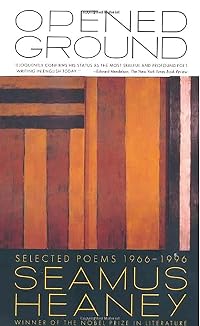
Seamus Heaney was born in Mossbawn, Ireland on April 13, 1939. He received a degree in English from Queen's College in Belfast in 1961. After earning his teacher's certificate in English from St. Joseph's College in Belfast the following year, he took a position at the school as an English teacher. During his time as a teacher at St. Joseph's, he show more wrote and published work in the university magazine under the pen name Incertus. In 1966, he became an English literature lecturer at Queen's College in Belfast. His first volume of poems, Death of a Naturalist, went on to receive the E.C. Gregory Award, the Cholmondeley Award, the Somerset Maugham Award, and the Geoffrey Faber Memorial Prize. After the death of his parents, Heaney published the poetry volumes The Haw Lantern, which includes a sonnet sequence memorializing his mother, and Seeing Things, a collection containing numerous poems for his father. His other works included Field Work, Opened Ground: Poems 1966-1996, and Human Chain. Heaney was a professor at Harvard from 1981 to 1997 and its Poet in Residence from 1988 to 2006. From 1989 to 1994 he was also the Professor of Poetry at Oxford and in 1996 was made a Commandeur de l'Ordre des Arts et Lettres. Other awards that he received include the Geoffrey Faber Memorial Prize (1968), the E. M. Forster Award (1975), the PEN Translation Prize (1985), the Golden Wreath of Poetry (2001), T. S. Eliot Prize (2006) and two Whitbread Prizes (1996 and 1999). In 2012, he was awarded the Lifetime Recognition Award from the Griffin Trust For Excellence In Poetry. His literary papers are held by the National Library of Ireland. He died following a short illness on August 30, 2013 at the age of 74. Heaney's last words were in a text to his wife Marie, "Noli timere", which means "Do not be afraid." (Bowker Author Biography) Seamus Heaney lives in Dublin and teaches at Harvard University. He was awarded the Nobel Prize in literature in 1995. (Publisher Provided) Seamus Heaney was born in 1939 in Northern Ireland. He was awarded the Nobel Prize in Literature in 1995. A resident of Dublin, he has taught poetry at Oxford University and Harvard University. (Publisher Provided) show less
All Editions
Series
Belongs to Publisher Series
Common Knowledge
- Canonical title
- Beowulf: A Verse Translation [Norton Critical Edition]
- Original publication date
- 2000 (Heaney translation) (Heaney translation); c. 700–1000 AD
- People/Characters
- Beowulf; Beowulf's Dragon; Grendel; Grendel's mother
- Important places
- Heorot, Denmark
- Disambiguation notice
- This LT Work is a Norton Critical Edition of the epic poem, Beowulf, in the Seamus Heaney Translation and edited by Daniel Donoghue. Please do not combine it either with alternate versions of the Norton Critical Editi... (show all)on (e.g., the Donaldson Translation, edited by Joseph E. Tuso) or with the LT Work for the original poem itself. Thank you.
Classifications
Statistics
- Members
- 1,032
- Popularity
- 25,129
- Reviews
- 9
- Rating
- (4.07)
- Languages
- English
- Media
- Paper, Ebook
- ISBNs
- 2
- ASINs
- 8
