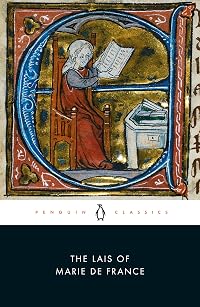
The Lais of Marie de France
by de France Marie
On This Page
Description
The twelve ?lays ? of Marie de France, the earliest known French woman poet, are here presented in sprightly English verse by poet and translator David R. Slavitt. Traditional Breton folktales were the raw material for Marie de France ?s series of lively but profound considerations of love, life, death, fidelity and betrayal, and luck and fate. They offer acute observations about the choices that women make, startling in the late twelfth century and challenging even today. Combining a woman show more ?s wisdom with an impressive technical bravura, the lays are a minor treasure of European culture. show lessTags
Recommendations









Member Recommendations

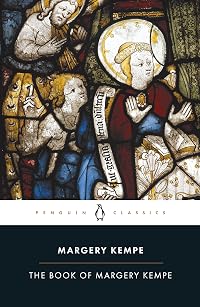
ed.pendragon The Lais are known to be by a French woman writing in England in the 12th century, while The Four Branches of the Mabinogi, written in Welsh, were probably by a 12th-century woman (as the study argues); both are narratives of great beauty and power.
Member Reviews
To be clear: I read the David Slavitt translation which is available free http://www.aupress.ca/index.php/books/120228
The style is really easy to read and has a good rhythm to it, with only a few weird words. The stories are solidly entertaining - like well written folktales - and my first read in the chivalric style. What stood out to me most is how almost every story feels like it features adultery from men who are, of course, highly chivalrous and virtuous. It's hard to tell what level of humour it's operating on sometimes when the guy says "oh let's go back and murder your husband" or (ending description/spoiler for the last tale, but it's such an incredible ending)the chivalrous guy conveniently doesn't mention to his new lover show more that he's married, takes her on a ship back to France from Albion, when a storm hits and one of his entourage says "this is a sign, this happened because you've done wrong" he MURDERS THE GUY while his lover faints in confusion. He thinks she's died, lays her to rest in a holy place, wife discovers and manages to revive her. Lover still claims he's virtuous despite acknowledging the deception. Wife is then like "oh this is chill, just let me become an abbess by giving me some land and you can marry her", he does, they get married, they live happily, then at the end THEY BOTH TAKE HOLY ORDERS, THE LOVER IN THE SAME ABBEY AS THE WIFE! AND THEY TRADE LETTERS AND ARE ALL VERY HAPPY. it's fucking great i love it
I would say this book has enhanced my understanding of chivalry as about a bunch of dudes who are horny all the time. Thank you show less
The style is really easy to read and has a good rhythm to it, with only a few weird words. The stories are solidly entertaining - like well written folktales - and my first read in the chivalric style. What stood out to me most is how almost every story feels like it features adultery from men who are, of course, highly chivalrous and virtuous. It's hard to tell what level of humour it's operating on sometimes when the guy says "oh let's go back and murder your husband" or (ending description/spoiler for the last tale, but it's such an incredible ending)
I would say this book has enhanced my understanding of chivalry as about a bunch of dudes who are horny all the time. Thank you show less
Marie de France is considered the first woman known to write francophone verse. Who she was is not really clear (it is not even clear if she is called Marie - even if her lais say so or that she was a woman really). But the current scholarship holds that she was a woman and has some ideas of who she may have been ranging from the French Henry II sister to the countess of Boulogne and Marie de Meulan. Based on her writing, she was born in France but spent a lot of time in England (which does not narrow the field of possibility as much as you would expect). Depending on how old a book about her is, you can see different claims about what she actually wrote - the lais collected here seem to always be considered hers but the Fables show more (translated or composed), "The Legend of the Purgatory of St. Patrick" and the newly tentatively attributed "The Life of Saint Audrey" had not always been connected to the author of the Lais. And I was thinking that we have a problem in our times with shared names of authors...
But what is a lai? In the case of Marie, a lai is a short (for some version of short) narrative poem, written in eight-syllable verse. They are an old French form, known and popular before Marie and they are a cousin to the longer romances to come later (which are more collections of adventures than single works). Just like the romances, they deal with heroes and what happens to them although with them being much shorter, they are more stories of things happening to people than of people going on adventures. The shortest of these 12 poems is 118 lines; the longest is 1,184 lines.
The order of the collection is not always clear - there are a lot of partial manuscripts, the order in the surviving ones seems to be almost random so in a lot of cases the editors decide how to order them when they are published. The editors of the Penguin edition used the order of the Harley manuscript (which also contains the prologue) and made a decision to translate the poems in prose.
That may sound weird but it is not unusual - most of the narrative poems, from Antiquity to nowadays, had seen prose translations. And the translations actually read like tales so even if I would have preferred a verse translation (and I may decide to chase one of those at some point), I liked the flow of the stories. Plus when you do not need to try to keep the rhythm, you have more freedom in words and expressions choices that actually fit the poem you are translating.
The poems themselves were not what I expected. There are damsels in distress and heroes but... there are also a lot of people cheating on their spouses and thinking about cheating (and not always being punished about it, especially if the husband was much older than the bride). There is a tale about a werewolf. There was a lot of implied sex (including a maiden who got liked so much by a man that she got pregnant). There are a lot of happy ends and most of the people who do good things get awarded for them but that did not always happen. The heroes usually got the girl but not all of them got to keep her. As with most of the medieval writing I had ever seen, there were usually the moral lessons to be learned by the tales but some of them may not be what you would expect in the 12th century. But there are also tales which end up in a way you hoped they won't ("Les Deux Amants" for example).
I picked up the book because of two of the lais connected to the Arthurian myths: "Lanval" and "Chevrefoil".
"Chevrefoil", which happens to retell an episode of the Tristan and Iseult mythology and is the shortest of the 12 lais, was a bit underwhelming besides the lyrical part somewhere in the middle of it which used the honeysuckle and hazel symbiosis as a metaphor for the love between the two lovers and spent some time expanding on that (thus the title of the lai meaning "Honeysuckle").
"Lanval" went into a direction I did not expect it to go. The knight Lanval gets in love with a fairy lady and because of that he refuses the advances of King Arthur's queen thus getting her very angry at him. When she cannot produce his lover (because she had broken the promise never to mention her), he gets in a real trouble - until he gets taken to Avalon at the end. Apparently this story was very popular and got retold a lot so I suspect I will meet Lanval again while exploring the Arthurian myths development. The poem mentions the Round Table explicitly as well - showing that it had become part of the Arthurian myths by the time the lai was written.
But I am happy that I read all of them and I will probably be returning to them (in a different translation) - I am curious to see how these work in verse even if the prose translation was pretty good.
One more note on the edition: the introduction is very useful for putting things in context, giving you some pointers on what to look for in specific poems... and telling you how the lais end, even when the end is surprising. Which is fine if you know the stories but very annoying if you don't. But it is helpful as a guide before you read them so... I am not sure if I would say to leave it for the end or not - I wish the editors (who are also the translators and wrote the introduction) had split it into two parts - leaving the text analysis and the spoilers for the endings for for the end of the book. But that's a common problem with introductions. show less
But what is a lai? In the case of Marie, a lai is a short (for some version of short) narrative poem, written in eight-syllable verse. They are an old French form, known and popular before Marie and they are a cousin to the longer romances to come later (which are more collections of adventures than single works). Just like the romances, they deal with heroes and what happens to them although with them being much shorter, they are more stories of things happening to people than of people going on adventures. The shortest of these 12 poems is 118 lines; the longest is 1,184 lines.
The order of the collection is not always clear - there are a lot of partial manuscripts, the order in the surviving ones seems to be almost random so in a lot of cases the editors decide how to order them when they are published. The editors of the Penguin edition used the order of the Harley manuscript (which also contains the prologue) and made a decision to translate the poems in prose.
That may sound weird but it is not unusual - most of the narrative poems, from Antiquity to nowadays, had seen prose translations. And the translations actually read like tales so even if I would have preferred a verse translation (and I may decide to chase one of those at some point), I liked the flow of the stories. Plus when you do not need to try to keep the rhythm, you have more freedom in words and expressions choices that actually fit the poem you are translating.
The poems themselves were not what I expected. There are damsels in distress and heroes but... there are also a lot of people cheating on their spouses and thinking about cheating (and not always being punished about it, especially if the husband was much older than the bride). There is a tale about a werewolf. There was a lot of implied sex (including a maiden who got liked so much by a man that she got pregnant). There are a lot of happy ends and most of the people who do good things get awarded for them but that did not always happen. The heroes usually got the girl but not all of them got to keep her. As with most of the medieval writing I had ever seen, there were usually the moral lessons to be learned by the tales but some of them may not be what you would expect in the 12th century. But there are also tales which end up in a way you hoped they won't ("Les Deux Amants" for example).
I picked up the book because of two of the lais connected to the Arthurian myths: "Lanval" and "Chevrefoil".
"Chevrefoil", which happens to retell an episode of the Tristan and Iseult mythology and is the shortest of the 12 lais, was a bit underwhelming besides the lyrical part somewhere in the middle of it which used the honeysuckle and hazel symbiosis as a metaphor for the love between the two lovers and spent some time expanding on that (thus the title of the lai meaning "Honeysuckle").
"Lanval" went into a direction I did not expect it to go. The knight Lanval gets in love with a fairy lady and because of that he refuses the advances of King Arthur's queen thus getting her very angry at him. When she cannot produce his lover (because she had broken the promise never to mention her), he gets in a real trouble - until he gets taken to Avalon at the end. Apparently this story was very popular and got retold a lot so I suspect I will meet Lanval again while exploring the Arthurian myths development. The poem mentions the Round Table explicitly as well - showing that it had become part of the Arthurian myths by the time the lai was written.
But I am happy that I read all of them and I will probably be returning to them (in a different translation) - I am curious to see how these work in verse even if the prose translation was pretty good.
One more note on the edition: the introduction is very useful for putting things in context, giving you some pointers on what to look for in specific poems... and telling you how the lais end, even when the end is surprising. Which is fine if you know the stories but very annoying if you don't. But it is helpful as a guide before you read them so... I am not sure if I would say to leave it for the end or not - I wish the editors (who are also the translators and wrote the introduction) had split it into two parts - leaving the text analysis and the spoilers for the endings for for the end of the book. But that's a common problem with introductions. show less
I don't know a lot about Medieval French poetry, but I can definitely see why the mysterious Marie de France is so well known among medieval writers. Her stories (written in the form of lais/lays) are both entertaining (who doesn't like romanticized knights) and are a definitive product of her time. Obviously the stories are quite outlandish, but we can actually tell quite a bit about how people living at her time were. Twin pregnancies could have definitely been perceived as omens of infidelity to the uneducated medieval minds, some amicable divorces may have been possible, and scheming wives were likely all par for the course. Obviously some of the subtlety and proper rhythmic format is lost in translation (and likely altered by this show more specific translator's substantial ego), but the poems were still quite enjoyable to read. show less
Quick and lovely read. I was getting a bit bored with the typical retelling of the same Arthurian stories, but these offer refreshing new tales from the same knightly time period. Also there’s one lay with a werewolf. The introduction was well written and functions well.
Marie de France was a woman who lived in the twelfth century. She is one of the earliest female writers in English literature. Her collection of lais, written in the style of the pre-existing Breton lais, tell stories of knights and ladies, kings and queens, sorcery and love.
Each lai of Marie’s reads like a fairy tale or a bite-sized portion of Arthurian legend. Arthur does appear in one lai and there is another lai about Tristan and Isolde. But for the most part these are new stories about unknown figures that still take place in that extremely courtly environment we know from Arthurian legend. Courtly love abounds in these poems, as do other values of twelfth-century Britain.
Marie’s writing is clear and accessible. It doesn’t show more borrow flowery or obscure phrases, so it’s quite pleasant to follow along. That doesn’t mean it reads like an uneducated person wrote it, however. On the contrary. I found Marie’s lais to contain a lot of complex themes. Even the lais that on the outside read like straightforward fables contain hidden depths. If you don’t believe me, take a look at “Chevrefoil.” That lai turns the traditional theme of a woman so beautiful that several men fight for her on its head.
So for anyone who is interested in medieval literature and the courtly tradition, but doesn’t want to wade through difficult, pompous texts, this is a good place to start. show less
Each lai of Marie’s reads like a fairy tale or a bite-sized portion of Arthurian legend. Arthur does appear in one lai and there is another lai about Tristan and Isolde. But for the most part these are new stories about unknown figures that still take place in that extremely courtly environment we know from Arthurian legend. Courtly love abounds in these poems, as do other values of twelfth-century Britain.
Marie’s writing is clear and accessible. It doesn’t show more borrow flowery or obscure phrases, so it’s quite pleasant to follow along. That doesn’t mean it reads like an uneducated person wrote it, however. On the contrary. I found Marie’s lais to contain a lot of complex themes. Even the lais that on the outside read like straightforward fables contain hidden depths. If you don’t believe me, take a look at “Chevrefoil.” That lai turns the traditional theme of a woman so beautiful that several men fight for her on its head.
So for anyone who is interested in medieval literature and the courtly tradition, but doesn’t want to wade through difficult, pompous texts, this is a good place to start. show less
Marie de France is one of the earliest known female authors, though we know little about her beyond her name, that she wrote in French and was evidently of French origin, and that she spent part of her life in England. To that extent, I found myself interested by these stories, and from a historical perspective there's a lot here. But my problem with the stories—and the reason why I'm a socio-economic historian and not a scholar of literature—is that they reflect such different sensibilities from mine that I find it extremely difficult to relate to the characters or to understand their actions. Marie does a better job than most medieval authors at making her characters something more than mere ciphers whose primary task is to show more communicate a moral lesson, but there was still more than one occasion where I found myself completely unable to believe that someone would (re)act in the way they did here. There's a lot of telling, not showing, and I find that difficult to relate to. (I read the edition translated by Robert Hanning and Joan Ferrante, which is a model of clarity; good explanatory notes.) show less
14. The Lais of Marie de France
translation: from Old French by Glyn S. Burgess & Keith Busby, 1986
composed: circa 1170, maybe for Henry II of England
format: 134-page paperback (2003 edition)
acquired: library book read: Mar 28 – Apr 2 time reading: 6:10, 2.8 mpp
rating: 4
genre/style: medieval literature, theme random
locations: Brittany, Devon and Wales
about the author: unknown, but the lais themselves say Marie.
Medieval love tales from French Brittany translated from Old French verse to English prose. I requested this from the library after reading about [Matrix] by Laura Goff here in Club Read and on Litsy. I think someone said forget the novel, read the Lais and that stuck. Anyway, it's a tiny book. There are twelve Lais, found show more amongst four manuscripts. They were possibly written for Henry II of England around 1170. Lengths vary, but they average about 10 pages each (ok, 7.167 pages). These are all love stories with knights and damsels and tragedy. Fun stuff. They come with a prologue and each story has its own tiny prologue, in first person. Most of them say something like, "I relay to you the Lais of so-and-so, as told, of old, by the Bretons." The first opens, "Whoever has good material for a story is grieved if the tale is not well told." Another opens discussing how one should go about presenting a new story.
This is charming fun stuff. Easy reading in this Penguin edition.
2022
https://www.librarything.com/topic/341027#7805221 show less
translation: from Old French by Glyn S. Burgess & Keith Busby, 1986
composed: circa 1170, maybe for Henry II of England
format: 134-page paperback (2003 edition)
acquired: library book read: Mar 28 – Apr 2 time reading: 6:10, 2.8 mpp
rating: 4
genre/style: medieval literature, theme random
locations: Brittany, Devon and Wales
about the author: unknown, but the lais themselves say Marie.
Medieval love tales from French Brittany translated from Old French verse to English prose. I requested this from the library after reading about [Matrix] by Laura Goff here in Club Read and on Litsy. I think someone said forget the novel, read the Lais and that stuck. Anyway, it's a tiny book. There are twelve Lais, found show more amongst four manuscripts. They were possibly written for Henry II of England around 1170. Lengths vary, but they average about 10 pages each (ok, 7.167 pages). These are all love stories with knights and damsels and tragedy. Fun stuff. They come with a prologue and each story has its own tiny prologue, in first person. Most of them say something like, "I relay to you the Lais of so-and-so, as told, of old, by the Bretons." The first opens, "Whoever has good material for a story is grieved if the tale is not well told." Another opens discussing how one should go about presenting a new story.
This is charming fun stuff. Easy reading in this Penguin edition.
2022
https://www.librarything.com/topic/341027#7805221 show less
Members
- Recently Added By
Lists

100 Books to Read in a Lifetime (That Are Older Than 200 Years)
415 works; 173 members

Read in 2016
107 works; 7 members

Books Read in 2024
4,727 works; 128 members

In Our Time books
4,934 works; 2 members

Lectuurlijst
63 works; 1 member
Author Information

Some Editions
Awards and Honors
Awards
Series
Belongs to Publisher Series
Mingling Voices (2013.09)
Work Relationships
Is contained in
Contains
Inspired
Common Knowledge
- Canonical title
- The Lais of Marie de France
- Original publication date
- 1190 (circa) (circa)
- People/Characters
- Lanval; Marie de France; King Arthur; Tristan; Iseult the Fair; Bisclavret
- Important places
- Brittany, France; France
- First words
- Ki Deus ad duné escïence /
E de parler bon eloquence /
Ne s'en deit taisir ne celer, /
Ainz se deit volunters mustrer.
If one has received from God the great
gift of eloquence, it is his fate
and duty to exercise and display
these talents. If one would compose a lay
he must speak or rather write
as well as he can for men's deli... (show all)ght
and appreciation. The talent will first
blossom in his company's thirst
for more and ever more of the same. {Slavitt} - Publisher's editor
- Radice, Betty
- Original language
- Old French
Classifications
Statistics
- Members
- 2,514
- Popularity
- 7,657
- Reviews
- 24
- Rating
- (3.87)
- Languages
- 10 — Catalan, Dutch, English, French, French (Middle), Old French, German, Italian, Multiple languages, Spanish
- Media
- Paper, Audiobook, Ebook
- ISBNs
- 62
- UPCs
- 1
- ASINs
- 15