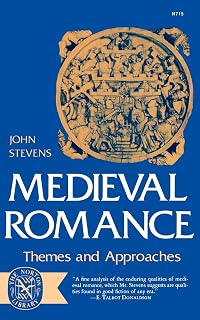
Medieval romance: themes and approaches (English literature)
by John E. Stevens
On This Page
Description
The subjects of medieval romance are the great and permanent concerns of the human mind. A literature is best approached by newcomers, through its major achievements, the author of this book, originally published in 1973, maintains. The book's discussion centres on the romances of Chaucer and Chre?tien de Troyes, and on such texts as Sir Gawain and the Green Knight, the Roman de la Rose, and Malory's Morte d'Arthur. The book's introductory chapters stress the continuity between medieval and show more later literature. show lessTags
Recommendations



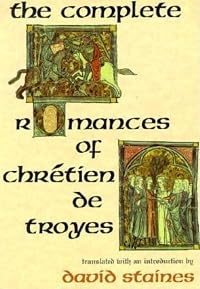
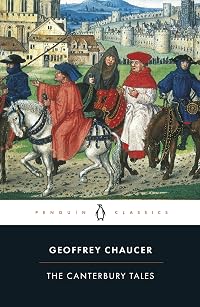
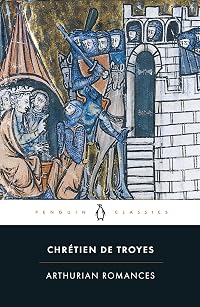


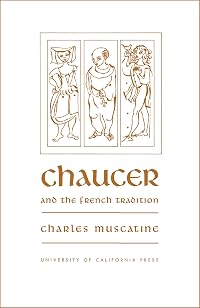





















Member Recommendations

waltzmn The Romances weren't written in isolation; they had a literary and a social context. Although now rather dated, this highly readable book is a good introduction to that context.

waltzmn An excellent sample of the Middle English romances, including several of the best (Sir Orfeo, Floris and Blancheflour), the oldest (King Horn), the coarsest (Gamelyn), and the funniest (The Tournament of Tottenham), all with introductions and solid glossing.
Member Reviews
You'd think that, six hundred years after the romances were written, people would have figured them out.
Surprisingly, this is still not true. Reputable scholars argue about whether a Romance (in the proper, medieval sense of the term) must be about courtly love, or about knighthood, or about courtesy, or about magic.
The best answer, surely, is that it may be about those things, but it must be about people who strive to be greater than themselves, and who work to accomplish something of true importance. The purpose of the romance is to strip away the mundane things that make this harder to see. So there may be magic, because a magical world tends to make it easier to understand good and evil. There may be courtly love, because a certain show more part of the population saw this as virtuous. There may be knights, because the ideal of chivalry tends to be expressed through tales of knighthood. But there may be none of these things -- a romance such as Gamelyn has no magic, no women, and a main character whose only virtue is his quick fists.
So to understand romances requires a broad view, looking at the settings of the romance, the characters, the mechanics -- all the myriad working parts.
Few books do that as well as this. This isn't a book of romances, it is a book about romances, and one of the most thought-provoking I have seen. Most books on romances, e.g., talk about modern romances, such as Tolkien's Middle Earth complex or the Harry Potter books, as latter-day expressions of an ancient phenomenon. I have to admire a book that has the nerve to turn that on its head and say that we should study the medieval romances because they are the sources Tolkien consulted to write the first great modern romance.
This is not a perfect book. A few of the examples run on too long. And very little attention is paid to the structure of the romances -- verse forms and the like. Still, in writing my own book on romances, I found that I cited this slim volume more than any other source. If you are the sort who takes an exclusionist view of romances, Stevens may not appeal to you. But if you want to study the romances in all their amazing (and, admittedly, sometimes monotonous) variety, this is a very good book to have. show less
Surprisingly, this is still not true. Reputable scholars argue about whether a Romance (in the proper, medieval sense of the term) must be about courtly love, or about knighthood, or about courtesy, or about magic.
The best answer, surely, is that it may be about those things, but it must be about people who strive to be greater than themselves, and who work to accomplish something of true importance. The purpose of the romance is to strip away the mundane things that make this harder to see. So there may be magic, because a magical world tends to make it easier to understand good and evil. There may be courtly love, because a certain show more part of the population saw this as virtuous. There may be knights, because the ideal of chivalry tends to be expressed through tales of knighthood. But there may be none of these things -- a romance such as Gamelyn has no magic, no women, and a main character whose only virtue is his quick fists.
So to understand romances requires a broad view, looking at the settings of the romance, the characters, the mechanics -- all the myriad working parts.
Few books do that as well as this. This isn't a book of romances, it is a book about romances, and one of the most thought-provoking I have seen. Most books on romances, e.g., talk about modern romances, such as Tolkien's Middle Earth complex or the Harry Potter books, as latter-day expressions of an ancient phenomenon. I have to admire a book that has the nerve to turn that on its head and say that we should study the medieval romances because they are the sources Tolkien consulted to write the first great modern romance.
This is not a perfect book. A few of the examples run on too long. And very little attention is paid to the structure of the romances -- verse forms and the like. Still, in writing my own book on romances, I found that I cited this slim volume more than any other source. If you are the sort who takes an exclusionist view of romances, Stevens may not appeal to you. But if you want to study the romances in all their amazing (and, admittedly, sometimes monotonous) variety, this is a very good book to have. show less
Ratings
Members
- Recently Added By
Author Information
7 Works 69 Members
Common Knowledge
- Original publication date
- 1973
- People/Characters
- Geoffrey Chaucer; Chrétien de Troyes; Floris; Blanchefleur; Gottfried von Strassburg; Gawain (show all 14); John Gower; King Horn; C. S. Lewis; Sir Thomas Malory; Marie, Countess of Champagne; Marie de France; Tristan; Isolde
- Dedication
- FOR ARTHUR
- First words
- PREFACE
Medieval romance, like other branches of medieval writing, has too often been regarded as the property of specialists.
I
INTRODUCTION:
THE PERMANENCE OF ROMANCE
'Why study romance?', one may properly ask. One answer is paramount. The romance stands to medieval literature as the novel stands to the literature of the nineteen... (show all)th and twentieth centuryes.
Classifications
- Genres
- Literature Studies and Criticism, Fiction and Literature, Romance
- DDC/MDS
- 809.1 — Literature & rhetoric Literature, rhetoric & criticism History, description, critical appraisal of more than two literatures Poetry
- LCC
- PN688 .S75 — Language and Literature Literature (General) Literature (General) Literary history By period Medieval (to 1500) Poetry
- BISAC
Statistics
- Members
- 31
- Popularity
- 904,028
- Reviews
- 1
- Rating
- (4.50)
- Languages
- English
- Media
- Paper, Ebook
- ISBNs
- 4