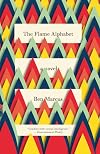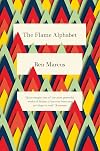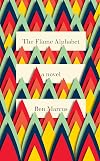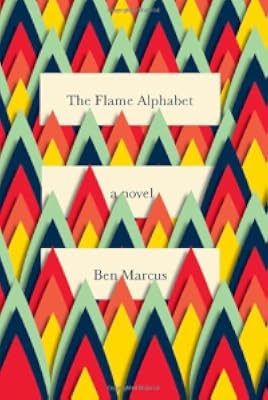
The Flame Alphabet
by Ben Marcus 
On This Page
Description
In The Flame Alphabet, the most maniacally gifted writer of our generation delivers a novel about how far we will go in order to protect our loved ones.The sound of children's speech has become lethal. In the park, adults wither beneath the powerful screams of their offspring. For young parents Sam and Claire, it seems their only means of survival is to flee from their daughter, Esther. But they find it isn't so easy to leave someone you love, even as they waste away from her malevolent show more speech. On the eve of their departure, Claire mysteriously disappears, and Sam, determined to find a cure for this new toxic language, presses on alone into a foreign world to try to save his family.
. show less
Tags
Recommendations
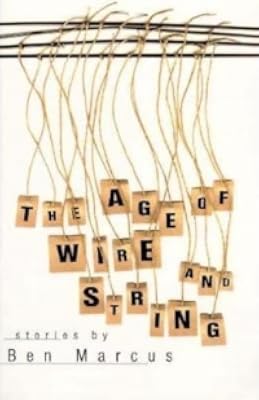
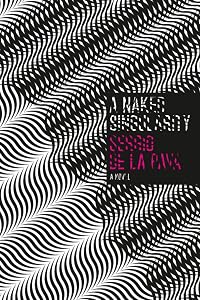
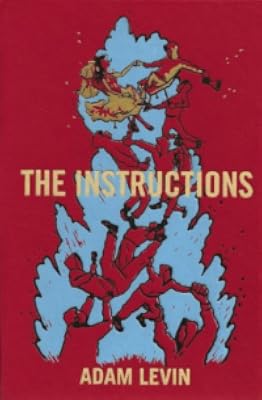
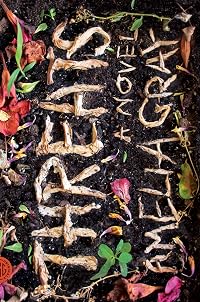


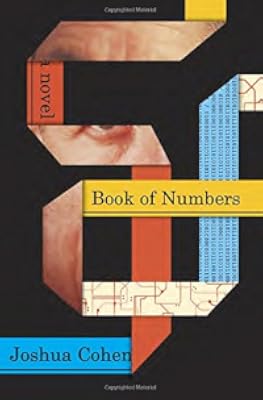
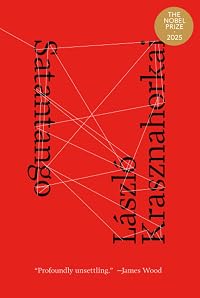

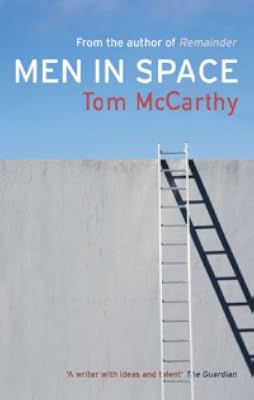
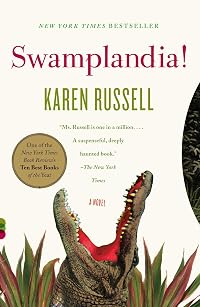



Member Recommendations
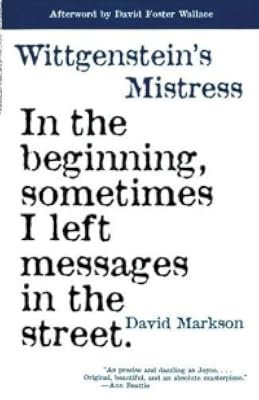
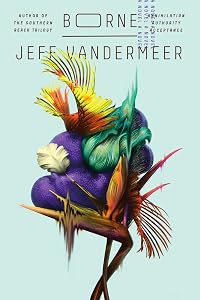
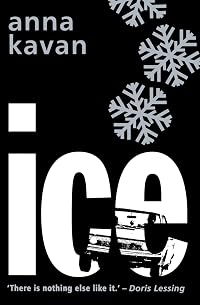
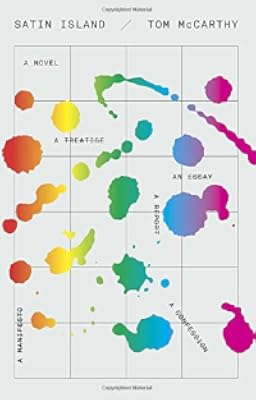
ShelfMonkey Very similar themes.

Member Reviews
I sort of hoped I'd dislike "The Flame Alphabet" just so I could call it "the lame alphabet" in my review, but, alas, this one is really pretty good. In a story that might have been hard for some readers to identify with prior to February 2020, the book's narrator fights hard to protect his wife and daughter from a mysterious plague that seems to be spread by language. I suspect that it'd be easy for readers better-educated than myself to craft analyses of this phenomenon that make frequent references to heavy-duty postmodern texts, but, for better or worse, that's beyond me right now. In more pedestrian terms, "The Flame Alphabet" could be called a sort of near-future dystopia, a literary novel that borrows heavily from some time-worn show more science fiction elements. It's not an easy read, though: its prose does its best to imitate corrosive qualities of the poisoned language in the story: dry, exacting, clear-eyed, and, at times, unpleasantly dissonant, Marcus seems set on perturbing his readers at a sort of molecular literary level. Perhaps it's not the thing to read in quarantine, though the way he complements the story's themes with an astringent prose style is frankly impressive.
This isn't to say that "The Flame Alphabet" is an entirely cruel book: in a sense, it's also, in a sense, a beautiful and even heartfelt meditation on the differences between thought, speech, writing and some ultimate spiritual Word. Marcus seems to be drawing on historical traditions of Jews that worshiped in secret and Jewish ideas about the relationship between the written word, God's creation and the divine to imagine a sort of alternate religious tradition that reconfigures the relationship between all three of these things. In places -- particularly when he describes the physical relationship between the narrator and his wife and her slow, sad physical decline during the plague -- "The Flame Alphabet" can be a surprisingly physical reading experience for a novel that's so focused on ideas and so sparing with its language. As the book ends, the narrator seems to have slipped into a tranquil, largely silent old age and to have rediscovered the power of silence. While I didn't necessarily love the way that the author arrives here -- the book has a big plot hole in its last third -- it seems a fitting ending for such a tense, oftentimes contradictory piece of writing. Marcus seems to have written a text about the potentially destructive power of text itself which is both an intellectual challenge, in places, a real pleasure to read. That's no mean feat. This one was my first Marcus; I may try to hunt up some of his other books, despite the danger that they might pose to my well-being. show less
This isn't to say that "The Flame Alphabet" is an entirely cruel book: in a sense, it's also, in a sense, a beautiful and even heartfelt meditation on the differences between thought, speech, writing and some ultimate spiritual Word. Marcus seems to be drawing on historical traditions of Jews that worshiped in secret and Jewish ideas about the relationship between the written word, God's creation and the divine to imagine a sort of alternate religious tradition that reconfigures the relationship between all three of these things. In places -- particularly when he describes the physical relationship between the narrator and his wife and her slow, sad physical decline during the plague -- "The Flame Alphabet" can be a surprisingly physical reading experience for a novel that's so focused on ideas and so sparing with its language. As the book ends, the narrator seems to have slipped into a tranquil, largely silent old age and to have rediscovered the power of silence. While I didn't necessarily love the way that the author arrives here -- the book has a big plot hole in its last third -- it seems a fitting ending for such a tense, oftentimes contradictory piece of writing. Marcus seems to have written a text about the potentially destructive power of text itself which is both an intellectual challenge, in places, a real pleasure to read. That's no mean feat. This one was my first Marcus; I may try to hunt up some of his other books, despite the danger that they might pose to my well-being. show less
Imagine knowing that you could become severely, maybe terminally, ill, just from a loved one opening their mouth. There is no reliable cure or treatment for this new disease, but children are least affected. The contagion is spreading. There are quarantines and travel restrictions. Its causes and mechanisms are unclear and controversial, feeding conspiracy theories. You can’t speak freely about it.
In May 2021, that doesn’t require imagination. Although the UK is slowly lifting lockdown restrictions, Covid is raging worse than ever in places like India, and new variants raise the possibility of locking down again.
However, this 2012 novel concerns a very different pathogen. One we’re addicted to: language becomes literally, show more lethally toxic.
Image: “Sticks and stones may break my bones, but words can never hurt me” has always been a damaging lie. (Source - with extra mouseover text.)
“We had to prepare for a time when communication was impossible.”
The mind-warping idea of a world without language is the best aspect of this book. It’s also the one that requires the greatest suspension of disbelief: the inherent paradox of writing about the loss of language, at length, using elaborate and florid style. Marcus admitted in an interview that it’s “a gift to a reviewer who didn’t like the book”. As with many of the apparent plot-holes, there is eventually a partial explanation.
Although animals and maybe plants have means of communicating with each other, the ubiquity and complexity of human languages is part of what makes us human - as individuals and as communities.
“The absence of language… had turned us into a king of emotive cattle… our faces… had atrophied into slack, piggish masks.”
The necessity to communicate starts from birth: eyes, cries, and then language. Even the shyest person knows “The craven desire to speak, to write, to be heard”. Just recall the frustration of trying to communicate with someone when you don’t have a common language, if you’ve had laryngitis so badly you couldn’t speak, or when you lose your phone and internet connection. We may complain of information overload, but better that than nothing at all.
When you’re craving language, and the loss is triggered by those you love the most, who you have a duty to care for, it pushes the limits of unconditional parental love, and any means to cure the disease seem justified. Child’s play?
Image: Face in the flames? Our compulsion to seek meaning is what causes pareidolia and is arguably at the root of all religions and supernatural beliefs. (Source)
Before, during, and after
The book opens with drama, fear, and pseudoscience:
“We left on a school day, so Esther wouldn’t see us… I stashed field glasses, sound abatement fabrics… anti-comprehension pills, a child’s radio retrofitted as a toxicity screen, an unopened bit of gear called a Dräger Aerotest breathing kit, and my symptom charts… [and] a personal noise dosimeter, hacked to measure children's speech. I wanted to be able to hear them coming.”
It continues in that vein, interspersed with backstory.
The middle section felt much longer (it’s actually slightly shorter) and is set in LeBov’s research lab in “the year of the sewn-up mouth” (the disease causes progressive facial smallness and rigidity). They research treatments as well as alternative forms of communication: ancient scripts, codes, and ciphers, using tools to see only part of one character at a time. They wear goggles to avoid eye contact and when someone gestured with their hands, a blanket was thrown over them. There are echoes of Nazi concentration camps (especially a brief shower scene).
A very short final section is gloomy, shocking, and although it answers some questions about possible plot holes, it raises new and bigger ones that left me doubting the narrator’s reliability more than I had previously. A bird falling from a tree is a powerful symbol.
Judaism
Sam and Claire are Reconstructionist Jews, aka Forest Jews who listen to Rabbi Burke’s weekly sermons via an unreliable radio in the “Jew hole” of their cabin in the woods. It’s “an entirely covert method of devotion”, not even to be discussed between husband and wife, and the message is “skeletal, in bones of language that often could not be joined for sense… meaning ripped out”.
It’s a fictitious, mystical, and secretive sect, and initially the plague is blamed on Jewish children. I was uncomfortable, but reassured when I found Marcus’s father was Jewish, he had a Bar Mitzvah, and the book has been reviewed in the Jewish press. After that, I was merely conscious of how little I know about Judaism and Kabbalah.
The sect is perfect for this dystopia because it has already dispensed with language and comprehension to some extent, and doesn’t seek converts, so doesn’t need to explain itself.
“Worship without the pollution of comprehension of a community.”
Quotes
• “We feasted on the putrid material because our daughter made it. We gorged on it, and inside us it steamed, rotted, turned rank.”
• “I was bracing for her [teen daughter’s] ambivalence to mature into a more liberal hostility.”
• “Deprived of all communication, a father dissolves… Perhaps it is better now to liken a father to an animal parent.”
• “Gelatinous bird sounds flowed out, half-words and astringent syllables that produced a low-grade menace.” [Teenager in her room]
• “Engorged medical waste canisters.” [School bus, used for evacuation]
• “Personal stories… are the most powerful impediment to any true understanding.”
• “Earshot. Such a true word.”
• “The trees stood bloodless, barely holding the wind.”
• “It was early December. The year of the sewn-up mouth. The last December of speech. If you were not a child, safely blanketed in quarantine, bleating poison from your little red mouth, you were one of us.”
• “One of those languages unsuited to describing anything but itself.” [Constellations]
• “Spreading messages dilutes them. Even understanding them is a compromise.”
• “Judaism to me, as badly as I practiced it, what I’ve always loved about it was its total embrace of complexity, its admission of unknowability.” [Ben Marcus, in an interview]
In a lighter vein
This is not a funny book - except for the most revolting birthday cake:
“There wasn’t much food left in the cupboard, just some pancake mix and a blend of baking powders… From the meaty, mineral smell I figured this would give a lift to the cake… For liquids I had an egg and some buttermilk, the custardy sludge from the bottom of the carton. I could boil the buttermilk to kill off bacteria, then flash freeze it before dumping it into the batter. The egg, too, would need flame, because it was likely spoiled by now. I broked it into a pan, stifled a gag, then whisked it… Mostly it did not congeal… For sugar I reduced the last of the orange juice until it thickened into a syrup.”
Anyone who knows Monty Python will, or should, immediately have thought of their sketch about The killer Joke. You can read the script HERE and watch it HERE.
A very different novelistic take on limited language is Mark Dunn’s Ella, Minnow, Pea (see my review HERE). I hated it, but if I’d read it as YA humour, rather than adult dystopia, I might have been slightly entertained.
A really good novel on the theme is Yōko Ogawa's The Memory Police. See my review HERE.
In a darker vein
There's a story in Daisy Johnson's Fen about someone's speech causing physical pain, though that's a more mythical and less dystopian setting. See my review HERE.
For a really gory take on the pain of language, read Kafka's In The Penal Colony. See my review HERE. show less
In May 2021, that doesn’t require imagination. Although the UK is slowly lifting lockdown restrictions, Covid is raging worse than ever in places like India, and new variants raise the possibility of locking down again.
However, this 2012 novel concerns a very different pathogen. One we’re addicted to: language becomes literally, show more lethally toxic.
Image: “Sticks and stones may break my bones, but words can never hurt me” has always been a damaging lie. (Source - with extra mouseover text.)
“We had to prepare for a time when communication was impossible.”
The mind-warping idea of a world without language is the best aspect of this book. It’s also the one that requires the greatest suspension of disbelief: the inherent paradox of writing about the loss of language, at length, using elaborate and florid style. Marcus admitted in an interview that it’s “a gift to a reviewer who didn’t like the book”. As with many of the apparent plot-holes, there is eventually a partial explanation.
Although animals and maybe plants have means of communicating with each other, the ubiquity and complexity of human languages is part of what makes us human - as individuals and as communities.
“The absence of language… had turned us into a king of emotive cattle… our faces… had atrophied into slack, piggish masks.”
The necessity to communicate starts from birth: eyes, cries, and then language. Even the shyest person knows “The craven desire to speak, to write, to be heard”. Just recall the frustration of trying to communicate with someone when you don’t have a common language, if you’ve had laryngitis so badly you couldn’t speak, or when you lose your phone and internet connection. We may complain of information overload, but better that than nothing at all.
When you’re craving language, and the loss is triggered by those you love the most, who you have a duty to care for, it pushes the limits of unconditional parental love, and any means to cure the disease seem justified. Child’s play?
Image: Face in the flames? Our compulsion to seek meaning is what causes pareidolia and is arguably at the root of all religions and supernatural beliefs. (Source)
Before, during, and after
The book opens with drama, fear, and pseudoscience:
“We left on a school day, so Esther wouldn’t see us… I stashed field glasses, sound abatement fabrics… anti-comprehension pills, a child’s radio retrofitted as a toxicity screen, an unopened bit of gear called a Dräger Aerotest breathing kit, and my symptom charts… [and] a personal noise dosimeter, hacked to measure children's speech. I wanted to be able to hear them coming.”
It continues in that vein, interspersed with backstory.
The middle section felt much longer (it’s actually slightly shorter) and is set in LeBov’s research lab in “the year of the sewn-up mouth” (the disease causes progressive facial smallness and rigidity). They research treatments as well as alternative forms of communication: ancient scripts, codes, and ciphers, using tools to see only part of one character at a time. They wear goggles to avoid eye contact and when someone gestured with their hands, a blanket was thrown over them. There are echoes of Nazi concentration camps (especially a brief shower scene).
A very short final section is gloomy, shocking, and although it answers some questions about possible plot holes, it raises new and bigger ones that left me doubting the narrator’s reliability more than I had previously. A bird falling from a tree is a powerful symbol.
Judaism
Sam and Claire are Reconstructionist Jews, aka Forest Jews who listen to Rabbi Burke’s weekly sermons via an unreliable radio in the “Jew hole” of their cabin in the woods. It’s “an entirely covert method of devotion”, not even to be discussed between husband and wife, and the message is “skeletal, in bones of language that often could not be joined for sense… meaning ripped out”.
It’s a fictitious, mystical, and secretive sect, and initially the plague is blamed on Jewish children. I was uncomfortable, but reassured when I found Marcus’s father was Jewish, he had a Bar Mitzvah, and the book has been reviewed in the Jewish press. After that, I was merely conscious of how little I know about Judaism and Kabbalah.
The sect is perfect for this dystopia because it has already dispensed with language and comprehension to some extent, and doesn’t seek converts, so doesn’t need to explain itself.
“Worship without the pollution of comprehension of a community.”
Quotes
• “We feasted on the putrid material because our daughter made it. We gorged on it, and inside us it steamed, rotted, turned rank.”
• “I was bracing for her [teen daughter’s] ambivalence to mature into a more liberal hostility.”
• “Deprived of all communication, a father dissolves… Perhaps it is better now to liken a father to an animal parent.”
• “Gelatinous bird sounds flowed out, half-words and astringent syllables that produced a low-grade menace.” [Teenager in her room]
• “Engorged medical waste canisters.” [School bus, used for evacuation]
• “Personal stories… are the most powerful impediment to any true understanding.”
• “Earshot. Such a true word.”
• “The trees stood bloodless, barely holding the wind.”
• “It was early December. The year of the sewn-up mouth. The last December of speech. If you were not a child, safely blanketed in quarantine, bleating poison from your little red mouth, you were one of us.”
• “One of those languages unsuited to describing anything but itself.” [Constellations]
• “Spreading messages dilutes them. Even understanding them is a compromise.”
• “Judaism to me, as badly as I practiced it, what I’ve always loved about it was its total embrace of complexity, its admission of unknowability.” [Ben Marcus, in an interview]
In a lighter vein
This is not a funny book - except for the most revolting birthday cake:
“There wasn’t much food left in the cupboard, just some pancake mix and a blend of baking powders… From the meaty, mineral smell I figured this would give a lift to the cake… For liquids I had an egg and some buttermilk, the custardy sludge from the bottom of the carton. I could boil the buttermilk to kill off bacteria, then flash freeze it before dumping it into the batter. The egg, too, would need flame, because it was likely spoiled by now. I broked it into a pan, stifled a gag, then whisked it… Mostly it did not congeal… For sugar I reduced the last of the orange juice until it thickened into a syrup.”
Anyone who knows Monty Python will, or should, immediately have thought of their sketch about The killer Joke. You can read the script HERE and watch it HERE.
A very different novelistic take on limited language is Mark Dunn’s Ella, Minnow, Pea (see my review HERE). I hated it, but if I’d read it as YA humour, rather than adult dystopia, I might have been slightly entertained.
A really good novel on the theme is Yōko Ogawa's The Memory Police. See my review HERE.
In a darker vein
There's a story in Daisy Johnson's Fen about someone's speech causing physical pain, though that's a more mythical and less dystopian setting. See my review HERE.
For a really gory take on the pain of language, read Kafka's In The Penal Colony. See my review HERE. show less
Ben Marcus is obviously some kind of genius, but that doesn't mean reading The Flame Alphabet is a pleasant experience. I have about ten pages to go in the novel, but even if the last nine of those ten pages feature unicorns farting rainbows, I will still consider myself some kind of stalwart mofo for making it through all this alive.
Let me just say that the central concept, of language (and especially the language of children) becoming a virulent toxin* is the LEAST disturbing thing about the imagined world of The Flame Alphabet. In terms of emotional affect, my own gut reaction, that is, to the act of reading this book, I was reminded of J. G. Ballard's novel Crash. I love Ballard, but I was unable to finish Crash because I kinda got show more nauseated.
In addition, as some other reviewers have pointed out, the characters (if that's even what they are) here are deeply un-likeable. I guess what I'm saying is that the novel is brilliant, but in order to read it you have to commit to something that will not be fun. "Enjoy" is not an applicable term, at least not in its usual sense.
* It made me think of William S. Burroughs' "language is a virus from outer space." show less
Let me just say that the central concept, of language (and especially the language of children) becoming a virulent toxin* is the LEAST disturbing thing about the imagined world of The Flame Alphabet. In terms of emotional affect, my own gut reaction, that is, to the act of reading this book, I was reminded of J. G. Ballard's novel Crash. I love Ballard, but I was unable to finish Crash because I kinda got show more nauseated.
In addition, as some other reviewers have pointed out, the characters (if that's even what they are) here are deeply un-likeable. I guess what I'm saying is that the novel is brilliant, but in order to read it you have to commit to something that will not be fun. "Enjoy" is not an applicable term, at least not in its usual sense.
* It made me think of William S. Burroughs' "language is a virus from outer space." show less
Half of this novel is devoted to a parable of raising an adolescent, whose speech turns lethal when they learn sarcasm. The other half is one of those after-the-fall-of-civilization things where people are either dying from hearing language, or struggling to find a way to communicate without inducing lethality.
It doesn't work. Sure, the first part is fun, in an aren't-kids-awful sort of way, or maybe aren't -parents-pathetic. And okay, the idea is interesting. But Marcus clearly outruns his ability here, or isn't as clever as he thinks he is, or however you want to dress up the notion that the novel is utter crap by somebody who thinks that all there is to science is torturing lab animals until one of them surprises you.
This not show more unconvincing in a [b:Blindness|40495148|Blindness|José Saramago|https://i.gr-assets.com/images/S/compressed.photo.goodreads.com/books/1528481068l/40495148._SY75_.jpg|3213039] way, where you think okay, I get it, some people are bad and the rest are largely unprepared for dealing with them, but I'm not buying this whole "blindness plague", nor am I convinced that is how the government would react to it. It presents itself as an allegory, and one trundles along ignoring all the mistakes and the poor reasoning, and then one gets to the end and thinks, what, so this is about a guy who's a loser, whose wife and daughter want nothing to do with him, but he doesn't realize it and loses them and so he writes a book because communication was the problem all along, see, he didn't have a language which they understood, and that's why everything fell apart. It's not an allegory or an internal journey or anything like that: it's a dull tale about a dull guy who the world pushes around and who never learns, never improves, never figures out how to get along with other people.
But enough about the story. Let's talk about the actual writing, which is pretty difficult to get though. It's not difficult because it's complicated, or because conversation isn't directly attributed to characters, or because it's stream-of-consciousness, or because you need to infer what is happening instead of trusting the text directly. It's hard to pin down, but the closest I can come is "the writer can string words together but he cannot communicate an idea". Okay, maybe it's intentional, and writing that somehow uses words but says nothing is the result of the protagonist's "research", and see it's meta and not merely bad writing. In which case well done, pal, for your next trick why don't you make a film that stabs the viewer in the eye. It's all good if you meant to do it!
A lot of the writing lands with the sound of a ball of lead hitting a concrete floor. As a parting gift, here is a selection of phrases jarring enough to interrupt the act of reading and make a note of:
"As Murphy would later say: We are in a high season of error." Nobody would say that. Ever.
"Claire's legs rose too easily in my hands, as though they'd been relieved of their bones." You know bones are actually the light part, right? And the part that makes a leg say, liftable?
"Her bottom flattened beneath me, as if relieved of its bones, and the generous skin of her back pooled onto the bed." This is how somebody who has never seen a naked human body might describe it, sure.
"Without sound, celebration and grief look nearly the same." No, they don't.
"Her hand dropped, found my coldness, squished it inside her fist." The most erotic writing since [b:Dhalgren|40963358|Dhalgren|Samuel R. Delany|https://i.gr-assets.com/images/S/compressed.photo.goodreads.com/books/1532735651l/40963358._SY75_.jpg|873021]!
"The technicians bobbed in place like rifle targets". Which don't bob, at least none that I've ever seen or shot at.
"Claire shouted. I held my ground. Esther's allergy to ceremony was predicted by all the guides we'd half read about teenagers." Allergy, eh? She broke out in hives?
"When I approached him, a pale cylinder of liquid birthed from his mouth." Nope, I don't believe you. Nor do I believe you know what a cylinder, a mouth, or birthing is.
"Claire and I held synagogue inside a small hut in the woods that recieved radio transmissions through underground cabling." The thing about radio, you see, it is travels through the air. It is broadcast. Using radio waves, I think they call them. You're thinking of cable, so-called because it travels through a, um, cable.
"What was it they'd found, a bucket of fresh, oiled genitals?" Aside from offal being an odd thing to assume children would be interested in, what's with the oil?
"And the occasional diesel helicopter." That is not a thing. I mean, okay, some people are experimenting with them to make use of biofuel in aerial vehicles, but you wouldn't be able to look up at one and say "yup, that's a diesel helicopter".
"My face felt so heavy, I thought I could remove it, step on it until it composted." Sigh. Here we go again. Okay, #1 and # 2 plastics go in the blue bin. Vegetative matter goes in the green bin for compost. Meat is discarded or fed to animals.
"Jew hole" - this one gets tossed around a lot. Sounds like something Mitch McConnell might say if he thought the cameras weren't rolling : "You! Shut your Jew-hole!" Only here, it apparently means a hole, by Jews, for Jews. No further comment.
"Therefore the language itself was, by definition, off-limits." Wait, can I see that definition? Because the logic doesn't follow, from what you're saying.
"Bafflement is the most productive reaction". Touché. show less
It doesn't work. Sure, the first part is fun, in an aren't-kids-awful sort of way, or maybe aren't -parents-pathetic. And okay, the idea is interesting. But Marcus clearly outruns his ability here, or isn't as clever as he thinks he is, or however you want to dress up the notion that the novel is utter crap by somebody who thinks that all there is to science is torturing lab animals until one of them surprises you.
This not show more unconvincing in a [b:Blindness|40495148|Blindness|José Saramago|https://i.gr-assets.com/images/S/compressed.photo.goodreads.com/books/1528481068l/40495148._SY75_.jpg|3213039] way, where you think okay, I get it, some people are bad and the rest are largely unprepared for dealing with them, but I'm not buying this whole "blindness plague", nor am I convinced that is how the government would react to it. It presents itself as an allegory, and one trundles along ignoring all the mistakes and the poor reasoning, and then one gets to the end and thinks, what, so this is about a guy who's a loser, whose wife and daughter want nothing to do with him, but he doesn't realize it and loses them and so he writes a book because communication was the problem all along, see, he didn't have a language which they understood, and that's why everything fell apart. It's not an allegory or an internal journey or anything like that: it's a dull tale about a dull guy who the world pushes around and who never learns, never improves, never figures out how to get along with other people.
But enough about the story. Let's talk about the actual writing, which is pretty difficult to get though. It's not difficult because it's complicated, or because conversation isn't directly attributed to characters, or because it's stream-of-consciousness, or because you need to infer what is happening instead of trusting the text directly. It's hard to pin down, but the closest I can come is "the writer can string words together but he cannot communicate an idea". Okay, maybe it's intentional, and writing that somehow uses words but says nothing is the result of the protagonist's "research", and see it's meta and not merely bad writing. In which case well done, pal, for your next trick why don't you make a film that stabs the viewer in the eye. It's all good if you meant to do it!
A lot of the writing lands with the sound of a ball of lead hitting a concrete floor. As a parting gift, here is a selection of phrases jarring enough to interrupt the act of reading and make a note of:
"As Murphy would later say: We are in a high season of error." Nobody would say that. Ever.
"Claire's legs rose too easily in my hands, as though they'd been relieved of their bones." You know bones are actually the light part, right? And the part that makes a leg say, liftable?
"Her bottom flattened beneath me, as if relieved of its bones, and the generous skin of her back pooled onto the bed." This is how somebody who has never seen a naked human body might describe it, sure.
"Without sound, celebration and grief look nearly the same." No, they don't.
"Her hand dropped, found my coldness, squished it inside her fist." The most erotic writing since [b:Dhalgren|40963358|Dhalgren|Samuel R. Delany|https://i.gr-assets.com/images/S/compressed.photo.goodreads.com/books/1532735651l/40963358._SY75_.jpg|873021]!
"The technicians bobbed in place like rifle targets". Which don't bob, at least none that I've ever seen or shot at.
"Claire shouted. I held my ground. Esther's allergy to ceremony was predicted by all the guides we'd half read about teenagers." Allergy, eh? She broke out in hives?
"When I approached him, a pale cylinder of liquid birthed from his mouth." Nope, I don't believe you. Nor do I believe you know what a cylinder, a mouth, or birthing is.
"Claire and I held synagogue inside a small hut in the woods that recieved radio transmissions through underground cabling." The thing about radio, you see, it is travels through the air. It is broadcast. Using radio waves, I think they call them. You're thinking of cable, so-called because it travels through a, um, cable.
"What was it they'd found, a bucket of fresh, oiled genitals?" Aside from offal being an odd thing to assume children would be interested in, what's with the oil?
"And the occasional diesel helicopter." That is not a thing. I mean, okay, some people are experimenting with them to make use of biofuel in aerial vehicles, but you wouldn't be able to look up at one and say "yup, that's a diesel helicopter".
"My face felt so heavy, I thought I could remove it, step on it until it composted." Sigh. Here we go again. Okay, #1 and # 2 plastics go in the blue bin. Vegetative matter goes in the green bin for compost. Meat is discarded or fed to animals.
"Jew hole" - this one gets tossed around a lot. Sounds like something Mitch McConnell might say if he thought the cameras weren't rolling : "You! Shut your Jew-hole!" Only here, it apparently means a hole, by Jews, for Jews. No further comment.
"Therefore the language itself was, by definition, off-limits." Wait, can I see that definition? Because the logic doesn't follow, from what you're saying.
"Bafflement is the most productive reaction". Touché. show less
An epidemic that started among the forest-dwelling Jews — “genetic in nature … a problem only for certain people” — is spreading to other communities and threatening to impose an ominous silence upon the world. The culprit is the toxic language of children. This is the ingenious premise of “The Flame Alphabet,” a novel By Ben Marcus (Knopf. $25.95).
Marcus, the author of “The Age of Wire and String” and “The Father Costume,” is an inventive novelist, and “The Flame Alphabet” is no exception. Marcus brings to life, in startling details, an apocalyptic landscape (reminiscent of Cormac McCarthy’s “The Road”), a devastated community plagued by the lethal virus of language. Children are immune to their own show more poisonous words that ravage the adults, shrink their faces, harden their tongues, and shrivel their skin until they wither away. What is a parent to do under such circumstances? Abandon an only child and flee to safety? Or stay put and feast “on the putrid material because our daughter made it. We gorged on it and inside us it steamed, rotted turned rank.”
The narrator is Sam, whose daughter, Esther, is an angry teenager who seems bent on destroying her father and mother, Claire. Their only partial relief occurs when Esther is away or asleep and silent. Why Ester would harbor such exaggerated rage is not explained, alas.
Forest Jews live in an anti-Semitic world. They worship in hiding. Their synagogues are small, private huts concealed under leaves and branches, in which a “Jewish hole” with all types of conductive wires broadcast sermons. Sometimes the “Jewish hole” works, often it doesn’t. There’s a listener, too, some type of a wet, slimy contraption that must be kept humid and manipulated, or it will shrivel and become inoperative—make what you may of this metaphor.
In the end, a decision is forced upon the adults. The authorities impose quarantine and an evacuation is ordered. “Health officials counsel seclusion, even from loved ones.” Children are rounded up—“captured”—Sam and Claire attempt to sneak away in order to avoid the sight of their daughter as she is being “Trapped in a net, twitching from a jolt they fired at her.”
Sam finds himself at Forsythe, a concentration-camp-like place, where Murphy or LeBov, a frightful man, reminiscent of Hitler, is attempting to discover a vaccine for the language disease. Sam, having been assigned the task of inventing a different language to replace the toxic one, comes up with creative ways to accomplish this task without exposing himself to the virus, which has spread to the written word. Will he succeed and if so will it prove to be a cure?
A plethora of questions are raised. In particular, the importance of language in our lives, its necessity or lack of, its power to elevate or destroy: “There were only so many words you could stand before you were done.” A metaphor for life, perhaps, and a measure of our respective thresholds to bear pain, not any run of the mill pain, but the most damaging kind—pain inflicted by our own children.
The story is rich with metaphors, Biblical and otherwise: the Tower of
Babel and the breakdown of language, horrors of the holocaust—“Volunteer, test subject, language martyr.” Clair is hosed down at Forsythe as if in preparation to enter a gas chamber, children are required to carry name labels on their coats; Burk is involved in horrific Mengele-like experiments on children.
This is a brilliantly rendered story of heart-break and violence, an exploration of language, the costs and rewards of silence, societal and familial conflicts, the unconditional love of parents and, above all, whether it is possible to salvage a semblance of humanity when a community is accosted by an existential threat. show less
Marcus, the author of “The Age of Wire and String” and “The Father Costume,” is an inventive novelist, and “The Flame Alphabet” is no exception. Marcus brings to life, in startling details, an apocalyptic landscape (reminiscent of Cormac McCarthy’s “The Road”), a devastated community plagued by the lethal virus of language. Children are immune to their own show more poisonous words that ravage the adults, shrink their faces, harden their tongues, and shrivel their skin until they wither away. What is a parent to do under such circumstances? Abandon an only child and flee to safety? Or stay put and feast “on the putrid material because our daughter made it. We gorged on it and inside us it steamed, rotted turned rank.”
The narrator is Sam, whose daughter, Esther, is an angry teenager who seems bent on destroying her father and mother, Claire. Their only partial relief occurs when Esther is away or asleep and silent. Why Ester would harbor such exaggerated rage is not explained, alas.
Forest Jews live in an anti-Semitic world. They worship in hiding. Their synagogues are small, private huts concealed under leaves and branches, in which a “Jewish hole” with all types of conductive wires broadcast sermons. Sometimes the “Jewish hole” works, often it doesn’t. There’s a listener, too, some type of a wet, slimy contraption that must be kept humid and manipulated, or it will shrivel and become inoperative—make what you may of this metaphor.
In the end, a decision is forced upon the adults. The authorities impose quarantine and an evacuation is ordered. “Health officials counsel seclusion, even from loved ones.” Children are rounded up—“captured”—Sam and Claire attempt to sneak away in order to avoid the sight of their daughter as she is being “Trapped in a net, twitching from a jolt they fired at her.”
Sam finds himself at Forsythe, a concentration-camp-like place, where Murphy or LeBov, a frightful man, reminiscent of Hitler, is attempting to discover a vaccine for the language disease. Sam, having been assigned the task of inventing a different language to replace the toxic one, comes up with creative ways to accomplish this task without exposing himself to the virus, which has spread to the written word. Will he succeed and if so will it prove to be a cure?
A plethora of questions are raised. In particular, the importance of language in our lives, its necessity or lack of, its power to elevate or destroy: “There were only so many words you could stand before you were done.” A metaphor for life, perhaps, and a measure of our respective thresholds to bear pain, not any run of the mill pain, but the most damaging kind—pain inflicted by our own children.
The story is rich with metaphors, Biblical and otherwise: the Tower of
Babel and the breakdown of language, horrors of the holocaust—“Volunteer, test subject, language martyr.” Clair is hosed down at Forsythe as if in preparation to enter a gas chamber, children are required to carry name labels on their coats; Burk is involved in horrific Mengele-like experiments on children.
This is a brilliantly rendered story of heart-break and violence, an exploration of language, the costs and rewards of silence, societal and familial conflicts, the unconditional love of parents and, above all, whether it is possible to salvage a semblance of humanity when a community is accosted by an existential threat. show less
I was largely baffled by this book, I admit. It has a fantastic central conceit: that humanity (or just part of North America’s population?) gradually becomes allergic to words. At first, children’s speech triggers a debilitating decline in their parents, but then the problem spreads and it becomes impossible for anyone to speak or write to each other. Communication becomes essentially impossible. This is not a post-apocalyptic adventure novel, though, but a literary novel. You can tell because the cover quotes are from broadsheet newspapers. Nonetheless, it didn’t so much remind me of Saramago’s oeuvre as [b:Nod|16044493|Nod|Adrian Barnes|https://images.gr-assets.com/books/1351786251s/16044493.jpg|21822383], in which humanity show more suddenly becomes unable to sleep. 'The Flame Alphabet' is narrated by Sam who, like the protagonist of [b:Nod|16044493|Nod|Adrian Barnes|https://images.gr-assets.com/books/1351786251s/16044493.jpg|21822383], is never especially well-developed or sympathetic.
The strength of the novel was its exploration of the implications when communication is severed. Sam ends up in a treatment centre/research institute/hideout and tries to painstakingly create a new form of alphabet that humans can tolerate. Whilst trying not to poison himself. There a lot of neat details in this part of the book - the institute inhabitants still watch TV, for example, but with the faces blurred and speech replaced with toneless music, erasing all but the last shreds of meaning. I was less convinced by all the machinations of LeBov and his confused conspiracy. The whole business with secret Jews and the ‘listeners’ they used to access illicit broadcasts was merely bizarre and vaguely offensive. If it was supposed to be a clever comment on religion, it went over my head. Overall, this novel has a brilliant concept but I had mixed feelings about the execution. It’s unsettling and thought-provoking in parts, whilst missing the mark in others. show less
The strength of the novel was its exploration of the implications when communication is severed. Sam ends up in a treatment centre/research institute/hideout and tries to painstakingly create a new form of alphabet that humans can tolerate. Whilst trying not to poison himself. There a lot of neat details in this part of the book - the institute inhabitants still watch TV, for example, but with the faces blurred and speech replaced with toneless music, erasing all but the last shreds of meaning. I was less convinced by all the machinations of LeBov and his confused conspiracy. The whole business with secret Jews and the ‘listeners’ they used to access illicit broadcasts was merely bizarre and vaguely offensive. If it was supposed to be a clever comment on religion, it went over my head. Overall, this novel has a brilliant concept but I had mixed feelings about the execution. It’s unsettling and thought-provoking in parts, whilst missing the mark in others. show less
In many ways this was a stellar book. The premise is unique and the prose, in particular, is beautifully dangerous.
If the writing style had not been so contagious I wouldn't have finished reading the book-- I never found a way to connect with the characters. Were the characters intentionally written so that I wouldn't care about -or even understand- their actions? (Maybe?) Have I been a jerk all these years and never noticed? (Possible, but perhaps not likely.) Do other readers feel the same way? (Please help me out here?)
Usually even when I'm dealing with characters I don't like I can find some sympathy or at least interest in what they're doing. Not here. The chasm was vast and unapproachable.
If the writing style had not been so contagious I wouldn't have finished reading the book-- I never found a way to connect with the characters. Were the characters intentionally written so that I wouldn't care about -or even understand- their actions? (Maybe?) Have I been a jerk all these years and never noticed? (Possible, but perhaps not likely.) Do other readers feel the same way? (Please help me out here?)
Usually even when I'm dealing with characters I don't like I can find some sympathy or at least interest in what they're doing. Not here. The chasm was vast and unapproachable.
Members
- Recently Added By
Published Reviews
ThingScore 50
With Marcus' knack for description, the environment is never lost on the reader. A vivid picture is painted on every gray, prison-like page. Unfortunately, the book also drowns in its own verbosity.
added by WeeklyAlibi
Marcus is a writer of prodigious talent, but “The Flame Alphabet” doesn’t fulfill its own promise as a hybrid of the traditional and experimental. At one point, Sam recalls the prayer hut: “Claire and I always got excited that we might hear a story instead of a sermon.” Readers with the same hope for this book may find it vexing; it’s a strange and impressive work, but in the end, show more it’s mostly sermon. show less
added by jlelliott
Lists

Dishonourable Mentions of 2013
189 works; 62 members
Author Information

17+ Works 2,477 Members
Ben Marcus is a LibraryThing Author, an author who lists their personal library on LibraryThing.
Some Editions
Awards and Honors
Awards
Common Knowledge
- Original publication date
- 2012
- People/Characters
- Samuel; Claire; Esther; Murphy; Anthony LeBov; Rabbi Burke (show all 7); Rabi Thompson
- Dedication
- To my family ‐ Heidi, Delia, and Solomon
- First words
- We left on a school day, so Esther wouldn't see us.
- Quotations
- The secrecy surrounding the huts was justified. The true Jewish teaching is not for wide consumption, is not for groups, is not to be polluted by even a single gesture of communication. Spreading messages dilutes them. Even <... (show all)i>understanding them is a compromise. The language kills itself, expires inside its host. Language acts as an acid over its message. If you no longer care about an idea or feeling, then put it into language. That will certainly be the last of it, a fitting end. Language is another name for coffin. Bauman told us the only thing we should worry about regarding the sermons was if we understood them too well. When such a day came, then something was surely wrong.
My face felt so heavy I thought I could remove it, step on it until it composted.
Without language my inner life, if such a phrase indicates anything anymore, was merely anecdotal, hearsay. - Last words
- (Click to show. Warning: May contain spoilers.)I will wait for them here in my hut, and when Claire and Esther return, this is what we'll do, as a family.
- Publisher's editor
- Asher, Marty
- Blurbers
- Chabon, Michael; Foer, Jonathan Safran; McCarthy, Tom
Classifications
Statistics
- Members
- 760
- Popularity
- 36,933
- Reviews
- 38
- Rating
- (2.98)
- Languages
- 5 — English, French, German, Italian, Spanish
- Media
- Paper, Audiobook, Ebook
- ISBNs
- 16
- ASINs
- 4