On This Page
Description
See the difference, read #1 bestselling author Anne Rice in Large Print- About Large Print
All Random House Large Print editions are published in a 16-point typeface
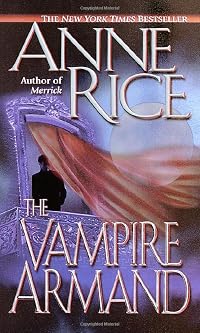
In the latest installment of The Vampire Chronicles, Anne Rice summons up dazzling worlds to bring us the story of Armand - eternally young, with the face of a Botticelli angel. Armand, who first appeared in all his dark glory more than twenty years ago in the now-classic Interview with the Vampire, the first of The Vampire
Now, we go with Armand across the centuries to the Kiev Rus of his boyhood - a ruined city under Mongol dominion - and to ancient Constantinople, where Tartar raiders sell him into slavery. And in a magnificent palazzo in the Venice of the Renaissance we see him emotionally and intellectually in thrall to the great vampire Marius, who masquerades among humankind as a mysterious, reclusive painter and who will bestow upon Armand the gift of vampiric blood.
As the novel races to its climax, moving through scenes of luxury and elegance, of ambush, fire, and devil worship to nineteenth-century Paris and today's New Orleans, we see its eternally vulnerable and romantic hero forced to choose between his twilight immortality and the salvation of his immortal soul.
From the Trade Paperback edition. . show less
Tags
Recommendations







Member Reviews
I read this after Queen of the Damned without the body thief or memnoch the devil, because I would like to know Armand’s biography more than any continuation of the ‘present.’
Louis, Lestat, Claudia and Armand feel like the core of book 1 and 2. They’re the heart of the interpersonal drama. I would have loved to read a Claudia book, but I’ll accept Armand too. Especially since this book explains why he is Like That. (insane)
Part 1 was about the most disturbing thing I’ve ever read. Unsure whether that’s a compliment by the way.
This is the first in the series that I actually found to be a horror novel. Yeah, these melodramatic vampires kill and ponder morality, but the blood and death was not the scary part. This one has show more slavery and child prostitution and that’s still not the scary part.
It’s the emotional abuse and gaslighting as told by someone who fell for all of it. Marius is never judged for whatever he did, and I think (hope!) it’s a clever bit of narration from Armand and the author. The story keeps insisting that Marius is some sort of beloved benefactor, and all his violence, abuse and emotional excuses are accepted by the 15-17 year old protagonist.
You know, I used to like Marius in book 2. He was the wise old guy who struggled to rein in Lestat. (Join the club, Louis Gabrielle and David are already in it) Armand is a 500 year old with a teenage crush/unhealthy obsession on his faux saviour. Can’t really fault him for it, but it’s harrowing.
This author writes long-winded descriptions and flowery prose. Sometimes beautiful and atmospheric, sometimes dreary and slow. I loved the setting of renaissance Venice in all its detail, didn’t love the religious pondering.
The poetic ways in which Marius and Amadeo declare their screwed up affection made it more readable as well. Whatever was going on in this novel really needed this lacquer of purple prose to stop me from recoiling. I doubt I would have liked this book at all if it was not written that way.
Once Marius is gone, so is the unsettling feeling. But that’s also when I got disappointed.
I wanted to know what was going on in Armand’s mind during the events of the first three books. Especially after 300 pages of backstory.
I wanted to know how he viewed the events I read about through others. Louis and Lestat’s memoirs are very subjective, so I really wanted Armand’s own subjectivity.
Everyone has elaborate opinions on Armand. In book 1 it was Louis, in book 2 it was Lestat and in book 3 it was interview boy. How did Armand run his theatre after Lestat essentially blew up his life and left him to it? What was Louis and Armand’s brief time together like? Why is he glossing over his book 3 reunion with Marius?
Armand doesn’t give any more information than we already know and it was SO frustrating. I wanted to know about Armand dealing with the Paris coven members he did not kill by fire. Were there excuses? Did they fear him? And what was his plan when he dragged interview boy across Europe like a manic tour guide? Did he do it for funsies?
What’s the point if having 3 different vampires narrate their life if those stories barely touch each other? I needed Armand to offer some contradiction to the way he was written in book 1-3.
Part 3 of the book is 150 pages about whatever is going on after book 5, which I have not read, so I don’t really have an opinion on it.
There’s a lot about God and the Devil. The presence of some theology made sense when it was about good and evil. These are historical settings and vampires kill people. It felt disjointed when they were characters. Armand talked as if the devil existed and Lestat was his literal acquaintance? And there is actual blood of Christ to drink instead of church wine?
Whatever is going in on in memnoch the devil, I don't think I want to find out. show less
Louis, Lestat, Claudia and Armand feel like the core of book 1 and 2. They’re the heart of the interpersonal drama. I would have loved to read a Claudia book, but I’ll accept Armand too. Especially since this book explains why he is Like That. (insane)
Part 1 was about the most disturbing thing I’ve ever read. Unsure whether that’s a compliment by the way.
This is the first in the series that I actually found to be a horror novel. Yeah, these melodramatic vampires kill and ponder morality, but the blood and death was not the scary part. This one has show more slavery and child prostitution and that’s still not the scary part.
It’s the emotional abuse and gaslighting as told by someone who fell for all of it. Marius is never judged for whatever he did, and I think (hope!) it’s a clever bit of narration from Armand and the author. The story keeps insisting that Marius is some sort of beloved benefactor, and all his violence, abuse and emotional excuses are accepted by the 15-17 year old protagonist.
You know, I used to like Marius in book 2. He was the wise old guy who struggled to rein in Lestat. (Join the club, Louis Gabrielle and David are already in it) Armand is a 500 year old with a teenage crush/unhealthy obsession on his faux saviour. Can’t really fault him for it, but it’s harrowing.
This author writes long-winded descriptions and flowery prose. Sometimes beautiful and atmospheric, sometimes dreary and slow. I loved the setting of renaissance Venice in all its detail, didn’t love the religious pondering.
The poetic ways in which Marius and Amadeo declare their screwed up affection made it more readable as well. Whatever was going on in this novel really needed this lacquer of purple prose to stop me from recoiling. I doubt I would have liked this book at all if it was not written that way.
Once Marius is gone, so is the unsettling feeling. But that’s also when I got disappointed.
I wanted to know what was going on in Armand’s mind during the events of the first three books. Especially after 300 pages of backstory.
I wanted to know how he viewed the events I read about through others. Louis and Lestat’s memoirs are very subjective, so I really wanted Armand’s own subjectivity.
Everyone has elaborate opinions on Armand. In book 1 it was Louis, in book 2 it was Lestat and in book 3 it was interview boy. How did Armand run his theatre after Lestat essentially blew up his life and left him to it? What was Louis and Armand’s brief time together like? Why is he glossing over his book 3 reunion with Marius?
Armand doesn’t give any more information than we already know and it was SO frustrating. I wanted to know about Armand dealing with the Paris coven members he did not kill by fire. Were there excuses? Did they fear him? And what was his plan when he dragged interview boy across Europe like a manic tour guide? Did he do it for funsies?
What’s the point if having 3 different vampires narrate their life if those stories barely touch each other? I needed Armand to offer some contradiction to the way he was written in book 1-3.
Part 3 of the book is 150 pages about whatever is going on after book 5, which I have not read, so I don’t really have an opinion on it.
There’s a lot about God and the Devil. The presence of some theology made sense when it was about good and evil. These are historical settings and vampires kill people. It felt disjointed when they were characters. Armand talked as if the devil existed and Lestat was his literal acquaintance? And there is actual blood of Christ to drink instead of church wine?
Whatever is going in on in memnoch the devil, I don't think I want to find out. show less
It is Armand’s turn to recount his history to David to be recorded for posterity
If Lestat and Louis’s books are digitised, he could always just copy and paste the relevant sections.
I am not a fan of this book, there’s very little about if I find even remotely enjoyable and the few steps forwards it takes are so overwhelmed with problems as to make whatever progress it made completely irrelevant. This book was not a fun read, it was a boring read and, more than anything else, it was an unnecessary read
Which underpins the main problem with this book – it’s unnecessary in many ways. Firstly, The Vampire Chronicles is already a grossly over written series with a truly unnecessary amount of back story for the tiny crumbs of actual show more plot and present day happenings we have been given. I know more about Louis than I needed to, but at least Interview with a Vampire existed to introduce the world. I know every last teeny tiny detail about Lestat, but at least he is a central figure in the plot. I know Marius’s background in painful length but at least he is, somewhat, a foundation for the other characters in a rather convoluted manner. Even Meheret dropped in for a dreadfully long story time of her history
This is a lot of unnecessary back story already for a very limited plot. It doesn’t need yet another book full of back story with no actual present day storyline; enough with this endless, long winded recitation of their pasts! Recounting of history is not a substitute for plot
But this unnecessariness is compounded by the fact that this is Armand! I know some people are big fans of Armand – but honestly I have no idea why. Armand hasn’t been relevant to the plot line since Louis left him after burning down his theatre. Armand has had no significant presence in any of the dramatic events of Akasha waking up, or Lestat playing body switching or Lestat’s appalling navel gazing theology – nor did he really start a storyline of his own in this book. Armand is completely irrelevant to current events and this book did nothing to make him relevant. Nor has he ever actually been relevant!
This is shown by this book, he was a brief stopping point in Marius’s, Louis’s and Lestat’s history – a permanent side character in all their lives. The book even lampshades it:
“How can I tell you about something that doesn’t interest me? Is it supposed to interest you? The problem is that too much has been written about my past already.”
I don't know Armand, is it supposed to interest me? Because it didn’t. And yes, every remotely interesting moment in Armand’s life had already been covered in previous books; Armand had nothing useful to add and did nothing useful or interesting outside of those moments. It is repetition with another repetitive story of being a young vampire and Armand and Marius tacked on (the basics of which we already knew). This character is irrelevant! His story is already told! His history is already known! Why are we repeating this?
For padding we have prose that sets record for purpleness even among Anne Rice’s work – and that’s already a screaming magenta – gross over-descriptiveness and yet more theological and ethical rambling. I would say there are seminary text books that contain less theological navel gazing than this vampire series, except all we really do is circle the same, few, narrow abouts about good, evil and aesthetic over and over and over again, from book to book, every vampire has the same tired theological moping over interminable pages of pseudo-philosophical claptrap. At the end, the plot line is running so thin that we actually have a chapter of just describing the other vampires; because we really need Armand to sum up Louis, Lestat, Marius et al?
Read More show less
If Lestat and Louis’s books are digitised, he could always just copy and paste the relevant sections.
I am not a fan of this book, there’s very little about if I find even remotely enjoyable and the few steps forwards it takes are so overwhelmed with problems as to make whatever progress it made completely irrelevant. This book was not a fun read, it was a boring read and, more than anything else, it was an unnecessary read
Which underpins the main problem with this book – it’s unnecessary in many ways. Firstly, The Vampire Chronicles is already a grossly over written series with a truly unnecessary amount of back story for the tiny crumbs of actual show more plot and present day happenings we have been given. I know more about Louis than I needed to, but at least Interview with a Vampire existed to introduce the world. I know every last teeny tiny detail about Lestat, but at least he is a central figure in the plot. I know Marius’s background in painful length but at least he is, somewhat, a foundation for the other characters in a rather convoluted manner. Even Meheret dropped in for a dreadfully long story time of her history
This is a lot of unnecessary back story already for a very limited plot. It doesn’t need yet another book full of back story with no actual present day storyline; enough with this endless, long winded recitation of their pasts! Recounting of history is not a substitute for plot
But this unnecessariness is compounded by the fact that this is Armand! I know some people are big fans of Armand – but honestly I have no idea why. Armand hasn’t been relevant to the plot line since Louis left him after burning down his theatre. Armand has had no significant presence in any of the dramatic events of Akasha waking up, or Lestat playing body switching or Lestat’s appalling navel gazing theology – nor did he really start a storyline of his own in this book. Armand is completely irrelevant to current events and this book did nothing to make him relevant. Nor has he ever actually been relevant!
This is shown by this book, he was a brief stopping point in Marius’s, Louis’s and Lestat’s history – a permanent side character in all their lives. The book even lampshades it:
“How can I tell you about something that doesn’t interest me? Is it supposed to interest you? The problem is that too much has been written about my past already.”
I don't know Armand, is it supposed to interest me? Because it didn’t. And yes, every remotely interesting moment in Armand’s life had already been covered in previous books; Armand had nothing useful to add and did nothing useful or interesting outside of those moments. It is repetition with another repetitive story of being a young vampire and Armand and Marius tacked on (the basics of which we already knew). This character is irrelevant! His story is already told! His history is already known! Why are we repeating this?
For padding we have prose that sets record for purpleness even among Anne Rice’s work – and that’s already a screaming magenta – gross over-descriptiveness and yet more theological and ethical rambling. I would say there are seminary text books that contain less theological navel gazing than this vampire series, except all we really do is circle the same, few, narrow abouts about good, evil and aesthetic over and over and over again, from book to book, every vampire has the same tired theological moping over interminable pages of pseudo-philosophical claptrap. At the end, the plot line is running so thin that we actually have a chapter of just describing the other vampires; because we really need Armand to sum up Louis, Lestat, Marius et al?
Read More show less
After a very long hiatus, I recently got back into Anne Rice, having read the first three books of THE VAMPIRE CHORNICLES many years ago. In THE VAMPIRE ARMAND, she takes one of her secondary characters from those books and gives him the center stage, letting him tell his story to the fledging vampire David Talbot in the wake of the events from MEMNOCH THE DEVIL. This book was written back in 1998, after Rice herself had stayed away from her beloved creatures of the night for a few years, but she clearly knew what her fans wanted, and most of all, liked in her fiction, so she went back to dancing with the ones who brought her. Only this dance was not with Lestat, her most famous and popular character, but with Armand, a teenage vampire show more with the face of an angel. What she was doing was obvious, expanding her vampire universe and seeing if she could do it without relying on, and in the process, exhausting, her most popular character.
How good were the results? I think this book will certainly please die hard Rice fans, for all the stuff she does well in on display here, including her mastery of characterization; her ability to make bygone cultures come to life on her pages, and not only that, but long vanished cities and places return in vivid detail. There are arcs in ARMAND that are Rice the story teller at her best, especially in first half, where Armand narrates how he was kidnapped as a child in medieval Russia and sold into slavery in Constantinople, only to be rescued by the ancient vampire Marius, who was once a Roman senator, and brought to the Venice of the Renaissance, where he lives in a house filled with other boys such as himself. How Armand comes to receive the Dark Gift and a subsequent trip back to Russia with Marius, where he is very briefly reunited with his grieving parents, is Rice at her best. In the other books, we have always seen Armand through the eyes of Lestat and Louis, but here we see him in full, and learn that he is truly a damaged child, eternally in search of the love he lost when the home of his maker was destroyed by fanatical blood drinkers. Attempts to find it in a coven underneath Rome, and later in Paris with Lestat, do not work out. Later, in the aftermath of the events of MEMNOCH, a badly burned and injured Armand is rescued by two precocious human children named Sybelle and Benji, and he has a chance to find love and a family once again, but this being Anne Rice, she throws in another twist before the resolution in the last pages.
And if the best of Anne Rice is on display, some of her worst faults can be found in ARMAND as well, starting with her well known penchant for over description, making sure we know everything about every crook and nanny of every house, hovel, palace, basement, and back room, it is a wonder she doesn’t describe the interior of the rat’s holes. Rice’s characters always talk a lot, her chatty undead are a staple that many love about her books, but boy do they talk here, as some scenes run on pages longer than they should. In the second half, there are long arguments about faith, philosophy, the nature of man and the mind of God, and what Christ meant. This has always been seen as Rice working out her own views on God and religion and man, and while I do not have a problem with it, I can see how this might try the patience of many readers. Some have noted that Rice was so successful at this point in her career that she no longer had an editor when she wrote this book, if it is true, then it certainly shows. Also, the ever present homo eroticism is not everyone’s cup of tea, and the part of the book concerning the Roman vampire Marius and his house filled with boys may make some uncomfortable in what it implies, but this is Rice portraying an older, and distinctly non Christian culture.
In the end, I found Armand to be good company, and an excellent narrator, treating the reader as an equal, as someone worthy enough to share his story with. There have been preparations for a TV series based on THE VAMPIRE CHRONICLES, and I am sure that sooner or later, it will come to pass. When this happens, hopefully, they will do justice to Armand’s side of the story. show less
How good were the results? I think this book will certainly please die hard Rice fans, for all the stuff she does well in on display here, including her mastery of characterization; her ability to make bygone cultures come to life on her pages, and not only that, but long vanished cities and places return in vivid detail. There are arcs in ARMAND that are Rice the story teller at her best, especially in first half, where Armand narrates how he was kidnapped as a child in medieval Russia and sold into slavery in Constantinople, only to be rescued by the ancient vampire Marius, who was once a Roman senator, and brought to the Venice of the Renaissance, where he lives in a house filled with other boys such as himself. How Armand comes to receive the Dark Gift and a subsequent trip back to Russia with Marius, where he is very briefly reunited with his grieving parents, is Rice at her best. In the other books, we have always seen Armand through the eyes of Lestat and Louis, but here we see him in full, and learn that he is truly a damaged child, eternally in search of the love he lost when the home of his maker was destroyed by fanatical blood drinkers. Attempts to find it in a coven underneath Rome, and later in Paris with Lestat, do not work out. Later, in the aftermath of the events of MEMNOCH, a badly burned and injured Armand is rescued by two precocious human children named Sybelle and Benji, and he has a chance to find love and a family once again, but this being Anne Rice, she throws in another twist before the resolution in the last pages.
And if the best of Anne Rice is on display, some of her worst faults can be found in ARMAND as well, starting with her well known penchant for over description, making sure we know everything about every crook and nanny of every house, hovel, palace, basement, and back room, it is a wonder she doesn’t describe the interior of the rat’s holes. Rice’s characters always talk a lot, her chatty undead are a staple that many love about her books, but boy do they talk here, as some scenes run on pages longer than they should. In the second half, there are long arguments about faith, philosophy, the nature of man and the mind of God, and what Christ meant. This has always been seen as Rice working out her own views on God and religion and man, and while I do not have a problem with it, I can see how this might try the patience of many readers. Some have noted that Rice was so successful at this point in her career that she no longer had an editor when she wrote this book, if it is true, then it certainly shows. Also, the ever present homo eroticism is not everyone’s cup of tea, and the part of the book concerning the Roman vampire Marius and his house filled with boys may make some uncomfortable in what it implies, but this is Rice portraying an older, and distinctly non Christian culture.
In the end, I found Armand to be good company, and an excellent narrator, treating the reader as an equal, as someone worthy enough to share his story with. There have been preparations for a TV series based on THE VAMPIRE CHRONICLES, and I am sure that sooner or later, it will come to pass. When this happens, hopefully, they will do justice to Armand’s side of the story. show less
I enjoyed the first half of the book which shows Armand's life before becoming a vampire, the circumstances that caused Marius to make him one at an age younger than he had wished, but the second half for me was bogged down in religious blahblahblah that I didn't find interesting or thought-provoking. They are things Rice has brought up before in her other books. I find these bog down the story. Her writing has always been voluptuously delicious. I love her descriptions of Renaissance Italy. I am no prude, by any means, but sometimes her descriptions of younger boys and girls, teens and tweens make me uncomfortable. I know in this era, things were different, but her descriptions in many instances aren't called for.
I believe I only own show more one more book in the vampire series, but after this, I think I am done with Rice. I have so many books to read, that I don't have times for ones that I don't enjoy to the fullest. I LOVED Interview with the Vampire, but each successive book I liked less and less. :( show less
I believe I only own show more one more book in the vampire series, but after this, I think I am done with Rice. I have so many books to read, that I don't have times for ones that I don't enjoy to the fullest. I LOVED Interview with the Vampire, but each successive book I liked less and less. :( show less
Armand gets a lot of flack from people who've not read this one, blaming him for the horrible things that The Theatre do. This is his story though, and gives insight into the world he was dragged into and his desperation to leave it behind,
Fuck Marius, I can't believe I felt bad for him for a few minutes in an earlier book. Anyway, great book as usual though my eyes began to glaze at all the heavy religion scenes. But I loved the deep dive into Armand, even if it was absolutely terrible.
Lestat lies in a coma-like sleep in a chapel and while vampires gathers around him, Armand tells his story to David Talbot, Lestat’s former Talamascan fledgling. Armand takes us with him through his childhood in Kiev; from where he is kidnapped and sold to slavery, to Venice where Marius saves him and eventually gives the dark gift and to Paris where he led his Satanic Vampire cult.
Maybe I should start this telling that this was 4th or 5th time reading this and yep, I still love it! Armand’s always been my favourite so it’s no surprise I love this.
It’s been over 8 years since I’ve last read this, and long before I had even heard about blogs etc., so it was interesting to read it again. And it seems my book taste hasn’t show more changed since I was 15… And oh why it’s so hard to write about books you loved!
When Armand lived in Kiev as a child he painted beautiful icons and was meant to join the monks so he had pretty religious upbringing, which shows through his life and is constant theme through the book.
I’ve always loved the chapter where Marius takes Armand back to Kiev after turning him. He could let the past go little after meeting his family and his father who was such a huge presence in his life.
They didn’t have that many years together with Marius but it was a big part of his life when he was loved and (relatively) safe. And I was dreading to reach the part where it would all be ruined!
It’s been told in previous books that he was the leader of the vampire cult that imprisoned Lestat but now we see how he became part of it.
You can see the growing theme with Christianity on Rice’s books here and while I’m not even remotely religious it didn’t bother me. I love the writing style and the descriptive writing but that may not be to everyone’s liking. show less
Maybe I should start this telling that this was 4th or 5th time reading this and yep, I still love it! Armand’s always been my favourite so it’s no surprise I love this.
It’s been over 8 years since I’ve last read this, and long before I had even heard about blogs etc., so it was interesting to read it again. And it seems my book taste hasn’t show more changed since I was 15… And oh why it’s so hard to write about books you loved!
When Armand lived in Kiev as a child he painted beautiful icons and was meant to join the monks so he had pretty religious upbringing, which shows through his life and is constant theme through the book.
I’ve always loved the chapter where Marius takes Armand back to Kiev after turning him. He could let the past go little after meeting his family and his father who was such a huge presence in his life.
They didn’t have that many years together with Marius but it was a big part of his life when he was loved and (relatively) safe. And I was dreading to reach the part where it would all be ruined!
It’s been told in previous books that he was the leader of the vampire cult that imprisoned Lestat but now we see how he became part of it.
You can see the growing theme with Christianity on Rice’s books here and while I’m not even remotely religious it didn’t bother me. I love the writing style and the descriptive writing but that may not be to everyone’s liking. show less
Members
- Recently Added By
Lists

Bloody Good Vampire Books
394 works; 28 members

Best LGBT Fiction
144 works; 25 members

The Best Vampires, Werebeasts, Witches Books
192 works; 12 members

Vampire Chronicles - Anne Rice
13 works; 1 member
Guilty Pleasures
223 works; 87 members
Best Vampire & Werewolf Fiction
221 works; 146 members

Top Five Books of 2025
954 works; 304 members

Fiction With Familiar Settings
280 works; 94 members

Unread books
1,063 works; 83 members
Author Information

132+ Works 189,697 Members
Anne Rice was born Howard Allen O'Brien on October 4, 1941 in New Orleans, Louisiana. She received a bachelor's degree in political science in 1964 and master's degree in English and creative writing in 1972 from San Francisco State University. She published her first short story in 1965 called October 4, 1948. Her first book, Interview with the show more Vampire, was published in 1976. It was made into a film starring Brad Pitt, Kirsten Dunst, and Tom Cruise in 1994. She wrote various series in the same genre including the rest of the Vampire Chronicles, the Mayfair Witches books, and The Wolf Gift Chronicles. Her novel, Feast of All Saints, became a Showtime mini-series in 2001. Her other works include Cry to Heaven, Servant of the Bones, and Violin. In 1998, Rice returned to the Catholic Church and for some time only wrote for Christ or about Christ. These works include Christ the Lord: Out of Egypt, Christ the Lord: The Road to Cana, and Called Out of Darkness. Anne Rice died on December 11, 2021 at the age of 80. (Bowker Author Biography) show less
Some Editions
Awards and Honors
Distinctions
Series

Belongs to Publisher Series
Fischer Taschenbuch (15626)
Work Relationships
Is contained in
Vittorio the Vampire / The Vampire Lestat / Interview With the Vampire / The Vampire Armand / Queen of the Damned / Merrick / The Witching Hour / Blood Canticle / The Mummy / Memnoch the Devil / Taltos by Anne Rice
Interview With the Vampire / The Vampire Lestat / The Queen of the Damned / The Tale of the Body Thief / Memnoch the Devil / The Vampire Armand by Anne Rice
Anne Rice 3 Pack- The Tale of the Body Thief / Memnoch the Devil / The Vampire Armand (The Vampire Chronicles, 4, 5 & 6) by Anne Rice
Interview With the Vampire / The Vampire Lestat / Queen of the Damned / The Tale of the Body Thief / Memnoch the Devil / The Vampire Armand / Merrick by Anne Rice
Common Knowledge
- Canonical title
- The Vampire Armand
- Original title
- The Vampire Armand
- Original publication date
- 1998-10-10
- People/Characters
- Armand (aka Andrei aka Amadeo); Marius de Romanus; Lestat de Lioncourt; Lord Harlech; Bianca Solderini; Santino (show all 7); Sybelle
- Important places
- Venice, Veneto, Italy
- Epigraph
- Jesus, speaking to Mary Magdalene:
Jesus saith unto her, Touch me not;
for I am not yet ascended to my Father:
but go to my brethren, and say unto them,
I ascend unto my Father, and your Father;
and to my G... (show all)od, and your God.
The Gospel According to St. John 20:17 - Dedication
- For
Brandy Edwards,
Brain Robertson
and
Christopher and Michele Rice - First words
- They said a child had died in the attic.
- Last words
- (Click to show. Warning: May contain spoilers.)"Sybelle," I asked, "would you play it for him? The Appassionata, again, if you would."
And of course, she did. - Original language
- English
- Canonical DDC/MDS
- 813.087381
Classifications
- Genres
- Horror, Fiction and Literature, Fantasy, General Fiction
- DDC/MDS
- 813.087381 — Literature & rhetoric American literature in English American fiction in English By type Genre fiction Adventure fiction Horror fiction; Ghost fiction Horror fiction Vampires and the undead
- LCC
- PS3568 .I265 .V25 — Language and Literature American literature American literature Individual authors 1961-
- BISAC
Statistics
- Members
- 7,654
- Popularity
- 1,501
- Reviews
- 57
- Rating
- (3.53)
- Languages
- 12 — Czech, Danish, English, French, German, Hungarian, Italian, Polish, Portuguese, Romanian, Croatian, Spanish
- Media
- Paper, Audiobook, Ebook
- ISBNs
- 68
- ASINs
- 27