
On This Page
Description
A Zoo in My Luggage is the colorful, first-hand account of Gerald Durrell's six-month animal-collecting trip in British Cameroon, and his attempts to create his own zoo. Motivated by a passion for wildlife, and a desire to save endangered species from extinction, Durrell assembles a glorious panoply of exotic animals - including a female baboon called Georgina, who later runs amok in a department store; a black-eared squirrel, who tries to bury nuts in his ear; and a gentlemanly chimpanzee show more named Chumly, who greets him with an outstretched hand. Aided by the Fon of Bafut, who houses the collection (and hosts many long and lively parties), Durrell amasses more than 250 animals. He struggles to find a home for the animals back in England, until a stroke of luck leads him to Jersey, and the eventual founding of Durrell Wildlife Park (now Jersey Zoo). show lessTags
Recommendations























Member Recommendations
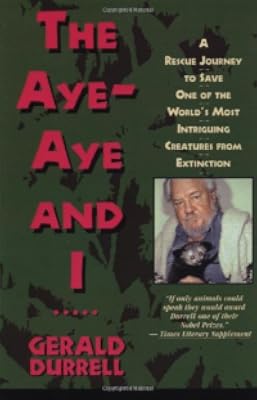
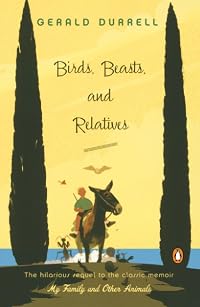
geophile Two different experiences starting a zoo.
Member Reviews
This is another enjoyable and amusing book by Gerald Durrell, an account of one his animal-collecting expeditions to Bafut in the British Cameroons in West Africa. I didn´t know where this was and had to look it up in my atlas; the country must now have changed its name.
Previously, while collecting animals in that country, Durrell had been permitted to stay in the Palace of the Fon of Bafut. I don´t know what a Fon is, neither could I find the word in any dictionary, but Durrell states that he was a “potentate”. The Fon in question has innumerable wives and hordes of children; he is tall, elderly, and extremely entertaining.
Durrell had written about the Fon following a previous stay with him, but had become afraid that his show more portrait of him might have been “open to misconstruction” and the Fon might have felt that Durrell had portrayed him as a senile alcoholic. So prior to the present trip he writes to the Fon asking with some trepidation whether he, his wife Jacquie and his team might again be allowed to enjoy his hospitality. It turned out however that the Fon had been most flattered by the unexpected fame he had encountered after being depicted in depth in Durrell´s book (I don´t know yet which one that was); many Europeans had visited the Fon with Durrell´s book in their hands, and the Fon had ended up autographing all these books, as though he himself had been the author!
Durrell and wife are accommodated in the Fon´s Rest House and their extra team of two arrives later; many of the locals begin to queue up outside with animals (“beef”) they have collected to sell to them, news of their arrival having hastily spread.
We´re apprised of the antics of a baby black-eared squirrel they receive, called Squill-bill small and of Bug-eyes, a needle-clawed lemur. On reading Durrell´s books we realize that each individual animal has its own distinct personality, just as we humans do.
When talking to the Fon and the other locals, Durrell and the others use a form of pidgin English, only half of which I for one could understand.
The Durrells and the Fon enjoy many entertaining get-togethers, with much dancing, singing and drinking, not least the latter.
They are presented with many monkeys, and one of their favourites is a half-grown female baboon called Georgina. She has “a wicked sense of humour”, and this leads to many both amusing and less amusing escapades.
Back in England, Georgina runs riot in a large department store, so they require the aid of two constables together with Durrell´s sister Margo to capture her.
At the end of the book, Durrell by a stroke of serendipity finds a suitable place to deposit his animals and set up his zoo – in Jersey.
Durrell is a master story-teller and recounts innumerable riotous episodes.
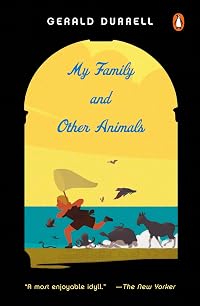
To sum up, another delightfully entertaining book by Gerald Durrell, though perhaps it does not quite reach the level of “My family and other animals”, which is my favourite. The writing is excellent, there are many fascinating descriptions of the various animals´ behaviour, and humour abounds! show less
Previously, while collecting animals in that country, Durrell had been permitted to stay in the Palace of the Fon of Bafut. I don´t know what a Fon is, neither could I find the word in any dictionary, but Durrell states that he was a “potentate”. The Fon in question has innumerable wives and hordes of children; he is tall, elderly, and extremely entertaining.
Durrell had written about the Fon following a previous stay with him, but had become afraid that his show more portrait of him might have been “open to misconstruction” and the Fon might have felt that Durrell had portrayed him as a senile alcoholic. So prior to the present trip he writes to the Fon asking with some trepidation whether he, his wife Jacquie and his team might again be allowed to enjoy his hospitality. It turned out however that the Fon had been most flattered by the unexpected fame he had encountered after being depicted in depth in Durrell´s book (I don´t know yet which one that was); many Europeans had visited the Fon with Durrell´s book in their hands, and the Fon had ended up autographing all these books, as though he himself had been the author!
Durrell and wife are accommodated in the Fon´s Rest House and their extra team of two arrives later; many of the locals begin to queue up outside with animals (“beef”) they have collected to sell to them, news of their arrival having hastily spread.
We´re apprised of the antics of a baby black-eared squirrel they receive, called Squill-bill small and of Bug-eyes, a needle-clawed lemur. On reading Durrell´s books we realize that each individual animal has its own distinct personality, just as we humans do.
When talking to the Fon and the other locals, Durrell and the others use a form of pidgin English, only half of which I for one could understand.
The Durrells and the Fon enjoy many entertaining get-togethers, with much dancing, singing and drinking, not least the latter.
They are presented with many monkeys, and one of their favourites is a half-grown female baboon called Georgina. She has “a wicked sense of humour”, and this leads to many both amusing and less amusing escapades.
Back in England, Georgina runs riot in a large department store, so they require the aid of two constables together with Durrell´s sister Margo to capture her.
At the end of the book, Durrell by a stroke of serendipity finds a suitable place to deposit his animals and set up his zoo – in Jersey.
Durrell is a master story-teller and recounts innumerable riotous episodes.
To sum up, another delightfully entertaining book by Gerald Durrell, though perhaps it does not quite reach the level of “My family and other animals”, which is my favourite. The writing is excellent, there are many fascinating descriptions of the various animals´ behaviour, and humour abounds! show less
This short but very entertaining book is about Durrell's return trip to the Cameroons (in Africa), eight years after his first visit (described in The Bafut Beagles). On this occasion he was collecting animals for his own zoo, which didn't have a location yet! The final brief chapters describe the difficulties of getting the animals safely home to England, and finding a site on which to build his zoo (the city didn't want it at first). Half the book is little stories about the wild animals, much is also about the Fon, a local dignitary Durrell met on his first trip, who greeted his return with enthusiasm- just as much for the nights spent drinking and dancing as for the economic windfall Durrell brought to his country, with his offer to show more buy as many wild animals as the local people could catch. The character sketches are delightful. Once again the phonetic presentation of the local pidgin dialect can be cringe-worthy, but I had encountered this before and knew what to expect...
Of course my favorite is reading about the animals. The cute bushbabies and infant squirrels, alarming snakes, elusive rare birds. A baboon that caused endless trouble, in particular amusing herself by ambushing visitors and tackling their legs. Two mongooses of very different types and temperaments. A squirrel that has green fur and a red tail- ? Hilarious chapter about his attempts to film wildlife in realistic settings doing normal things- with regular failure. A doormouse who having tasted the easy life in captivity, refused to leave when it was set free (it had suffered an accident which did no lasting harm but made it unfit for display in Durrell's opinion).
more at the Dogear Diary show less
Of course my favorite is reading about the animals. The cute bushbabies and infant squirrels, alarming snakes, elusive rare birds. A baboon that caused endless trouble, in particular amusing herself by ambushing visitors and tackling their legs. Two mongooses of very different types and temperaments. A squirrel that has green fur and a red tail- ? Hilarious chapter about his attempts to film wildlife in realistic settings doing normal things- with regular failure. A doormouse who having tasted the easy life in captivity, refused to leave when it was set free (it had suffered an accident which did no lasting harm but made it unfit for display in Durrell's opinion).
more at the Dogear Diary show less
an interesting, if at times upsetting from the outlook of today's animal care and ecological standards, window on a zoo owner's animal-collecting expedition in Africa
I enjoyed this nonfiction book but don't think it was quite as good as some of the other Gerald Durrell books I have read. Maybe I should have read it rather than listening to the audiobook...
Gerald Durrell spent 10 years collection animals for British zoos and then in 1957 decided to start his own zoo concentrating on rare and endangered species. He planned to show them and breed them in order to replenish the species. The book covers his trip to British Cameroon to collect the animals and his hunt for a zoo location when he returned. The book includes some hilarious anecdotes about catching and handing the animals. This man trulu loved living and working with the animals. Very enjoyable.
Not one of my most favorite Durrell's, but still good. The blurb on the back of the cover intimates that the story will cover the founding of their Jersey zoo, but it was more a travelogue of people and places in getting the animals. That's fine with me! Wonder if he wrote a book that truly chronicles the ups and downs of owning and operating a zoo.
This is the first in The Zoo Memoirs Trilogy by Gerald Durrell, originally published in 1960. The follow-up to A Zoo in My Luggage is “The Whispering Land”. I’m not sure if the publisher, Open Road Media, has thrown in another book as a selling point for it to be a Trilogy, but the third book is called “Menagerie Manor”.
Gerald Durrell (1925 - 1995) was born in India and grew up loving to study wildlife. His writing is very easy and his stories of the animals they collected over the years are quite humorous. I was just a little put off and couldn’t quite understand his use of native African dialogue at times.
You will find a photo of him, at age 10, all dressed up in his exploration garb at the back of the book, along with 13 show more other photos of himself throughout his life’s work.
He was a British naturalist, and I would say a writer and a little bit of an artist as well, whose main goal was to educate the people so they would have a better understanding and care for wild and nearly extinct animals. He had gathered animals in Bafut, Camaroon, Africa, before for other zoo owners, but now he wanted his own zoo. So, he headed back to Bafut with his wife, along with his secretary, Sophie, and another naturalist, Bob, and they stayed at the Fon of Bafut’s place, while he paid the local native hunters to gather wild and rare animals, birds, insects, and rodents. He accepted only about 10% of what they found, the rest were let lose back into the wild. He also paid the local native children daily to go out and hunt for snails, birds’ eggs, beetle larvae, grasshoppers, spiders, rats, etc…to feed his growing menagerie, which was around 250 by the time they left Africa and headed home with “a zoo in their luggage”.
The trials and hardships of them dealing with all of these animals makes for a great story. All of the thought that had to go into the daily feedings and cleanings, and the preparation for them to travel back to Bournemouth, England, with all those animals was quite remarkable. He had no place to put the animals so temporarily set them up in his sister’s backyard. He would later, in a stroke of luck, find the perfect place in Jersey, the largest of the Channel Islands. Today, there is a bronze statue of Durrell that stands at the entrance to the Jersey Zoo, now called Durrell Wildlife Park. show less
Gerald Durrell (1925 - 1995) was born in India and grew up loving to study wildlife. His writing is very easy and his stories of the animals they collected over the years are quite humorous. I was just a little put off and couldn’t quite understand his use of native African dialogue at times.
You will find a photo of him, at age 10, all dressed up in his exploration garb at the back of the book, along with 13 show more other photos of himself throughout his life’s work.
He was a British naturalist, and I would say a writer and a little bit of an artist as well, whose main goal was to educate the people so they would have a better understanding and care for wild and nearly extinct animals. He had gathered animals in Bafut, Camaroon, Africa, before for other zoo owners, but now he wanted his own zoo. So, he headed back to Bafut with his wife, along with his secretary, Sophie, and another naturalist, Bob, and they stayed at the Fon of Bafut’s place, while he paid the local native hunters to gather wild and rare animals, birds, insects, and rodents. He accepted only about 10% of what they found, the rest were let lose back into the wild. He also paid the local native children daily to go out and hunt for snails, birds’ eggs, beetle larvae, grasshoppers, spiders, rats, etc…to feed his growing menagerie, which was around 250 by the time they left Africa and headed home with “a zoo in their luggage”.
The trials and hardships of them dealing with all of these animals makes for a great story. All of the thought that had to go into the daily feedings and cleanings, and the preparation for them to travel back to Bournemouth, England, with all those animals was quite remarkable. He had no place to put the animals so temporarily set them up in his sister’s backyard. He would later, in a stroke of luck, find the perfect place in Jersey, the largest of the Channel Islands. Today, there is a bronze statue of Durrell that stands at the entrance to the Jersey Zoo, now called Durrell Wildlife Park. show less
Members
- Recently Added By
Lists

Best Travel Writing - Non-Fiction
110 works; 6 members

My Wishlist
40 works; 1 member

Books about Animals
86 works; 4 members

Satori Smiles Children's Book List
262 works; 7 members

SHOULD Read Books!
354 works; 9 members

Books Read in 2021
5,361 works; 114 members

Books Read in 2023
5,547 works; 145 members
Author Information

107+ Works 21,792 Members
Gerald Durrell was born on January 7, 1925 in Jamshedpur, India to British parents. After the death of his father in 1928, the family lived in England and Europe before settling in Corfu, where he spent much of his childhood. Educated by private tutors, he became interested in natural history and amassed a private collection of dozens of creatures show more from scorpions to owls. He went on numerous wildlife expeditions and founded the Jersey Zoological Park and the Jersey Wildlife Preservation Trust with the purpose of breeding endangered species. His first book, The Overloaded Ark, was published in 1953. He wrote 37 books during his lifetime including My Family and Other Animals, The Bafut Beagles, A Zoo in My Luggage, Rosy Is My Relative, and The Mockery Bird. He received the Order of the British Empire in 1982 and was featured in the United Nations' Roll of Honor for Environmental Achievement in 1988. He died from complications related to a liver transplant on January 30, 1995 at the age of 70. (Bowker Author Biography) show less
All Editions
Some Editions
Series

Belongs to Publisher Series
Work Relationships
Is contained in
The Bafut Beagles / The Drunken Forest / Encounters with Animals / Menagerie Manor / My Family and Other Animals / Three Singles to Adventure / The Whispering Land / A Zoo in My Luggage by Gerald Durrell
The New Noah / Encounters with Animals / A Zoo in My Luggage / The Whispering Land / Menagerie Manor by Джеральд Даррелл
Common Knowledge
- Canonical title
- A Zoo in My Luggage
- Original title
- A Zoo in My Luggage
- Original publication date
- 1960
- People/Characters
- Gerald Durrell; Jacquie Durrell; The Fon of Bafut; Bob; Sophie; Philip Omega
- Important places
- British Cameroons
Classifications
Statistics
- Members
- 1,003
- Popularity
- 26,017
- Reviews
- 16
- Rating
- (3.88)
- Languages
- 12 — Catalan, Chinese, Czech, Dutch, English, Estonian, German, Hungarian, Italian, Norwegian (Bokmål), Spanish, Swedish
- Media
- Paper, Audiobook, Ebook
- ISBNs
- 44
- ASINs
- 27