On This Page
Description
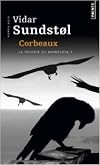
"It's been a long, dark time since a gruesome discovery drew U.S. Forest Service ranger Lance Hansen into a murder investigation that is now approaching a resolution--although not to his satisfaction. In fact, the mysteries have been multiplying and getting uncomfortably close to home. On the run after a hunting expedition with his brother, Andy, went awry, Lance is haunted by visions of Swamper Caribou, the Ojibwe medicine man whose death a century earlier remains unexplained. Willy Dupree, show more Lance's former father-in-law, has the ability to interpret dreams--and what he reveals may be key to understanding both deaths, past and present. Reluctantly taking on the role of detective, Lance uncovers troubling connections and grim secrets that will shake him to his very core.In the final installment of his award-winning Minnesota Trilogy, Norwegian crime writer Vidar Sundstøl's affinity for the northern world of Lake Superior is on full display--as Lance's search takes him from the wilds of the Boundary Waters to outposts steeped in voyageur history and Ojibwe culture, from the streets of the Twin Cities to the gritty port of Duluth, to the sleepy tourist towns that dot the North Shore--and as the mysteries of love and nature, history and culture merge in a powerful conclusion. "-- show lessTags
Recommendations

















Member Reviews
People like us – we wind up like carcasses at the side of the road, and the best we can hope for is that someone will stop and chase away the ravens.
Lance Hanson has survived what he thought was an attack by his brother, Andy, at the end of Only the Dead and has been hiding out by pretending to be in Norway. In fact, he actually went to northern Ontario in Canada but now he is back in Minnesota where his niece Chrissy runs into him in a bar. He tells her he has been working undercover and makes her promise not to reveal that he’s back. He is still obsessed with the murder of a Norwegian tourist and he still suspects his brother’s involvement. As he learns more about his niece’s drug problems and her relationship with both her show more father and Lenny Diver, the man charged with the murder, he begins to learn more unsettling truths about his family than he had previously thought or wanted to know.
The Ravens is the third and final book in Norwegian author Vidar Sundstl’s Minnesota Trilogy. If the first book, Land of Dreams, was a strong police procedural and the second book, Only the Dead, was a claustrophobic thriller, in style The Ravens lies somewhere in between the two, a literary mystery, with elements of both books. It contains descriptions of the northern Minnesota landscape as well as Lance’s efforts to solve the case through examining the evidence like in the first book while maintain much of the mystic qualities of the second but here much of the book is taken up with the slow and heart-breaking dissolution of a family, torn apart by secrets and lies and Lance’s inability to act faced with knowledge that could free an innocent man but could also send someone he loves to prison. Most of all, like the first two books, The Ravens is an intelligent, beautifully written and original mystery novel almost lyrical in its prose, and a fitting end to the trilogy. show less
Lance Hanson has survived what he thought was an attack by his brother, Andy, at the end of Only the Dead and has been hiding out by pretending to be in Norway. In fact, he actually went to northern Ontario in Canada but now he is back in Minnesota where his niece Chrissy runs into him in a bar. He tells her he has been working undercover and makes her promise not to reveal that he’s back. He is still obsessed with the murder of a Norwegian tourist and he still suspects his brother’s involvement. As he learns more about his niece’s drug problems and her relationship with both her show more father and Lenny Diver, the man charged with the murder, he begins to learn more unsettling truths about his family than he had previously thought or wanted to know.
The Ravens is the third and final book in Norwegian author Vidar Sundstl’s Minnesota Trilogy. If the first book, Land of Dreams, was a strong police procedural and the second book, Only the Dead, was a claustrophobic thriller, in style The Ravens lies somewhere in between the two, a literary mystery, with elements of both books. It contains descriptions of the northern Minnesota landscape as well as Lance’s efforts to solve the case through examining the evidence like in the first book while maintain much of the mystic qualities of the second but here much of the book is taken up with the slow and heart-breaking dissolution of a family, torn apart by secrets and lies and Lance’s inability to act faced with knowledge that could free an innocent man but could also send someone he loves to prison. Most of all, like the first two books, The Ravens is an intelligent, beautifully written and original mystery novel almost lyrical in its prose, and a fitting end to the trilogy. show less
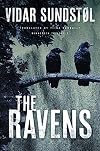
The Ravens is the conclusion of Vidar Sundstøl’s Minnesota Trilogy, following The Land of Dreams and Only the Dead. Unlike many mystery series, these books really must be read together and in order, because they all concern the same crimes which are only resolved in this final volume. And for that reason, I need to include here a . . .
SPOILER ALERT!
It’s not really possible to discuss this book without inadvertently revealing some of the surprises in the previous two.
Just so you know.
You’ve been warned.
Okay, then. In The Ravens, “forest cop” Lance Hansen continues his obsessive quest to find out whether his brother Andy is responsible for the murder of a Norwegian tourist who was camping on the shore of Lake Superior. As a show more forest ranger, Lance has no responsibility for investigating this crime, rumored to be the first murder in Cook County, a wooded tract of land in the northeastern tip of the state, framed by Lake Superior, the Boundary Waters, and the Canadian border. Lance’s only involvement is that he discovered the body, close to Baraga’s Cross, a local historical landmark marking the place where a Catholic missionary landed in a storm on his way to minister to an Ojibwe community stricken with an epidemic.
Because the crime occurred on federal land, it is handled by the local FBI office with the help of a Norwegian detective. An Ojibwe man whose fingerprints are on the bat used to bludgeon the Norwegian to death and who can’t or won’t provide an alibi has been arrested and is awaiting trial. Blood evidence also suggests that the killer was an Indian, not a white descendant of European immigrants. But Lance, a local historian who is more comfortable in the past than in the present, has uncovered a family secret. He and his brother have Ojibwe ancestry. He also finds a second murder victim – an Ojibwe medicine man who disappeared in 1892, just as Lance’s ancestor stumbled ashore after walking across the frozen lake, delirious and half-dead. As Lance thinks to himself “his family had spent a century perfecting the art of forgetting.”
Because he saw his brother’s truck close to the scene of the crime, and because he knows Andy is probably gay (as were the Norwegian tourists) but ashamed of his sexual identity and has a history of committing extreme violence, Lance becomes convinced his brother may be a killer. In the second book of the trilogy, that suspicion makes a hunting expedition take a threatening turn as Lance and Andy stalk one another. Layered in this narrative is the story of their ancestor, a young Norwegian immigrant who has crossed the frozen lake and who is terrified by the Indian medicine man who is trying to help him. It’s an intense and disorienting book that leaves us hanging.
In The Ravens, the hunt resumes. Lance continues the family tradition of lying by hiding out in Canada for weeks, convincing his family he is vacationing in Norway. On his return to Minnesota, he continues to lie about his activities while gathering information, particularly from Andy’s daughter, who has been dabbling in drugs and feels oppressed by her father’s protectiveness, which has become physically abusive. Lance reconnects with a woman who he loved many years ago and wonders if it’s too late to love again. He also visits his mother in a Duluth nursing home, where she’s beginning to lose her grip on reality but still seems saner than anyone else in the family. Throughout this concluding volume, Lance is suffers from the same condition as Hamlet. He feels compelled to act, but is paralyzed by introspection.
Though in some ways this final volume has more elements of a mystery than the previous two volumes, it fuses stylistic elements of both: the deep psychological conflicts within a man who seeks the truth but feels the pressures of convention, a mixing of past and present in the figure of Swamper Caribou and what Lance has learned about his murder, moments of visionary hallucinations, and inchoate tension as two brothers circle each other, full of fury and twisted family loyalty.
Throughout the three books, the landscape plays a major role, particularly the vast frozen lake that’s always there, that seems to be without boundaries, a frozen world where figures hover in the distance and large shadows move beneath the ice.
All in all, I found this an intriguing, poetic, and really unusual crime fiction trilogy, well worth trying. The translation is by the always reliable Tiina Nunnally, who has done a great job. show less
SPOILER ALERT!
It’s not really possible to discuss this book without inadvertently revealing some of the surprises in the previous two.
Just so you know.
You’ve been warned.
Okay, then. In The Ravens, “forest cop” Lance Hansen continues his obsessive quest to find out whether his brother Andy is responsible for the murder of a Norwegian tourist who was camping on the shore of Lake Superior. As a show more forest ranger, Lance has no responsibility for investigating this crime, rumored to be the first murder in Cook County, a wooded tract of land in the northeastern tip of the state, framed by Lake Superior, the Boundary Waters, and the Canadian border. Lance’s only involvement is that he discovered the body, close to Baraga’s Cross, a local historical landmark marking the place where a Catholic missionary landed in a storm on his way to minister to an Ojibwe community stricken with an epidemic.
Because the crime occurred on federal land, it is handled by the local FBI office with the help of a Norwegian detective. An Ojibwe man whose fingerprints are on the bat used to bludgeon the Norwegian to death and who can’t or won’t provide an alibi has been arrested and is awaiting trial. Blood evidence also suggests that the killer was an Indian, not a white descendant of European immigrants. But Lance, a local historian who is more comfortable in the past than in the present, has uncovered a family secret. He and his brother have Ojibwe ancestry. He also finds a second murder victim – an Ojibwe medicine man who disappeared in 1892, just as Lance’s ancestor stumbled ashore after walking across the frozen lake, delirious and half-dead. As Lance thinks to himself “his family had spent a century perfecting the art of forgetting.”
Because he saw his brother’s truck close to the scene of the crime, and because he knows Andy is probably gay (as were the Norwegian tourists) but ashamed of his sexual identity and has a history of committing extreme violence, Lance becomes convinced his brother may be a killer. In the second book of the trilogy, that suspicion makes a hunting expedition take a threatening turn as Lance and Andy stalk one another. Layered in this narrative is the story of their ancestor, a young Norwegian immigrant who has crossed the frozen lake and who is terrified by the Indian medicine man who is trying to help him. It’s an intense and disorienting book that leaves us hanging.
In The Ravens, the hunt resumes. Lance continues the family tradition of lying by hiding out in Canada for weeks, convincing his family he is vacationing in Norway. On his return to Minnesota, he continues to lie about his activities while gathering information, particularly from Andy’s daughter, who has been dabbling in drugs and feels oppressed by her father’s protectiveness, which has become physically abusive. Lance reconnects with a woman who he loved many years ago and wonders if it’s too late to love again. He also visits his mother in a Duluth nursing home, where she’s beginning to lose her grip on reality but still seems saner than anyone else in the family. Throughout this concluding volume, Lance is suffers from the same condition as Hamlet. He feels compelled to act, but is paralyzed by introspection.
Though in some ways this final volume has more elements of a mystery than the previous two volumes, it fuses stylistic elements of both: the deep psychological conflicts within a man who seeks the truth but feels the pressures of convention, a mixing of past and present in the figure of Swamper Caribou and what Lance has learned about his murder, moments of visionary hallucinations, and inchoate tension as two brothers circle each other, full of fury and twisted family loyalty.
Throughout the three books, the landscape plays a major role, particularly the vast frozen lake that’s always there, that seems to be without boundaries, a frozen world where figures hover in the distance and large shadows move beneath the ice.
All in all, I found this an intriguing, poetic, and really unusual crime fiction trilogy, well worth trying. The translation is by the always reliable Tiina Nunnally, who has done a great job. show less
Ratings
Members
- Recently Added By
Published Reviews
ThingScore 88
« Å aksle en bør og bære den uten å klage, var hva Lance Hansen var skapt for.» Slik beskriver Vidar Sundstøl sin hovedperson, skogspolitimannen, hobbyhistorikeren og slektsgranskeren Lance Hansen. Sundstøl ble belønnet med Rivertonprisen for «Drømmenes land», den første boka i hans såkalte Minnesota-trilogi. Nå foreligger den siste boka i trilogien, «Ravnene». Resultatet er show more blitt en krim av aller ypperste merke og en roman som ville stått seg utmerket i et hvilket som helst litterært selskap. show less
added by annek49
Levende portrett: Er det noe Vidar Sundstøl virkelig har greid gjennom disse tre romanene, så er det å gi en følelse av hvordan liv kan leves, akkurat nå, nord i USA. Og det har han gjort gjennom å knytte bånd bakover i tid; til norske immigranter og slektsmyter fra 1800-tallet, men også til indianske minner og drømmer. Det er originalt gjort. For han tegner ikke noe rosenrødt bilde show more av fortiden. Lance gjennomskuer mytene, søker mot sannhet, men registrerer at det stoffet slekten egentlig er lagd av, er løgn og fortielse. show less
added by annek49
Lists

Kirkus Starred Fiction Reviews of Books Published in 2015
310 works; 6 members
Author Information

16+ Works 516 Members
Awards and Honors
Distinctions
Series

Common Knowledge
- Canonical title
- The Ravens
- Original title
- Ravnene
- Original publication date
- 2011
- People/Characters
- Lance Hansen
- First words
- Lake Superior had frozen over and was transformed into a desolate white wasteland.
- Last words
- (Click to show. Warning: May contain spoilers.)Lance thought it looked like a funeral wreath as it bobbed up and down on the rippling waves.
Classifications
- Genres
- Fiction and Literature, Mystery
- DDC/MDS
- 839.823 — Literature & rhetoric German & related literatures Other Germanic literatures Danish and Norwegian literatures Norwegian literature Norwegian Bokmål fiction
- LCC
- PT8952.29 .U53 .R3813 — Language and Literature German, Dutch and Scandinavian literatures Norwegian literature Individual authors or works 2001-
- BISAC
Statistics
- Members
- 73
- Popularity
- 424,619
- Reviews
- 2
- Rating
- (3.25)
- Languages
- 6 — Danish, Dutch, English, French, Norwegian (Bokmål), Norwegian
- Media
- Paper, Ebook
- ISBNs
- 11
- ASINs
- 3