On This Page
Description
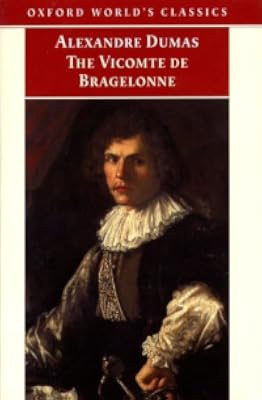
The Vicomte of Bragelonne: Ten Years Later is the final book in Dumas' d'Artagnon Romances trilogy. The book is in four parts, of which this is the second. According to French academic Jean-Yves Tadie, the real subject of the book is the beginning of King Louis XIV's rule..
Tags
Recommendations





























Member Reviews
Meraviglioso, questo libro!!!
Già dalle prime pagine Dumas mi ha affascinato, è stato un piacere ritrovare la sua ironia! Caspita, quanto m’era mancato, e quanto mi mancherà ancora di più adesso!
Da chi l’aveva già letto, ho sempre sentito parlare bene di questo romanzo, qualcuno anzi lo considera il migliore della trilogia. In effetti devo dire che tutte le lodi sono ampiamente confermate, e sinceramente non me l’aspettavo! Non mi aspettavo che un libro così lungo, e che viene dopo due romanzi appassionanti come i precedenti, potesse essere così bello! Milleduecentosettentasei pagine, eppure così avvincente, ogni pagina mi ha regalato nuove emozioni, senza annoiarmi mai! In certi momenti non riuscivo proprio a smettere di show more leggere!!! Una serie infinita di colpi di scena e capitoli emozionatissimi! Un continuo esclamare: “Cospettaccio!” ;)
Nel primo libro del ciclo, I Tre Moschettieri, il mio personaggio preferito è stato senz’altro Athos. Nel secondo libro, Vent’anni dopo, ricordo mi è piaciuto di più d’Artagnan. Con questo terzo libro, confermo pienamente e totalmente d’Artagnan! Mi piace sopratutto per la sua lealtà e la sua abnegazione, e allo stesso tempo il suo interesse personale nel buttarsi in ogni nuova avventura! Insomma, sì la gloria e la gioia di aver combattuto per una causa che si ritiene giusta, però non restare sempre a mani vuote, e vedere riconosciuti i proprio meriti è assai piacevole!!
E poi sa anche essere divertente, come per esempio quando si trova con la corte a Fontainebleau, e non sopporta quel tipo di vita:
Era avvicinato tutti i momento da gente che gli domandava:
«Come trovate che mi stia questo abito, signor d’Artagnan?».
Egli rispondeva con la sua voce placida e sarcastica:
«Ma trovo che siete vestito meglio della miglior scimmia della fiera di San Lorenzo».
[...]
E quando gli domandavano:
«Signor d’Artagnan, come vi vestite stasera?».
Egli rispondeva:
«Stasera? Mi spoglierò».
Il che faceva ridere anche le dame.
Che dire poi dello stile di Dumas? Mi piace davvero molto come sa dosare le varie storie, creando sempre l’aspettativa, sorprendendoci in continuazione! Ma devo ammettere che mi piace molto anche suo modo di descrivere. Per esempio ricordo la scena agreste della casa di Planchet a Fontainebleau, che mi piacque moltissimo, oppure Hampton-court in Inghilterra… molte scene che mi hanno fatto fermare un po’ a rileggere qualche brano, pensando: “Che bella espressione!” o “Che bella descrizione”!
Davvero uno splendido romanzo, e anche se Dumas si è dimostrato assai sadico nella parte finale, lo confermo come il migliore della trilogia!! Cinque stelle senza alcun dubbio!
http://www.naufragio.it/iltempodileggere/3053 show less
Già dalle prime pagine Dumas mi ha affascinato, è stato un piacere ritrovare la sua ironia! Caspita, quanto m’era mancato, e quanto mi mancherà ancora di più adesso!
Da chi l’aveva già letto, ho sempre sentito parlare bene di questo romanzo, qualcuno anzi lo considera il migliore della trilogia. In effetti devo dire che tutte le lodi sono ampiamente confermate, e sinceramente non me l’aspettavo! Non mi aspettavo che un libro così lungo, e che viene dopo due romanzi appassionanti come i precedenti, potesse essere così bello! Milleduecentosettentasei pagine, eppure così avvincente, ogni pagina mi ha regalato nuove emozioni, senza annoiarmi mai! In certi momenti non riuscivo proprio a smettere di show more leggere!!! Una serie infinita di colpi di scena e capitoli emozionatissimi! Un continuo esclamare: “Cospettaccio!” ;)
Nel primo libro del ciclo, I Tre Moschettieri, il mio personaggio preferito è stato senz’altro Athos. Nel secondo libro, Vent’anni dopo, ricordo mi è piaciuto di più d’Artagnan. Con questo terzo libro, confermo pienamente e totalmente d’Artagnan! Mi piace sopratutto per la sua lealtà e la sua abnegazione, e allo stesso tempo il suo interesse personale nel buttarsi in ogni nuova avventura! Insomma, sì la gloria e la gioia di aver combattuto per una causa che si ritiene giusta, però non restare sempre a mani vuote, e vedere riconosciuti i proprio meriti è assai piacevole!!
E poi sa anche essere divertente, come per esempio quando si trova con la corte a Fontainebleau, e non sopporta quel tipo di vita:
Era avvicinato tutti i momento da gente che gli domandava:
«Come trovate che mi stia questo abito, signor d’Artagnan?».
Egli rispondeva con la sua voce placida e sarcastica:
«Ma trovo che siete vestito meglio della miglior scimmia della fiera di San Lorenzo».
[...]
E quando gli domandavano:
«Signor d’Artagnan, come vi vestite stasera?».
Egli rispondeva:
«Stasera? Mi spoglierò».
Il che faceva ridere anche le dame.
Che dire poi dello stile di Dumas? Mi piace davvero molto come sa dosare le varie storie, creando sempre l’aspettativa, sorprendendoci in continuazione! Ma devo ammettere che mi piace molto anche suo modo di descrivere. Per esempio ricordo la scena agreste della casa di Planchet a Fontainebleau, che mi piacque moltissimo, oppure Hampton-court in Inghilterra… molte scene che mi hanno fatto fermare un po’ a rileggere qualche brano, pensando: “Che bella espressione!” o “Che bella descrizione”!
Davvero uno splendido romanzo, e anche se Dumas si è dimostrato assai sadico nella parte finale, lo confermo come il migliore della trilogia!! Cinque stelle senza alcun dubbio!
http://www.naufragio.it/iltempodileggere/3053 show less
In this installment of d'Artagnan romances, our eponymous character finds himself in the service of a boy king rendered completely impotent by his mother and Cardinal Mazarin. When fellow king, Charles II of England arrives at court to beg his relative Louis XIV to help him recover his throne, both Louis and d'Artagnan are dismayed when the king of France is seemingly incapable of offering either men or funds to the effort. Having witnessed this shameful display, d'Artagnan resigns his position with the Musketeers and sets off on a mad plan of his own devising to reinstate the king of England.
Unbeknownst to him, Athos has just set off on a very similar (though much better planned) mission. The two cross paths but still manage to save show more the king and are richly rewarded. Meanwhile, while all this is going on Mazarin dies and the young King Louis sets about seizing power. He makes an alliance with Mazarin's old steward to lets the king in on a bunch of financial secrets and gives him his first lessons in intrigue. However, Colbert has his own agenda and wants to destroy Fouquet, his current superior. He warns the king that Fouquet is making a fortress from which to repel the king.
Louis convinces d'Artagnan to return to his service and investigate the construction. When d'Artagnan arrives he discovers that Porthos is in charge of it and Aramis seems to be in an advisory capacity. Aramis distracts d'Artagnan while sending Porthos back to Paris to warn Fouquet. Colbert's plan is defeated for the moment but d'Artagnan has also returned to the king.
This cliff-hanger ending leaves me wanting to continue reading. Louis is learning king craft and I can't wait to see how these four friends work out their various allegiances. show less
Unbeknownst to him, Athos has just set off on a very similar (though much better planned) mission. The two cross paths but still manage to save show more the king and are richly rewarded. Meanwhile, while all this is going on Mazarin dies and the young King Louis sets about seizing power. He makes an alliance with Mazarin's old steward to lets the king in on a bunch of financial secrets and gives him his first lessons in intrigue. However, Colbert has his own agenda and wants to destroy Fouquet, his current superior. He warns the king that Fouquet is making a fortress from which to repel the king.
Louis convinces d'Artagnan to return to his service and investigate the construction. When d'Artagnan arrives he discovers that Porthos is in charge of it and Aramis seems to be in an advisory capacity. Aramis distracts d'Artagnan while sending Porthos back to Paris to warn Fouquet. Colbert's plan is defeated for the moment but d'Artagnan has also returned to the king.
This cliff-hanger ending leaves me wanting to continue reading. Louis is learning king craft and I can't wait to see how these four friends work out their various allegiances. show less
The Vicomte de Bragelonne is an immense novel, which is the third in Dumas's D'Artagnan trilogy after The Three Musketeers and Twenty Years After. In English translations, this is always divided into three or four volumes. What I have read here in the Delphi Classics ebook edition is the first of these four volumes, slightly confusingly also called The Vicomte de Bragelonne. The action is set some 30 years after the Three Musketeers, and our four heroes are all living separate lives. The thrust of the novel is them all coming together again in the context of Louis XIV's coming of age as he emerges from the influence of his chief minister Cardinal Mazarin as the latter lies dying, and the consequent struggle for power and influence show more between Mazarin's protégé Colbert and the finance minister Fouquet. In the process, D'Artagnan and Athos almost casually restore King Charles II to the throne of Britain. As a swashbuckler, I thought this was nowhere near as good as its predecessors, especially The Three Musketeers, and apart from a few set piece scenes and some nice touches of humour especially involving Porthos, I found this a bit of a drag in places. show less
This continuation of the Three Musketeers follows them well into middle age. There are still swordfights, court intrigues, and acts of daring-do, but also gout and disillusion. The friendship between the men is not what it was, but the respect and fondness are still there. The younger generation, including the titular Vicomte de Bragelonne, also play larger roles.
I was more engaged when characters like D'Artagnan and Raoul were on the page than other, less-pleasant figures of court. I did skim some. Dumas's action and zingy dialogue remain fantastic. The book does feel long, though. So very long. And there are two more books (not included in this volume, despite confusing wording at the start of this edition) to complete this arc of the show more musketeers' lives. show less
I was more engaged when characters like D'Artagnan and Raoul were on the page than other, less-pleasant figures of court. I did skim some. Dumas's action and zingy dialogue remain fantastic. The book does feel long, though. So very long. And there are two more books (not included in this volume, despite confusing wording at the start of this edition) to complete this arc of the show more musketeers' lives. show less
Okay, this was not the swashbuckling adventures of The Three Musketeers. Not by a long shot. Given that so many of the characters in this one are the next generation, so to speak, I was hopeful for some youthful adventures. Instead, all we get is over 400 pages of drama of the jealous, lustful and scandal-hungry members of the French court, along with various pastoral fancies and a growing love triangle that can only become bad news for someone. Even the power struggles that arise between Fouquet, the superintendent of finance, and Cardinal Mazarin's clerk Colbert, don't have enough teeth to make them interesting. It all just comes across as petty antics. Aramis and D'Artagnan both play minor roles in this one, with Porthos and Athos show more only being vaguely mentioned. Nice to see Raoul taking on the role of the voice of reason, when he is in the picture, but for the most part, this one is all about French court life. What I did find rather odd - and it might have just been me - was not so much the lack of swords play and missing the whole protect, honor and glory thing, but the weird, almost Shakespearean manner in which the court activities during the fête at Fontainbleau are portrayed. It is because of this aspect, I can really only recommend this one to readers who might enjoy Louis XIV's court becoming a variation on Shakespeare's A Midsummer's Night Dream. To its credit, the story does contain some wonderful references to the possible background of a mystery man locked up in the Bastille, and the secret that is larger than all other secrets. Foreshadowing for what is to come... too bad that bit only occupies about 25 pages of the story! show less
This is probably one of my favorite books. I’m writing this review to encompass the entire “Vicomte de Bragelonne” story which is three books and 260 some chapters.
The overall book is an epic. It tells the final stories of the Musketeers, the new adventures of Athos’ son, and the beginnings of Louis XIV reign. All of these stories intertwine and all come together to form one complete narrative. This first volume follows several characters but mainly D’artagnan as he has a scheme to reinstate a monarchy and profit in the process. In the periphery there is Athos completing a royal favor, Louis XIV gaining his first taste of power, and Raul interacting with the next generation of characters. I understand why some might not be show more able to get through the whole book, as it is three volumes and 1800 some pages, but you have to stick with it and it will all be worth it. This book has suspense, romance, tragedy, betrayal, political intrigue, etc. Essentially everything that you want in a story.
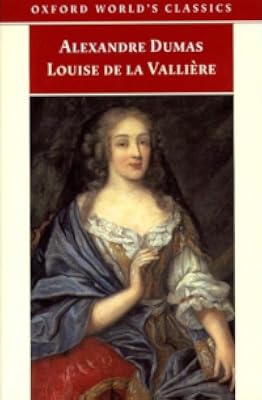
If you’ve read Twenty Years After and are wondering whether you should continue, you must. You’ll be so glad you did. This is a true classic. If you have finished this one move on to Louise de la Valliere. show less
The overall book is an epic. It tells the final stories of the Musketeers, the new adventures of Athos’ son, and the beginnings of Louis XIV reign. All of these stories intertwine and all come together to form one complete narrative. This first volume follows several characters but mainly D’artagnan as he has a scheme to reinstate a monarchy and profit in the process. In the periphery there is Athos completing a royal favor, Louis XIV gaining his first taste of power, and Raul interacting with the next generation of characters. I understand why some might not be show more able to get through the whole book, as it is three volumes and 1800 some pages, but you have to stick with it and it will all be worth it. This book has suspense, romance, tragedy, betrayal, political intrigue, etc. Essentially everything that you want in a story.
If you’ve read Twenty Years After and are wondering whether you should continue, you must. You’ll be so glad you did. This is a true classic. If you have finished this one move on to Louise de la Valliere. show less
This is more Twenty Years After than Three Musketeers. As it's only the first part of a long novel it's hard to judge whether the varied events will be drawn into anything resembling a coherent plot (which Twenty Years lacked) or if we will find any over riding themes. It's interested in money and social status. It's highly readable and when you're sitting down and reading it the pages just fly over but I didn't feel the urge to read that I perhaps would have done if there were a little more intellectual and emotional content. There are some funny moments and the chapter 'Throes' is a little comic masterpiece. The introduction contains spoilers, as do the notes, though in their case they are not as bad as in the previous volume. I show more wonder if Mr Coward received complaints show less
Members
- Recently Added By
Lists

Best Historical Fiction
620 works; 261 members

Best Adventure Stories
66 works; 15 members

Fifty Representative Historical Novels
50 works; 2 members

Swashbucklers
29 works; 6 members

Books I Wish I’d Read as a Kid
32 works; 4 members

French Fiction of the 18th and 19th Centuries in English Translation
169 works; 3 members
Books mentioned in Julian Symons’ Bloody Murder
438 works; 6 members

TBR of Books I Don't Own
132 works; 1 member
Author Information

1,609+ Works 98,567 Members
Some Editions
Awards and Honors
Series

Belongs to Publisher Series
Romances of Alexandre Dumas (Volume 12)
Amstelboeken (74-75)
Work Relationships
Contains
Has the (non-series) sequel
Has the adaptation
Is abridged in
Common Knowledge
- Canonical title
- The Vicomte de Bragelonne
- Original title
- Le Vicomte de Bragelonne; Dix ans plus tard
- Alternate titles
- Ten Years Later
- Original publication date
- 1847
- People/Characters
- Athos; D'Artagnan; Porthos; Aramis; Raoul, vicomte de Bragelonne; Charles II, King of England, Scotland, and Ireland (show all 21); Louise de La Vallière; Louis XIV; Cardinal Mazarin; Abbe Fouquet; Nicolas Fouquet; Raoul de Bragelonne; Marquise du Plessis-Bellière; George Monck, 1st Duke of Albemarle; Princess Henrietta of England; Philippe I, Duke of Orléans; Jean-Baptiste Colbert; George Villiers, 2nd Duke of Buckingham; Armand de Gramont, Comte de Guiche; Anne of Austria; Marquise de Montespan
- Important places
- Paris, Île-de-France, France; London, England, UK; Le Havre, Seine-Maritime, Normandy, France; Fontainebleau, Seine-et-Marne, Île-de-France, France; Bastille, Paris, France; Belle Île, Brittany, France (show all 7); Vaux
- Important events*
- Restoration
- Related movies*
- La maschera di ferro (1909 | IMDb); Der Mann mit der eisernen Maske (1923 | IMDb); The Iron Mask (1929 | IMDb); The Man in the Iron Mask (1939 | IMDb); Le masque de fer (1962 | IMDb); The Man in the Iron Mask (1968 | IMDb) (show all 10); The Man in the Iron Mask (1977 | IMDb); The Fifth Musketeer (1979 | IMDb); The Man in the Iron Mask (1998/I | IMDb); The Man in the Iron Mask (1998/II | IMDb)
- First words
- Towards the middle of the month of May, in the year 1660, at nine o'clock in the morning, when the sun, already high in the heavens, was fast absorbing the dew from the ramparts of the castle of Blois, a little cavalcade, com... (show all)posed of three men and two pages, re-entered the city by the bridge, without producing any other effect upon the strollers of the river bank beyond a first movement of the hand to the head, as a salute, and a second movement of the tongue to express, in the purest French then spoken in France: 'There is Monsieur returning from hunting.'
- Last words
- (Click to show. Warning: May contain spoilers.)Anne leaned her head upon her hands, and then looking at herself in the glass, murmured, 'It has been truly said, that a woman who has truly loved is always young, and that the bloom of the girl she was at twenty ever lies concealed in some secret cloister of her heart.'
- Original language
- ranska
- Disambiguation notice
- This book, includes the 3 parts sometimes published separately as:
1 - The Vicomte of Bragelonne,
2 - Louise de la Vallière,
3 - The Man in the Iron Mask.
*Some information comes from Common Knowledge in other languages. Click "Edit" for more information.
Classifications
- Genres
- Fiction and Literature, General Fiction, Historical Fiction
- DDC/MDS
- 843.7 — Literature & rhetoric French Literature French fiction Constitutional monarchy 1815–48
- LCC
- PQ2229 .V413 — Language and Literature French, Italian, Spanish and Portuguese literatures French literature Modern literature 19th century
- BISAC
Statistics
- Members
- 1,734
- Popularity
- 12,759
- Reviews
- 27
- Rating
- (3.81)
- Languages
- 12 — Dutch, English, Finnish, French, German, Hungarian, Italian, Polish, Russian, Spanish, Swedish, Turkish
- Media
- Paper, Audiobook, Ebook
- ISBNs
- 155
- ASINs
- 87