Ring Around the Sun
by Clifford D. Simak
On This Page
Description
In this classic novel by the Science Fiction Grand Master, a writer searching for explanations uncovers the existence of mutants and multiple Earths: "First-rate Simak" (The New York Times). Author Jay Vickers would like nothing more than to be left alone so he can finish his next book. But "there's something strange going on," as his peculiar neighbor, Horton Flanders, says. For instance, the market is filling with new inventions that supposedly last forever--cars, razors, cigarette show more lighters, and more. Individuals and whole families are disappearing. Soon, even Mr. Flanders vanishes--but not before leaving Vickers a note. Following Flanders's advice, Vickers travels to his childhood home, where he makes a fantastic discovery. It is a mere child's toy, a brightly colored whistling top. But for Jay Vickers, it leads to other worlds and answers all his questions. What happened to all the vanished people? Who is behind these helpful inventions? And what sort of being would want to stop them. . . ? "Unforgettable." --New York Herald Tribune "Solid entertainment, with plenty of startling plot twists." --The Magazine of Fantasy & Science Fiction "Some of the most ingenious plot twists in recent science-fiction." --Galaxy show lessTags
Recommendations



















Member Reviews
Este libro de Simak nos retrotrae a esos clásicos de la Edad de Oro de la ciencia ficción, ingenuos por una parte pero también muy entretenidos, ese tipo de lecturas que se leen con un gran placer. ‘Un anillo alrededor del Sol’ nos relata una historia sencilla a primera vista, pero en realidad toca temas muy interesantes, como son la Teoría de la Relatividad, la existencia de mundos paralelos, la Guerra Fría, la caída del capitalismo, así como una crítica feroz de la sociedad de consumo.
La novela no trata de extraterrestres, galaxias lejanas ni nada parecido, sino que se centra en la misma Tierra, y trata sobre la teoría de la existencia de infinitas Tierras, cada una suspendida en su propio tiempo; digamos que no existe el show more término tiempo per se, y que cada Tierra permanece en su propio momento, como si de fotografías se tratase. De esta manera es como si hubiese un anillo de Tierras diferentes entre sí. En cuanto la historia en sí mejor no hablar demasiado, ya que la novela está construida de tal forma que la trama da un giro inesperado casi en cada capítulo.
Así que únicamente contaré el comienzo. El protagonista es Jay Vickers, un escritor, a través del cual vamos sabiendo lo que está sucediendo. Resulta que desde hace un tiempo están apareciendo en el mercado una serie de artículos, aparentemente inocuos, cuya durabilidad es eterna, nunca se desgastan: maquinillas de afeitar, mecheros y bombillas. Algo a simple vista insignificante empieza a acarrear problemas en cadena, ya que si uno de estos objetos dura toda la vida, ya no es necesaria su fabricación, así que la fábrica cierra, los trabajadores se quedan sin empleo, etc. El orden mundial peligra...
Con un estilo sencillo, capítulos cortos y bastantes diálogos, la narración se desarrolla sin trabas, y además, Simak no se para en especulaciones innecesarias. Sin duda se trata de una grata lectura, que gustará a quien quiera recordar cómo era la ciencia ficción que se escribía antes. show less
La novela no trata de extraterrestres, galaxias lejanas ni nada parecido, sino que se centra en la misma Tierra, y trata sobre la teoría de la existencia de infinitas Tierras, cada una suspendida en su propio tiempo; digamos que no existe el show more término tiempo per se, y que cada Tierra permanece en su propio momento, como si de fotografías se tratase. De esta manera es como si hubiese un anillo de Tierras diferentes entre sí. En cuanto la historia en sí mejor no hablar demasiado, ya que la novela está construida de tal forma que la trama da un giro inesperado casi en cada capítulo.
Así que únicamente contaré el comienzo. El protagonista es Jay Vickers, un escritor, a través del cual vamos sabiendo lo que está sucediendo. Resulta que desde hace un tiempo están apareciendo en el mercado una serie de artículos, aparentemente inocuos, cuya durabilidad es eterna, nunca se desgastan: maquinillas de afeitar, mecheros y bombillas. Algo a simple vista insignificante empieza a acarrear problemas en cadena, ya que si uno de estos objetos dura toda la vida, ya no es necesaria su fabricación, así que la fábrica cierra, los trabajadores se quedan sin empleo, etc. El orden mundial peligra...
Con un estilo sencillo, capítulos cortos y bastantes diálogos, la narración se desarrolla sin trabas, y además, Simak no se para en especulaciones innecesarias. Sin duda se trata de una grata lectura, que gustará a quien quiera recordar cómo era la ciencia ficción que se escribía antes. show less
Vintage science fiction. The economy is being wrecked by the introduction of common items that never wear out as well as a free source of carbohydrates. A cabal of industrial tycoons unites to try to oust the creators of these items but has systematically failed so they try to recruit a writer to write an expose for them.
Even for the era the science is weak. Parts of the plot don't make sense. The ideas are creative but lack logical follow-through.
Even for the era the science is weak. Parts of the plot don't make sense. The ideas are creative but lack logical follow-through.
Though I'm a longtime fan of science fiction, I have often found something a little formulaic about most of the novels from the "golden era" of the genre. The problem is not with the premise -- though that can crop up from time to time -- so much as with the plot, which typically functions in the standard pattern of boy-meets-girl, boy-fights-antagonists (usually against seemingly overwhelming but ultimately surmountable odds), boy-gets-girl. For a while, though, I thought that with this novel I had found one of the exceptions. For much of its length Clifford Simak kept me guessing as to who Jay Vickers was and the role he was going to play. Then I got to the end, and the last development -- where the girl Ann Carter, who Simak had show more hinted might be a fragment of Jay's splintered persona, was actually the long-lost love of his life after all -- just felt like a total cop out. It was as though Simak was at the brink of doing something that would have been incredibly daring and far-sighted for a novel of the early 1950s, then wavered and reverted back to the comfortable clichés of his time. It doesn't mean the novel isn't worth reading, but it left me with a sense of disappointment at having witnessed something that could have been so much greater than it turned out to be. show less
This text is actually two permeable stories whose connecting element is a humming top which works similarly to the one in Christopher Nolan's Inception (2010).
In my view, the first story is a parable that depicts the superiority of life experienced as a series of meaningful events by themselves rather than as the outcome of them, whereas the second one is completely different. What I found interesting in these last chapters is the postulate that mutants are the human outliers among their equals in nature, that is, what we call the modern Prometheis, the pioneers, the geniuses of each epoch. Also, there is a layer in this second part of the novel that is fairly grotesque in the style of William Blake's The Chimney Sweeper, since people show more who are worse off in this world are being permanently removed from it and placed in other paradise-like Earths, and it goes without saying that in this section the plot gets quite intriguing. show less
In my view, the first story is a parable that depicts the superiority of life experienced as a series of meaningful events by themselves rather than as the outcome of them, whereas the second one is completely different. What I found interesting in these last chapters is the postulate that mutants are the human outliers among their equals in nature, that is, what we call the modern Prometheis, the pioneers, the geniuses of each epoch. Also, there is a layer in this second part of the novel that is fairly grotesque in the style of William Blake's The Chimney Sweeper, since people show more who are worse off in this world are being permanently removed from it and placed in other paradise-like Earths, and it goes without saying that in this section the plot gets quite intriguing. show less
In this science fiction novel from the 1950s, our protagonist, Jay Vickers, learns about some fantastic new products on the market, from ridiculously cheap housing to a razor blade that never dulls to a car will run literally forever. Then he learns some even stranger things about the world, the universe, and himself.
There are some interesting ideas at the heart of this book, and some also-interesting social commentary. The details, though, are a little bit silly and very woo-woo. Actually, it reminds me in a lot of ways of the last Simak novel I read, All Flesh Is Grass, although it lacks the oddball charm of that one.
In the end... Well, I'm not sorry I read it, but I can't really call it Simak's best.
There are some interesting ideas at the heart of this book, and some also-interesting social commentary. The details, though, are a little bit silly and very woo-woo. Actually, it reminds me in a lot of ways of the last Simak novel I read, All Flesh Is Grass, although it lacks the oddball charm of that one.
In the end... Well, I'm not sorry I read it, but I can't really call it Simak's best.
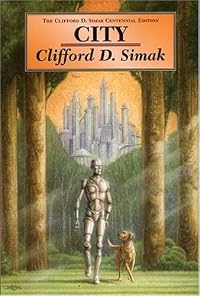
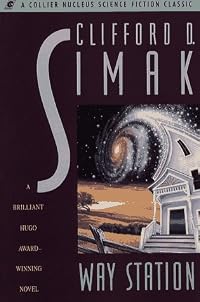
When I was younger I read just about every Simak book that I could get my hands on. Novels of his such as "Waystation" and "City" and "All Flesh Is Grass" I consider as personal favorites and genuine classics of the genre. I loved most of his stuff, although a few of his last novels didn't do much for me. And there were a few books I never did read. Ring Around the Sun was one of them. This story was written in the very early 50's and a version first appeared serialized in Galaxy Magazine from Dec 1952-Feb 1953.
When reading this I kept thinking what a great movie this would have been back in the 50's. Although the book is set in the "future" of 1977, 25 years after publication, there really isn't a thing in it to say 1977 instead of show more 1952.
The Cold War is approaching 30 years in the book. I've always thought Simak a good writer. This has a bit of the menacing feel of Invasion of the Body Snatchers mixed up with a slight fantasy touch and the vivid descriptions of Ray Bradbury that tend to conjur big dollops of a haunted nostalgia here and there, and maybe a touch of Phillip K. Dick.
The protaganist of the story, Jay Vickers, has always noticed a touch of strange about the world and it's relation to him. He's probably in his mid 30's, a successful writer, but also a loner. Strange things are astir in the world and he and his neighbor, Horton Flanders, an old but observent man, discuss some of it. There are a couple of other notable characters, but the story is primarily about Vickers and what he finds out about the world. It is a quick moving story with pauses here and there. In the latter half though, I think we get a bit too much exposition and mental hand-wringing which spoils some of the momentum of the story and keeps me from rating this higher. The ending is a little unsatisfactory as well.
This really has that 50's sense of paranoia underlying it and I enjoyed this story a lot. Really an above average read for me, for an older novel. This book made it onto a list of the 100 best science fiction novels written between 1949 and 1984. It has some good company on the list. https://www.worldswithoutend.com/lists_pringle_sf.asp show less
When reading this I kept thinking what a great movie this would have been back in the 50's. Although the book is set in the "future" of 1977, 25 years after publication, there really isn't a thing in it to say 1977 instead of show more 1952.
The Cold War is approaching 30 years in the book. I've always thought Simak a good writer. This has a bit of the menacing feel of Invasion of the Body Snatchers mixed up with a slight fantasy touch and the vivid descriptions of Ray Bradbury that tend to conjur big dollops of a haunted nostalgia here and there, and maybe a touch of Phillip K. Dick.
The protaganist of the story, Jay Vickers, has always noticed a touch of strange about the world and it's relation to him. He's probably in his mid 30's, a successful writer, but also a loner. Strange things are astir in the world and he and his neighbor, Horton Flanders, an old but observent man, discuss some of it. There are a couple of other notable characters, but the story is primarily about Vickers and what he finds out about the world. It is a quick moving story with pauses here and there. In the latter half though, I think we get a bit too much exposition and mental hand-wringing which spoils some of the momentum of the story and keeps me from rating this higher. The ending is a little unsatisfactory as well.
This really has that 50's sense of paranoia underlying it and I enjoyed this story a lot. Really an above average read for me, for an older novel. This book made it onto a list of the 100 best science fiction novels written between 1949 and 1984. It has some good company on the list. https://www.worldswithoutend.com/lists_pringle_sf.asp show less
Simak is one of the most important Science Fiction writers of the early 1960's, mostly because he created novels of marvelous ideas, ones with much potential and meat on them, if you understand. But Simak didn't always create great characters and plots to go along with those ideas (like so many other science fiction novels, the ideas are more important than the story). However, Ring Around the Sun is not one of those. It is a marvelous sci-fi novel, centering around the very idea that Currie used in Everything Matters, that the Earth is only one of millions of Earths existing in multiple space-time planes. This book is mentioned in Stephen King's Hearts in Atlantis and influenced King in his Dark Tower series. It is, in my opinion, a show more book that should be included in the modern Western Literary Cannon, mainly because it merges literature and science in a way that most high school students could easily understand it and enjoy it.
In the story, Jay Vickers, on his way to a meeting with a Mr. Crawford, sees a shop selling Forever Light Bulbs, as well as a razor that never needs sharpening, a car that runs forever...etc... This, explains Crawford, is crippling the industries of the world, causing chaos and fear. Vickers is supposed to investigate it and expose it in articles to be published. But it's not all that simple, because the people behind the Forever Light Bulb are trying to save the world, not destroy it.
A fabulous book, one that I've read twice now. It's very rare for me to do that. The other books I've read twice include LOTR, Lord Foul's Bane by Stephen R. Donaldson, Dragonriders of Pern by McCaffrey, and Dandelion Wine by Bradbury. Simak's book easily ranks among these. show less
In the story, Jay Vickers, on his way to a meeting with a Mr. Crawford, sees a shop selling Forever Light Bulbs, as well as a razor that never needs sharpening, a car that runs forever...etc... This, explains Crawford, is crippling the industries of the world, causing chaos and fear. Vickers is supposed to investigate it and expose it in articles to be published. But it's not all that simple, because the people behind the Forever Light Bulb are trying to save the world, not destroy it.
A fabulous book, one that I've read twice now. It's very rare for me to do that. The other books I've read twice include LOTR, Lord Foul's Bane by Stephen R. Donaldson, Dragonriders of Pern by McCaffrey, and Dandelion Wine by Bradbury. Simak's book easily ranks among these. show less
Members
- Recently Added By
Lists

David Pringle's Science Fiction: The 100 Best Novels
101 works; 9 members

AbeBooks: 50 essential science fiction books
50 works; 6 members
Author Information

386+ Works 25,279 Members
Some Editions
Awards and Honors
Series
Belongs to Publisher Series
Work Relationships
Is contained in
Has as a commentary on the text
Common Knowledge
- Canonical title
- Ring Around the Sun
- Original title
- Ring Around the Sun
- Alternate titles*
- L'anello intorno al sole
- Original publication date
- 1953
- People/Characters
- Jay Vickers; Horton Flanders; Ann Carter; Crawford
- Dedication
- For Carson
- First words
- Vickers got up at an hour outrageous for its earliness, because Ann had phoned the night before to tell him about a man in New York she wanted him to meet.
- Last words
- (Click to show. Warning: May contain spoilers.)"Or should I call you brother?"
- Original language*
- English
*Some information comes from Common Knowledge in other languages. Click "Edit" for more information.
Classifications
Statistics
- Members
- 694
- Popularity
- 40,768
- Reviews
- 23
- Rating
- (3.56)
- Languages
- 12 — Bulgarian, Czech, Dutch, English, French, German, Hebrew, Italian, Portuguese, Russian, Spanish, Swedish
- Media
- Paper, Audiobook, Ebook
- ISBNs
- 18
- ASINs
- 23