
Harry Harrison (1925–2012)
Author of The Stainless Steel Rat
About the Author
Harry Harrison was born Henry Maxwell Dempsey on March 12, 1925 in Stamford, Connecticut. He was drafted into the U. S. Air Corps in 1943 and became a sharpshooter, a military policeman, a gunnery instructor, and a specialist in the prototypes of computer-guided bomb-sights and gun turrets. After show more being discharged, he graduated from Hunter College with a degree in art. By the end of the 1940s, he was running a small studio that specialized in selling illustrations to comics and science-fiction magazines. He then moved on to editing some of the magazines. As the market for comics began to shrink, he started writing for science-fiction magazines. He wrote short science fiction stories and novels including Deathworld, Captive Universe, Montezuma's Revenge, Star Smashers of the Galaxy Rangers, Stonehenge, West of Eden, Stars and Stripes Forever. He also wrote the Stainless Steel Rat series and the Bill, the Galactic Hero series. His novel Make Room! Make Room! Was the inspiration for the movie Soylent Green. He also wrote under the pseudonyms Hank Dempsey, Felix Boyd, Wade Kaempfert, Cameron Hall, Philip St. John, and Leslie Charteris. He died on August 15, 2012 at the age of 87. (Bowker Author Biography) show less
Series
Works by Harry Harrison
Hell's Cartographers: Some Personal Histories of Science Fiction Writers (1975) — Editor — 141 copies, 3 reviews
The Harry Harrison Megapack: 12 Classics of Science Fiction, including ROBOT JUSTICE, DEATHWORLD, and DEATHWORLD II (2014) 28 copies, 1 review
Harry Harrison 16 copies
The Collected Works of Harry Harrison (Illustrated Edition): Deathworld, The Stainless Steel Rat, Planet of the Damned, The Misplaced Battleship (2004) 11 copies
1001 Things Happy Couples Know About Marriage: Like Love, Romance and Morning Breath (2009) 11 copies
Deathworld and Deathworld 2 by Harry Harrison (Unexpurgated Edition) (Halcyon Classics) (2009) 7 copies
Catastrophes : La Fin du rêve ; Terre brûlée ; Soleil vert ; La Goélette des glaces ; Génocides (2006) 6 copies
Sterren stralen overal : en het felst in dit unieke boek met 18 schrijvers favorieten (1977) — Foreword — 6 copies, 1 review
Galaxy 11 - Eine Auswahl der besten Stories aus dem Schience Fiction Magazine GALAXY (1968) — Contributor — 5 copies
Short Science Fiction Collection 001 5 copies
The Ever-Branching Tree 5 copies
I Always Do What Teddy Says 5 copies
Space Rats of the CCC 4 copies
The Eden Trilogy - West of Eden, Winter in Eden and Return to Eden (3 books, as a set) (1988) 4 copies
Galaxy 12 ; Eine Auswahl der besten Stories aus dem amerikanischen Science Fiction Magazin Galaxy / [Herausgegeben und übersetzt von Walter Ernsting und Thomas Schlück] (1969) — Contributor — 4 copies
Afterward- This Year in SF 1966 4 copies
Mundo-Nosso 4 copies
You Know You're a Mom: A Book for Moms Who Spend Saturdays at the Soccer Field Instead of the Spa (2017) 3 copies
The Day After the End of the World 3 copies
The Year's Best SF 3 copies
You Know You're a Dad: A Book for Dads Who Never Thought They’d Say Binkies, Blankies, or Curfew (2017) 3 copies
Heavy Duty 3 copies
Dawn of the Endless Night 3 copies
Welt im Fels - Das Projekt des Grossen Planers - Menschen auf dem Weg zu den Sternen - Terra SF-Roman (1969) 3 copies
Captain Honario Harpplayer, R.N. 3 copies
Short Science Fiction Collection 010 3 copies
Years Best Science Fiction No 4, The 2 copies
Fantastic. No. 147 (October 1968) — Editor — 2 copies
The Defensive Bomber 2 copies
Short Fiction 2 copies
Cwacc Strikes Again 2 copies
Short Science Fiction Collection 059 2 copies
Planeta Śmierci 2 copies
Harry Harrison - Boxed Set (Illustrated Edition): Deathworld, The Stainless Steel Rat, Planet of the Damned, The Misplaced Battleship (2020) 2 copies
Årets bedste science fiction, 1968 — Editor — 2 copies
Jackson Pollock Artist Box: The Complete Kit Including Paint Brushes, Drip Bottles, Canvases, and a Book! (2010) 2 copies
L'Era degli Yilané 2 copies
Билл герой галактики 2 copies
Hitchhiker 2 copies
The Gods Themselves Throw Incense 2 copies
The Most Thrilling Science Fiction Ever Told, No. 9, Summer 1968 — Editor — 2 copies
The Greening of the Green 2 copies
How the Old World Died 2 copies
I Have My Vigil 2 copies
Captain Bedlam 2 copies
An Artist's Life 2 copies
American Dead 2 copies
The Road to the Year 3000 2 copies
Rock Diver 2 copies
Ad Astra {short story} 2 copies
Pareigos jausmas 2 copies
The Pliable Animal 2 copies
AHEAD OF TIME 2 copies
Raumschiff in Gefahr 1 copy
2000 AD Sci-Fi Special #01 1 copy
O rato de aço inoxidável 1 copy
Web of the Worlds 1 copy
The Matter Transmitter 1 copy
Analog Science Fact/Science Fiction 1961 April (British Edition) — Contributor — 1 copy
No War Or Battle's Sound 1 copy
Wife To The Lord 1 copy
Waiting Place 1 copy
The Life Preservers 1 copy
A Technicolor idõgép 1 copy
Spaceship Medic 1 copy
Свят на смъртта I 1 copy
A Tale Of The Ending 1 copy
Run From The Fire 1 copy
Чума из космоса: сборник 1 copy
The Fourth Law of Robotics 1 copy
mundo nosso - homeworld 1 copy
Nova One 15 bold new departures by the greatest masters and fastest rising stars of science fiction (1971) 1 copy
A rozsdamentes acélpatkány 1 copy
Bil, bohater galaktyki 1 copy
Best Sci Fi 1969 1 copy
Best Sci Fi 1957 1 copy
SFAuthor's Choice 2 1 copy
SF Impulse Vol 1. No. 12 1 copy
Les 3 solutions 1 copy
1979 1 copy
II 1 copy
CATASTROFE EN EL ESPACIO 1 copy
Best SF 1 copy
The Harry Harrison Anthology 1 copy
A Backdrop of Stars 1 copy
Fantastic. No. 146 (August 1968) — Editor — 1 copy
A Fragment Of Manuscript 1 copy
The Omnibus Collection 1 copy
Lifeship Life Ship 1 copy
Planetenjäger 1 copy
Attacke aus dem Kosmos 1 copy
Mundo-Nosso Livro 1 1 copy
A Praga do Espaço Livro 1 1 copy
Mundo yerto 1 copy
Associated Works
What Might Have Been, Volumes 1 & 2: Alternate Empires, Alternate Heroes (1990) — Contributor — 185 copies, 2 reviews
Dogs of War: Ten Classic Stories of Men and Machines in War (2002) — Contributor — 116 copies, 1 review
Gateways: A Feast of Great New Science Fiction Honoring Grand Master Frederik Pohl (2010) — Contributor — 113 copies, 2 reviews
The Prentice Hall Anthology of Science Fiction and Fantasy (2000) — Contributor — 101 copies, 2 reviews
Best Science Fiction Stories of the Year First Annual Collection (1972) — Contributor — 88 copies, 2 reviews
Best Science Fiction Stories of the Year Fourth Annual Collection (1975) — Contributor — 84 copies, 3 reviews
The Science Fiction Megapack: 25 Classic Science Fiction Stories by Masters (2011) — Author — 65 copies, 3 reviews
The Girl Who Loved Animals: And Other Stories (2007) — Introduction, some editions — 33 copies, 1 review
Analog Science Fiction/Science Fact: Vol. XCV, No. 3 (March 1975) (1975) — Contributor — 28 copies, 1 review
Analog Science Fiction/Science Fact: Vol. XCV, No. 2 (February 1975) (1975) — Contributor — 24 copies, 1 review
Analog Science Fiction/Science Fact: Vol. LXXXIX, No. 4 (June 1972) (1972) — Contributor — 22 copies
Kong Unbound: The Cultural Impact, Pop Mythos, and Scientific Plausibility of a Cinematic Legend (2005) — Contributor — 21 copies
Analog Science Fiction/Science Fact: Vol. LXXXI, No. 1 (March 1968) (1968) — Contributor — 21 copies
Der widerspenstige Planet: Meisterwerke der Science Fiction - Erzählungen (2009) — Preface, some editions — 21 copies
Analog Science Fiction/Science Fact: Vol. LXXXIX, No. 2 (April 1972) (1972) — Contributor — 19 copies, 1 review
Analog Science Fiction/Science Fact: Vol. LXXXIV, No. 4 (December 1969) (1969) — Contributor — 19 copies
Analog Science Fiction/Science Fact: Vol. LXXXV, No. 1 (March 1970) (1970) — Contributor — 18 copies
Van Jules Verne tot Isaac Asimov de vijftig beste science fiction verhalen (1981) — Contributor — 17 copies, 1 review
Analog Science Fiction/Science Fact: Vol. LXXXV, No. 2 (April 1970) (1970) — Contributor — 17 copies
The Magazine of Fantasy and Science Fiction March 1964, Vol. 26, No. 3 (1964) — Contributor — 13 copies
The Magazine of Fantasy and Science Fiction November 1964, Vol. 27, No. 5 (1964) — Author — 13 copies
Analog Science Fact/Science Fiction: Vol. LXXIV, No. 5 (January 1965) (1965) — Contributor — 11 copies
Das Science Fiction Jahr 1994. Ein Jahrbuch für den Science Fiction Leser (1994) — Contributor — 10 copies
Titan, Teil 21: Klassische Science Fiction- Erzählungen (1976) — Contributor, some editions — 10 copies
Analog Science Fact/Science Fiction: Vol. LXXI, No. 6 (August 1963) (1963) — Contributor — 10 copies
Worlds of If Science Fiction 156, September/October 1971 (Vol. 21, No. 1) (1971) — Contributor — 9 copies
Analog Science Fact/Science Fiction: Vol. LXXIV, No. 4 (December 1964) (1964) — Contributor — 9 copies
Short Science Fiction Collection 004 5 copies
New Worlds Science Fiction 75, September 1958 — Contributor — 4 copies
Short Science Fiction Collection 072 — Contributor — 2 copies
Fantasy Fiction - November 1953 - Vol. 1, No. 4 — Contributor — 1 copy
Comics Revue #237 — Contributor — 1 copy
Comics Revue #278 — Contributor — 1 copy
Comics Revue #240 — Contributor — 1 copy
Comics Revue #276 — Contributor — 1 copy
Comics Revue #262 — Contributor — 1 copy
Comics Revue #241 — Contributor — 1 copy
Comics Revue #242 — Contributor — 1 copy
Comics Revue #280 — Contributor — 1 copy
Comics Revue #279 — Contributor — 1 copy
Comics Revue #277 — Contributor — 1 copy
Comics Revue #243 — Contributor — 1 copy
Comics Revue #253 — Contributor — 1 copy
Comics Revue #244 — Contributor — 1 copy
Comics Revue #256 — Contributor — 1 copy
Comics Revue #238 — Contributor — 1 copy
Tagged
Common Knowledge
- Canonical name
- Harrison, Harry
- Legal name
- Harrison, Harry Maxwell
Dempsey, Henry Maxwell (born) - Other names
- Boyd, Felix
Dempsey, Hank - Birthdate
- 1925-03-12
- Date of death
- 2012-08-15
- Gender
- male
- Occupations
- translator
novelist
short story writer
illustrator (comics) - Organizations
- Science Fiction and Fantasy Writers of America
- Awards and honors
- Guest of Honour, Eastercon, UK (1965 ∙ 1975)
SF Hall Of Fame (Living Inductee ∙ 2004)
Damon Knight Memorial Grand Master Award (2009) - Relationships
- Harrison, Evelyn (wife div. 1951)
Harrison, Joan Merkler (wife 1954–2002, her death)
Harrison, Todd (son 1955 - )
Harrison, Moira (daughter 1959 - ) - Nationality
- USA
- Birthplace
- Stamford, Connecticut, USA
- Places of residence
- Stamford, Connecticut, USA (birth)
New York, New York, USA
Ireland
England
Italy - Place of death
- Crowborough, Uckfield, East Sussex, England, UK
- Associated Place (for map)
- Crowborough, Uckfield, East Sussex, England, UK
Members
Discussions
a sci-fi book with two gay main characters and an airliner turned into a spaceship in Name that Book (April 2014)
Harry Harrison (1925 – 2012) in Science Fiction Fans (August 2012)
Bibliographie in Zwischen �t�p� und Wirklichkeit: Konstruierte Sprachen für die gl�b�l�s�rt� Welt (June 2012)
SF: Man infiltrates alien society based on barbarian nomadic society. 80's? in Name that Book (April 2012)
trying to remember a title/author in Name that Book (July 2010)
Reviews

My reaction to reading this novel in 1999. Spoilers follow.
This savage satire takes aim at not only the military (Harrison was a machine gun instructor in the Army) but certain works and types of sf itself.
Robert A. Heinlein’s Starship Troopers with recruit Johnny Ringo's respectful worshp of his drill instructor is parodied here. Bill is tricked into joining the military and his drill instructor, one Petty Officer Deathwish Drang is an ex-actor who cynically got some fang implants to get show more the cushy role of DI. Bill threatens a chaplain at gunpoint to get Drang’s old dentition after the latter’s death. The powered suits of Heinlein’s novel prove a positive liability in combat on the mudworld of Venuria. Nor is Bill serving a noble state where veterans get a vote. He serves a cynical empire that, in one funny (and there are many in this novel) scene, stages a decoration ceremony with a fake emperor. (Thus Harrison satirizes not only Heinlein but all those space operas where good and noble empires are faithfully and willingly served by commoners in the military.) Bill doesn’t exactly deserve his medal – he unknowingly destroyed an enemy spaceship. Nor is – and this is particularly funny – his job heroic. His job is to change fuses in the massive fuse room of spaceship during combat, a job his superior insists will take at least a year to learn but can be mastered by almost anyone in under fifteen minutes.
The huge, gilded aluminum covered imperial capital city-planet of Helior is quite obviously a parody of Isaac Asimov’s Trantor in the Foundation series. Here is a world so vast and complex that its guidebooks are rare and precious items. Bill loses his and gets lost and shows up from leave late where he is promptly court-martialed in a kangaroo court. (Harrison takes great delight in mocking military bureaucracy which, at one point, gives Bill a second right arm as a transplant after a combat injury.) He eventually seeks refuge in the garbagemen of Helior (prefiguring the environmental concerns which were part of Harrison’s classic Make Room! Make Room! written a year later) whose main concern is how to get rid of Helior’s vast garbage. Bill hits on the scheme of mailing it, non-returnable post, of course – to the provinces. He also, on Helior, gets involved, coerced actually, as a double agent in the Robot Underground Resistance (RUR, an allusion to Karl Capek’s classic play of the same name). When the day of the revolution comes, it turns out there’s only one genuine human revolutionary. The rest are spies. (Harrison has a place in science fiction as inventing some of the wackier robot scenarios).
Speaking of espionage, the ship Bill serves on is the Christine Keeler, an allusion to a woman in a real British spy scandal of the early 1960s. Espionage plays its part when recruit Eager Beaver (always willing to polish his fellow recruit’s boots) turns out to be a Chinger spy – though the Chingers turn out to be seven inches high, though quite strong being from a heavy gravity planet, rather than the giant lizards of propaganda. But the final bit of savage satire comes at the end of the novel. Now possessing Drang’s old fangs, he’s become a recruiter. He unknowingly returns to his home planet and recruits his brother (using beer, music, and hypnotism). When his mother shows up, tells him what he’s done, and begs him “You wouldn’t take your own little brother into the troopers, would you?”, the completely dehumanized and brutalized Bill, knowing every recruit is a month off his service time, instantly and simply responds “Yes.”
I think it’s safe to say Harrison didn’t like his time in the military. show less
This savage satire takes aim at not only the military (Harrison was a machine gun instructor in the Army) but certain works and types of sf itself.
Robert A. Heinlein’s Starship Troopers with recruit Johnny Ringo's respectful worshp of his drill instructor is parodied here. Bill is tricked into joining the military and his drill instructor, one Petty Officer Deathwish Drang is an ex-actor who cynically got some fang implants to get show more the cushy role of DI. Bill threatens a chaplain at gunpoint to get Drang’s old dentition after the latter’s death. The powered suits of Heinlein’s novel prove a positive liability in combat on the mudworld of Venuria. Nor is Bill serving a noble state where veterans get a vote. He serves a cynical empire that, in one funny (and there are many in this novel) scene, stages a decoration ceremony with a fake emperor. (Thus Harrison satirizes not only Heinlein but all those space operas where good and noble empires are faithfully and willingly served by commoners in the military.) Bill doesn’t exactly deserve his medal – he unknowingly destroyed an enemy spaceship. Nor is – and this is particularly funny – his job heroic. His job is to change fuses in the massive fuse room of spaceship during combat, a job his superior insists will take at least a year to learn but can be mastered by almost anyone in under fifteen minutes.
The huge, gilded aluminum covered imperial capital city-planet of Helior is quite obviously a parody of Isaac Asimov’s Trantor in the Foundation series. Here is a world so vast and complex that its guidebooks are rare and precious items. Bill loses his and gets lost and shows up from leave late where he is promptly court-martialed in a kangaroo court. (Harrison takes great delight in mocking military bureaucracy which, at one point, gives Bill a second right arm as a transplant after a combat injury.) He eventually seeks refuge in the garbagemen of Helior (prefiguring the environmental concerns which were part of Harrison’s classic Make Room! Make Room! written a year later) whose main concern is how to get rid of Helior’s vast garbage. Bill hits on the scheme of mailing it, non-returnable post, of course – to the provinces. He also, on Helior, gets involved, coerced actually, as a double agent in the Robot Underground Resistance (RUR, an allusion to Karl Capek’s classic play of the same name). When the day of the revolution comes, it turns out there’s only one genuine human revolutionary. The rest are spies. (Harrison has a place in science fiction as inventing some of the wackier robot scenarios).
Speaking of espionage, the ship Bill serves on is the Christine Keeler, an allusion to a woman in a real British spy scandal of the early 1960s. Espionage plays its part when recruit Eager Beaver (always willing to polish his fellow recruit’s boots) turns out to be a Chinger spy – though the Chingers turn out to be seven inches high, though quite strong being from a heavy gravity planet, rather than the giant lizards of propaganda. But the final bit of savage satire comes at the end of the novel. Now possessing Drang’s old fangs, he’s become a recruiter. He unknowingly returns to his home planet and recruits his brother (using beer, music, and hypnotism). When his mother shows up, tells him what he’s done, and begs him “You wouldn’t take your own little brother into the troopers, would you?”, the completely dehumanized and brutalized Bill, knowing every recruit is a month off his service time, instantly and simply responds “Yes.”
I think it’s safe to say Harrison didn’t like his time in the military. show less

Oddly enough, I kinda expected something hokey before I read this, but instead, I just got a dystopian nightmare of overpopulation.
This isn't unexpected or a bad thing. After all, I've seen Soylent Green and felt the huge impact of the scene where the old man Saul mouths the BIG SECRET through the plane of glass. I remember the riots, the pressure, the senseless violence, and the massive levels of injustice AND stupidity that brought us to this state.
And yet, after reading this novel, that show more sense is more visceral, more realistic, and a lot less sensational. Yes, there's massive injustice. Just look at the Squatter law that gives priority to squalid massive families regardless of any consideration, or the way no detective is able to do his job because life is already worthless.
For '66, this nightmare world that has used up all resources by 1999 and has ignored or actively fought all birth control or warnings, has resorted to sticking its head in the sand.
Sound familiar?
Well, fortunately, our modern world is getting well-adjusted to living with less... and less... and some technologies are letting us live with a bit less squalor than predicted in this novel... and a New York City of 35 million in the novel is pretty damn close to what some cities are reaching now, true, but the quality of life is NOT as bad as predicted in Harrison's novel.
Of course, in some ways, the violence, the poverty, and the cultural clamp-downs are WORSE in our world. It's odd to see our 7.7 billion people displayed against the novel's measly 7.0 billion. And yet... it's interesting because most of the world is a dustbowl and the only place to safely live .. on the dole .. is the big cities, so everyone migrates there.
I'm just saying this is a really fascinating world-building exercise. I love books that predict or fail to predict in really big ways. :)
Does anyone want any meat flakes? It's just snails... right? Yum, yum. show less
This isn't unexpected or a bad thing. After all, I've seen Soylent Green and felt the huge impact of the scene where the old man Saul mouths the BIG SECRET through the plane of glass. I remember the riots, the pressure, the senseless violence, and the massive levels of injustice AND stupidity that brought us to this state.
And yet, after reading this novel, that show more sense is more visceral, more realistic, and a lot less sensational. Yes, there's massive injustice. Just look at the Squatter law that gives priority to squalid massive families regardless of any consideration, or the way no detective is able to do his job because life is already worthless.
For '66, this nightmare world that has used up all resources by 1999 and has ignored or actively fought all birth control or warnings, has resorted to sticking its head in the sand.
Sound familiar?
Well, fortunately, our modern world is getting well-adjusted to living with less... and less... and some technologies are letting us live with a bit less squalor than predicted in this novel... and a New York City of 35 million in the novel is pretty damn close to what some cities are reaching now, true, but the quality of life is NOT as bad as predicted in Harrison's novel.
Of course, in some ways, the violence, the poverty, and the cultural clamp-downs are WORSE in our world. It's odd to see our 7.7 billion people displayed against the novel's measly 7.0 billion. And yet... it's interesting because most of the world is a dustbowl and the only place to safely live .. on the dole .. is the big cities, so everyone migrates there.
I'm just saying this is a really fascinating world-building exercise. I love books that predict or fail to predict in really big ways. :)
Does anyone want any meat flakes? It's just snails... right? Yum, yum. show less

2.5/5
In full transparency, these opinions are based on my reading of the first of the Deathworld stories, and more cursory glances at the second and third. That, in and of its self, should be some indicator as to what I think about them. At the center of them all is Jason dinAlt a struggling psyonic gambler, whose boredom and hubris land him on the planet Pyrrus, where the environment, the flora, and the fauna are in constant, hellish combat with the dwindling human settlement. This constant show more state of war has a produced a society that values stoic strength, hard-nose stubbornness, and combat ability above all else. Jason is alone in his skepticism and curiosity about the origin of this war and the mysterious "grubbers", a people who can somehow live outside in the wilds of the planet.
At first my reading experience was surprisingly pretty enjoyable. Deathworld is really smartly self conscious of what it is, cuts all of the fluff out and delivers by going over the top with its central premise, which while pulpy is fun in a youthful sort of way. Jason is also surprisingly incompetent for a leading male character at this time period. He struggles to survive on Pyruss, living by the grace of those around him. Yet he's also the only character able of any complex thought, the only one able to piece the puzzle together after hundreds of years. So, definitely mixed on the character front.
If I were being charitable, I would say that Deathworld does have some standout thematic work. War begetting war, the cycle of violence, humans as the aggressor, humans in the wrong. But, somehow, these themes feel inadvertent, since the rest of the book is written like a pulp adventure flick. It's really obvious that this was a serialized work that was only later collected together. The writing is sometimes surprisingly dark for the magazines, but not so much as to be a defining feature.
After struggling to finish the first Deathworld story, I decided to poke my nose into the sequels to see if the format was changed significantly enough to merit further exploration. Sadly, no. While the setting may change, these stories are really more of the same with lower quality prose work.
Decisively not as impressive as Harrison's main attraction Make Room! Make Room!, but might be worth it if you're interested in campy and self aware action drama with all of the trappings of 1960's SF. Had Harrison limited himself to the one foray with Jason and Pyrrus I might've felt more positively about the whole thing, but the sequels seemed more or less unnecessary to begin with. show less
In full transparency, these opinions are based on my reading of the first of the Deathworld stories, and more cursory glances at the second and third. That, in and of its self, should be some indicator as to what I think about them. At the center of them all is Jason dinAlt a struggling psyonic gambler, whose boredom and hubris land him on the planet Pyrrus, where the environment, the flora, and the fauna are in constant, hellish combat with the dwindling human settlement. This constant show more state of war has a produced a society that values stoic strength, hard-nose stubbornness, and combat ability above all else. Jason is alone in his skepticism and curiosity about the origin of this war and the mysterious "grubbers", a people who can somehow live outside in the wilds of the planet.
At first my reading experience was surprisingly pretty enjoyable. Deathworld is really smartly self conscious of what it is, cuts all of the fluff out and delivers by going over the top with its central premise, which while pulpy is fun in a youthful sort of way. Jason is also surprisingly incompetent for a leading male character at this time period. He struggles to survive on Pyruss, living by the grace of those around him. Yet he's also the only character able of any complex thought, the only one able to piece the puzzle together after hundreds of years. So, definitely mixed on the character front.
If I were being charitable, I would say that Deathworld does have some standout thematic work. War begetting war, the cycle of violence, humans as the aggressor, humans in the wrong. But, somehow, these themes feel inadvertent, since the rest of the book is written like a pulp adventure flick. It's really obvious that this was a serialized work that was only later collected together. The writing is sometimes surprisingly dark for the magazines, but not so much as to be a defining feature.
After struggling to finish the first Deathworld story, I decided to poke my nose into the sequels to see if the format was changed significantly enough to merit further exploration. Sadly, no. While the setting may change, these stories are really more of the same with lower quality prose work.
Decisively not as impressive as Harrison's main attraction Make Room! Make Room!, but might be worth it if you're interested in campy and self aware action drama with all of the trappings of 1960's SF. Had Harrison limited himself to the one foray with Jason and Pyrrus I might've felt more positively about the whole thing, but the sequels seemed more or less unnecessary to begin with. show less
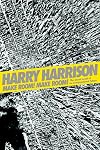
In 1966, Harrison published this tale of the New York City of 1999. Unrestrained population growth and gluttany of natural resources have led to a world packed to bursting with people. There are riots over cracker crumbs, you have to pay up-front to get a job, and people live packed like sardines. The novel follows a few characters: Andy Rusch, a detective assigned to solve the murder of a politically-connected racketeer, and Billy Chung, whose panicked attempt to make money end show more disastrously. The real thrust of this story is on the city, and the pathetic lives of those living in it.
The strength of this novel is in the little details: the sliver of grey soap Andy uses every morning, the unremarked use of slates (presumably because there is too little paper for every-day use), the way Andy has never tasted whiskey before (because grain is too precious), someone being proud of going to the "full three years" of school. Harrison writes the slow grind of scarcity and being constantly surrounded by other people so well that I found myself getting tense every time I opened the book. show less
The strength of this novel is in the little details: the sliver of grey soap Andy uses every morning, the unremarked use of slates (presumably because there is too little paper for every-day use), the way Andy has never tasted whiskey before (because grain is too precious), someone being proud of going to the "full three years" of school. Harrison writes the slow grind of scarcity and being constantly surrounded by other people so well that I found myself getting tense every time I opened the book. show less
Lists
Awards


You May Also Like


Associated Authors
Statistics
- Works
- 440
- Also by
- 194
- Members
- 44,492
- Popularity
- #370
- Rating
- 3.6
- Reviews
- 567
- ISBNs
- 1,309
- Languages
- 22
- Favorited
- 77


