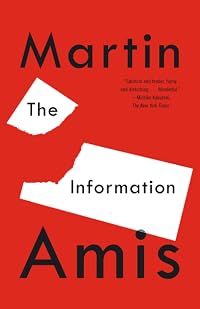
The Information
by Martin Amis
On This Page
Description
From the author of London Fields and Time's Arrow comes the story of Richard Tull, a novelist whose literary criticism is the only work to actually see publication. His life is not going well. Now, he has dedicated his life to screwing up the political aspirations of his best friend and bestselling novelist, Gwyn Barry.Tags
Recommendations



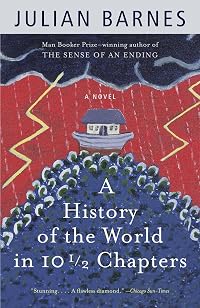
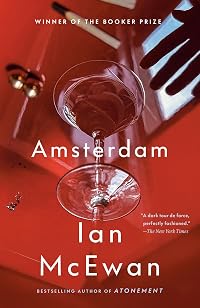
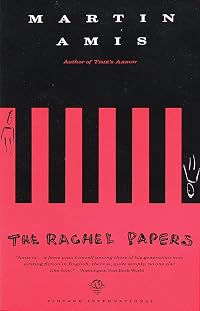
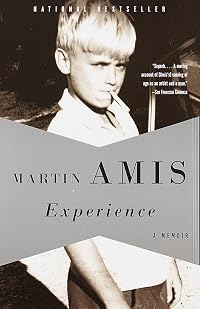




Member Recommendations
noveltea Blacker has blatantly and brilliantly rewritten Amis's The Information.
11

BookshelfMonstrosity These two books are witty satirical fiction in which London, England is a main topic.
02
Member Reviews
I distinctly recall reading The Information when first published back in 1995 – it was like being dragged through the rough street of London, forced to breathe secondhand tobacco smoke and smell the stale liquor breath of the novel’s main character, forty-year-old book reviewer and greatest novelist in the world wannabe Richard Tull. Also featured are a motley crew of other literary types and British lowlife at its lowest, a police lineup of mates and thugs taking street names such as Scozzy, Crash, Belladonna, 13 and Darko. I was so emotionally drained after the book’s nearly four hundred pages, I had to take a break from fiction for weeks. One doesn’t read this Martin Amis novel so much as one lives it.
After my recent show more rereading along with listening to the audio book, most assuredly this is literary writing at its finest. Martin Amis renders memorable his blokes, buggers, dudes and dolts through searing description, lively dialogue, atmosphere, mood, setting, dramatic tension coupled with reflections on solar systems and galaxies, quasars and black holes, upward evolution and downward spiraling (especially midlife crisis), all with the mastery of a virtuoso performing Paganini.
Mr. Amis reports how the characters in a William Burroughs novel are “the ironist’s version of nature without nurture, like Swift’s Yahoos – filthy, treacherous, dreamy, vicious and lustful.” Curiously and perhaps even ironically (irony squared?) such a portrayal is a near perfect fit for the men and women in The Information, as if Martin Amis’ London has transformed itself into a late twentieth century Naked Lunch Interzone or one of Burroughs’ Cities of the Red Night.
Additionally, Mr. Amis' biting satirical steak reminds me of yet another finely crafted tale, this one featuring a host of upper and lower class Brits along with one down-on-his-luck Septimus Harding - of course, its that well-known, much loved classic The Warden. Quite the feat Martin pulled off here – the improbable combination of William Burroughs American-style nihilism and Anthony Trollope British satire.
Back on our dastardly main character. From all accounts, Richard Tull could have been an absolutely first rate book reviewer and literary critic, another James Wood or Michiko Kakutani or Eliot Fremont-Smith, but Richard would never ever come close to being satisfied with such low status – book reviewing, the slum district of the literary world. He might as well write dust jacket blurbs for a publisher’s marketing department.
Richard aspired to be nothing less than another James Joyce. To this end he forged on with his latest unreadable tome entitled Untitled, a novel with sixteen unreliable narrators (sixteen!) and an entire chapter formulated as a burlesque of Alfred Tennyson’s The Idylls of the King. Sound like fun reading? It’s anything but fun; in point of fact, reading more than ten pages of Richard’s turgid, overwrought mess would make you physically ill, or even worse, inflict neurological damage. Exactly the fate of those unlucky ones in Amis' book who submitted themselves to the torture of Untitled. By the way, nobody at Bold Agenda, Richard’s New York publisher, actually read Untitled; they simply wanted to balance out their list of dime store pulps with a bulky British novel that, from all appearances, could be deemed serious literature.
In addition to being a failed novelist, Richard recognizes he could very easily be judged a failed man. Richard peers into the bathroom mirror and concludes nobody in the history of the world deserves the face he has: “His hair, scattered over his crown in assorted folds and clumps, looked as though it had just concluded a course of prolonged (and futile) chemotherapy. Then the eyes, each of them perched on its little blood-rimmed beer gut.” Debilitating and unflattering observations, launched both by the narrator and Richard himself, continue throughout the book regarding not only his face but also his tobacco-liquor-drug battered body, his twisted, cracked psyche, his (gulp) sexual impotence.
Meanwhile, his best friend, a Welshman Richard met back in college by the name of Gwyn Barry, writes to be read by the masses. And he succeeds, big time, with his latest, Amelior, a novel about a group of well-intentioned, problem-free young men and women who set off to establish their own rural community. Now, as Richard and many other readers with literary standards recognized, Amelior is nothing more than a watered down version of, say, Paulo Coelho’s The Alchemist or Richard Bach’s Jonathan Livingston Seagull, as per Richard's reflections upon reading his friend's second novel (Summertown was Gwyn's first):
"If Richard had chortled his way through Summertown, he cackled and yodeled his way through Amelior: its cuteness, its blandness, its naively pompous semicolons, its freedom from humor and incident, its hand-me-down imagery; the almost endearing transparency of its little color schemes, its Tinkertoy symmetries."
But, hey Richard; hey highbrows literary types, Gwyn Barry's Amelior hit the best seller list at number nine. And what was Richard's response when reading the latest news of his closest and stupidest friend's rousing success? He strode out of his den into the parlor where his little twin sons, Marco and Marius, were watching cartoons and gave Marco a good whack on the side of his head. As Christopher Buckley wrote in his New York Times review, probably the one and only instance of child abuse in all of literature that contains a tincture of humor. And soon thereafter, Richard began planing his revenge on Gwyn Barry.
Midway through the novel the narrator himself pops up, bestowing a John Barth-like metafictional spin to this sprawling urban tale, a narrator bearing the name of Martin and possessing one particular physical trait worth emphasizing to readers – he stands not much over five feet. This snippet, including how he was humiliated whenever his older brother arranged a blind date for him with a young lady who turned out to be tall (the bad luck of Cupid's draw), is all we need to comprehend Mr. Amis bears a deep-seated seething resentment over the fact he didn’t shoot up like mum said he would back when he lived at home as a teenager; nope, Martin recognized he would forever remain a pipsqueak, one of the Munchkins from The Wizard of Oz condemned (at least in his own mind) to bursting into song each and every time he entered a room or walked down the street: “I represent the Lolly pop Guild, The Lolly pop Guild, The Lolly pop Guild.”
Thus I have figured out the major reason why I found The Information such an emotionally draining read. Its a double whammy – both the narrator and the main character spit their vitriol out on every single page. More acrimoniousness toward other people and the world you will not encounter. But, still, the writing is magnificent and gives the reader frequent occasion to shake one’s head and laugh out loud. show less
After my recent show more rereading along with listening to the audio book, most assuredly this is literary writing at its finest. Martin Amis renders memorable his blokes, buggers, dudes and dolts through searing description, lively dialogue, atmosphere, mood, setting, dramatic tension coupled with reflections on solar systems and galaxies, quasars and black holes, upward evolution and downward spiraling (especially midlife crisis), all with the mastery of a virtuoso performing Paganini.
Mr. Amis reports how the characters in a William Burroughs novel are “the ironist’s version of nature without nurture, like Swift’s Yahoos – filthy, treacherous, dreamy, vicious and lustful.” Curiously and perhaps even ironically (irony squared?) such a portrayal is a near perfect fit for the men and women in The Information, as if Martin Amis’ London has transformed itself into a late twentieth century Naked Lunch Interzone or one of Burroughs’ Cities of the Red Night.
Additionally, Mr. Amis' biting satirical steak reminds me of yet another finely crafted tale, this one featuring a host of upper and lower class Brits along with one down-on-his-luck Septimus Harding - of course, its that well-known, much loved classic The Warden. Quite the feat Martin pulled off here – the improbable combination of William Burroughs American-style nihilism and Anthony Trollope British satire.
Back on our dastardly main character. From all accounts, Richard Tull could have been an absolutely first rate book reviewer and literary critic, another James Wood or Michiko Kakutani or Eliot Fremont-Smith, but Richard would never ever come close to being satisfied with such low status – book reviewing, the slum district of the literary world. He might as well write dust jacket blurbs for a publisher’s marketing department.
Richard aspired to be nothing less than another James Joyce. To this end he forged on with his latest unreadable tome entitled Untitled, a novel with sixteen unreliable narrators (sixteen!) and an entire chapter formulated as a burlesque of Alfred Tennyson’s The Idylls of the King. Sound like fun reading? It’s anything but fun; in point of fact, reading more than ten pages of Richard’s turgid, overwrought mess would make you physically ill, or even worse, inflict neurological damage. Exactly the fate of those unlucky ones in Amis' book who submitted themselves to the torture of Untitled. By the way, nobody at Bold Agenda, Richard’s New York publisher, actually read Untitled; they simply wanted to balance out their list of dime store pulps with a bulky British novel that, from all appearances, could be deemed serious literature.
In addition to being a failed novelist, Richard recognizes he could very easily be judged a failed man. Richard peers into the bathroom mirror and concludes nobody in the history of the world deserves the face he has: “His hair, scattered over his crown in assorted folds and clumps, looked as though it had just concluded a course of prolonged (and futile) chemotherapy. Then the eyes, each of them perched on its little blood-rimmed beer gut.” Debilitating and unflattering observations, launched both by the narrator and Richard himself, continue throughout the book regarding not only his face but also his tobacco-liquor-drug battered body, his twisted, cracked psyche, his (gulp) sexual impotence.
Meanwhile, his best friend, a Welshman Richard met back in college by the name of Gwyn Barry, writes to be read by the masses. And he succeeds, big time, with his latest, Amelior, a novel about a group of well-intentioned, problem-free young men and women who set off to establish their own rural community. Now, as Richard and many other readers with literary standards recognized, Amelior is nothing more than a watered down version of, say, Paulo Coelho’s The Alchemist or Richard Bach’s Jonathan Livingston Seagull, as per Richard's reflections upon reading his friend's second novel (Summertown was Gwyn's first):
"If Richard had chortled his way through Summertown, he cackled and yodeled his way through Amelior: its cuteness, its blandness, its naively pompous semicolons, its freedom from humor and incident, its hand-me-down imagery; the almost endearing transparency of its little color schemes, its Tinkertoy symmetries."
But, hey Richard; hey highbrows literary types, Gwyn Barry's Amelior hit the best seller list at number nine. And what was Richard's response when reading the latest news of his closest and stupidest friend's rousing success? He strode out of his den into the parlor where his little twin sons, Marco and Marius, were watching cartoons and gave Marco a good whack on the side of his head. As Christopher Buckley wrote in his New York Times review, probably the one and only instance of child abuse in all of literature that contains a tincture of humor. And soon thereafter, Richard began planing his revenge on Gwyn Barry.
Midway through the novel the narrator himself pops up, bestowing a John Barth-like metafictional spin to this sprawling urban tale, a narrator bearing the name of Martin and possessing one particular physical trait worth emphasizing to readers – he stands not much over five feet. This snippet, including how he was humiliated whenever his older brother arranged a blind date for him with a young lady who turned out to be tall (the bad luck of Cupid's draw), is all we need to comprehend Mr. Amis bears a deep-seated seething resentment over the fact he didn’t shoot up like mum said he would back when he lived at home as a teenager; nope, Martin recognized he would forever remain a pipsqueak, one of the Munchkins from The Wizard of Oz condemned (at least in his own mind) to bursting into song each and every time he entered a room or walked down the street: “I represent the Lolly pop Guild, The Lolly pop Guild, The Lolly pop Guild.”
Thus I have figured out the major reason why I found The Information such an emotionally draining read. Its a double whammy – both the narrator and the main character spit their vitriol out on every single page. More acrimoniousness toward other people and the world you will not encounter. But, still, the writing is magnificent and gives the reader frequent occasion to shake one’s head and laugh out loud. show less
A fine novel in the "cruel, clever young man" vein. Amis follows the antagonistic relationship between two writers, one shallow and successful, the other abstruse and an unknown, and describes what happens when the latter decides to exact revenge on the former. "The Information" is genuinely funny; Amis can make you laugh out loud without resorting to standup-style shtick, and his prose is admirably precise and often very effective. Many readers will also enjoy the well-aimed broadsides he takes at Gwynn, the mercenary author who has found success by marketing colorless New Age tripe, and Richard, the avenger, also gives Amis some space to reflect on the inevitable disappointment that comes with entering middle age.
Despite all this, show more "The Information" doesn't strike me as a particularly deep or meaningful novel; I halfway suspect that Amis wrote it in order to vent his frustration with the publishing industry. And publishing, is, after, all, this novel's real subject. If one of the characteristics of great novels is that they make an attempt to define the limits and purpose of literature, "The Information" flunks that test completely. Even though just about everyone we meet works in the book trade, nobody seems to give literature, defined as an art form, a moment's thought. Richard, the failed novelist of the pair, is a book reviewer and sometime editor; Gwynn spends his days going to book-related interviews and photoshoots. I don't get the sense, though, that either one of them has an ounce of literary talent between them. Amis himself would probably call this criticism ridiculous. He isn't a high modernist and isn't trying to be one. Why bother with these value distinctions? Still, this stylistic choice makes his characters appear a little static. "The Information" is, after all, dealing with envy, a literary subject that's yielded a lot of good fruit in the past, but I don't get a sense that this emotion provokes any significant internal change in either of our protagonists during the course of the events described in the novel. Richard and Gwynn start off, respectively as a somewhat bitter and caustically funny former novelist and an ingratiating multimillionaire fraud, and they more or less end up that way, too. This isn't to say I didn't enjoy this book; I did, and wish I could write half as well as Amis does. Still, I can't understand why Saul Bellow, of all people, compares him to Joyce and Flaubet on my copy's back flap. Call me old-fashioned, but I'm hoping that "The Information" isn't the future of writing, or even book publishing. show less
Despite all this, show more "The Information" doesn't strike me as a particularly deep or meaningful novel; I halfway suspect that Amis wrote it in order to vent his frustration with the publishing industry. And publishing, is, after, all, this novel's real subject. If one of the characteristics of great novels is that they make an attempt to define the limits and purpose of literature, "The Information" flunks that test completely. Even though just about everyone we meet works in the book trade, nobody seems to give literature, defined as an art form, a moment's thought. Richard, the failed novelist of the pair, is a book reviewer and sometime editor; Gwynn spends his days going to book-related interviews and photoshoots. I don't get the sense, though, that either one of them has an ounce of literary talent between them. Amis himself would probably call this criticism ridiculous. He isn't a high modernist and isn't trying to be one. Why bother with these value distinctions? Still, this stylistic choice makes his characters appear a little static. "The Information" is, after all, dealing with envy, a literary subject that's yielded a lot of good fruit in the past, but I don't get a sense that this emotion provokes any significant internal change in either of our protagonists during the course of the events described in the novel. Richard and Gwynn start off, respectively as a somewhat bitter and caustically funny former novelist and an ingratiating multimillionaire fraud, and they more or less end up that way, too. This isn't to say I didn't enjoy this book; I did, and wish I could write half as well as Amis does. Still, I can't understand why Saul Bellow, of all people, compares him to Joyce and Flaubet on my copy's back flap. Call me old-fashioned, but I'm hoping that "The Information" isn't the future of writing, or even book publishing. show less
"The information is nothing. What will happen to me when I die? What is death anyway? Is there anything that I can do about it?"
"Before girls looked at him and showed interest or no interest. Then, for awhile, they looked past him. Now they looked through him. Because he no longer snagged on their DNA. Because he was over on the other side..."
Simultaneously hilarious, wicked, disturbing, and gut-piercing. Brilliant. Nonpareil. "And then there is the information, which is nothing, and comes at night." Lord have mercy or not...
"Before girls looked at him and showed interest or no interest. Then, for awhile, they looked past him. Now they looked through him. Because he no longer snagged on their DNA. Because he was over on the other side..."
Simultaneously hilarious, wicked, disturbing, and gut-piercing. Brilliant. Nonpareil. "And then there is the information, which is nothing, and comes at night." Lord have mercy or not...
How does one writer hurt another writer? This question is central to this novel and in particular Richard Tull whose best friend Gwyn Barry has become the darling of book buyers, TV interviewers and even award committees as his own literary career slips into obscurity.
Fame, envy, lust, violence and literary intrigue abound in this book but its another dud from Master Amis as far as I'm concerned. The novel is described as a satire of literary London and whilst there are a couple of amusing elements, I just didn't get it. My main problem was that I just couldn't appreciate any of the characters. Characters don't have to be particularly likeable, although that usually helps, but they do at least have to be interesting and realistic but show more none of them here are. They simply weren't fleshed out at all and I didn't really care what happened to them. The criminals were a little more entertaining, but even here after a while I found it impossible to be really interested about what happened to them. They were unrealistic and I had no sympathy for them. The plot of one man attacking another out of jealousy, and having the plots that are either ineffectual or backfire, isn't exactly original either. I actually enjoyed the first 50 pages or so but then it dipped and never raised above dull from that point on. There are books where you can't put them down, but this book just wasn't one of them as far as I'm concerned . show less
Fame, envy, lust, violence and literary intrigue abound in this book but its another dud from Master Amis as far as I'm concerned. The novel is described as a satire of literary London and whilst there are a couple of amusing elements, I just didn't get it. My main problem was that I just couldn't appreciate any of the characters. Characters don't have to be particularly likeable, although that usually helps, but they do at least have to be interesting and realistic but show more none of them here are. They simply weren't fleshed out at all and I didn't really care what happened to them. The criminals were a little more entertaining, but even here after a while I found it impossible to be really interested about what happened to them. They were unrealistic and I had no sympathy for them. The plot of one man attacking another out of jealousy, and having the plots that are either ineffectual or backfire, isn't exactly original either. I actually enjoyed the first 50 pages or so but then it dipped and never raised above dull from that point on. There are books where you can't put them down, but this book just wasn't one of them as far as I'm concerned . show less
"He was an artist when he saw society: it had never crossed his mind that society had to be like this, had any right, had any business being like this. A car in the street. Why? Why cars? This is what an artist has to be: harassed to the point of insanity or stupefaction by first principles."
By the time I read The Information, the novel was notable not so much for its critical success, but for the scandals surrounding its publication, I had already enjoyed London Fields. The Information, while also set in London had a more contemporaneous plot and with its focus on the literati held my attention in spite of Amis's sometimes anarchic prose style. The enormous advance (an alleged £500,000) demanded and subsequently obtained by Amis for the novel attracted what the author described as "an Eisteddfod of hostility" from writers and critics after he abandoned his long-serving agent, the late Pat Kavanagh, in order to be represented by the Harvard-educated Andrew "The Jackal" Wylie. The split was by no means amicable; it created show more a rift between Amis and his long-time friend, Julian Barnes, who was married to Kavanagh. According to Amis's autobiography Experience (2000), he and Barnes had not resolved their differences.
The Information itself deals with the relationship between a pair of British writers of fiction. One, a spectacularly successful purveyor of "airport novels," is envied by his friend, an equally unsuccessful writer of philosophical and generally abstruse prose. The novel is written in the author's classic style: characters appearing as stereotyped caricatures, grotesque elaborations on the wickedness of middle age, and a general air of post-apocalyptic malaise.
Amis's novels are somewhat an acquired taste and his claim to be influenced by Jane Austen seems to have dissipated by the appearance of this and later novels. On the other hand perhaps not, with a fascination for words and contemporary relationships Amis's style may mirror our current world in a way not that different from Austen in her world. show less
The Information itself deals with the relationship between a pair of British writers of fiction. One, a spectacularly successful purveyor of "airport novels," is envied by his friend, an equally unsuccessful writer of philosophical and generally abstruse prose. The novel is written in the author's classic style: characters appearing as stereotyped caricatures, grotesque elaborations on the wickedness of middle age, and a general air of post-apocalyptic malaise.
Amis's novels are somewhat an acquired taste and his claim to be influenced by Jane Austen seems to have dissipated by the appearance of this and later novels. On the other hand perhaps not, with a fascination for words and contemporary relationships Amis's style may mirror our current world in a way not that different from Austen in her world. show less
Get ready for a lexical avalanche. Not only are we stretched to the limits of the universe but also to the depths of the mind. Fortunately there is enough plot to string these far flung antipodes together. Just. Unfortunately, the narrator and his main character show far too much solidarity in teaming up against the defenceless antagonist.
Otherwise this entertaining novel appears to have been dragged out of the ink well on a sitting by sitting basis and on the premise of never deleting anything. Half finished sentences are sculpted into patterns. Unfinished thoughts are retrospectively branded as having belonged to the principal character. Entire paragraphs are composed of strings of nouns. Indeed the author's greatest skill appears to show more be creating something from nothing.
Finally, the nothings outweigh the somethings. The entertainment outweighs the aesthetic. Too much detail is lost buried in obscure passages, and the denouement sags like a untied sack of potatoes. show less
Otherwise this entertaining novel appears to have been dragged out of the ink well on a sitting by sitting basis and on the premise of never deleting anything. Half finished sentences are sculpted into patterns. Unfinished thoughts are retrospectively branded as having belonged to the principal character. Entire paragraphs are composed of strings of nouns. Indeed the author's greatest skill appears to show more be creating something from nothing.
Finally, the nothings outweigh the somethings. The entertainment outweighs the aesthetic. Too much detail is lost buried in obscure passages, and the denouement sags like a untied sack of potatoes. show less
Members
- Recently Added By
Published Reviews
ThingScore 50
Amis once proposed ‘never being satisfied’ as Philip Roth’s great theme, but it is the boundless nature of need that he, too, endlessly celebrates and satirises. And if Amis is the poet of profligacy, the expert on excess, it is because he is himself full of what he might call male need-to-tell, what John Updike has diagnosed as an urge ‘to cover the world in fiction’. Money may have show more been the definitive portrait of Eighties materialism, but Amis has a sly suspicion that we haven’t yet tired of reading about the things we cannot get too much of – like fame and money, sex and information. show less
added by SnootyBaronet
Lists

The Guardian's 1000 Novels Everyone Must Read
1,005 works; 547 members

1001 Books You Must Read Before You Die
1,448 works; 1,134 members

Backlisted
109 works; 9 members

Read These Too
458 works; 9 members
Backlisted Podcast
65 works; 2 members

Books Read in 2021
5,361 works; 114 members

living room bookshelf
150 works; 1 member

In Our Time books
4,934 works; 2 members
Talk Discussions
Past Discussions
Group Read, November 2023: The Information in 1001 Books to read before you die (November 2023)
Author Information

58+ Works 29,762 Members
Martin Amis, son of the novelist Kingsley Amis, was born August 25, 1949. His childhood was spent traveling with his famous father. From 1969 to 1971 he attended Exeter College at Oxford University. After graduating, he worked for the Times Literary Supplement and later as special writer for the Observer. Amis published his first novel, The Rachel show more Papers, in 1973, which received the prestigious Somerset Maugham Award in 1974. Other titles include Dead Babies (1976), Other People: A Mystery Story (1981); London Fields (1989), The Information (1995), and Night Train (1997). Martin Amis has been called the voice of his generation. His novels are controversial, often satiric and dark, concentrating on urban low life. His style has been compared to that of Graham Greene, Philip Larkin and Saul Bellow, among others. He is currently Professor of Creative Writing at the Centre for New Writing at the University of Manchester. In 2008, The Times named him one of the 50 greatest British writers since 1945. (Bowker Author Biography) show less
Some Editions
Awards and Honors
Awards
Distinctions
Series
Belongs to Publisher Series
Otavan kirjasto (117)
Common Knowledge
- Canonical title
- The Information
- Original title
- The Information
- Original publication date
- 1995
- People/Characters
- Gwyn Barry; Richard Tull; Gina Tull; Marco Tull; Marius Tull; Lady Demeter Barry (show all 14); Steve (Scozzy) Cousins (Scozzy); 13; Gal Aplanalp; Lizzete; Gilda; Anstice; Belladonna; Crash
- Important places
- London, England, UK
- Dedication
- To Louis and Jacob.
And to the memory of Lucy Partington (1952 - 1973) - First words
- Cities at night, I feel, contain men who cry in their sleep and then say Nothing.
- Quotations
- There in the night their bed had the towelly smell of marriage.
There was a time, about fifteen years ago, when Richard Tull was so worried by alcohol, so worried that he might be an alcoholic, that he became almost as interested in alcoholism as he was interested in alcohol, which was pl... (show all)enty interested. And, when he read, his eyes would mutiny. He was of course transfixed by any incidence of the word alcohol, and all its cognates and synonyms and homonyms; and innocent words, innocently used, came to rivet him: words like stout and punch and sack and hock and mild and bitter, “high spirits,” “small beer,” “in the drink.” He knew he had gone about as far as he could go with this when one day he veered in on the word it. He was thinking, he realized, of gin-and-it, or gin-and-Italian vermouth.
The next day it was his turn: Richard turned forty. Turned is right. Like a half-cooked steak, like a wired cop, like an old leaf, like milk, Richard turned. And nothing changed. He was still a wreck.
If you homogenized all the reviews (still kept, somewhere, in a withered envelope), allowing for many grades of generosity and IQ, then the verdict on Aforethought was as follows: nobody understood it, or even finished it, bu... (show all)t, equally, nobody was sure it was shit.
He now stood, finally, in the presence of the Earl of Rieveaulx. The old bloodsucker sat upright in a functional armchair before a slit-faced paraffin stove. His surroundings were characterized by wipeable surfaces, lined bin... (show all)s, plastic tablecloths, and an undersmell of carbolic and Sunday-best batman BO; here, geriatric praxis was still in its infancy. So the old slavedriver was making his last preparations, was shedding worldliness - Last words
- (Click to show. Warning: May contain spoilers.)And then there is the information, which is nothing, and comes at night.
- Blurbers
- Bradbury, Malcolm; Bragg, Melvyn; Bellow, Saul; Updike, John
- Original language
- English
Classifications
Statistics
- Members
- 2,333
- Popularity
- 8,467
- Reviews
- 23
- Rating
- (3.44)
- Languages
- 10 — Danish, Dutch, English, Finnish, French, German, Italian, Portuguese, Spanish, Swedish
- Media
- Paper, Audiobook, Ebook
- ISBNs
- 45
- ASINs
- 13