
On This Page
Description
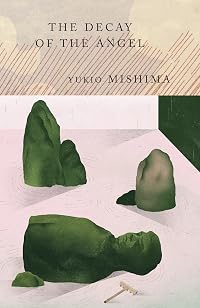
The dramatic climax of "The Sea of Fertility" tetraology takes place in the late 1960s. Honda, now an aged and wealthy man, discovers and adopts a sixteen-year-old orphan, Toru, as his heir, identifying him with the tragic protagonists of the three previous novels, each of whom died at the age of twenty. Honda raises and educates the boy, yet watches him, waiting.Tags
Recommendations

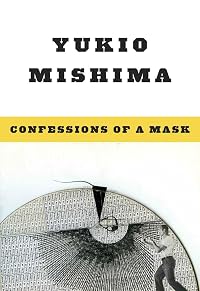
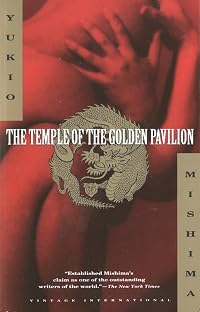






Member Recommendations
by GYKM

Member Reviews
This was the weakest in the tetralogy for me. Compared with the previous three books, it felt very slight and in a hurry to tie things up. The prose, as ever, is exquisite. The characters are unpleasant in the extreme. Honda and Keiko have distilled to their manipulative worst in old age. Tōru, the boy Honda believes to be the latest incarnation of childhood friend Kiyoaki, is a sub-Valmont, bent on causing pain to people because he can. In a way, it is a fitting end to the cycle, leaving doubt about what, if anything, is true in Honda's 60 year pursuit of meaning and redemption. I just wish it had felt less hurried to sew things up.
Mishima started this book after he'd already resolved on suicide. Spiritual desolation pervades its every cranny and squeezes perversity out of everyone who enters its pages. Being is filth, the author has seemingly resolved, and filth is sacred, and the profane cleanliness of Japan will never save him from himself when there is a deeper cleanliness of non-being to draw him inevitably forward. Japan was supposed to save him from himself, but the unbearable aridity of Japaneseness ends up being his pretext for reducing the symphony of growing emotion and power that he's been building since book one to cacophony and then silence. I don't think he wanted to be a samurai at all. I think he wanted to be Jean Genet, a sexy bodhisattva. But show more his Japaneseness made that impossible: decay ever, fruition never.
Enough psychologizing! Most of this is the story of the sick interaction between a dark vampire of a man and the spirit of malevolence he adopts as a son. The scene where the old people watch Toru and Momoko on the beach must be the most vampiric in all of literature. (Seidensticker as well as Mishima impresses here with his artistry.) Honda, that twisted Horatio, sees Toru disappoint his hopes (we shall avoid spoilers here), and evil briefly reigns. But a dramatic series of reverses follows--the black angel must decay as the benign ones do--the center shall not hold--and the dissolution of the self and the narrative that comes at the end is the most masterful act of self-devouring I've ever seen a work of fiction accomplish. Appropriately, this book relies for much of its power on the three previous volumes in the series, but that doesn't change the fact that by the end you could dissolve into oceanic nothing yourself with--not Kiyoaki's erotic ardour, or Isao's death-and-glory, or Ying Chan's almost absent-minded slipping out of the flesh, or Toru's botched, unintentional self-abnegation, or indeed Mishima's own devoutly wish'd and brutally forc'd consummation--but nothing more than an aesthete's shrug. "Perhaps then there has been no I." There is also Satoko, and Buddhism, and I think a real transendence that I don't know how to talk about, but certainly for Mishima there is foremost the relief of escape from a desiccated self and age. show less
Enough psychologizing! Most of this is the story of the sick interaction between a dark vampire of a man and the spirit of malevolence he adopts as a son. The scene where the old people watch Toru and Momoko on the beach must be the most vampiric in all of literature. (Seidensticker as well as Mishima impresses here with his artistry.) Honda, that twisted Horatio, sees Toru disappoint his hopes (we shall avoid spoilers here), and evil briefly reigns. But a dramatic series of reverses follows--the black angel must decay as the benign ones do--the center shall not hold--and the dissolution of the self and the narrative that comes at the end is the most masterful act of self-devouring I've ever seen a work of fiction accomplish. Appropriately, this book relies for much of its power on the three previous volumes in the series, but that doesn't change the fact that by the end you could dissolve into oceanic nothing yourself with--not Kiyoaki's erotic ardour, or Isao's death-and-glory, or Ying Chan's almost absent-minded slipping out of the flesh, or Toru's botched, unintentional self-abnegation, or indeed Mishima's own devoutly wish'd and brutally forc'd consummation--but nothing more than an aesthete's shrug. "Perhaps then there has been no I." There is also Satoko, and Buddhism, and I think a real transendence that I don't know how to talk about, but certainly for Mishima there is foremost the relief of escape from a desiccated self and age. show less
This wraps up the tetralogy, that much is clear. A fourth manifestation of Honda's object of fascination... we do get a good peek at the character of Toru, a chapter of the writings of his diary for example. The whole thing certainly has a kind of nihilistic flavor. Beauty and death. Everybody seems to treat each other as a pawn on their chess board. Maybe the whole thing is a tale of what can happen when Buddhism meets the modern world. It'd be interesting to construct a similar narrative, but about Westerners confronting Buddhism. Of course Buddhism has hardly imposed itself in the Western world. but still, in little pockets, it might be possible. Nova Scotia maybe. Perhaps Kerouac could be the counter narrative.
Yeah this whole thing show more is just dripping with sensuality of all dimensions. It's got so many competing layers of meaning, a tangled mat of seaweed washed up on the rocks and rotting. show less
Yeah this whole thing show more is just dripping with sensuality of all dimensions. It's got so many competing layers of meaning, a tangled mat of seaweed washed up on the rocks and rotting. show less
Oi! A complex fourth novel in the "Sea of Fertility" tetralogy has my head spinning. Mishima's prose is lyrical and mystical and evocative. The themes of reincarnation, cultural and personal decay, and coming to terms with death continue from the previous novels. The protagonist, Honda, believes he has found yet another reincarnation of his friend, Mitsugae. Then good and evil battle each other until the entire plot twists and throws all beliefs into question. Is the title a reference to each of us being angels who decay with time? Are all of us fallen angels? The reader I is left with all the existential, philosophical questions unanswered. Somehow it all works.
(Two reviews in one.)
[The Decay of the Angel]
After I was done, I couldn't say that this was the best or even my favourite Mishima novel, but it is an interesting novel, one that is almost as good enough to stand by itself, and that possesses all the hallmarks of my favourite Mishima works. The novel was short and translated, but it was nonetheless filled with beautiful prose, brilliantly deep insight, fresh psychologically disturbed characters, dark humour and wit. My expectations ran high with this last installment that the story of Shigekuni Honda and the reincarnations of Kiyoaki Matsugae would be satisfactorily resolved. In the end, I was both disappointed and yet (satisfied), for while the ending was not what I had expected, it was show more a fitting ending appropriate for the Buddhist philosophical framework that Mishima utilized and arguably believed in.
There are many ways to try understand what the entire tetralogy tries to communicate. The thesis that I found most convincing was that this is the story of the transformation of Japan from the brilliance of its feudal era to the apocalyptic ruins of its modernity, threaded together by eternal Buddhist philosophy; glimpses of that most fleeting thread having being seen by poets, seers, sages, and, like Kiyoaki and Honda, the damned. Honda, the embodiment of the Japanese people, tries over a span of sixty years to save the reincarnation of his childhood friend, Kiyoaki, from karmic fate. He does this partially out of guilt, partially to save a part of his lost innocence or naiveté, and partially to rub his thumb into the eye of fate. However, fate thwarts him time and time again, even into his seventies and eighties when he is the physical embodiment of a rich but impotent, immoral, aimless, and socially alienated modern Japan that appalled Mishima.
While I don’t necessary agree with Mishima’s judgment on the fate of Japan in modernity, I understand his arguments, I’m awed by the stylistic means he used to present them—whether beautiful, intense, provocative, terrifying, and I find him persuasive.
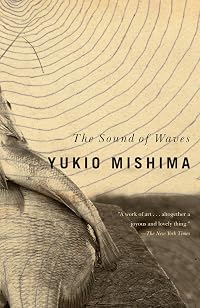
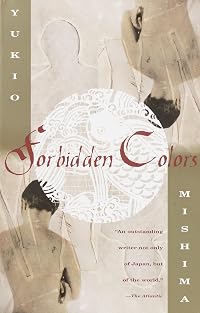
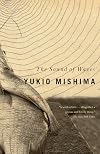
If I could be allowed to read into the work, I believe that there are echoes from Mishima’s previous novels in The Decay of the Angel, echoes that serve it fittingly as his deliberate last testament. In a 1995 interview for [Suburu (available in English in the Spring 1996 issue of "Japan Echo" as "Mishima: The Man and the Mask")], Ishihara Shintaro, the controversial Governor of Tokyo and former Mishima friend, accused Mishima of unoriginally and lazily taking the basic plot for his 1951–53 novel Forbidden Colors, wherein an old man is tricked by a strange boy, and reworked it in The Decay of the Angel. While I did read slight shades of what Ishihara had argued in the English text, I didn’t agree with him. Mishima did not plagiarize himself in The Decay of the Angel. Sure, while he might have provided several examples of self-homage in the text, he created something new as he deconstructed those old characters, images, and themes to demonstrate the frailty and transience of human existence. For instance, I read the return of the old Japanese I-Novel genre, that was arguably exemplified by Mishima in Confessions of a Mask and in the sinister shadows of his early short stories, in Toru's diary. I read an at first silly but then truly disturbed variation of the Daphnis and Chloe myth, first explored by Mishima in The Sound of Waves, in the form of Toru and Kinue—who do end up together as impotent as Mishima saw Japan in the late-60s and -70s after several petty and purely psychological adventures. I also saw throughout the conflict between Honda and Toru, the desperate need for a young man to not only survive but to prove his existence in the face of both an existential and physical threat, which finds parallels in The Temple of the Golden Pavilion, Confessions, and in Forbidden Colors. Mishima didn't just rehash his old ideas, but he destroyed them in favour of a different, more timeless, and possibly more universal theme: the limitlessness and timelessness of the Buddhist universe.
I would like type that E. G. Seidensticker's already critically lauded translation of The Decay of the Angel is superb. It is tricky, but not impossible, to review translated works because of a concern about what has been lost in translation, especially from Japanese to English. Sometimes a translated text takes on the "voice" of its translator, as has been argued by many with the Constance Garnett translations of War and Peace. The problems with the translation of Japanese prose into English have included failed attempts to faithfully transmit emotions, socioeconomic class, but especially the wordplay, the double- and triple-entendres, and the humour particular to the Japanese language. One particular problem many translators of Mishima have encountered has been failed attempts to retain the acoustically pleasing (sounds) of reading Mishima's prose aloud in Japanese. Seidensticker doesn't fail English readers; in fact, he had given English readers one of the best translations of a Mishima work, if not the best. While a translation may necessarily be incomparable from the original, Seidensticker has retained more of Mishima's humour and wit, the same that Mishima was famous for in Japan when he was alive. He has also saved Mishima’s propensity for phenomenally descriptive prose—Mishima was said to have always used the right word for everything, whereas previous instalments of this tetralogy in English sometimes seemed bland and listless. Seidensticker's translation is never dull.
[The Sea of Fertility]
The Sea of Fertility is a brilliant but uneven at times epic; it can be dull, tedious as it can be humorous, but it's never awful or unreadable. Out of the four books, the Seidensticker translated The Decay of the Angel is the best and most readable in English. Seidensticker also retains more of Mishima's humour than Michael Gallagher. Reading the whole tetralogy took me a good part of a year, but with each installment I was even more encouraged to see it to the end. At the end I was left not with a sense of satisfaction, but I was slipped in Honda's shoes. Like him, I tasted, as he did, the sour grapes of age, the transience of human life, the endlessness of time, and of seeing karma run its miraculous course until it is disturbed, like a still pond or a unspoiled landscape, by human arrogance. Honda begins the tetralogy as a witness to history and karma, and he, and like Japan in Mishima's estimation, declines into a rich but helpless and impotent voyeur. Unfortunately, as a character, he, and possibly a hundred others, did not transcend in my eyes. However, Satoko Ayakura (did) transcend, and after 1,400 pages of sacrifice, mystery, twists and turns, she remained as interesting and inscrutable as her creator, Yukio Mishima. show less
[The Decay of the Angel]
After I was done, I couldn't say that this was the best or even my favourite Mishima novel, but it is an interesting novel, one that is almost as good enough to stand by itself, and that possesses all the hallmarks of my favourite Mishima works. The novel was short and translated, but it was nonetheless filled with beautiful prose, brilliantly deep insight, fresh psychologically disturbed characters, dark humour and wit. My expectations ran high with this last installment that the story of Shigekuni Honda and the reincarnations of Kiyoaki Matsugae would be satisfactorily resolved. In the end, I was both disappointed and yet (satisfied), for while the ending was not what I had expected, it was show more a fitting ending appropriate for the Buddhist philosophical framework that Mishima utilized and arguably believed in.
There are many ways to try understand what the entire tetralogy tries to communicate. The thesis that I found most convincing was that this is the story of the transformation of Japan from the brilliance of its feudal era to the apocalyptic ruins of its modernity, threaded together by eternal Buddhist philosophy; glimpses of that most fleeting thread having being seen by poets, seers, sages, and, like Kiyoaki and Honda, the damned. Honda, the embodiment of the Japanese people, tries over a span of sixty years to save the reincarnation of his childhood friend, Kiyoaki, from karmic fate. He does this partially out of guilt, partially to save a part of his lost innocence or naiveté, and partially to rub his thumb into the eye of fate. However, fate thwarts him time and time again, even into his seventies and eighties when he is the physical embodiment of a rich but impotent, immoral, aimless, and socially alienated modern Japan that appalled Mishima.
While I don’t necessary agree with Mishima’s judgment on the fate of Japan in modernity, I understand his arguments, I’m awed by the stylistic means he used to present them—whether beautiful, intense, provocative, terrifying, and I find him persuasive.
If I could be allowed to read into the work, I believe that there are echoes from Mishima’s previous novels in The Decay of the Angel, echoes that serve it fittingly as his deliberate last testament. In a 1995 interview for [Suburu (available in English in the Spring 1996 issue of "Japan Echo" as "Mishima: The Man and the Mask")], Ishihara Shintaro, the controversial Governor of Tokyo and former Mishima friend, accused Mishima of unoriginally and lazily taking the basic plot for his 1951–53 novel Forbidden Colors, wherein an old man is tricked by a strange boy, and reworked it in The Decay of the Angel. While I did read slight shades of what Ishihara had argued in the English text, I didn’t agree with him. Mishima did not plagiarize himself in The Decay of the Angel. Sure, while he might have provided several examples of self-homage in the text, he created something new as he deconstructed those old characters, images, and themes to demonstrate the frailty and transience of human existence. For instance, I read the return of the old Japanese I-Novel genre, that was arguably exemplified by Mishima in Confessions of a Mask and in the sinister shadows of his early short stories, in Toru's diary. I read an at first silly but then truly disturbed variation of the Daphnis and Chloe myth, first explored by Mishima in The Sound of Waves, in the form of Toru and Kinue—who do end up together as impotent as Mishima saw Japan in the late-60s and -70s after several petty and purely psychological adventures. I also saw throughout the conflict between Honda and Toru, the desperate need for a young man to not only survive but to prove his existence in the face of both an existential and physical threat, which finds parallels in The Temple of the Golden Pavilion, Confessions, and in Forbidden Colors. Mishima didn't just rehash his old ideas, but he destroyed them in favour of a different, more timeless, and possibly more universal theme: the limitlessness and timelessness of the Buddhist universe.
I would like type that E. G. Seidensticker's already critically lauded translation of The Decay of the Angel is superb. It is tricky, but not impossible, to review translated works because of a concern about what has been lost in translation, especially from Japanese to English. Sometimes a translated text takes on the "voice" of its translator, as has been argued by many with the Constance Garnett translations of War and Peace. The problems with the translation of Japanese prose into English have included failed attempts to faithfully transmit emotions, socioeconomic class, but especially the wordplay, the double- and triple-entendres, and the humour particular to the Japanese language. One particular problem many translators of Mishima have encountered has been failed attempts to retain the acoustically pleasing (sounds) of reading Mishima's prose aloud in Japanese. Seidensticker doesn't fail English readers; in fact, he had given English readers one of the best translations of a Mishima work, if not the best. While a translation may necessarily be incomparable from the original, Seidensticker has retained more of Mishima's humour and wit, the same that Mishima was famous for in Japan when he was alive. He has also saved Mishima’s propensity for phenomenally descriptive prose—Mishima was said to have always used the right word for everything, whereas previous instalments of this tetralogy in English sometimes seemed bland and listless. Seidensticker's translation is never dull.
[The Sea of Fertility]
The Sea of Fertility is a brilliant but uneven at times epic; it can be dull, tedious as it can be humorous, but it's never awful or unreadable. Out of the four books, the Seidensticker translated The Decay of the Angel is the best and most readable in English. Seidensticker also retains more of Mishima's humour than Michael Gallagher. Reading the whole tetralogy took me a good part of a year, but with each installment I was even more encouraged to see it to the end. At the end I was left not with a sense of satisfaction, but I was slipped in Honda's shoes. Like him, I tasted, as he did, the sour grapes of age, the transience of human life, the endlessness of time, and of seeing karma run its miraculous course until it is disturbed, like a still pond or a unspoiled landscape, by human arrogance. Honda begins the tetralogy as a witness to history and karma, and he, and like Japan in Mishima's estimation, declines into a rich but helpless and impotent voyeur. Unfortunately, as a character, he, and possibly a hundred others, did not transcend in my eyes. However, Satoko Ayakura (did) transcend, and after 1,400 pages of sacrifice, mystery, twists and turns, she remained as interesting and inscrutable as her creator, Yukio Mishima. show less
"There is nothing in the least special about you. I guarantee you a long life. You have not been chosen by the gods, you will never be at one with your acts, you do not have in you the green light to flash like young lightning with the speed of the gods and destroy yourself. All you have is a certain premature senility. Your life will be suited for coupon-clipping. Nothing more."
--The Decay of the Angel by Yukio Mishima
Holy Krakatoa, that's some stiff medicine, Mishima. Or poison. While not my favorite book of the tetralogy, it is a worthy culmination. A slow rotting and realization over time. Maybe quick self-destruction should be left to those with passion and the acrid bite from years by acid at the bottom of the throat.
--The Decay of the Angel by Yukio Mishima
Holy Krakatoa, that's some stiff medicine, Mishima. Or poison. While not my favorite book of the tetralogy, it is a worthy culmination. A slow rotting and realization over time. Maybe quick self-destruction should be left to those with passion and the acrid bite from years by acid at the bottom of the throat.
Here ends Yukio Mishima's The Sea of Fertility, regarded by many as his masterpiece. The Decay of the Angel is the fourth and final book in the tetralogy. As with The Temple of Dawn, a different translator from the earlier books was assigned; this time, the responsibility being left in the capable hands of Edward George Seidensticker. (I still find it odd that they changed translators not once, but twice during the series, but there you have it.) Reading The Sea of Fertility was my first attempt delving into contemporary Japanese literature, and in the end I think it made a fine place to start. I didn't enjoy the previous book, The Temple of Dawn nearly as much as I did the first two novels, but I still expected great things from The show more Decay of the Angel and, for the most part, I wasn't disappointed.
Almost six decades have passed since the death of Kiyoaki Matsugae. Since then his friend Shigekuni Honda has encountered two people he was convinced were Kiyoaki's reincarnations--Isao, a passionate Japanese nationalist and Ying Chan, an indolent Thai princess--each who died when they reached the age of twenty despite Honda's efforts. After meeting Tōru Yosunaga, a sixteen year old orphan, Honda wants to believe that he has once again found Kioyoaki despite evidence against it. Honda is old and without an heir and so decides to adopt the young man, hoping that this time he might be able to save him. But both men are strong-willed, manipulative, and malicious; their relationship can end in nothing but disaster.
I have always appreciated the elegant descriptions of nature and the settings in The Sea of Fertility, but The Decay of the Angel has some absolutely stunning imagery surrounding the sea and ships. Even the attention give to decay is beautiful. I also found the characters to be captivating, although not particularly likeable. Honda, who I actually did like at the beginning of the series, has become even more of a manipulative bastard and his obsessions are destroying him, but he has finally been able to recognize his true feelings regarding Kiyoaki. Tōru's personality seemed to shift drastically between the beginning of the book and his adoption, but it was to some extent understandable. And the confrontation between him and Keiko was marvelous.
The Decay of the Angel is significantly shorter than the novels that preceded it. Technically, the book can stand on its own--all of the necessary plot elements are included if not thoroughly re-explored--but to me it felt more like an epilogue to the entire series. Not having read the first three books will significantly reduce the impact of the fourth and the tetralogy's ultimate conclusion. I would understand and certainly wouldn't be surprised if some people were upset or felt cheated by the ending. I, however, thought it was fantastic and highly appropriate for the story; I also enjoyed its ambiguity and that it could be interpreted in several different ways. Mishima always manages to write plot twits that are unexpected but not unprecedented when looking back at what came before as details fall into place. The Decay of the Angel has several of these moments in addition to the ending, and they can be heart- and gut-wrenching. The Sea of Fertility isn't without its faults but overall I was quite impressed with the work. I really do think Mishima is brilliant.
Experiments in Reading show less
Almost six decades have passed since the death of Kiyoaki Matsugae. Since then his friend Shigekuni Honda has encountered two people he was convinced were Kiyoaki's reincarnations--Isao, a passionate Japanese nationalist and Ying Chan, an indolent Thai princess--each who died when they reached the age of twenty despite Honda's efforts. After meeting Tōru Yosunaga, a sixteen year old orphan, Honda wants to believe that he has once again found Kioyoaki despite evidence against it. Honda is old and without an heir and so decides to adopt the young man, hoping that this time he might be able to save him. But both men are strong-willed, manipulative, and malicious; their relationship can end in nothing but disaster.
I have always appreciated the elegant descriptions of nature and the settings in The Sea of Fertility, but The Decay of the Angel has some absolutely stunning imagery surrounding the sea and ships. Even the attention give to decay is beautiful. I also found the characters to be captivating, although not particularly likeable. Honda, who I actually did like at the beginning of the series, has become even more of a manipulative bastard and his obsessions are destroying him, but he has finally been able to recognize his true feelings regarding Kiyoaki. Tōru's personality seemed to shift drastically between the beginning of the book and his adoption, but it was to some extent understandable. And the confrontation between him and Keiko was marvelous.
The Decay of the Angel is significantly shorter than the novels that preceded it. Technically, the book can stand on its own--all of the necessary plot elements are included if not thoroughly re-explored--but to me it felt more like an epilogue to the entire series. Not having read the first three books will significantly reduce the impact of the fourth and the tetralogy's ultimate conclusion. I would understand and certainly wouldn't be surprised if some people were upset or felt cheated by the ending. I, however, thought it was fantastic and highly appropriate for the story; I also enjoyed its ambiguity and that it could be interpreted in several different ways. Mishima always manages to write plot twits that are unexpected but not unprecedented when looking back at what came before as details fall into place. The Decay of the Angel has several of these moments in addition to the ending, and they can be heart- and gut-wrenching. The Sea of Fertility isn't without its faults but overall I was quite impressed with the work. I really do think Mishima is brilliant.
Experiments in Reading show less
Members
- Recently Added By
Published Reviews
"a surpassingly chilling, subtle and original novel."
added by GYKM
"The outstanding weakness of this, the final novelistic effort of Mishima Yukio and indeed the major failing of the bulk of his work is its striking inability to rise above the emotional and intellectual limitations of its author." "He is a good writer with a well-developed sense of intrigue and suspense, but he is not a great writer." "Seidensticker's rendering of the final volume is superb show more and it is a pity that he could not have been persuaded to take on the whole tetralogy." show less
added by GYKM
Lists

Japanese Literature
230 works; 40 members

1970s
657 works; 23 members

Good Buddhist Novels
30 works; 4 members

Published in 1970
58 works; 7 members

Philip Ward's Lifetime Reading Plan
592 works; 22 members

sea of fertility tetralogy
4 works; 1 member
Talk Discussions
Past Discussions
Mishima: The Decay of the Angel. The Sea of Fertility finally ends. in Le Salon Littéraire du Peuple pour le Peuple (October 2013)
Author Information

269+ Works 27,094 Members
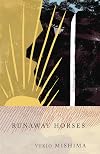
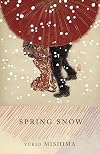
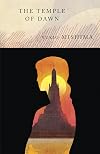
Yukio Mishima, the pseudonym for Hiraoka Kimitake, was born in Tokyo in 1925. His work covers many styles: poetry, essays, modern Kabuki ja Noh drama, and novels. Among his masterpieces are The Temple of the Golden Pavilion, and the four-volume novel Sea of Fertility, which outlines the Japanese experience in the 20th century. Each of the four show more volumes in this series has a distinct title--Spring Snow, Runaway Horses, The Temple of Dawn, and Five Signs of a God's Decay--and they were published over a six-year period, from 1965-1970. Mishima's plays include Tenth Day Chrysanthemum, and the Kabuki piece The Moon Like a Drawn Bow. Although Mishima was been nominated three times for the Nobel Prize for Literature, he never received it. Nevertheless, he is considered by many critics as one of the most important Japanese novelists of the 20th century. Yukio Mishima died by his own hand in 1970, committing seppuku (ritual disembowelment). (Bowker Author Biography) show less
Some Editions
Awards and Honors
Notable Lists
Series

Belongs to Publisher Series
Work Relationships
Is contained in
Common Knowledge
- Canonical title
- The Decay of the Angel
- Original title
- 天人五衰; Tennin Gosui
- Alternate titles
- The Angels: Five Signs of Decay; Five Signs of a God's Decay
- Original publication date
- 1971 (original Japanese) (original Japanese); 1974 (English: Seidensticker) (English: Seidensticker)
- People/Characters
- Shigekuni Honda; Tōru Yasunaga; Keiko Hisamatsu; Kinue; Ayakura Satoko
- Important places
- Yokohama, Japan; Japan
- Important events
- Shōwa era; 1970s
- First words
- "The mists in the offing turned the distant ships black."
- Quotations
- Perhaps then there has been no I.
- Last words
- (Click to show. Warning: May contain spoilers.)"The noontide sun of summer flowed over the still garden."
- Original language
- Japanese
Classifications
- Genres
- General Fiction, Fiction and Literature
- DDC/MDS
- 895.635 — Literature & rhetoric Asian Literature Literatures of East and Southeast Asia Japanese Japanese fiction 1945–2000
- LCC
- PL833 .I7 .T4613 — Language and Literature Languages and literatures of Eastern Asia, Africa, Oceania Languages of Eastern Asia, Africa, Oceania Japanese language and literature Japanese literature Individual authors and works
- BISAC
Statistics
- Members
- 1,182
- Popularity
- 21,098
- Reviews
- 16
- Rating
- (3.92)
- Languages
- 11 — Chinese, Dutch, English, French, German, Italian, Japanese, Portuguese, Russian, Spanish, Turkish
- Media
- Paper, Ebook
- ISBNs
- 33
- ASINs
- 11