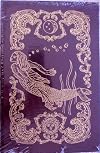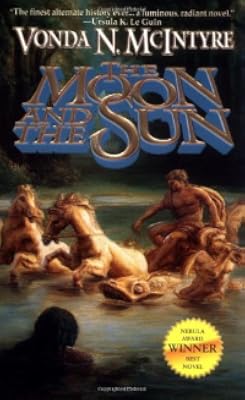
The Moon and the Sun
by Vonda N. McIntyre
On This Page
Description
The Nebula-winning novel has been optioned by Bill Mechanic (executive producer of The New World) and Pandemonium Films (Coraline). It is in pre-production with plans to begin filming in Spring 2012."Inspired by tales of ancient sea-monsters, McIntyre spins a marvelous alternative-history fable about greed and goodness, power and pathos set at the 17th century court of Louis XIV, France's glittering Sun King.... McIntyre vividly re-creates a Versailles poised on the cusp between alchemy and show more modern science. Her imaginings enliven her history with wonder, but, as in the best fantasy, they serve less to dazzle by their inventiveness than to illuminate brilliantly real-world truths - here, humanity's responses, base and noble, when confronting the unknown." —Roger Zelazny
. show less
Tags
Recommendations


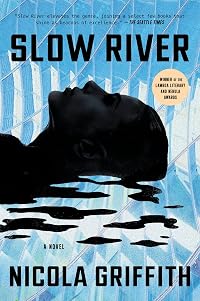
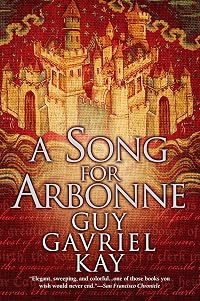


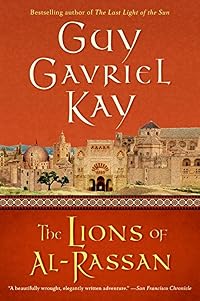



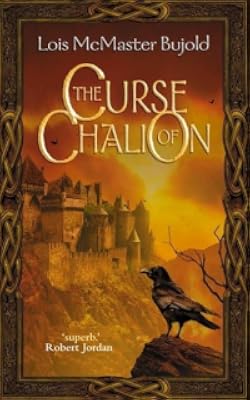

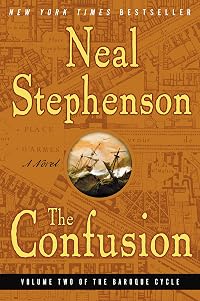
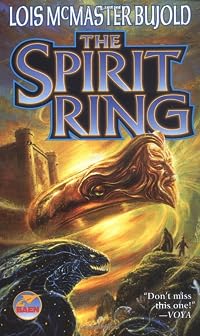








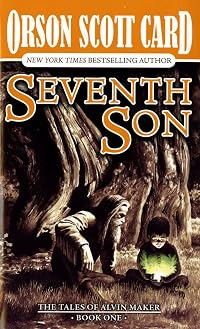
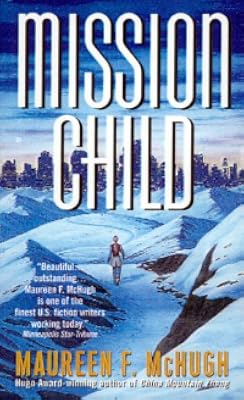
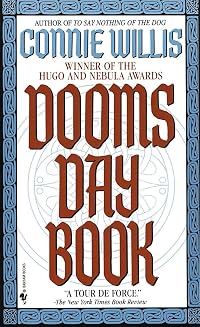

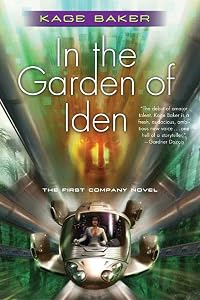








Member Recommendations
feeling.is.first both books are set in alternate French court, complex politics & difficult moral choices
Litrvixen Both are set in 17th century France and deals with fantastical elements. Female protagonists who has to make difficult choices and make their way in a male dominated world.
Member Reviews
Marie-Josèphe has just become lady-in-waiting to Lotte, a niece of Louis XIV, the Sun King. Her brother, a Jesuit, returns from his adventures at sea and brings a pair of sea monsters to the court: The male is dead, but the female is still alive. The King wishes to possess such a creature because it is supposed to bring him immortality. Marie-Josèphe assists her brother with the autopsy and he gives her the task of feeding the female creature. A friendship grows between the human woman and the being from the sea, and Marie-Josèphe realizes that the creature is not a monster. She decides to save it, which means danger and maybe losing everything she cares for, including the favor of the king and of another man whom she has grown to show more admire.
This novel is long and includes many lavish descriptions of life at court, of the clothing, the food, the rooms, the customs, and its main players. These descriptions were never boring to me, though - not in the end of the 1990s, and not now. On the contrary, I felt like I discovered this world with Marie-Josèphe, I was impressed and enchanted like she was, until she has to decide what is more important: The freedom and life of a friend, or the dazzling theatre of Versailles.
Apart from being a portrait of the court, the novel explores topics of otherness, not only because of the sea monster, but also because of the character of Lucien, a man with achondroplasia.
I love how the relationship between Marie-Josèphe the creature develops, how they learn to communicate, and how their bond grows. There are heart breaking moments in this, but ultimately it is a novel about caring and kindness, and that we should not lose these traits no matter how the world around us reacts. show less
This novel is long and includes many lavish descriptions of life at court, of the clothing, the food, the rooms, the customs, and its main players. These descriptions were never boring to me, though - not in the end of the 1990s, and not now. On the contrary, I felt like I discovered this world with Marie-Josèphe, I was impressed and enchanted like she was, until she has to decide what is more important: The freedom and life of a friend, or the dazzling theatre of Versailles.
Apart from being a portrait of the court, the novel explores topics of otherness, not only because of the sea monster, but also because of the character of Lucien, a man with achondroplasia.
I love how the relationship between Marie-Josèphe the creature develops, how they learn to communicate, and how their bond grows. There are heart breaking moments in this, but ultimately it is a novel about caring and kindness, and that we should not lose these traits no matter how the world around us reacts. show less
As I read through many of the ER reviews, I was dismayed by how many people didn't seem to enjoy it. Since The Moon and the Sun is one of my all time favorites I feel the need to even up the reviews somewhat. I will not overview the plot, so many have done it much better than I could, but I will explain why it is a personal favorite.
There are some quibbles about which genre this novel belongs in: Science Fiction, Historical Fiction, Romance, Fantasy etc. The answer is simply that it belongs to all of them. There are so many elements to the story that it borrows from many genres; it involves fantastical mermaids that are studied scientifically by a Jesuit priest in the royal court of king Louis XIV's Versailles. See what I mean?
The show more Historical side of the novel is very well researched, and the detail of the fashion, etiquette and intrigue take up a good amount of the page space. Not only is Louis XIV realized credibly, but so are real life members of his court all brought to life by vivid and extreme detail. Some may find this tedious, but personally, these are the exact kind of things I enjoy in historical fiction.
This detail of the time is not limited to dress and setting, it extends to characters also. The reader is made aware of exactly who everyone is, where they come from, what their standing in court is and also why they do the things they do. This does take time, so the beginning of the novel is bogged down with the machinations of the court and a great deal of dialogue between the characters, but again, this is precisely the kind of unhurried and meticulous characterization that I enjoy.
While all the character's follow obvious archetypes, they are not one dimensional. Marie may be the Naive Beauty and her brother may be the Stoic and Moral Scholar, but they are both so much more than that. Marie is a woman of ideas who struggles with the belief of the time that women are not supposed to even have ideas. Her brother is also a man of ideas, but struggles with balancing the morals of his order and the strictures of society. In the court they are surrounded by the greedy, the immoral, the disillusioned and the spiteful and lusty lot that make up the Royal Court. Every character, even the minor ones, have some personal struggle.
There are some hokey or "cheesy" moments, and these are what appeal to the romantics and the dreamers, but I think these light hearted and fanciful moments are needed to balance out some equally morbid and dark parts of the novel. There is a love story but there is also a good deal of hate, prejudice, misogyny, deceit and plain viciousness. This is the main reason I enjoy the novel so much, that many of the characters and their issues bring up interesting ideas about ethics.
It really isn't that difficult to figure out where the plot is headed, but following the predictable plot is no less enjoyable simply because you know where its going. The story as a whole is represented by the mermaid itself, not a lovely siren but an ugly humanoid fish, a metaphorical symbol of all the characters in the court: creatures bound by the beliefs and expectations of others, forced to hide the things that truly make them happy. show less
There are some quibbles about which genre this novel belongs in: Science Fiction, Historical Fiction, Romance, Fantasy etc. The answer is simply that it belongs to all of them. There are so many elements to the story that it borrows from many genres; it involves fantastical mermaids that are studied scientifically by a Jesuit priest in the royal court of king Louis XIV's Versailles. See what I mean?
The show more Historical side of the novel is very well researched, and the detail of the fashion, etiquette and intrigue take up a good amount of the page space. Not only is Louis XIV realized credibly, but so are real life members of his court all brought to life by vivid and extreme detail. Some may find this tedious, but personally, these are the exact kind of things I enjoy in historical fiction.
This detail of the time is not limited to dress and setting, it extends to characters also. The reader is made aware of exactly who everyone is, where they come from, what their standing in court is and also why they do the things they do. This does take time, so the beginning of the novel is bogged down with the machinations of the court and a great deal of dialogue between the characters, but again, this is precisely the kind of unhurried and meticulous characterization that I enjoy.
While all the character's follow obvious archetypes, they are not one dimensional. Marie may be the Naive Beauty and her brother may be the Stoic and Moral Scholar, but they are both so much more than that. Marie is a woman of ideas who struggles with the belief of the time that women are not supposed to even have ideas. Her brother is also a man of ideas, but struggles with balancing the morals of his order and the strictures of society. In the court they are surrounded by the greedy, the immoral, the disillusioned and the spiteful and lusty lot that make up the Royal Court. Every character, even the minor ones, have some personal struggle.
There are some hokey or "cheesy" moments, and these are what appeal to the romantics and the dreamers, but I think these light hearted and fanciful moments are needed to balance out some equally morbid and dark parts of the novel. There is a love story but there is also a good deal of hate, prejudice, misogyny, deceit and plain viciousness. This is the main reason I enjoy the novel so much, that many of the characters and their issues bring up interesting ideas about ethics.
It really isn't that difficult to figure out where the plot is headed, but following the predictable plot is no less enjoyable simply because you know where its going. The story as a whole is represented by the mermaid itself, not a lovely siren but an ugly humanoid fish, a metaphorical symbol of all the characters in the court: creatures bound by the beliefs and expectations of others, forced to hide the things that truly make them happy. show less
An unusual historical fantasy. Claustrophobic life at the court of King Louis XIV is quite subtly and convincingly rendered. The politics, even by the standards of when the book was written never mind 17th Century France, seem a little ahead of their time. It makes the passage of the book's heroine a harrowing one, as she battles for the right of a woman to be taken seriously, for the rights of other races and even other species, for romantic love and for natural justice in the very seat of absolute power. I found myself nearly as emotionally exhausted as Marie-Josephe on occasion. Ultimately, however, if improbably, this is a narratively satisfying novel. PS You fools! You really did it! You made it into a terrible movie! Argggh!
My brother, about the premise of the book, said "who is this for?", but if no one else, it's definitely for me. Alternate history, novel of manners, tinges of sci fi, an undercurrent of romance, I love them all and McIntyre weaves them together well. I loved the many specifics of the court of Louis XIV, especially the tension between the divinity of the church and of the king. I think at times the setting and lavish detail almost threatened to overwhelm plot and character, but it managed to never quite tip over that line-- though it seemed like the price there was that characters were sometimes almost too powerfully dramatic/archetypal, and the plot could be, of necessity, rollicking. In the end, though, I think both extremes increased show more my enjoyment. After all, 17th century Versailles is a good setting for extremes.
The book is written in a close third person that usually follows the young lady-in-waiting Marie-Josephe but occasionally switches to another character-- sometimes I was off-put by what felt like a switch mid-stream, but in general I enjoyed Marie-Josephe as a protagonist and also found the diversions away from her refreshing. At times Marie-Josephe felt a bit like she was everything all in one (outsider, king's favorite, dangerous rebel, deft court lady, pious sheltered Catholic, natural philosopher, composer, accomplished artist, and action hero). But also, why not? Explanations of natural talent and particular circumstance were plausible enough, and it fit well into the more romantic drift of the story and gave us windows into all of the areas McIntyre was interested in revealing.
Just as McIntyre mixes genres, she also mixes styles-- the moments of darkness and realism balance out the fanciful or romantic ones. A mermaid can sing images into being and heal wounds with a kiss, just as she can be petted and trained and quietly misunderstood, just as she can be violently netted and beaten. A lady-in-waiting casually worries about menstrual stains in one scene, is horrified to have her blood let against her will in another, draws a sword and climbs out onto the bowsprit of a ship in another. I liked that in this book all these things can exist together.
A side note-- what in the world is going on with the movie adaptation? I've only seen the trailer so I'm sure there's stuff I'm missing, and I also understand that it's 2014 schlocky fun that was released in 2022 through some production fluke. The book can be a bit schlocky too, I get it, the things that are confusing me are aren't cheap costuming or strange accent work or Marie-Josephe being a secret princess or even Sherzad looking almost completely human. I mean, I do hate that last one, but I feel like in a pre-Shape of Water world it was inevitable. But one the thing that really got me was when I was trying to figure out who the obviously-love-interest character was-- I couldn't tell whether they had gotten rid of Lucien's dwarfism (boo) or made up a new character entirely -- and I discovered that actually the man making out with Marie-Josephe was... Yves!! What?! In the book that's the name of her Jesuit priest brother. It looks like he is no longer a priest in the movie and I HAVE to assume he and Marie-Josephe are no longer brother and sister. But why would you even do that?? Just give him a different name-- or, better yet, keep Lucien as the love interest!
But sorry to spend so much time on an adaptation I haven't even seen. Overall, I very much enjoyed this book, and Anna Fields continues to be an excellent narrator. show less
The book is written in a close third person that usually follows the young lady-in-waiting Marie-Josephe but occasionally switches to another character-- sometimes I was off-put by what felt like a switch mid-stream, but in general I enjoyed Marie-Josephe as a protagonist and also found the diversions away from her refreshing. At times Marie-Josephe felt a bit like she was everything all in one (outsider, king's favorite, dangerous rebel, deft court lady, pious sheltered Catholic, natural philosopher, composer, accomplished artist, and action hero). But also, why not? Explanations of natural talent and particular circumstance were plausible enough, and it fit well into the more romantic drift of the story and gave us windows into all of the areas McIntyre was interested in revealing.
Just as McIntyre mixes genres, she also mixes styles-- the moments of darkness and realism balance out the fanciful or romantic ones. A mermaid can sing images into being and heal wounds with a kiss, just as she can be petted and trained and quietly misunderstood, just as she can be violently netted and beaten. A lady-in-waiting casually worries about menstrual stains in one scene, is horrified to have her blood let against her will in another, draws a sword and climbs out onto the bowsprit of a ship in another. I liked that in this book all these things can exist together.
A side note-- what in the world is going on with the movie adaptation? I've only seen the trailer so I'm sure there's stuff I'm missing, and I also understand that it's 2014 schlocky fun that was released in 2022 through some production fluke. The book can be a bit schlocky too, I get it, the things that are confusing me are aren't cheap costuming or strange accent work or Marie-Josephe being a secret princess or even Sherzad looking almost completely human. I mean, I do hate that last one, but I feel like in a pre-Shape of Water world it was inevitable. But one the thing that really got me was when I was trying to figure out who the obviously-love-interest character was-- I couldn't tell whether they had gotten rid of Lucien's dwarfism (boo) or made up a new character entirely -- and I discovered that actually the man making out with Marie-Josephe was... Yves!! What?! In the book that's the name of her Jesuit priest brother. It looks like he is no longer a priest in the movie and I HAVE to assume he and Marie-Josephe are no longer brother and sister. But why would you even do that?? Just give him a different name-- or, better yet, keep Lucien as the love interest!
But sorry to spend so much time on an adaptation I haven't even seen. Overall, I very much enjoyed this book, and Anna Fields continues to be an excellent narrator. show less
I enjoyed this a great deal, though it's a gentle, historic, thematic story more than a rollicking tale of kidnapped mermaids and romantic derring-do (note presence of both kidnapped mermaids and romantic derring-do in story however). For me, the strongest theme and greatest strength of the story was its depiction of the war between Catholicism and the Divine Right of Kings, and the fulsome exploration of nature and truth.
Our heroine is perhaps a little over-accomplished - she's a natural philosopher in her own right; exchanged letters with Newton; composes music; draws exquisitely; is only sixteen, or perhaps seventeen. But she is, with all that, more intelligent than she is wise, and her limited experience is wonderfully shown through show more the tale of her getting of wisdom.
Gentle, intelligent, magical, elegant, and I'm looking forward to the movie. (For all the faces I make at some of the character names on that castlist, it's hard to go past Fan Bingbing as a mermaid...) show less
Our heroine is perhaps a little over-accomplished - she's a natural philosopher in her own right; exchanged letters with Newton; composes music; draws exquisitely; is only sixteen, or perhaps seventeen. But she is, with all that, more intelligent than she is wise, and her limited experience is wonderfully shown through show more the tale of her getting of wisdom.
Gentle, intelligent, magical, elegant, and I'm looking forward to the movie. (For all the faces I make at some of the character names on that castlist, it's hard to go past Fan Bingbing as a mermaid...) show less
For quite a while, I was convinced I'd already read this book - but then I realized I'd confused it title-wise, with Patricia McKillip's "The Moon and the Face." Not the same book at all.
Here, we are thrown into the court of Louis XIV. Our protagonist, Marie-Josephe, is a very low-ranking member of this court, an absurdly sheltered girl, straight from a hellish stint in a convent. However, she's scholarly and intelligent by nature, and is more than enthusiastic to assist her brother, a priest and naturalist, in the task sponsored by the King himself: an expedition to capture, display and dissect sea monsters. Sea monsters are rare, already hunted nigh to extinction, as legend has it that eating their flesh will confer immortality.
The show more priest has succeeded in capturing two of the monsters - one dead, one alive. Marie-Josephe is given the task of feeding the living monster, a female. She balances these duties with the demands of the court, and her growing moral discomfort regarding her slave and childhood companion, the Turkish woman known as Odelette. As she becomes familiar with the captive 'monster,' she begins to realize that the mermaid is just as human as herself.
The book starts rather slowly and confusingly. I rarely have to refer to a list of 'dramatis personae,' but I did find myself consulting the one provided here. However, it really picked up as it went on, and the novel's themes emerged. The narrative grew into a powerful and complex musing on freedom, oppression, and the nature of humanity.
* It reminded me quite a bit of the short story I read recently: Miss Carstairs and the Merman - Delia Sherman.
* It also features a much-shorter-than-average noble who excels at court politics, for the Tyrion Lannister fans. (Lucien's a bit nicer than Tyrion, though.)
[note 9/7/14 - I just found out a movie is in production, based on this novel. I very much doubt they'll capture either the atmosphere or the complexities... but, we shall see! http://www.imdb.com/title/tt2328678/ ] show less
Here, we are thrown into the court of Louis XIV. Our protagonist, Marie-Josephe, is a very low-ranking member of this court, an absurdly sheltered girl, straight from a hellish stint in a convent. However, she's scholarly and intelligent by nature, and is more than enthusiastic to assist her brother, a priest and naturalist, in the task sponsored by the King himself: an expedition to capture, display and dissect sea monsters. Sea monsters are rare, already hunted nigh to extinction, as legend has it that eating their flesh will confer immortality.
The show more priest has succeeded in capturing two of the monsters - one dead, one alive. Marie-Josephe is given the task of feeding the living monster, a female. She balances these duties with the demands of the court, and her growing moral discomfort regarding her slave and childhood companion, the Turkish woman known as Odelette. As she becomes familiar with the captive 'monster,' she begins to realize that the mermaid is just as human as herself.
The book starts rather slowly and confusingly. I rarely have to refer to a list of 'dramatis personae,' but I did find myself consulting the one provided here. However, it really picked up as it went on, and the novel's themes emerged. The narrative grew into a powerful and complex musing on freedom, oppression, and the nature of humanity.
* It reminded me quite a bit of the short story I read recently: Miss Carstairs and the Merman - Delia Sherman.
* It also features a much-shorter-than-average noble who excels at court politics, for the Tyrion Lannister fans. (Lucien's a bit nicer than Tyrion, though.)
[note 9/7/14 - I just found out a movie is in production, based on this novel. I very much doubt they'll capture either the atmosphere or the complexities... but, we shall see! http://www.imdb.com/title/tt2328678/ ] show less
Upon first reading, the novel seems to be more historical fantasy than traditional science fiction, but McIntyre manages to craft the court of King Louis XIII into the setting in which the aims and design of scientific endeavor is challenged by the discovery of something alien.
The book is written in superb style. The fierce glitter of the court and the cloying charms of the aristocracy are related through the eyes of a protagonist who, despite being gifted with seemingly all the accomplishments one might desire -- for she is beautiful, musical, artistic, mathematically gifted -- finds all her ambitions thwarted by her station and yet she must draw upon every single one of her gifts merely to survive.
Her initial innocence, which show more translates into the reader's innocence, transforms. Surrounded by men glutted with power and privilege, as her innocence fades she establishes a connection, which is at the same time supernatural, mystical and moral, with the creature her brother had brought back from the seas for the sake of the king's immortality. The sudden connection between her and the sea-woman requires a suspension of belief but that hardly matters.
This is a very cruel book. It begins happily, wonderfully, beautifully. The details and the wonderment of the French court and all the interesting people seem enough. Then begins the suffering. The protagonists' despair, the horrific moral implications, the threats of rape, murder, and unsuccessful attempts at challenging authority...This novel mentions all the usual unmentionables in fiction -- from menstruation to the depth of attachment between Monsieur and Chevaliar de Lorraine -- everything is not as it seems and people are oftentimes worse than they are.
Happily, the ending is ultimately satisfying. show less
The book is written in superb style. The fierce glitter of the court and the cloying charms of the aristocracy are related through the eyes of a protagonist who, despite being gifted with seemingly all the accomplishments one might desire -- for she is beautiful, musical, artistic, mathematically gifted -- finds all her ambitions thwarted by her station and yet she must draw upon every single one of her gifts merely to survive.
Her initial innocence, which show more translates into the reader's innocence, transforms. Surrounded by men glutted with power and privilege, as her innocence fades she establishes a connection, which is at the same time supernatural, mystical and moral, with the creature her brother had brought back from the seas for the sake of the king's immortality. The sudden connection between her and the sea-woman requires a suspension of belief but that hardly matters.
This is a very cruel book. It begins happily, wonderfully, beautifully. The details and the wonderment of the French court and all the interesting people seem enough. Then begins the suffering. The protagonists' despair, the horrific moral implications, the threats of rape, murder, and unsuccessful attempts at challenging authority...This novel mentions all the usual unmentionables in fiction -- from menstruation to the depth of attachment between Monsieur and Chevaliar de Lorraine -- everything is not as it seems and people are oftentimes worse than they are.
Happily, the ending is ultimately satisfying. show less
 This review was written for LibraryThing Early Reviewers.
Members
- Recently Added By
Lists

Mythical Monsters of the World
199 works; 79 members

Female Protagonist
1,056 works; 57 members

Nebula Award
111 works; 14 members

Genre Benders: Historical Speculative Fiction
22 works; 7 members

Books Read in 2019
4,052 works; 110 members
Author Information

70+ Works 14,557 Members
Vonda Neel McIntyre was born in Louisville, Kentucky on August 28, 1948. She received a bachelor's degree in biology from the University of Washington in 1970 and studied genetics there as a postgraduate until ending her studies in 1971. In 1973, her short story, Of Mist, Grass, and Sand, won a Nebula Award for best novelette. Her novel, show more Dreamsnake, won a Nebula Award and a Hugo Award in 1978. She wrote five Star Trek novels including The Entropy Effect and Enterprise: The First Adventure. Her other novels included Curve of the World and The Moon and the Sun, which won a Nebula Award in 1997. She died from pancreatic cancer on April 1, 2019 at the age of 70. (Bowker Author Biography) show less
Some Editions
Awards and Honors
Awards
Series
Belongs to Publisher Series
Work Relationships
Has the adaptation
Common Knowledge
- Canonical title
- The Moon and the Sun
- Original title
- The Moon and the Sun
- Original publication date
- 1997
- People/Characters
- Marie-Josephe de la Croix; Father Yves de la Croix; Louis XIV, 1638-1715; Lucien de Barenton; Liselotte von der Pfalz; Philippe I, Duke of Orléans (show all 9); Madame de Maintenon; Pope Innocent XII; Philippe II, Duke of Orléans, Regent of France
- Important places
- Versailles, Île-de-France, France; France; Le Havre, Normandy, France
- Related movies
- The King's Daughter (2022 | IMDb)
- Dedication
- In Memoriam
Avram Davidson
1923 - 1993 - First words
- Midsummer Day’s sun blazed white in the center of the sky. The sky burned blue to the horizon. The flagship of the King crossed abruptly from the limpid green of shallow water to the dark indigo of limitless depths.
- Last words
- (Click to show. Warning: May contain spoilers.)They adorned their friends with their finery, enriching Lucien and Marie-Josèphe beyond measure, trading jewels for the shimmer of clearest moonlight.
- Publisher's editor*
- Sahler, Martina; Bauer, Stefan
- Blurbers
- Gabaldon, Diana; Le Guin, Ursula K.; Beagle, Peter S.; Auel, Jean M.; Preuss, Paul; Griffith, Nicola (show all 7); McKinley, Robin
- Original language
- English
*Some information comes from Common Knowledge in other languages. Click "Edit" for more information.
Classifications
- Genres
- Fiction and Literature, Fantasy, Historical Fiction, Science Fiction
- DDC/MDS
- 813.54 — Literature & rhetoric American literature in English American fiction in English 1900-1999 1945-1999
- LCC
- PS3563 .A3125 .M66 — Language and Literature American literature American literature Individual authors 1961-
- BISAC
Statistics
- Members
- 883
- Popularity
- 30,633
- Reviews
- 30
- Rating
- (3.49)
- Languages
- 9 — English, Finnish, French, German, Italian, Polish, Russian, Spanish, Turkish
- Media
- Paper, Audiobook, Ebook
- ISBNs
- 32
- ASINs
- 8