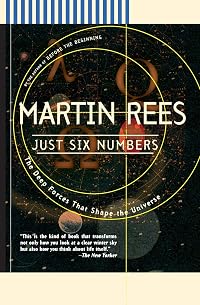
Just Six Numbers: The Deep Forces That Shape The Universe
by Martin J. Rees
On This Page
Description
How did a single "genesis event" create billions of galaxies, black holes, stars and planets? How did atoms assemble--here on earth, and perhaps on other worlds--into living beings intricate enough to ponder their origins? What fundamental laws govern our universe? This book describes new discoveries and offers remarkable insights into these fundamental questions. There are deep connections between stars and atoms, between the cosmos and the microworld. Just six numbers, imprinted in the show more "big bang," determine the essential features of our entire physical world. Moreover, cosmic evolution is astonishingly sensitive to the values of these numbers. If any one of them were "untuned," there could be no stars and no life. This realization offers a radically new perspective on our universe, our place in it, and the nature of physical laws. show lessTags
Recommendations


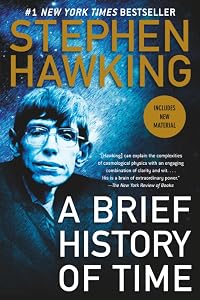
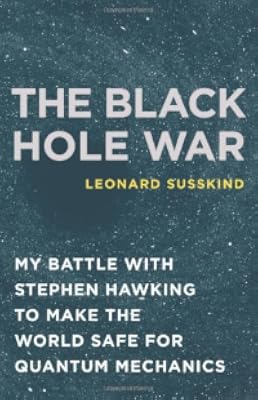
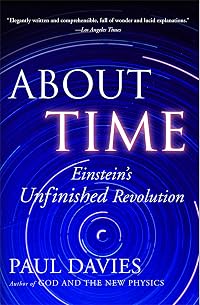
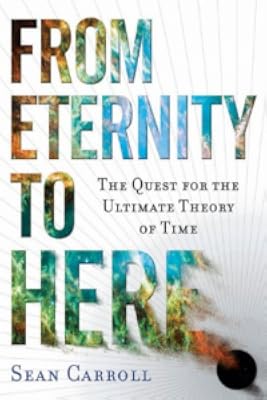


Member Recommendations
themulhern Atkins is probably engaged in refuting Rees. My money is on Atkins, except that I would have to actually read both books through to make a judgement.
Member Reviews
You may be familiar with a so called “proof” for the existence of a creator [or do I mean “Creator” (?)] from the apparent design of [his or her] creatures. This argument has been pretty much debunked as it applies to living animals by (1) the theory of evolution and (2) a deep understanding how the phenomenon of emergence can result in complex order arising from randomness despite the second law of thermodynamics. Nonetheless, it does seem as if the earth is very well suited for human life and probably will continue to be so unless climate change deniers prevent sensible people from taking steps necessary to protect our environment.
Indeed, the fact that human life evolved as it did seems to be dependent on the fact that a show more number of ratios of physical phenomena fall within some very sensitive parameters. Martin Rees, a Royal Society Research Professor at Cambridge University, who was also the official Astronomer Royal of Great Britain, wrote a very interesting book in 1999 that explored the sensitivity of six of those parameters, which he argues are fundamental to modern physics and the known structure of the universe.
Rees observes that each of these ratios has to fall within a very narrow range or, for example (in no particular order): (1) atoms could not have formed after the Big Bang, (2) galaxies could not have formed, (3) the universe would have already collapsed upon itself, (4) the nuclear power generated at the core of the sun would not diffuse outward at just the right rate to balance the heat lost at the surface, and (5) there could be no complex chemistry, atoms larger than helium being unstable.
Although arguing that the universe is spookily “fine tuned,” Rees draws no conclusions as to whether a benign Creator made it so. Other sources like YouTube indicate that he is an atheist. Instead of God, he discusses the cosmological theory of the “multiverse,” the possibility that there are many, if not an infinite number of, other universes that are not as finely tuned as our own. In such a case, the anthropic principal dictates that our universe is finely tuned for human benefit because if it were not, we would not be here!
Evaluation: This book is well worth reading for a lot of reasons. It gives a lucid explication of many physics principles and serves as an excellent introduction to advances in cosmology. I would quibble with the premise that all the constants are “fine tuned,” but his argument that human life depends on several of them falling within narrow limits appears irrefutable.
(JAB) show less
Indeed, the fact that human life evolved as it did seems to be dependent on the fact that a show more number of ratios of physical phenomena fall within some very sensitive parameters. Martin Rees, a Royal Society Research Professor at Cambridge University, who was also the official Astronomer Royal of Great Britain, wrote a very interesting book in 1999 that explored the sensitivity of six of those parameters, which he argues are fundamental to modern physics and the known structure of the universe.
Rees observes that each of these ratios has to fall within a very narrow range or, for example (in no particular order): (1) atoms could not have formed after the Big Bang, (2) galaxies could not have formed, (3) the universe would have already collapsed upon itself, (4) the nuclear power generated at the core of the sun would not diffuse outward at just the right rate to balance the heat lost at the surface, and (5) there could be no complex chemistry, atoms larger than helium being unstable.
Although arguing that the universe is spookily “fine tuned,” Rees draws no conclusions as to whether a benign Creator made it so. Other sources like YouTube indicate that he is an atheist. Instead of God, he discusses the cosmological theory of the “multiverse,” the possibility that there are many, if not an infinite number of, other universes that are not as finely tuned as our own. In such a case, the anthropic principal dictates that our universe is finely tuned for human benefit because if it were not, we would not be here!
Evaluation: This book is well worth reading for a lot of reasons. It gives a lucid explication of many physics principles and serves as an excellent introduction to advances in cosmology. I would quibble with the premise that all the constants are “fine tuned,” but his argument that human life depends on several of them falling within narrow limits appears irrefutable.
(JAB) show less
An excellent Popular Science trip through the bits that just seem weird with one of the world's great cosmologists. Sir Martin manages to keep things just about understandable for someone who needs to remind himself which one lambda is, but thinks it's Einstein's one.
It's 20 years since this was published and that means I'm off to figure out what's moved on as I certainly know parts have, but I'll feel more comfortable so doing having read this book.
It's 20 years since this was published and that means I'm off to figure out what's moved on as I certainly know parts have, but I'll feel more comfortable so doing having read this book.
Despite the suggestions of other reviews, this book has nothing to do with theology or "intelligent design". The author, Martin Rees, is a cosmologist at Cambridge University and does not propagate the ideas of intelligent design in any way. In fact , in the final chapter Rees states that he does not interpret the fine tuning of universal constants to an intelligent designer but rather supports the notion of a "multiuniverse". Just Six Numbers is a well-written introduction into the forces that shape our existence. The book focuses on 6 fundamental constants in the universe and how key the values of these numbers are towards the universe and life ever coming into being. I can see how the religious crowd would jump on these ideas as show more "proof" of god but a simple swipe of Occam's razor takes care of these notions. Not overly technical and no mathematics required to enjoy and understand this book. show less
I happened across this book when putting away something else. I decided to read it - it's small, and should go quickly. Which it did.
I say 3 and a half stars.
It was an enjoyable read, even if a lot of supporting detail for the numbers and conclusions had to be omitted. I think the book was aimed at people who know less physics than I do. I'm sure it was aimed at people who know less math than I do. I did REALLY like some of the quotes for the chapter headings.
The book was written late in the 20th century, and the author speculated that a lot of open questions in cosmology would be answered within 5 years. It's been 3 times that long, and as far as I can tell, the cosmologists are still debating the answers.
A lot of popular science show more writers have jumped on the multiverse bandwagon, and I appreciate that this guy makes it clear that the multiverse is one possible explanation, but that other ideas may emerge. show less
I say 3 and a half stars.
It was an enjoyable read, even if a lot of supporting detail for the numbers and conclusions had to be omitted. I think the book was aimed at people who know less physics than I do. I'm sure it was aimed at people who know less math than I do. I did REALLY like some of the quotes for the chapter headings.
The book was written late in the 20th century, and the author speculated that a lot of open questions in cosmology would be answered within 5 years. It's been 3 times that long, and as far as I can tell, the cosmologists are still debating the answers.
A lot of popular science show more writers have jumped on the multiverse bandwagon, and I appreciate that this guy makes it clear that the multiverse is one possible explanation, but that other ideas may emerge. show less
Rees’ small volume on cosmology is good but not great. He details the origins and fine-tuned-ness of six physical constants: N (10^36 = strength of atomic electrical forces); E (0.007 = nuclear force); Omega (the amount of dark matter in the universe); Lambda (anti-gravitational force); Q (1/100,000 = ratio between fundamental energies); and D (3 = number of dimensions). If any of these numbers were slightly off, we would not have the universe as we recognize it today. While Rees has neither the flare or plain-spoken-ness that Brian Greene possesses, he gets his point across with some competence. I wouldn’t recommend starting with this book, but it is nevertheless a decent source of cosmological wonder.
I can see how this book could be considered to contribute to the debate about intelligent design, but unless I missed something fundamental, it is a dispassionate exposition based upon rigorous science. As with all scientifically based literature, it is open to interpretation. Science should just provide data to inform hypotheses, not interpret things in any subjective way. Unfortunately, many non-scientists do not follow this discipline, so I can see how the data presented here could be hi-jacked by creationists. Professor Rees has posed many more questions than he has answered - which is to be expected. I read this book in a spirit of scientific curiosity, and I found it very informative and entertaining. frankly, I would recommend it show more to anyone, scientifically oriented or not. show less
I wonder if any one here read the same book I did, I found the book to be very readable. I didn't see much of the Intelligent design stuff. it it spoke of it, i would have said it put everything within limits. As general readable text (Brian Green's stuff is sometimes not) I think it is a great book all should read it to learn the rules of the road in cosmology.
Members
- Recently Added By
Lists

Five star books
1,767 works; 110 members

In Our Time books
4,934 works; 2 members
Author Information

35+ Works 3,447 Members
Martin Rees is Royal Society Research Professor at Cambridge University and holds the title of Astronomer Royal.
Awards and Honors
Notable Lists
Series
Belongs to Publisher Series
Work Relationships
Is abridged in
Common Knowledge
- Canonical title
- Just Six Numbers: The Deep Forces That Shape The Universe
- Original title
- Just Six Numbers: The Deep Forces That Shape The Universe
- Original publication date
- 1999
- Canonical DDC/MDS
- 523.18
Classifications
Statistics
- Members
- 1,146
- Popularity
- 22,103
- Reviews
- 14
- Rating
- (3.92)
- Languages
- 13 — Czech, Dutch, English, Finnish, German, Greek, Hungarian, Italian, Polish, Portuguese, Romanian, Spanish, Swedish
- Media
- Paper, Audiobook, Ebook
- ISBNs
- 24
- ASINs
- 8