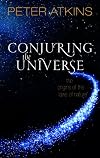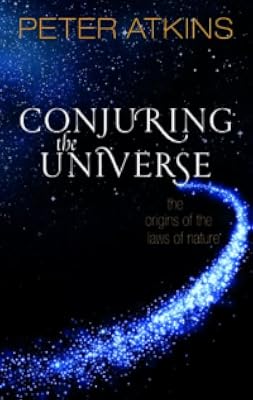
Conjuring the Universe: The Origins of the Laws of Nature
by Peter Atkins, pw atkins
On This Page
Description
The marvelous complexity of the Universe emerges from several deep laws and a handful of fundamental constants that fix its shape, scale, and destiny. There is a deep structure to the world which at the same time is simple, elegant, and beautiful. Where did these laws and these constants come from? And why are the laws so fruitful when written in the language of mathematics? Peter Atkins considers the minimum effort needed to equip the Universe with its laws and its constants. He explores show more the origin of the conservation of energy, of electromagnetism, of classical and quantum mechanics, and of thermodynamics, showing how all these laws spring from deep symmetries. The revolutionary result is a short but immensely rich weaving together of the fundamental ideas of physics. With his characteristic wit, erudition, and economy, Atkins sketches out how the laws of Nature can spring from very little. Or arguably from nothing at all.-- show lessTags
Recommendations

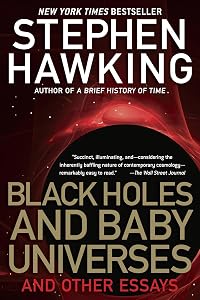
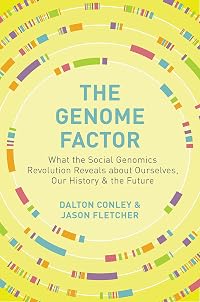
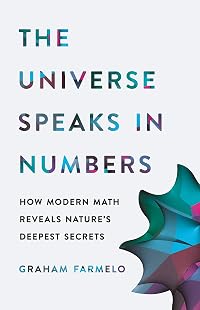
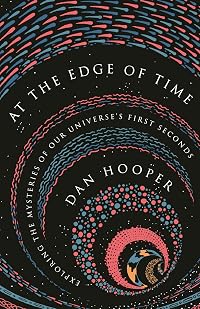


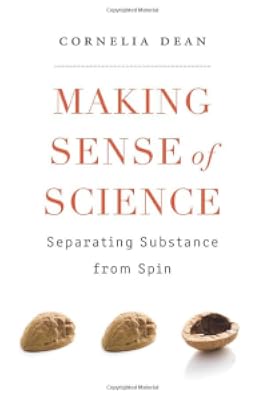
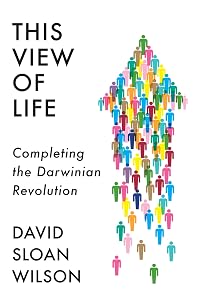
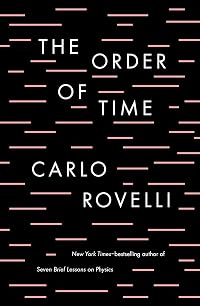

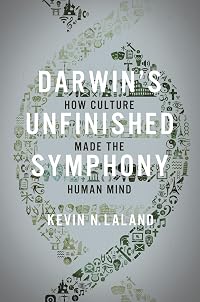
Member Recommendations
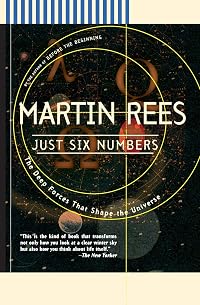
themulhern Atkins is probably engaged in refuting Rees. My money is on Atkins, except that I would have to actually read both books through to make a judgement.
Member Reviews
The style makes the read a slog with its petulant boasting, it's downright childish in its attempts at jaded humour. I'm sure the author would call it acerbic wit. I call it embarrassing for an academic. Do you want to teach me something or do you want to prove you're clever?
"Anarchy", "indolence", and "ignorance" as grounding concepts for a non-frivolous account of the laws of mechanics (classical and quantum), thermodynamics, and electromagnetics? Yes, surprisingly, and physical chemist Atkins's account is a fresh and innovative one indeed. He gets away with saying that nothing much happened at the Big Bang. In the realm of fundamental constants, he suggests some radical revaluations and redimensionalizations that physicists could adopt. (E.g., they could eliminate the Boltzmann constant and redefine entropy as a pure number. And they could measure temperatures in inverse zeptojoules or in picoseconds!)
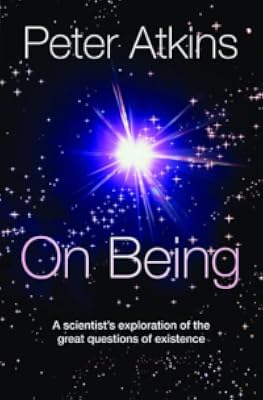
After the first chapter, I get the feeling that Atkins has "Just Six Numbers" by Martin Rees in his sights, and is getting ready to fire away. Hopefully this will be less just grumpy than Atkins's "On Being".
Ratings
Members
- Recently Added By
Author Information

28+ Works 2,012 Members

72+ Works 4,624 Members
Ronald Friedman is Professor, Department of Chemistry, Indiana University Purdue University Fort Wayne, USA. Peter Atkins is Professor of Chemistry, and Fellow of Lincoln College, University of Oxford, UK.
Classifications
Statistics
- Members
- 36
- Popularity
- 780,108
- Reviews
- 3
- Rating
- (2.50)
- Languages
- English, Portuguese
- Media
- Paper, Audiobook, Ebook
- ISBNs
- 6
- ASINs
- 1