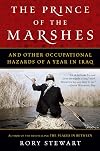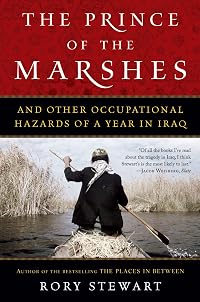
The Prince of the Marshes: And Other Occupational Hazards of a Year in Iraq
by Rory Stewart
On This Page
Description
"Iraq. September 2003; it's six months after the US-led invasion, and the country is in anarchy - the infrastructure has collapsed, terrorist attacks have begun and the coalition has decided to rule directly via the Coalition Provisional Authority (CPA). Rory Stewart, a young British diplomat, is appointed as the coalition deputy governor (CPA deputy governorate coordinator) of a province of 850,000 people in the southern marshland. There, in the cities of Amara and then Nasiriyah, he and show more his colleagues confront gangsters, Iranian-linked politicians, tribal vendettas and a full Islamist insurgency, in which Stewart is besieged in his compound under continual fire, struggling to keep his staff alive. They negotiate hostage releases, appoint Iraqi governors and police chiefs, patch up the shattered infrastructure and, in June 2004, hand over sovereignty to the Iraqi government." "Stewart's almost colonial role may never exist again. His insider's account reveals a side of Iraq hidden from most foreign journalists and soldiers and raises questions about the whole project of 'state-building' in the twenty-first century."--BOOK JACKET. show lessTags
Recommendations





Member Reviews
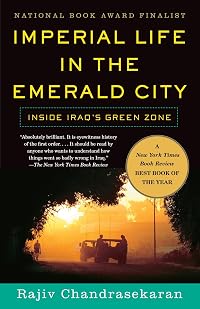
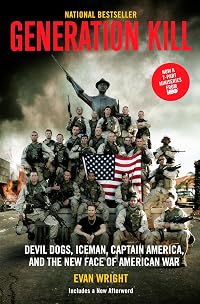
Until a friend's husband recommended it, I had no idea that the idiosyncratic Conservative MP Rory Stewart had written a book about the aftermath of the 2003 Iraq invasion. I was surprised to find it absolutely fascinating, insightful, and suffused with deadpan humour. It joins [b:Imperial Life in the Emerald City: Inside Iraq's Green Zone|22121|Imperial Life in the Emerald City Inside Iraq's Green Zone|Rajiv Chandrasekaran|https://i.gr-assets.com/images/S/compressed.photo.goodreads.com/books/1388184155l/22121._SY75_.jpg|1275660] and [b:Generation Kill|6357099|Generation Kill|Evan Wright|https://i.gr-assets.com/images/S/compressed.photo.goodreads.com/books/1327571775l/6357099._SY75_.jpg|908023] in the 'first hand accounts of how the show more coalition fucked up Iraq in 2003' canon, all of which I find compulsive to read. Indeed, I started writing this review a week ago and made the mistake of picking up [b:Generation Kill|6357099|Generation Kill|Evan Wright|https://i.gr-assets.com/images/S/compressed.photo.goodreads.com/books/1327571775l/6357099._SY75_.jpg|908023] for reference, then accidentally reread all 450 pages in one evening. [b:Occupational Hazards|594673|Occupational Hazards|Rory Stewart|https://i.gr-assets.com/images/S/compressed.photo.goodreads.com/books/1356125412l/594673._SY75_.jpg|29349] isn't quite so addictive to read, but it's not far off. (Incidentally, US marine Nate Fick features in both.) Stewart's perspective as a former-military civilian very much aware of his neo-colonialist position is thoughtful and self-aware:
Stewart worked as governor then vice-governor of an Iraqi province for about a year, before a shorter stint in another province. He recounts events in considerable detail, based on a diary he kept. Notably, he attempted to understand the complex local politics and specific individuals involved, of which the Prince of the Marshes is probably the most prominent. Compared with other books I've read about the occupation period, Stewart gives a lot more attention to the Iraqis themselves both individually and collectively. This is to his credit, and the book does suggest that he tried to do his best for the Iraqi people within the shambolic Coalition Provisional Authority. He certainly doesn't give a positive impression of the American adminstration, for example at this conference in the Green Zone:
This kind of stuff would be funny if it didn't have such a terrible body count. Although I strongly disagreed with the Iraq invasion and the march against it was my first time attending a big protest, I find books about on the topic fascinating. They tend to have interesting insights into the geopolitics of the War on Terror, as well as the mentality of its participants. (Is this war still technically going on? Wikipedia suggests yes, but I'd have to take a poll among historians.) Regardless of good intentions that Stewart and others may have had, the results for Iraq were disastrous. I found this moment particularly revealing, after an Iraqi governor had just been appointed and his new office ransacked:
In the epilogue, Stewart reflects more generally on what his experience in Iraq taught him and comes to an evidence-based conclusion:
I have to respect this unequivocal admission of failure. [b:Occupational Hazards|594673|Occupational Hazards|Rory Stewart|https://i.gr-assets.com/images/S/compressed.photo.goodreads.com/books/1356125412l/594673._SY75_.jpg|29349] is informative, compellingly-written, and well-titled account of the Iraq occupation on the ground. show less
We were surrounded by half-forgotten history. I had met some people back home who still remembered British political officers who served in Iraq between 1916 and 1958. [...]
Our position reminded people of colonialism. But we were not colonial officers. Colonial officers in British India served for forty years, spoke the local languages fluently, and risked their lives and health, administering justice and collecting revenue in tiny, isolated districts, protected only by a small local levy. They often ruled indirectly, 'advising' local kings, tolerating the flaws in their administration and toppling them only if they seriously damaged the security of the state. They put a strong emphasis on local knowledge, courage, initiative, and probity, but they were ruthless in controlling dissent and wary of political change.
By contrast, our governments, like the United Nations, kept us on short contracts and prevented us from going into dangerous or isolated areas. They gave us little time or incentive to develop serious local expertise, and they considered indirect rule through local elites unacceptable. They had no long-term commitment to ruling the country. Their aim was to transfer power to an elected Iraqi government.
Stewart worked as governor then vice-governor of an Iraqi province for about a year, before a shorter stint in another province. He recounts events in considerable detail, based on a diary he kept. Notably, he attempted to understand the complex local politics and specific individuals involved, of which the Prince of the Marshes is probably the most prominent. Compared with other books I've read about the occupation period, Stewart gives a lot more attention to the Iraqis themselves both individually and collectively. This is to his credit, and the book does suggest that he tried to do his best for the Iraqi people within the shambolic Coalition Provisional Authority. He certainly doesn't give a positive impression of the American adminstration, for example at this conference in the Green Zone:
It appeared from all of this [powerpoint presentation] that we were being told that within the next seven months we should, among many other things, elect a transitional assembly, privatise state-owned enterprises, install electronic trading on the Baghdad stock exchange, reform the university curriculum, generate six thousand megawatts of electrical power, vet all the judges, and have thirty-two thousand Iraqi soldiers selected and trained in the new Civil Defence Corps and ensure that 90 per cent of Iraqis received terrestrial television broadcasts.
[...]
There was a silence and then a general said, "I'm sorry. Did I misunderstand you? Did you just say that you have briefed this plan to the highest levels in Washington without consulting any one of us around this table?"
Bremer cut in. "General, there has been an extensive consultation process - parts of this plan have been shown to people all over Iraq - all the relevant departments have been canvassed."
"Well, I sure as hell know that I haven't seen it," said the general. "Has anyone else seen it in this room? Any of my military colleagues?" Heads shook. "Any of the governors?" We civilians shook our heads. "You don't think you could have shown it to some of us?"
"We are showing it to you now."
This kind of stuff would be funny if it didn't have such a terrible body count. Although I strongly disagreed with the Iraq invasion and the march against it was my first time attending a big protest, I find books about on the topic fascinating. They tend to have interesting insights into the geopolitics of the War on Terror, as well as the mentality of its participants. (Is this war still technically going on? Wikipedia suggests yes, but I'd have to take a poll among historians.) Regardless of good intentions that Stewart and others may have had, the results for Iraq were disastrous. I found this moment particularly revealing, after an Iraqi governor had just been appointed and his new office ransacked:
It was ten months since the looting in Baghdad had badly damaged the reputation of the Coalition - a disaster that most commentators blamed on poor planning, insufficient troops, and bad command. In Amara, however, where we had planned, had months to prepare, and had many soldiers, well trained and experienced in crowd control from Northern Ireland, looting had occurred again partly because we thought property less important than life. And because we could not define the conditions under which we were prepared to kill Iraqis or have our own soldiers killed. Occupation is not a science but a deep art, which can only be learned through experience.
Finally, the governor came to the point. "And why did your soldiers not protect this building from the crowd? You send home my security force, dissolved the police line, and took responsibility for the building. How did you then let the crowd get in and steal everything?"
One of us replied, "Governor, maybe it is better that a little computer equipment gets stolen than that more people get killed."
And he then said, "What are you talking about? Would you let the mob go stampeding into your office and loot your computer equipment?" We had no answer. Of course, we would have shot anyone who tried to break into our compound. The governor left that meeting certain that we were not prepared to give him the level of protection we gave ourselves. And from then onwards any hope of co-operation was lost.
In the epilogue, Stewart reflects more generally on what his experience in Iraq taught him and comes to an evidence-based conclusion:
Nowhere in thirty years has there been such a concentration of foreign money, manpower, and determination as in in Iraq. Nowhere has their failure been more dramatic. And yet few convincing explanations of the mess have emerged, and no attractive solutions. Some things are now clear. Iraqis are the only people who can rebuild their nation. We cannot. We have done what good we can do. It is not our tactics but the very fact of our presence that is inflaming the situation. We cannot improve the situation because our institutions are fundamentally unsuited to nation-building: we do not have the personnel, the training, or the political culture to do it, nor the sympathy for local politics. We are too unpopular to be able to defeat the insurgency, stop a civil war, or create security. You cannot predict which policy will work but you must recognise when your policy has failed. In short, I can confidently assert that Iraqis are the only people with the moral authority, understanding, and skills to rebuild their nation. Beyond that I, like almost everyone else, would be guessing.
I have to respect this unequivocal admission of failure. [b:Occupational Hazards|594673|Occupational Hazards|Rory Stewart|https://i.gr-assets.com/images/S/compressed.photo.goodreads.com/books/1356125412l/594673._SY75_.jpg|29349] is informative, compellingly-written, and well-titled account of the Iraq occupation on the ground. show less
"Occupational Hazards" is Rory Stewart's memoir of his time as deputy governor of two of Iraq's southern provinces. Like his previous book, "The Places In Between", it's a good read, thoughtful, well-written, and an insight into a place which very few other Westerners are likely to be.
Unlike its predecessor, though, this isn't a travel book; but then it doesn't quite fit the mould of the Iraq debacle post-mortem, either. This is a book immersed in detail: what it was actually like trying to govern day-to-day. Apart from an epilogue, Stewart avoids analysis of the wider context, although this doesn't stop him building up a pretty clear picture of the problems. His story is often absurd or even farcical - early on, Stewart points out the show more contrast between his vast power (on paper) and scant authority to back that up, and he wrings a grim humour from the parallel-universe instructions he receives from head offices in Basra and Baghdad. Tellingly, the majority of the chapter epigrams are from either Machiavelli or Don Quixote.
Stewart comes across as sensible, and reasonably alert to local culture and nuance - although he's clearly a thorn in the side of some of his colleagues. At one point he laments, "we were not allowed to return to our office [after a serious insurgent attack]. My superiors said that whatever my work had been, it wasn't worth getting killed for. This seemed a pretty depressing statement of how serious we were about the occupation". This brought me up short when I first read it - but it fitted with the overall picture of the lack of clear thinking about what the conflict aimed to achieve. The overwhelming impression is that the people who were setting the agenda believed that anything was possible, however limited the resources - from time and money to people and skills.
In particular, the question that came out most strongly for me was that of security. Restoring security was the linchpin of everything the Coalition Provisional Authority was trying to achieve - so, expeditiously, they selected existing networks and groups who could act as a police force. But this ignored the fact that while in the developed world we implicitly accept the social contract involved (that the state is entitled to the monopoly of force because it also has responsibilities to use that force for the good of the people), there was nothing in ordinary Iraqis' experience to explain this - making the distinction between legitimate and illegitimate use of force much more arbitrary.
Stewart does not discuss this directly - and indeed, in the main body of the book, says little about his feelings about the job he had been assigned. However, in his epilogue (which I think was added to the paperback version of the book), he argues clearly that only the Iraqi people can credibly tackle the problems which they are facing. show less
Unlike its predecessor, though, this isn't a travel book; but then it doesn't quite fit the mould of the Iraq debacle post-mortem, either. This is a book immersed in detail: what it was actually like trying to govern day-to-day. Apart from an epilogue, Stewart avoids analysis of the wider context, although this doesn't stop him building up a pretty clear picture of the problems. His story is often absurd or even farcical - early on, Stewart points out the show more contrast between his vast power (on paper) and scant authority to back that up, and he wrings a grim humour from the parallel-universe instructions he receives from head offices in Basra and Baghdad. Tellingly, the majority of the chapter epigrams are from either Machiavelli or Don Quixote.
Stewart comes across as sensible, and reasonably alert to local culture and nuance - although he's clearly a thorn in the side of some of his colleagues. At one point he laments, "we were not allowed to return to our office [after a serious insurgent attack]. My superiors said that whatever my work had been, it wasn't worth getting killed for. This seemed a pretty depressing statement of how serious we were about the occupation". This brought me up short when I first read it - but it fitted with the overall picture of the lack of clear thinking about what the conflict aimed to achieve. The overwhelming impression is that the people who were setting the agenda believed that anything was possible, however limited the resources - from time and money to people and skills.
In particular, the question that came out most strongly for me was that of security. Restoring security was the linchpin of everything the Coalition Provisional Authority was trying to achieve - so, expeditiously, they selected existing networks and groups who could act as a police force. But this ignored the fact that while in the developed world we implicitly accept the social contract involved (that the state is entitled to the monopoly of force because it also has responsibilities to use that force for the good of the people), there was nothing in ordinary Iraqis' experience to explain this - making the distinction between legitimate and illegitimate use of force much more arbitrary.
Stewart does not discuss this directly - and indeed, in the main body of the book, says little about his feelings about the job he had been assigned. However, in his epilogue (which I think was added to the paperback version of the book), he argues clearly that only the Iraqi people can credibly tackle the problems which they are facing. show less
Stewart conveyed the sense of tribal loyalties and religious differences, which have always governed the political management of the Mesopotamia. The Marsh Arabs are distinct people in the area called 'Iraq' and this recounting of an interim government is spot on. There was humour coupled with cynicism and certainly ineptitude in the expat hierarchy. The portrayals of day to day life were brilliant. However, some of the author's writing in this book was rather dreadful, not typical of his ability for incisive observation and clarity, such as in "The Places in Between".
A memoir of a Scottish eccentric of the old (and by "old" I mean "Chinese Gordon") breed, who, fresh from walking across Iran and Afghanistan in 2002, decided to live dangerously by serving as a provincial governor in Iraq under the CPA. He proceeded to discover that when you're trying to administer a restive local population for a foreign army trying to keep its country safe, you will very quickly learn to understand Pontius Pilate; and, that if your personal security is entirely provided by Italians, you might as well kill yourself now and spare yourself the stress. (Luckily, the author had an American gunship and US and UK security contractors to call on.)
If you've ever wondered what went right in Iraq, what went wrong, and why I show more would vote for David Petraeus as dictator of the world, you'll find out here. (And if Petraeus wasn't on the ballot, I'd vote for Stewart himself.) Extremely interesting reading; and you'll learn a great deal about the cultures of the Iraqis (who don't deserve the hand history, by which I mean Saddam, dealt them, but many of whom aren't trying all that hard to improve it), the US military (much more principled, and indeed more intellectual, than Hollywood would have you think), and the Italians (if you think they're any less contemptible than they were in WWII, you're wrong).
An intriguing thing about this book is that you can practically see the game mechanics; I don't think it would be particularly hard to create an Iraq-occupation sim... show less
If you've ever wondered what went right in Iraq, what went wrong, and why I show more would vote for David Petraeus as dictator of the world, you'll find out here. (And if Petraeus wasn't on the ballot, I'd vote for Stewart himself.) Extremely interesting reading; and you'll learn a great deal about the cultures of the Iraqis (who don't deserve the hand history, by which I mean Saddam, dealt them, but many of whom aren't trying all that hard to improve it), the US military (much more principled, and indeed more intellectual, than Hollywood would have you think), and the Italians (if you think they're any less contemptible than they were in WWII, you're wrong).
An intriguing thing about this book is that you can practically see the game mechanics; I don't think it would be particularly hard to create an Iraq-occupation sim... show less
Another excellent book by Rory Stewart, this recounts his time in Iraq helping to rebuild the nation after the coalition invasion of the early 2000s. He calls into question the logic behind the coalitions attempts to create in Iraq a modern democracy, suggesting that there was no concrete plan, no sense of achievable objectives, and no hope for success in this country that never invited invaders to come in and deal with Saddam in the first place.
A cool and canny young Scottish diplomat tells of his daily deal-making with wily Arab officials and tribal leaders in Southern Iraq during the occupation by the Coalition Provisional Authority. His 12-month tour begins in hope yet ends in disillusionment at the sad inadequacies of both East and West in a clash of cultures.
Stewart craftily notes a similar history has often dogged the region even as long as four thousand years ago when invaders routed King Sulgi of Ur and looted his treasure.
The publisher's proofreading is notably deficient.
Stewart craftily notes a similar history has often dogged the region even as long as four thousand years ago when invaders routed King Sulgi of Ur and looted his treasure.
The publisher's proofreading is notably deficient.
Rory Stewart takes on a various government roles in the provinces of Iraq during 2003 and 2004. The reading I have done on the occupation and the CPA have either been from the point of view of the military or very Baghdad centric. This is the view from the forntline of the occupation in South Iraq,. The attempt to crow bar Western ideals into Iraqi culture and it underlines the absolute futlity of 99% of the work attempted in that first year. How anyone could keep their patience when met with incompetence, misunderstandings, deceit and cowardice to the level seen here is beyond my understanding. Bureaucracy seems determined to make life tough for itself, the military are playing by their own rules but they won't share the rulebook, the show more bewildering number of factions seem more interested in hamstringing each other rather than moving forward. It is a tragicomic tale and while don't agree with all of RS's conclusions I do applaud his efforts and recommend this book to anyone puzzled as to how we made such a mess of the whole situation. show less
Members
- Recently Added By
Author Information

13+ Works 4,279 Members
Rory Stewart is a former infantry officer, diplomat in Indonesia and Yugoslavia, and fellow at Harvard's John F. Kennedy School of Government
Awards and Honors
Common Knowledge
Classifications
- Genres
- Nonfiction, Travel, General Nonfiction, Biography & Memoir, History
- DDC/MDS
- 956.704431 — History & geography History of Asia Middle East Asia: Turkey, Iraq, Syria, Lebanon, Israel, Jordan Iraq 1920- 1979- 1991-
- LCC
- DS70.65 .S74 — History of Europe, Asia, Africa and Oceania Asia History of Asia
- BISAC
Statistics
- Members
- 831
- Popularity
- 32,998
- Reviews
- 17
- Rating
- (3.96)
- Languages
- Dutch, English, Italian, Portuguese
- Media
- Paper, Audiobook, Ebook
- ISBNs
- 23
- ASINs
- 8