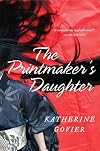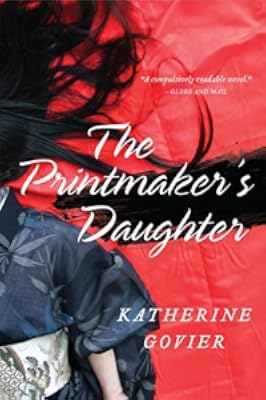
The Printmaker's Daughter: A Novel
by Katherine Govier 
On This Page
Description
Recounting the story of her life, Oei plunges us into the colorful world of nineteenth-century Edo, in which courtesans rub shoulders with poets, warriors consort with actors, and the arts flourish in an unprecedented moment of creative upheaval. Oei and Hokusai live among writers, novelists, tattoo artists, and prostitutes, evading the spies of the repressive shogunate as they work on Hokusai's countless paintings and prints. Wielding her brush, rejecting domesticity in favor of dedication show more to the arts, Oei defies all expectations of womanhood--all but one. A dutiful daughter to the last, she will obey the will of her eccentric father, the man who created her and who, ultimately, will rob her of her place in history. show lessTags
Recommendations


















Member Reviews
Nineteenth century Japan is an era most equate with the end of an era. Japan saw the end of the shogun and samurai as it became open to the West. Although it was the end of many cultural practices and traditions, many beautiful artisans were introduced to the West. One such artist was Hokusai. The Printmaker's Daughter by Katherine Gouvier is a fictional account of the lives of Hokusai and his daughter Ei.
Ei Katsushika was the third daughter of Hokusai Katsushika. Ei appears to the much-loved daughter of Hokusai at the beginning of this story. Her father takes her with him around town and affords her freedom that her other sisters never knew. She befriends other artists, poets and even prostitutes in the town of Edo. As she ages, she show more becomes an indispensable assistant to her father, helping mix paint colors, even working on some of his pictures. In many respects Ei is a free woman in an era when women were never afforded much freedom. She marries, divorces, takes lovers, and assists her father in his work while never learning any of the so-called womanly arts of cooking, making tea, sewing, or even cleaning.
Ms. Gouvier paints a picture of Ei that is often tragic yet filled with wonder. Although Ei has freedom that many Japanese women never experienced during this time period, she remains tied to her father. She puts up with his verbal abuse and has her art demeaned and belittled. As her father ages and becomes either incapable or unwilling to paint, Ei takes over and continues his school and even paints many pictures that are ultimately attributed to Hokusai (some intentionally). Although Hokusai is the best-known print maker of his time, he and Ei lived in virtual poverty much of their lives. Ei's life seemed to come to an abrupt stop when Hokusai finally died. It isn't until she reunites with a former prostitute turned nun - Shino, that she learns to placate society and her family while continuing to do what she wants until her death.
The Printmaker's Daughter is at times hauntingly beautiful in bringing the lives of Ei, Shino and Hokusai to life. There were also times the story seemed sluggish, as a result I found myself having to put the book down because my attention kept wavering as I tried to read. It wasn't until the latter portion of Ei's life is portrayed after Hokusai's death that the story truly became interesting for me. Don't get me wrong, The Printmaker's Daughter is a beautiful fictional account of Ei and Hokusai. This is a well-written and well-researched book with well-developed characters and settings. Sadly I found the research discussion at the end of the book more captivating than most of the fictional story. show less
Ei Katsushika was the third daughter of Hokusai Katsushika. Ei appears to the much-loved daughter of Hokusai at the beginning of this story. Her father takes her with him around town and affords her freedom that her other sisters never knew. She befriends other artists, poets and even prostitutes in the town of Edo. As she ages, she show more becomes an indispensable assistant to her father, helping mix paint colors, even working on some of his pictures. In many respects Ei is a free woman in an era when women were never afforded much freedom. She marries, divorces, takes lovers, and assists her father in his work while never learning any of the so-called womanly arts of cooking, making tea, sewing, or even cleaning.
Ms. Gouvier paints a picture of Ei that is often tragic yet filled with wonder. Although Ei has freedom that many Japanese women never experienced during this time period, she remains tied to her father. She puts up with his verbal abuse and has her art demeaned and belittled. As her father ages and becomes either incapable or unwilling to paint, Ei takes over and continues his school and even paints many pictures that are ultimately attributed to Hokusai (some intentionally). Although Hokusai is the best-known print maker of his time, he and Ei lived in virtual poverty much of their lives. Ei's life seemed to come to an abrupt stop when Hokusai finally died. It isn't until she reunites with a former prostitute turned nun - Shino, that she learns to placate society and her family while continuing to do what she wants until her death.
The Printmaker's Daughter is at times hauntingly beautiful in bringing the lives of Ei, Shino and Hokusai to life. There were also times the story seemed sluggish, as a result I found myself having to put the book down because my attention kept wavering as I tried to read. It wasn't until the latter portion of Ei's life is portrayed after Hokusai's death that the story truly became interesting for me. Don't get me wrong, The Printmaker's Daughter is a beautiful fictional account of Ei and Hokusai. This is a well-written and well-researched book with well-developed characters and settings. Sadly I found the research discussion at the end of the book more captivating than most of the fictional story. show less
Going into reading this book I knew absolutely nothing about Katsushika Hokusai. To be honest, I didn't even know this was actually based on a true story. It's loosely based, but really only because there is not a lot of information out there about Hokusai's life, just his work.
The author had to take certain liberties with the character's personalities, but for the most part, these were real people that once lived in a very difficult time. Katherine spent five years researching and writing this novel. Five years of interviewing, traveling to Japan, researching, visiting museums and colleges, talking to experts, scholars and anyone else that could possibly help write the story of this man and his mystery daughter, Oi.
I knew nothing show more about any of this until I started reading. But then I fell in love with the story and wanted to know more (a lot more!), so I did some research of my own. I studied Hokusai and his work, I read up on him and the time that he lived, I learned as much as I could about the courtesans of the Yoshiwara and painting woodblock prints. All this was, and still is, new to me. But I was mesmerized. Enchanted, really. I could talk about this forever. And really, if you have ANY questions to ask me about this book, feel free, because I loved it. Adored it.
I don't want to compare it to Memoirs of a Geisha, because the books cover two completely different topics, but it's hard not to for me, because Memoirs is at this point probably my favorite book. Ever. But I think The Printmaker's Daughter may surpass that for me. If not surpass, it is equal. I think this story was a bit more real in its authenticity. The voice of Oi felt extremely real to me. It was almost as if a Japanese girl was really telling the story. It felt extremely authentic. And Oi had personality. I didn't really feel that way about Memoirs. While I really loved the story, it was because of the characters that I was enchanted. But the protagonist, Sayuri, didn't have much of a personality. Not so with this book. And the settings felt so incredibly real.
This was a book to get lost in. A book to take your time with. I just wanted to savor every word and let the story unfold slowly. And I did. It was magical. Parts of it were depressing, sure, because living in that time for women was not easy. It felt very oppressive for Oi. And also the courtesans. And it was. But through it all, Oi remained strong and steadfast. As impossible and selfish as her father was, she remained loyal and devoted to him until the day he died. Which by the way, was a very long time to live. He lived to the ripe old ancient age of 89. In 1849 when he died, living that long was extremely rare. Oi lived under his thumb, and fame, for his entire life. How oppressive.
Finally, she is starting to gain recognition. People are actually trying to find out the truth. Which paintings of her father's was she actually responsible for? From what I have seen, she is a little more talented than he is. Her usage of colors is just outstanding. And in my opinion, you can clearly tell her work from his.
In closing, this was a brilliant cultural read. I could write for endless hours about how epic I found this book to be. And I learned so much while reading. It was basically my ultimate reading experience. I love reading cultural fiction. Specifically about Asia, but as long as I am learning, I could care less. I will be following Katherine Govier's career. I think she is an amazing writer and this book deserves to be read by the masses. I am SO, so glad I read it. And of course I will be buying a copy for keeps. show less
The author had to take certain liberties with the character's personalities, but for the most part, these were real people that once lived in a very difficult time. Katherine spent five years researching and writing this novel. Five years of interviewing, traveling to Japan, researching, visiting museums and colleges, talking to experts, scholars and anyone else that could possibly help write the story of this man and his mystery daughter, Oi.
I knew nothing show more about any of this until I started reading. But then I fell in love with the story and wanted to know more (a lot more!), so I did some research of my own. I studied Hokusai and his work, I read up on him and the time that he lived, I learned as much as I could about the courtesans of the Yoshiwara and painting woodblock prints. All this was, and still is, new to me. But I was mesmerized. Enchanted, really. I could talk about this forever. And really, if you have ANY questions to ask me about this book, feel free, because I loved it. Adored it.
I don't want to compare it to Memoirs of a Geisha, because the books cover two completely different topics, but it's hard not to for me, because Memoirs is at this point probably my favorite book. Ever. But I think The Printmaker's Daughter may surpass that for me. If not surpass, it is equal. I think this story was a bit more real in its authenticity. The voice of Oi felt extremely real to me. It was almost as if a Japanese girl was really telling the story. It felt extremely authentic. And Oi had personality. I didn't really feel that way about Memoirs. While I really loved the story, it was because of the characters that I was enchanted. But the protagonist, Sayuri, didn't have much of a personality. Not so with this book. And the settings felt so incredibly real.
This was a book to get lost in. A book to take your time with. I just wanted to savor every word and let the story unfold slowly. And I did. It was magical. Parts of it were depressing, sure, because living in that time for women was not easy. It felt very oppressive for Oi. And also the courtesans. And it was. But through it all, Oi remained strong and steadfast. As impossible and selfish as her father was, she remained loyal and devoted to him until the day he died. Which by the way, was a very long time to live. He lived to the ripe old ancient age of 89. In 1849 when he died, living that long was extremely rare. Oi lived under his thumb, and fame, for his entire life. How oppressive.
Finally, she is starting to gain recognition. People are actually trying to find out the truth. Which paintings of her father's was she actually responsible for? From what I have seen, she is a little more talented than he is. Her usage of colors is just outstanding. And in my opinion, you can clearly tell her work from his.
In closing, this was a brilliant cultural read. I could write for endless hours about how epic I found this book to be. And I learned so much while reading. It was basically my ultimate reading experience. I love reading cultural fiction. Specifically about Asia, but as long as I am learning, I could care less. I will be following Katherine Govier's career. I think she is an amazing writer and this book deserves to be read by the masses. I am SO, so glad I read it. And of course I will be buying a copy for keeps. show less
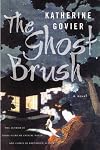
The Ghost Brush is a wonderfully imagined story of the lives of a real Japanese artist, Hokusai, and his perhaps even more talented daughter, Oe. However, because she was a woman, her work could not be recognized in her own right. The book is well-researched, and brings that chapter of Japanese history to life with the sights and smells and beauty and squalor. Particularly interesting is Oe's friendship with the courtesan Shino, and also her encounter with a Dutch doctor living on the man-made island where the Dutch were allowed to live in isolation. The story follows Oe's life from beginning to end, especially her relationship with her famous and eccentric artist father, who taught her his skills and helped her develop her own. We are show more privy to Oe's thoughts on Japanese society and the role of women in it at that time. A memorable and fascinating read - highly recommended. show less
The daughter of the great painter Hokusai tells about his life, and her life, and about being a great painter herself, and more than just Hokusai's daughter. This is beautifully written, with a strong voice that is easy to read, and very pleasing to read. Oei grows from a child to an old woman with every part of life in between well described. Sometimes she seems too concerned with the men in her life, but this is because it was the life she was forced to have in the time she was living. And the traditions she broke are incredible for that time.
Oei is a heroine in a very real way. She is a demonstration of a great woman and a great artist--that is obvious even without seeing her work, because of her determination. It took me a very long show more time to read this because it is an autobiography of sorts, it never rushes and the pace is even. But I enjoyed every chapter. It has a wonderful smoothness and I'll happily look into whatever else the author writes. show less
Oei is a heroine in a very real way. She is a demonstration of a great woman and a great artist--that is obvious even without seeing her work, because of her determination. It took me a very long show more time to read this because it is an autobiography of sorts, it never rushes and the pace is even. But I enjoyed every chapter. It has a wonderful smoothness and I'll happily look into whatever else the author writes. show less
This turned out to be a highly enjoyable book - after a rocky start.
First, the start: to give the courtesan's their own patois, the author chooses to use some form of Californian Valley Girl slang. It is, like, a disaster. There is also the clunky use of the local storyteller (part town crier, part tabloid scandal monger) to fill in the background on one of the important characters, Shino.
But, the book flows from there. The author tells the story sparingly, with occasional vignettes in a roughly chronological sequence. The characterisation of the key players is well done and they rise from the page.
Interestingly for a book about two famous artists, there is only very limited analysis of the actual art works. What detail that is given show more is mostly descriptive, and not detailed at that. Instead, the book is about relationships, set in the background of the place and time - Japan in the era leading up to the time of the forced "opening" in 1867. Now I was quite happy with this balance, but I wonder of others might prefer more artistic criticism.
The subsidiary issue discussed in the book is the role of gender in Japan in the 19th century. The author manages to deal explicitly with the injustices without turning the book into a undergraduate gender studies assignment.
Great book.
Read Jan 2016 show less
First, the start: to give the courtesan's their own patois, the author chooses to use some form of Californian Valley Girl slang. It is, like, a disaster. There is also the clunky use of the local storyteller (part town crier, part tabloid scandal monger) to fill in the background on one of the important characters, Shino.
But, the book flows from there. The author tells the story sparingly, with occasional vignettes in a roughly chronological sequence. The characterisation of the key players is well done and they rise from the page.
Interestingly for a book about two famous artists, there is only very limited analysis of the actual art works. What detail that is given show more is mostly descriptive, and not detailed at that. Instead, the book is about relationships, set in the background of the place and time - Japan in the era leading up to the time of the forced "opening" in 1867. Now I was quite happy with this balance, but I wonder of others might prefer more artistic criticism.
The subsidiary issue discussed in the book is the role of gender in Japan in the 19th century. The author manages to deal explicitly with the injustices without turning the book into a undergraduate gender studies assignment.
Great book.
Read Jan 2016 show less
Pulling from history, and adding it's own spin, The Printmaker's Daughter tells the story of Ei Katsushika, the third daughter of Hokusai Katsushika. For those of you who may be fans of Japanese art, or of their rich history, this name will ring a bell. Hokusai was a famous artist at the end of an era. A man who openly and vibrantly put his feelings down into his paintings. Faced with censorship and hardship, Hokusai was a man shrouded in much mystery. The Printmaker's Daughter takes what is known to be fact, and mixes it gorgeously with a fictional story.
In the beginning, Ei is shown as the favorite of her father. She is afforded a freedom that most women didn't have at this time. Galavanting around town, meeting people from all show more different walks of life, and even being allowed to attend places that children weren't technically allowed to go. Ei's ability to slip unnoticed into these places allows the reader to get a through glimpse at what life was like for the common people during this time. I thought it was truly brilliant how much Ei is allowed to experience, and therefore how much the reader is as well.
As Ei gets older, Katherine Govier really shows the truth behind this young girl's life. The reader follows as Ei tries to make a place in the world for herself. Constantly belittled by her father and told she is nothing, it is her strength that really drew me in. Until her dying breath, she faced the world head on and did what she felt was right for her. In fact, all the characters in this story are strong and wonderfully written. The first person narrative is beautifully done, and it is very easy to become immersed in this story.
The Printmaker's Daughter is hauntingly beautiful and well written. The vivid characters bring the story to life, and really were what kept me reading on. If I had one complaint, it would be that there were times when Ei's story became a little heavy in the historical descriptions. However, considering the topic, it makes perfect sense. I'm simply not a reader who often delves into Historical Fiction, so it was a different read for me. The discussion at the end of the book ties everything together, and definitely answered all the questions I had left upon finishing this intriguing book.
If you are a reader who enjoys historical fiction, this is a book that you will fall in love with. I definitely recommend Katherine Govier's The Printmaker's Daughter and look forward to more from this author. show less
In the beginning, Ei is shown as the favorite of her father. She is afforded a freedom that most women didn't have at this time. Galavanting around town, meeting people from all show more different walks of life, and even being allowed to attend places that children weren't technically allowed to go. Ei's ability to slip unnoticed into these places allows the reader to get a through glimpse at what life was like for the common people during this time. I thought it was truly brilliant how much Ei is allowed to experience, and therefore how much the reader is as well.
As Ei gets older, Katherine Govier really shows the truth behind this young girl's life. The reader follows as Ei tries to make a place in the world for herself. Constantly belittled by her father and told she is nothing, it is her strength that really drew me in. Until her dying breath, she faced the world head on and did what she felt was right for her. In fact, all the characters in this story are strong and wonderfully written. The first person narrative is beautifully done, and it is very easy to become immersed in this story.
The Printmaker's Daughter is hauntingly beautiful and well written. The vivid characters bring the story to life, and really were what kept me reading on. If I had one complaint, it would be that there were times when Ei's story became a little heavy in the historical descriptions. However, considering the topic, it makes perfect sense. I'm simply not a reader who often delves into Historical Fiction, so it was a different read for me. The discussion at the end of the book ties everything together, and definitely answered all the questions I had left upon finishing this intriguing book.
If you are a reader who enjoys historical fiction, this is a book that you will fall in love with. I definitely recommend Katherine Govier's The Printmaker's Daughter and look forward to more from this author. show less
http://iwriteinbooks.wordpress.com/2011/12/12/the-printmakers-daughter-katherine...
The prints of famed Japanese artist Hokusai are well ingrained in my idea of what constitues amazing international art through time. You all know it and if you’re at all like me you love it. I took a kick-butt series of Asian Art History classes in college and have just plain always liked this style of nature depiction. So, of course, I had to set aside my silly prejudices about spot-specific tales of history when I realized that this one was about the possibly true, possibly very scandalous story of Hokusai and his daughter through the 19th century.
I was very well rewarded, as it turns out, as the story is just so readable and fantastic. The book show more circles around the artist and the protagonist, the father and daughter, with such realism that it honest to goodness, feels like reading about old friends. The most fascinating part of the story is that it is woven through the red light district, the artists’ hang out, the call girls’ home, the place where art, culture, passion and forbidden pleasures live. Poets and prostitutes live together in celebration of all things fun and this is where our story’s roots take hold.
I highly recommend the book to anyone who loves a good story with good, evil, censorship and rebellion. On a more personal scale, when all the hustle and bustle of the city and the lights are stripped away, what remains is a story about family, about friendship and about one father and his daughter. It came in just under the wire with three weeks left in the game, to be called one of my favorite books of 2011. I haven’t read anything else by Govier but I am now off to hunt her other works down.
Check out the links, below for a few other thoughts on the book. show less
The prints of famed Japanese artist Hokusai are well ingrained in my idea of what constitues amazing international art through time. You all know it and if you’re at all like me you love it. I took a kick-butt series of Asian Art History classes in college and have just plain always liked this style of nature depiction. So, of course, I had to set aside my silly prejudices about spot-specific tales of history when I realized that this one was about the possibly true, possibly very scandalous story of Hokusai and his daughter through the 19th century.
I was very well rewarded, as it turns out, as the story is just so readable and fantastic. The book show more circles around the artist and the protagonist, the father and daughter, with such realism that it honest to goodness, feels like reading about old friends. The most fascinating part of the story is that it is woven through the red light district, the artists’ hang out, the call girls’ home, the place where art, culture, passion and forbidden pleasures live. Poets and prostitutes live together in celebration of all things fun and this is where our story’s roots take hold.
I highly recommend the book to anyone who loves a good story with good, evil, censorship and rebellion. On a more personal scale, when all the hustle and bustle of the city and the lights are stripped away, what remains is a story about family, about friendship and about one father and his daughter. It came in just under the wire with three weeks left in the game, to be called one of my favorite books of 2011. I haven’t read anything else by Govier but I am now off to hunt her other works down.
Check out the links, below for a few other thoughts on the book. show less
Members
- Recently Added By
Published Reviews
ThingScore 75
"Although not as gifted as Anchee Min in characterizing her female protagonist, Govier nonetheless gives readers an engrossing narrative worth their time."
added by Christa_Josh
Author Information

17+ Works 719 Members
Canadian author, Katherine Govier was born on July 4, 1948 in Edmonton, Canada. She attended the University of Alberta and York University where she studied English Literature. She has published several novels and short story collections. She won the City of Toronto Book Award for Hearts of Flame in 1992. She was shortlisted for both the Trillium show more Award for Immaculate Conception Photography Gallery and Books in Canada, WH Smith First Novel Award, for Random Descent. In 1997 she received Canada's Marian Engel Award for a woman writer in mid-career in 1997. She currently resides in Toronto, Canada. (Bowker Author Biography) show less
Katherine Govier is a LibraryThing Author, an author who lists their personal library on LibraryThing.
Some Editions
Awards and Honors
Common Knowledge
- Original title
- The Ghost Brush
- Original publication date
- 2011
- People/Characters
- Katsushika Hokusai; Oei; Shino; Sanba
- Important places
- Japan
Classifications
- Genres
- Fiction and Literature, General Fiction, Historical Fiction
- DDC/MDS
- 813.54 — Literature & rhetoric American literature in English American fiction in English 1900-1999 1945-1999
- LCC
- PR9199.3 .G657 .P75 — Language and Literature English English Literature English literature: Provincial, local, etc.
- BISAC
Statistics
- Members
- 175
- Popularity
- 186,491
- Reviews
- 21
- Rating
- (3.41)
- Languages
- English, French, Latvian, Spanish
- Media
- Paper, Audiobook, Ebook
- ISBNs
- 11
- ASINs
- 4